Thirty-five years after the Navy stopped disposing of toxic waste in unlined pits next to San Francisco Bay on Alameda Point’s southwest shoreline, the final actions to comply with state and federal laws are finally being implemented this year.
Site 2 where industrial waste is buried. Area up to the wetland will be covered with two feet of additional soil.
Decades of wrangling between the Navy and regulatory agencies over how to handle the West Beach Landfill, dubbed Site 2, were finally ironed out this spring. The U.S. Environmental Protection Agency (EPA), the Regional Water Quality Control Board (Water Board), and the California Department of Toxic Substances Control (DTSC) have agreed to a plan that calls for leaving the estimated 1.6 million tons of industrial waste in place and adding more soil to the existing soil cover.
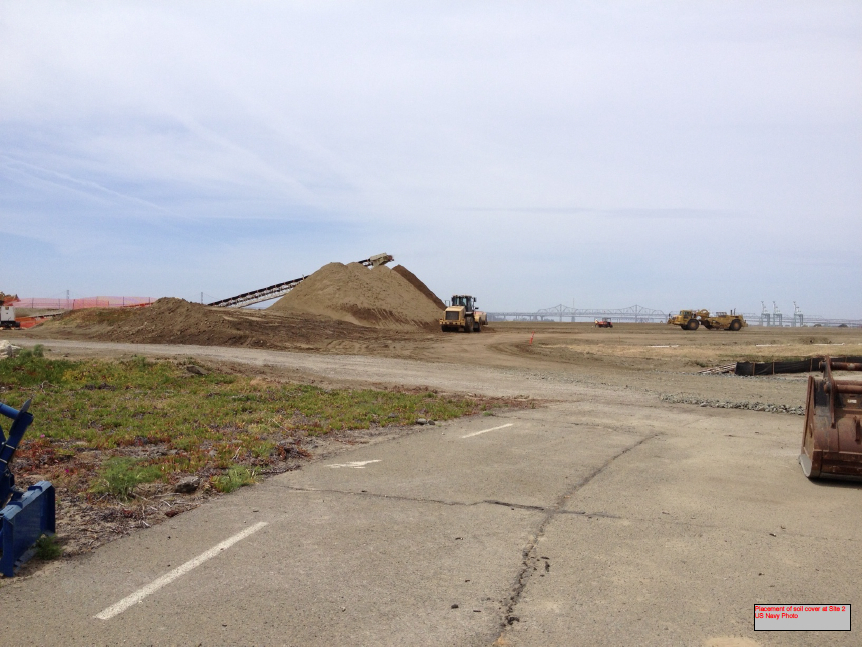
Placement of soil cover at Site 2 – May 2013. US Navy Photo.
The Navy began dumping waste in the area in 1952, four years before they surrounded the area with a seawall. The dump was closed in 1978, but early efforts to comply with state environmental laws for landfill closure were not to the satisfaction of the Water Board.
In its May 2012 draft engineering work plan for the landfill, the Navy cited a decade of groundwater monitoring along the shoreline that proved the toxic chemicals of concern are not migrating toward the Bay. Instead, the chemical concentrations are either stable or declining. The contents have been sitting in water-saturated subsurface soil since the disposal program began 60 years ago.
Radiological hotspots of debris and soil, including a small storage building, were removed after an earlier scan of Site 2. Before the current two feet of clean soil is put in place, the soil will again be scanned down to a depth of one foot, and elevated concentrations will be removed. Radium-226 paint waste was disposed of in the landfill.
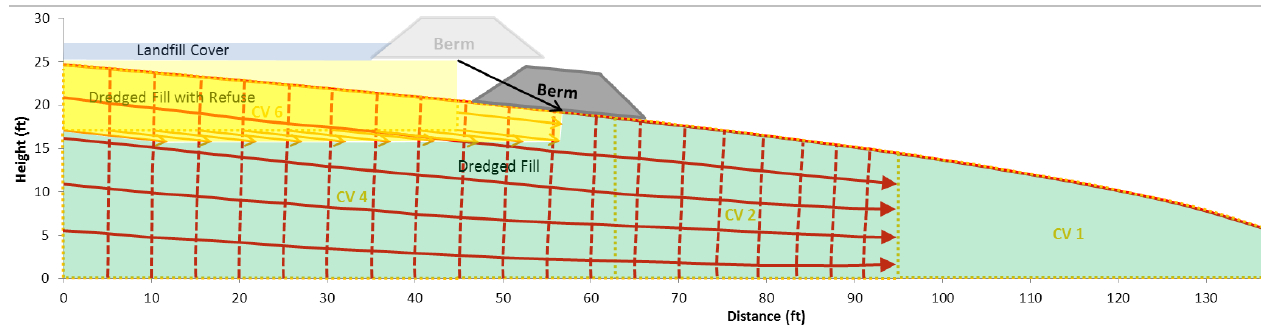
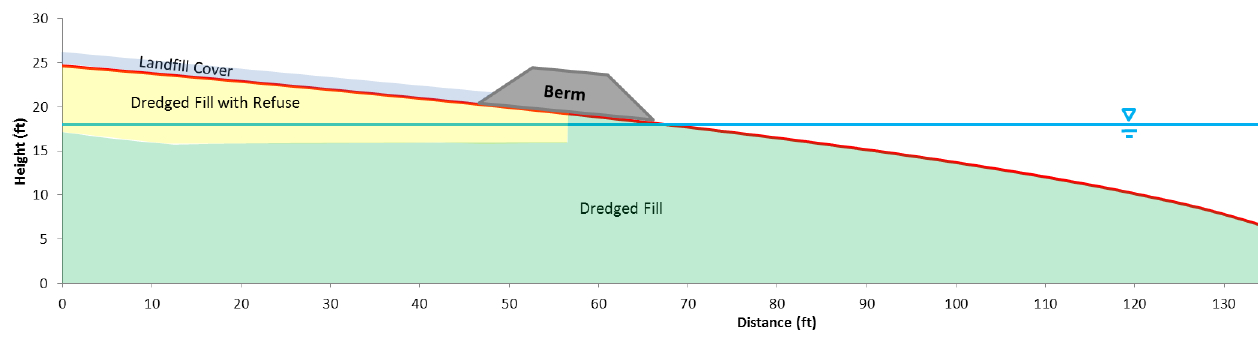
One of the major concerns about leaving this landfill in place is the consequence of a major earthquake. The Navy responded to a comment from a DTSC engineer by acknowledging that in the event of a maximum credible earthquake, the riprap boulders forming the “seawall is conservatively assumed to be non-existent, instantaneously whisked away and replaced with a 25-foot vertical face of liquefiable sand subject to plastic flow without being constrained by a rigid shell (sea wall).” The Navy’s earthquake model predicts that the earthen embankment above the seawall at the perimeter of the landfill, composed of clay and not sand, will glide into the Bay and “will not be overtopped by the waters of San Francisco Bay and freeboard of about 5 feet above mean sea level will remain, and so the refuse will remain isolated.”
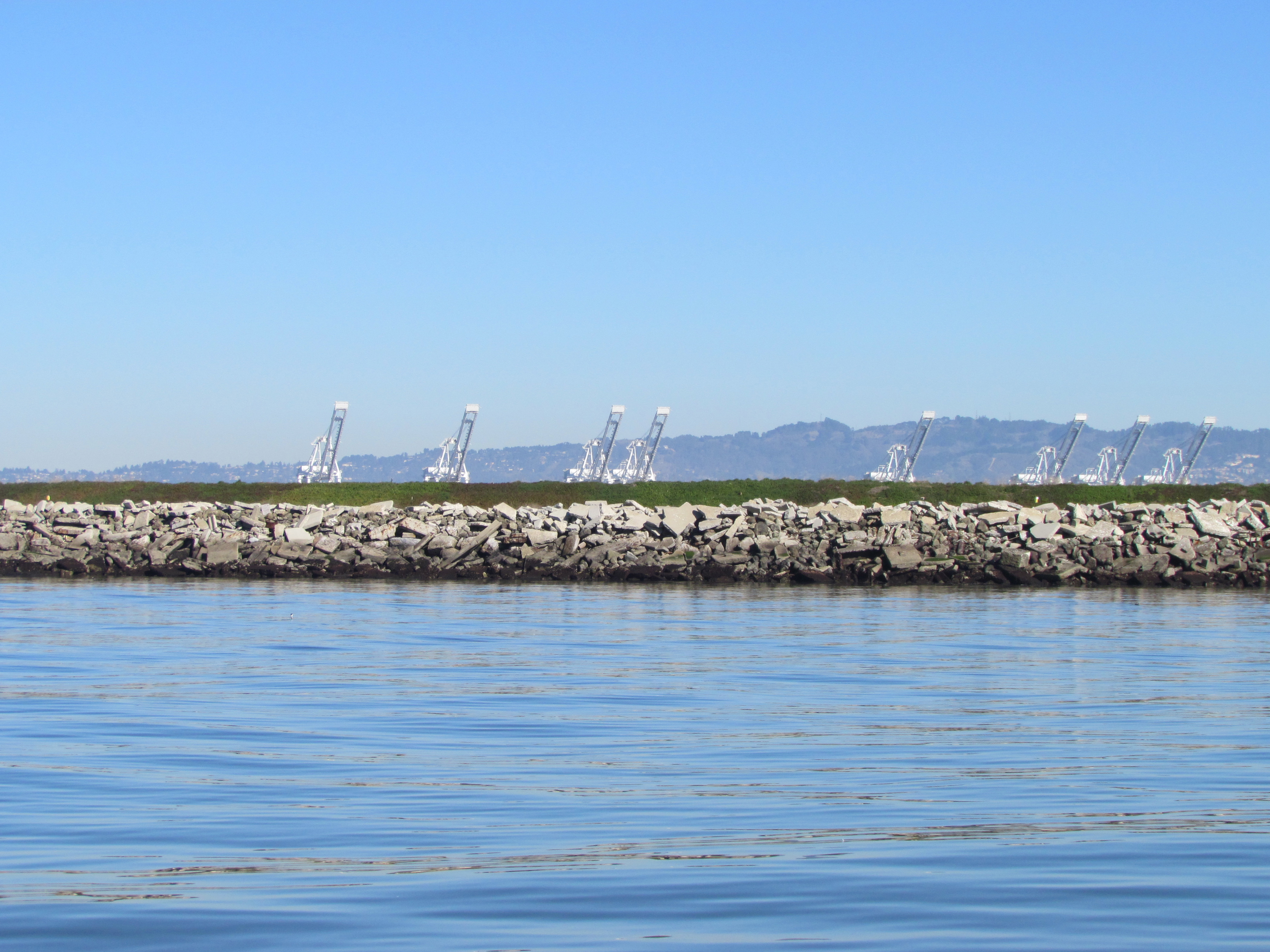
Navy graphic showing predicted movement of embankment berm into San Francisco Bay during an earthquake. Click on image to enlarge.Navy graphic depicting position of embankment berm at Bay shoreline following a catastrophic earthquake. Click on image to enlarge.Southwestern shoreline of Alameda Point at Site 2 landfill. Rock/cement riprap seawall, with green embankment berm above. Looking north toward Port of Oakland.
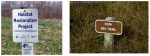
The Navy removed a perimeter security fence from their plans following objections from regulators and the public. “Navy’s design and [Superfund] requirements for this project do not preclude future use of the site for limited public access or passive recreational purposes,” said the Navy. Simple “Habitat Restoration Project” and “Stay on trail” signs were deemed adequate.
In an unusual move, the Navy offered the Restoration Advisory Board the opportunity to select the new vegetation that will anchor the 60 acres of clean soil. In the fall of 2013, the Navy will seed the new soil with 13 native grasses, most of them flowering. The Navy has permanently removed the 12-foot high embankment on the eastern, inland side of the landfill site, which will make the grassland visible from the mixed-use area.
The 30-acre wetland area on Site 2 was not contaminated, but will receive improvements to the quality of several acres. The culvert connecting the wetland to San Francisco Bay will be regularly inspected and permanently protected.
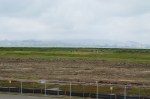
Bare soil is where the eastern embankment used to be.
Site 2 landfill with eastern embankment removed.
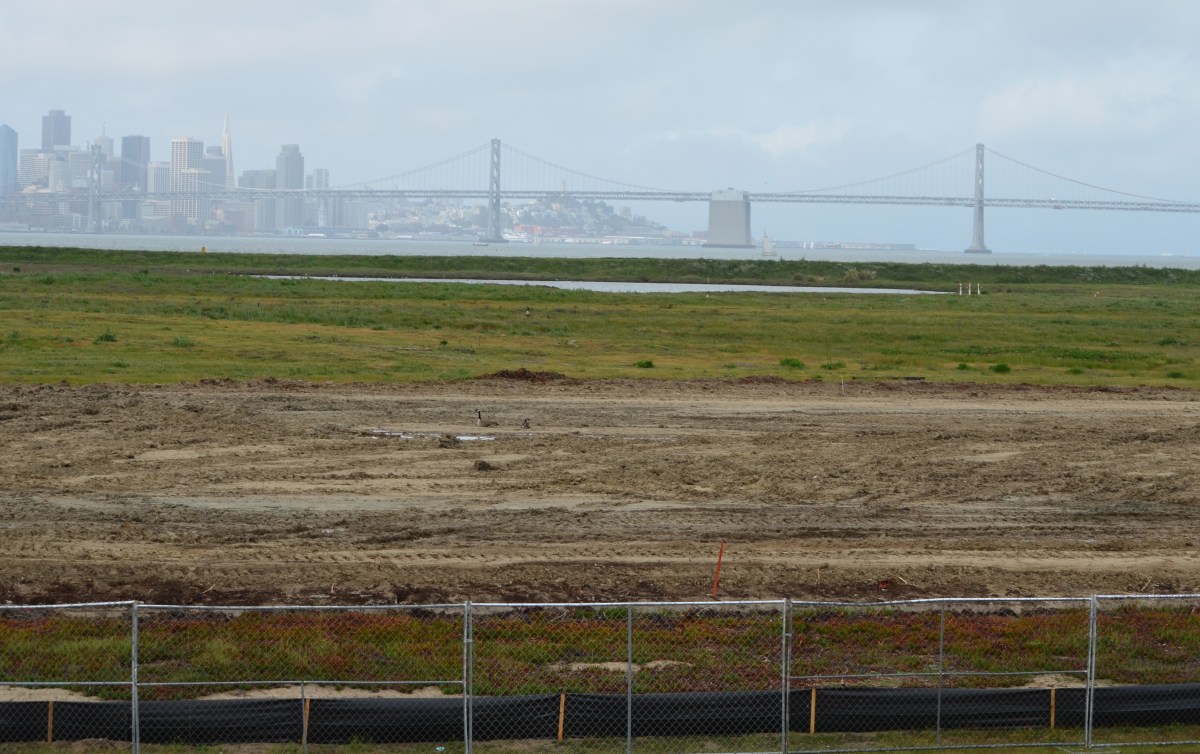
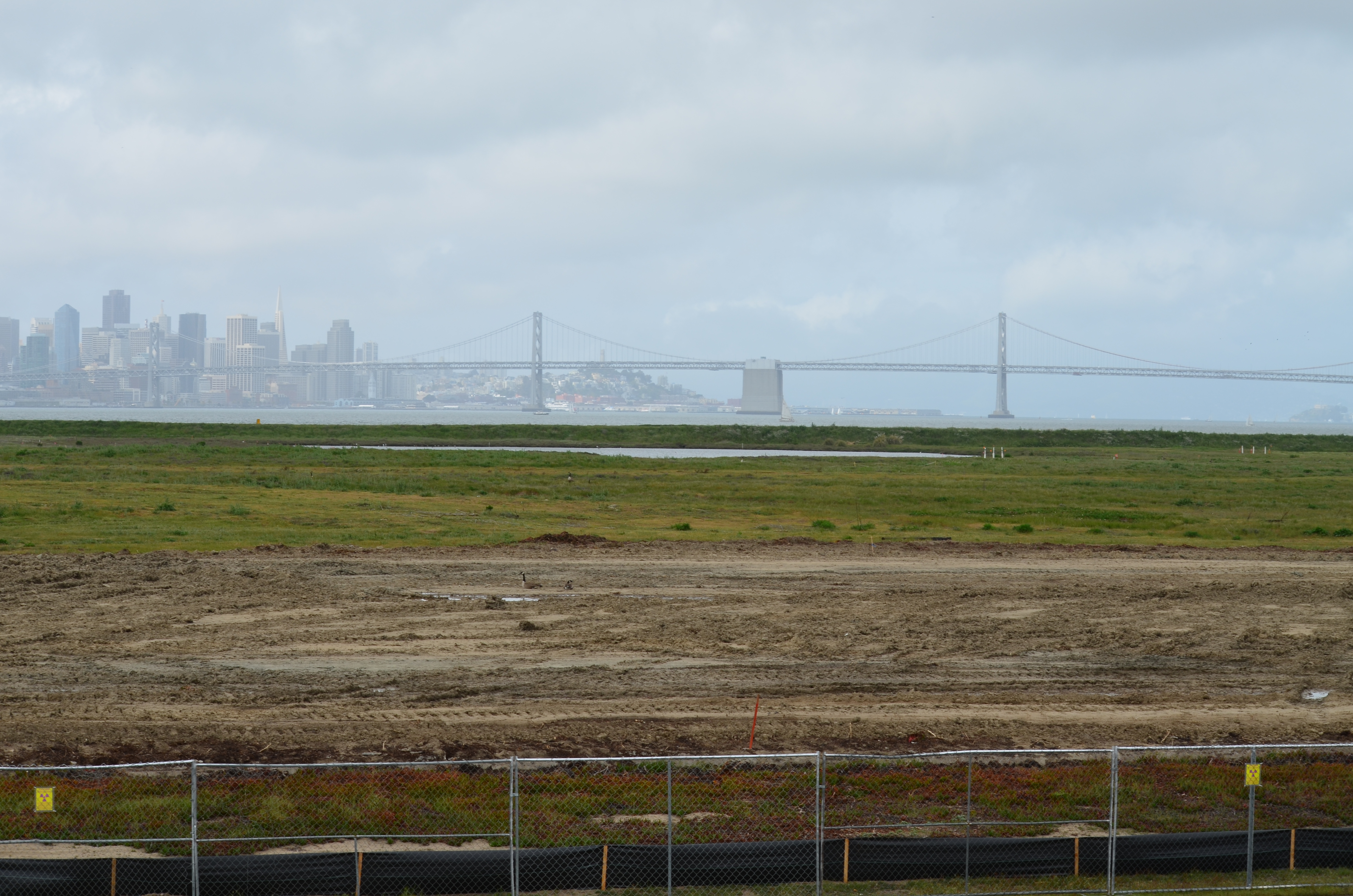
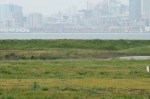
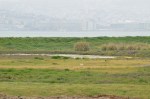
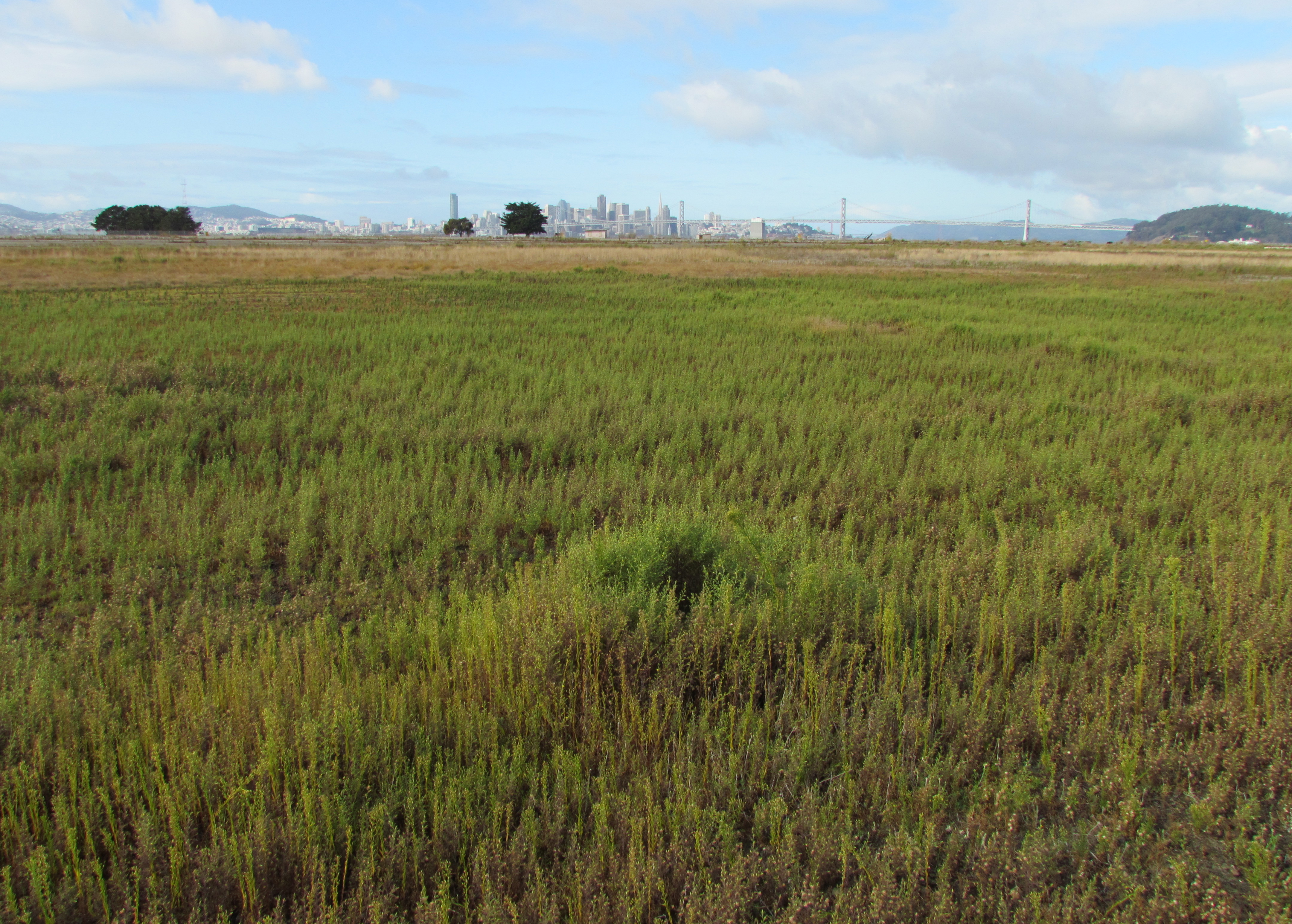
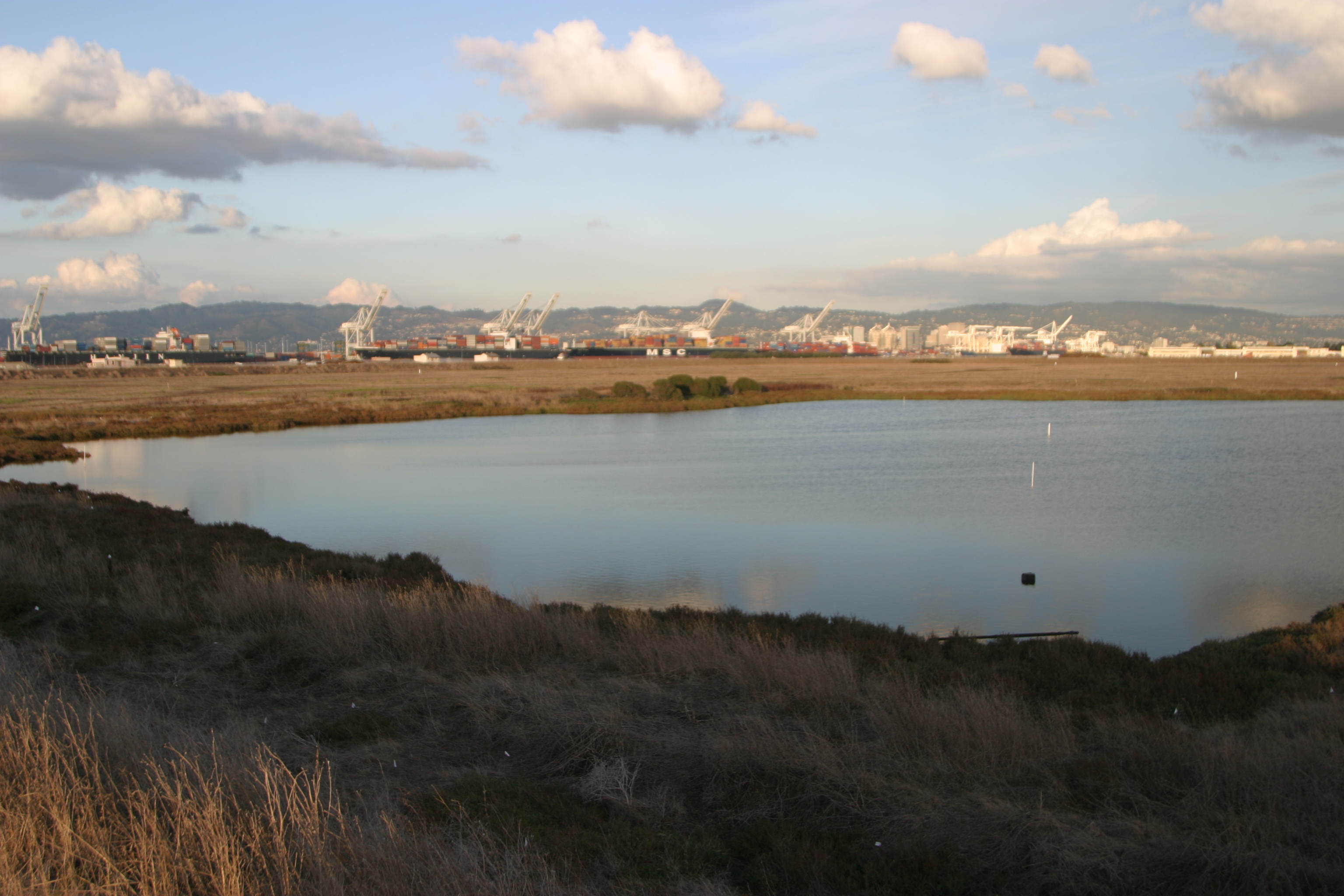
West Beach Wetland on southwestern Alameda Point. San Francisco in background.
West Beach Wetland with San Francisco Bay in the background. Part of wetland is connected to the Bay via metal culvert.
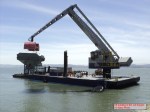
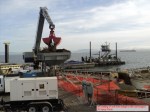
Off-loading of the soil hopper. US Navy Photo.
Off-loading of soil from barge to the soil hopper. US Navy Photo.
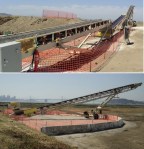
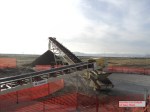
Soil conveyor at Site 2. US Navy Photo.
Imported soil stockpile. US Navy Photo
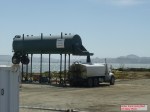
Water truck being filled. US Navy Photo.
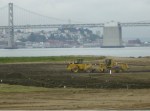
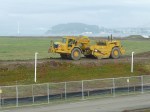
Site 2 grading equipment. US Navy Photo.
Eastern (inland) embankment at Site 2 being removed. US Navy Photo.
Loading trucks with Site 17 (Seaplane Lagoon) dredge spoils that were cleared as non-hazardous and stockpiled on the runway north of Site 2. US Navy Photo.
Site 2 wetland mitigation plan. US Navy map.
Site 2 trail signage. US Navy images.
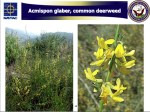
One of the native grasses to be hydroseeded on Site 2 in the fall of 2013.
One of the native grasses to be hydroseeded on Site 2 in the fall of 2013.
One of the native grasses to be hydroseeded on Site 2 in the fall of 2013.
One of the native grasses to be hydroseeded on Site 2 in the fall of 2013.
One of the native grasses to be hydroseeded on Site 2 in the fall of 2013.
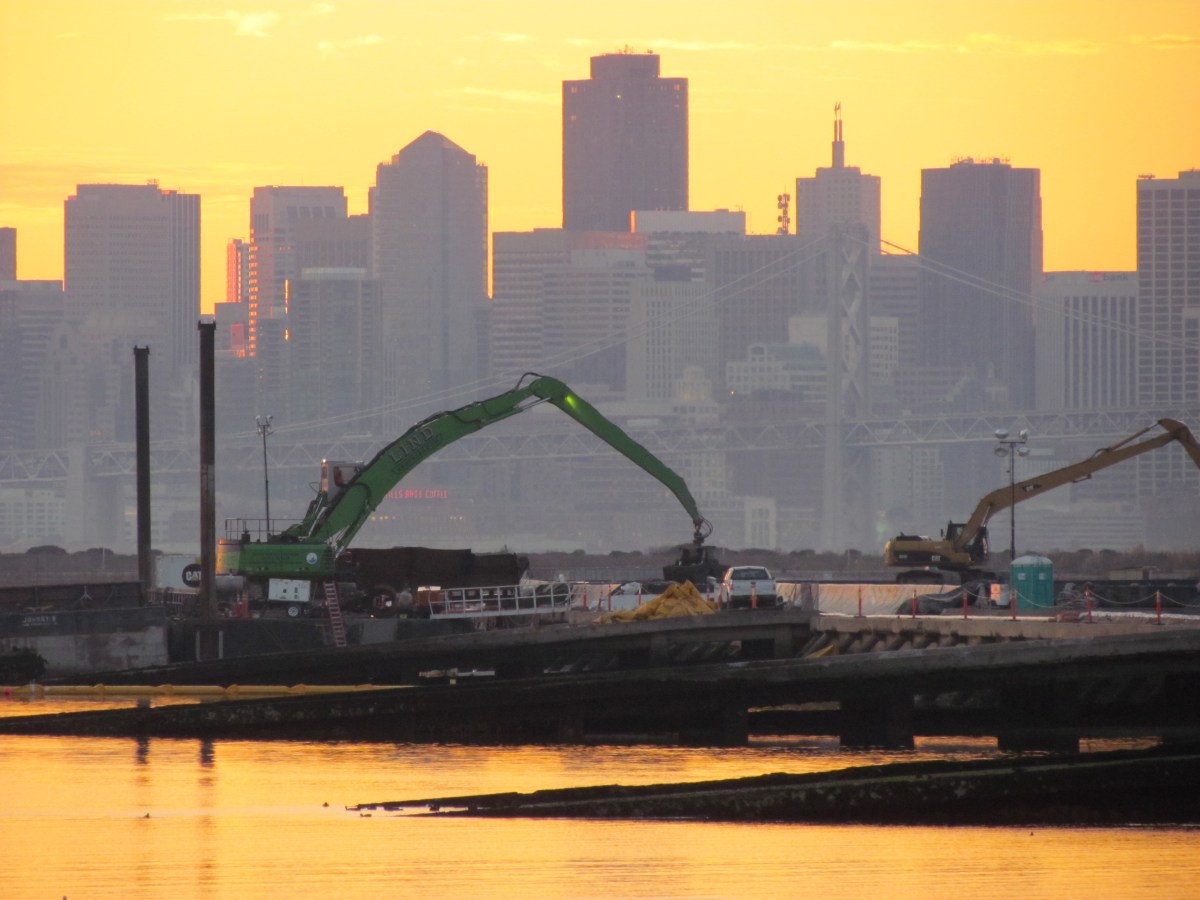
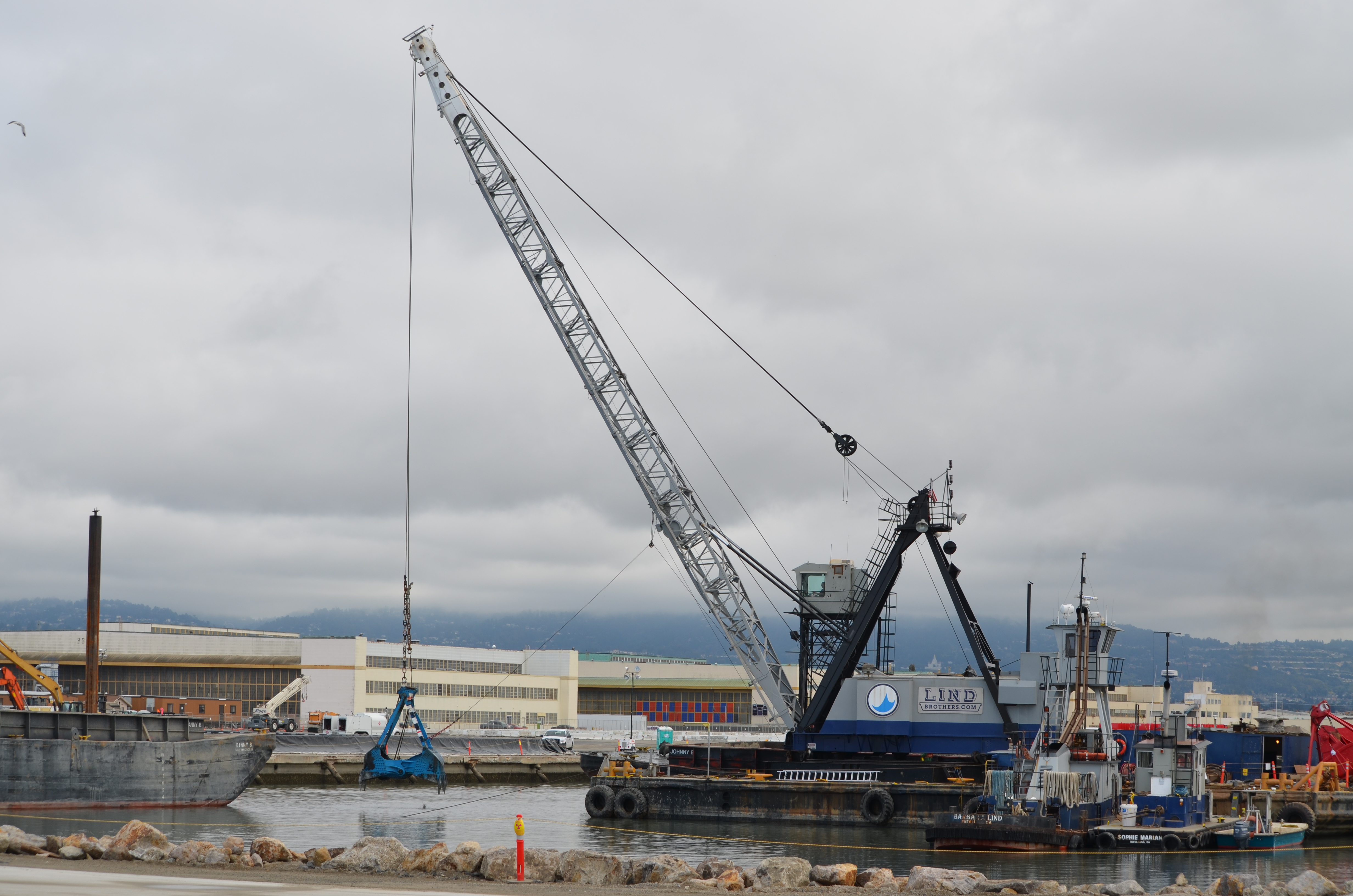
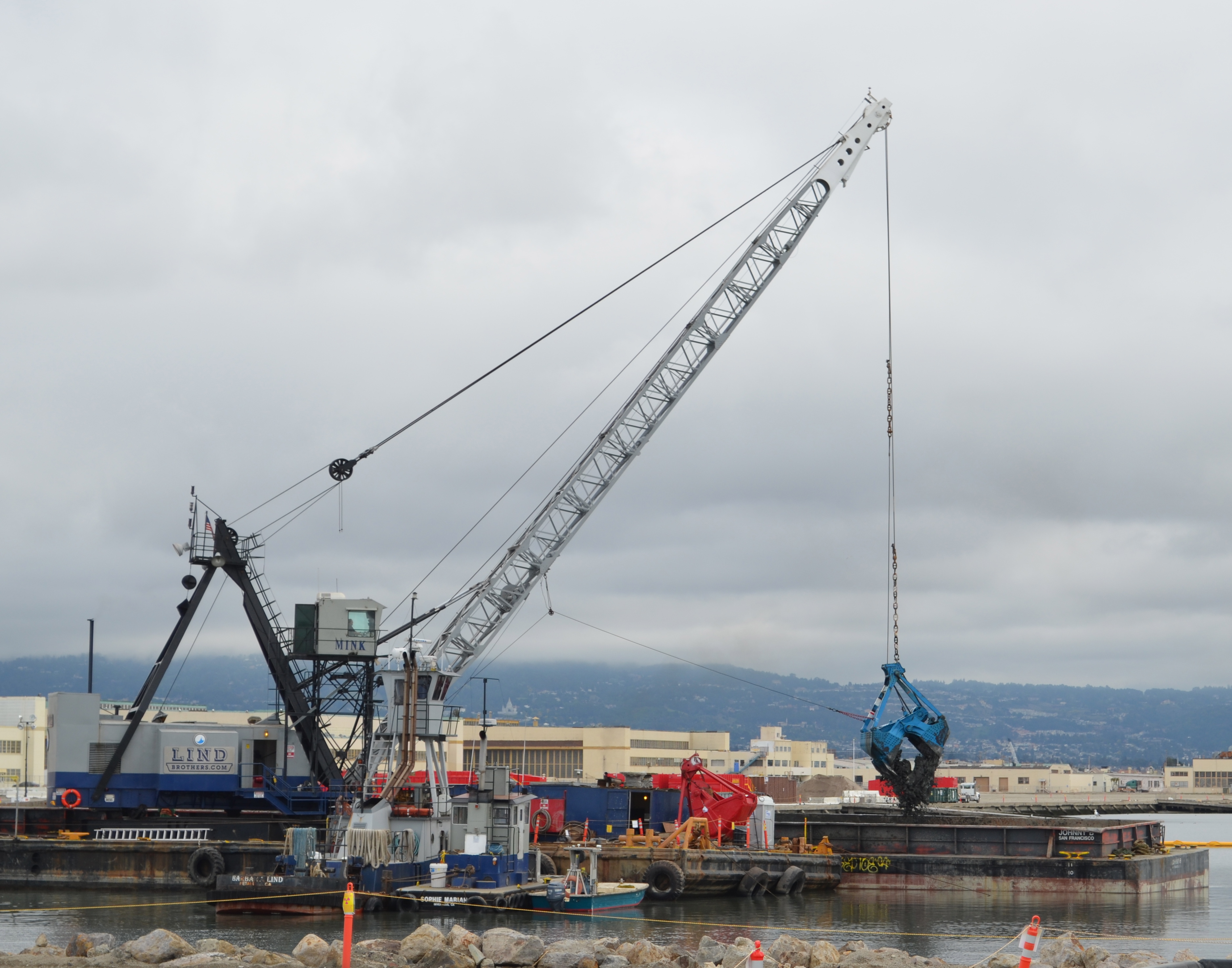
Cleanup activity at Alameda Point in 2012 started where it left off in 2011 — at the Seaplane Lagoon. The northwest corner of the lagoon was the site of the second and final phase of lagoon dredging, which targeted sediment that had been contaminated near storm drain outfalls. With dredging completed by spring, the sight of Americas Cup racing yachts arriving at their temporary dock in the lagoon seemed to be a harbinger of the approaching end of the Superfund era at the Point.
Dredging northwest corner of Seaplane Lagoon
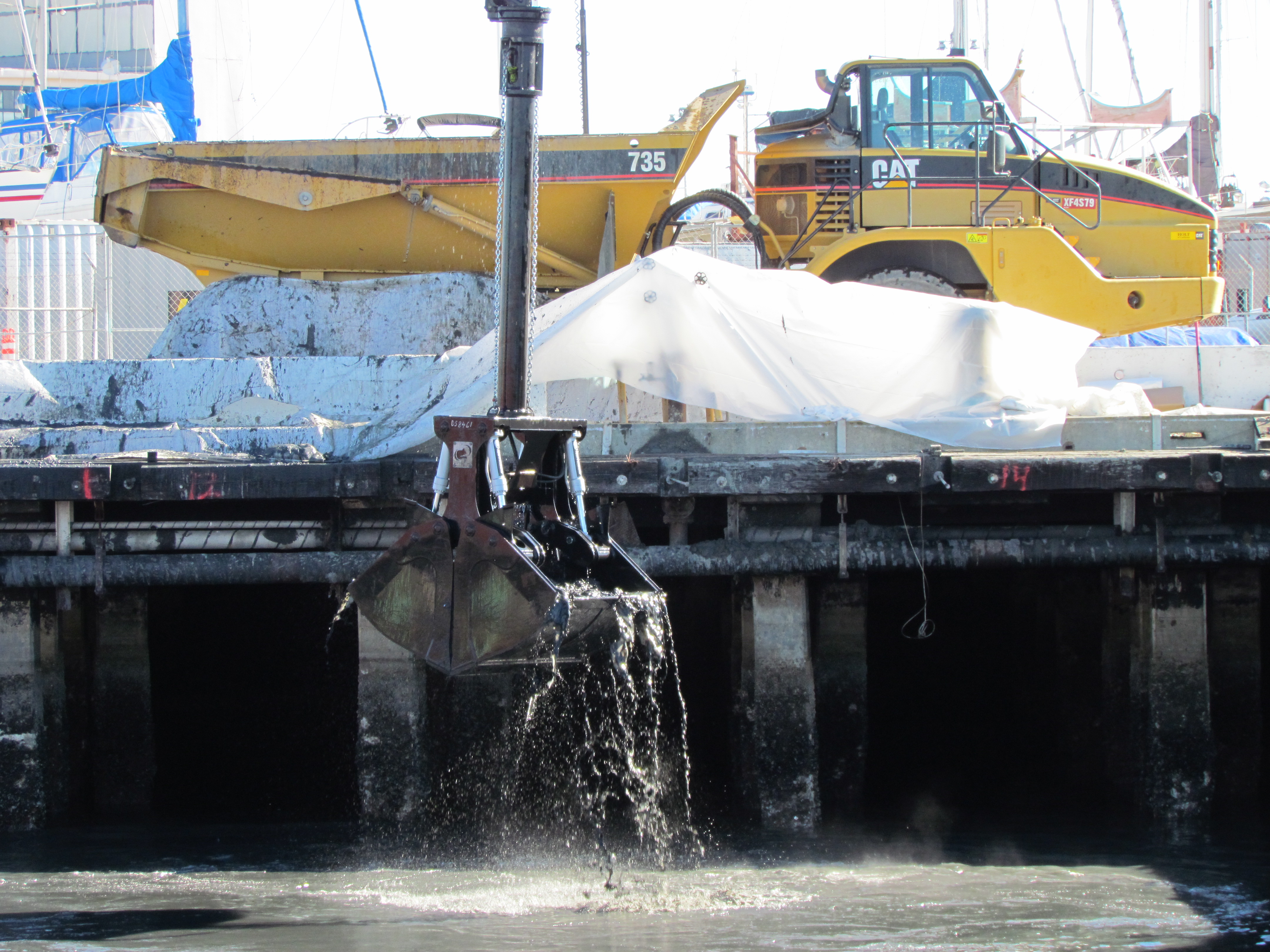
Just outside the Seaplane Lagoon, another dredging operation was started and finished at one of the maritime ship piers where the Cape Orlando had been docked. By November, the massive ship was back at dockside, hull lights glowing at night.
Dredging Pier 1 wharf area
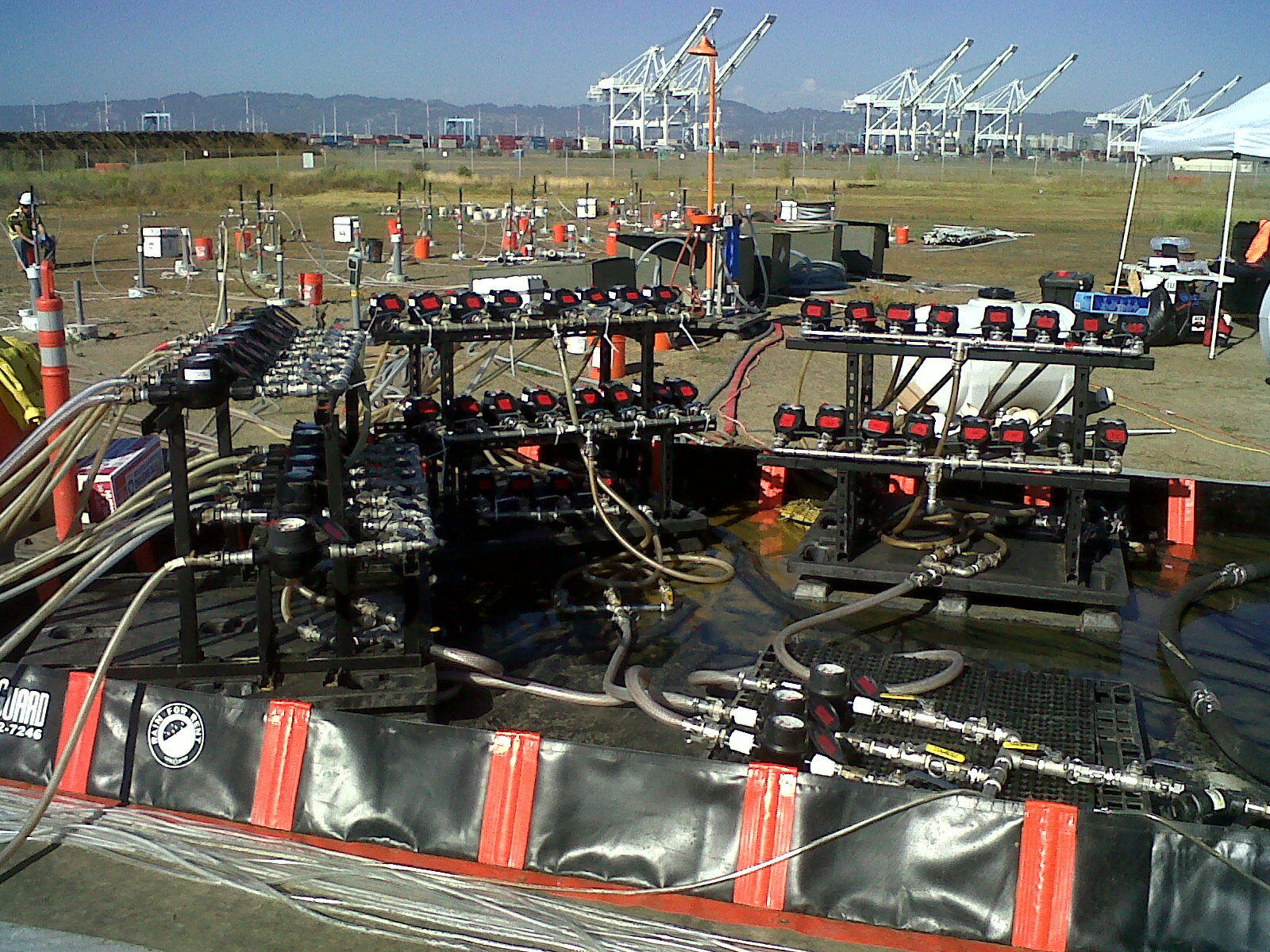
In one of the most complicated and contaminated areas to the east of the Seaplane Lagoon, cleanup work began at an area 30 feet below ground where a cleaning solvent used on aircraft parts had seeped into the groundwater. After driving a series of metal bars down to the contaminated area, the soil, groundwater, and solvent were heated to just below simmering by means of electricity. This turned the water and solvent into vapor, which was then vacuumed out into a filtering system through a series of pipes.
Heat treatment and vapor extraction – OU-2B
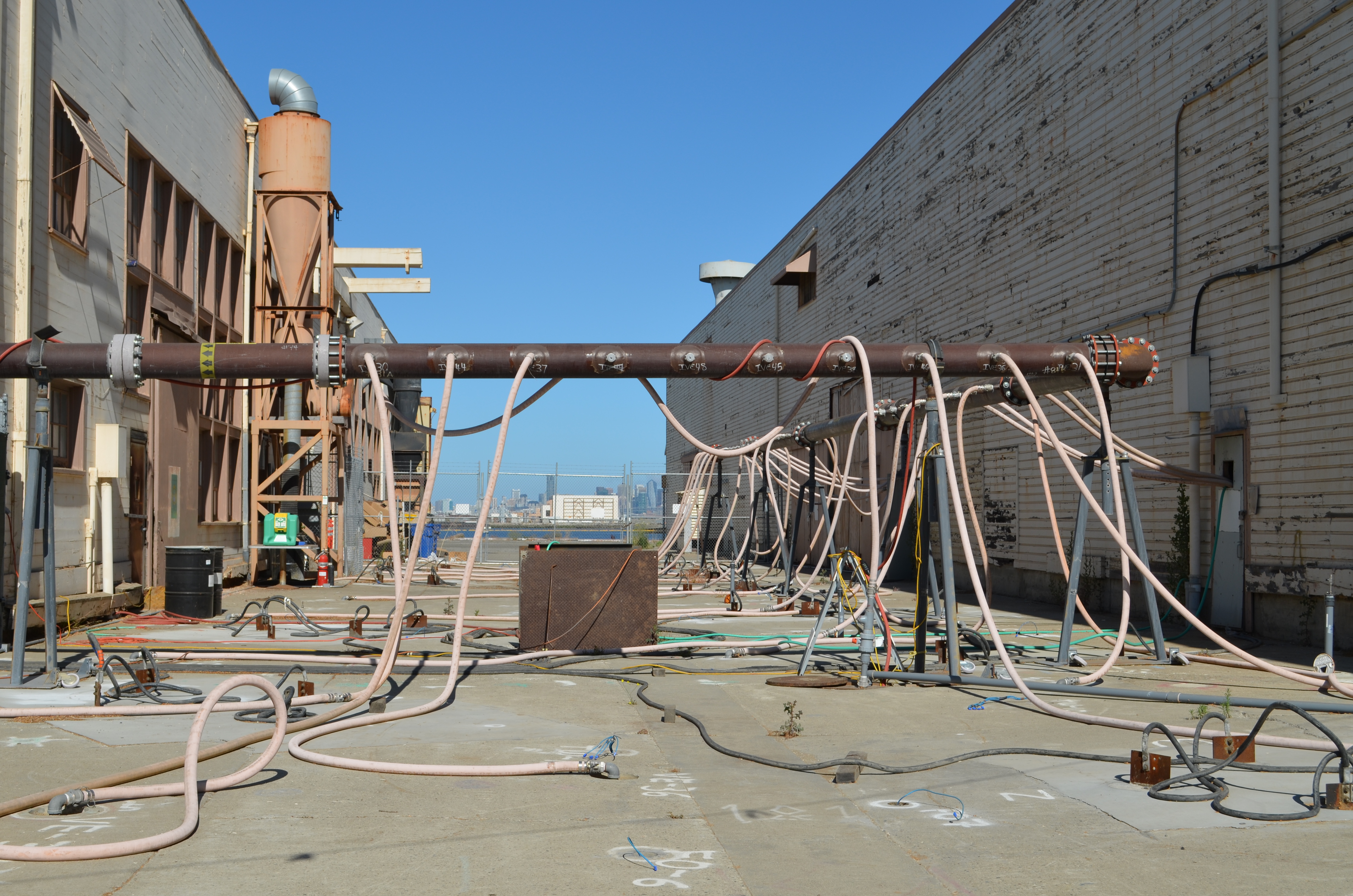
At the far end of Alameda Point on the northwest landfill, the Navy relied on chemicals, rather than heat, to do the cleanup on a small portion of the site. Dozens of hoses snaking around the site to the injection wells delivered an oxidizing mixture of neutralizing chemicals into a pocket of solvents. Without this remediation, the solvents had the potential to reach the Bay.
Injecting oxidizing chemical into solvent plume – Site 1. Navy photo.
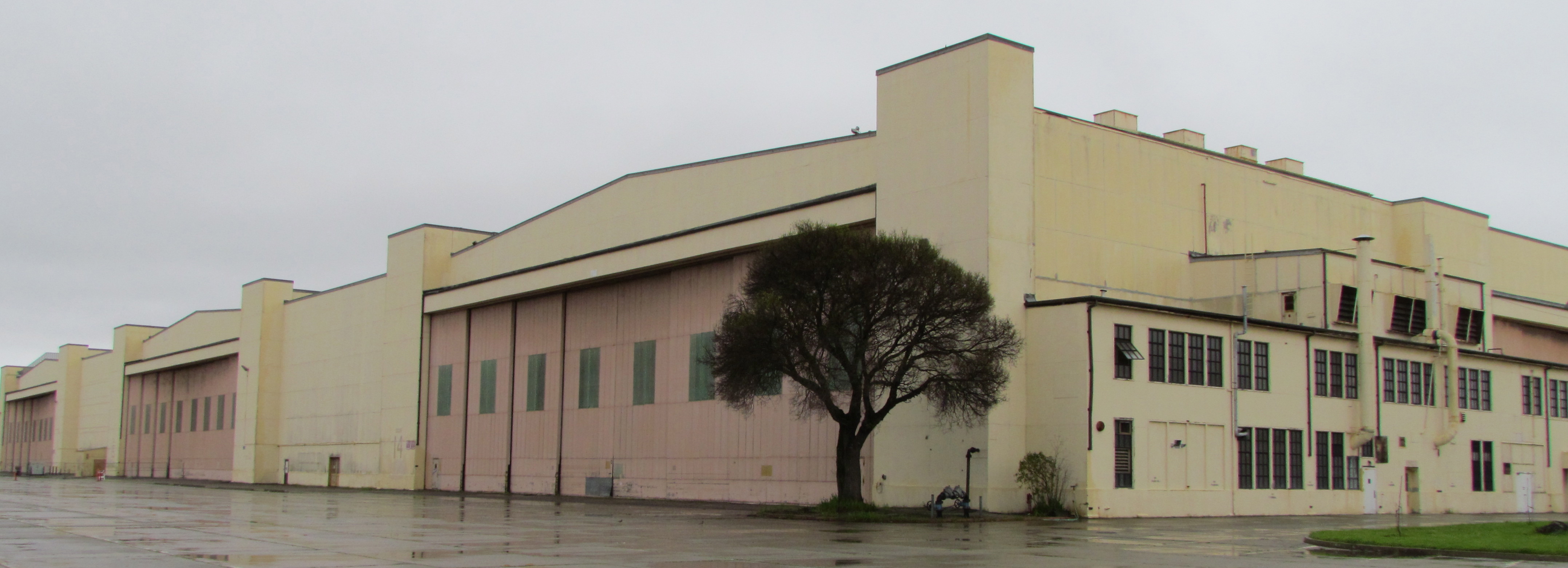
The year ends with a cloud of controversy over the Navy’s plan for leaving drain pipes under the old Naval Air Rework Facility — Building 5. Letters from both the Restoration Advisory Board (RAB) and the city call for the complete removal of any lines containing radium paint waste. The Navy ruled out a more costly alternative that would remove all the contaminated pipes. The city challenged this decision, in part, on the ground that the Navy’s cost estimates for a thorough job are inflated and have asked that they reconsider.
Building 5
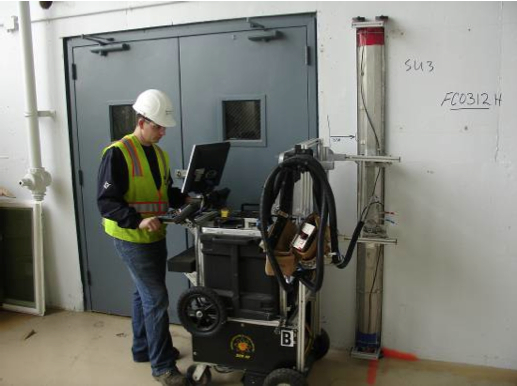
Also in Building 5, plans to remove above-ground radium contamination from floors, walls, and ceilings in the mezzanine area will get underway within weeks. This area is where aircraft dials and markers were painted with radium paint that provided visibility in the dark. A final scanning investigation to detect radium, using sophisticated equipment employed in the decommissioning of nuclear power plants, found dozens of pie-sized irregular areas where radium dust had embedded in the surfaces. This project will conclude two decades of scanning and radium removal efforts in Building 5 and other buildings. Around $50 million has already been spent replacing drain lines leading to the lagoon under the surrounding tarmac, and dredging the lagoon, due to the disposal of radium paint and other chemicals down storm drains.
Scanning a wall for radiological contamination. Navy photo.
2013
2013 will see the long-awaited final soil cover installed on the waste disposal site called Site 2 on the southwest corner of the wildlife refuge. It will be the largest engineering project since the runways were expanded in the 1950s, with over 200,000 cubic yards of clean soil being barged in from Decker Island in the Sacramento River. It will be seeded with California native flowering grasses selected by the RAB. This is the controversial dump that led the US Fish & Wildlife Service to balk at accepting the land for a wildlife refuge ten years ago. Since then, this dump has seen numerous reviews and a new plan that the US Environmental Protection Agency, regional Water Board, and state Department of Toxic Substances Control will be signing off on shortly.
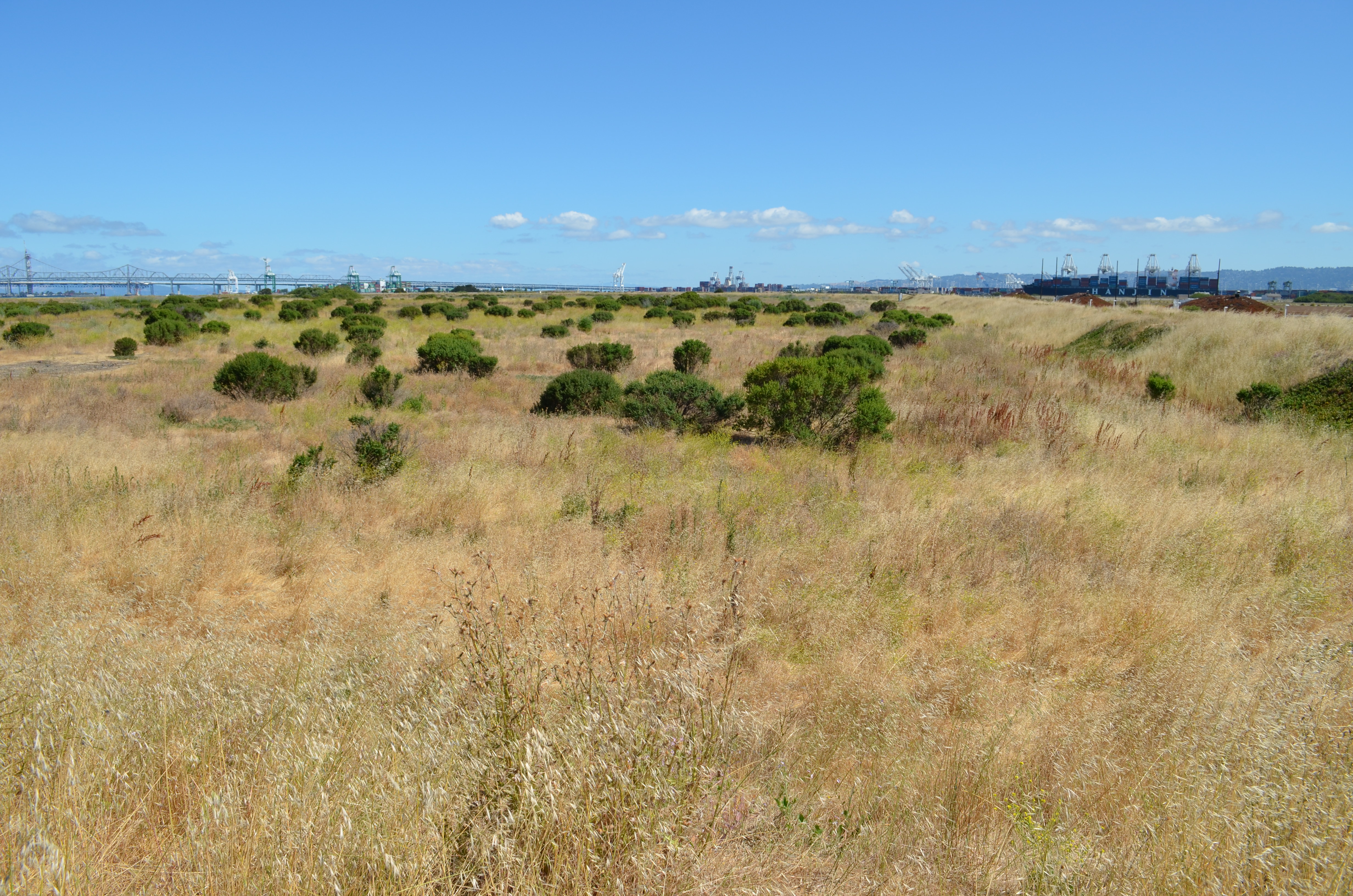
Site 2 underground dump on southwest corner of Alameda Point.
2013 will end with commencement of a similar soil covering operation on the nearby landfill on the northwest corner of Alameda Point called Site 1. Both landfill areas will be safe for open space recreational activities when completed, but will be limited to hiking trails rather than mowed playing fields in order to maintain soil-stabilizing vegetation.
Northwest corner of Alameda Point where soil cover will be installed.
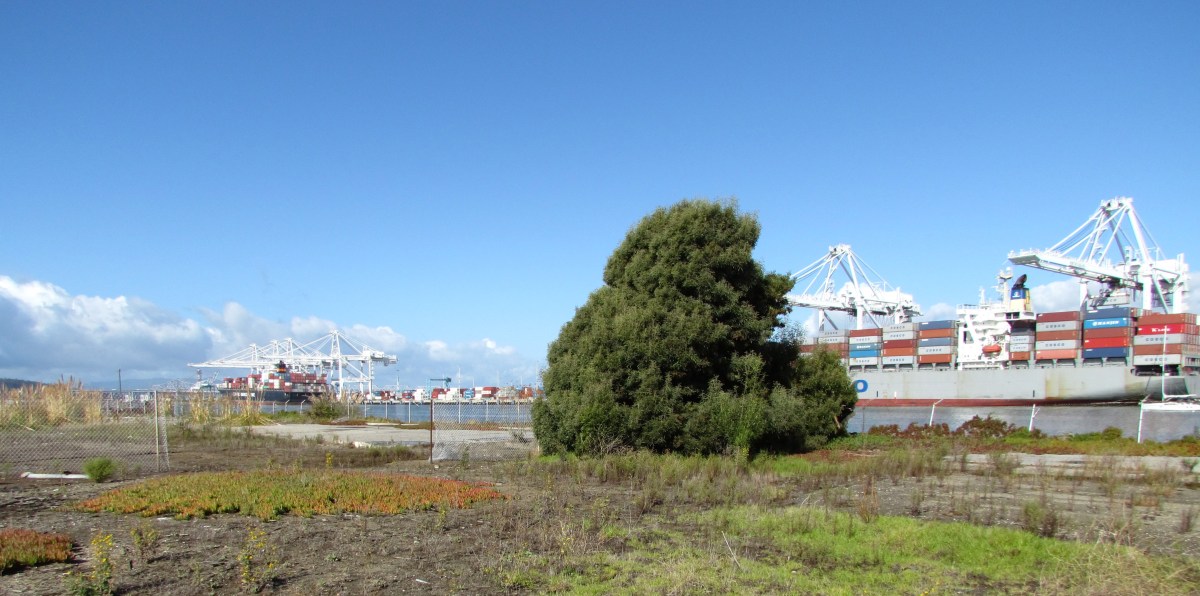
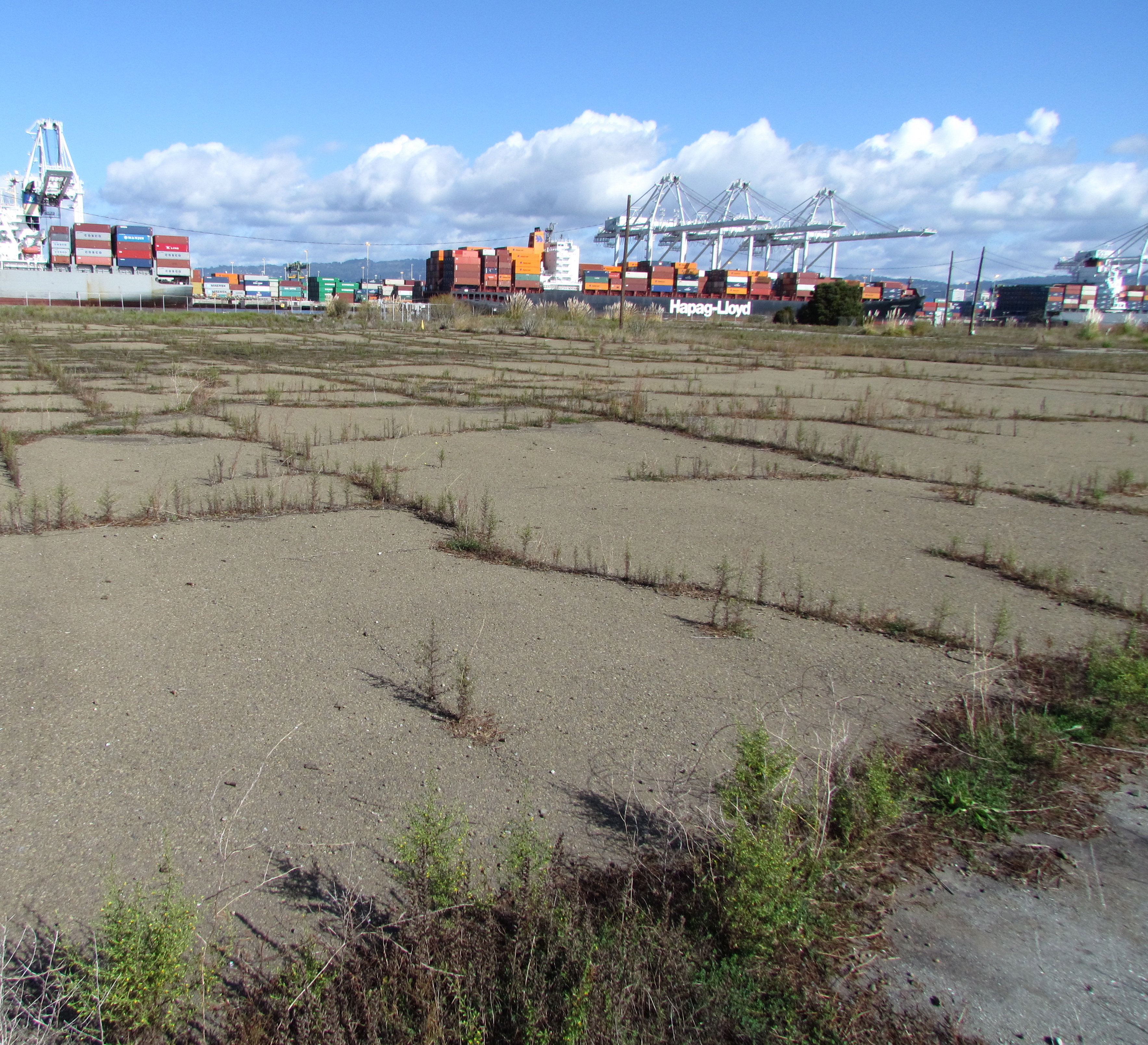
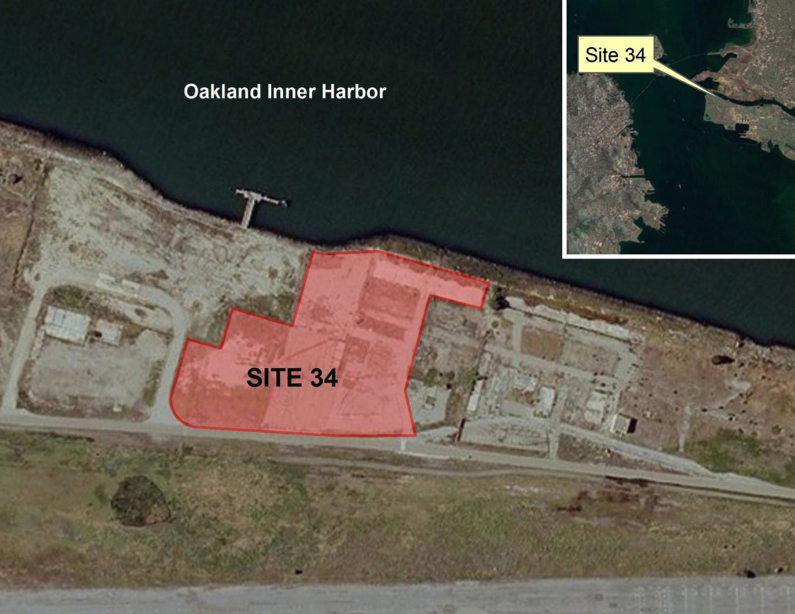
The 4.18-acre cleanup Site 34 in the old runway area next to the Oakland estuary looks barren from a distance. But up close there are concrete slabs and pavement, reminders of its bygone days as a bustling workshop area.
This area was once part of the division known as the Naval Air Rework Facility (NARF). Everything from sandblasting and painting, to metal working, woodworking, and scaffold maintenance went on out there. More than 40 years of activity left soil around buildings contaminated with lead, arsenic, pesticides, PCBs, and aircraft and diesel fuel. Above ground fuel storage tanks and electrical transformers contributed to the contamination.
The Navy will clean up the soil in this area next year. Their draft work plan, which will be released on July 31, was discussed during a Navy presentation at the July 2012 Restoration Advisory Board (RAB) meeting.
Site 34 aerial view. Old fuel dock to left of site. Runway at bottom is part of area where antiques faire is held. Navy photo/graphic.
Based on more than 200 soil samples taken in prior years and this year, the contractor created the draft work plan. Separate groundwater samples indicate contamination from the solvent trichloroethane. No remedial action is being taken on the trichloroethane, however, because 1) vapor intrusion into residences is not a factor, as this land will become Public Trust Land on which housing is not permitted; and 2) water monitoring has shown that the chemical is not migrating toward the estuary.
The northern edge of this site is part of the early westward land extension of Alameda, which allowed trains carrying freight and passengers to get out to a point where the water was deep enough for ferry connections. More fill was later added to the area. According to the Navy’s Remedial Investigation report, “In the 1920s, most of IR Site 34 was filled with estuary dredging material during construction of the Posey Tube.”
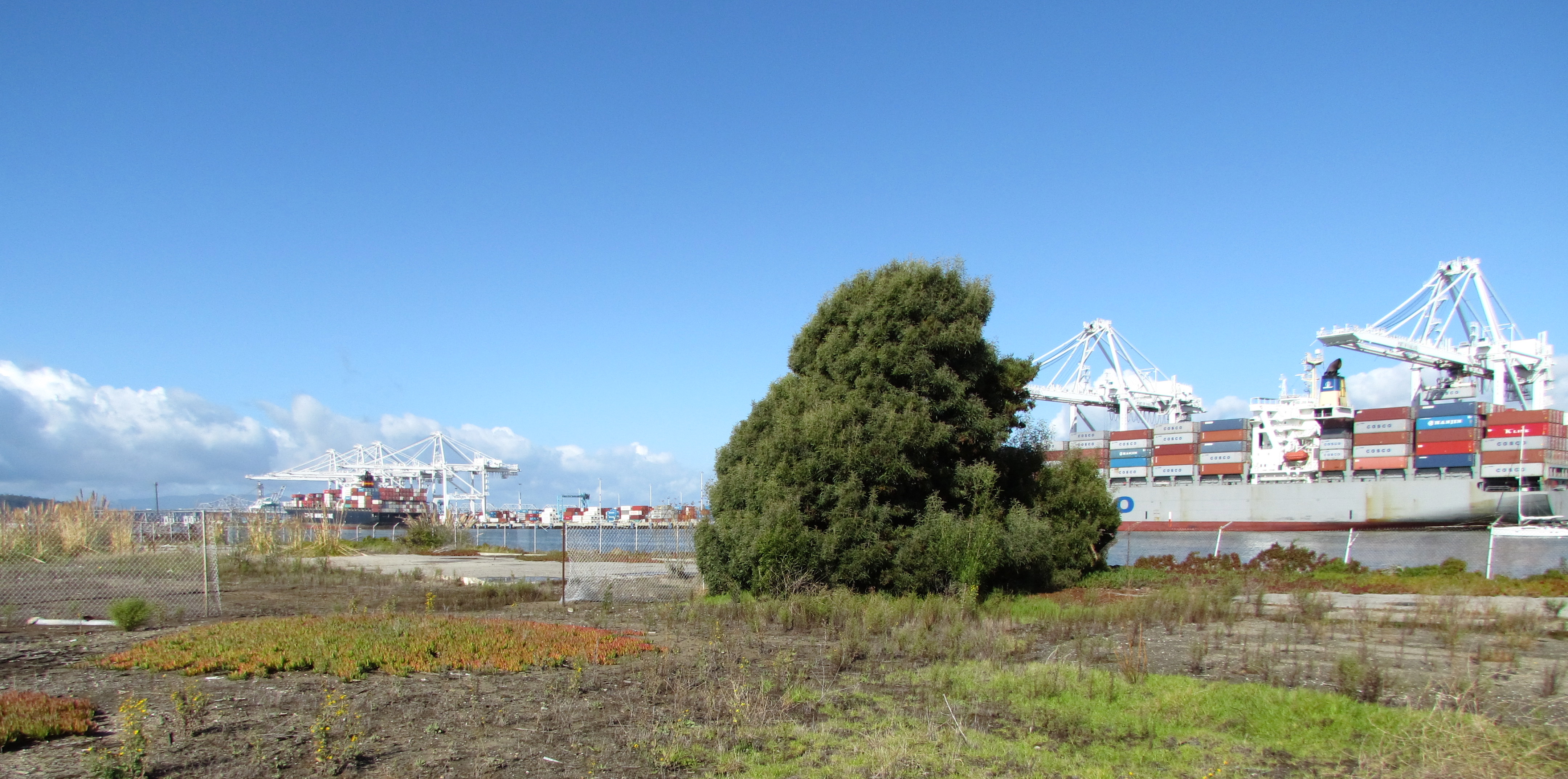
Site 34 starts at concrete slab on far side of tree. Port of Oakland on right. In late 1800s and early 1900s, trains travelled on tracks along the estuary where tree and slab are.
By the time the closure of the Navy base was announced in 1993, this workshop area had 12 buildings, 7 aboveground storage tanks, 2 “generator accumulation points” (waste storage), 15 transformers, and over 7,000 feet of aviation fuel line. Between 1996 and 2000 everything except the concrete pads and pavement was removed.
Building demolitions ended shortly after Alameda Point became a Superfund site in July 1999. The Superfund program, officially called the Comprehensive Environmental Response, Compensation, and Liability Act (CERCLA), does not allow for land improvements such as building demolition.
Most of the soil cleanup locations are adjacent to the exterior edges of old building slabs. Much of the lead in the soil came from sandblasting lead-based paint. Other contamination came from lubricants used for metals fabrications, and the use of oils and solvents for woodwork and metal work. In addition to removing soil next to the slabs, the contractor will dig under the slabs at the hot spots to take what is called a sidewall sample to confirm that all contaminated soil is removed. They have to keep digging as long as contamination is found. Clean soil will be brought in to the areas where soil is removed.
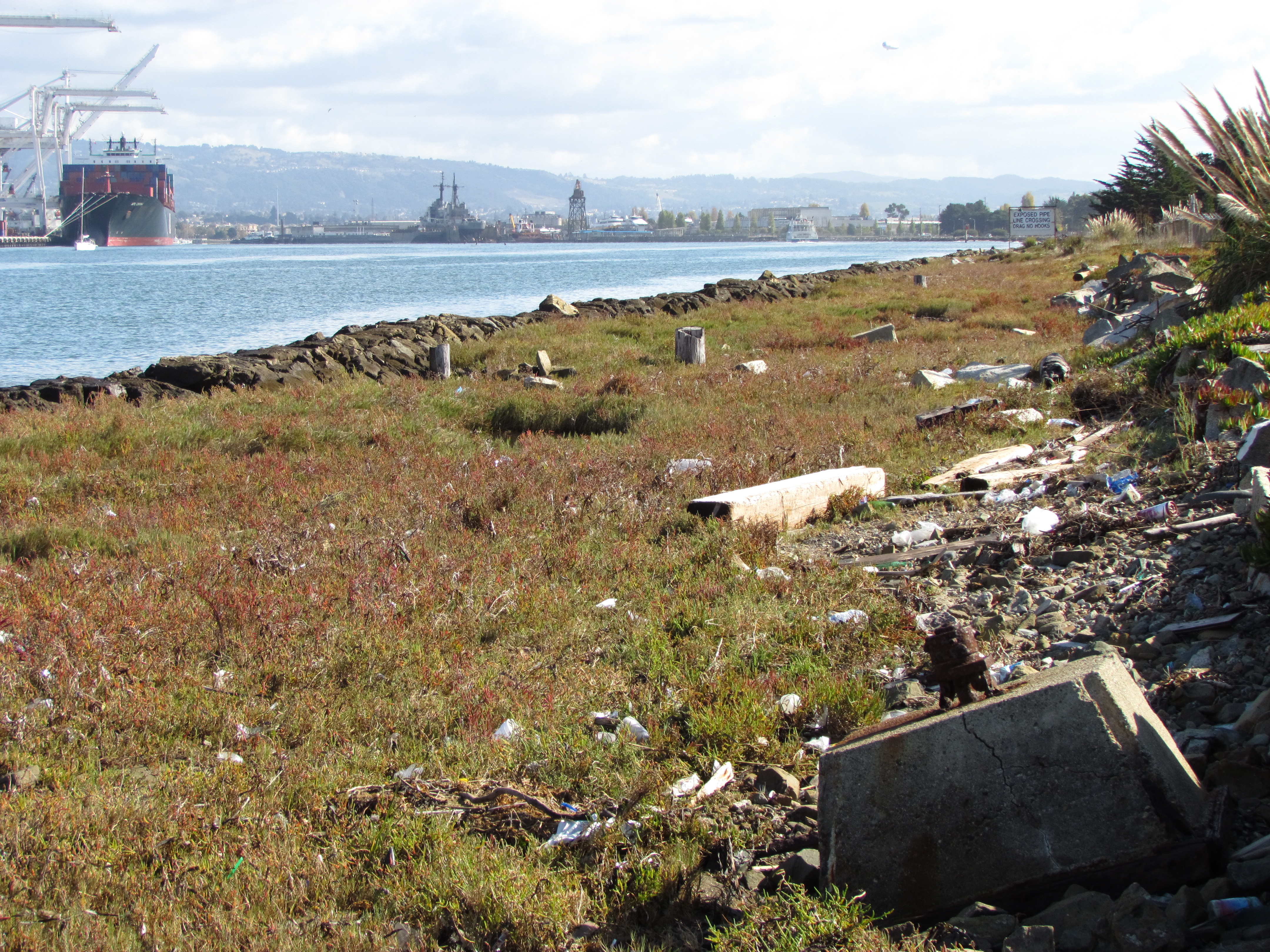
A strip of coastal marshland running along the Oakland Estuary on the north end of the site has no contamination. Its habitat quality, however, is marred by discarded concrete, wood, and trash. It will be up to the city to initiate wetlands restoration efforts there.
Coastal marsh on Oakland estuary at Alameda Point Site 34. Port of Oakland on left. Old runway area on right. Looking east toward Alameda Main Ferry Terminal.
A 60-day public comment period on the work plan begins when it’s released on July 31. The work plan will be finalized in January 2013. Fieldwork is anticipated to take place January through April 2013.
Site 34, located in the Northwest Territories, is expected to be given to the City of Alameda in 2014.
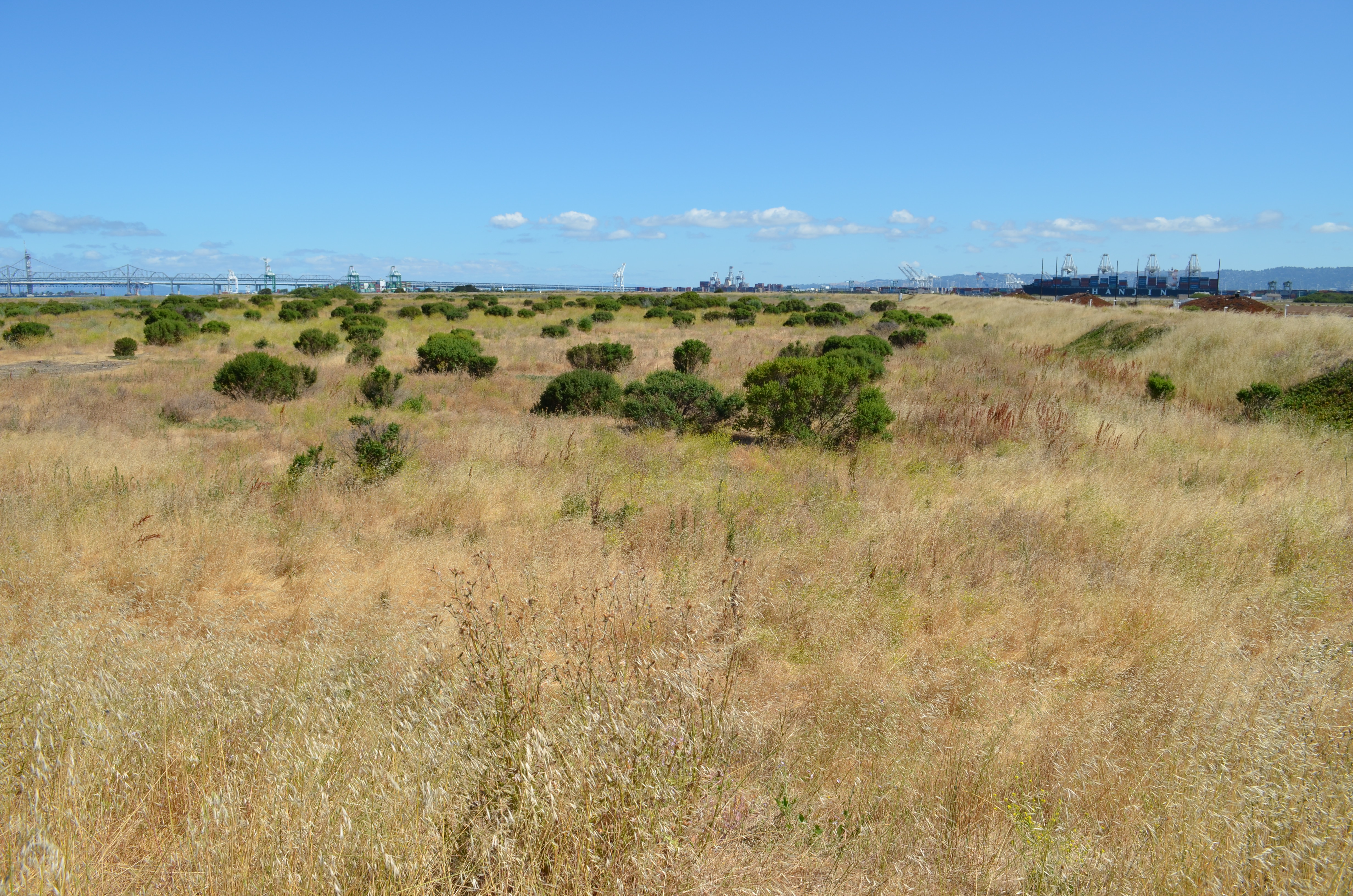
Looking north across Site 2 with Port of Oakland and Bay Bridge in background. Area to the left of landfill embankment will be covered with clean soil. Unlined industrial waste disposal pits lie underground.
The environmental remediation work plan for the Site 2 waste disposal area was finally introduced for public comment in early May after a decade on the Superfund list. During the 60-day public comment period that ended July 9, numerous agencies, groups, and individuals offered their critique of the Navy’s plans to install a suitable soil cover over the substandard soil cover that currently overlays the waste. Digging up the waste and hauling it away was ruled out in 2010 because of the $900 million price tag. Exclusionary security fencing, soil gas vents, wetlands, and geological/seismic stability due to close proximity to the Bay are issues receiving attention.
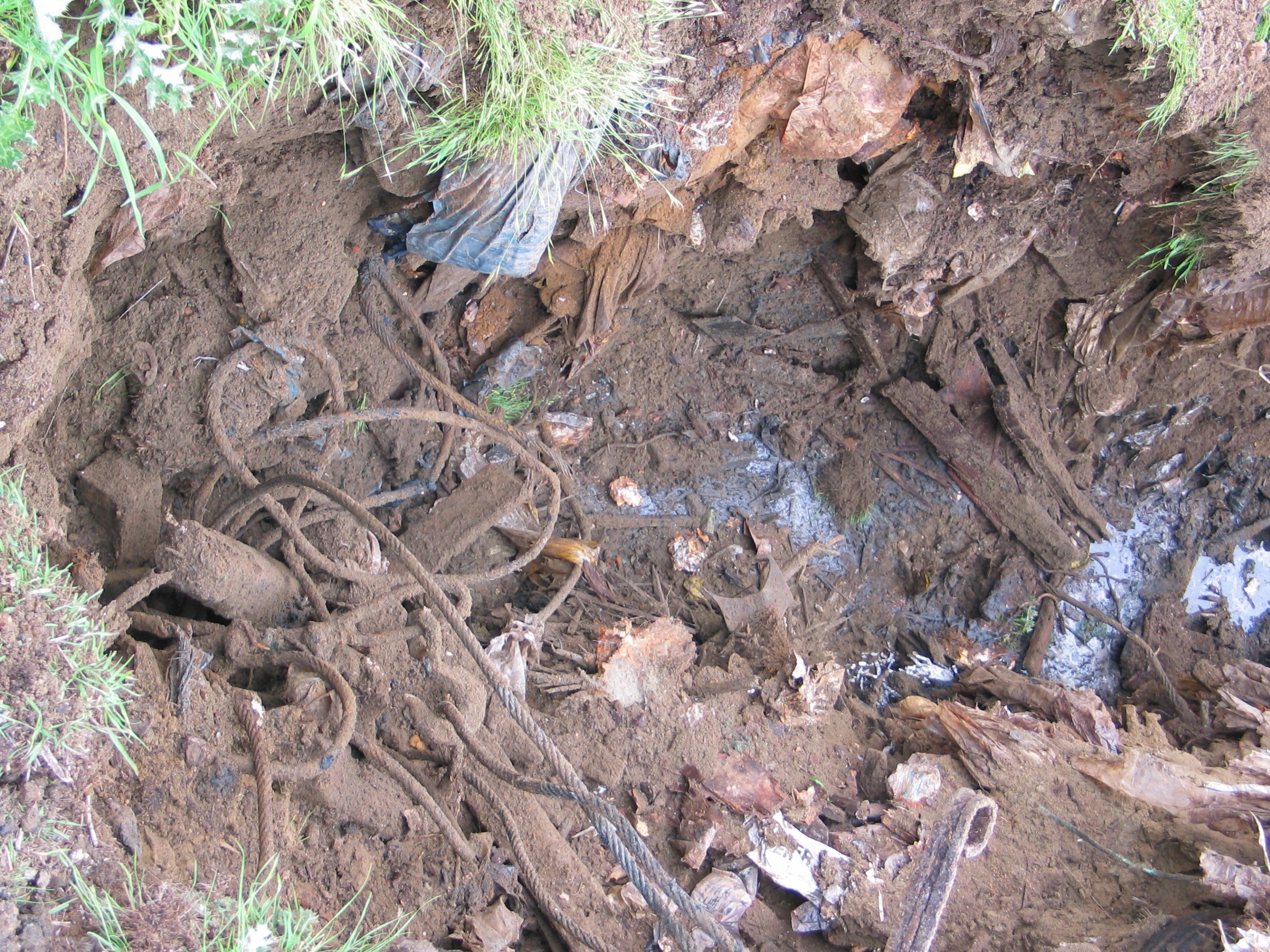
Taking samples of Site 2 landfill contents in 2005. Navy contractor photo.
The Navy’s industrial waste dump on Alameda Point’s southwestern corner has been the subject of environmental concern since the 1980s when the Water Board ordered the dump closed. The mid-1980s were a little more than a decade after passage of the federal Clean Water Act and the emerging environmental awareness and new regulations requiring underground waste sites to be lined. The Alameda Point dump is composed of various unlined cells, or pits, where all manner of aircraft parts and maintenance chemicals and debris were dumped, along with waste material from the luminescent dial and marker painting that used radium-226.
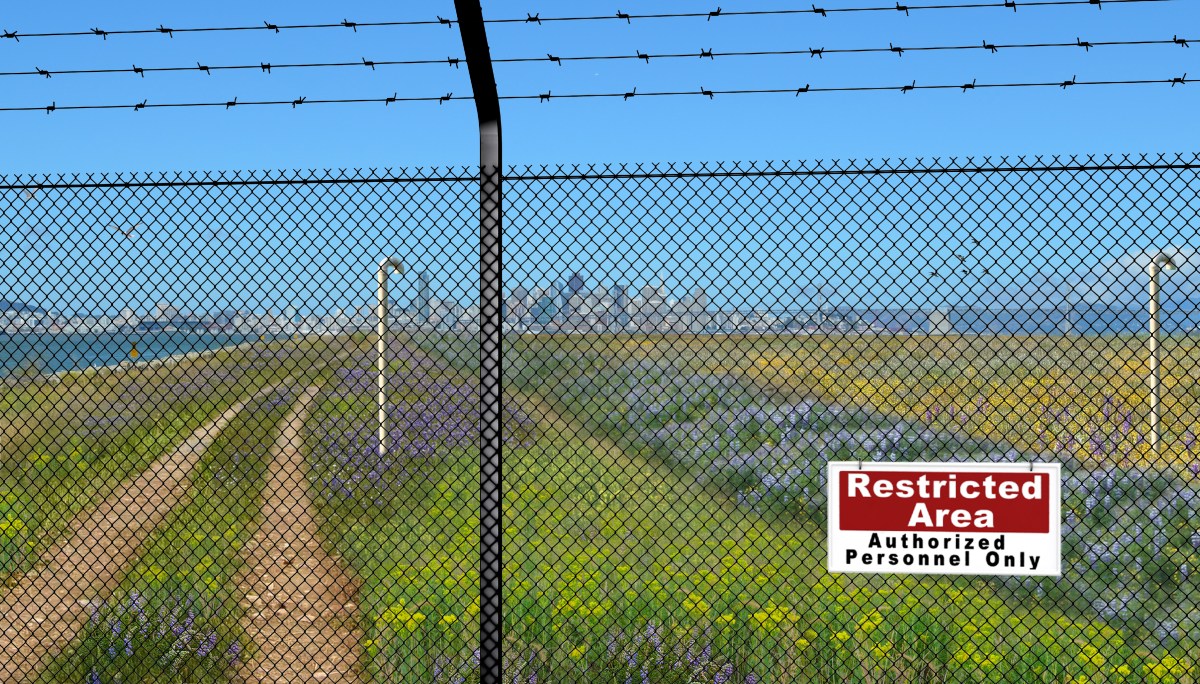
Exclusionary fencing
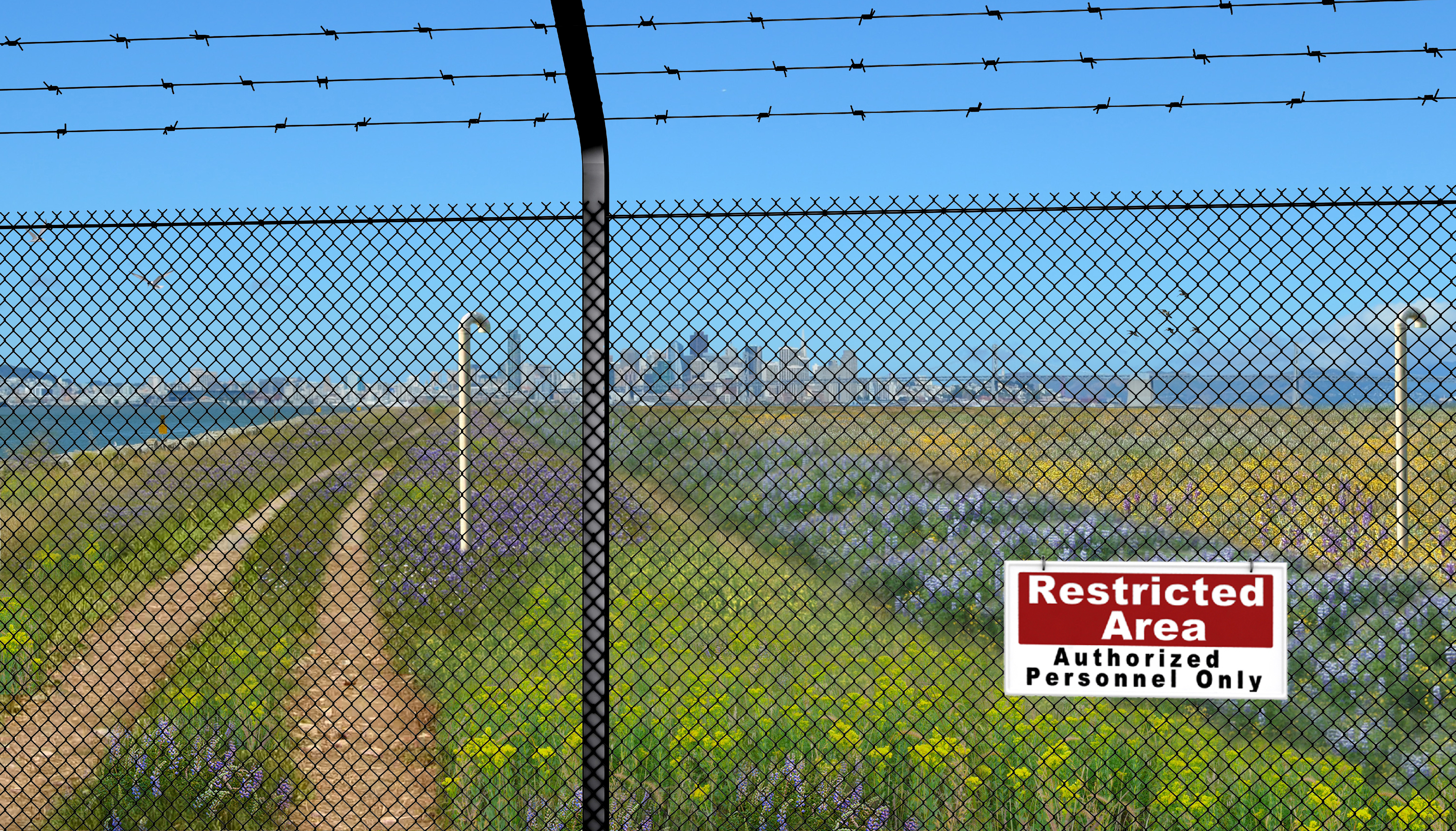
The Navy’s work plan includes a security fence and tall PVC pipes to vent methane gas. Golden Gate University’s Center on Urban Environmental Law (CUEL) has been following open space planning at Alameda Point and offered comments on the proposed security fence and the 10-foot tall soil gas vents. With collaboration from UCLA’s Landscape Architecture Department they created two composite drawings illustrating the stigmatizing effect that a fence would have on this wild open space with the Bay and San Francisco skyline in the background. The Navy has proposed the fence, even though the newly seeded clean soil cap will be safe to walk on. Protection of the soil, gas vents, and monitoring equipment was the reason given for the fence.
Composite drawing illustrating fence and 10-foot tall soil gas vents at Site 2 when Navy completes work. Image simulations produced for Center on Urban Environmental Law by Janet Wolsborn and Natural Resource Planning and Design.Image simulation of Site 2 without security fence. Showing two-foot gas vents, trail, and soil cover and embankment seeded with native grasses and wildflowers. Produced for Center on Urban Environmental Law by Janet Wolsborn and Natural Resource Planning and Design.
The law group also secured the help of Pangea Environmental Services to investigate the necessity of the security fence and obtrusive gas vents. Pangea interviewed city employees and other personnel responsible for oversight of four closed Bay Area landfills that have been converted to open space and recreational uses: Shoreline Park in the City of Mountain View; Sunnyvale Landfill in Sunnyvale; Oyster Point Park in San Leandro; and Cesar Chavez Park in Berkeley. Only the Sunnyvale site has a fence, but the gates are open during the day and allow free access. “The interviewees all reported that they could not recall encountering any vandalism or other damage associated with public use to either monitoring wells/vapor probes, landfill cover materials or landfill gas venting systems during the periods (generally exceeding a decade) for which they had roles in managing the landfills.”
Pangea goes on to say, “[T]he proposed post-construction installation of permanent exclusionary fencing surrounding Site 2 is considered to contradict the ‘open space and recreational use’ land use restriction proposed in the RAWP (Remedial Action Work Plan), since a closed fenced area cannot be considered open space or be used for recreation. [T]here appears to be no technical basis for installation of a permanent exclusionary fence restricting public access to Site 2.”
The City of Alameda pointed to the Record of Decision for Site 2 that specifies certain land use restrictions such as “land disturbing activities,” which would prohibit digging, disturbing monitoring equipment, or building construction. Referring to the proposed fence, the city said that these restrictions “explicitly do not prohibit recreational uses.”
Site 2 (outlined in yellow on map above), comprising 110 acres, lies within the larger 549-acre parcel commonly known as the wildlife refuge in the runway area of the former Naval Air Station. The refuge is home to a nesting site for the endangered California Least Tern, which lies a few hundred yards east of Site 2. The US Fish & Wildlife Service currently manages the refuge and the tern colony. Continuing management of the refuge to protect the terns and their nesting area will mean that a fence and gates will always be necessary around the greater refuge boundaries to limit the introduction of mammals such as raccoons, opossums, skunks, and feral cats that could pose a threat to the terns during nesting season. The perimeter fence will also serve to control human access. Thus, a secondary fence within the refuge would be redundant in controlling access.
Both the US Environmental Protection Agency (EPA) and the Regional Water Quality Control Board (Water Board) called on the Navy to look for alternatives to the fence. The Water Board stated, “Although protection of human health and the environment is our primary goal, we request that alternatives be evaluated for the fence line and methane gas venting so that public concerns and environmental health might more naturally coexist with the other beneficial uses that are planned for the area.”
Landfill gas venting
PVC piping will be installed to vent methane gas created by decay of organic matter. Thirty of the proposed vents will be 10 feet high. However, since the predominant waste is industrial and not organic, the amount of methane produced is minimal. And after more than 25 years, methane production would be expected to be near the end of its life. The Navy’s project manager recently said that the current methane out-gassing is so low that it wouldn’t keep a flame lit if there was a flaring system, calling into question the number of vents required and their height.
The Water Board questioned the gas vents saying, “[I]t is unclear why the methane vents need to be so high.” The EPA, Pangea, and the City of Alameda echoed this concern suggesting that the methane gas venting system could be reengineered into a lower profile system.
The Bay Conservation and Development Commission (BCDC) had similar concerns about shoreline access and the visual experience of future trail users. They also called for more specifics on the overall design, including how the shoreline is suited to withstand sea level rise impacts, and specifics about drainage and other impacts on the wetlands from the new soil cover.
Wetlands connection to Bay
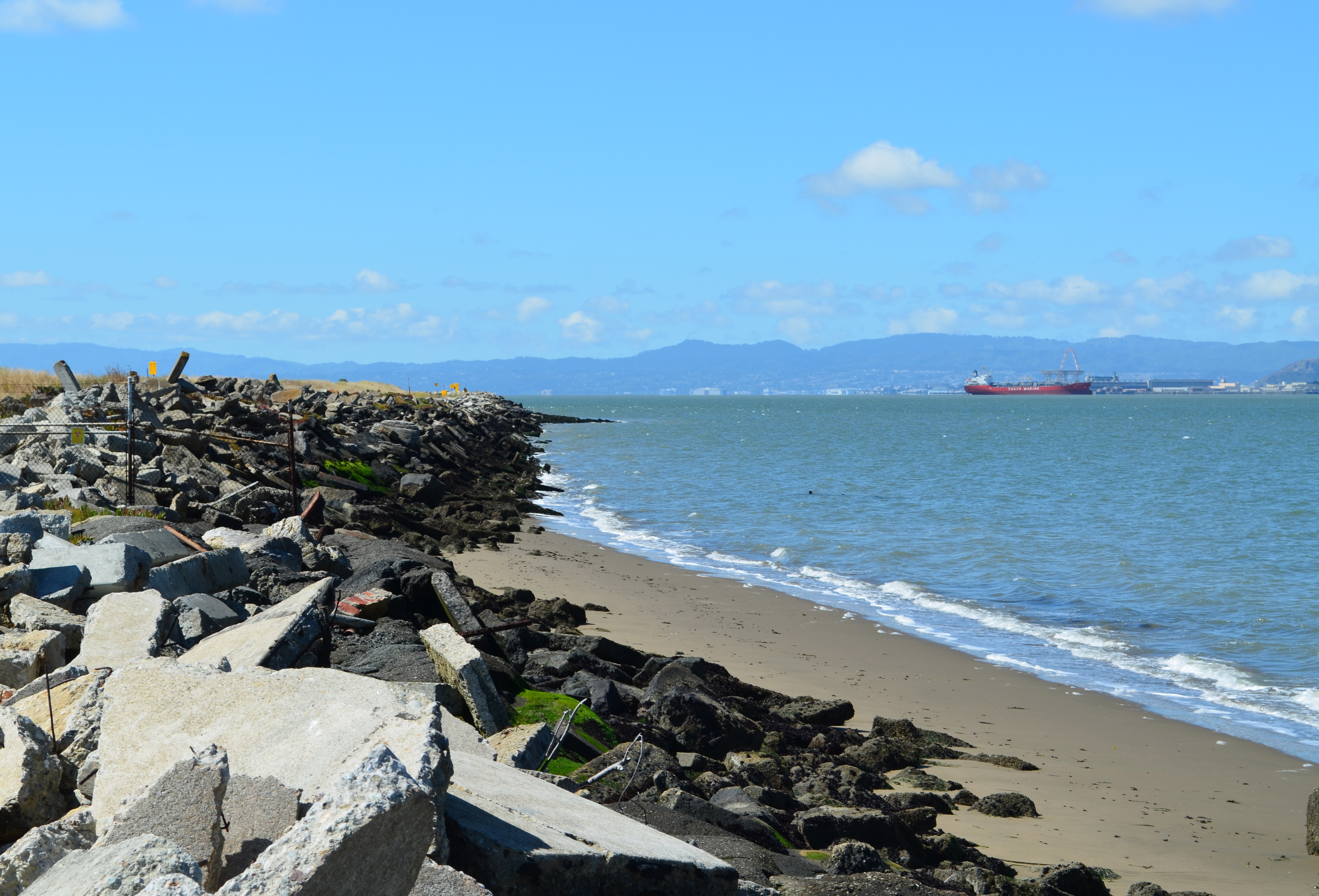
Western shore of Alameda Point looking south with San Francisco Bay on right. Site 2 begins where beach ends. Culvert connecting wetlands is in rip rap shore levee further south.
When the Navy extended the size of the base over 50 years ago to create the landfill site, they installed an underground 36” metal culvert that connects the North Pond on Site 2 to San Francisco Bay. Because the aging culvert does not enter the landfill portion of the site, the Navy is not addressing the soundness of the culvert, even though they are addressing wetlands issues at the site. The Navy’s presumed argument is that culvert improvements would be a “land improvement” that is outside the scope of environmental remediation requirements.
Both the Water Board and the EPA are arguing for the Navy to address the culvert issue. The Water Board stated, “We are very concerned about the age and integrity of the culvert that is the sole source of Bay water to the tidal wetlands. It is our understanding that the aged culvert is in very poor shape and may collapse any time. The value of this culvert became painfully apparent a year ago when some driftwood or other material clogged it up and impeded all tidal flow of brackish water to the wetland. In a matter of days the tidal wetland started drying up. Should that culvert collapse, the delays in rebuilding, from getting contracts to actual physical work, could be devastating and even fatal to the wetland flora and fauna.”
Partial view of Site 2 wetlands. Navy contractor photo.
The EPA said, “[T]here is no evaluation of the culvert to demonstrate that the culvert is appropriately sized or constructed to minimize the potential for future blockages, nor is there any provision for the periodic inspection and maintenance.” EPA went on to say, “Either the connection to the Bay needs to be reconstructed to reduce the potential for blockage or an obligation to periodically inspect the culvert and clear blockages needs to be included in the Operations and Maintenance plan. The details for the inspection and maintenance should be reviewed with BCDC as part of the Navy’s compliance with the substantive provisions of Bay Plan.”
Further addressing wetlands issues, the Water Board questioned, “Will there be an adequate number of wells effectively placed to monitor landfill leachate concentrations that might adversely affect the adjacent wetland species?”
Seismic stability
The hazardous waste pits on the south end of the site come within a few dozen yards of the Bay. The two longstanding concerns about proximity to the Bay have been chemical leaching into the water table, and failure of the seawall during an earthquake along the Hayward Fault. Well monitoring over the past 16 years shows that toxic chemical leaching is not a problem. However, the EPA is questioning the stability of the seawall and the earthen berm that surrounds the landfill containment area.
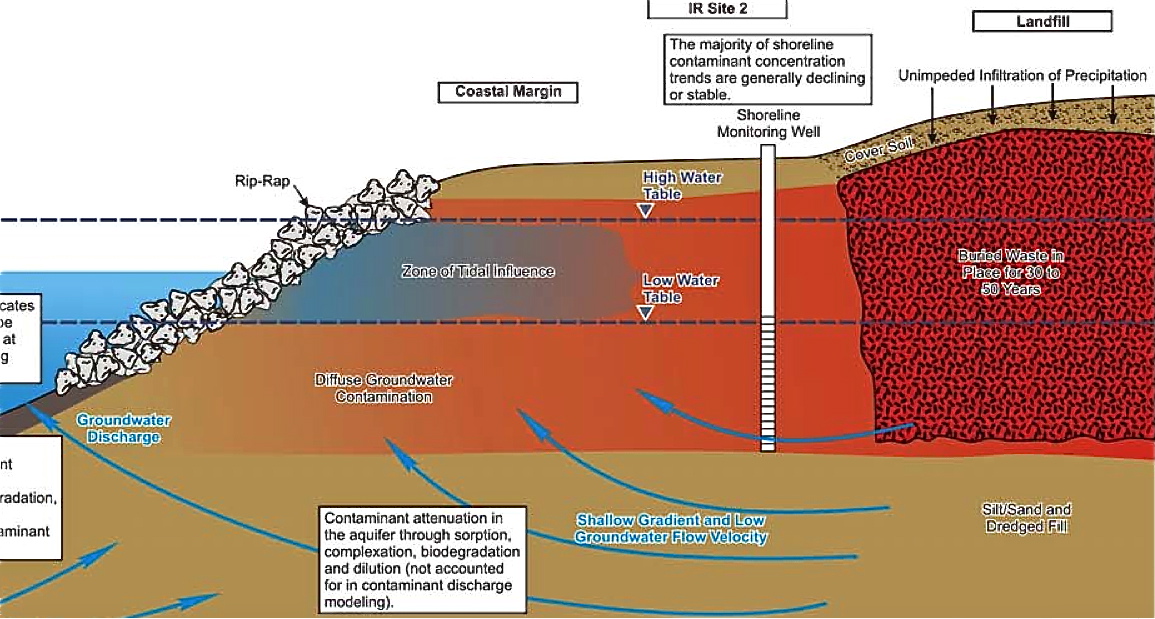
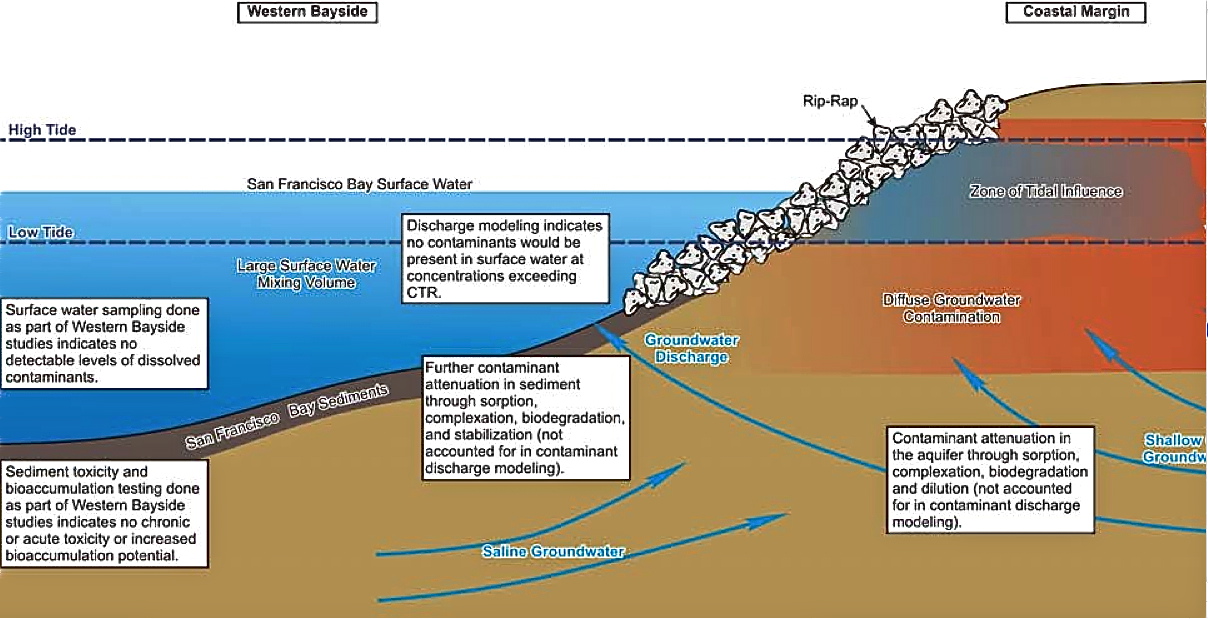
The EPA said, “It should be noted that based on the presented analyses the seawall along the southern coastal margin which is founded on liquefiable hydraulic fill and coarse-grained Young Bay Mud is prone to edge failure and lateral spreading.” They go on to say, “No remedial actions are proposed in the [Work Plan] to address these issues,” and they continue by saying, “[I]f the seawall is prone to failure and lateral spreading, it is unclear how further lateral spreading will be localized and will not distort the cover and result in depressions, drainage reversals or similar effects. Please address potential edge failure on spreading on southern coastal margin.” They also point out that the soil make-up of the berm around the landfill has not been characterized, leaving another question mark about seismic stability.
Site 2 geology cross section depicting western shoreline with features similar to southern shoreline addressed in EPA comments. 1 of 2 images. Navy illustration from 2007.Illustration of geologic features looking north along western shoreline showing features similar to southern shoreline that raised concerns with EPA over seismic readiness. Navy illustration from 2007.
The EPA mentions reinforcement options such as “cement deep soil mixing and jet-grouting,” and calls on the Navy to clarify whether they think perimeter slope failure in an earthquake is an acceptable long term risk, in lieu of underground seismic reinforcements. They also point out that the work plan does not analyze consequences of future expected sea level rise.
The Navy has until August 24 to respond to comments and incorporate changes or additions to the plan in their final draft. The regulators and the Navy will meet periodically prior to the August 24 deadline. A 30-day final review by the Navy and regulatory agencies will follow. Work on the site is scheduled to begin on October 1 and be completed by summer of 2013. Completion could be delayed if the seeding of the soil cover cannot be accomplished during the rainy season.
Below is a photo gallery of Palo Alto’s Byxbee Park, which is built over a landfill waste site at the edge of San Francisco Bay. No exclusionary fencing.
“The Navy provided a more current explanation of the future redevelopment of IR Site 2, indicating that even under Department of Veterans Affairs (VA) ownership that IR Site 2 would be a wildlife refuge.”
“[T]he purpose of the multilayer soil cover is to control specific site risk through the prevention of direct contact by either humans or ecological receptors (e.g., burrowing animals).”
January 15, 2008, Minutes from regulatory agency and Navy “Resolution Meeting” on the Feasibility Study for Site 2
Environmental cleanup of the Seaplane Lagoon has centered on two areas where storm sewers drain into the lagoon. It was commonplace to discharge all sorts of chemicals down storm sewer lines prior to the passage of the federal Clean Water Act in the early 1970s. Contaminants such as PCBs, cadmium, lead, pesticides, and radium have been found in the sediment around the sewer discharge points.
Prior to dredging, sewer lines leading to the northeast and northwest corners were either replaced or flushed out. An underwater debris pile of metal and wood was also removed at the northeast corner before dredging.
The Northeast Corner
Setup for the 6.5-acre northeast dredging area began in late 2010, and dredging was completed in April of 2011. The total amount of sediment removed was 75,628 cubic yards. Even though the contamination depth was three feet, the dredging went to five feet.
Only 1,719 cubic yards of sediment were transported to hazardous waste disposal sites, of which 11 cubic yards went to a low-level radiological waste disposal site because of the radium-226. The rest of the sediment was determined to be safe enough for reuse, in large part because the contaminants were diluted by the over-dredging of clean sediment. The clean sediment has been stockpiled on the western end of the Wildlife Refuge for future use in capping the landfill disposal sites 1 and 2.
All of the drying pad materials for the northeast corner have been removed, which will allow for the fence to be moved.
The Northwest Corner
Concrete drying pad installed at northwest corner of Seaplane Lagoon
Setup for the 3.3-acre northwest corner began in October of 2011 with the construction of a concrete, waterproof drying pad. Prior to dredging, a sunken barge was demolished and removed. The barge pieces were scanned for radiation, but none was found. The 66 tons of scrap iron was sent to a recycling facility.
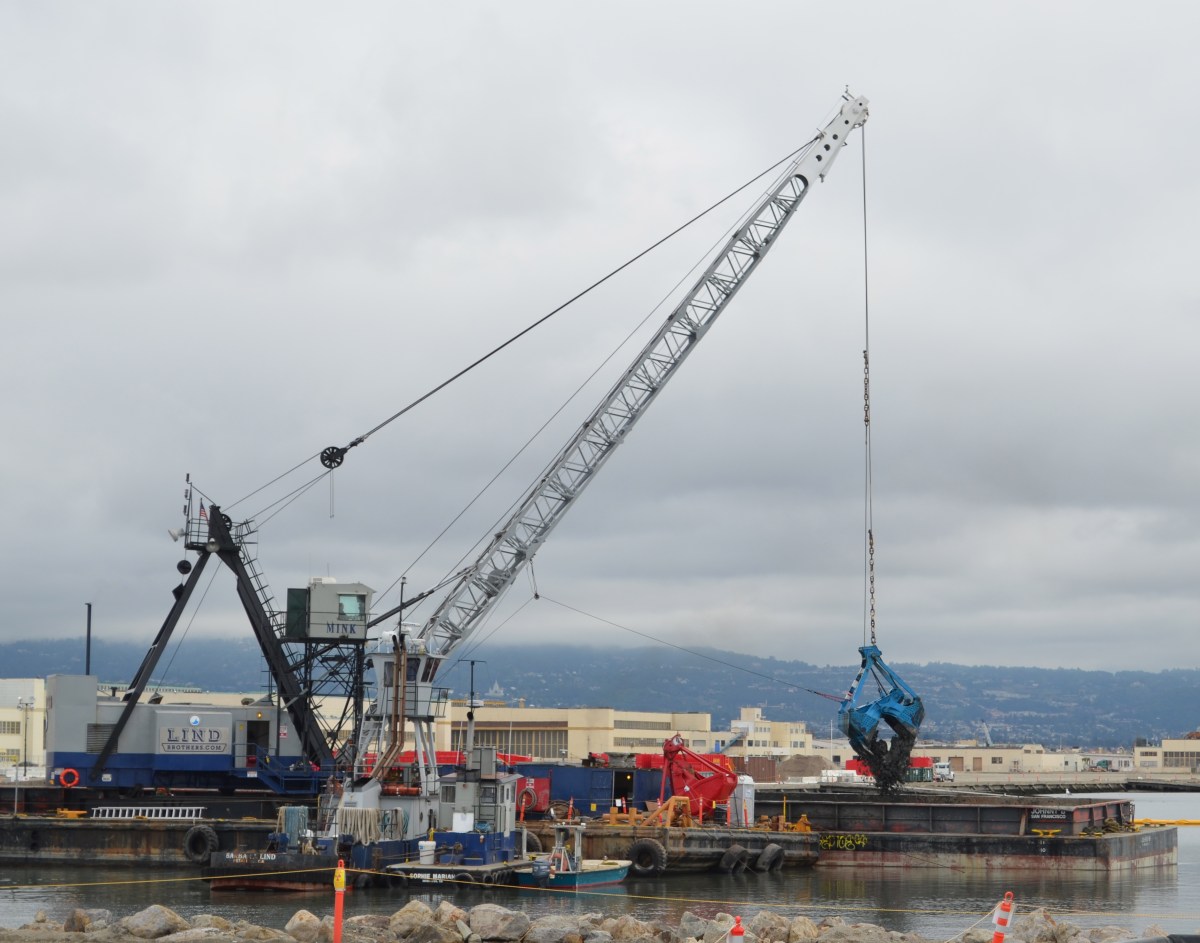
Dredging started on January 16 and ended on February 22. The dredging at the NW corner went much faster than the early dredging, partly because of the smaller area, and partly because of heftier dredging equipment.
Unlike the NE corner, however, the sediment here is expected to contain higher levels of radium-226 because the sewer line leading here was highly contaminated. As was the case at the NE corner, this sediment will have to dry out before being tested and disposed of. The project should be completed and everything removed by December.
The price tag for all of the Seaplane Lagoon dredging and hauling away sediment, when completed: $46 million.
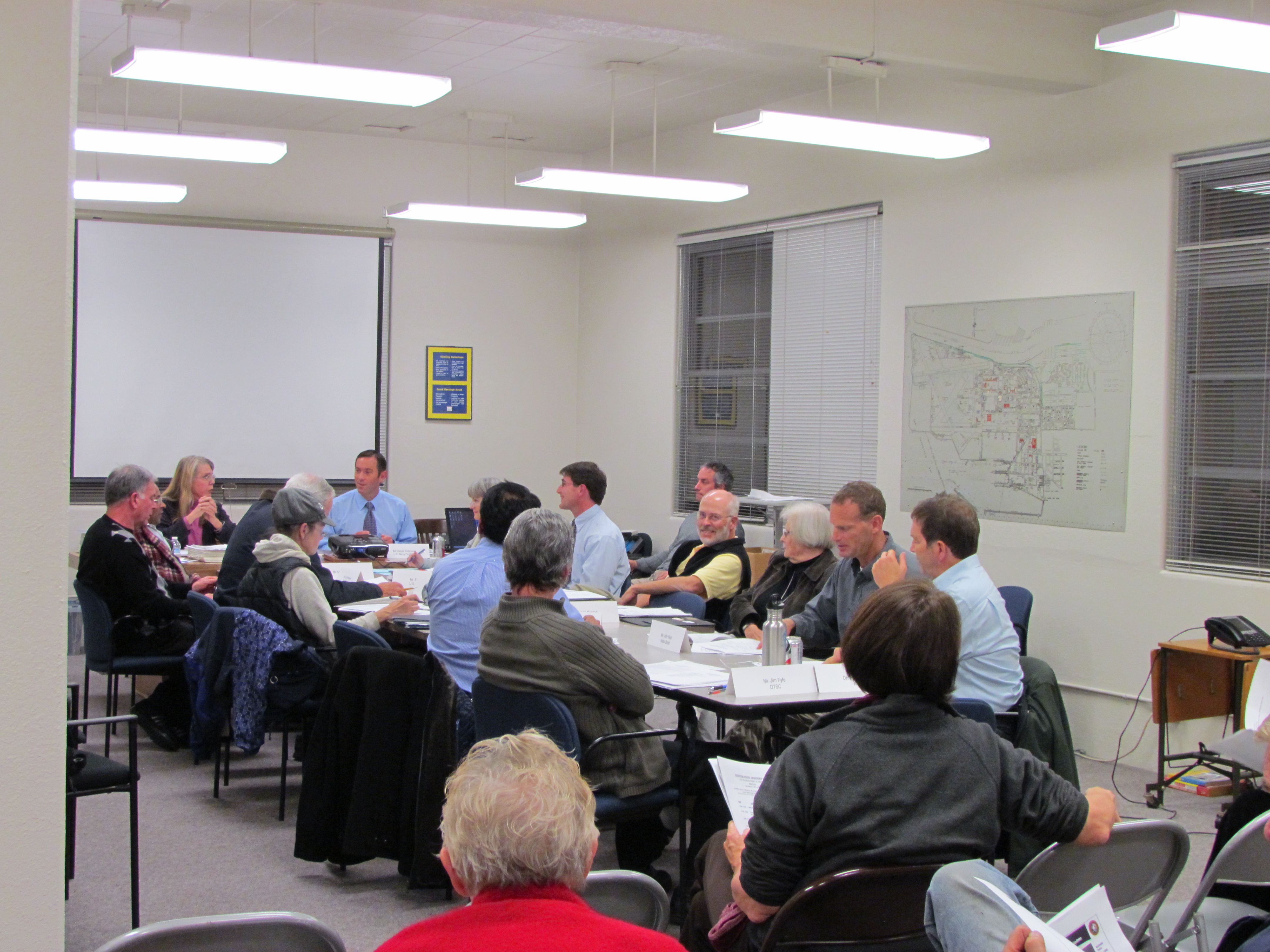
At the October 2011 Alameda Point Restoration Advisory Board (RAB) meeting, the Navy announced that Alameda Point’s monthly RAB meetings would be reduced to quarterly meetings due to budget cutbacks. The Navy said it would welcome a written response from the RAB on how the Navy might continue to carry out its responsibilities for community dialogue during difficult budgetary times.
On February 22, 2012, the RAB sent a letter to the Navy’s Environmental Coordinator for Alameda Point cleanup, Derek Robinson. The letter cited the magnitude of the cleanup effort at Alameda Point – 25 percent of the Navy’s nationwide cleanup budget in Fiscal Year 2011 – as justification for having more than four meetings per year. The RAB offered a reasonable compromise schedule that would add two meetings, bringing the total number of meetings this year to six. The Navy has already indicated that it would continue to host its annual tour of cleanup sites at Alameda Point, which would be in addition to the six meetings being proposed by the RAB.
The RAB also suggested having more than one cleanup site presentation at a meeting in order to make more efficient use of the Navy’s time and money spent on hosting the meetings. In past years, multiple presentations were made at meetings, but this practice ended because of the Navy’s concern that the meetings were too long and community members in attendance would leave before the end.







![Seaplane Lagoon cleanup dredging completed [video and slideshow]](https://alamedapointenviro.com/wp-content/uploads/2012/03/img_9647.jpg?w=1200)


 Alameda Point Environmental Report