Wetland Project Takes Hold on Alameda Point Airfield – Photo essay

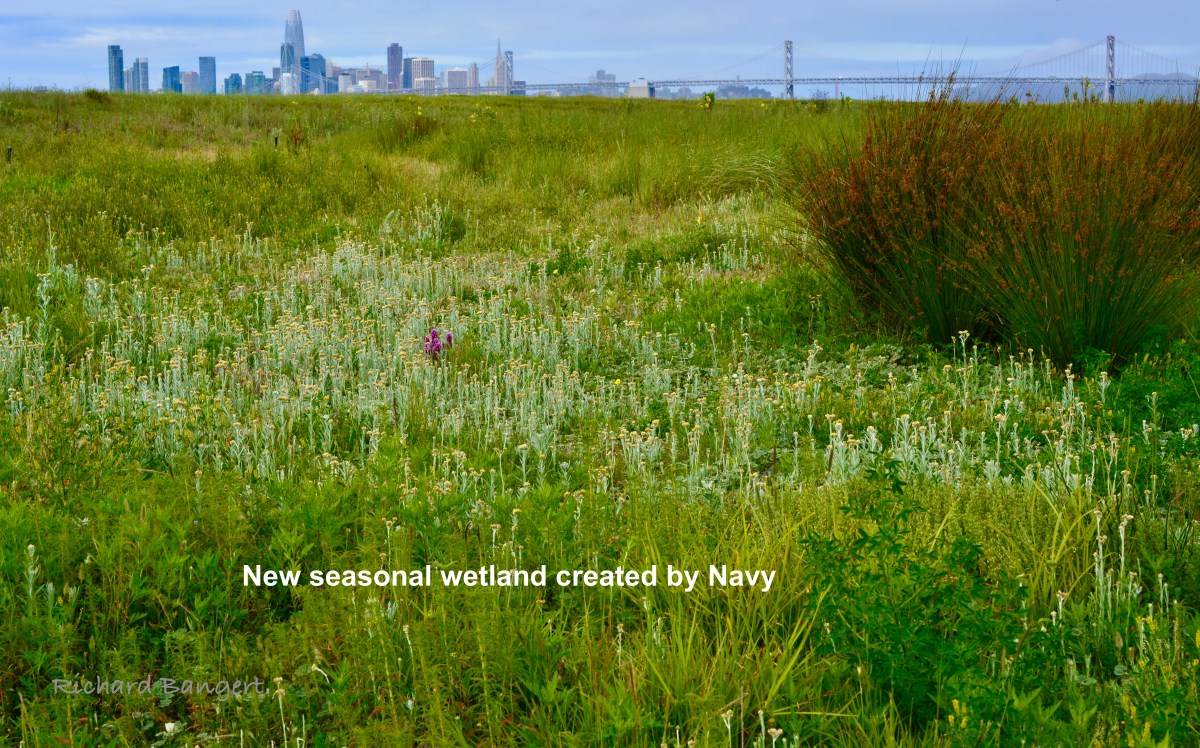
The wetlands and grasslands on the airfield at Alameda Point are looking alive with flowers and wildlife after a boost from heavy rainfall in April and temperatures in the high 70s. 

A seasonal wetland next to the shoreline, created by the Navy in 2016 as mitigation for covering a nearby wetland, is finally reaching maturity with a rich and colorful palette of vegetation.  This comes after years of failed attempts at growing new vegetation through seeding alone, mainly due to recurring drought conditions.  This led to the Navy installing an irrigation system connected to a fire hydrant in 2022 and hand planting about 9,000 nursery-grown plugs, followed by three rounds of seeding in 2023. 

Continue reading “Wetland Project Takes Hold on Alameda Point Airfield – Photo essay”
Springtime on the Wild Side of Alameda Point

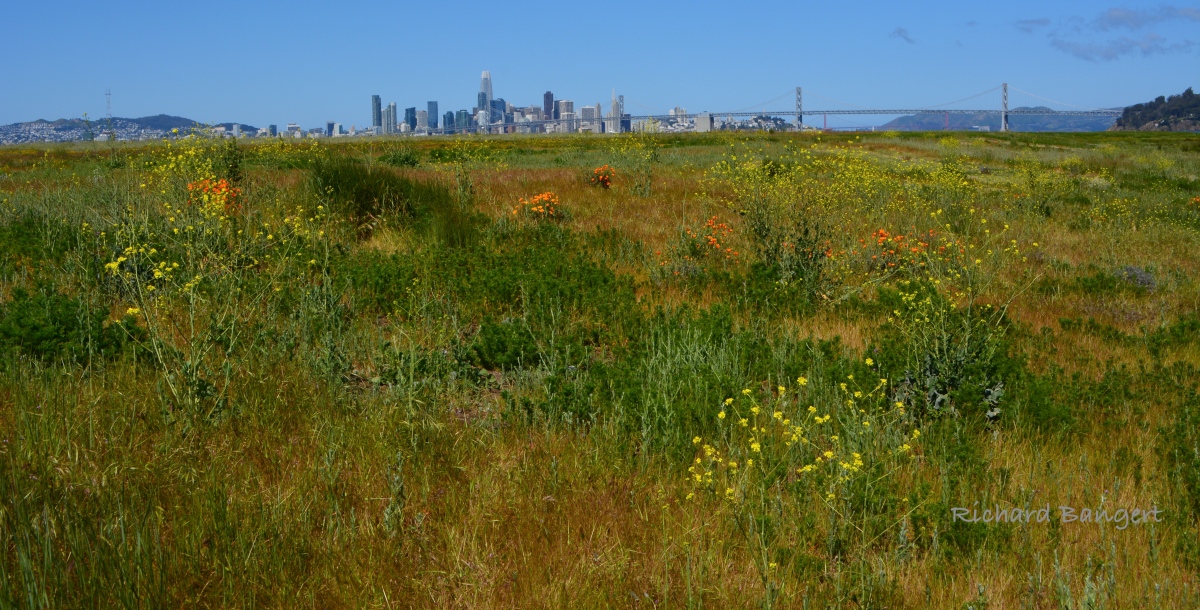
The Navy’s repeated attempts to establish native vegetation on cleanup Site 1 at Alameda Point have finally borne flowers this spring.  Birds are enjoying the nearby seasonal wetland, which is in jeopardy of being destroyed. Someday people will be able to enjoy the space, as well. For now, enjoy the accompanying gallery of photos, along with background info.

Continue reading “Springtime on the Wild Side of Alameda Point”

Updated De-Pave Park plan given green light by City of Alameda

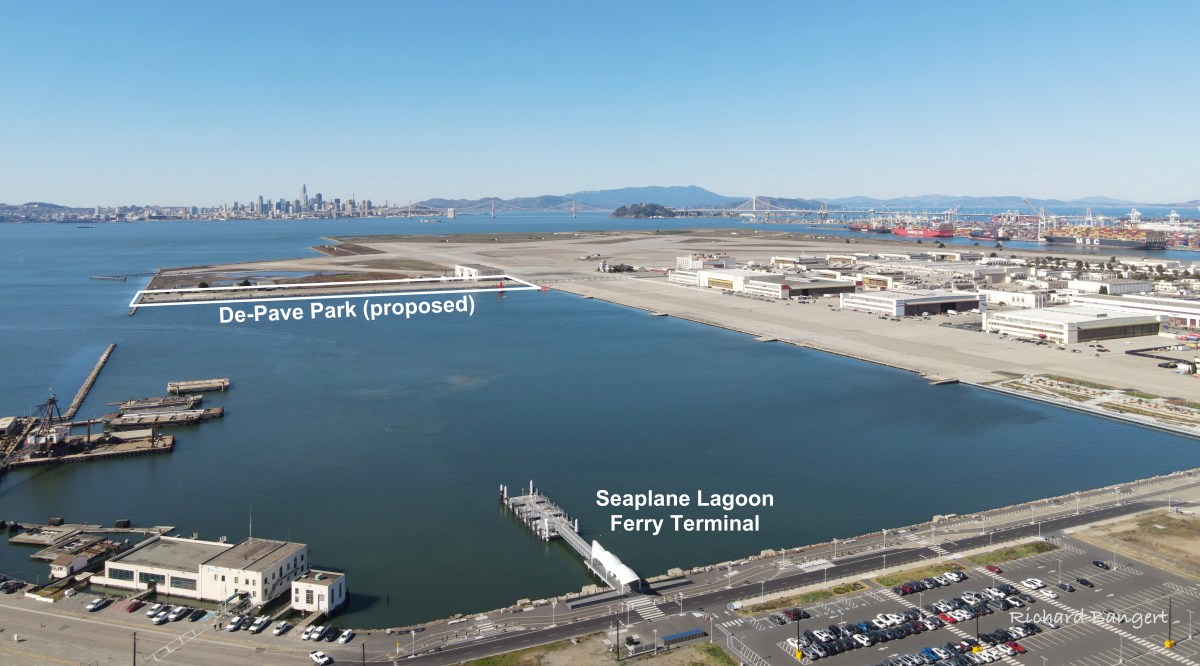
In March 2024, after a decade of lobbying by advocates for wildlife and open space, the city council approved a Master Plan for building the ecological wetland park, known as De-Pave Park, at Alameda Point.

Continue reading “Updated De-Pave Park plan given green light by City of Alameda”

Maximum tidal wetland design approved for De-Pave Park

Environmental groups are celebrating an historic decision on what is now destined to become a model for shoreline ecological adaptation around San Francisco Bay.

At issue was whether to keep Building 25, a 55-foot-tall hangar, as a source of lease revenue, or remove it to maximize natural habitat. 

On November 7th, ten years after the De-Pave Park concept was first introduced, the City Council approved moving forward with a plan to remove the building to make way for a park that will welcome sea level rise.  The term “de-pave” refers to the removal of paving.  The paving will be recycled on site to provide the elevated observation overlook and the elevated entrance.  The decision was the latest step in the process of developing a Master Plan that will provide the foundation for receiving a multitude of regulatory permits and construction grant funds. 

Continue reading “Maximum tidal wetland design approved for De-Pave Park”

De-Pave Park master plan kick-off meeting April 15th

If participating in creating a wetland ecological park in Alameda is of interest to you, mark your calendar for this upcoming outdoor event.

The master planning process for De-Pave Park on the west side of Alameda Point’s Seaplane Lagoon begins with an in-person workshop on Saturday, April 15, from 3:00 to 5:00 p.m.

Continue reading “De-Pave Park master plan kick-off meeting April 15th”

De-Pave Park slated to receive planning grant

Alameda’s proposed De-Pave Park project has made the short list for this year’s grant funding from the San Francisco Bay Restoration Authority.  The Restoration Authority Board will hear staff recommendations and provide input at its February 25, 2022, meeting, with authorization coming at its April meeting. 

Of this year’s 18 applicants, six have been selected for funding.  The recommended award for De-Pave Park is $800,000.  This amount is expected to cover the cost of developing a master plan, as well as the first level of construction drawings. 

Continue reading “De-Pave Park slated to receive planning grant”

Navy Forced to Destroy Wetlands at Alameda Point

A recently released Navy document reveals that an implausible last-minute health-risk theory killed the Navy’s plan for upgrading and expanding wetlands at Alameda Point where a regional park is planned (Navy To Create New Wetlands,” Jan. 3, 2019).

A 60-acre cleanup site, known as Site 32, was on track to include 15 acres of seasonal wetlands, along with a doubling of watershed drainage into the wetlands.  The regulatory agencies overseeing cleanup — namely, the U.S. Environmental Protection Agency, Regional Water Board, and Department of Toxic Substances Control — had signed off on the plan in 2018.  But nothing has been done since the tons of clean soil for the project were delivered there in 2019.

A support agency, the CA Department of Public Health (CDPH), interjected claims that trees, other vegetation, and burrowing animals could compromise the proposed soil cover underneath the 15 acres of proposed new wetlands, exposing people and animals to radiological contaminants from paint residue on scattered objects that have been buried there for 65 years.

Continue reading “Navy Forced to Destroy Wetlands at Alameda Point”