Wetland park plan at Seaplane Lagoon gets a boost

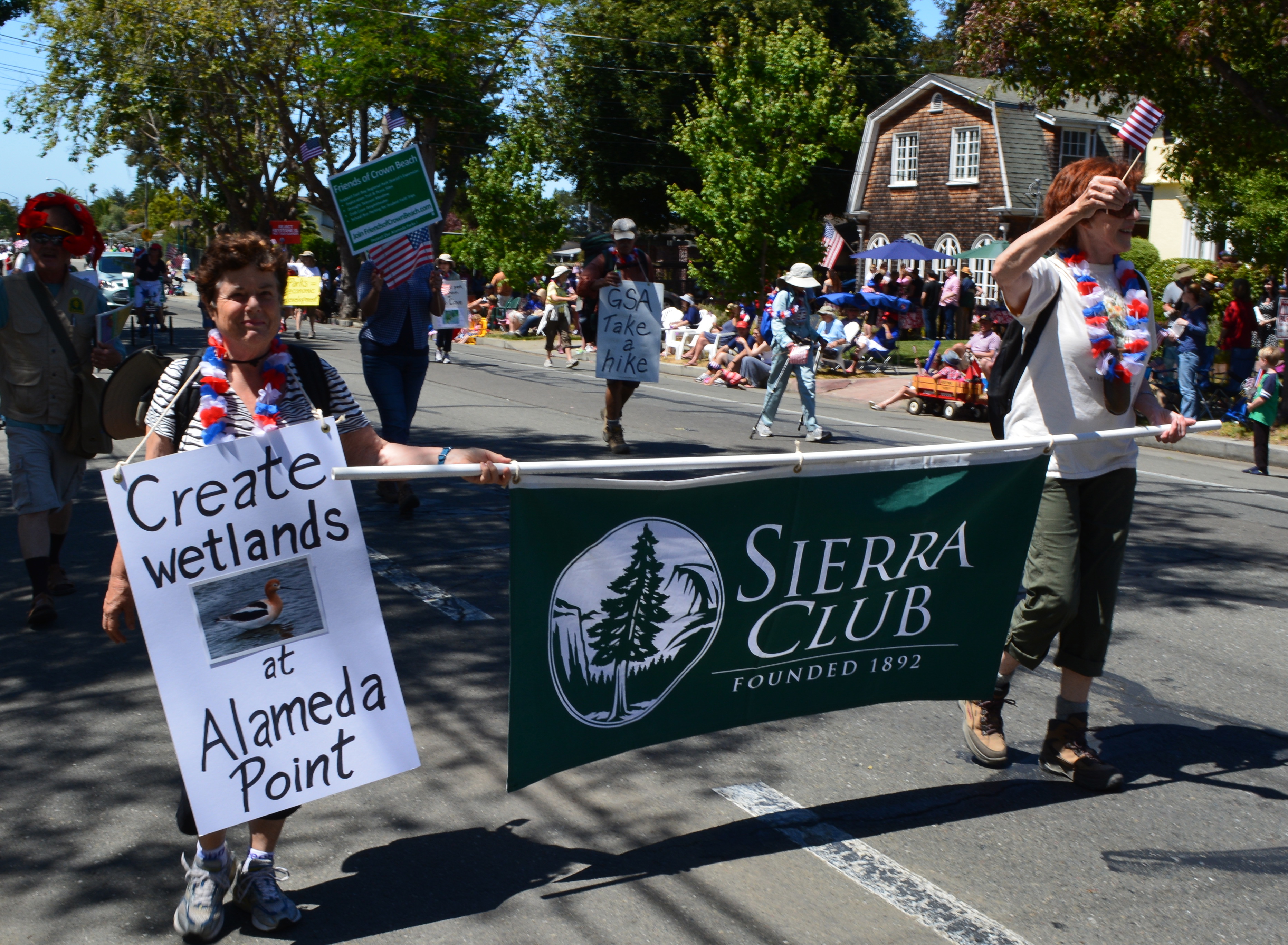
It’s more likely a new wetland will be created on the western shoreline of the Seaplane Lagoon at Alameda Point, thanks to lobbying efforts led by the Sierra Club.

Sierra Club in Alameda's 4th of July Parade 2014
Sierra Club in Alameda’s 4th of July Parade 2014

On July 1, 2014, the Alameda City Council added language to the Alameda Point Town Center and Waterfront Specific Plan that raises the commitment to remove pavement from the western side of the Seaplane Lagoon for wetland—an area called De-Pave Park.  Lobbying efforts convinced the council to include the following options to help facilitate the wetland park creation:  1) creating a wetland mitigation bank; 2) adding the area to a possible national wildlife refuge on the federal property; and 3) working with local community members who may identify funding sources for creating the passive park area. Continue reading “Wetland park plan at Seaplane Lagoon gets a boost”
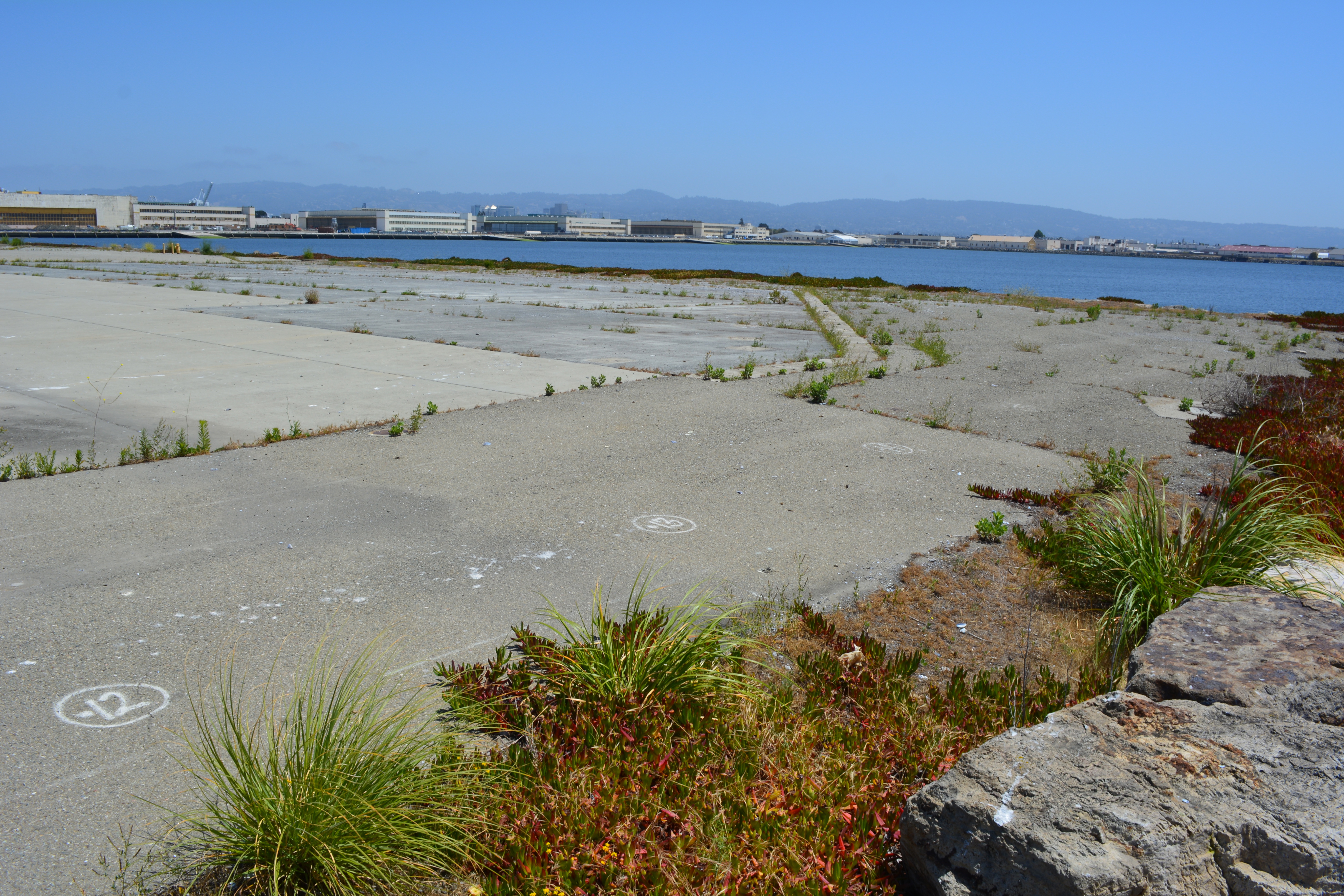
Shoreline grassland, wetland: An opportunity now at Alameda Point

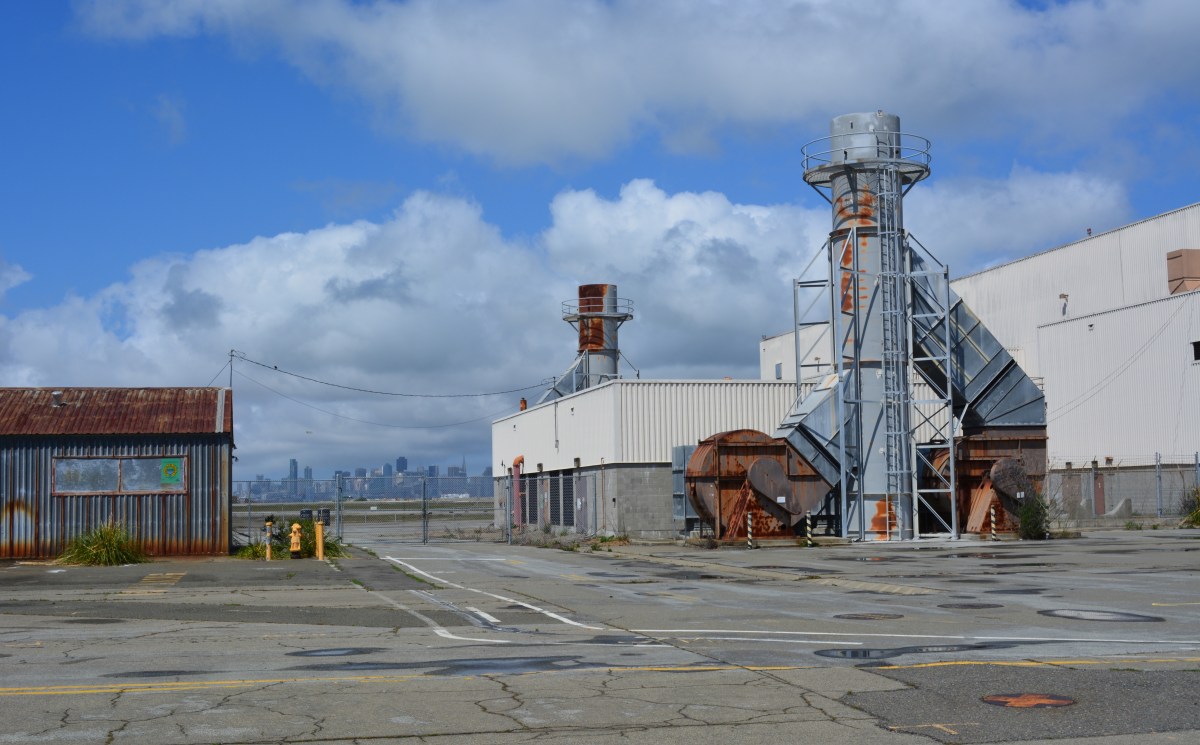
The city’s west side of the Seaplane Lagoon at Alameda Point is mostly pavement – acres of it – with a few old buildings abutting a wetland on the federal property. The city claims its long-range plan for this area features a conversion to a wetland habitat, but their only commitment is to continue leasing the buildings to generate revenue while allowing a sea of unnecessary pavement to remain as an environmental blight.

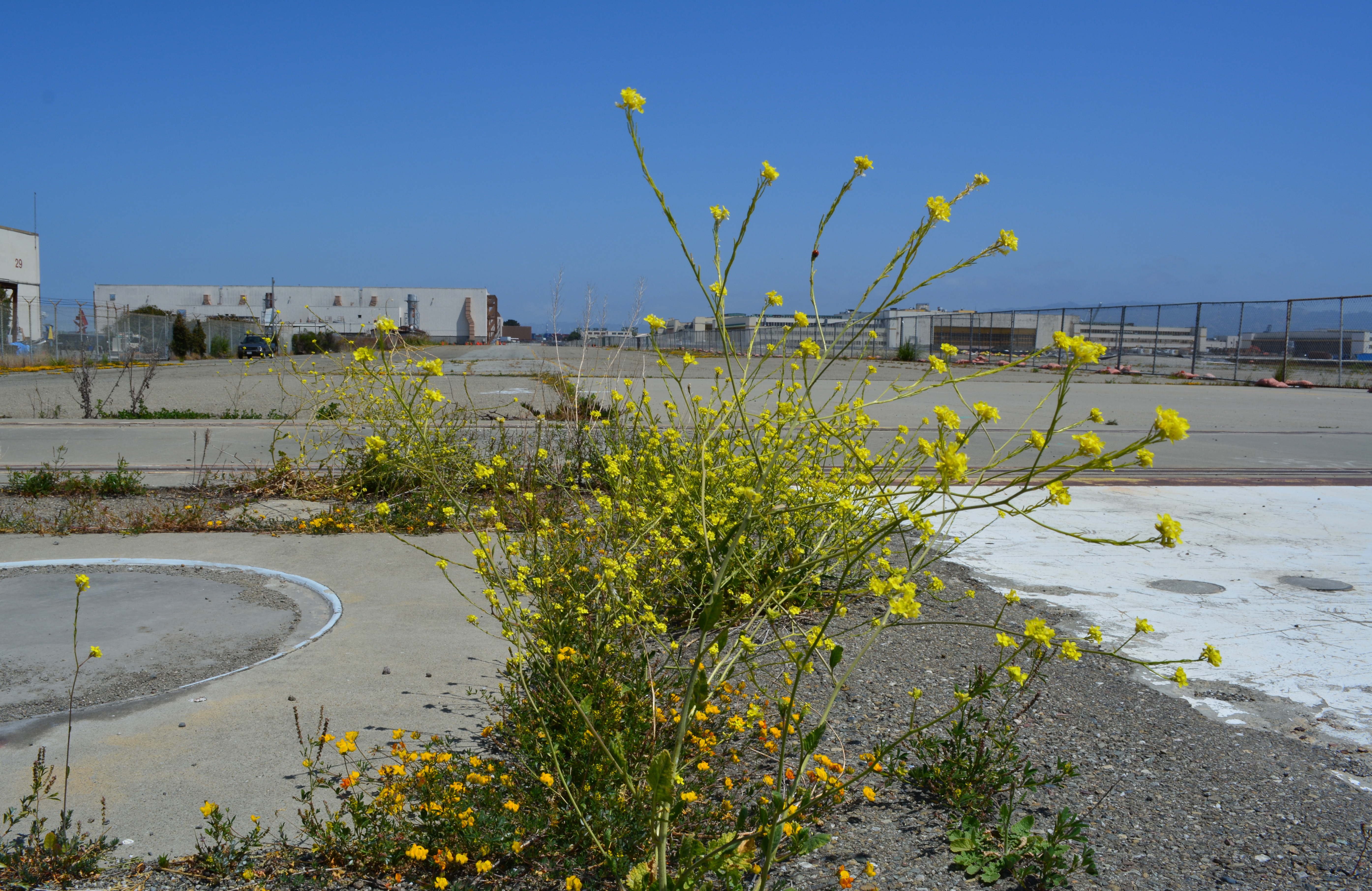
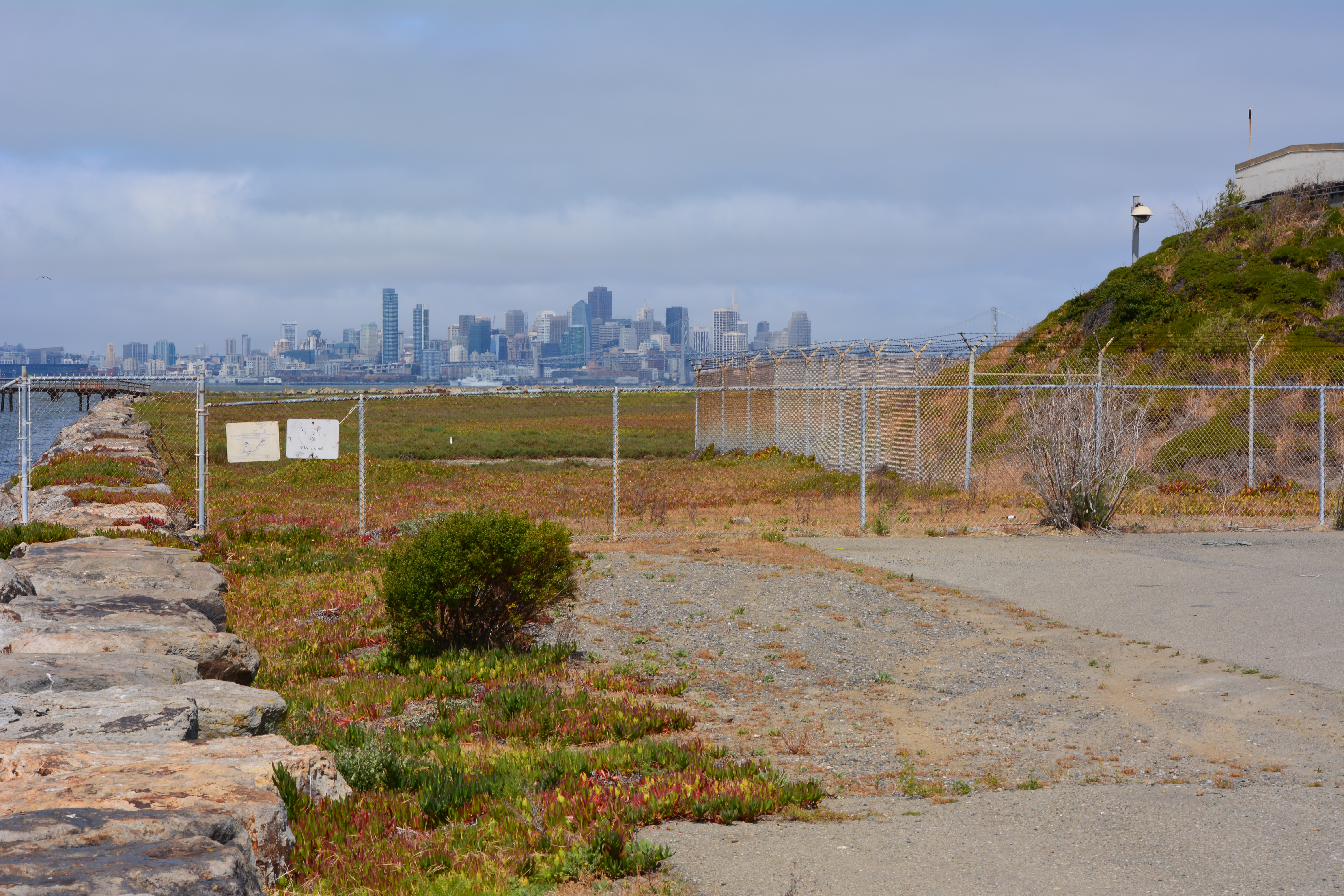
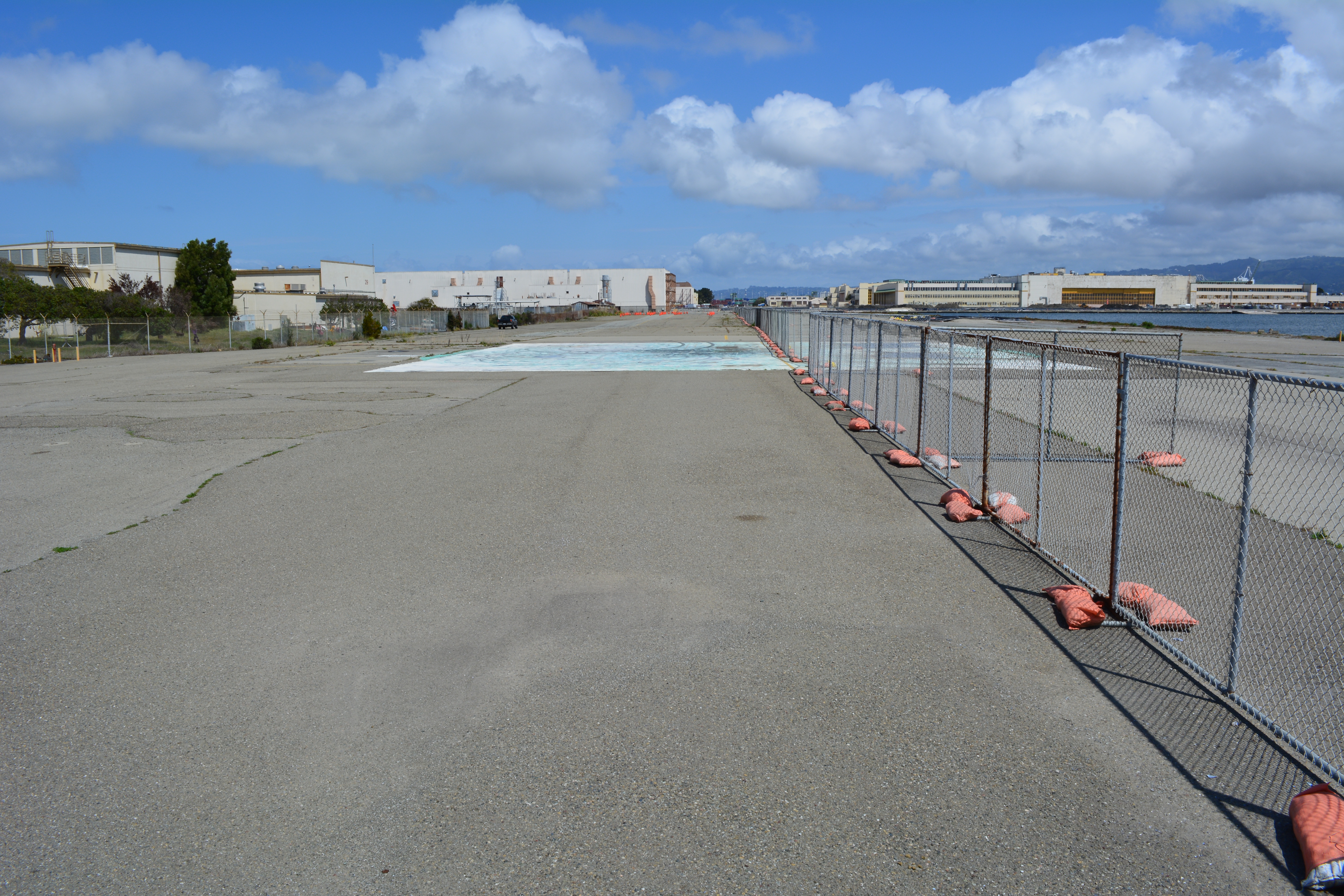
Seaplane Lagoon west side, looking south.  Seaplane Lagoon on left, Alameda Point Channel and SF Bay in background.
Seaplane Lagoon west side, looking south. Seaplane Lagoon on left, Alameda Point Channel and SF Bay in background.  Temporary fence to be removed by end of 2014.

Opportunities for implementing ecosystem enhancement, both short and long term, have yet to be explored for this area. We need to start moving in a direction now that benefits the environment by reducing climate impacts, improves the atmosphere around nearby businesses, adds to public enjoyment, and increases wildlife habitat.

Proposal for ecosystem enhancement

Short-term plan – Remove all pavement not required for commercial tenants. Recycle the pavement at the VA’s Alameda Point project site where they will be raising elevation and need base rock and fill. Once the pavement is removed and the soil exposed, native vegetation could be planted. Native vegetation will absorb CO2, produce oxygen, eliminate the heat island effect of the former pavement, add wildlife habitat, improve the aesthetic appearance of the property, and make it attractive as a hiking, jogging, and cycling destination.

          Step 1 – Set aside money from lease revenue generated on the west side of the Seaplane Lagoon for pavement removal and introduction of native plant vegetation.

          Step 2 – Explore recycling pavement at Alameda Point.

          Step 3 – Explore grant sources for conversion of paved areas to native vegetation, i.e., state air quality board, EPA, State Lands Commission, etc.

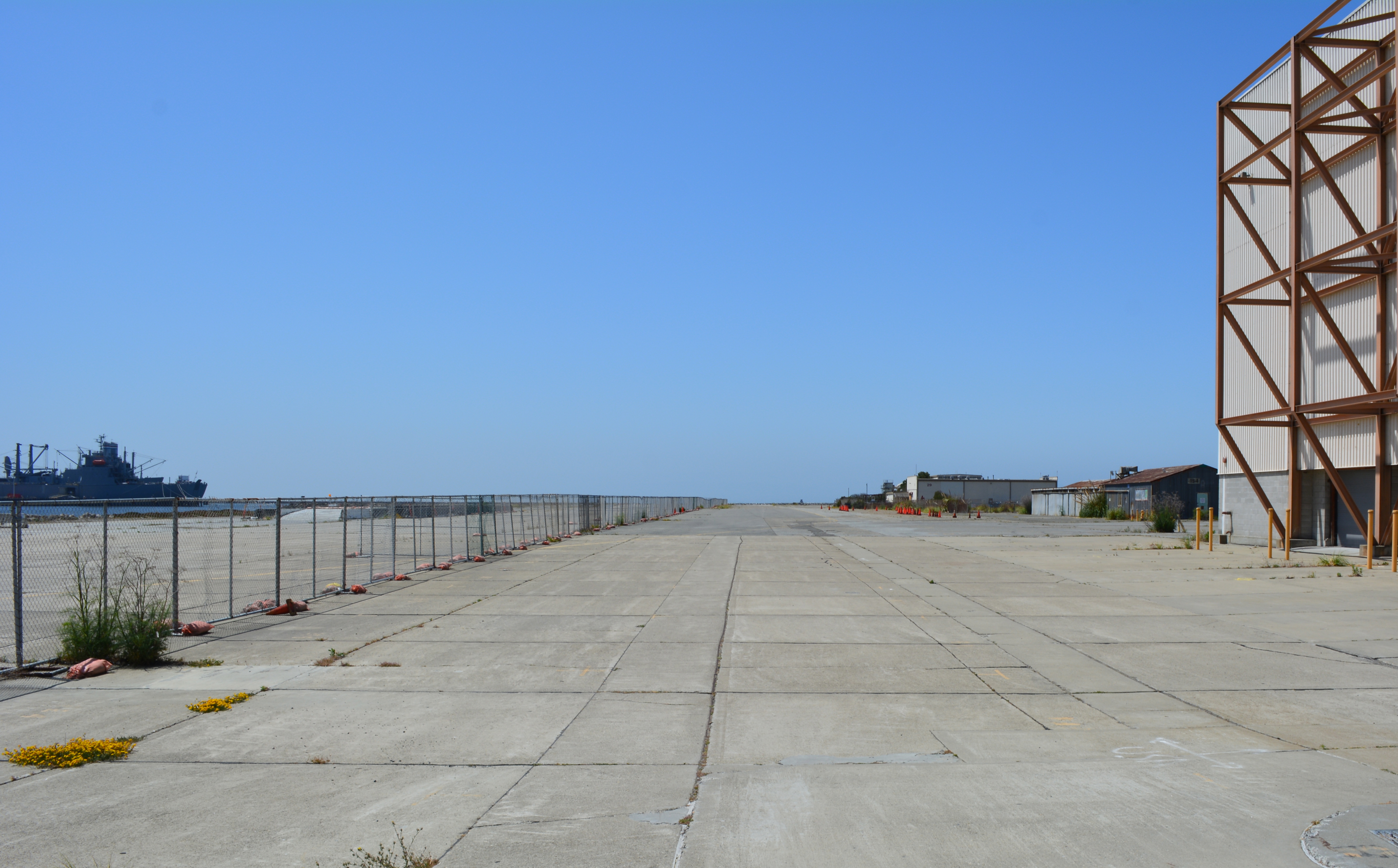
West side of Seaplane Lagoon, looking north.  Seaplane Lagoon on right.  Buildings 29 and 25 on left.  Most of this area could be covered with native grasses with no negative effects on commercial leasing.
West side of Seaplane Lagoon, looking north. Seaplane Lagoon on right. Buildings 29 and 25 on left. Most of this area could be covered with native grasses with no negative effects on commercial leasing.

Long-term plan – Establish an Alameda Point Wetland Mitigation Bank, which would incorporate the west Seaplane Lagoon acreage along with 50 acres on the northwest side of Alameda Point (Northwest Territories). Investment money would provide the capital for wetland creation, with money being recouped when mitigation credits are sold to developers elsewhere in the Bay watershed to offset their project’s impacts. As a general rule, a tidal wetland is worth at least as much as it would cost to create it. That’s why businesses exist that specialize in mitigation banks. In theory at least, the wetland project could be self-funding.

          Step 1 – Commission a study on wetland mitigation bank formation using lease revenue from Buildings 25 and 29.

Information about wetland mitigation banking:

Report To The Legislature – California Wetland Mitigation Banking – Jan. 2012 

U.S. Wetland Banking – Market Features and Rules

Forbes wetland article 4/25/2014 from BCDC

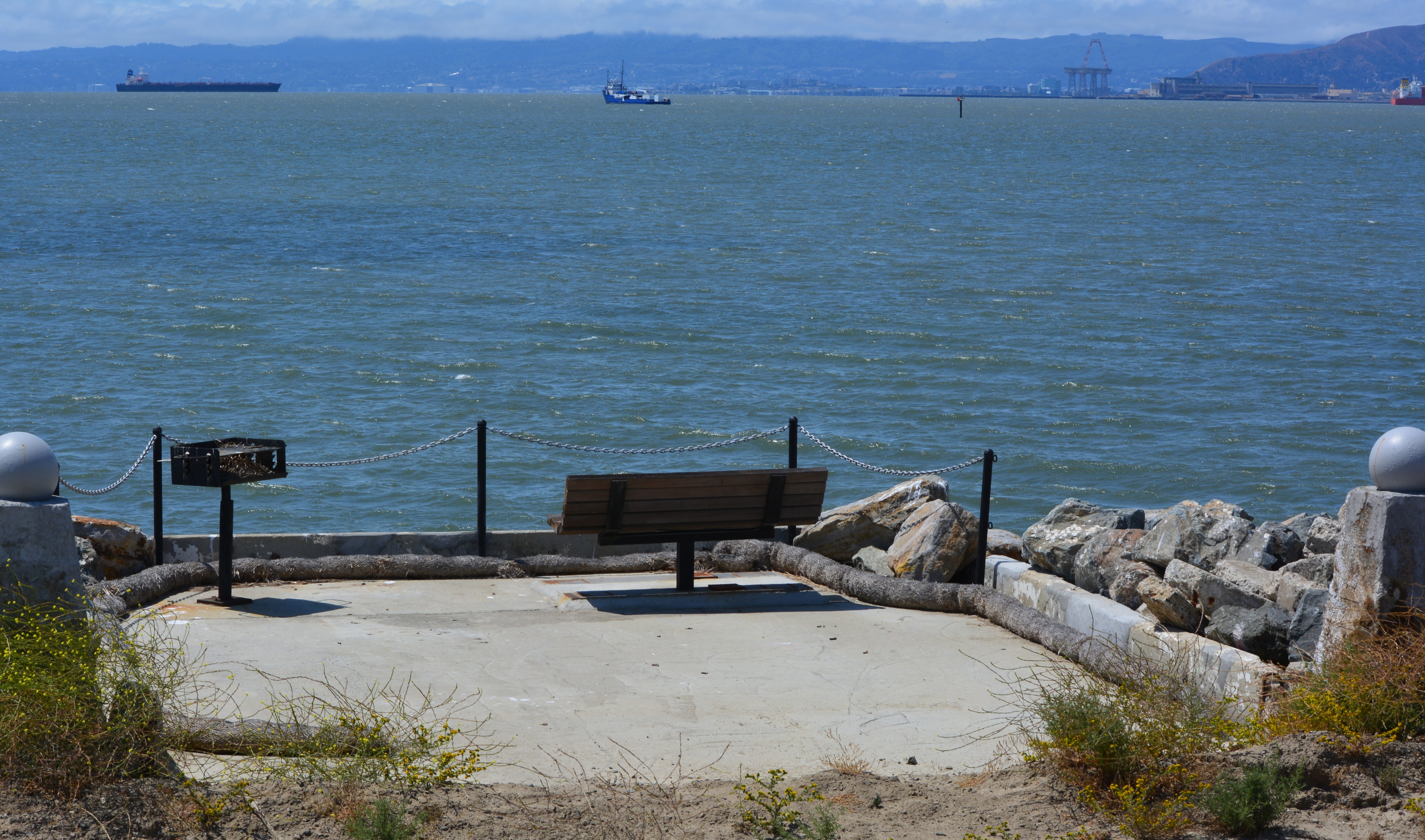
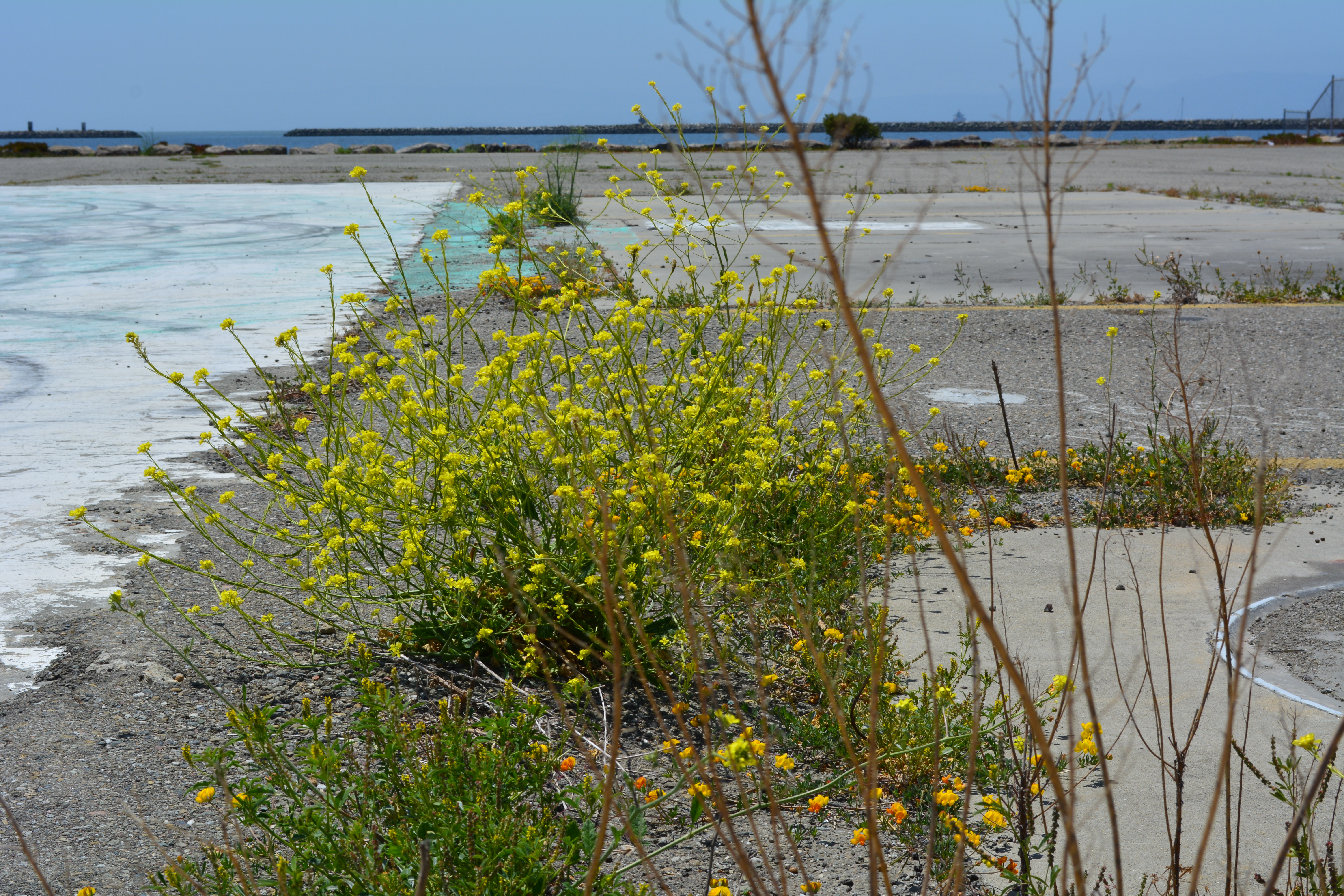
West side of Seaplane Lagoon looking south, with channel and Breakwater Island in background.
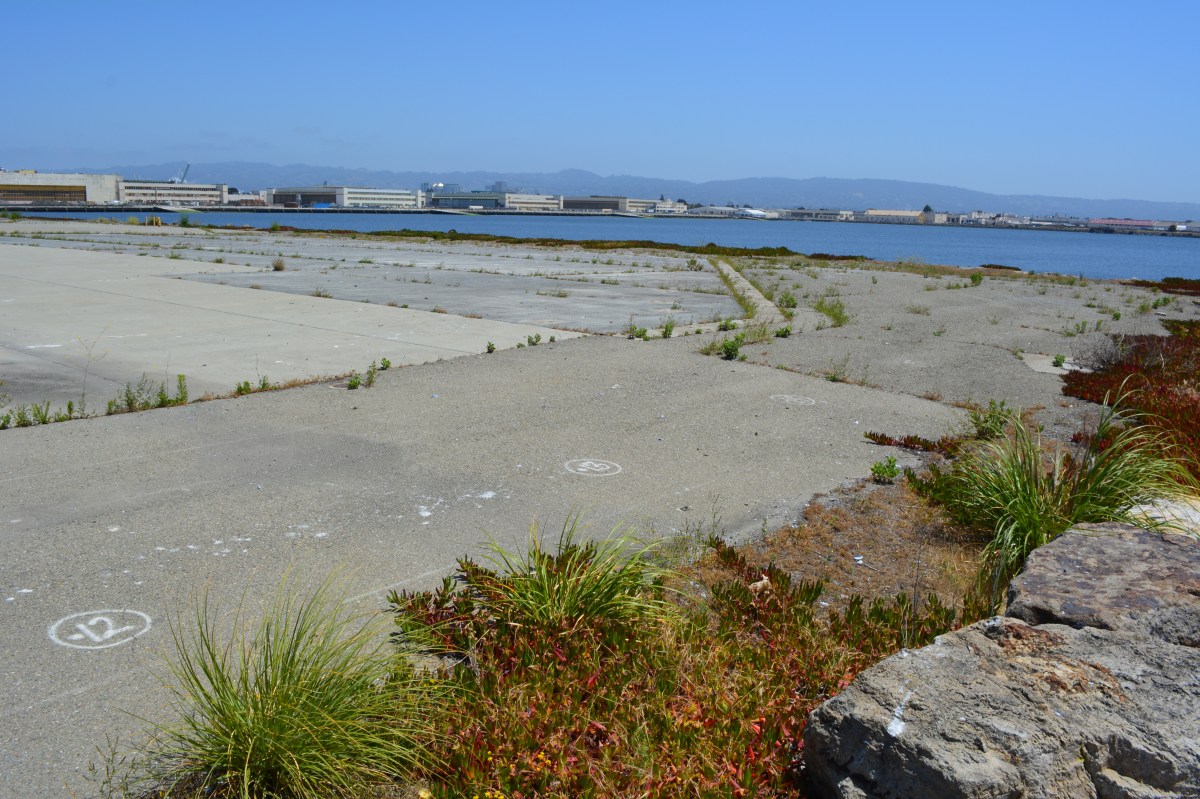
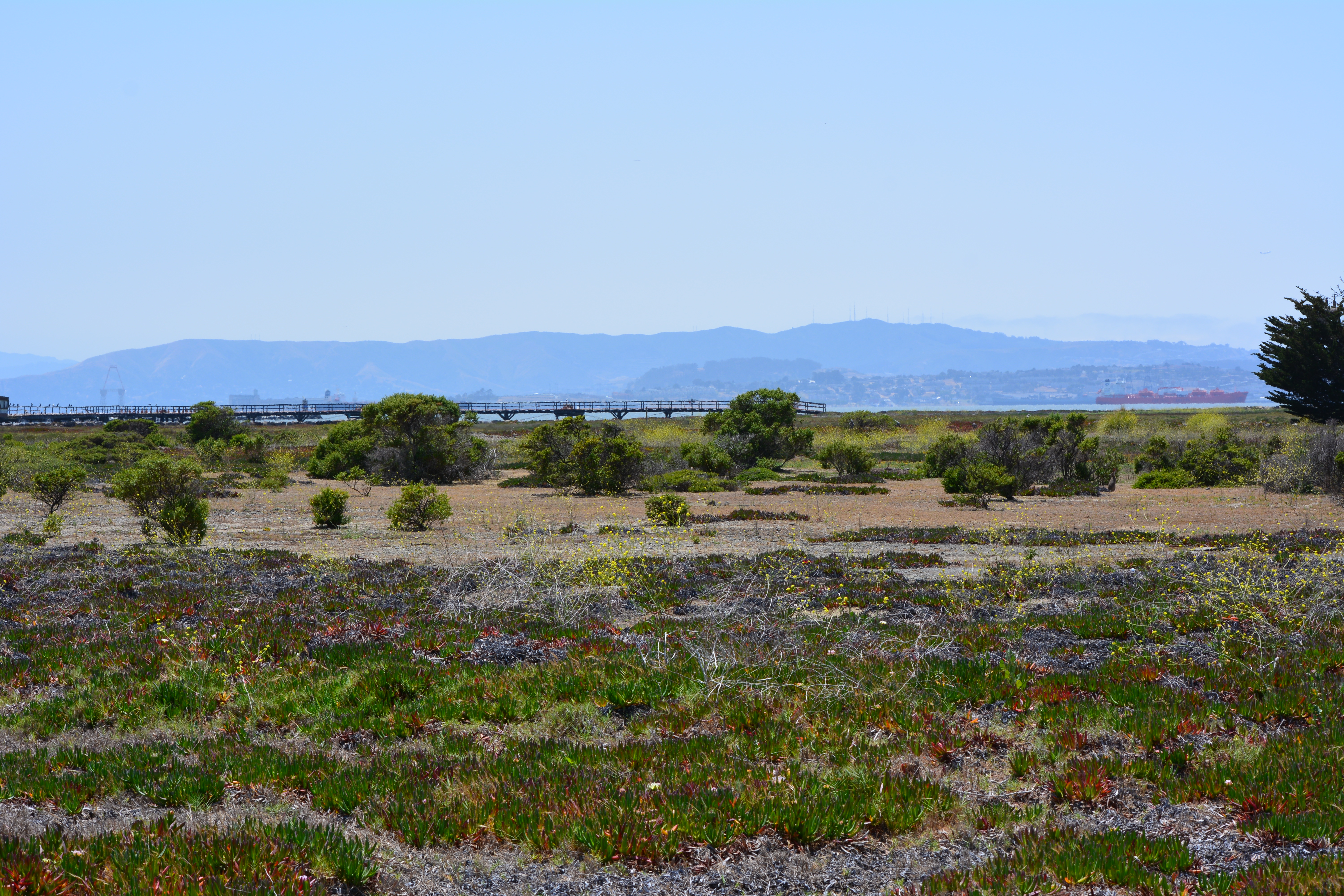
West side of Seaplane Lagoon, looking northeast from shoreline riprap, with lagoon and hangars in background.
West side of Seaplane Lagoon, looking northeast from shoreline riprap, with lagoon and hangars in background.  Pavement here will serve no commercial purpose under current low-impact guidelines.
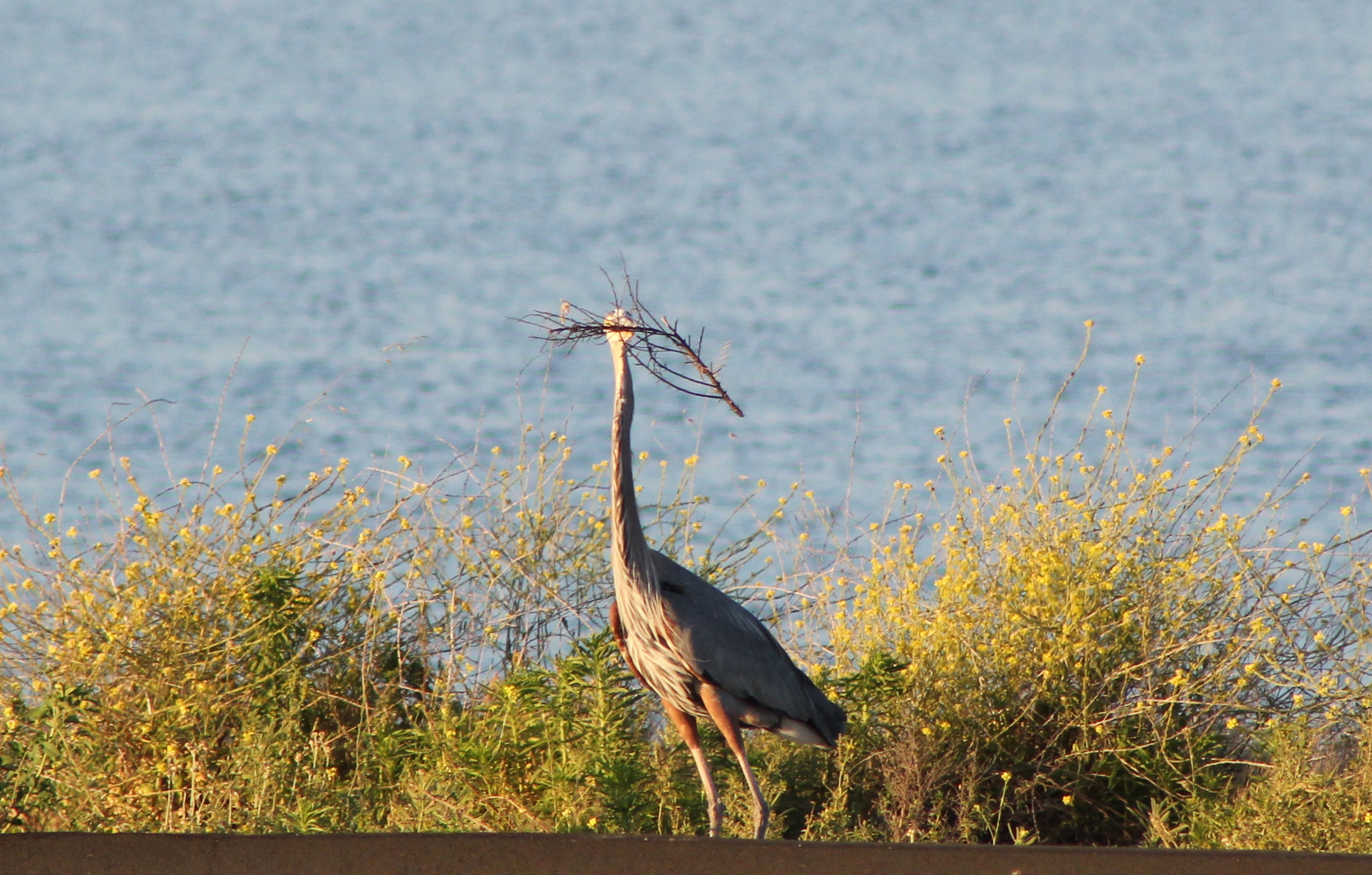
Great Blue Heron gathering nesting material on western edge of Seaplane Lagoon for nearby nest.  Increased vegetation will bring more birds along shoreline.
Great Blue Heron gathering nesting material on western edge of Seaplane Lagoon for nearby nest. Increased vegetation will bring more birds along shoreline.
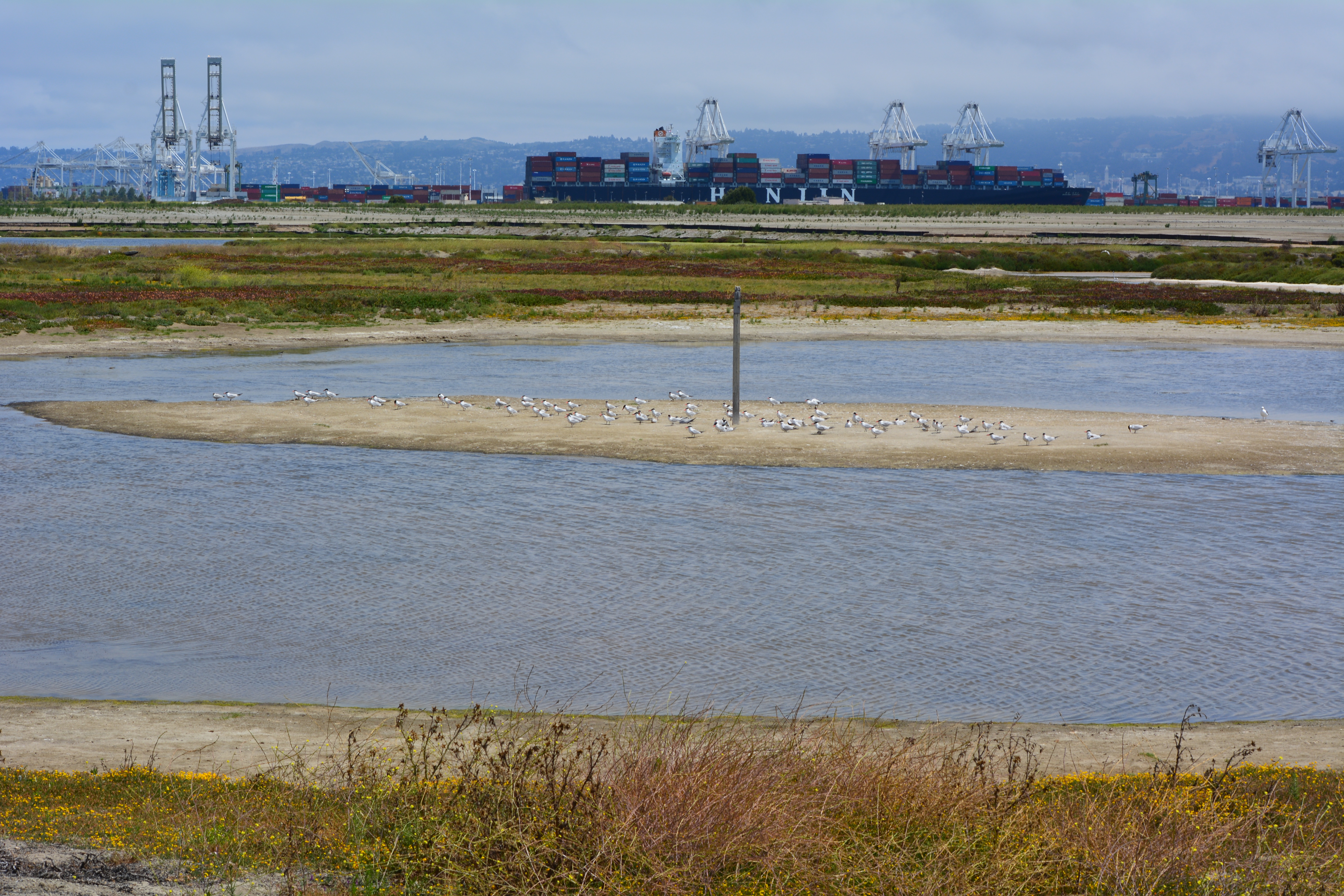
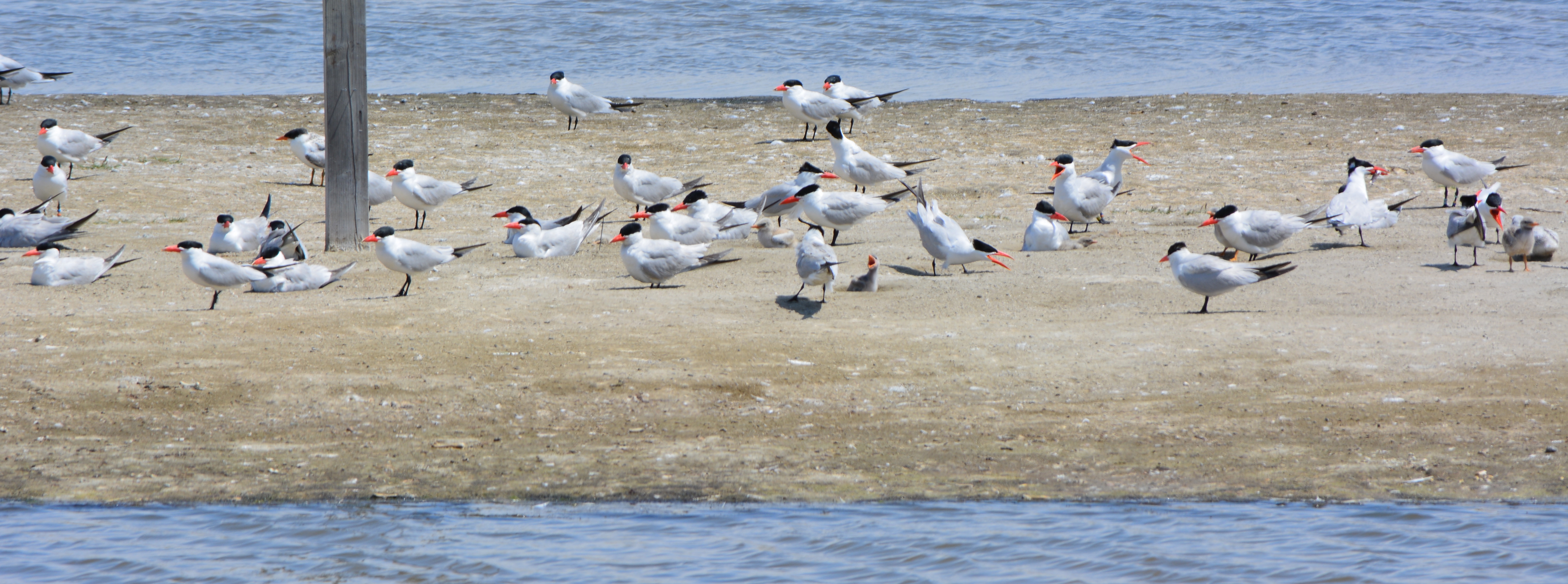
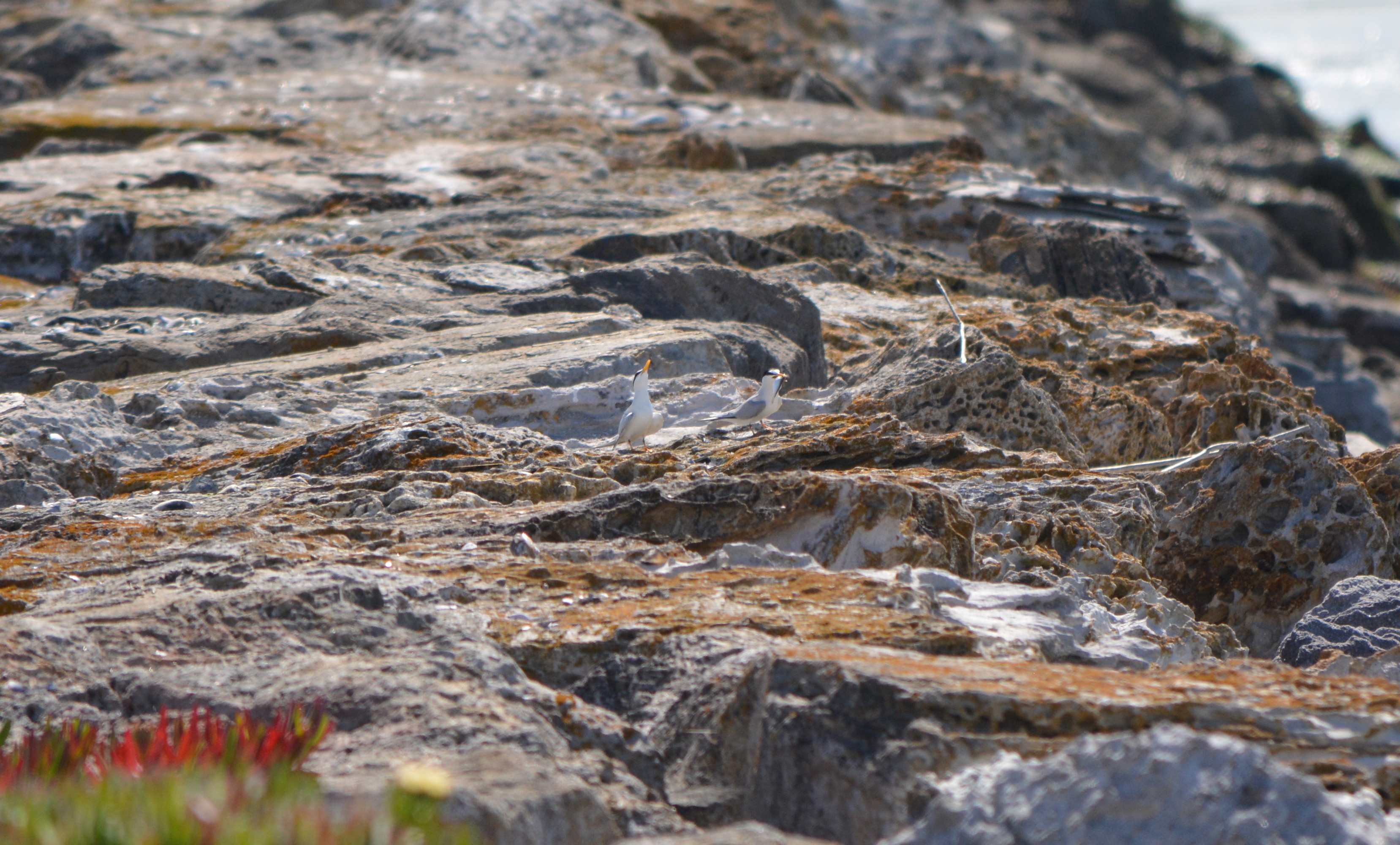
CA Least Terns engaged in courtship ritual of exchanging a fish on jetty adjacent to west side of Seaplane Lagoon - May 2014.
CA Least Terns (center of photo) engaged in courtship ritual of exchanging a fish on jetty adjacent to west side of Seaplane Lagoon – May 2014.
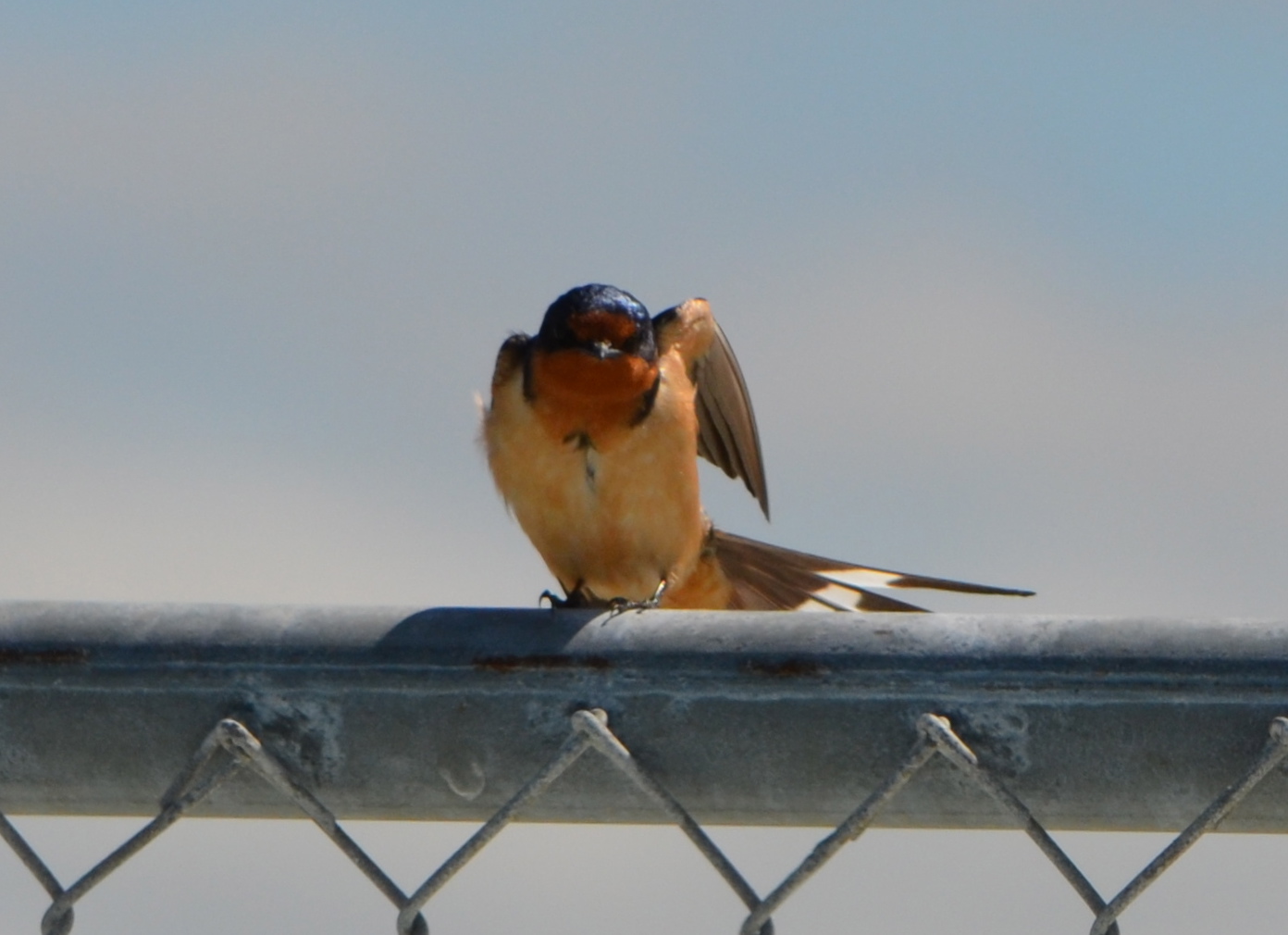
Barn Swallow on fence on west side of Seaplane Lagoon.  Common to the area, often seen flying low over the water looking for flying insects,  nesting almost exclusively on man-made structures, possibly Building 29.
Barn Swallow on fence on west side of Seaplane Lagoon. Common to the area, often seen flying low over the water looking for flying insects, nesting almost exclusively on man-made structures, possibly Building 29.
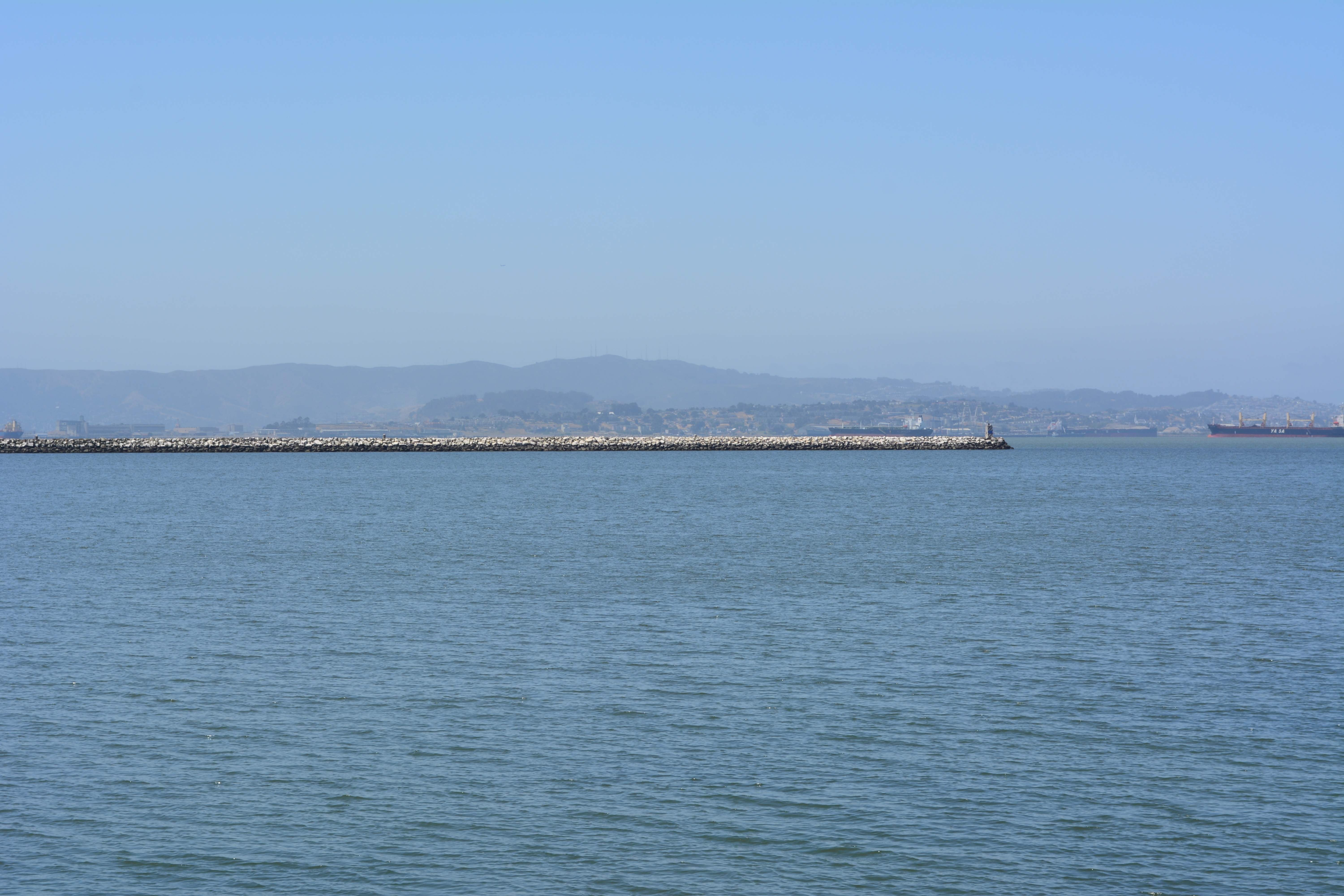
Breakwater Island viewed from shoreline on west side of Seaplane Lagoon.  Breakwater Island is a roosting site for CA Brown Pelicans and other birds.  Island owned by city of Alameda.
Breakwater Island viewed from shoreline on west side of Seaplane Lagoon. Breakwater Island is a roosting site for CA Brown Pelicans and other birds. Island owned by city of Alameda.
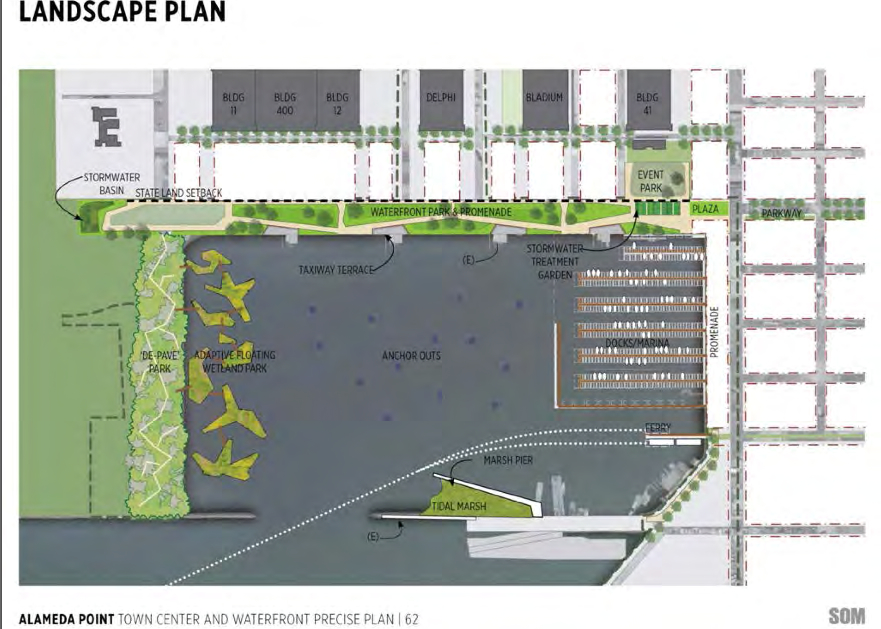
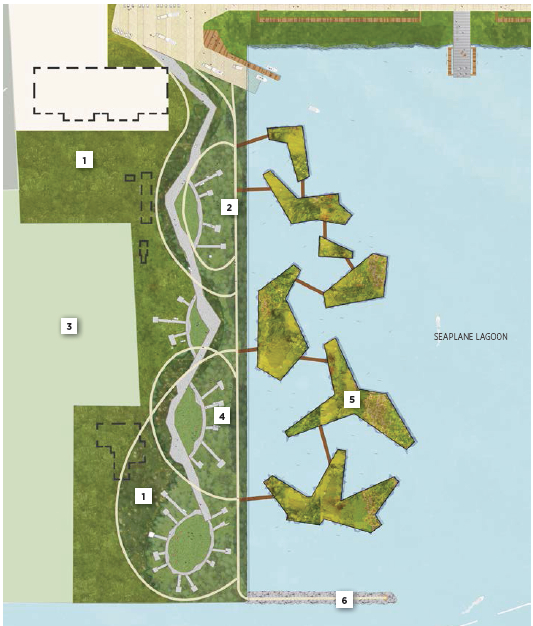
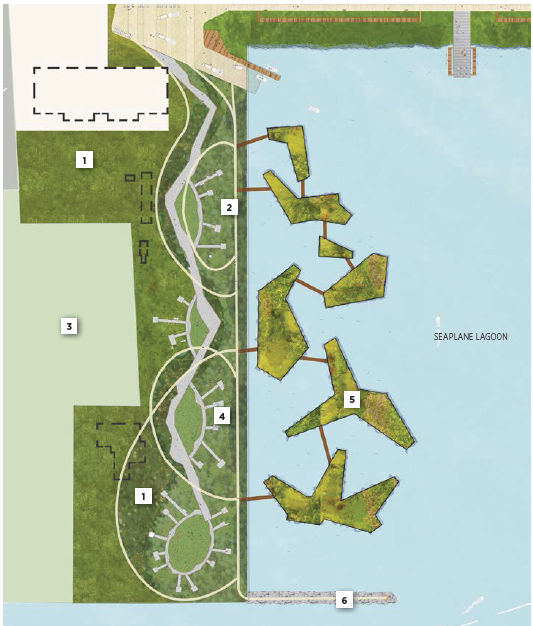
Landscape plan from 2013 showing no buildings on west (left) side of Seaplane Lagoon.  Buildings are now being recommended to stay.  Floating wetlands are a very long-range option if funding is available.
Landscape plan from 2013 showing no buildings on west (left) side of Seaplane Lagoon. Buildings are now being recommended to stay. Floating wetlands are a very long-range option if funding is available.
2014 plans for west side of Seaplane Lagoon show buildings in dashed lines.  Active leasing of buildings currently underway suggests buildings should be in solid lines and wetland in gray.
2014 plans for west side of Seaplane Lagoon show buildings in dashed lines. Active leasing of buildings currently underway suggests buildings should be in solid lines and wetland in gray.
Looking west from west side of Seaplane Lagoon.  Bay/Channel on left.  Building 29 on right.  City property extends beyond fence to far edge of Building 29 property line.
Looking west from west side of Seaplane Lagoon. Bay/Channel on left. Building 29 on right. City property extends beyond fence to far edge of Building 29 property line.
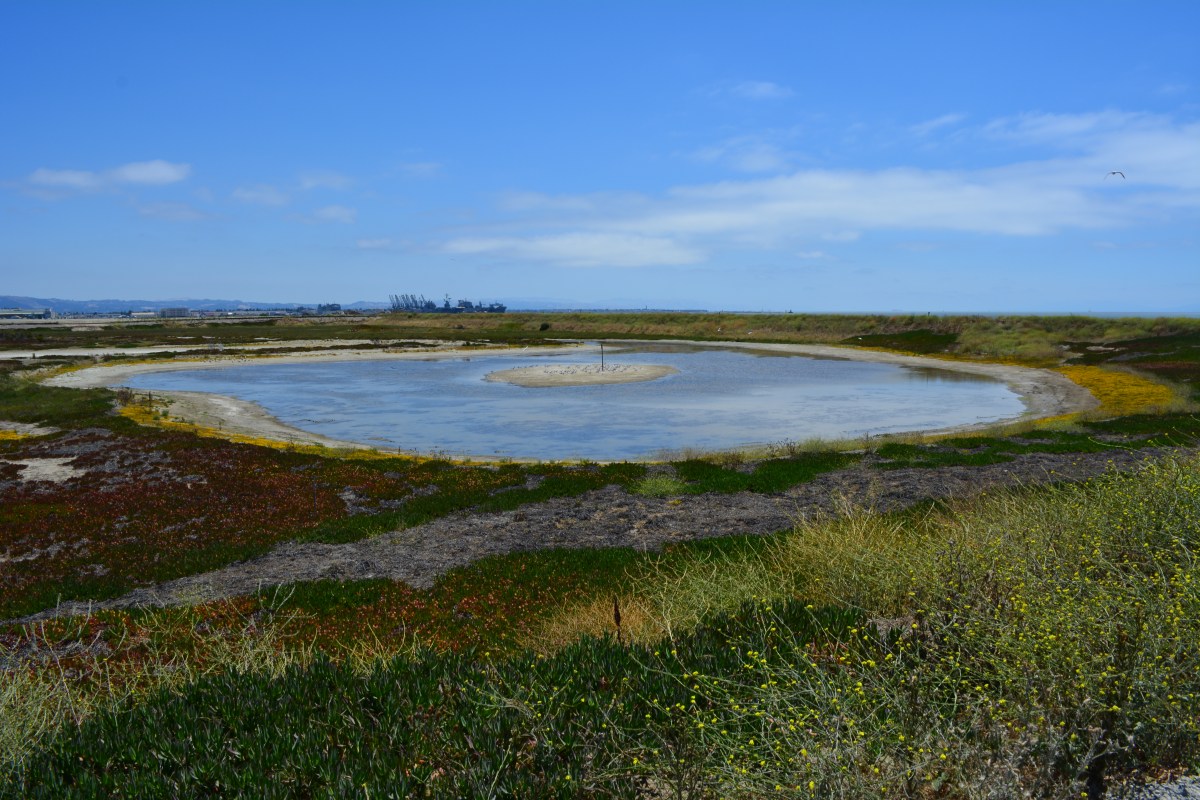
Runway Wetland area on federal property adjacent to Building s 25 and 29 on city property at west side of Seaplane Lagoon.  A naturalized west shoreline of Seaplane Lagoon, with public access, would enhance the greater wildlife habitat in this area.
Runway Wetland area on federal property adjacent to Buildings 25 and 29 on city property at west side of Seaplane Lagoon. A naturalized west shoreline of Seaplane Lagoon, with public access, would enhance the greater wildlife habitat in this area.

Take the plunge!  Remove pavement on the west side of the Seaplane Lagoon and improve our environment.

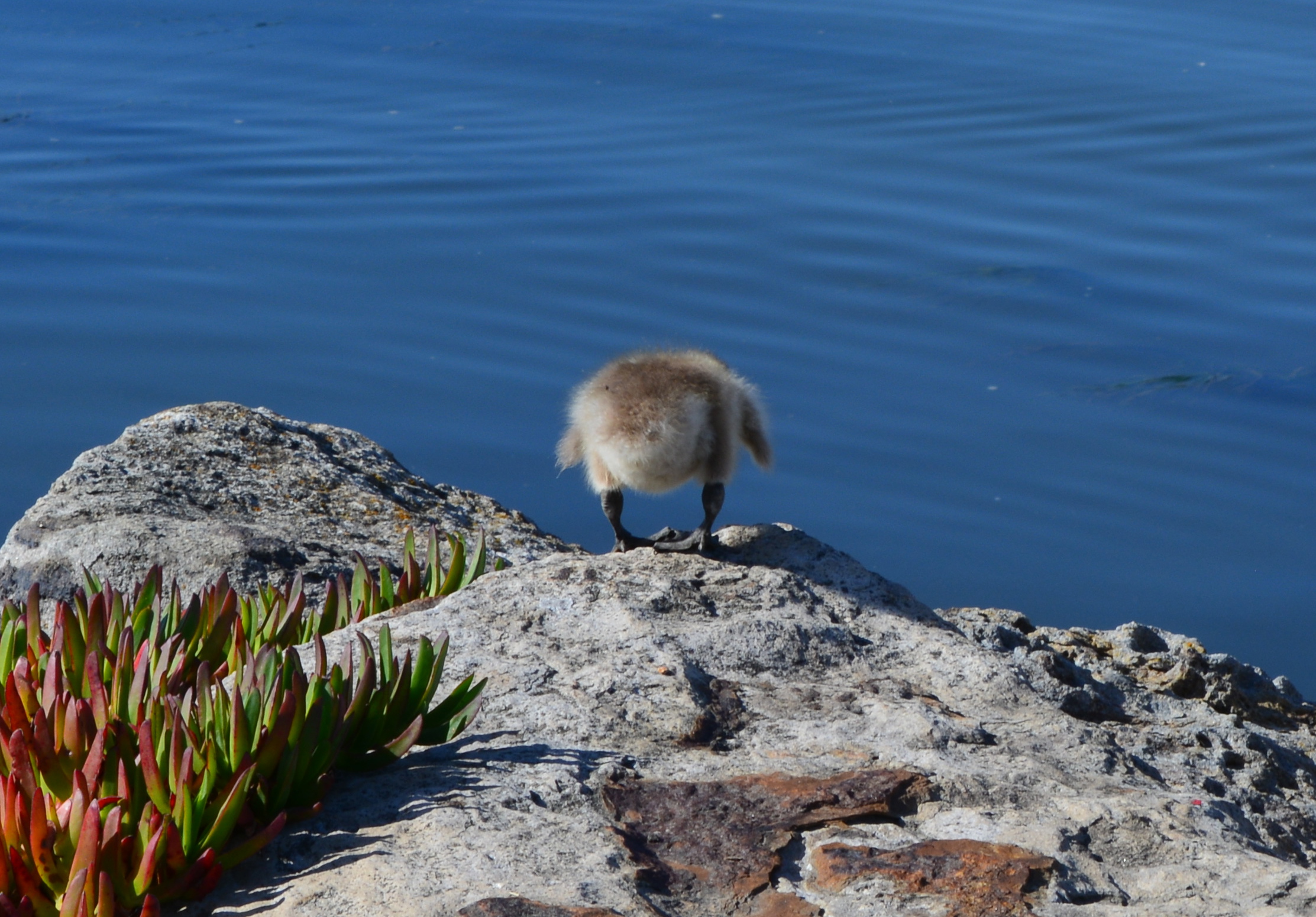
Gosling ready to plunge onto rocks below, on west side of Seaplane Lagoon, to get to parents in the Alameda Point Channel.
Gosling ready to plunge onto rocks below, on west side of Seaplane Lagoon, to get to parents in the Alameda Point Channel.  It was successful.

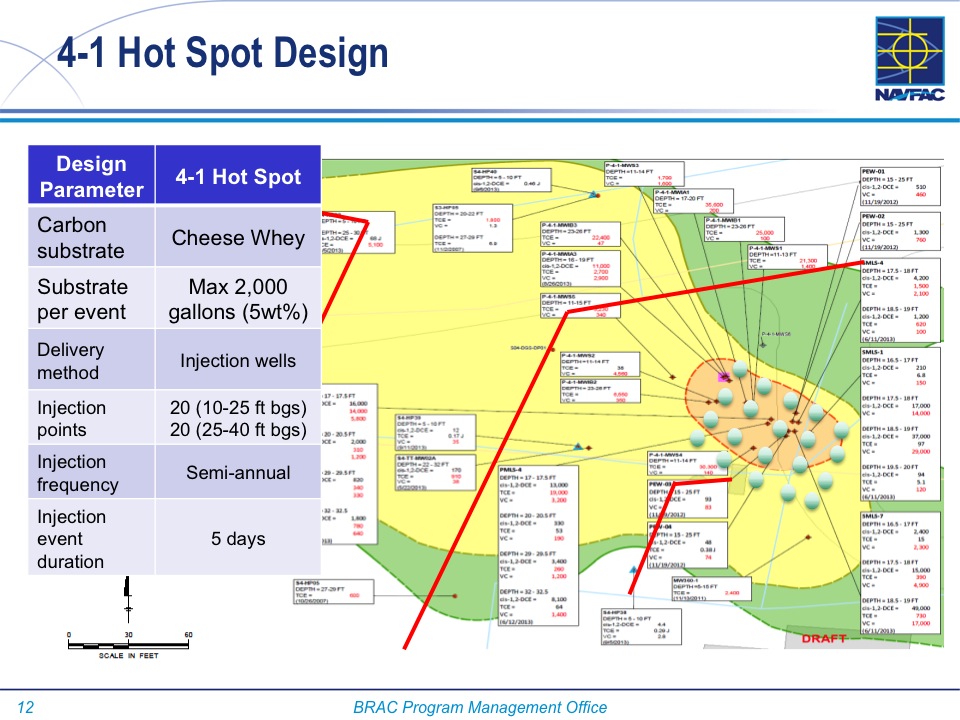
Groundwater solvent cleanup will use cheese whey and veggie oil to feed natural bacteria

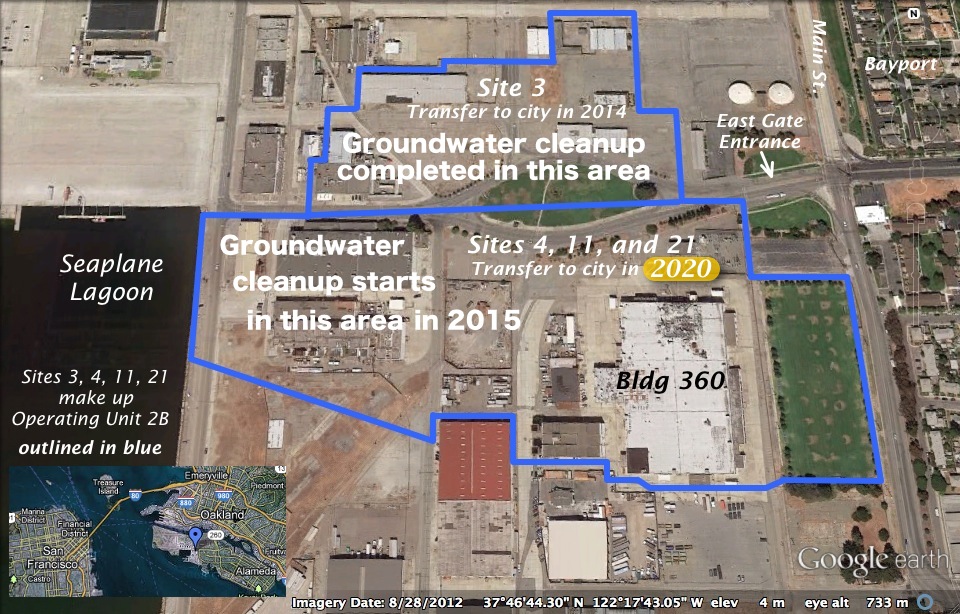
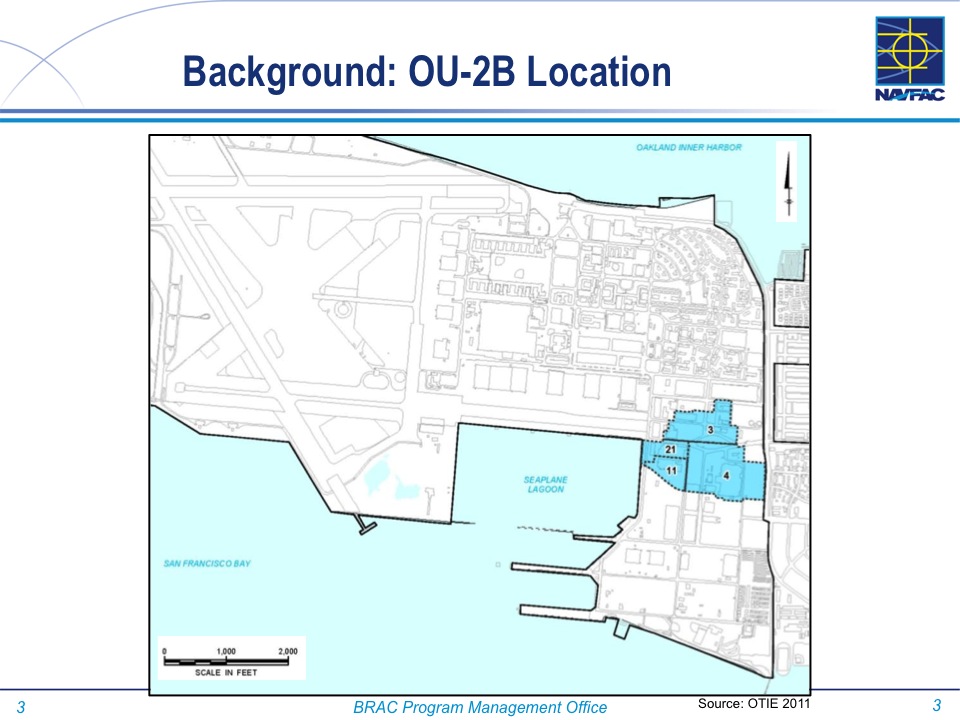
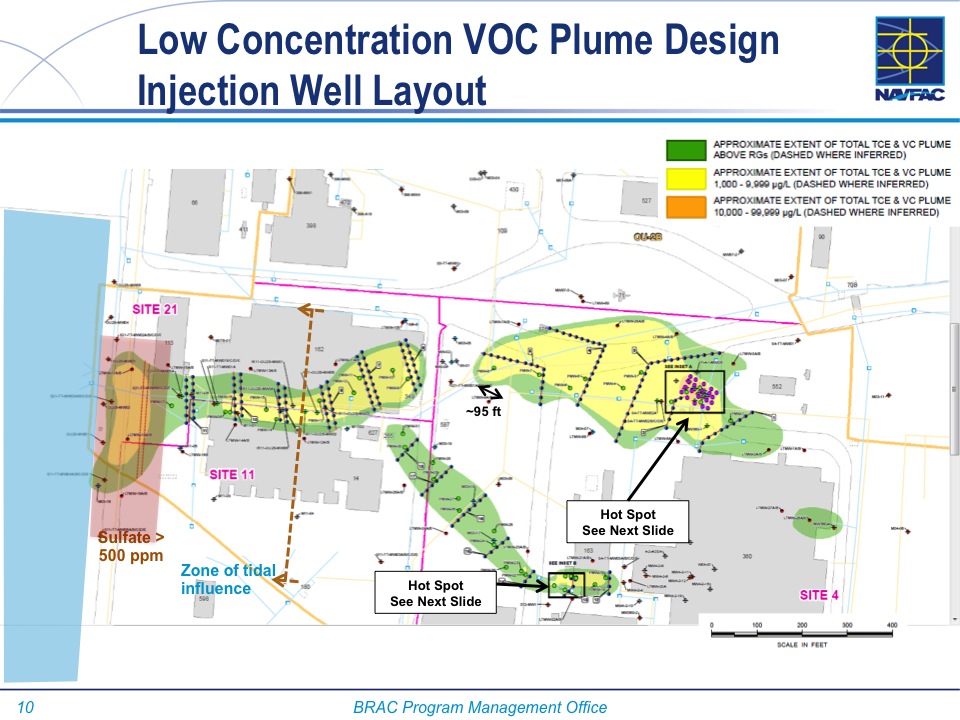
Cleanup Operating Unit 2B at east entry to proposed Town Center - Alameda Point.    Graphics by Alameda Point Environmental Report.
Cleanup Operating Unit 2B at east entry to proposed Town Center – Alameda Point. Graphics by Alameda Point Environmental Report.

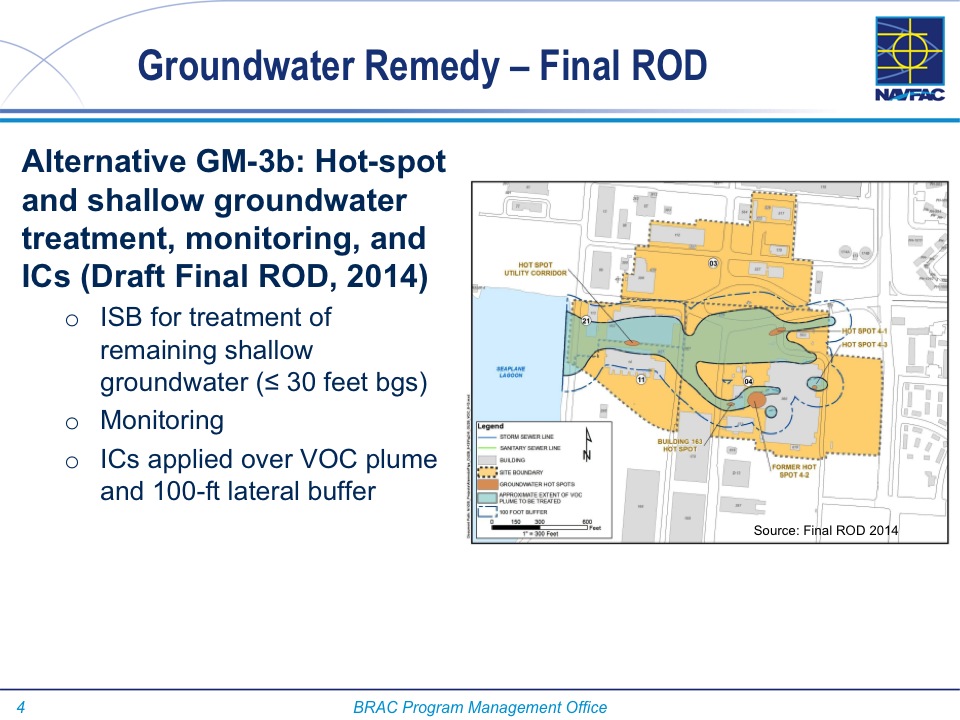
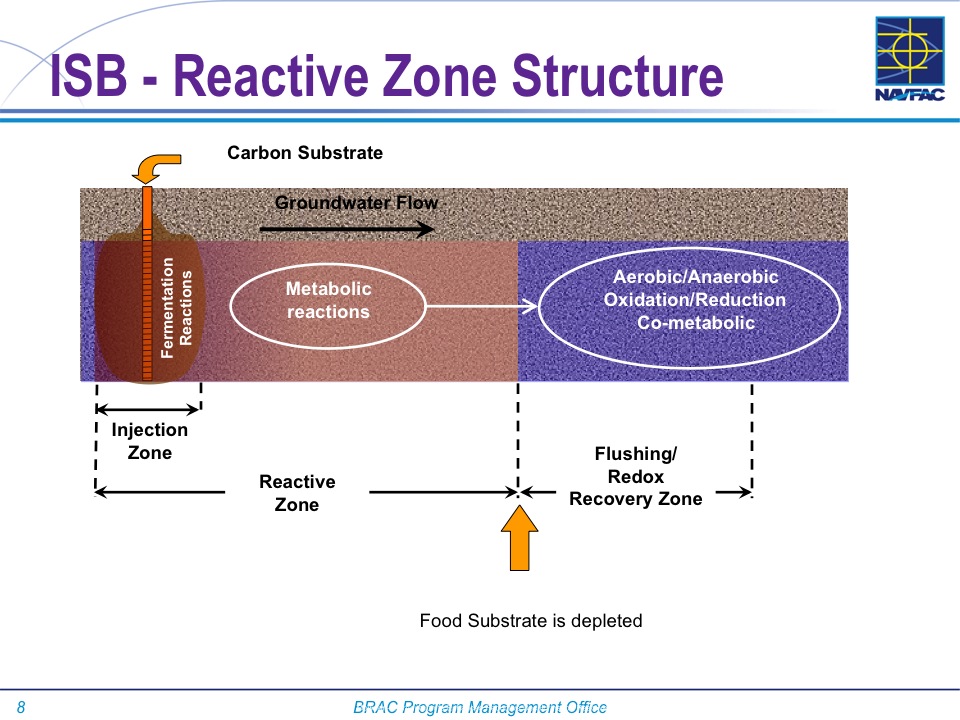
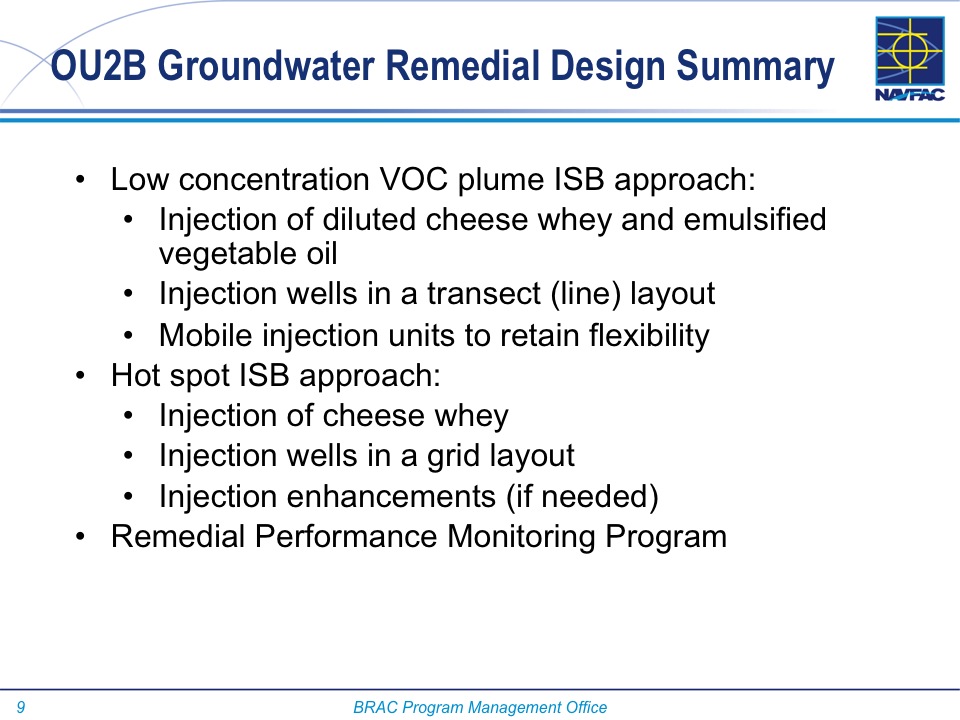
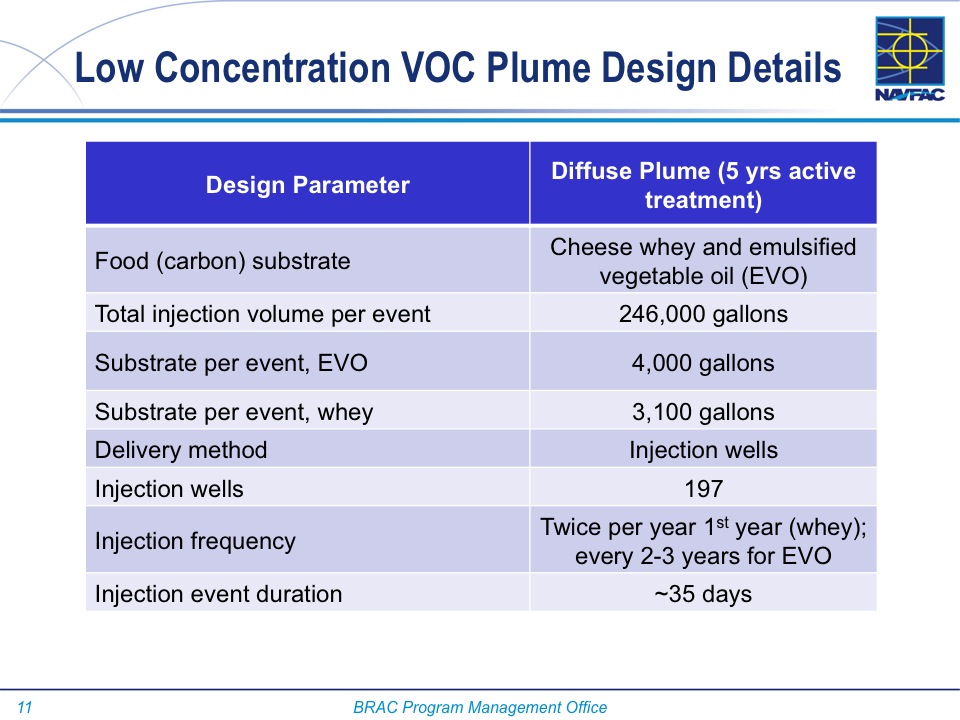
A Navy contractor will be cleaning up groundwater in part of the Town Center area next to the Seaplane Lagoon by injecting a solution of cheese whey, emulsified vegetable oil and water into nearly 200 wells that go down between 30 and 40 feet. The whey and vegetable oil will cause natural bacteria to flourish that will feed on the toxic trichloroethene (TCE) solvent causing it to break down.

According to the Navy, this type of food-stimulated bacterial bioremediation is common. The cheese whey is similar to the powdered whey products found in grocery stores. It will be delivered to the site already diluted in water. A hose will be connected to a fire hydrant and hooked to a metering device that will mix the whey and oil solution with municipal water as it is pumped into the wellheads.

The work is expected to begin in 2015, with periodic visits and testing until 2020. The first year of operation the contractor will make two visits of 35 days each. During each of these work periods they will inject 246,000 gallons of whey, oil, and water solution into the ground, allowing gravity to disperse the liquid.

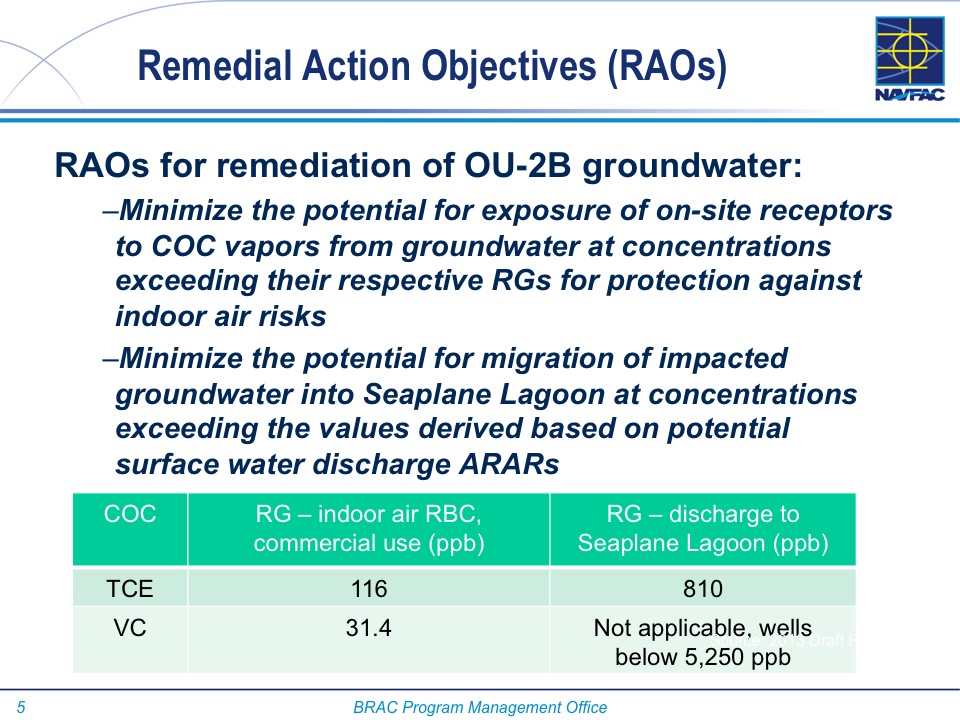
The goal of the cleanup is to minimize the potential for hazardous vapors entering buildings, and chemicals migrating into the Seaplane Lagoon. TCE is an industrial solvent used to degrease metal parts. It was heavily used at aircraft and ship engine repair facilities on the site. A leak from a rail car is believed to be one of the major sources of the plume.

The 33-acre cleanup area is immediately to the south of the Navy jet on West Atlantic Avenue at the east entry to Alameda Point near Main Street. It is within the 150 acres of the Town Center that the city is seeking to develop in the near future.  In April, the city council sent out requests seeking qualified developers interested in residential and commercial projects. The cheese and veggie oil cleanup area will not be transferred to the city until at least 2020 when cleanup has been certified to have met its goals.

Cleanup of fuel in groundwater ended about four years ago at an old fuel distribution point on the north side of the jet monument.

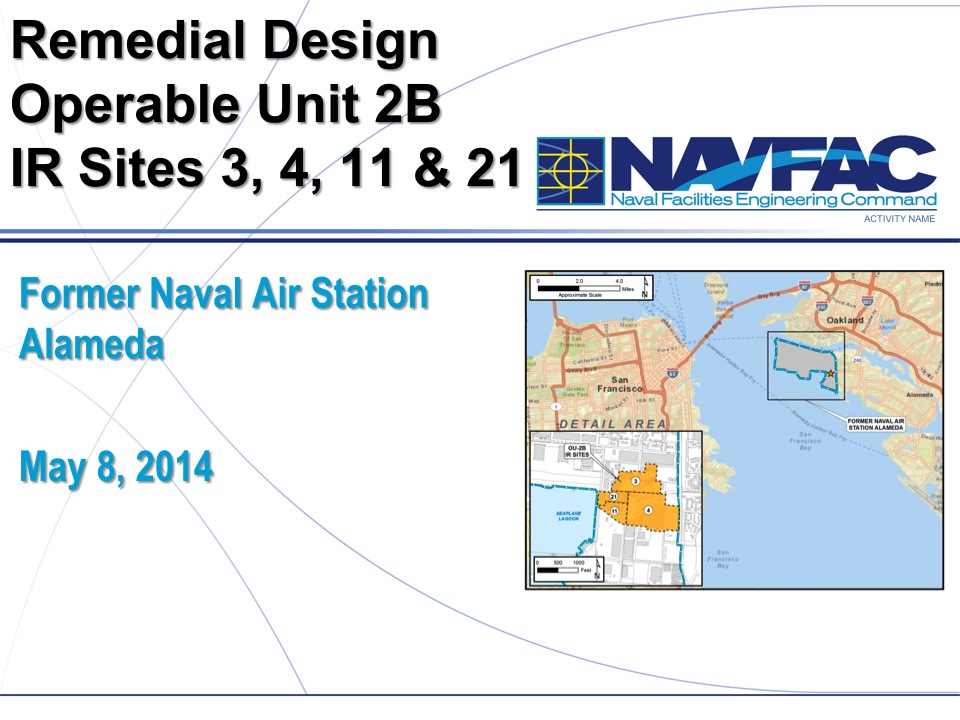
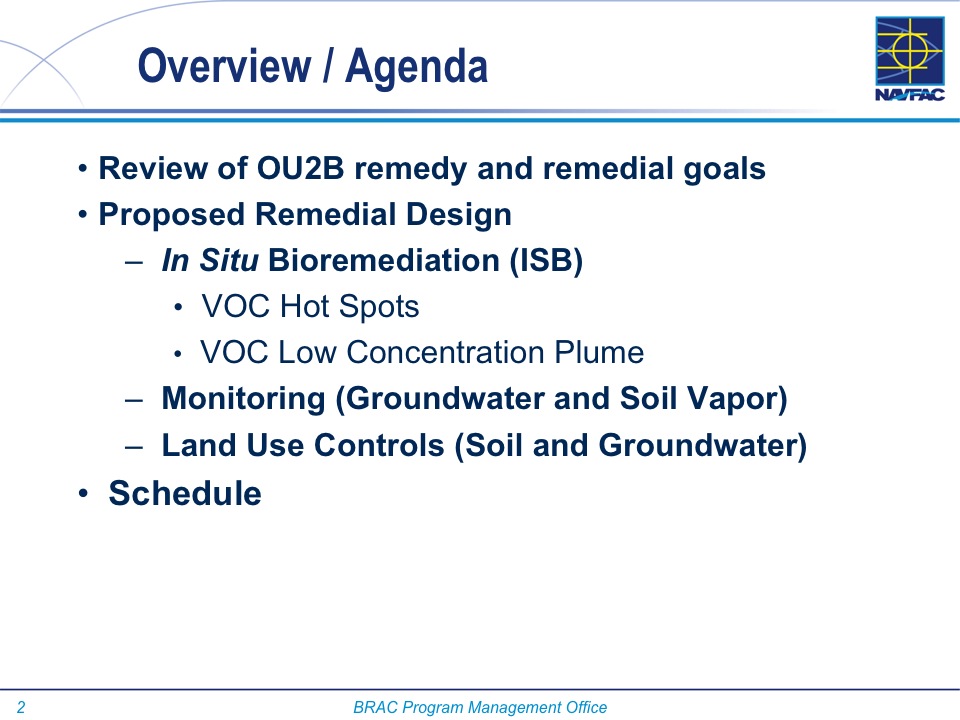
Below is an audio and image presentation from the Alameda Point Restoration Advisory Board meeting on May 8, 2014.

voice graphic w:text

Slide01

Slide02

Slide03

Slide04

Slide05

Slide06

Slide07

Slide08

Slide09

Slide10

Slide11

Slide12

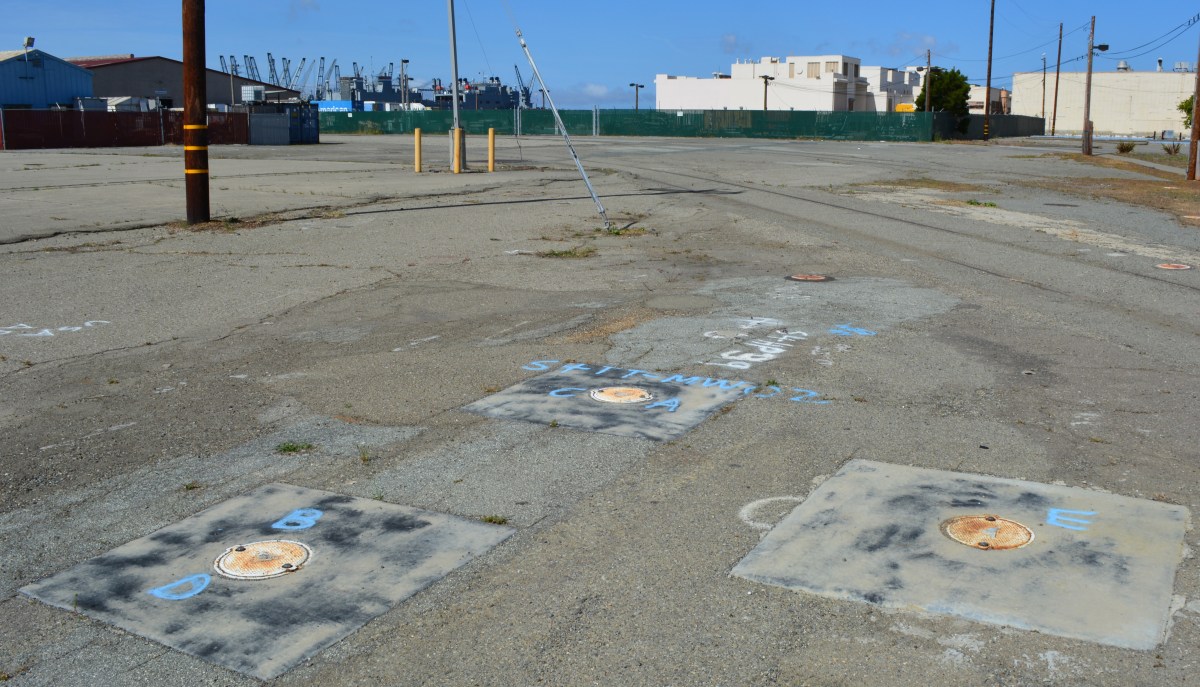
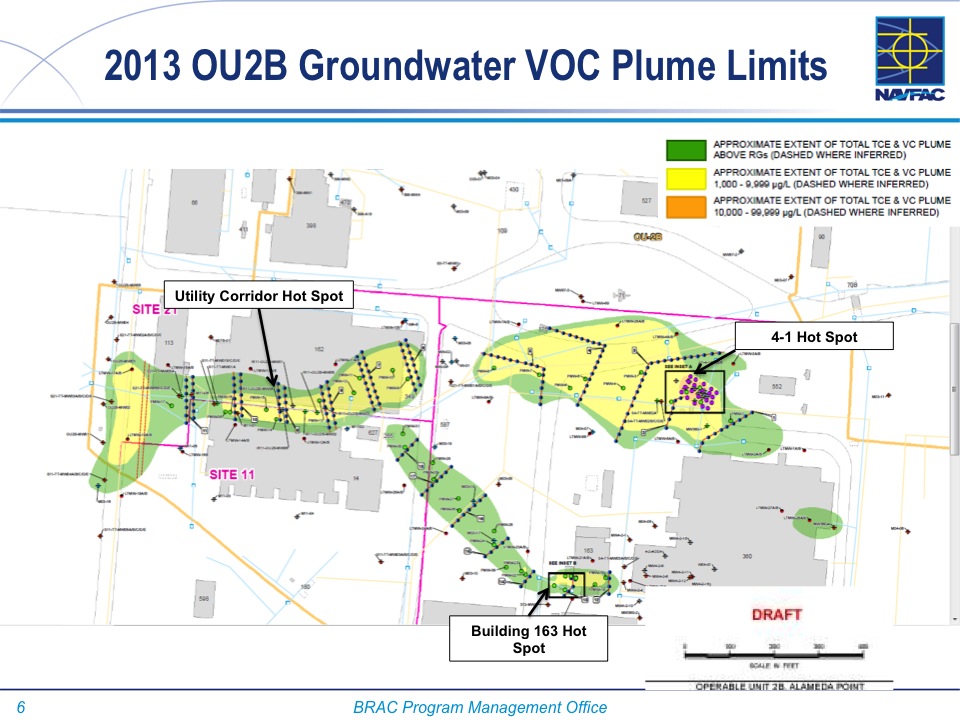
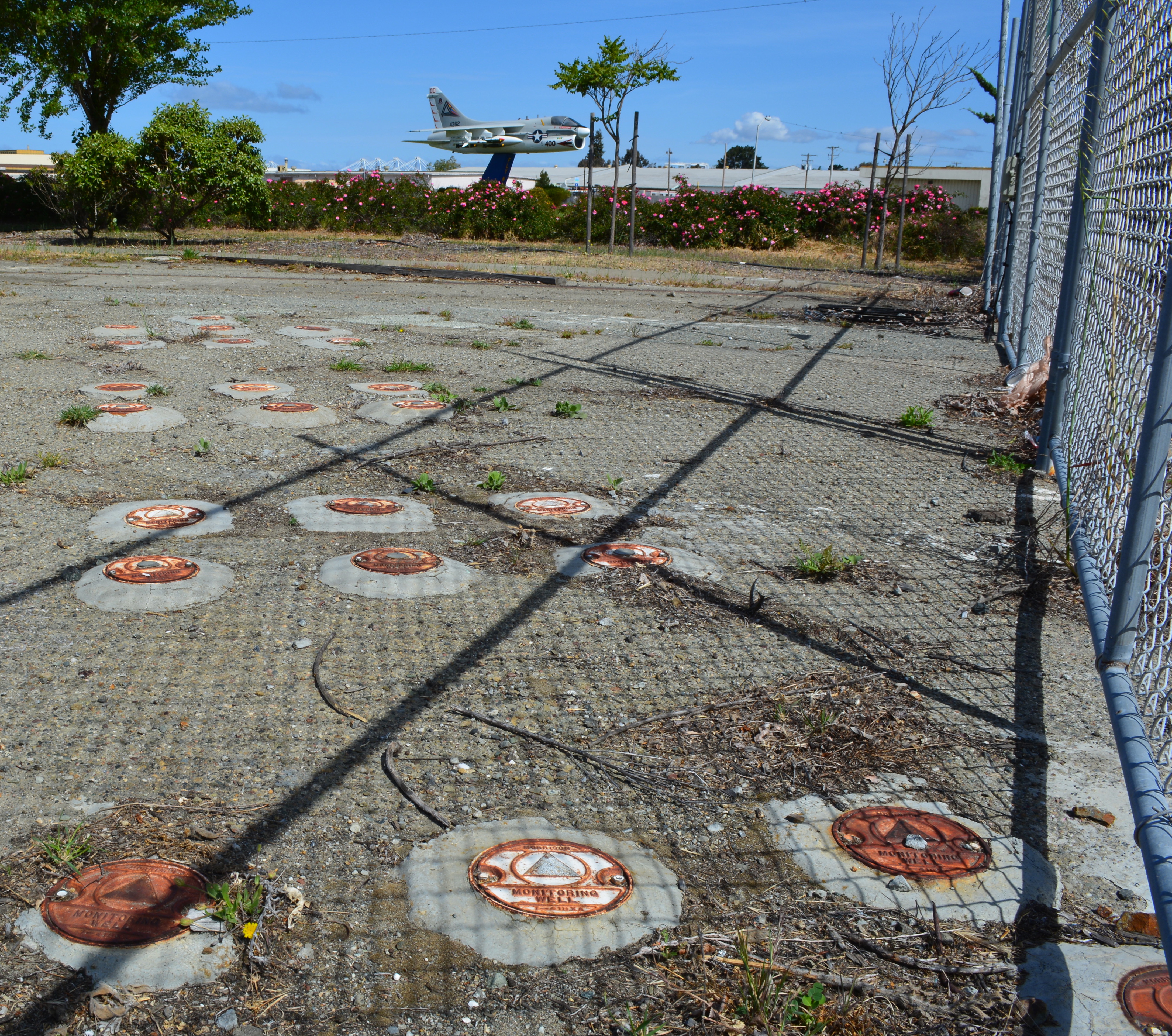
One of the high contamination "hot spots" that will get extra treatment to cleanup trichlorethene solvent in groundwater 30 to 40 feet deep.
One of the high contamination “hot spots” that will get extra treatment to cleanup trichloroethene solvent in groundwater 30 to 40 feet deep.
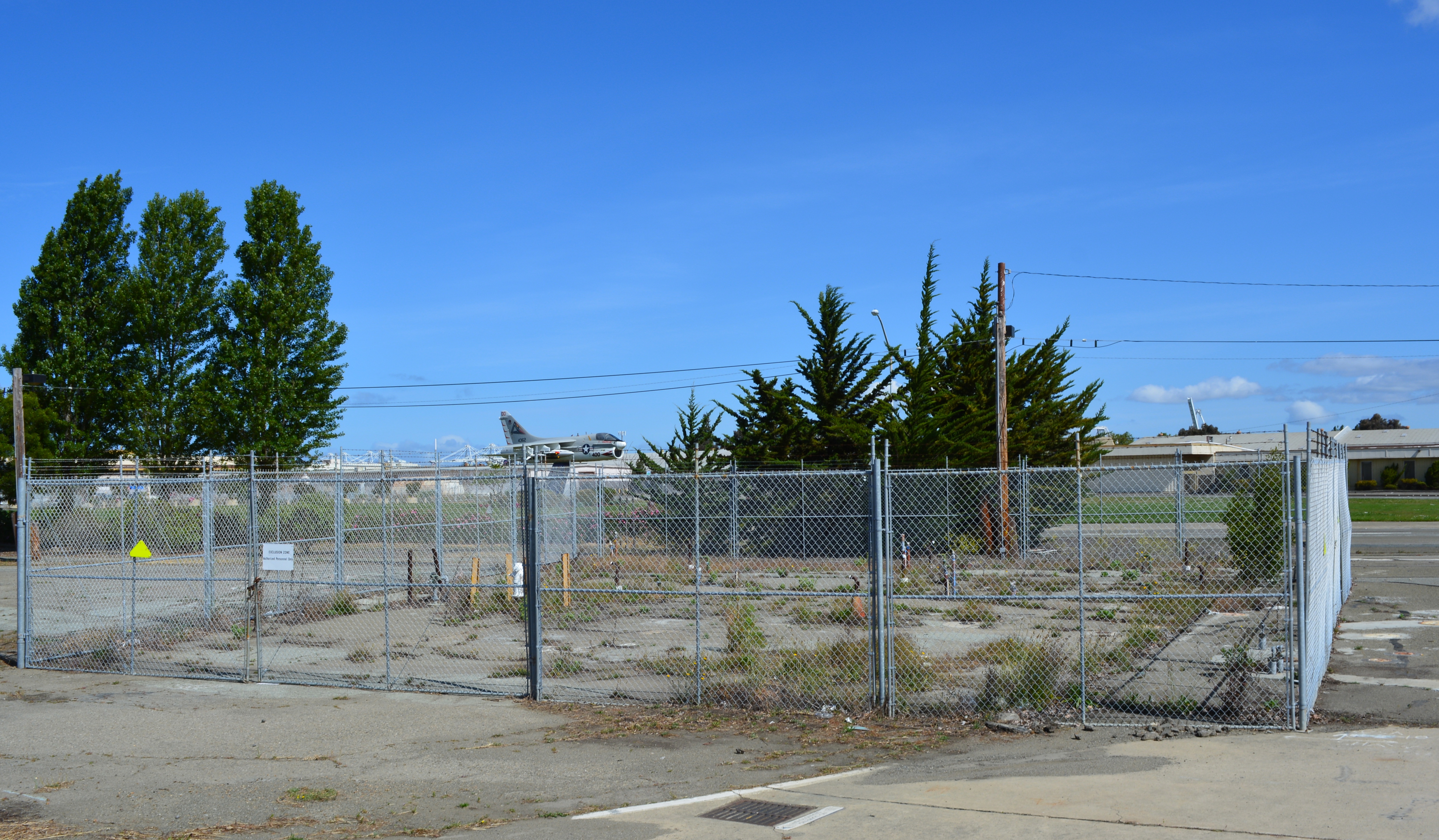
Fenced area is where testing was conducted.  This is one of the hot spot areas that will get extra attention to clean up trichloroethene in groundwater.
Fenced area is where testing was conducted. This is one of the hot spot areas that will get extra attention to clean up trichloroethene in groundwater.
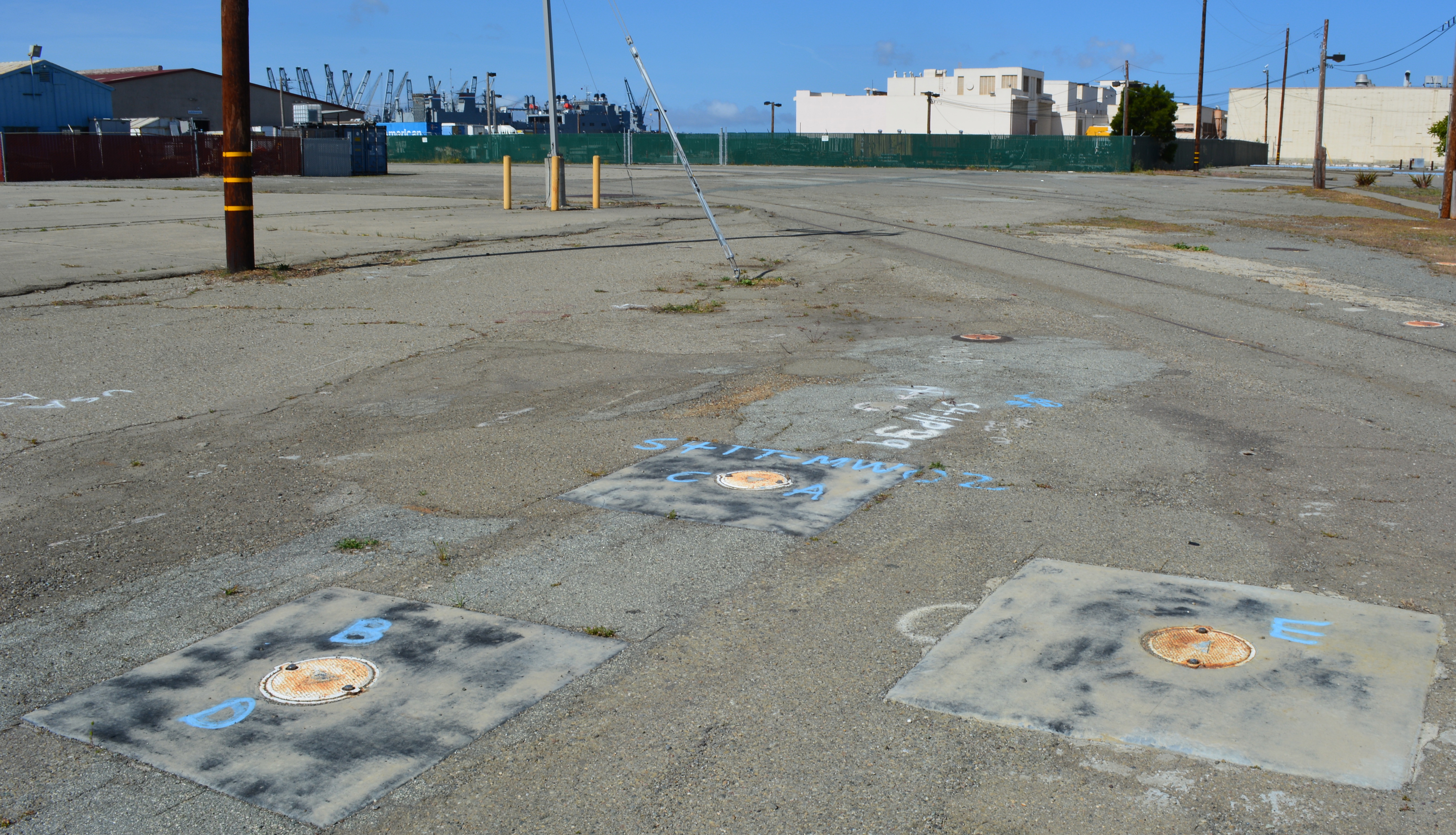
Groundwater cleanup area on OU-2B.  Cleanup will not be completed until 2020.  Looking west with maritime ships in background in Seaplane Lagoon.
Groundwater cleanup area on OU-2B. Cleanup will not be completed until 2020. Looking west with maritime ships in background in Seaplane Lagoon.

Phony green shoreline park plans for Seaplane Lagoon at Alameda Point

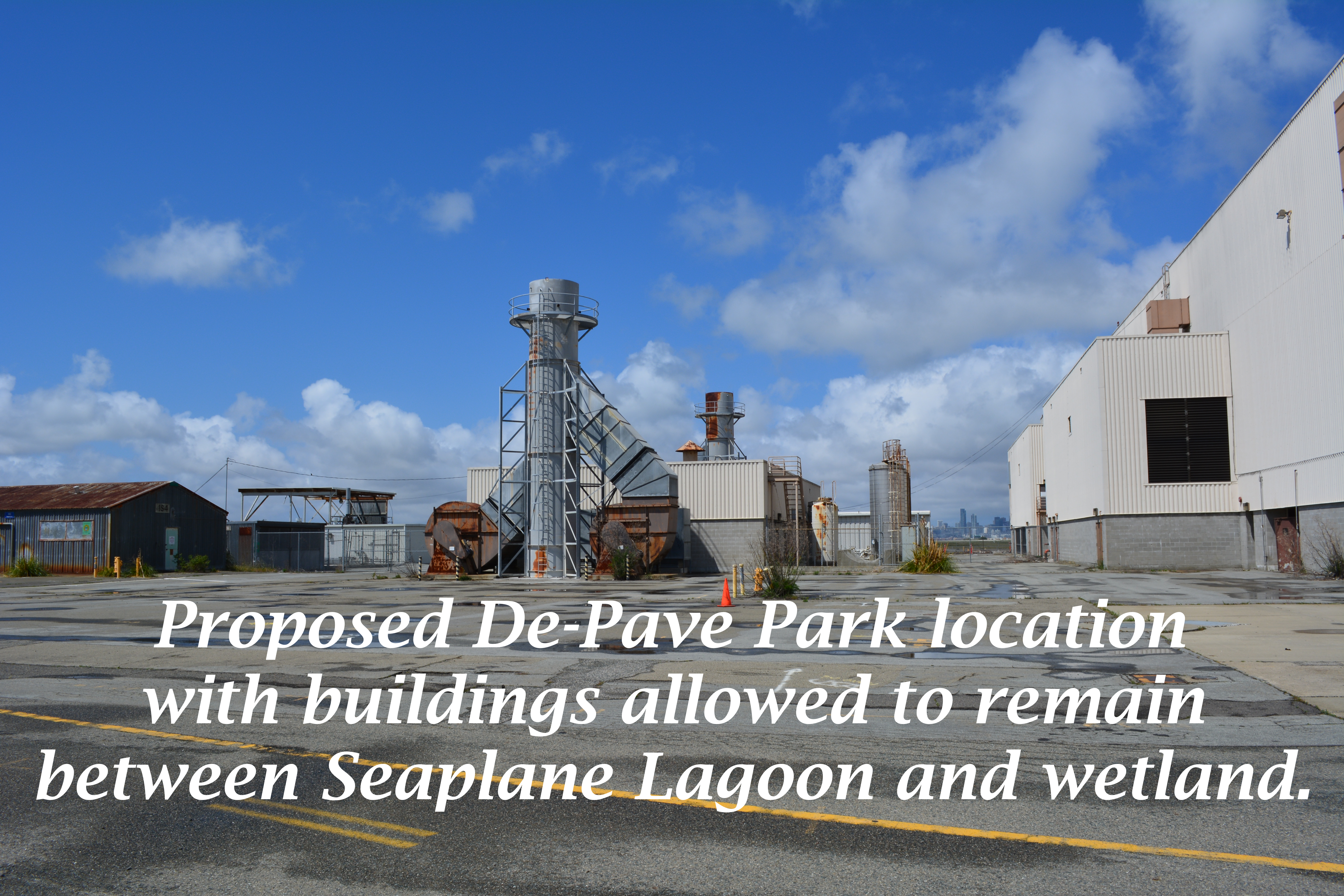
The drawing and images for the so-called “De-Pave Park” on the western side of the Seaplane Lagoon would be something to cheer about if the park had any chance of ever being created. The text of the city’s recently released Town Center and Waterfront Plan, however, allows existing industrial buildings along the western edge of De-Pave Park to remain “if needed.”

Proposed De-Pave Park location w:buildings

Such a caveat sets the framework for never moving forward with the plans. If the buildings are being leased, the buildings will be “needed.” If the buildings are needed, then the pavement around them will also be needed. The city is continuing to market these buildings to tenants and, thus, there’s not likely to come a day when we try to secure grant money to develop the park.

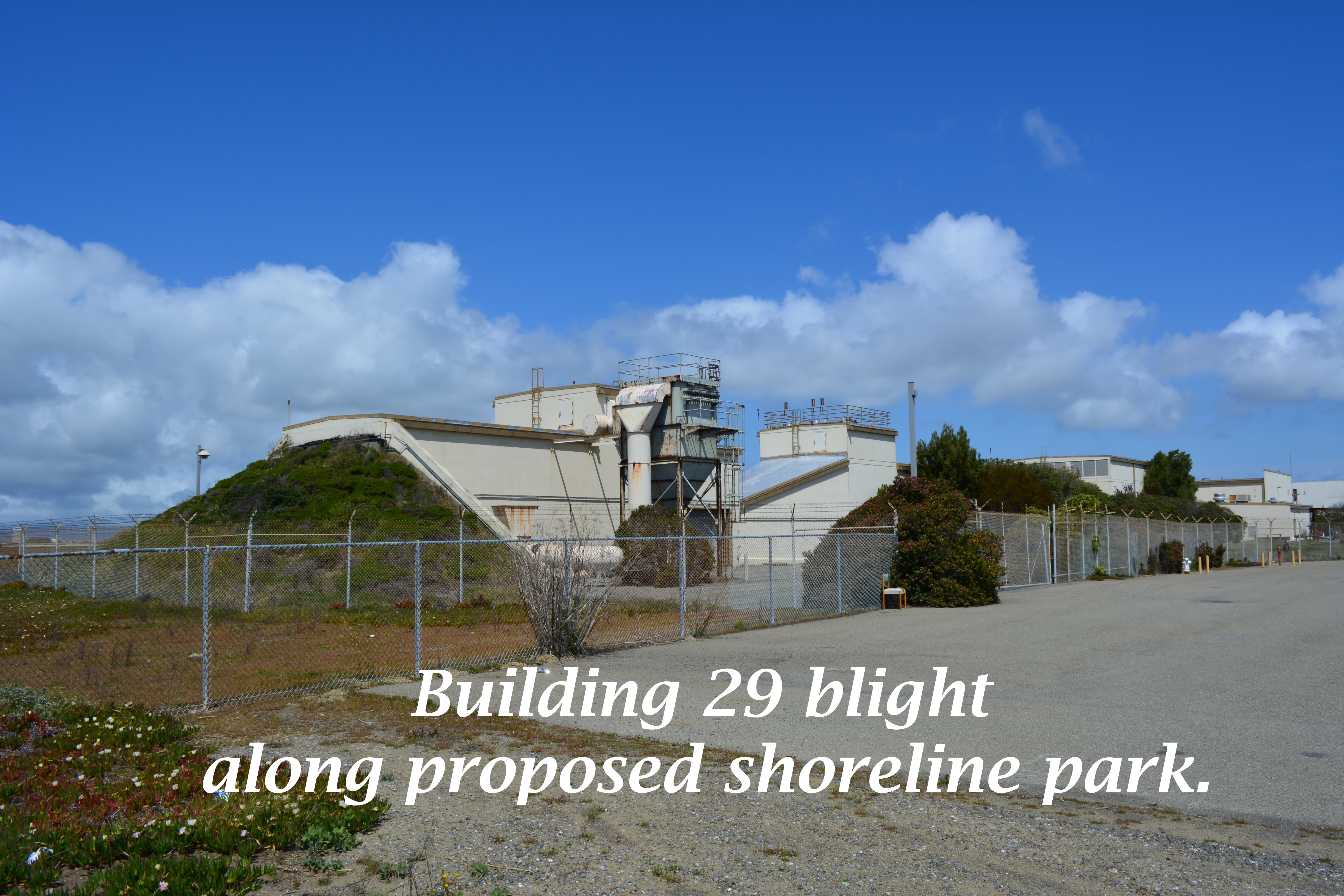
Building 29 blight

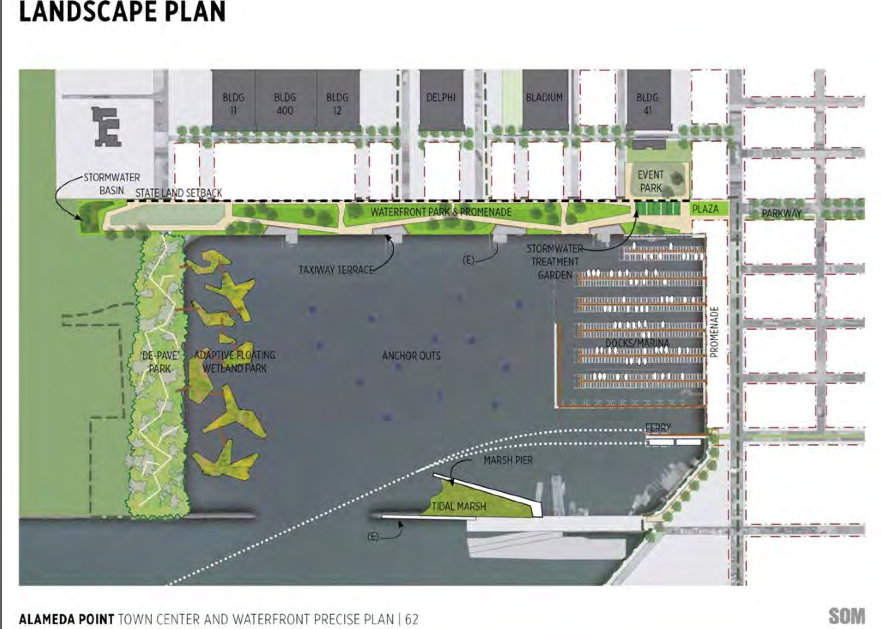
This is a change from the first presentation of De-Pave Park in 2013 when the Town Center and Waterfront Plan was rolled out. The existing structures were not shown in that drawing.  The community was led to believe that all structures would be removed to provide a natural wetland-oriented transition to the existing Runway Wetland on federal property. Not so anymore. The structures can stay.

Conceptual plan presented in 2013 did not indicate that any buildings would remain between De-Pave Park and the Runway Wetland on the federal property.
2014 De-Pave Park plan shows dashed lines indicating existing structures that will be allowed to remain "if needed."
2014 De-Pave Park plan shows dashed lines indicating existing structures that will be allowed to remain “if needed.”  Floating wetlands do not exist right now, and probably never will.

The infrastructure plan now has a levee protecting the 55-foot tall “Building 25” from sea level rise. There would be no reason to protect this eyesore if it was slated for permanent removal. Furthermore, the building is part of the mixed-use commercial and residential waterfront zone where even a hotel is permitted.

55-foot tall "Building 25" that will be protected by a levee, and remind campers that they are on an old military industrial site, as they gaze at the night stars.
55-foot tall “Building 25” that will be protected by a levee, and remind campers that they are on an old military industrial site, as they gaze at the night stars.

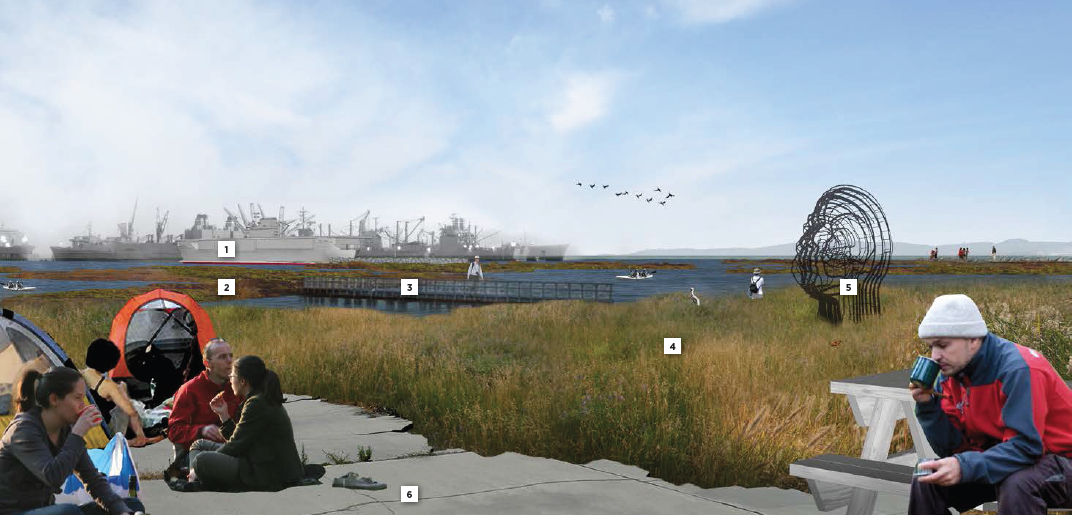
The plan’s conceptual drawing and photo collage showing campers, hikers, and grasslands does not include a view to the west, and with good reason.  It would show the industrial legacy that will interrupt the potentially expansive views toward the west. It’s deceptive advertising.

Looking toward the Seaplane Lagoon in conceptual drawing for De-Pave Park.  No drawings are offered to inform viewers that directly behind this vantage point are old industrial buildings that will be allowed to stay "if needed."  There is currently no plan to remove the industrial buildings.
Looking toward the Seaplane Lagoon in conceptual drawing for De-Pave Park. No drawings are offered to inform viewers that directly behind this vantage point are old industrial buildings that will be allowed to stay “if needed.” There is currently no plan to remove the industrial buildings.

Parks, as we’ve learned during the new zoning designations for Alameda Point, are zoned Open Space. This “park” is not zoned Open Space. It’s another indication that the so-called “De-Pave Park” is phony.

Changing the western shoreline of the Seaplane Lagoon to a wetland-grassland landscape connected to the Runway Wetland would implement climate change adaptation goals and carbon sequestration goals. Without a commitment by the city to implement De-Pave Park in the Town Center and Waterfront Plan – including removal of all buildings on the western side of the Seaplane Lagoon – a great opportunity to help rebalance the San Francisco Bay ecosystem will fall through the loopholes.

City Hall is requesting comments on the draft plans for the Town Center and Waterfront Plan by May 15, in preparation for a June 9 Planning Board meeting. The plan will be the guiding document on how, where, and what gets built around the Seaplane Lagoon. The city council is expected to approve the plan in July. Comments can be submitted to city planner Andrew Thomas at athomas@alamedaca.gov for forwarding to the Planning Board.

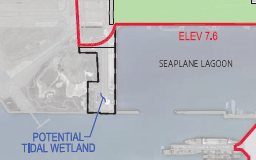
Red line indicates levee that will protect "Building 25."
Red line indicates levee that will protect “Building 25.”
Western side of the Seaplane Lagoon with potential for a major rebalancing of the Bay ecosystem.
Western side of the Seaplane Lagoon with potential for major improvements to the Bay ecosystem.
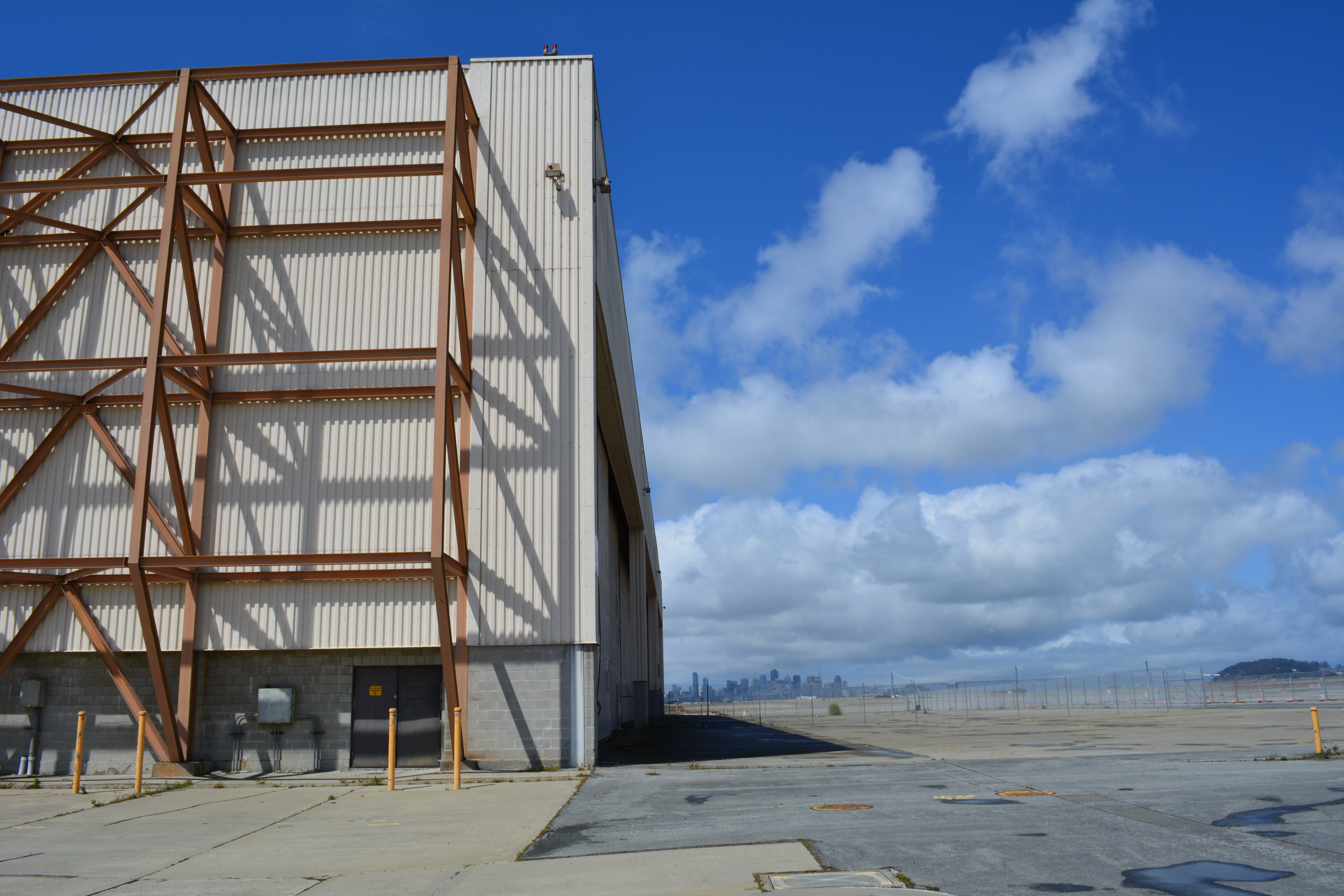
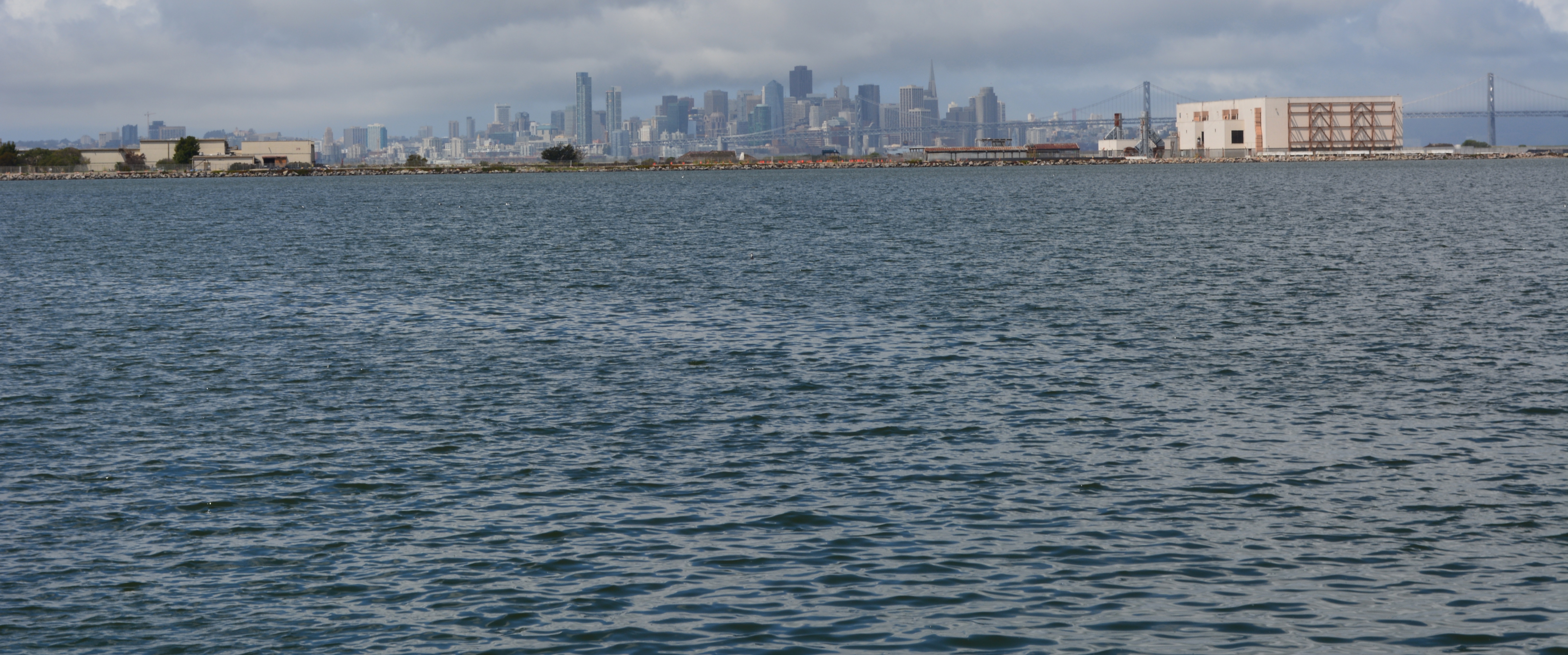
Seaplane Lagoon looking west, with blighted viewscape that will allowed to remain.  San Francisco is in background.  "Building 25" is the large building on the right that will be saved by a levee.
Seaplane Lagoon looking west, with blighted viewscape that will be allowed to remain. San Francisco is in background. “Building 25” is the large building on the right that will be saved by a levee.


Reference:  Open Space, Landscape, and Sustainability sectionDraft Town Center and Waterfront Precise Plan for Alameda Point.

Landfill landscaping on Nature Reserve – Update October 2013

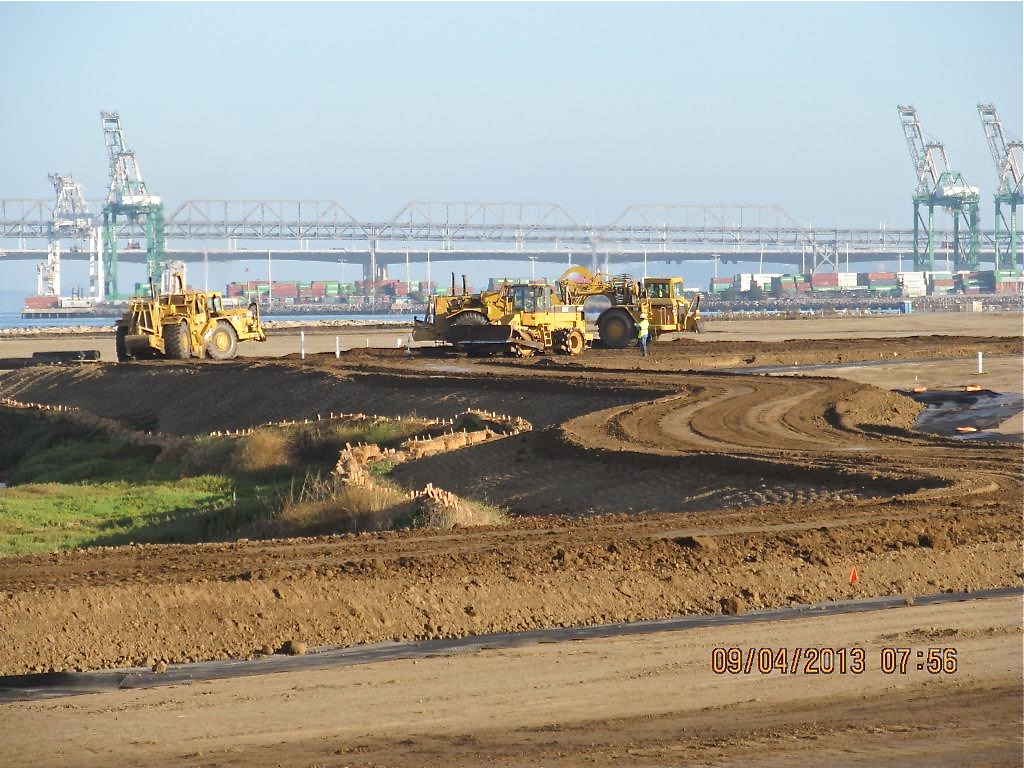
Landscaping of the 100-acre landfill area on the southwest corner of Alameda Point is nearing completion.  The seeding of the landfill site with flowering native grasses is almost ready to begin.  Contouring of the site is complete.  Stabilization of the shoulder around the wetland area is complete.  Placement of the final soil cover is underway.

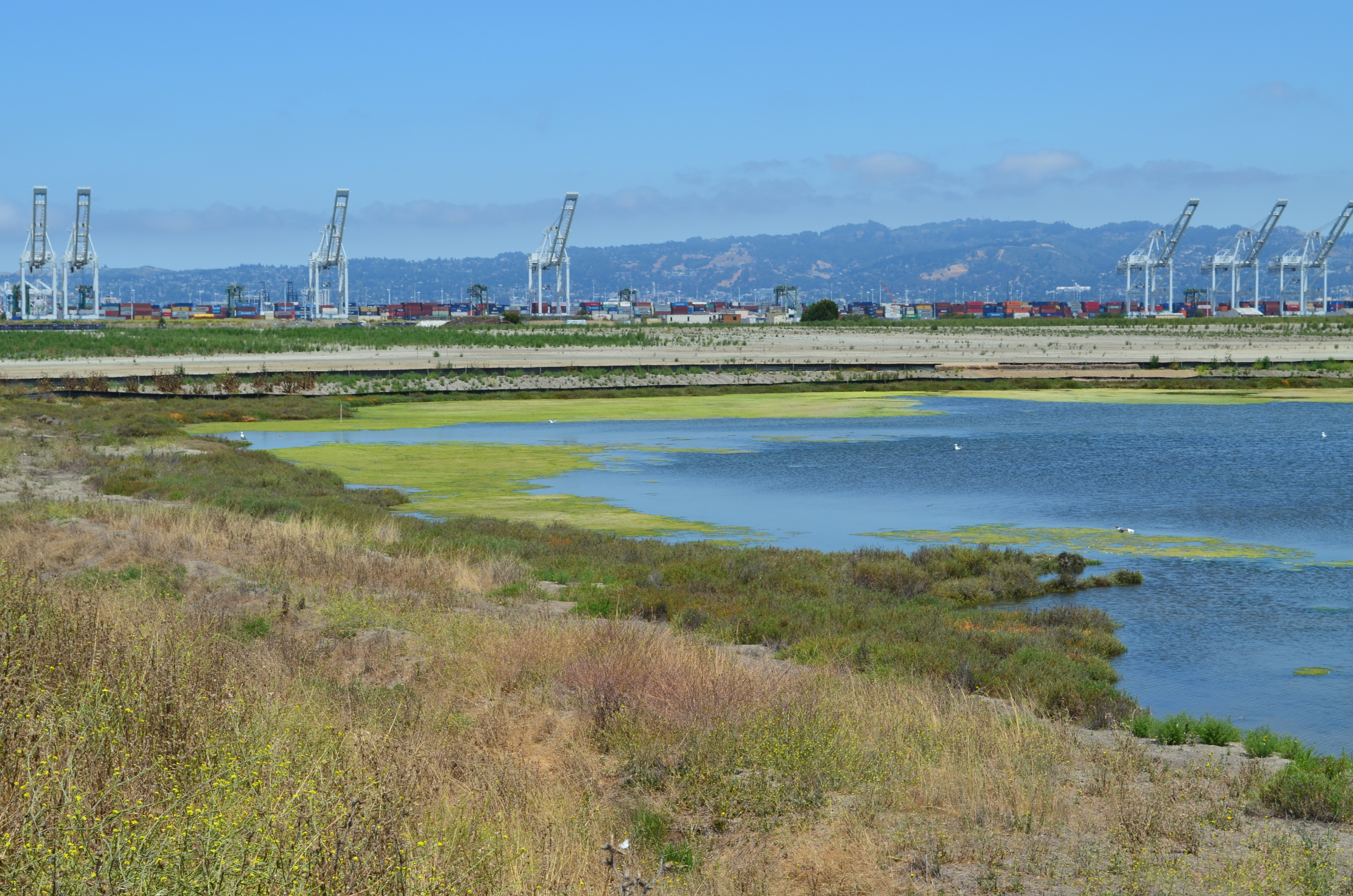
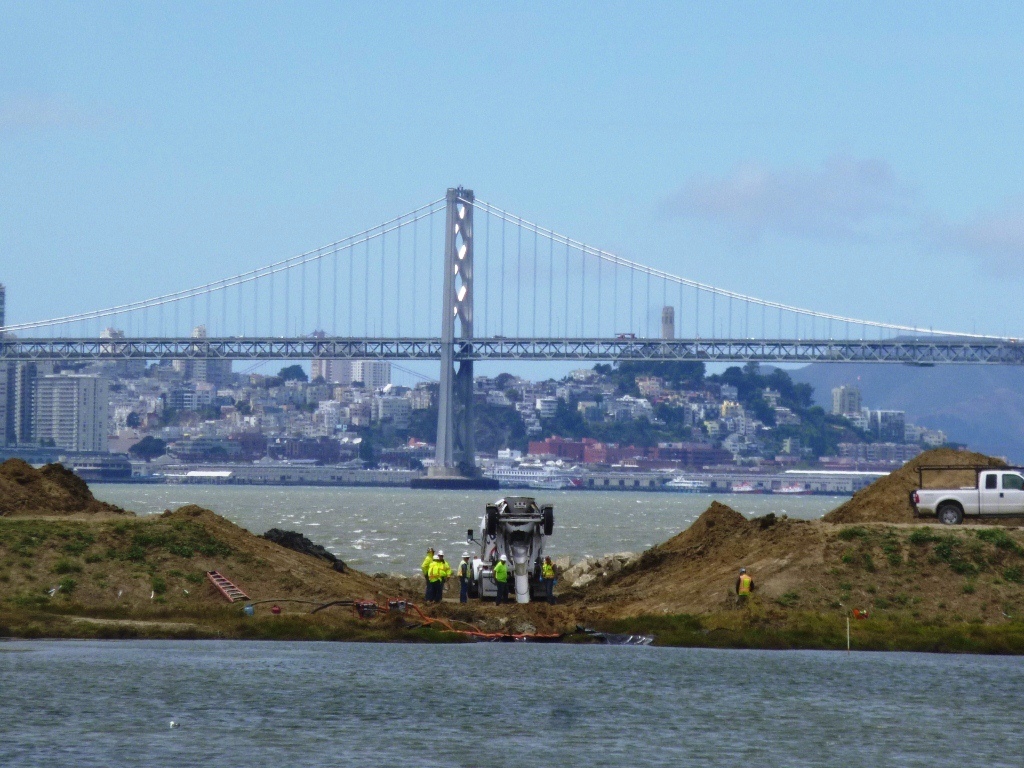
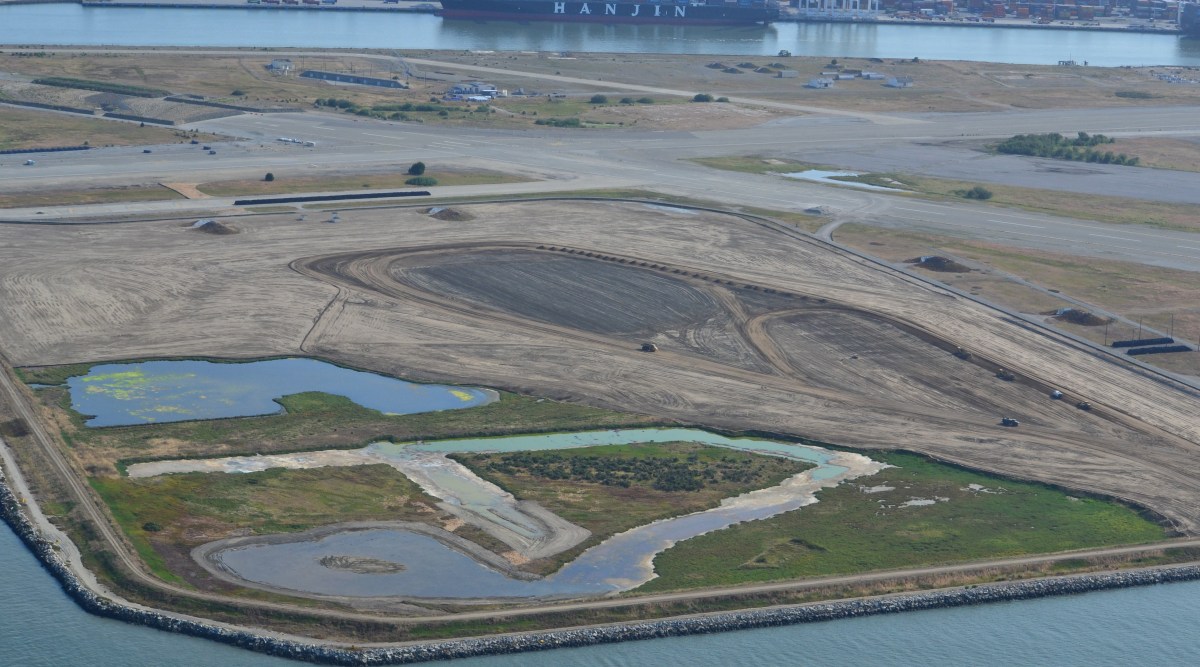
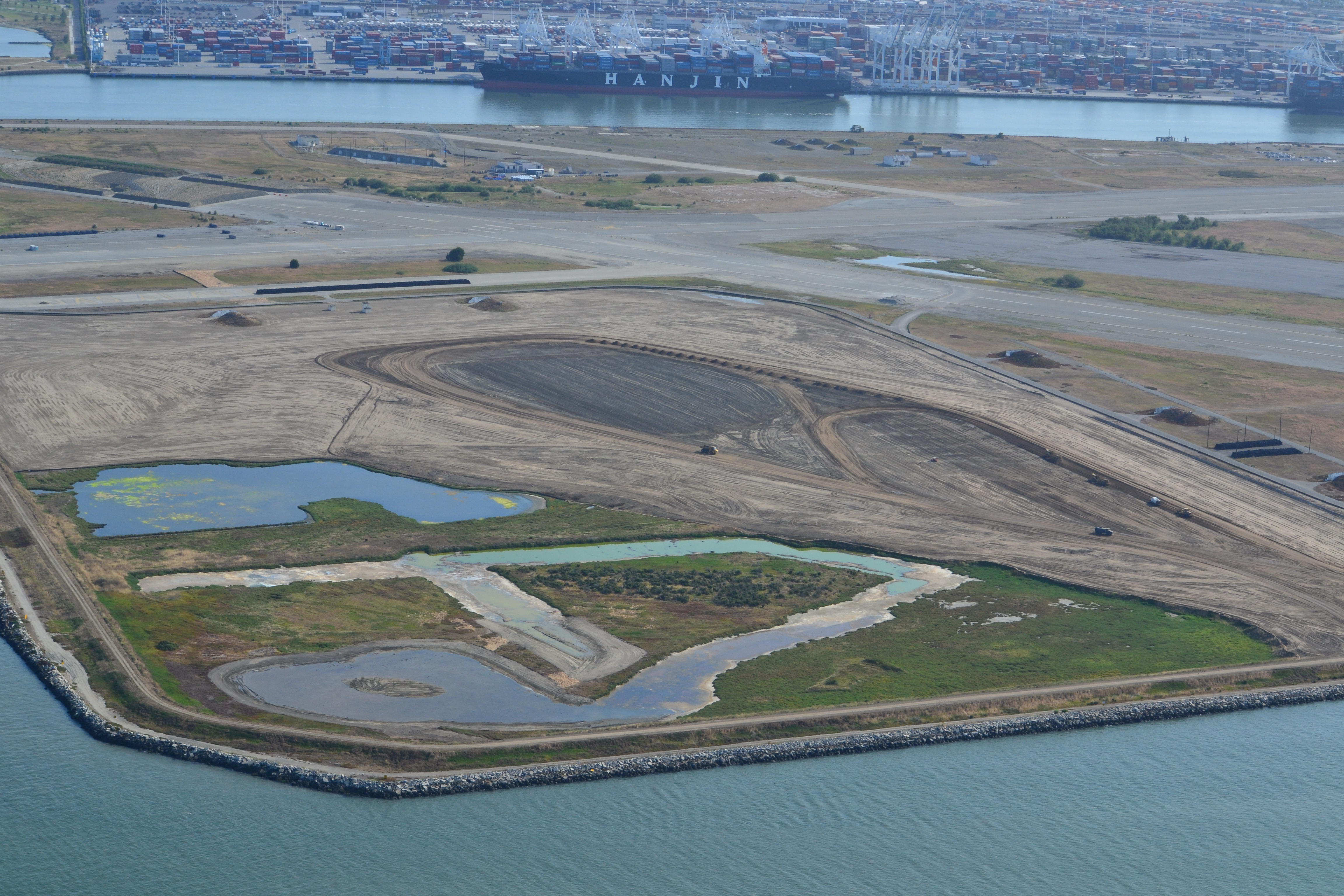
Site 2 wetland area and adjacent contouring underway in early July 2013.  Wetland area has since been expanded by several acres.  Port of Oakland is in the background.  Bay Trail will eventually follow the foreground shoreline along the Bay.  Funding and construction of the Bay Trail is not part of this project, and is yet to be funded.
Site 2 wetland area and adjacent contouring underway in early July 2013. Wetland area has since been expanded by several acres. Port of Oakland is in the background. Bay Trail will eventually follow the foreground shoreline along the Bay. Funding and construction of the Bay Trail is not part of this project, and is yet to be funded.

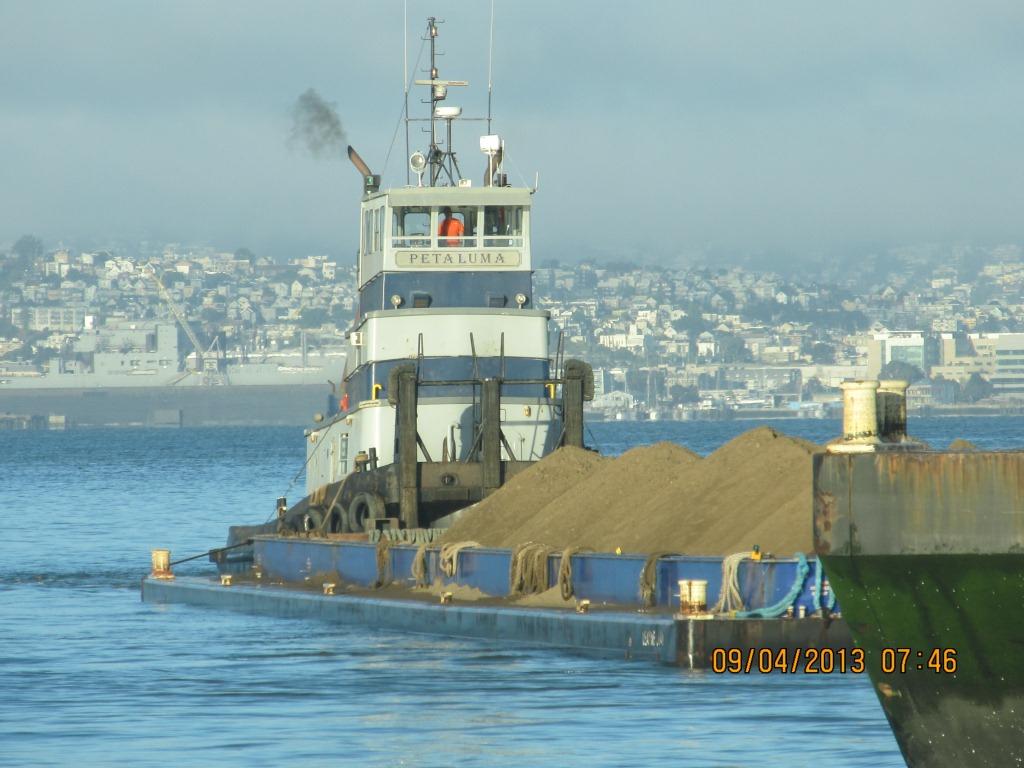
The contouring of this industrial landfill site was completed on August 16, 2013.  Approximately one-third of the contouring, or base layer, soil is clean soil recycled from Seaplane Lagoon dredging.  The recycled soil stock was quickly exhausted, along with soil recycled after removing some of the berms and high areas.  More than half of the base layer – 193,000 cubic yards – is soil barged in from Decker Island in the Sacramento River. 

Soil being delivered from Decker Island.

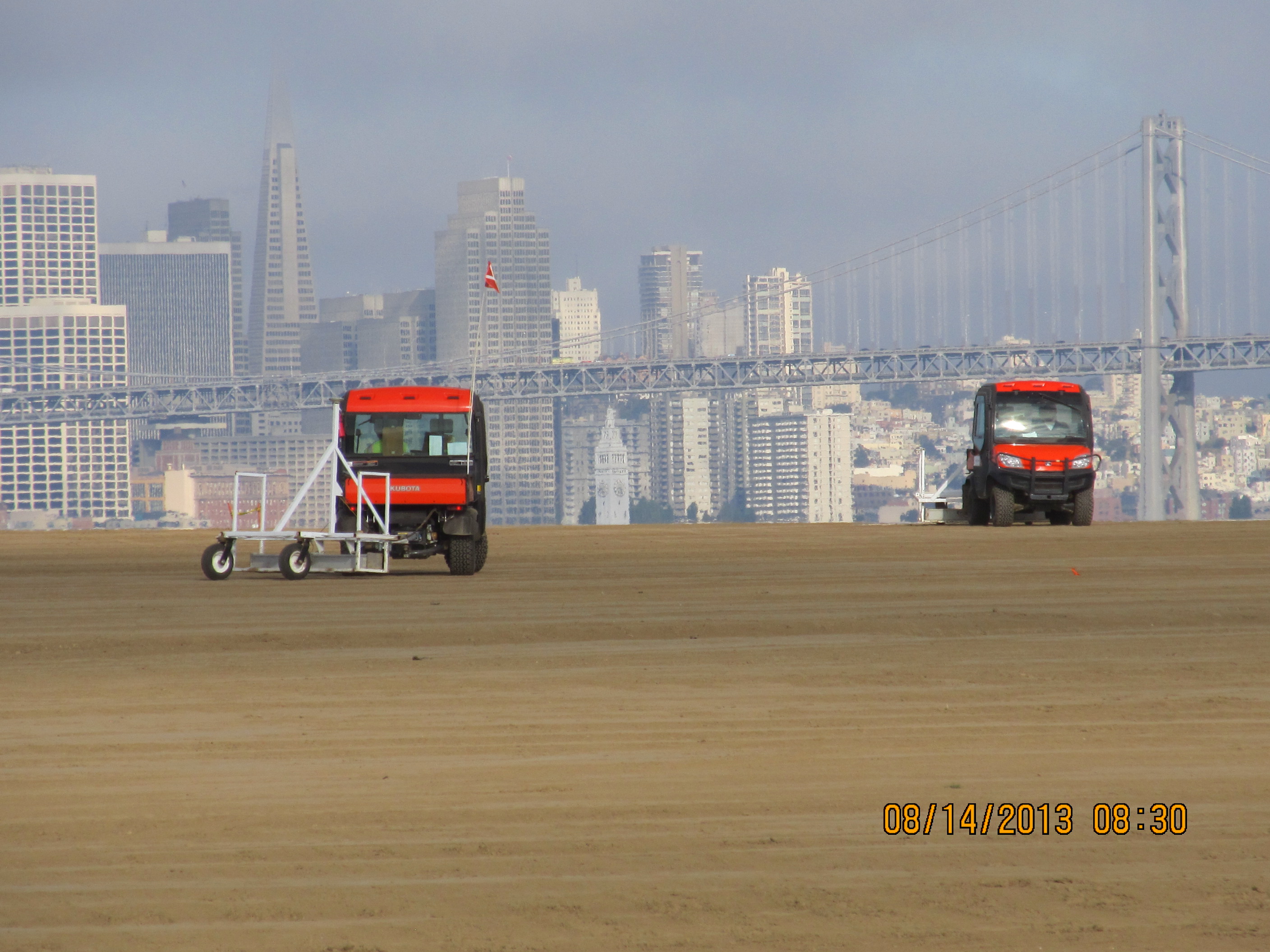
This contouring phase, which began in January of 2013, created the base layer with a specially-engineered slope.  It was then scanned for radiation using scanners towed by a small vehicle, even though the site had been surveyed for radiation prior to placing the base layer.

Scanning the base layer for radiation.

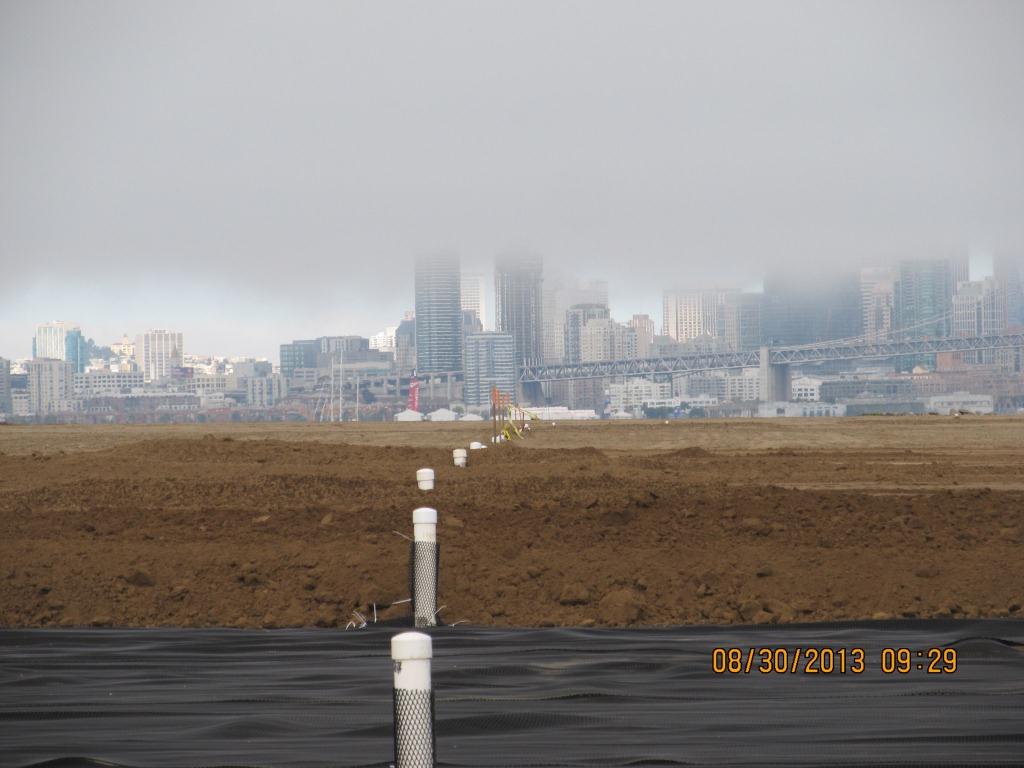
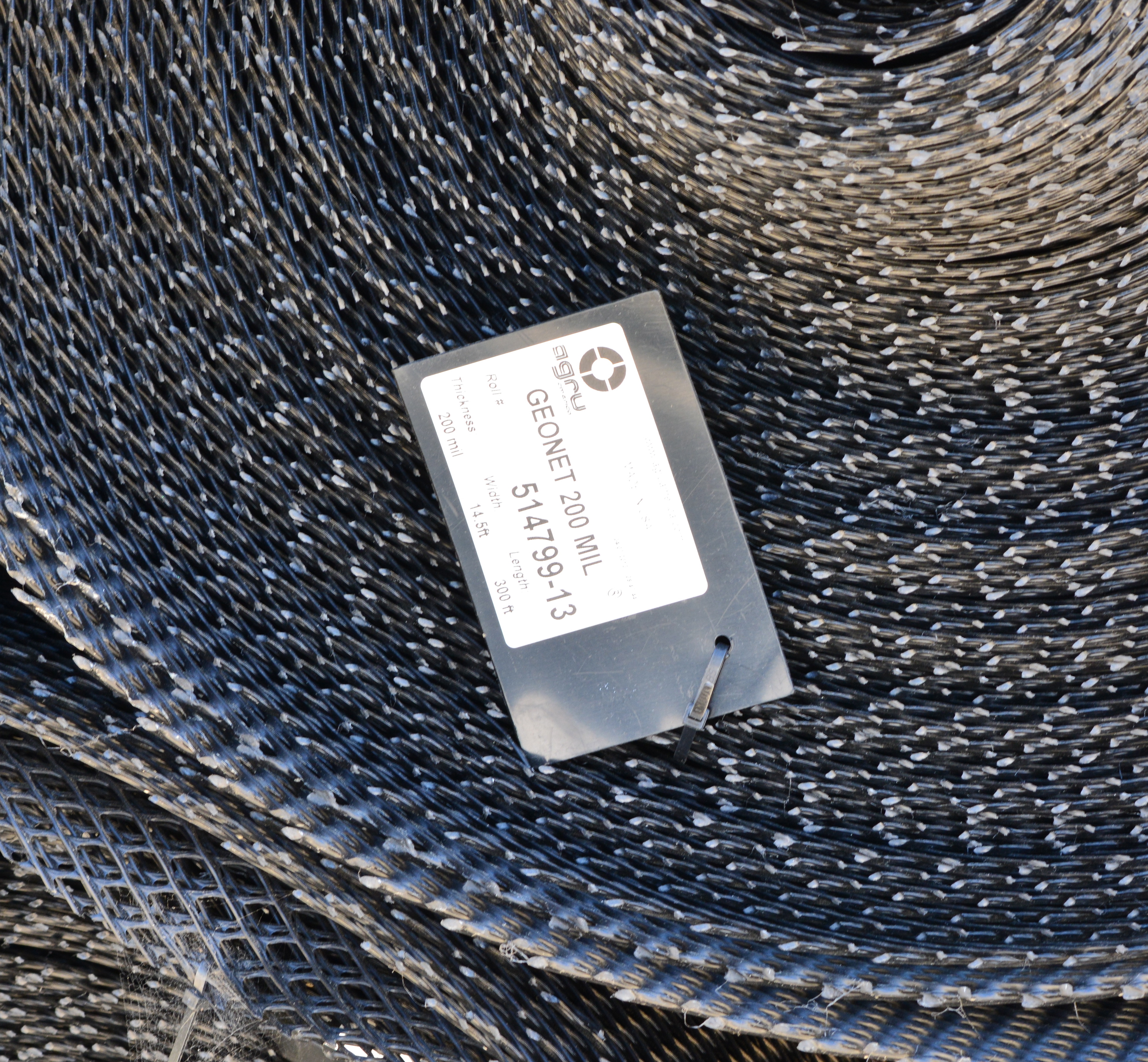
Placement of the plastic biobarrier (see photo below) and the final soil cover using soil barged in from Decker Island began on August 19, 2013.  The biobarrier is a plastic mesh that is designed to discourage burrowing animals from coming into contact with the waste area.  The biobarrier installation is over 90% complete as of week #38 (October 24, 2013).  The final two-foot soil cover is over 60% complete.  The final soil cover includes six inches of soil amended to promote growth of vegetation. 

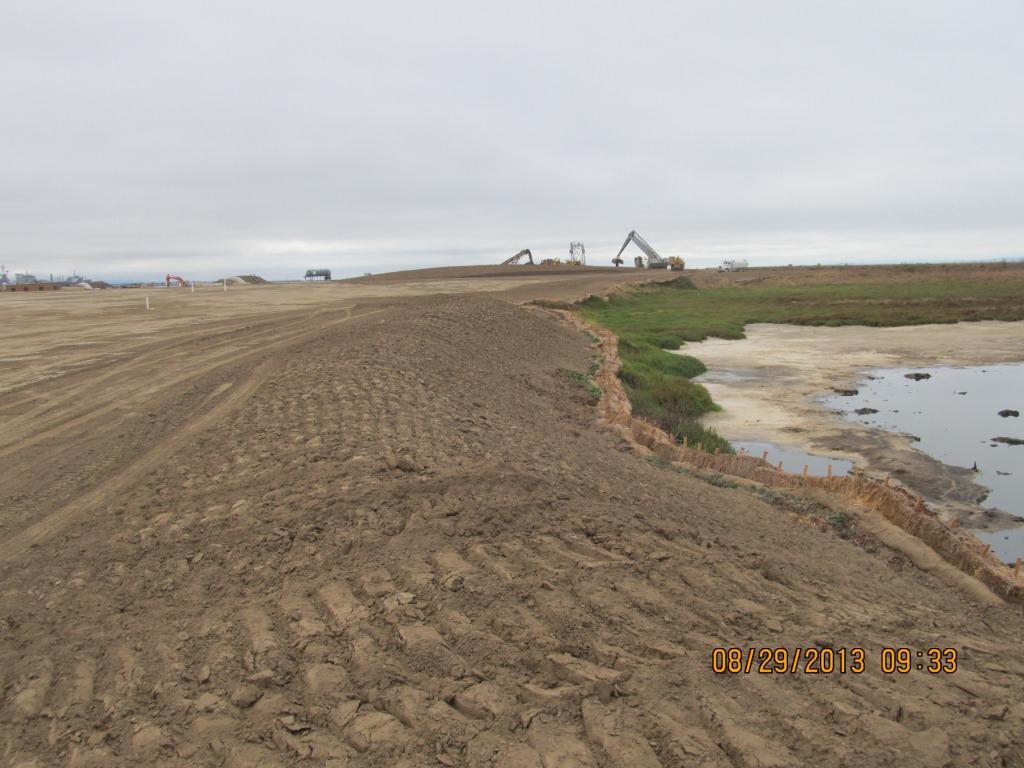
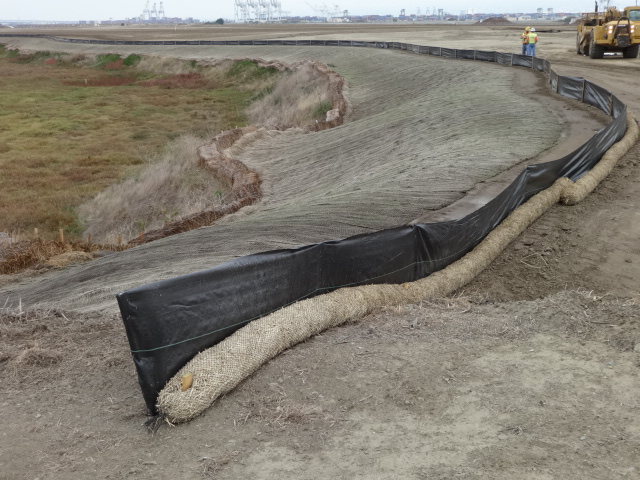
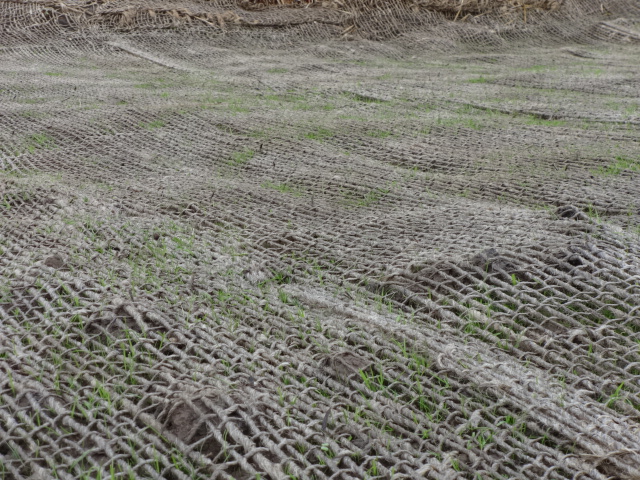
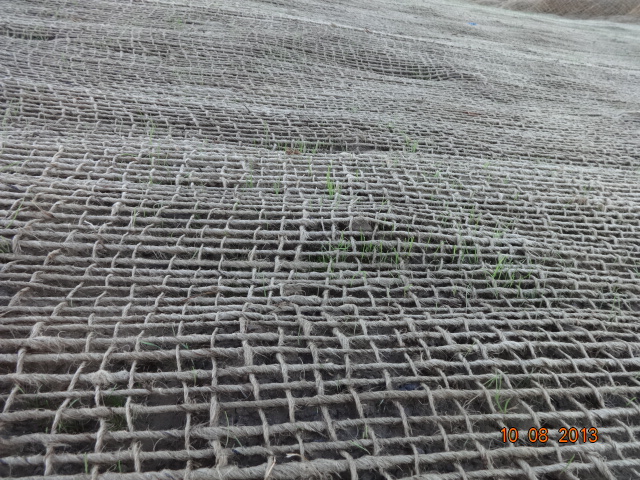
The soil stabilization and drainage work on the shoulder around the wetland area is also completed.  It includes native rye grass seeding, a jute mesh cover, and a silt fence.  Some of the rye grass has already started to sprout.

Stormwater controls near wetland area being created.

New monitoring wells will be installed starting in late November. 

Hydroseeding of the site with an assortment of California native grasses will begin in late November or early December. 

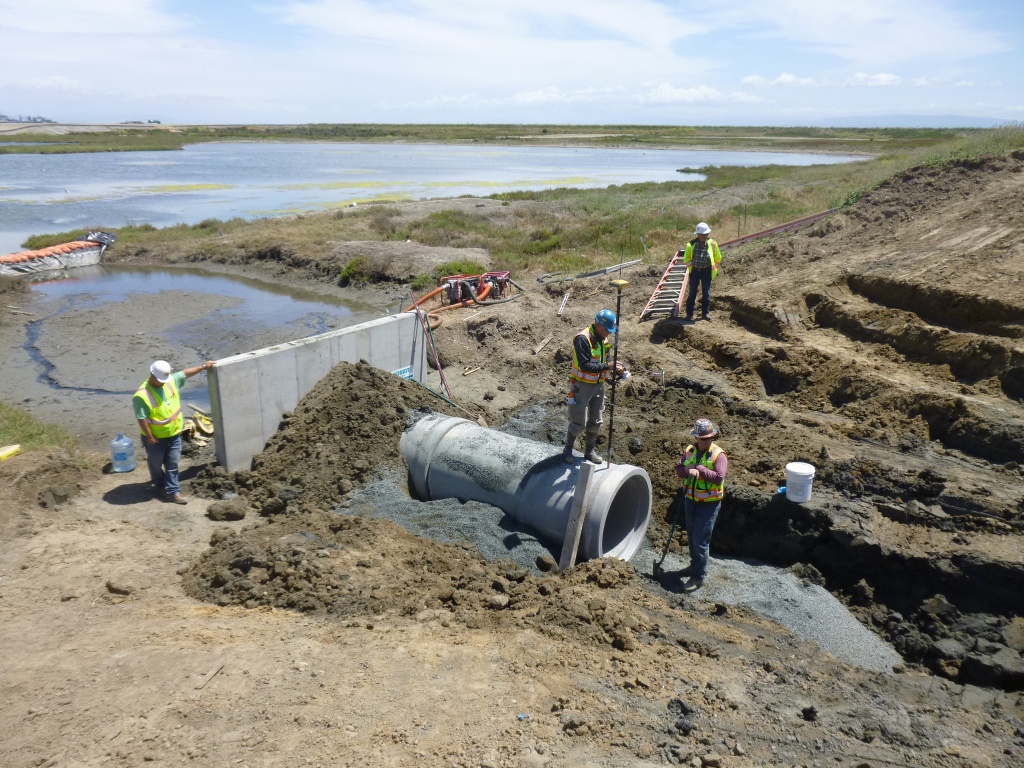
In 2014 the old culvert connecting the north side of the wetland with San Francisco Bay will be replaced with a new culvert.

Fifty tons of old fence and metal have been recycled.  The temporary work fence will be removed at the end of the job.  The methane gas vents will be short and virtually unnoticeable (see photo below).  Due to the age of the landfill and the fact that very little organic waste was deposited there, the methane gas produced is minor and will not require the 10-foot tall vent stacks proposed in an earlier workplan.

Methane gas vent pipes.

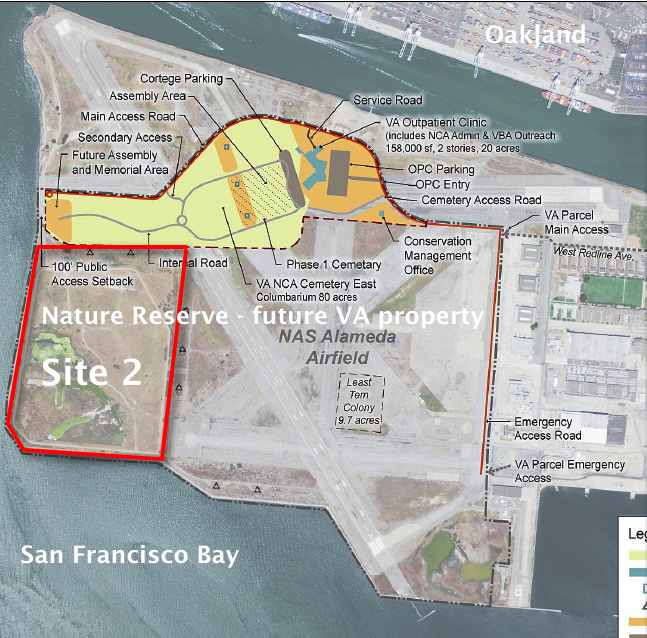
This site, along with adjacent land, will be transferred to the U.S. Department of Veterans Affairs in late 2013 or early 2014.

VA map, with Site 2 and Nature Reserve notations added by Alameda Point Environmental Report.
Biobarrier to discourage burrowing animals.  Photo credit:  Alameda Point Environmental Report.
Biobarrier to discourage burrowing animals. Photo credit: Alameda Point Environmental Report.

Interim stormwater controls - tracked slope.

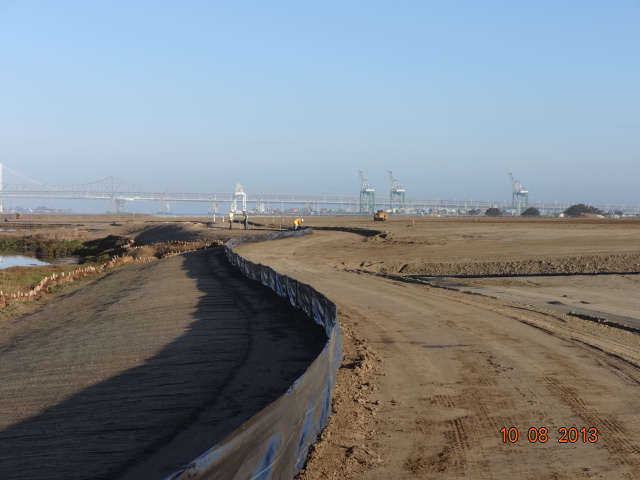
Silt fence installed above jute mesh around wetland area.
Silt fence under construction.
Jute mesh around wetland should, with grass starting to sprout.
Jute mesh around wetland shoulder, with grass starting to sprout.
Week 36 - Vegetation growing through jute mesh around shoulder of wetland area.
Week 36 – Vegetation growing through jute mesh around shoulder of wetland area.

Source:   The information in this update was gathered from the weekly progress reports for Installation Restoration Site 2 Remedial Action at Alameda Point.  The progress reports are posted on the Envirostor website maintained by the California Department of Toxic Substances Control (DTSC).  The source for all photos in this update, unless otherwise credited, is DTSC.

Radium-impacted drain line becomes regulatory cleanup headache

Looking east on West Tower Avenue.  Buildings 5 and 400 are where radium-226 paint was applied to aircraft dials and marker.  Paint waste contaminated thousands of feet of drain lines.   Industrial Waste Line is partially illustrated showing where it runs in front of Bldg. 5.
Looking east on West Tower Avenue. Buildings 5 and 400 are where radium-226 paint was applied to aircraft dials and markers. Paint waste contaminated thousands of feet of drain lines, most of which have been removed. The remaining radium-contaminated Industrial Waste Line is partially illustrated showing where it runs in front of Building 5, also known as the Naval Air Rework Facility.

The Industrial Waste Line of Operating Unit 2C

All of the drain lines containing radium-226 paint waste at Alameda Point have either been removed, cleaned, or are scheduled to be cleaned or removed, except for one:  The Industrial Waste Line in the hangar area where aircraft dials were painted.  This drain line was installed in the mid-1970s after passage of the Clean Water Act prohibited sending industrial waste into public waterways.  It sent wastewater to a treatment facility, and is now lying dormant, broken in places, and no longer in use.  The big question is what to do about it – leave it alone and create a special radiological license, a special exemption, or dig it up? 

The Navy, regulatory agencies, and the city discussed this cleanup problem at their regular cleanup team meeting on June 11, 2013, the most recent date for which meeting minutes are available.

Clean area inside Building 5 where Navy aircraft were serviced.  Radium painting operations to the left and outside of this area.
Clean area inside Building 5 where Navy aircraft were serviced. Radium painting occurred to the left and outside of this area.

Even though radium dial painting at Building 5 and Building 400 along West Tower Avenue had ended by the time the Industrial Waste Line was installed, drain lines inside and under these two buildings contained radium that may have been released down into the waste line. 

The Navy doesn’t feel it should spend the extra money to remove the Industrial Waste Line, saying the contamination, some of which may have seeped into surrounding soil through breaks in the drain tiles, is trivial and should be left in place.  The Navy’s Lead Remedial Project Manager Bill McGinnis said,  “When risk was evaluated, the highest risk scenario was to an industrial worker at 225 days per year, 8 hours a day, for 25 years, through direct contact with soil. For the emergency worker the exposure and risk would be significantly less.”

The regulatory agencies aren’t sure how they will sign off on this waste line if it is left in place with elevated radium-226 levels inside the pipe or possibly in the soil where the pipe has deteriorated and leaked.

The city doesn’t want a perpetual worry about monitoring and digging precautions.  The East Bay Municipal Utility District (EBMUD) would also be concerned about the presence of radium.  The Navy’s Environmental Coordinator, Derek Robinson, asked the city’s engineering contractor, Angelo Obertello, if EBMUD was asked about routing around the existing industrial waste lines.  Mr. Obertello said EBMUD is looking to upsize the lines in this corridor because of fire flow pressures.  The city’s Chief Operating Officer for Alameda Point, Jennifer Ott, said that sewer and storm drain lines are planned for this area and that it is not realistic to expect EBMUD to work around existing rad-impacted lines.

The Navy is hoping to avoid the extra cleanup expense by asking the state to write a special document governing the drain line – essentially a warning label on a half-mile of two streets. 

The Navy asked the city if they could work around the lines when installing new infrastructure.  But even though the city’s new infrastructure plans call for using concrete utility corridors, or trenches, the plans drawn up by the city’s consulting engineer, Angelo Obertello, show that there would be future utility conflicts with the half-mile of the Industrial Waste Line on West Tower Avenue and Lexington Street.  The Industrial Waste Line, including its connections to Buildings 5 and 400, is about a mile in length.

Right now, the idea of writing a special radiological license or granting a special exemption is an administrative headache because not enough soil samples have been taken from around the waste line to fashion such a document.  Rob Terry of the U.S. Environmental Protection Agency pointed out that the whole licensing issue would go away if the drain line were removed.

From the meeting minutes:  “Mr. Terry agreed with Mr. Miya’s description of the process, and said CDPH [California Department of Public Health] is looking at two issues: the rad dose remaining in place, and the quantity of rad materials present. The possibility of a rad license for AP [Alameda Point] is a very real one, and under CERCLA [Comprehensive Environmental Response, Compensation, and Liability Act, commonly known as Superfund] the cleanup should be as complete as possible. If everything is removed, the need for licensing goes away.”

A similar drain line at Hunter’s Point Shipyard in San Francisco was removed.

2009 removal of radium-226-contaminated storm drains next to Building 400.  West Tower Avenue is to the right.  Looking west.
2009 removal of radium-226-contaminated storm drains next to Building 400. West Tower Avenue is to the right. Looking west.

Questions about future emergency repairs were highlighted at the meeting.  Mr. Robinson asked if the main concern of the California Department of Toxic Substances Control (DTSC) is the “uncertainty of a license exemption.”  Karen Toth said, “DTSC’s main concern is that if an emergency arises – e.g., a sinkhole occurs in the affected streets by a water or sewer line break – this could require hiring a rad contractor to address a sinkhole or line break, either by the City or by East Bay Municipal Utility District (EBMUD).”

The meeting ended with everyone agreeing to continue working together to solve the problem of what to do about the radium-impacted Industrial Waste Line and adjacent soil.

The minutes of the Industrial Waste Line agenda item at the June 11, 2013 cleanup team meeting are below.

Meeting Minutes

June 11, 2013 Meeting minutes of OU-2C Industrial Waste Line discussion
Alameda Point Base Realignment and Closure (BRAC) Cleanup Team (BCT)
Teleconference Meeting Attendees:

Navy
Bill McGinnis – BRAC PMO-West Lead Remedial Project Manager (RPM)
Jacques Lord – BRAC PMO-West Contracted RPM
Sarah Ann Moore – BRAC PMO-West Deputy Base Closure Manager
Marvin Norman – Legal Counsel
Mary Parker – BRAC PMO-West Contracted RPM
Derek Robinson – BRAC PMO-West BRAC Environmental Coordinator
Cecily Sabedra – BRAC PMO-West RPM
Matt Slack – Radiological Affairs Support Office (RASO)

Regulatory Agencies
Isabella Alasti – California Department of Toxic Substances Control (DTSC)
Bob Carr – U.S. Environmental Protection Agency (EPA)
John Chesnutt – EPA
David Elias – Regional Water Quality Control Board (Water Board)
James Fyfe – DTSC
Chris Lichens – EPA
Ryan Miya – DTSC
Rob Terry – EPA
Karen Toth – DTSC
Xuan-Mai Tran – EPA

City of Alameda
Jennifer Ott – City of Alameda
Peter Russell – Russell Resources

Contractors
Angelo Obertello – CBG
Betty Schmucker – Trevet

“Mr. Robinson said the Navy appreciated the City’s effort in preparing drawings of the industrial waste lines. Peter Russell (City) said the drawings show potential conflicts with infrastructure/utilities (existing and future) and thus are higher priority for addressing.

“Angelo Obertello (CBG), City contractor, explained that updated figures were prepared and overlain on as-built drawings of existing utilities. Areas were identified where existing utilities fall within the industrial waste line areas. The City has also re-evaluated placement of future utility lines in West Tower Avenue, Lexington Street, and Monarch Street, and preliminarily shifted the future lines about 15 feet away from the existing industrial waste lines. Based on the drawings presented, possible conflicts could occur along approximately 3,300 linear feet of line as follows:  about 900 linear feet of 4-inch force main; and about 2,400 linear feet of gravity line feeding into the pump station in Lexington Street. This represents about 57 percent of the force main line in conflict with existing industrial waste lines and about 44 percent of the gravity line in conflict with existing industrial waste lines. The conflicts primarily in West Tower Avenue and Lexington Street are for future utilities and represent about 45 percent of the lines. 

“Dr. Russell noted that as part of the petroleum program the Navy identified former fuel lines in Monarch Street, close to the industrial waste lines. Sampling of the fuel lines was interrupted and sampling locations were adjusted to avoid the industrial waste lines. 

“Mr. Robinson asked if the City expects to put buildings on top of any the industrial waste lines.  Mr. Obertello said a 300- to 400-foot area northeast of Building 12 contains industrial waste lines and potentially falls within a future development block. Jennifer Ott (City) said the area may be residential and is identified for intensified development to support the historic district.  Dr. Russell noted this land would not be acquired until about 2019. 

“Karen Toth (DTSC) said DTSC has discussed this with CDPH licensing staff.  Until it is known what is left behind in the soil, CDPH cannot say whether a radiological (rad) license or license exemption is appropriate. Soil data are needed on what remains.

“Marvin Norman (Navy Legal) said the consensus is that the rad-impacted lines beneath the building slabs will remain in place and the question concerns the extent to which the Navy commits to removal of outlying lines.  He acknowledged the issues of licensing will need to be dealt with regardless of which option the Navy pursues.

“Mr. Robinson asked if CDPH will work with the Navy in making its determinations. Ms. Toth said CDPH is available for further consultation. This is a new process for CDPH at a CERCLA facility, and the first rad license exemption will be for HPS.  Bob Carr (EPA) said there have been discussions with CDPH and no decisions have been made yet. EPA asked for specifics and could not get them.

“Rob Terry (EPA) said he has some experience writing rad licenses and the more contamination, the harder it is to exempt a property and the more complex the license becomes. He envisioned an AP radioactive materials license and individual “storage and use areas” within the license. Ms. Toth said they are looking at the larger buildings and lines coming out of the buildings; there are two (or maybe three) areas still under evaluation. 

“Bill McGinnis (Navy) asked what legal criteria/standards/requirements CDPH is using and where the process is now. Ms. Toth said the decision criteria are still up in the air. In talking with the CDPH Radiological Health Branch (RHB), they are looking at data from specific waste lines and more site-specific data are needed in those areas being left in place. CDPH/RHB is not making “impacted” v. “non-impacted” decisions for industrial waste lines.  Ryan Miya (DTSC) explained the process for licensing/licensing exemption at HPS. RHB needs to understand what is being left in the ground to determine whether or not an exemption is appropriate. The activities remaining and boundaries in picocuries per gram (pCi/g) should be defined.

“The Navy drafted a “dose-modeling assessment” for HPS so RHB understood what it is issuing a license or exemption for. The Navy and DTSC worked together to prepare the assessment, which became a key component of the application. The assessment determined how much rad is left and how deep it is located. The City of San Francisco will file an application with a cover letter, the dose-modeling assessment, and supporting CERCLA documentation in about one month to CDPH/RHB. At HPS, a small landfill/debris area is what remains.

“If AP is proposing a buffer area for a utility corridor, then more information is needed for that buffer determination.  Dr. Russell said it seems easier for CDPH to issue an exemption for buildings with concrete slabs in place, and wondered if an issue is being created by addressing lines under buildings together with lines in the streets. Mr. Miya said yes, lines under the buildings are much less likely to offer potential exposure, while the lines in the streets offer a more likely exposure pathway.

“Mr. Terry agreed with Mr. Miya’s description of the process, and said CDPH is looking at two issues: the rad dose remaining in place, and the quantity of rad materials present. The possibility of a rad license for AP is a very real one, and under CERCLA the cleanup should be as complete as possible. If everything is removed, the need for licensing goes away. 

“Mr. Robinson said that the Navy modeled the industrial waste line exposure scenario very conservatively. The Navy is concerned about the uncertainty of a license versus an exemption.  Mr. Miya said that knowing the potential exposure of what is left behind is important; at HPS what is left is very low in concentration and is covered by three feet of soil.

“Mr. Robinson asked if DTSC’s main concern is the uncertainty of a license exemption. Ms. Toth said DTSC’s main concern is that if an emergency arises – e.g., a sinkhole occurs in the affected streets by a water or sewer line break – this could require hiring a rad contractor to address a sinkhole or line break, either by the City or by East Bay Municipal Utility District (EBMUD).

“Mr. Norman asked if it would be considered a problem if the lines were grouted and sealed. Ms. Toth said the clay (gravity) pipelines are known to have integrity problems. The implementability of the remedy becomes a problem.

“Bob Carr (EPA) said what Ms. Toth described is a very real possibility, and the reality is that a break in the pipeline requires time-critical access to the area to repair. Mr. Norman asked for clarification about whether a sinkhole would be caused by the natural geology or the possibility of breaking lines.

“Mr. McGinnis said the CERCLA Institutional Controls (ICs) and Land Use Control-Remedial Design would state that repair work is subject to a soil management plan including rad control requirements. Ms. Toth said the City and EBMUD do not have the ability to comply with this in a timely manner. Mr. Robinson said the Navy appreciates Ms. Toth’s concerns. 

“David Elias (Water Board) said that in early discussions with John West (Water Board), the project as envisioned indicated that the rad material was well defined, the risk was conservatively assessed, the lines left in the street would not be in contact with anyone, and the lines would be under concrete. However, with redevelopment the current scenario changed and the situation is different, creating small “waste management units.” With future changes it may become hard to address these issues. There is no real precedent for this approach. He said the agencies may become less comfortable with the new scenario. Mr. Robinson said it is difficult for the Navy to do things just for future development; however, the City needs to take into account the environmental disposition of the property. He suggested evaluating some options for relocating lines.

“A lot of good information was presented today and the Navy will look more closely at the drawings presented. 

“Dr. Russell said even without the City’s redevelopment, when the Navy built AP the design standards were different and construction had shorter life cycles. Regardless of future development, the current infrastructure must be repaired and maintained for several years. Mr. Robinson said the Navy appreciates this, and justifying cleanup expenditures is tied to risk. The waste lines have been evaluated in a Remedial Investigation/Feasibility Study; the risk was determined to be low and within the risk management range. It is difficult for the Navy to consider complete removal of the lines when risk has been shown to be low. 

“John Chesnutt (EPA) asked if there is a risk driver and what would make the agency members comfortable with the certainty of the risk. At HPS, after removing 20-plus miles of pipelines, breaks were found and sampling showed rad levels in catch basins were similar to intact pipeline areas. He asked if people would feel more comfortable if site-specific sampling was conducted at the breaks and data were collected that would enhance confidence in the risk level. Mr. Elias raised the issue of tarry refinery waste at AP, where it was left in place and the risk is low, but decision-makers have to manage the waste and the risk and communicate this to the public. This may be a messy issue long term. 

“Mr. Norman said CERCLA is driven primarily by long-term human-health risk and the City may not be required to comply with long-term maintenance or handling in the event of a calamity. Dr. Russell said this is not true; the City will have to conduct routine maintenance, and emergency maintenance if needed, and will require funding for long-term rad maintenance. State and community acceptance of risk are also considered.

“Ms. Ott said EBMUD may not be comfortable working near the rad-impacted industrial waste lines. Mr. Chesnutt asked if new soil samples collected showed higher risk, would rad workers have to be hired and, if this happens, are people at risk. Mr. Robinson said no. Mr. Terry said the data from along the trench line show the risk is trivial. Mr. Carr said the highest levels detected now are about 30 pCi/g, and what is not known is what criteria other agencies (e.g, California Occupational Safety and Health) have for restricting access to this area. Mr. Terry said he did not know but it would likely depend upon the volume at 30 pCi/g. 

“There was a question about whether the sediment is still present in the manholes. Mary Parker (Navy) said sediment was not removed from the industrial waste line manholes except for the small volume of sediment required for the laboratory analysis. Mr. Robinson said sediment in the manholes could be removed fairly easily and would help reduce the volume of soil.

“Mr. McGinnis said when risk was evaluated, the highest risk scenario was to an industrial worker at 225 days per year, 8 hours a day, for 25 years, through direct contact with soil. For the emergency worker the exposure and risk would be significantly less. Mr. Robinson said the Navy will evaluate the information provided today more thoroughly. He asked Mr. Obertello if EBMUD was asked about routing around the existing industrial waste lines. Mr. Obertello said EBMUD is looking to upsize the lines in this corridor because of fire flow pressures. Ms. Ott said sewer and storm drain lines are planned for this area. It is not realistic to expect EBMUD to work around existing rad-impacted lines. 

“Mr. Norman said the Navy is taking the actions it needs to take and cannot take response actions to enhance development. He understands the City will have to maintain the existing lines and this could be more costly or more risky. Further, replacement of existing lines could cost more if the Navy abandons the lines with residual rad in place.

“Mr. Chesnutt said he is not sure it is a protectiveness issue. Ms. Ott asked if the risk is negligible, would a rad contractor be needed.  Mr. Robinson said from a risk perspective, no rad contractor is needed. Ms. Ott asked if RASO concurred. Matt Slack (RASO) said he believed a rad contractor would be needed, but he agreed with the existing data and that the risk due to the sediment within the pipe is minimal.

“Mr. Terry said when something is left behind, there will always be a question whenever a hole needs to be dug in the street. Time and resources will be needed to respond to questions.

“Mr. Elias said the Navy usually looks at source control through removal, and that ICs are for residual contamination. Now, ICs are being looked at for source material and felt this is an unusual way of managing a contaminant source. Mr. Chesnutt said he was not sure this was a source area or just material left behind. Mr. Elias suggested the rad might be a de minimis source.

“Mr. Robinson asked if there are ARARs that address waste left in place with low risk. Ms. Toth said with ICs in place the area cannot be used as residential, and ICs are required if something is left in place. Mr. McGinnis said residential risk was evaluated and there is no exposure pathway for residential users.

“Mr. Miya said the pipeline was removed at HPS, which allowed free release.  Ms. Toth suggested that if a quick resolution cannot be reached, the industrial waste lines might be removed from the Record of Decision (ROD) so the rest of the site can move forward. Mr. Robinson asked EPA and Water Board members how they feel about this suggestion. Mr. Elias said he is not sure, and Mr. Chesnutt said it is worth discussing but may be premature. Mr. Robinson suggested a follow-on call on July 2 or July 8 to discuss this further.”

Fuel contamination in groundwater flagged for more cleanup work

Under the petroleum cleanup program the Navy has been removing tanks and fuel lines and cleaning up spills and fuel leaks dating back to the early 1990s before the base closed.  Most of the tanks and fuel lines were removed within three years after the base closed in 1997. 

Cleaning up leaked and spilled fuel has been slower, often involving running a vapor extraction pump 24/7 for years.  In a few cases, a groundwater contamination site will require a callback after the initial work is completed.  The Navy’s routine monitoring of groundwater, even after cleanup work has been completed, is aimed at determining whether there is a rebound in contamination readings and follow-up treatment is necessary.  Three such sites needing more work, on land recently acquired by the city, are currently undergoing follow-up treatment at the Navy’s expense.

Two of the sites once served as automobile service stations.  The other site is where fuel was removed from planes before they were serviced. 

Former location of auto service station and car wash where fuel leaked into the ground.  Part of the site is receiving follow-up cleanup work.  Near Main St. and Pacific.  Soccer field in background.
Former location of gasoline service station and car wash operated between 1971 and 1980 where fuel leaked into the ground. Part of the site is receiving follow-up cleanup work. Near intersection of Main St. and Pacific. Soccer field in background.

The treatment method is simple.  Air is pumped into the ground where the contamination is the highest.  This causes the petroleum products to vaporize, and then a suction system draws out the vapors into a barrel of charcoal.  The air injected into the ground also helps natural petroleum-digesting bacteria to grow.

Petroleum cleanup site receiving follow-up cleanup next to Main St. across from Bayport.  Site was former location of Navy auto service station.
Petroleum cleanup site receiving follow-up cleanup next to Main St. across from Bayport. Site was former location of Navy auto service station.

Solar-powered cleanup for the first time at Alameda Point  

Air injection/extraction pumps at the two former service station sites are running on electricity from the grid.  At the former plane de-fueling site next to Building 410, however, the Navy is using a solar-powered pump for the first time anywhere at Alameda Point.  Derek Robinson, the Navy’s Environmental Coordinator, explained the solar choice saying, “Electricity is not optimum because the overhead electrical tie-in is located too far away for the system to be tied in to the grid cost effectively.  The solar units provide the power necessary to operate the air sparging and soil vapor extraction system at a competitive price.”  The only other option was a combustion engine pump running on gas or diesel.  

“The battery storage system is traditional lead/acid batteries,” said Robinson.  “The solar array charges storage batteries allowing the system to store energy and operate in cloud cover and beyond strictly daylight hours; however, the system is designed to power off the blowers once the voltages drop below a preset level,” he said.  

Sustainable Technologies, located just a block away at Alameda Point, constructed the entire rig.  It consists of solar panels, a box full of lead-acid batteries, a circuit panel, and a pump.  Ironically, Sustainable Technologies is located on a Superfund site that will take another six years to clean up.  

Solar-powered cleanup at Building 410.

The area next to Building 410 where the fuel spills occurred has had a number of cleanup actions going back to 2002.  “Corrective actions under the petroleum program were conducted in 2002 and 2011 and a remedial action under the CERCLA [Superfund] program was conducted between 2005 and 2006,” said Robinson.

Work will continue until the end of the year.  The Navy will always be responsible for returning to do more cleanup work if groundwater testing shows some of the contamination was missed.

Locations of three petroleum cleanup sites currently undergoing more cleanup work.