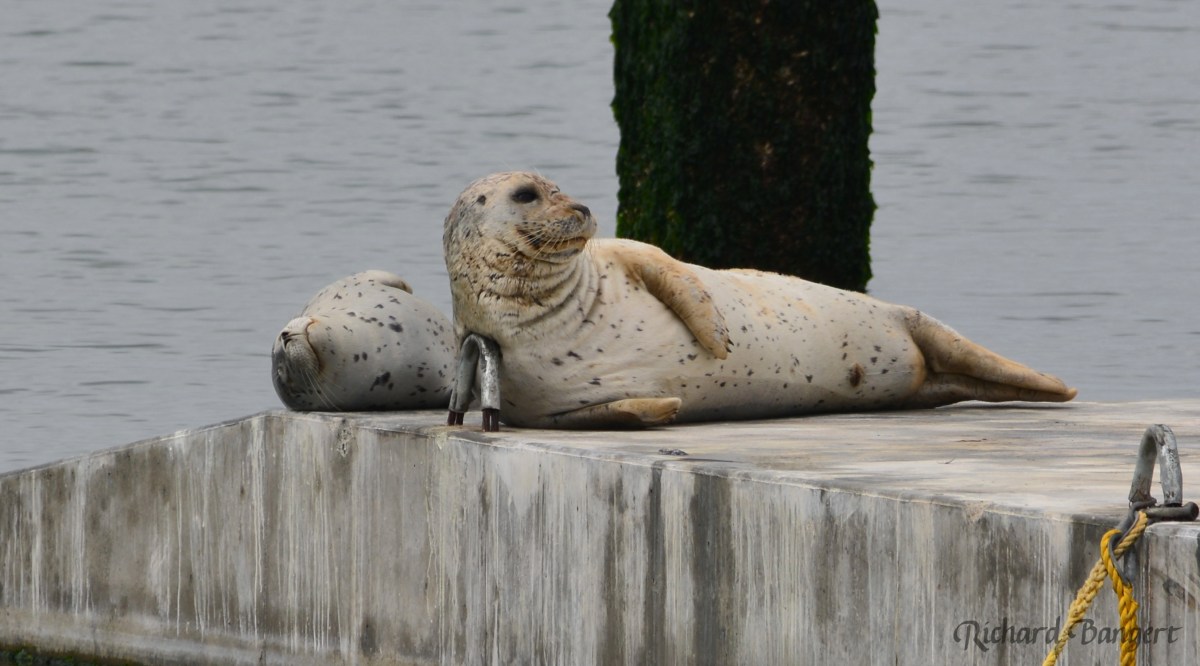
Harbor seals adapting to new float

A new concrete float for harbor seals was delivered to Alameda Point on June 22. It is the first-of-its-kind on the West Coast. With seals starting to use the new platform, a milestone has been reached culminating two-and-a-half years of citizen advocacy to maintain a resting site for harbor seals at Alameda Point. A ferry maintenance facility is slated to begin construction this summer where the seals have been finding solitude for over a decade. The new float will be anchored 300 yards away to the east.

Harbor seals on new float Alameda

In an effort to acclimate the seals to their new float and surroundings, the float is being moved in stages to its permanent location. It will be anchored a hundred yards offshore from the Bay Trail near the soccer field on West Hornet Avenue. Continue reading “Harbor seals adapting to new float”

Marine ecosystem thrives at Alameda Point

Conservation of wildlife isn’t just important at Crab Cove 

Visitors flock to Crab Cove, a State Marine Conservation Area, to learn about and experience the Bay’s sea dwellers. The educational lessons at the Crab Cove Visitor Center are equally relevant throughout the waterway south of the USS Hornet at Alameda Point where even more creatures thrive in relative obscurity.

The area encompasses an interconnected web of vegetation, birds, seals, fish, mollusks, crustaceans and worms. Ghost shrimp, bat rays, leopard sharks, striped crabs, mussels, California sea hares and fish with light-emitting diodes are just a sampling. A 36-foot-wide rock wall, known as a breakwater and built by the Navy in 1945, forms the mile-long southern boundary.

Ghost shrimp at Breakwater Beach, Alameda Point. Red spots on shrimp are baby shrimp. Click on photo to enlarge.

Continue reading “Marine ecosystem thrives at Alameda Point”

Dining on the farm at Alameda Point

The Alameda Point Collaborative (APC) served up gourmet meals at their annual Urban Farm Table fundraising event on Sunday, May 15, 2016. About 100 guests were seated under a canopy squarely in the middle of crops growing on the Alameda Point farm.

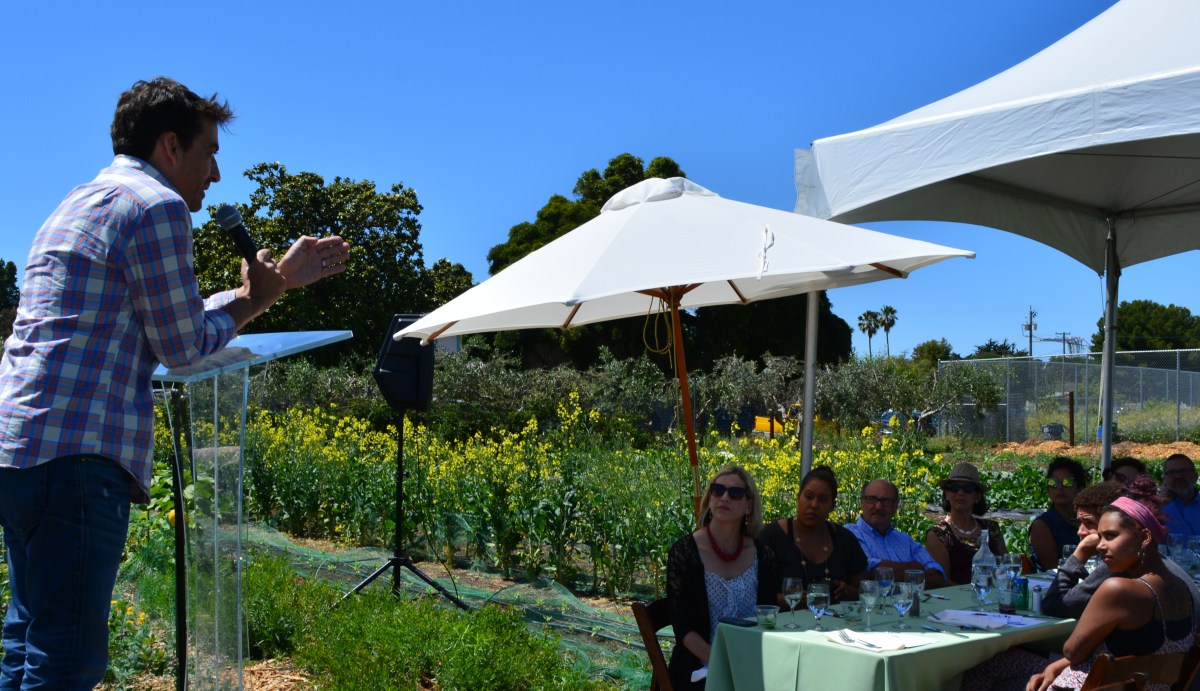
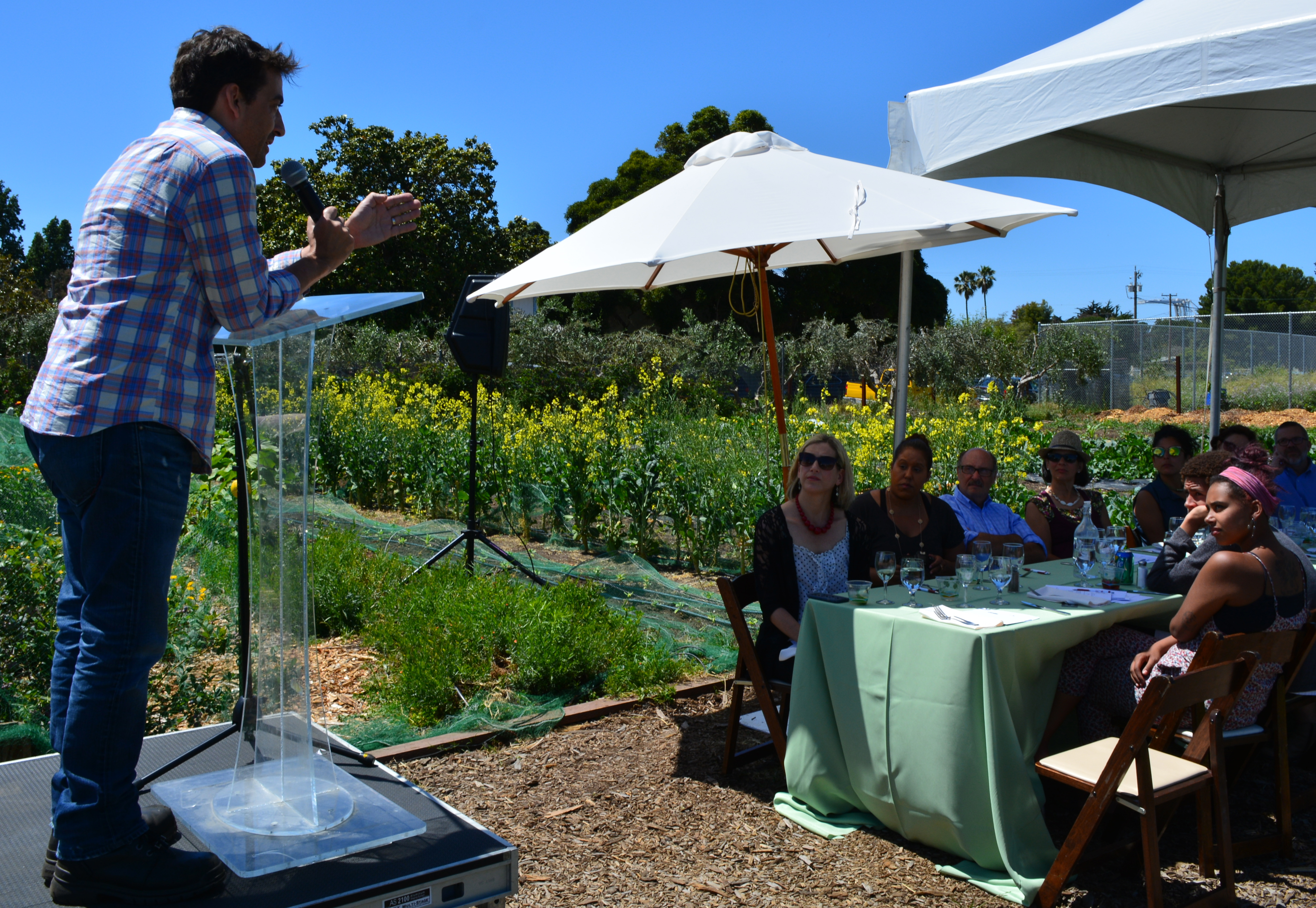
Keynote speaker Matthew Dolan, executive chef at Twenty Five Lusk in San Francisco, spoke at the Urban Farm Table fundraiser for the Alameda Point Collaborative.

This year’s menu was again created by Jeff Rosen, executive chef at Blue Heron Catering of Oakland. Some of the salad and entrée ingredients, such as arugula, strawberries and onions, were grown within a few steps of the table.

APC is the largest supportive housing provider for homeless families in Alameda County. Adults in the community can acquire new job skills and self-confidence in APC’s various enterprises – Ploughshares Nursery, Farm2Market farm production, and commercial kitchen. The Farm2Market program sells produce through a subscription service. Continue reading “Dining on the farm at Alameda Point”

Radium safety enhanced at Seaplane Lagoon

The City of Alameda became the new owner of the Seaplane Lagoon at Alameda Point on April 13, 2016. It came from the Navy with a new condition that exceeds normal protocols for dredging in San Francisco Bay.

As with all cleanup sites, the Navy, city and regulators agreed to what areas needed to be cleaned up in the Seaplane Lagoon. The cleanup plan approved in 2006 was based on testing the sediment throughout the 110-acre lagoon. The problem areas were confined to about 10 acres at the northeast and northwest corners of the lagoon where storm sewers dumped contaminants prior to 1970s environmental laws. The agreed upon plan said that there would be no restrictions on the lagoon when cleanup was done.

Dredging the northwest corner of the Seaplane Lagoon in February 2012.

After cleanup was completed, two years of discussions between the Navy, state and federal regulators, and the city led to an amendment to the official cleanup decision to include a detailed management plan for any future dredging in the Seaplane Lagoon. The city led the effort to create a sediment management plan. It stipulates that all dredge sediment brought to the surface will have to be spread out six inches thick on a drying pad and scanned for radium-226 radiation at a cost borne by the city. Continue reading “Radium safety enhanced at Seaplane Lagoon”

Ferry agency, volunteers help the least terns

Three thousand tons of sand was added to the nesting grounds for the least terns at Alameda Point in late February and early March. In the weeks that followed, volunteers from St. George Spirits and the Boy Scouts and Cub Scouts came out to help make the site ready for the arrival of the terns in mid-April.

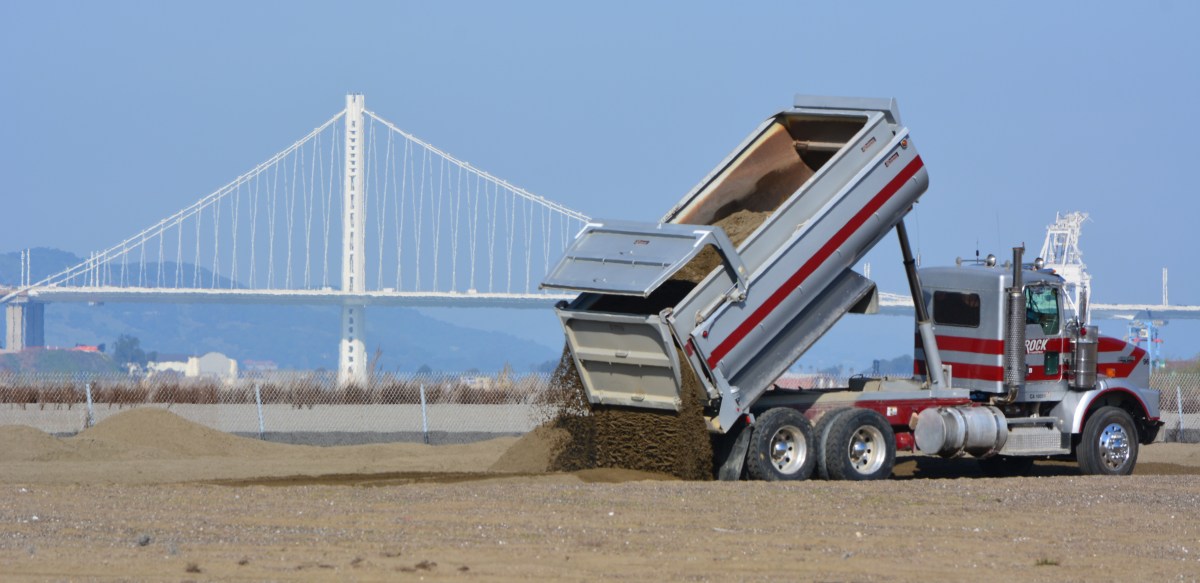
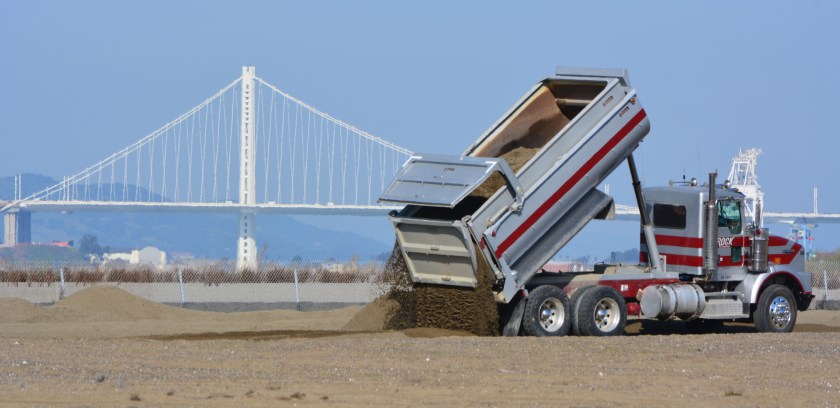
Sand being delivered to the least tern nesting grounds at Alameda Point on February 25, 2016. Bay Bridge in the background.

The Water Emergency Transportation Authority (WETA) paid for enough sand to cover half of the 9.6-acre nesting area with three inches of sand, as well as for grading. The weeklong delivery of sand was a conservation mitigation requirement for the impact that WETA’s new ferry maintenance facility will have on the terns’ feeding area. As many as 12 ferries will make up to four passes per weekday through the Alameda Point Channel where the terns frequently dive for small fish.

Wind and water erosion take their toll on the sand substrate lying atop old airfield taxiway pavement, requiring periodic replenishment. This latest delivery of Angel Island coarse sand has built up the sand depth on much of the site to the point that it’s starting to feel like a real beach underfoot. Beaches are the traditional nesting habitat for terns. Continue reading “Ferry agency, volunteers help the least terns”

Demolition of former Navy apartments begins

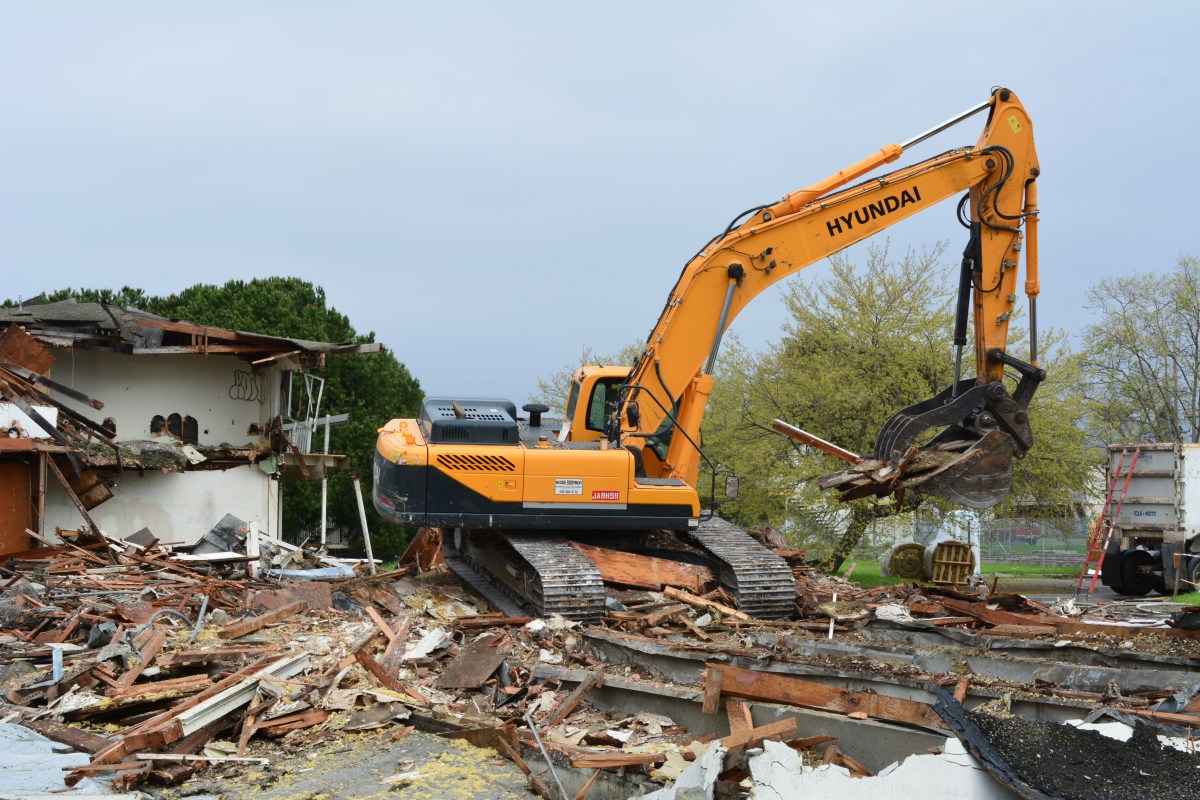
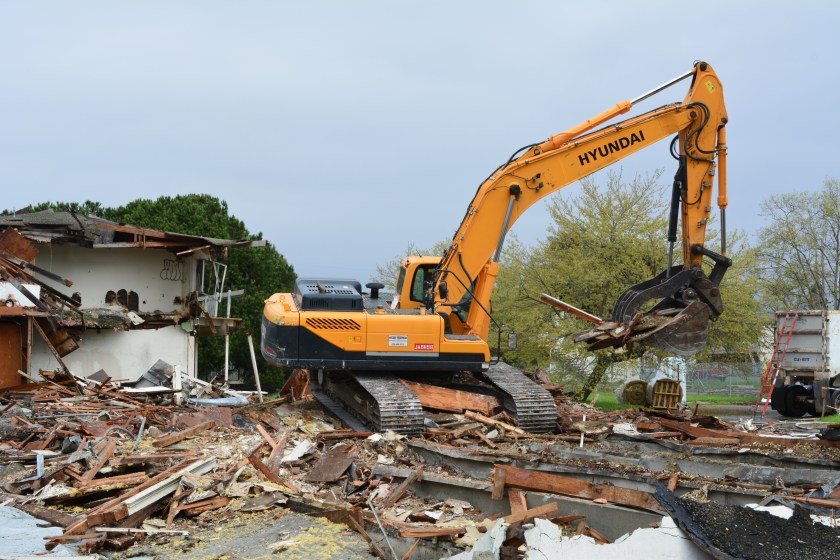
The demolition of 16 former Navy apartment buildings at Alameda Point has begun. On January 5, 2016, the City Council awarded a $547,000 contract to Asbestos Management Group of Oakland to perform the demolition.

Demolition of Navy apartment buildings at West Tower Avenue and Orion Street, Alameda Point.

In April of 2015, the city council directed city staff to come up with a plan to address safety and blight issues after KTVU Channel 2 aired a story about unsafe conditions at the abandoned housing area.

The structures are located on Orion Street, West Tower Avenue, Stardust Place and Pearl Harbor Road. Demolition began during the second week of March and is expected to be completed within 60 days. The job is being paid for out of Alameda Point base reuse funds.
Continue reading “Demolition of former Navy apartments begins”

Navy adds a wetland and grassland

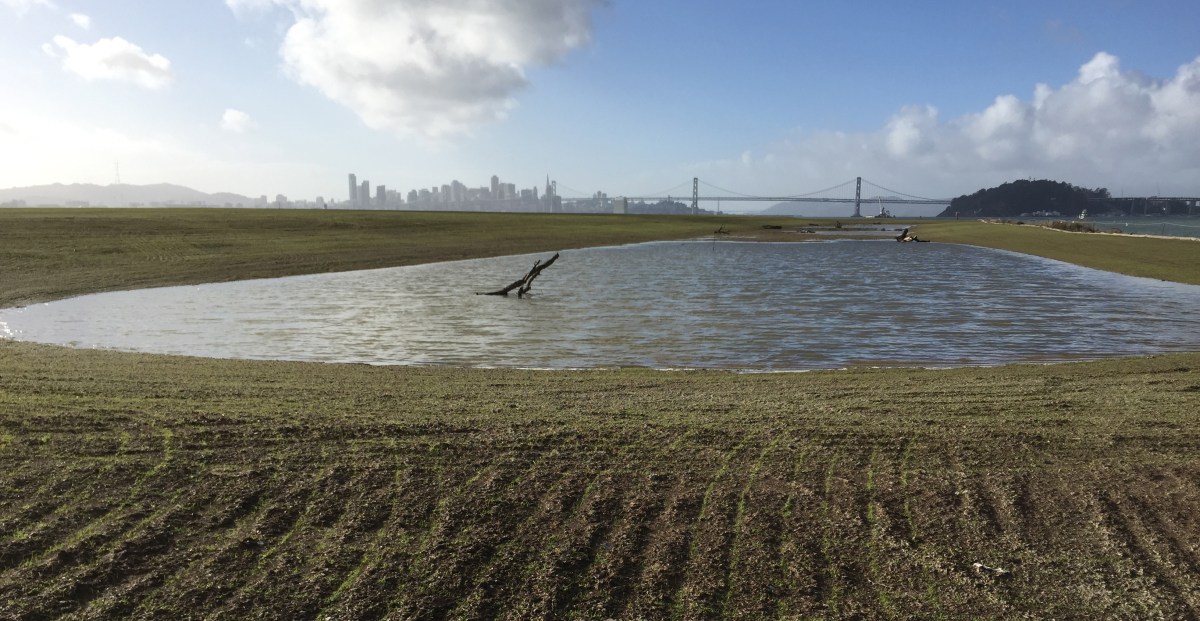
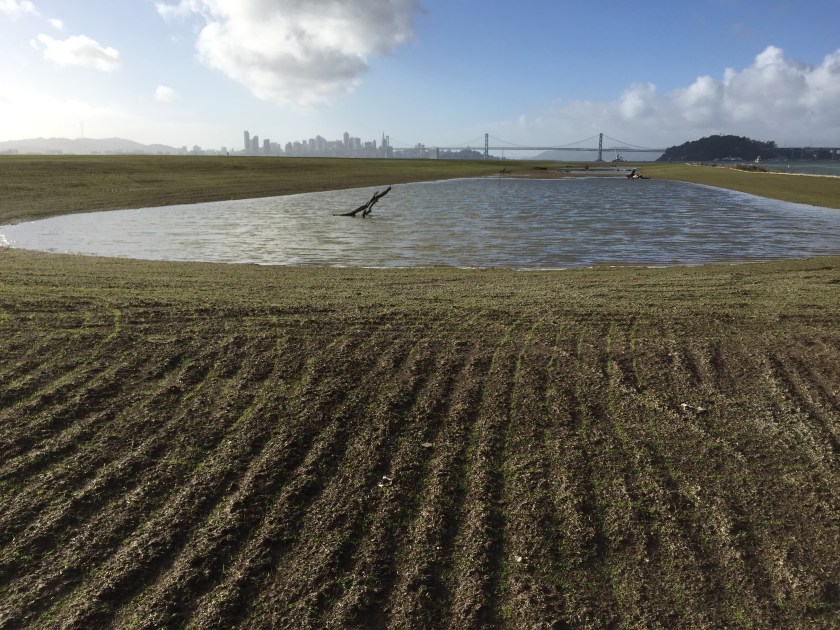
The Navy’s cleanup program has not only removed toxic substances from below ground, it has dramatically improved some of the above ground environment by creating new native grassland and wetlands. January rains filled the Navy’s new seasonal wetland on the northwest shoreline corner of Alameda Point and fostered growth of newly planted native grass seed on the surrounding soil.

New Site 1 wetland on January 13, 2016, with San Francisco in background. Rows in soil with emerging growth were created during sowing of seeds. Navy photo.

The 2.25-acre wetland lies within an approximately 37-acre shoreline cleanup area known as Site 1 at the confluence of the Oakland Estuary and San Francisco Bay. It is where the Navy buried its waste between 1943 and 1956. Most of the waste pits were covered by pavement in the mid-1950s when a new runway was added. Continue reading “Navy adds a wetland and grassland”