“Demilitarized Landscapes” is a nine-minute film about three San Francisco Bay Area communities in which the military has played a major role: San Francisco’s Bayview Hunters Point, Alameda Point, and the Richmond waterfront. The film was featured in a special exhibition called “Above and Below: Stories From Our Changing Bay” at the Oakland Museum of California. The exhibition, which ran from August 31, 2013 to February 23, 2014, explored the impacts of humans and natural forces on San Francisco Bay over the last 6,000 years.
The film played continuously in a special display area titled “Military Landscapes – Demilitarized Landscapes” and shows the transitions being made today. The Alameda Point segment focuses on the Nature Reserve and the recovery effort for the endangered California Least Tern.
Construction of the ferry maintenance facility at Alameda Point is delayed another year. Originally scheduled to begin in August of this year, the project is on hold while the Water Emergency Transportation Authority (WETA) seeks a federal permit allowing for harassment of harbor seals during demolition and construction.
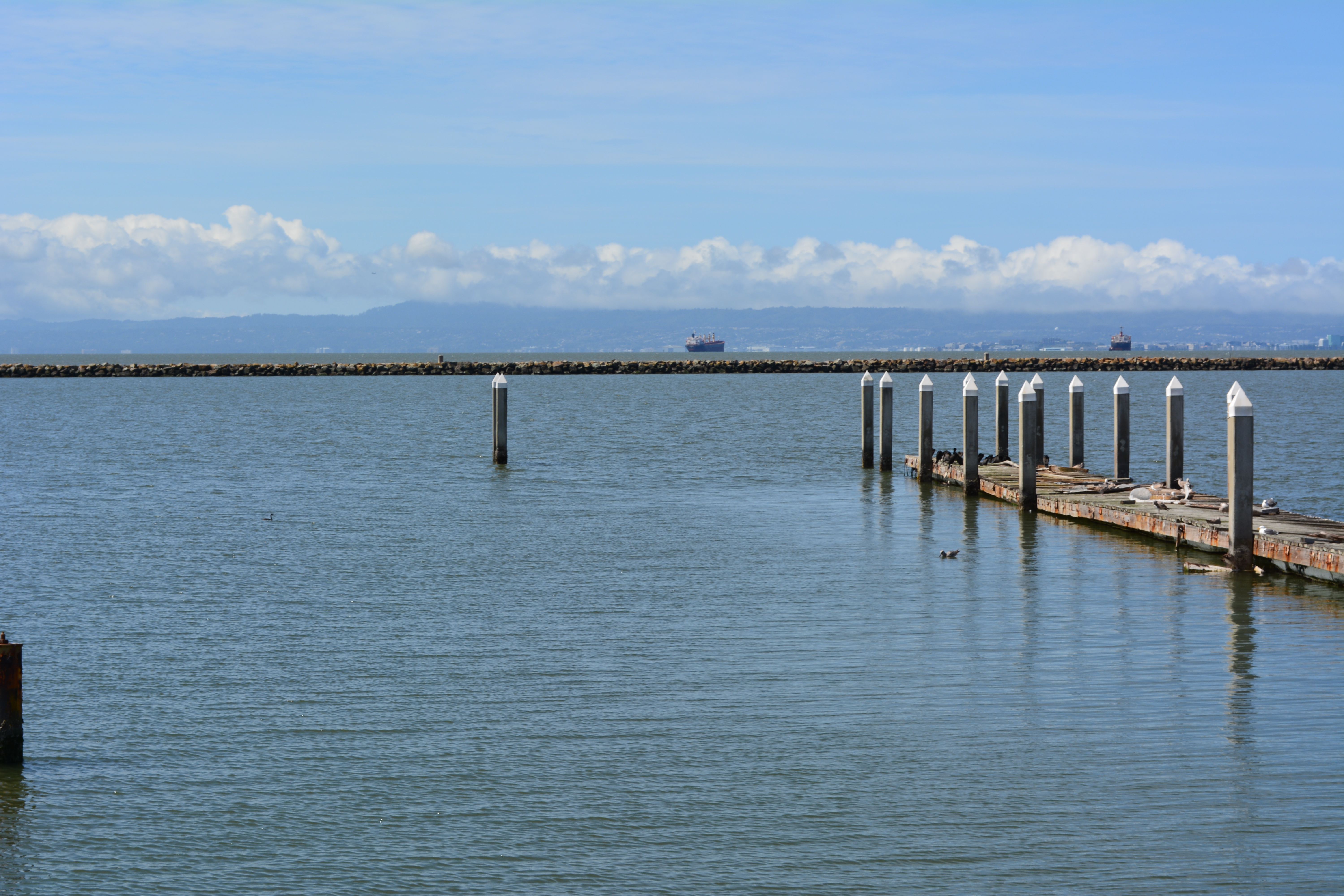
The public, beginning in January of 2014, raised concerns about the harbor seals being displaced at the project site. The Central Bay Operations and Maintenance Facility is slated for construction east of the USS Hornet where the Navy operated a recreational boating dock.
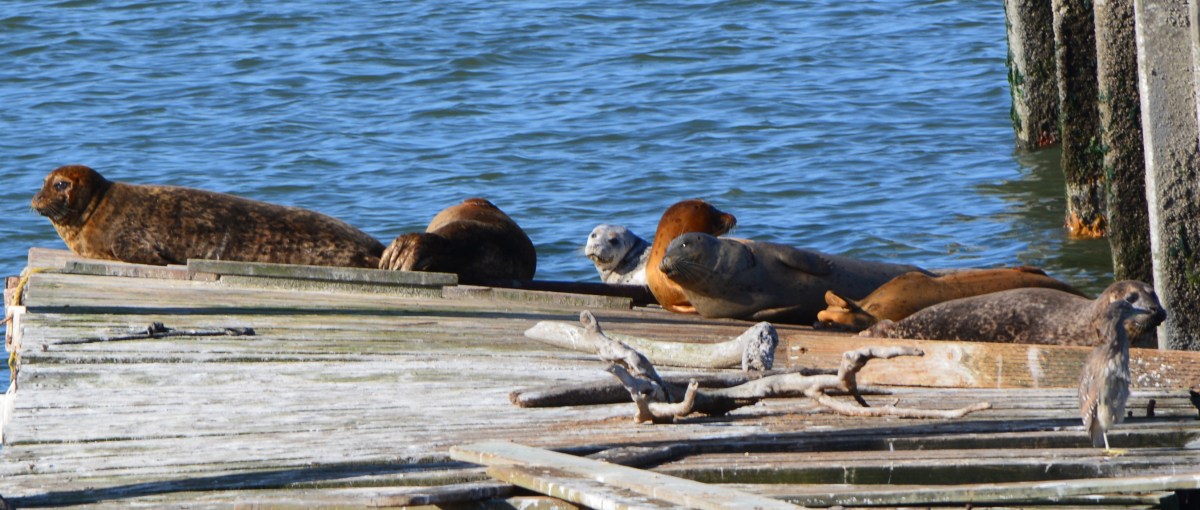
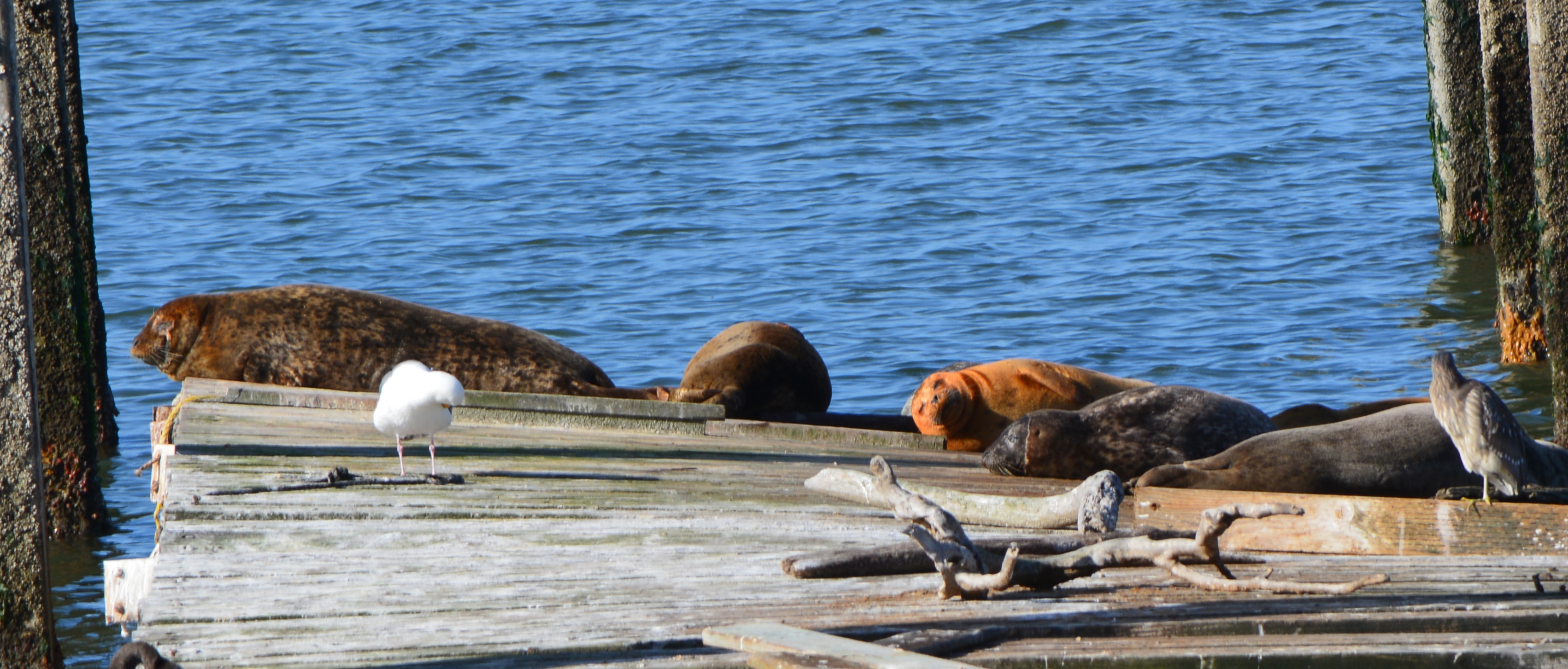
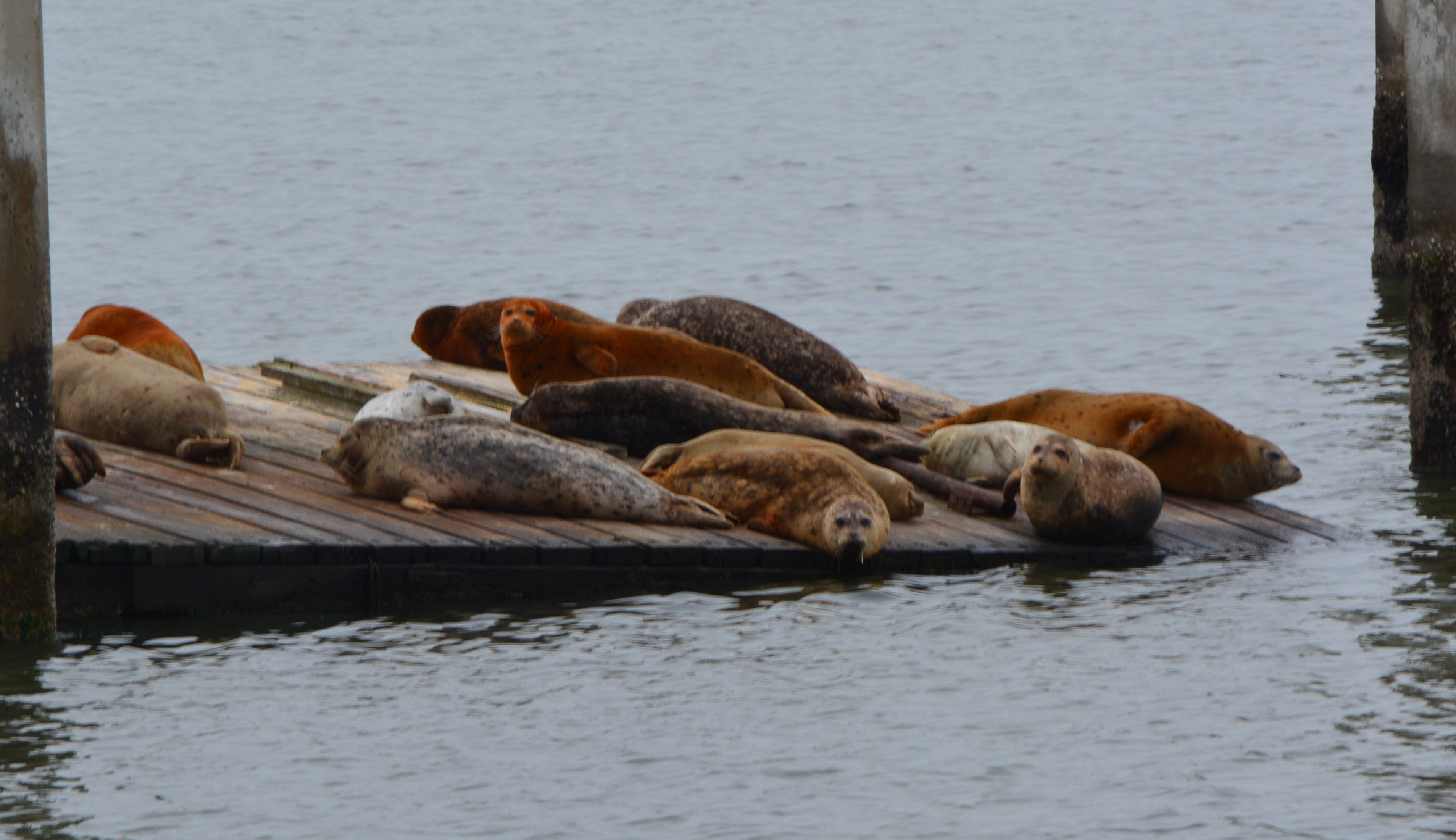
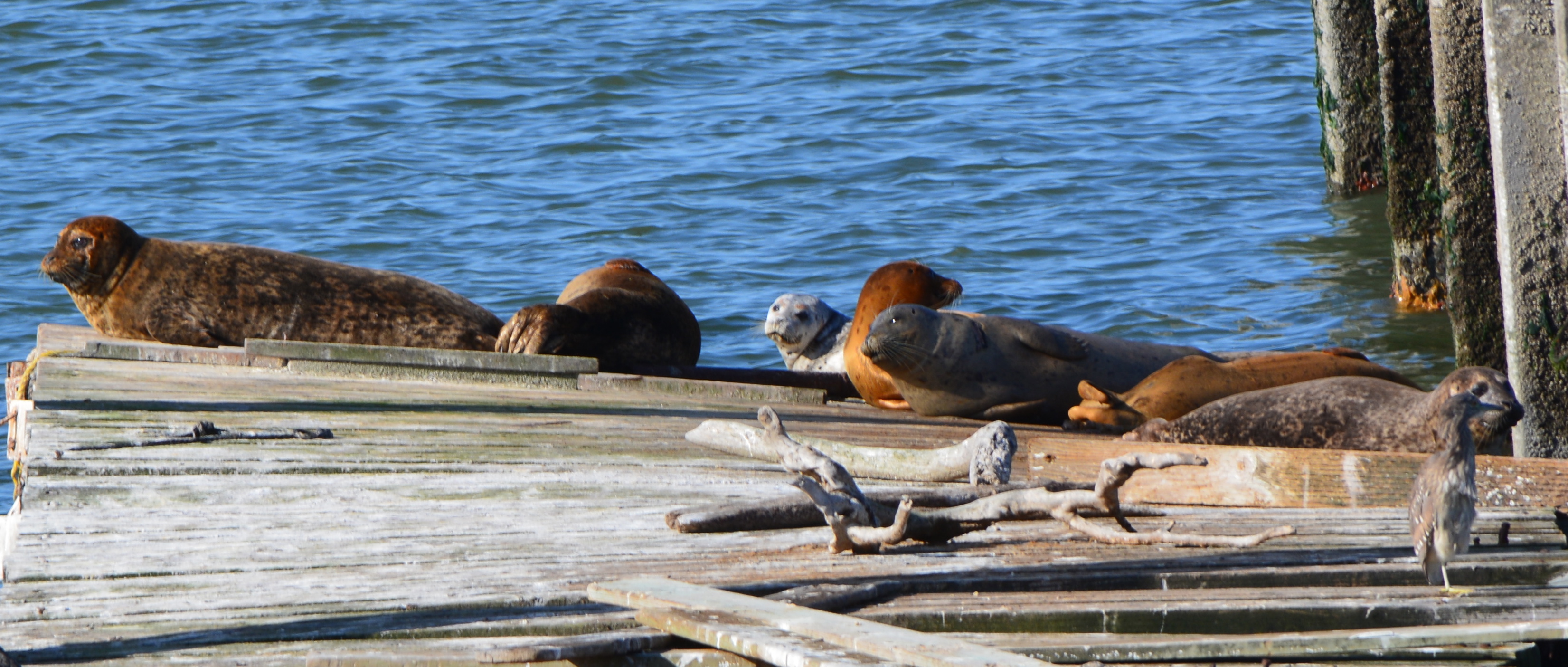
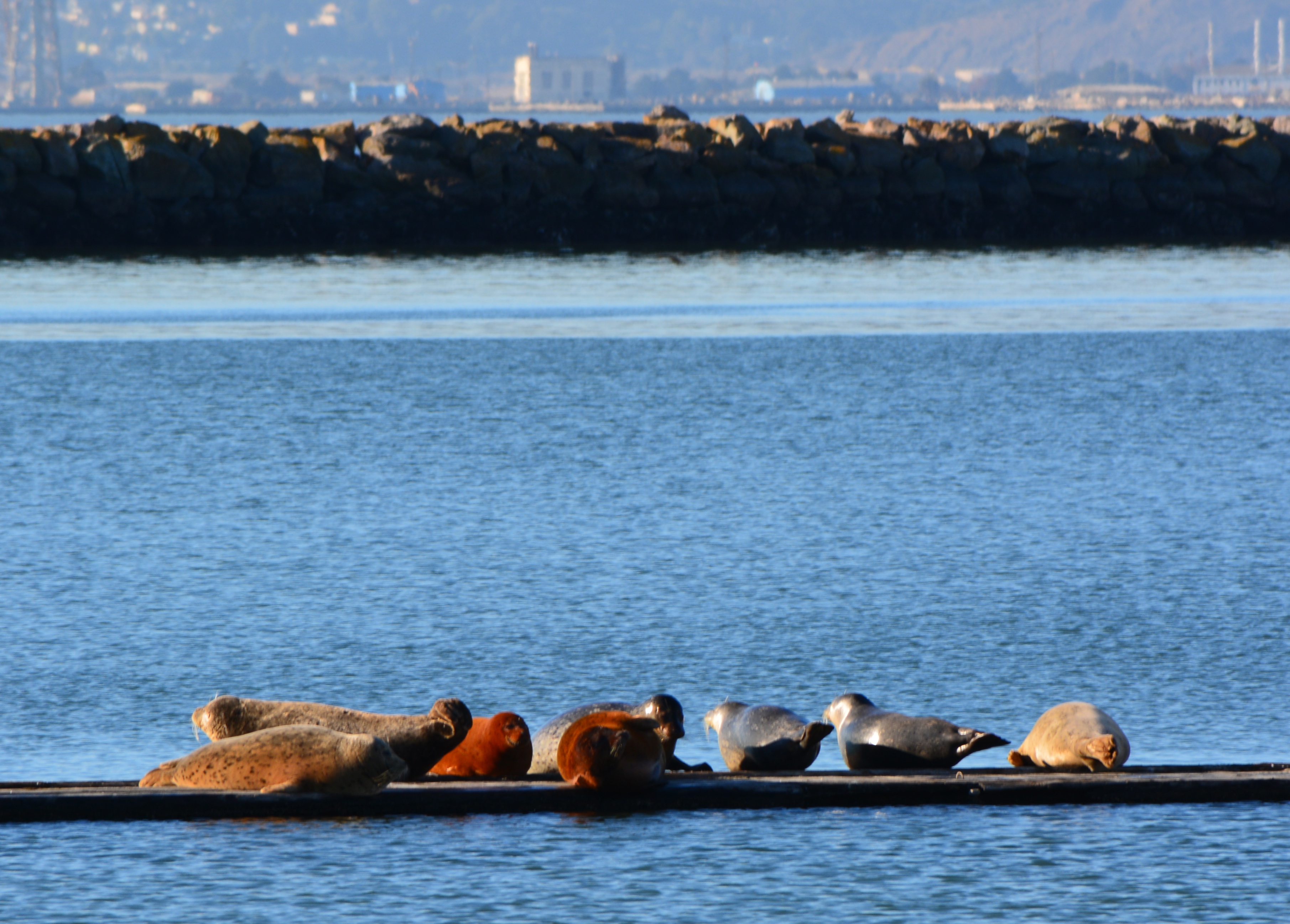
14 harbor seals resting on June 4, 2014, at Alameda Point dock where ferry facility is planned.
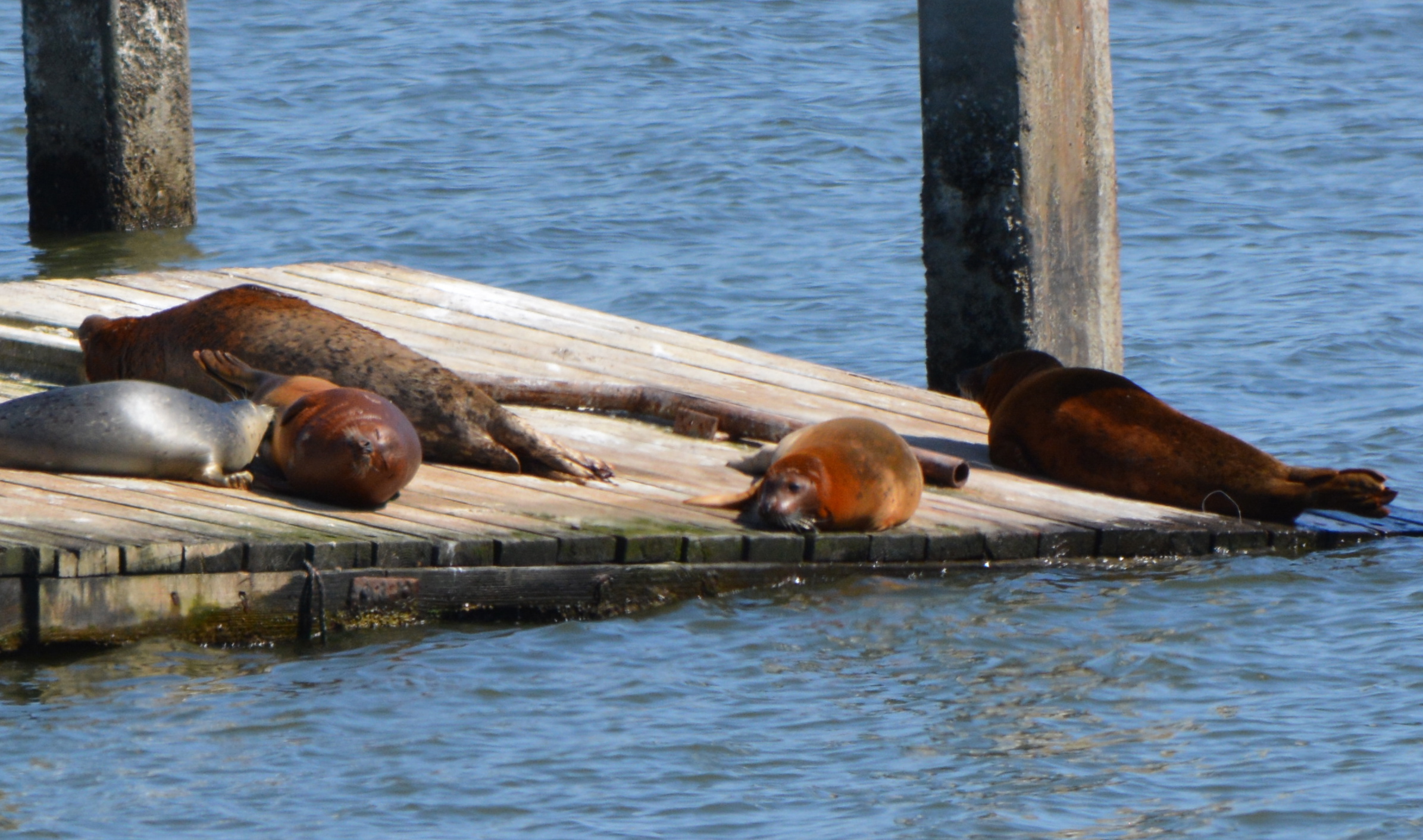
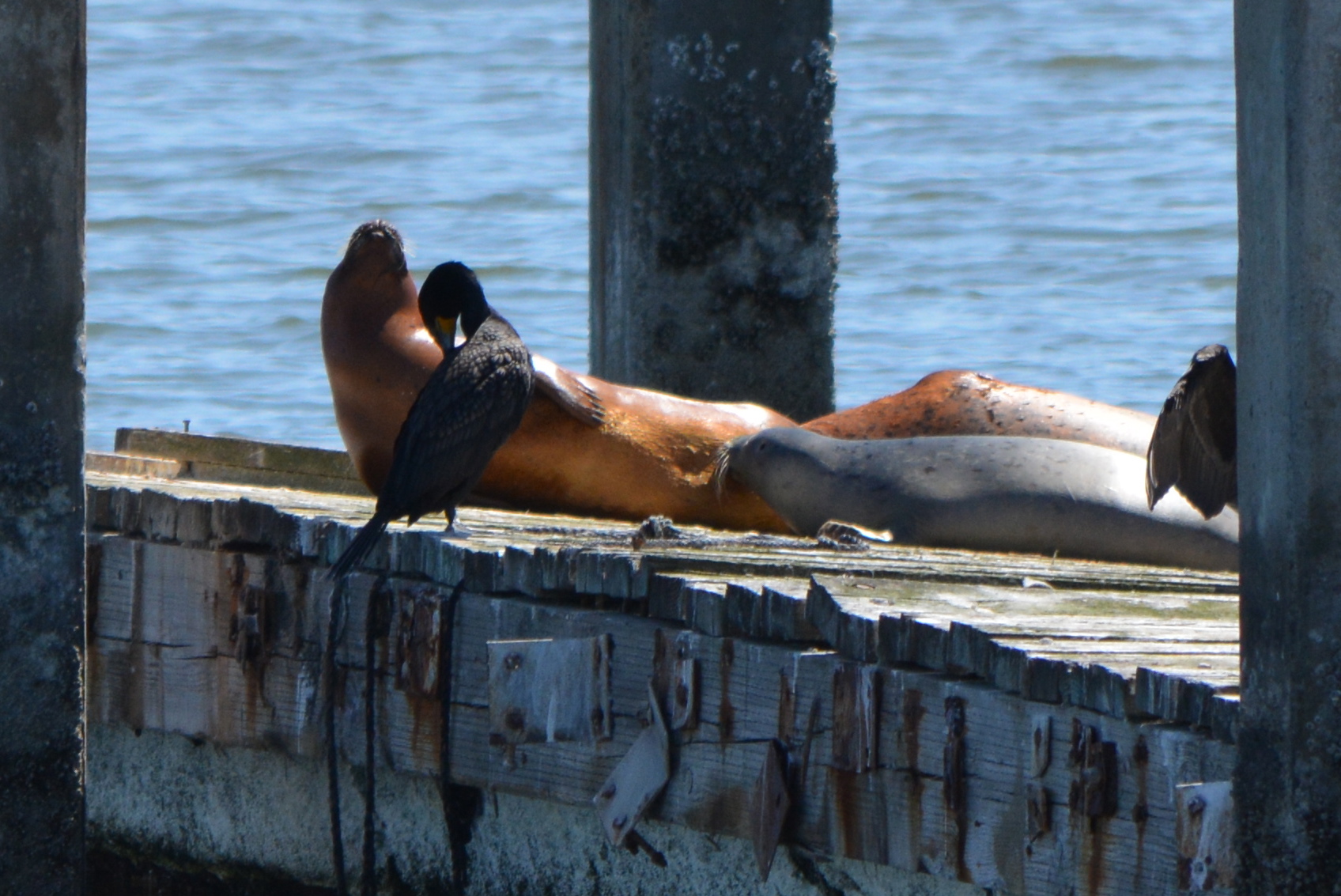
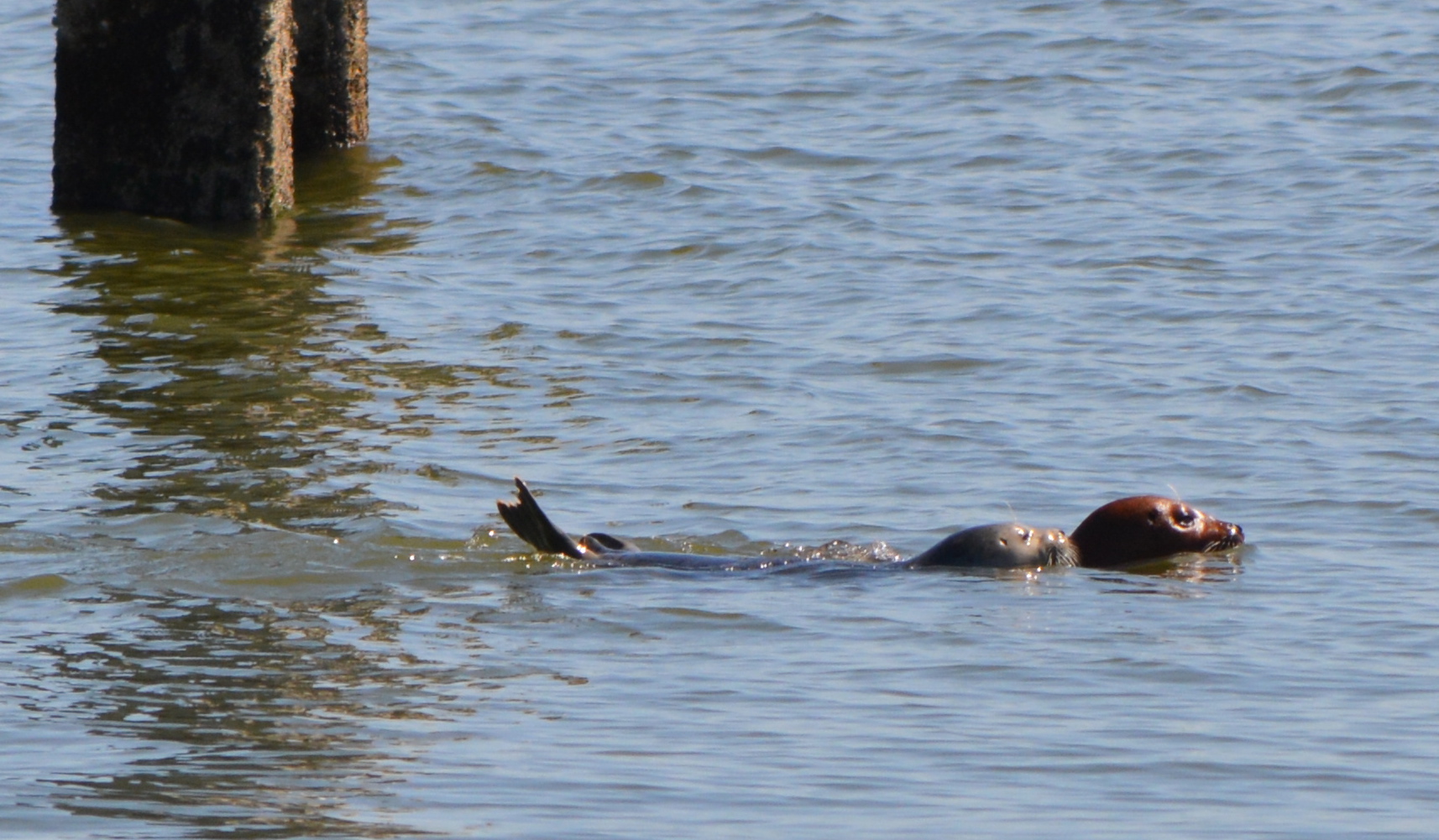
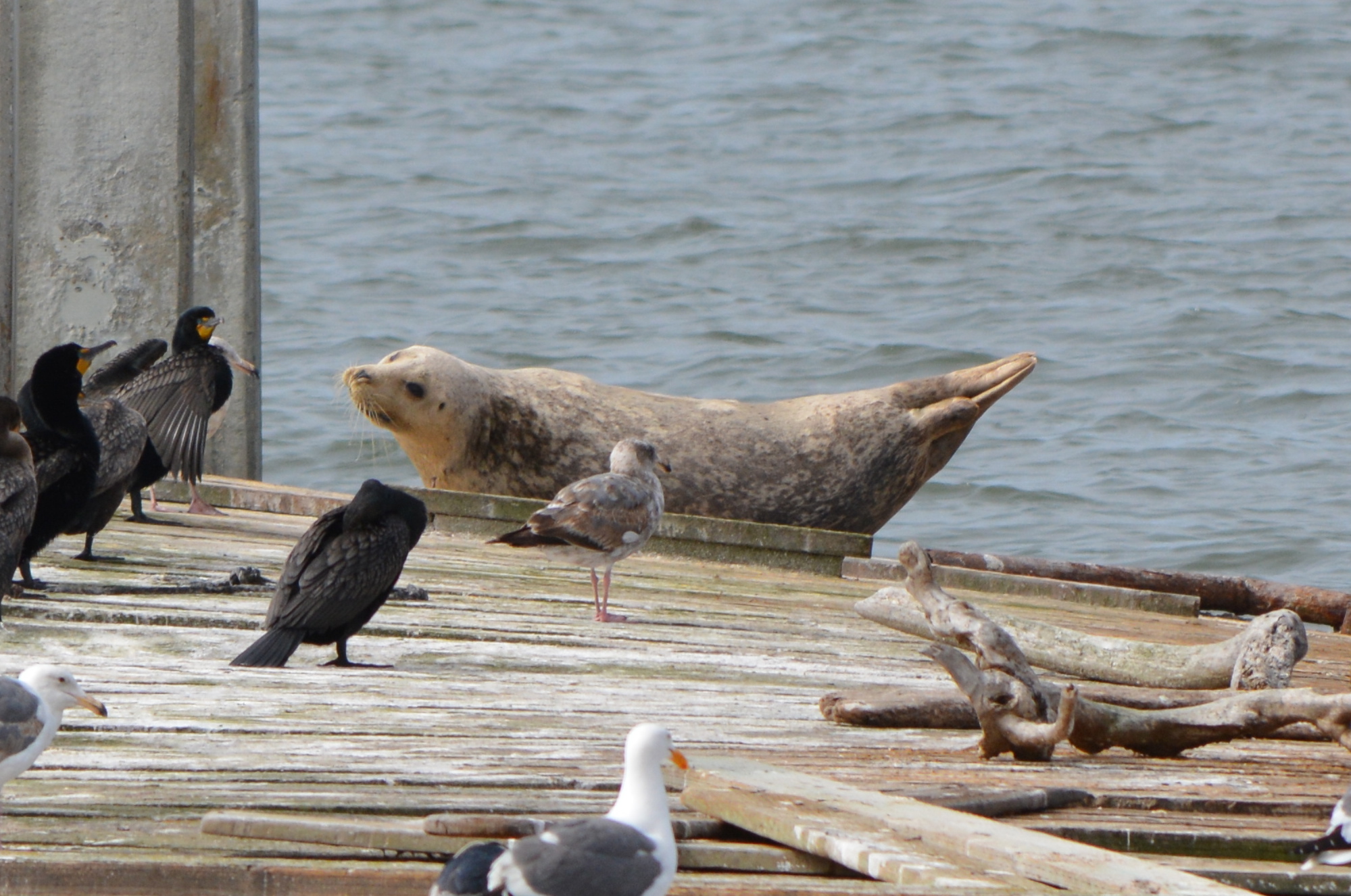
Part of the dock structure has sunk, but the main dock and remnant timbers have attracted harbor seals in recent years that manage to haul themselves up onto the wooden islands to rest. In May 2014, a female harbor seal was observed nursing a pup on the old dock and leading the pup in training exercises around the dock area.
Nursing harbor seal pup – May 13, 2014 – Alameda Point
In its permit application published in the Federal Register on September 17, 2014, the description of the type of harassment for which WETA is seeking a permit is limited to sounds emitted during demolition of the existing pilings and hammering in new ones.
The application makes only passing reference to residents having observed seals at the site. The loss of a resting site is not contemplated in the federal review, even though the Marine Mammal Protection Act lists habitat loss as a form of harassment. A haul-out resting site is considered habitat integral to the welfare of seals.
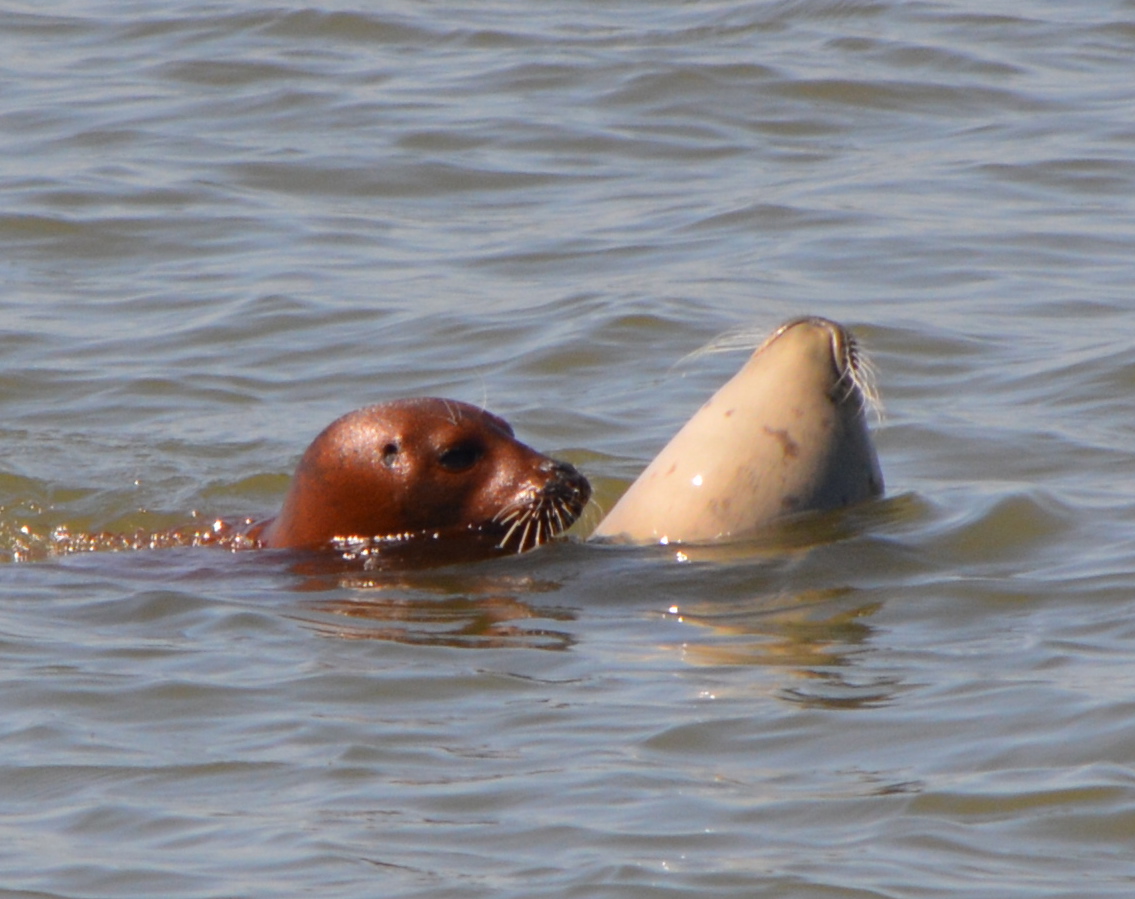
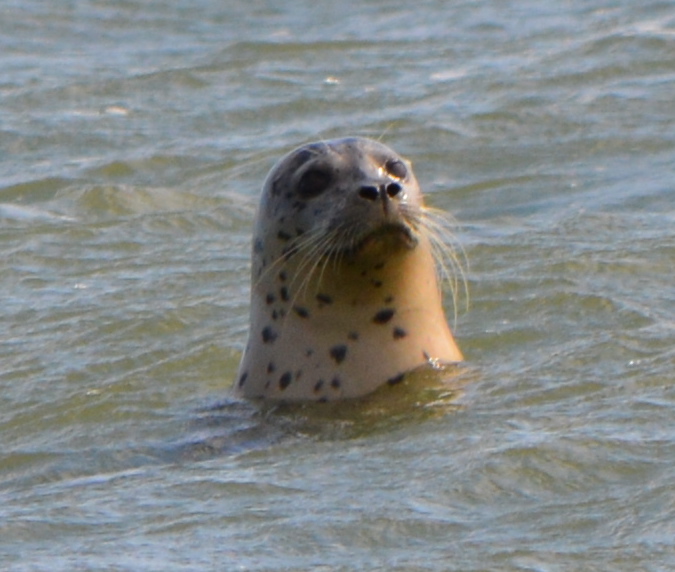
Adult harbor seals with silver pup – May 29, 2014
The permit is being processed as part of a federal Environmental Assessment and is being prepared by the National Marine Fisheries Service (NMFS). The NMFS is an arm of the National Oceanic and Atmospheric Administration that enforces the Marine Mammal Protection Act (MMPA), as well as aquatic components of the Endangered Species Act.
The permit being applied for by WETA is called an Incidental Harassment Authorization (IHA). An IHA “Level A” involves injury to a marine mammal. “Level B” involves disruption of behavioral patterns. The WETA permit is Level B.
The preliminary conclusion of NMFS is that no significant impact will occur, especially in light of the acoustical mitigation measures worked out between WETA and NMFS. The mitigation measures call for gradual start-ups to demolition and dock construction work, a sound curtain in the water, and NMFS-approved biological monitors.
Silver-colored harbor seal pup nursing on May 13, 2014.
Despite the fact that a regular haul-out site will be eliminated with the dock removal, NMFS concludes, “No permanent impacts to marine mammal habitat are proposed to or would occur as a result of the proposed Project.” WETA’s proposed facility “would not modify the existing habitat. Therefore, no restoration of the habitat would be necessary,” stated NMFS.
The most recent harbor seal data for the area cited by NMFS in the application is from 1998. It highlights Breakwater Island, the rocky barrier forming the south side of the Alameda Point Channel, as “the only haul-out site in the Central Bay that is accessible to seals throughout the full tidal range.”
The Alameda Point seals have been seen again in the project area in recent weeks after an absence of a few months, which corresponds with behavior predicted by NMFS. Citing harbor seal research, NMFS stated, “Haul-out sites are relatively consistent from year to year, and females have been recorded returning to their own natal haul-out when breeding.”
The public can submit comments no later than October 17, 2014. Pending review of the comments, the NMFS may impose additional mitigation measures. Comments can be sent via email to:itp.guan@noaa.gov. Paper mail to: Jolie Harrison, Chief, Permits and Conservation Division, Office of Protected Resources, National Marine Fisheries Service, 1315 East-West Highway, Silver Spring, MD 20910.
Adult harbor seal with pup at proposed ferry facility site, Alameda Point, May 13, 2014.
WETA will also need a permit from the Bay Conservation and Development Commission, which follows state rules regarding marine mammal impacts. WETA will be leasing the site from the city, and still needs to conclude a lease agreement and obtain a building permit. Demolition and dredging at the site can only occur between August 1 and November 30 due to foraging by least terns in the spring and summer and fish migration in late fall. The permit is for 2015.
The project was authorized by WETA in 2009 and has been undergoing review ever since. It will include berths for 11 ferries, a service yard and a four-story workshop and administration building. The facility would also function as an emergency operation center for passenger service in the event of an emergency.
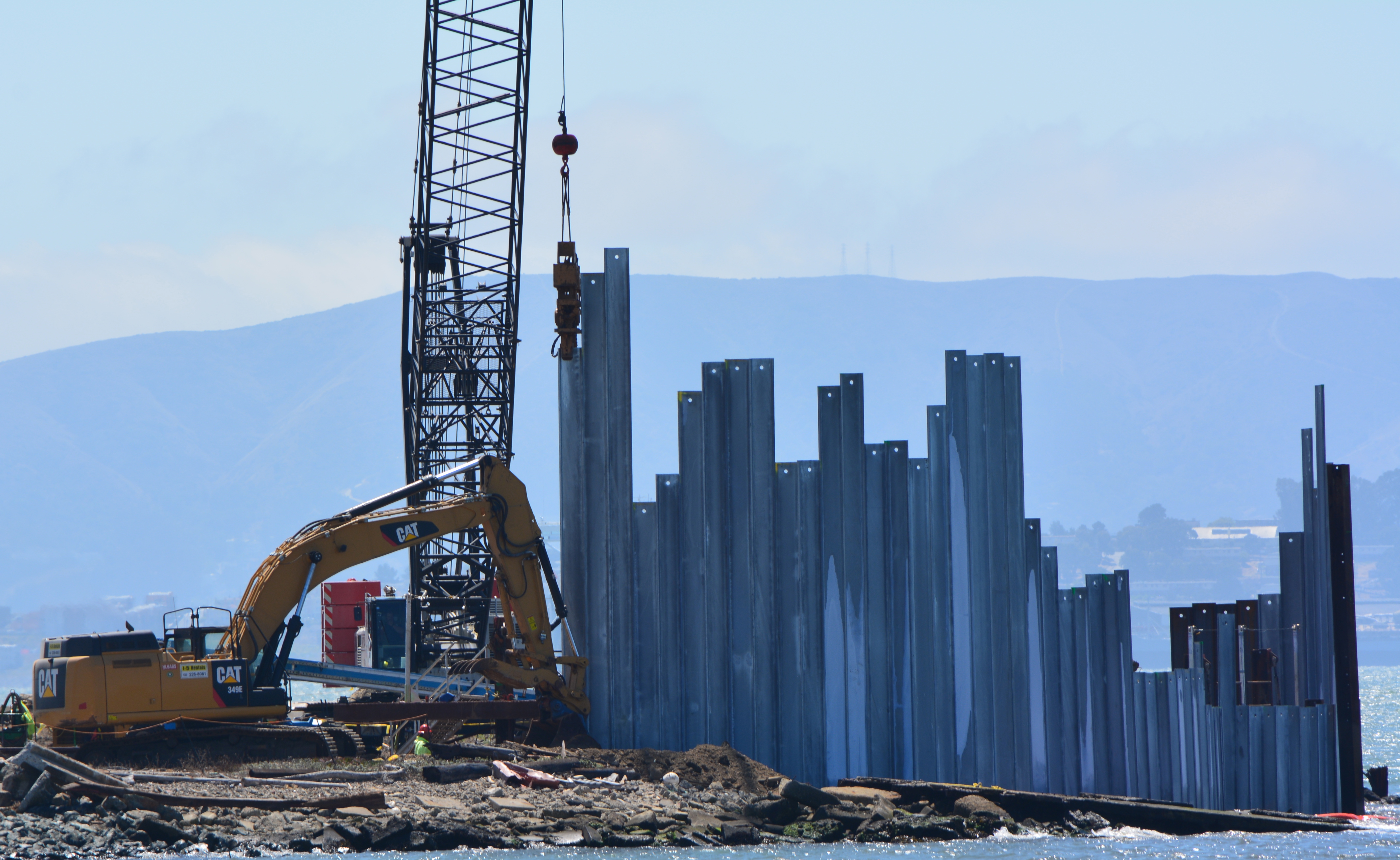
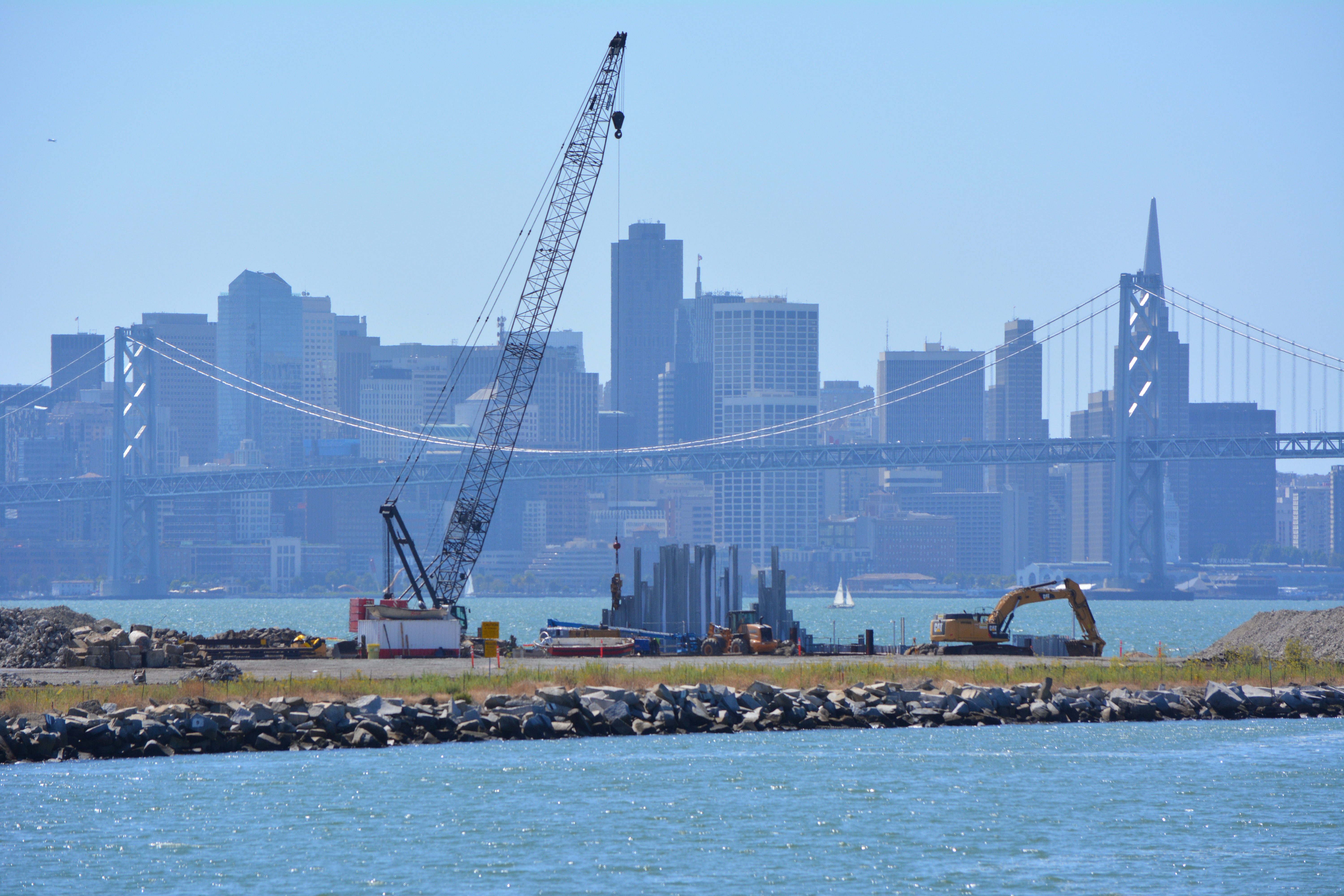
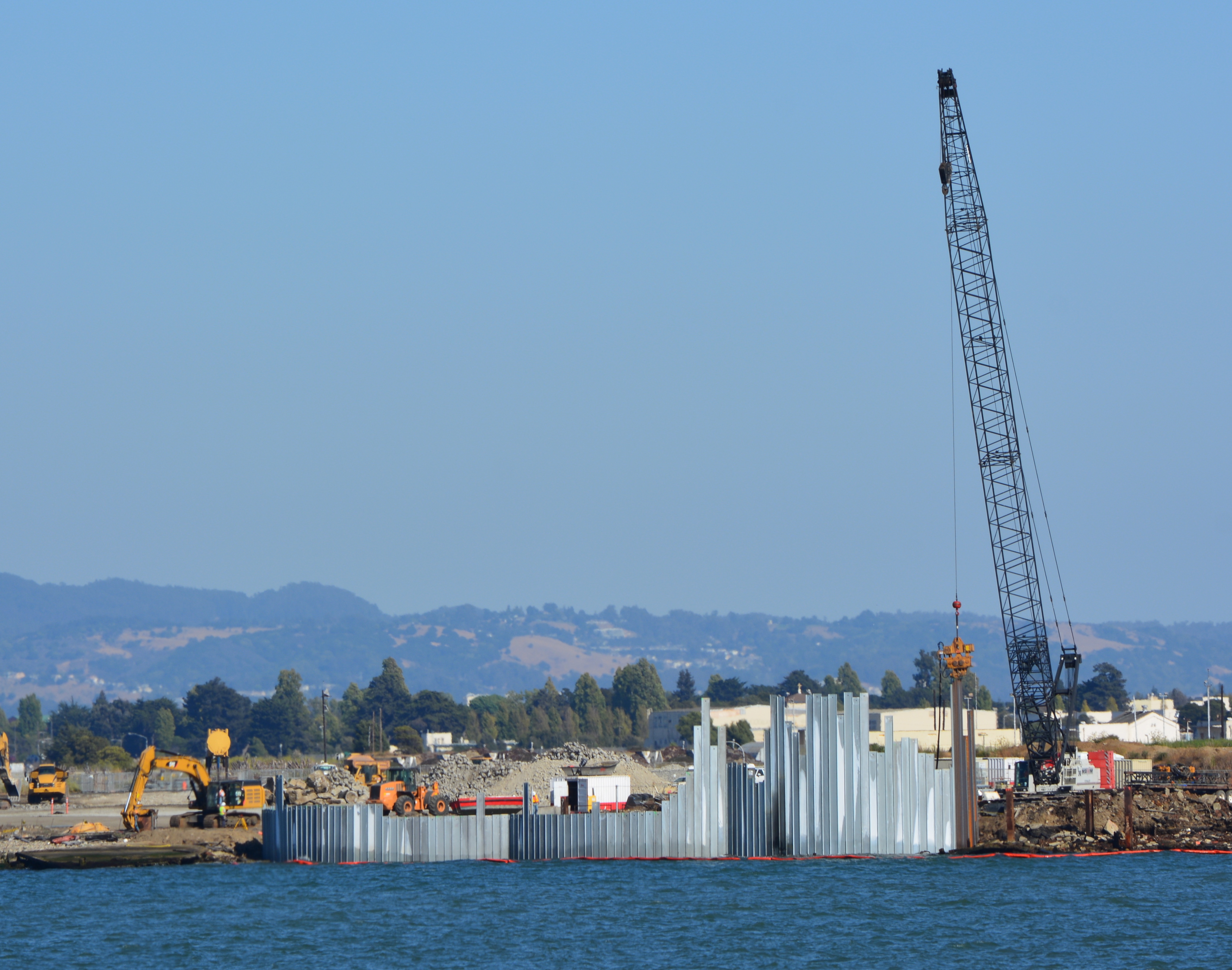
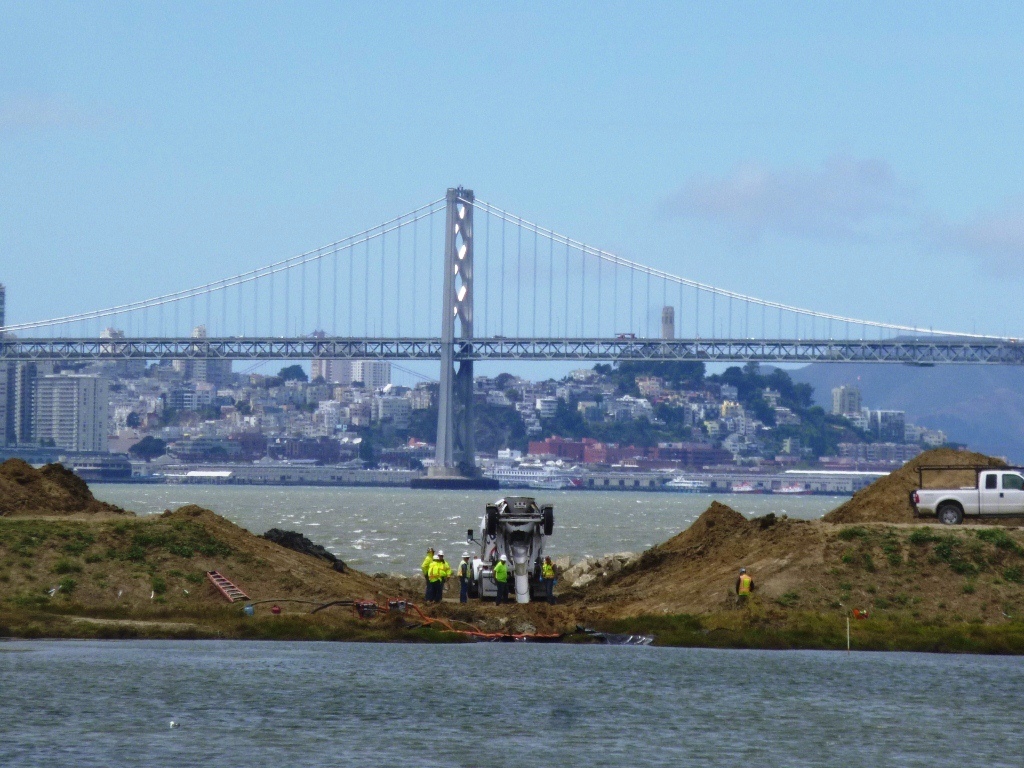
The Navy began embedding a steel barrier along several hundred feet of the western shoreline of Alameda Point during the week of August 18. The purpose of the barrier is to contain contaminated ash and burn waste material that was bulldozed into the Bay some 60 years ago and is now overlain with silt. The area is where the Navy burned various waste materials.
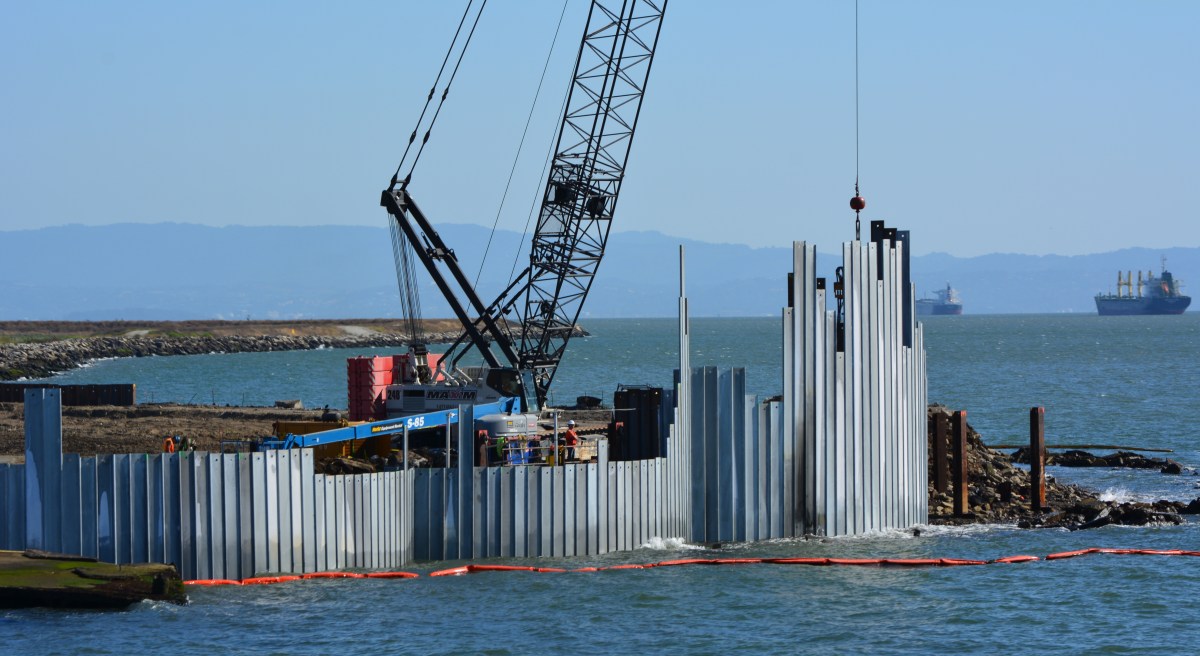
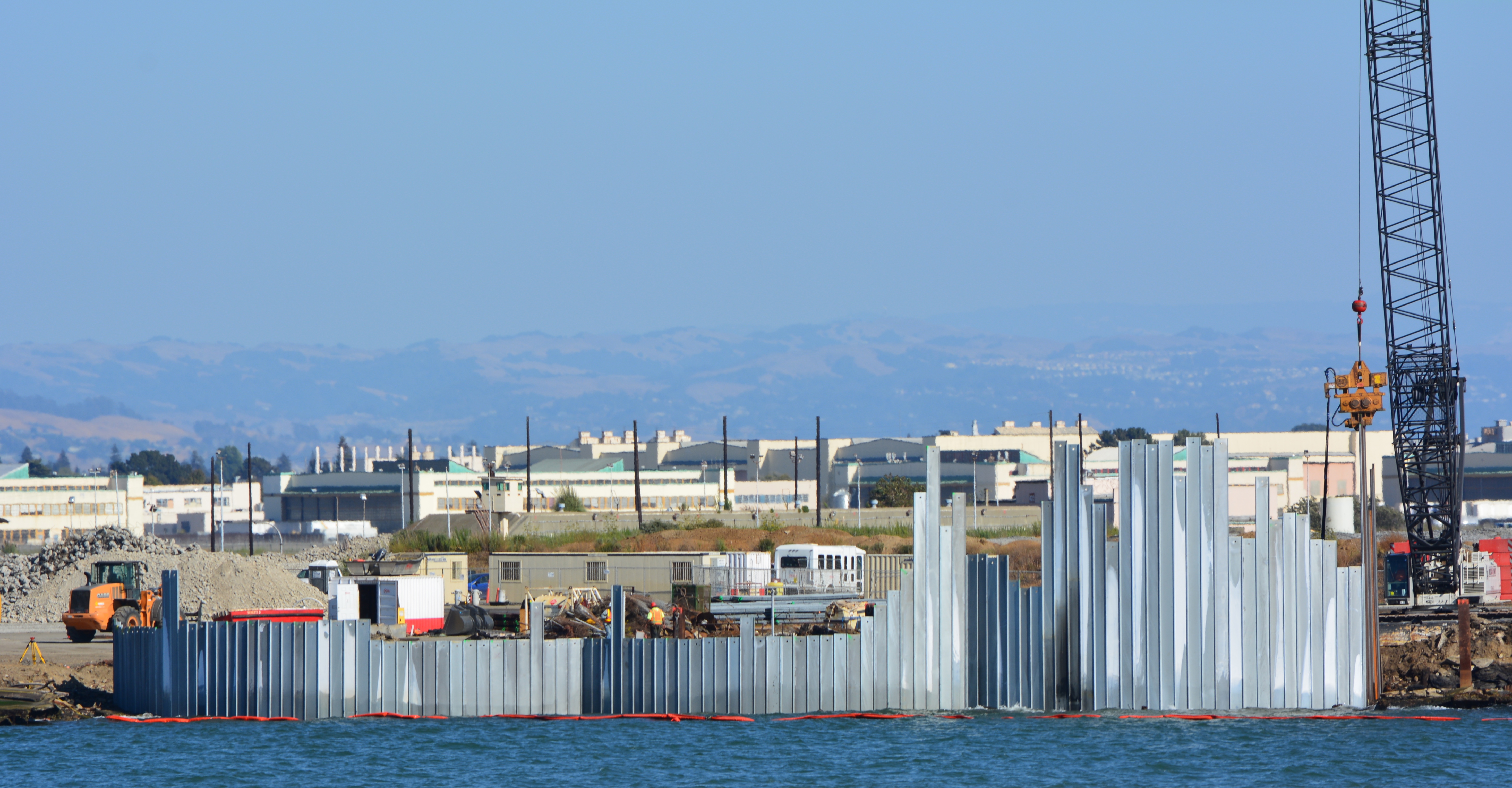
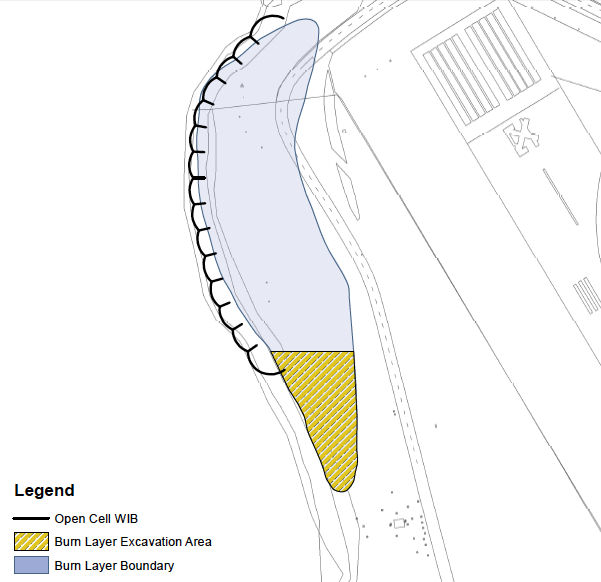
Three of the waste isolation cells under construction at northwestern tip of Alameda Point. A total of 15 cells, each one separated by a wall behind the face of the barrier, will be constructed here.
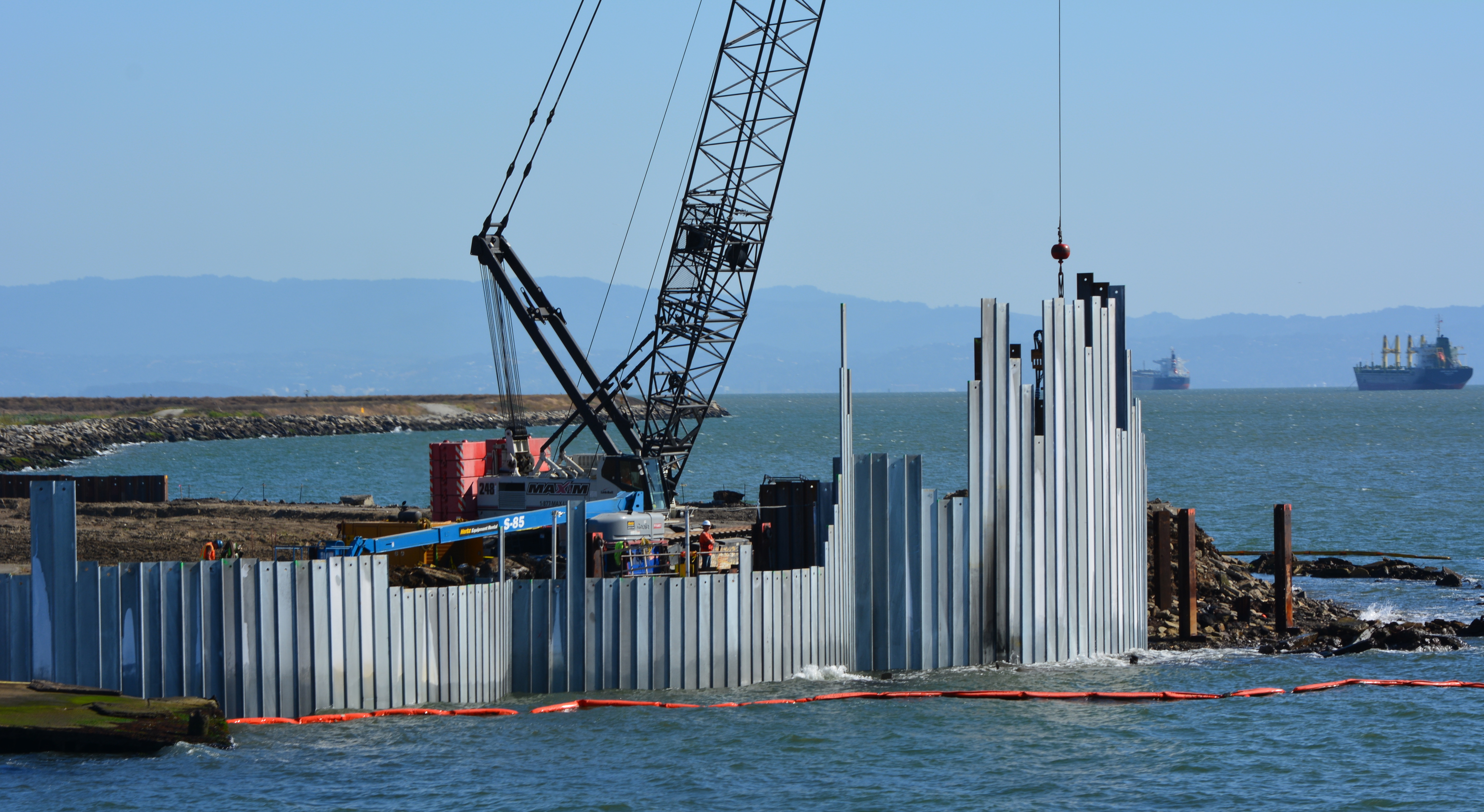
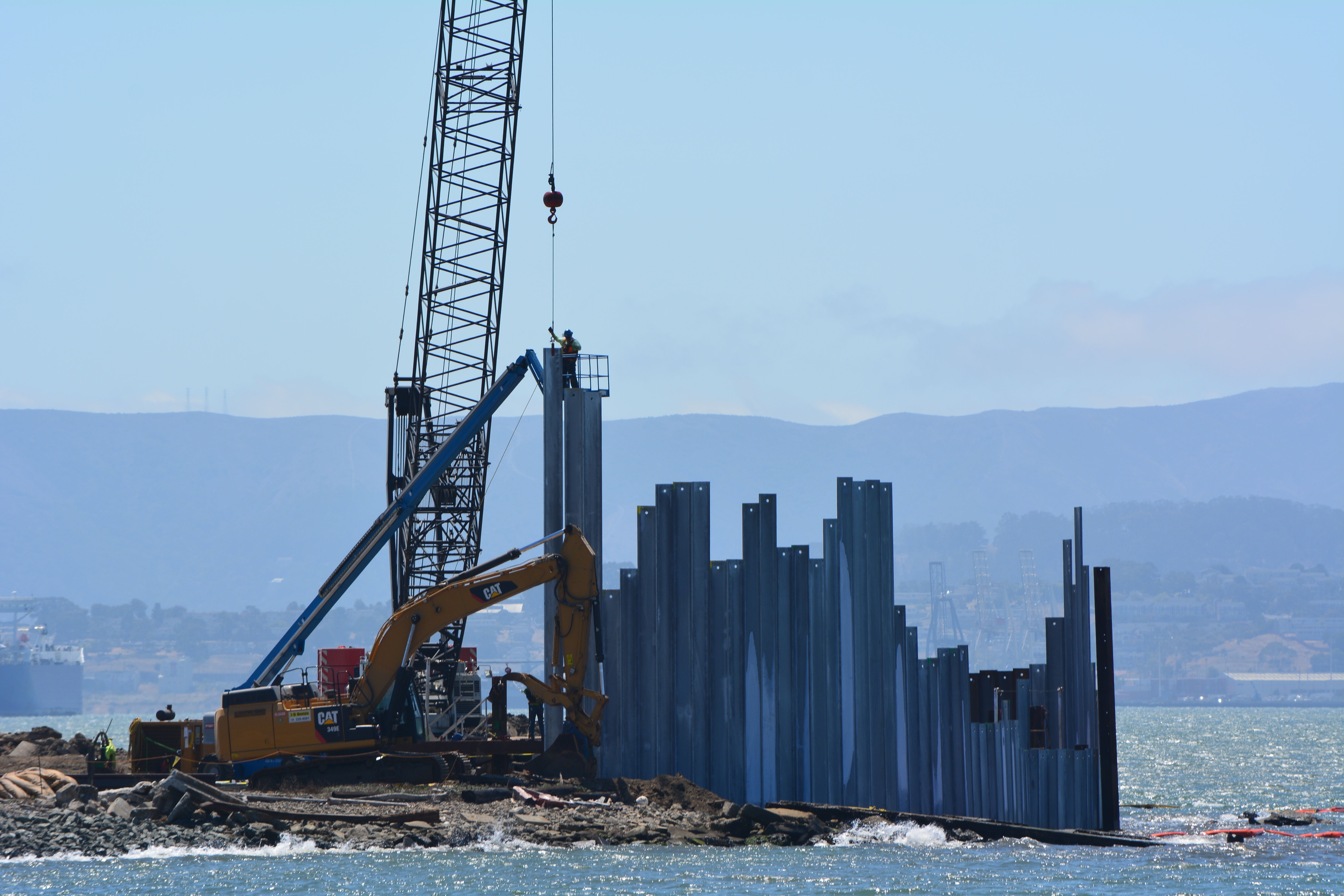
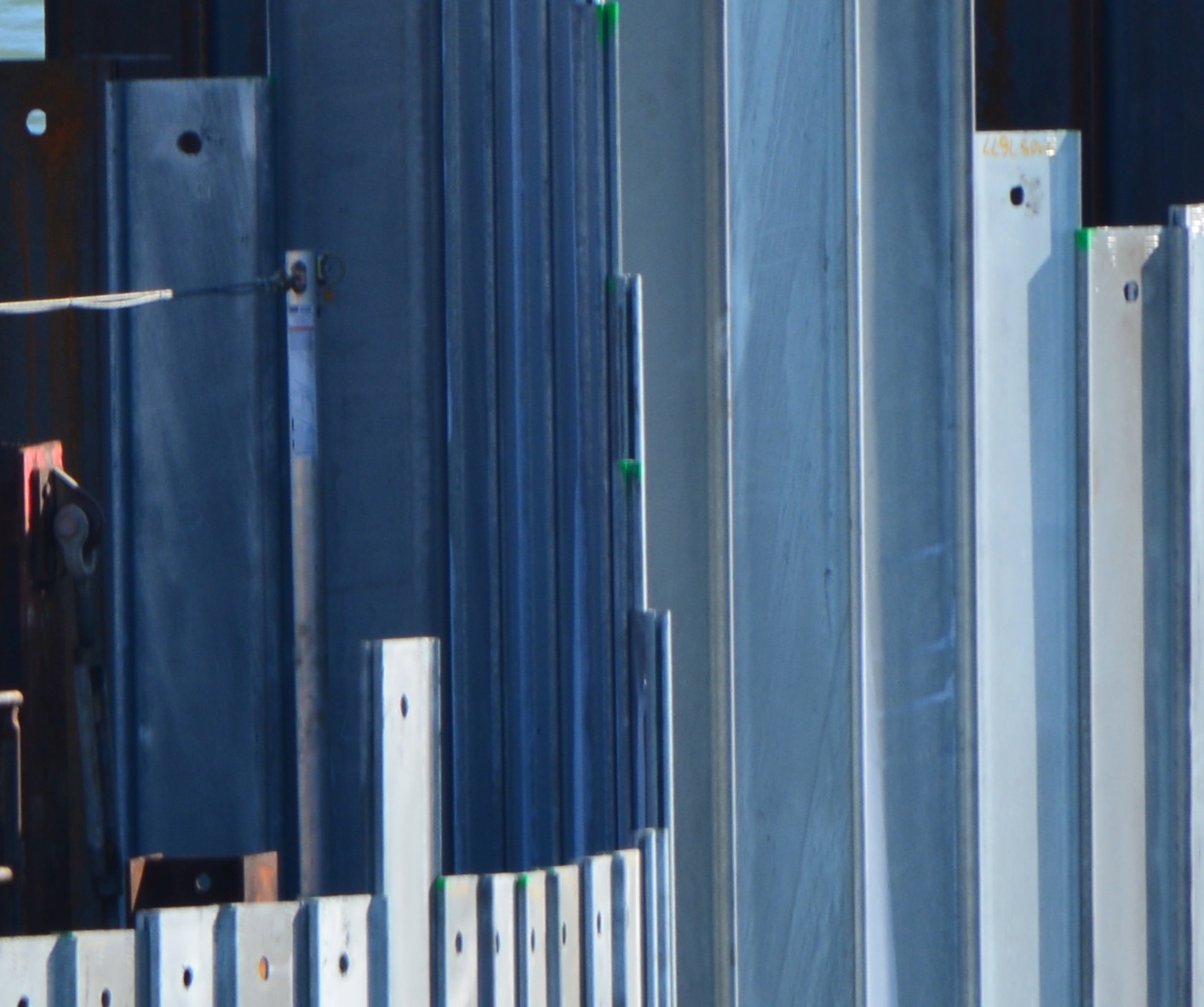
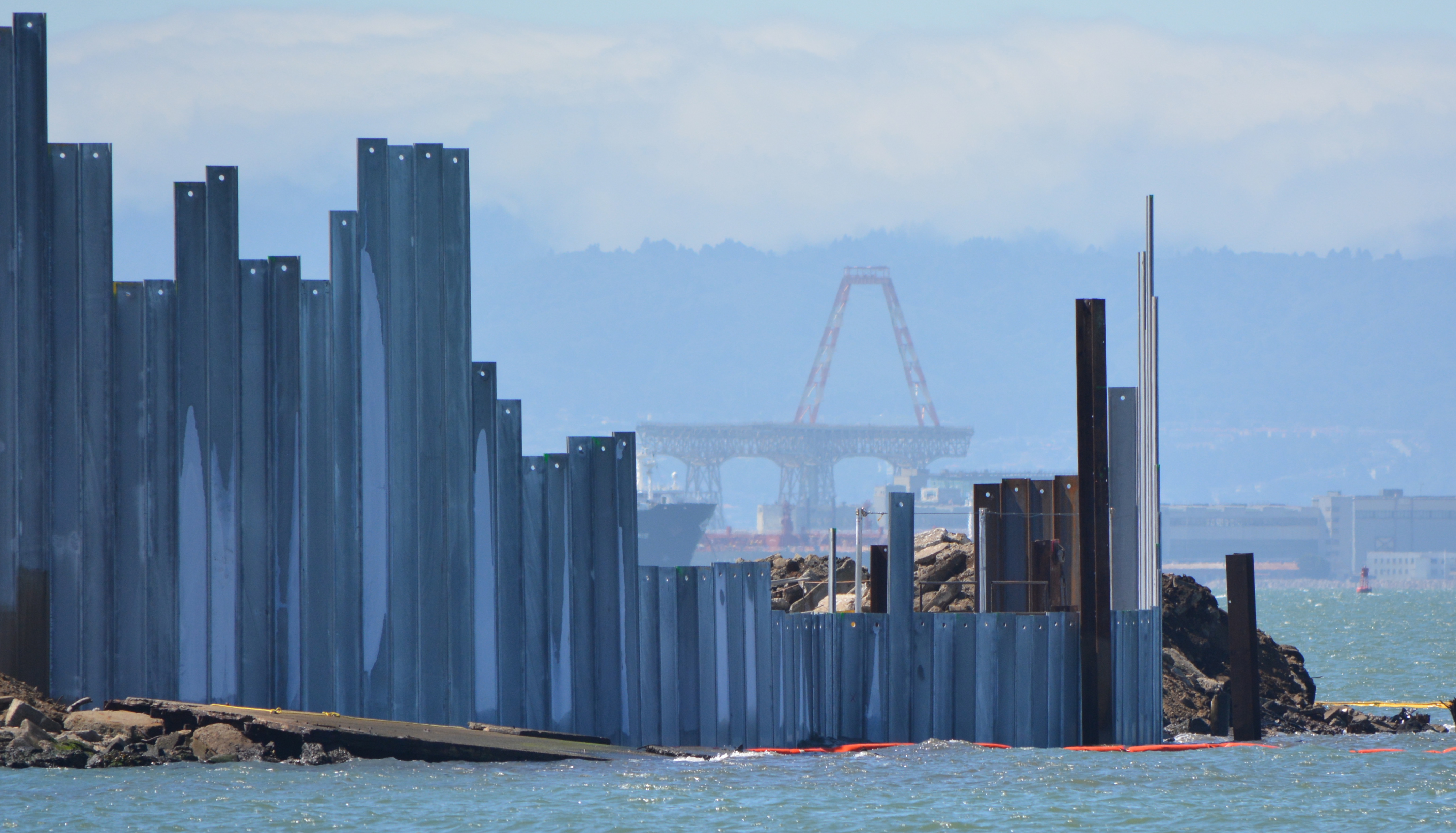
The containment system is called a waste isolation barrier. It consists of 35-foot-long interlocking steel pilings that are hammered into the ground with a hydraulic vibrator suspended from a crane cable. Perpendicular steel walls behind the barrier add stability. The final elevation of the top of the waste isolation barrier will be approximately 10 feet above mean sea level.
A worker guides one of the galvanized steel pilings into place as crane operator maneuvers.
Tests around the area were conducted in 2010, 2011, and 2012 to determine if any of the chemicals in the burn residue were entering San Francisco Bay. None were found to be entering the Bay. Nevertheless, the Burn Area’s proximity to the Bay requires that the contaminated waste either be removed or permanently isolated. Removing all of the waste from under the shoreline would have cost $40 million. The containment system costs $13 million.
Piling being slowly driven into the ground by a hydraulically operated vibratory hammer.
The construction of the shoreline waste barrier is part of a larger Navy cleanup project on the adjacent 37 acres, called Site 1, which was once used as an underground waste disposal area. Much of the area is now covered by runway pavement that will remain in place. The entire 37 acres right up to the steel barrier will be covered with three feet of clean soil and seeded with native vegetation. A small wetland area will also be created along the shoreline.
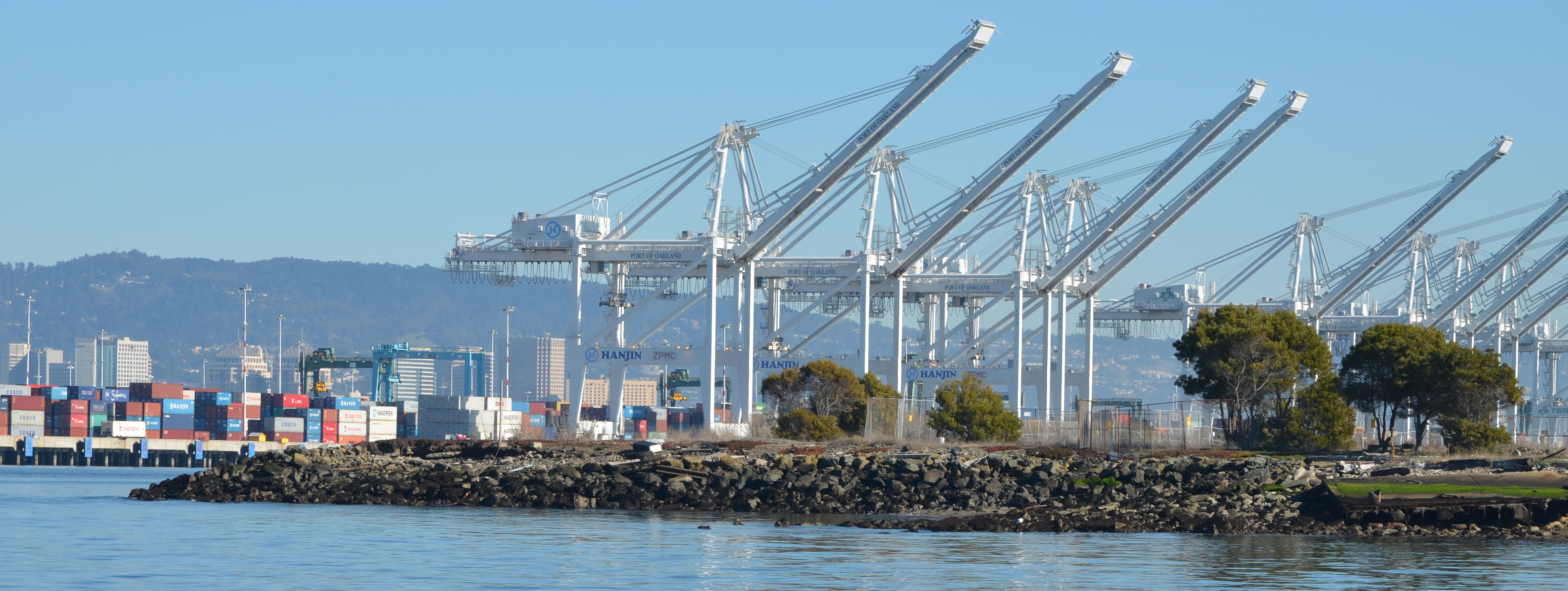
Site 1 cleanup project with crane. Oakland Estuary in the foreground and San Francisco in the background.
When completed early next year, the area will be suitable for passive recreational use, including the Bay Trail.
The work can be observed from the Oakland side of the estuary at Middle Harbor Shoreline Park right next to the cranes.
Background information can be found in this post from April 2013.
More photos and a diagram below
Waste isolation barrier will have 12 more cells to the right when completed.Diagram of shoreline waste isolation barrier at northwestern tip of Alameda Point. Navy diagram.
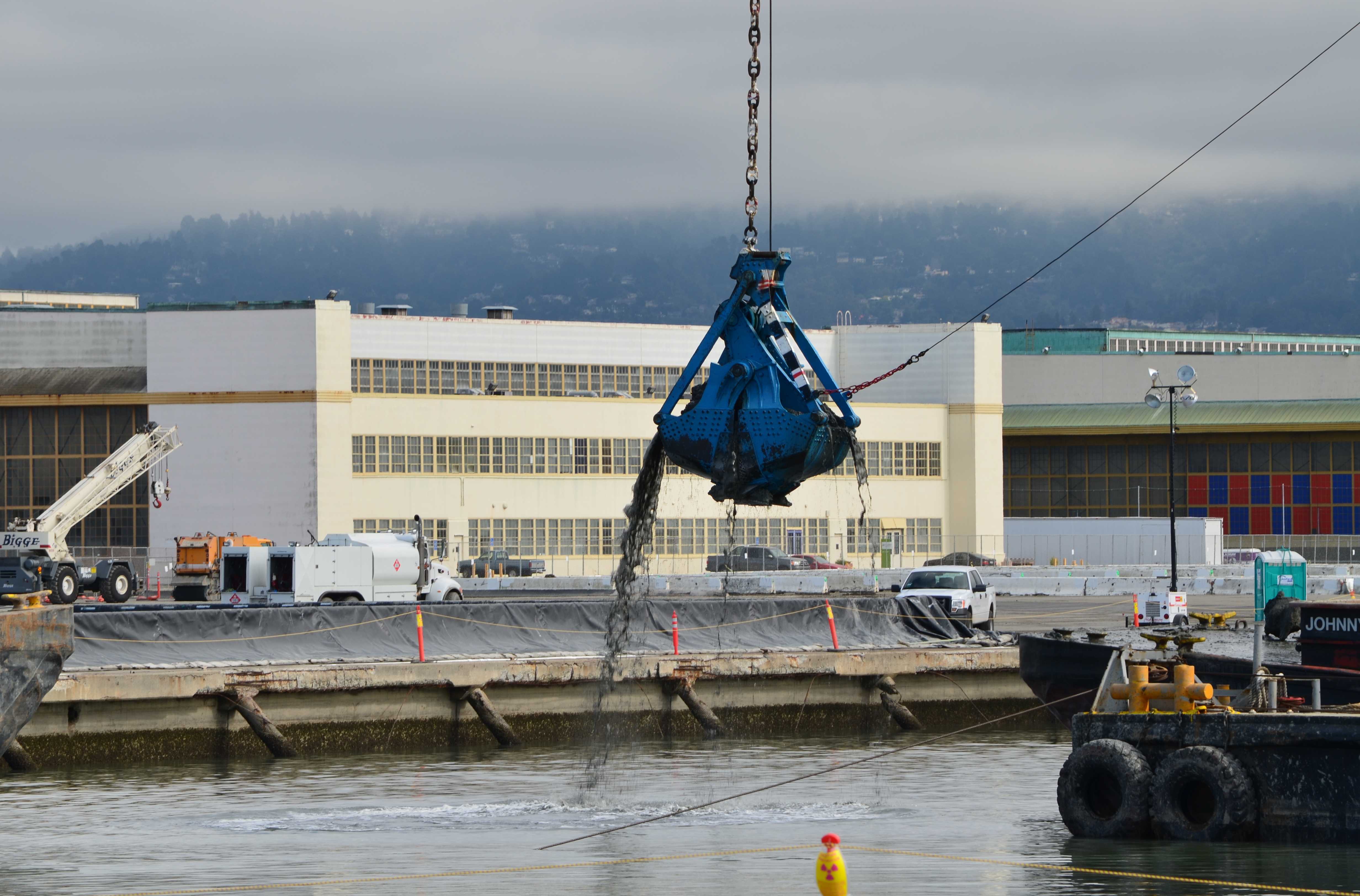
The Seaplane Lagoon’s north side will be looking like its old self in a few months. The Navy has begun dismantling the waterproof concrete-walled containment system that was used for three years for dewatering and testing of soil dredged from the Seaplane Lagoon, marking a major cleanup milestone. Prior to that dredging work, much of the lagoon’s north frontage served as a staging area for replacement of storm drain lines contaminated with radium-226.
Construction of a new and improved soil cover over a waste disposal site concluded this spring, marking another milestone. The 110-acre site on the southwest corner of Alameda Point took 10 years of haggling about potential environmental impacts before a cleanup plan was adopted in 2010. Work began in early 2013. The dome-shaped soil cover required 500,000 cubic yards of barged-in soil to complete.
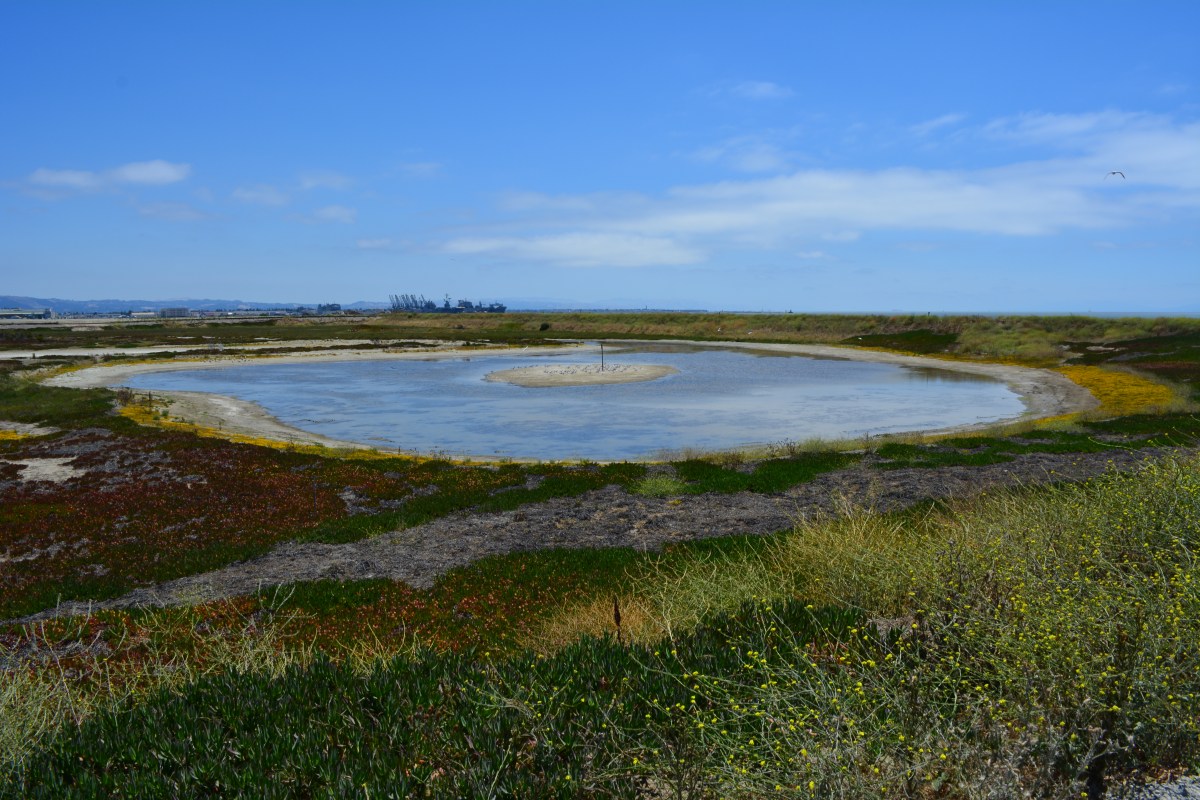
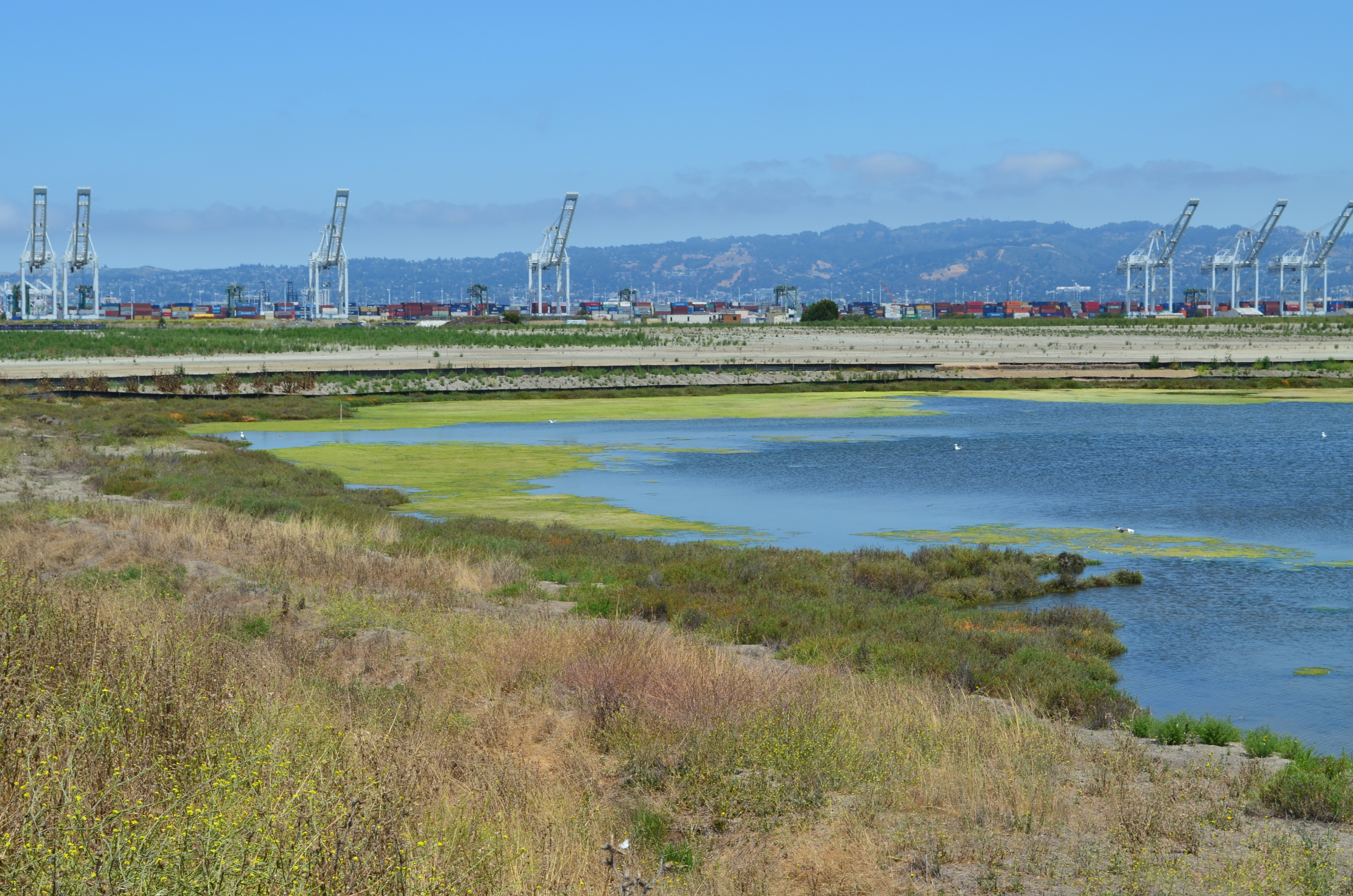
North Pond of West Wetland on southwest corner of Alameda Point. Pond is connected to San Francisco Bay via a new culvert near upper left of pond. Landfill soil cover is partially visible on far side of pond and will be seeded with flowering native grasses later this year.
At the far northwestern corner of the Point, work is about to begin on another long studied and analyzed waste disposal site. In a few months, the Navy will be installing an interlocking steel retaining wall along 200 yards of the Bay shoreline to contain contaminated burned waste material that was bulldozed into the Bay more than a half century ago. Water dye tests showed no toxics are leaching into the Bay, but members of the Restoration Advisory Board (RAB) questioned whether the barrier would withstand a catastrophic earthquake. Partially covered by runway pavement, the entire 30-acre site will receive a three-foot soil cover. The work is expected to be completed in 2015. The area will be available for passive recreational use such as hiking trails when the city receives the land.
Northwest tip of Alameda Point where Site 1 is located. Waste burning area is here. Trees have been removed. Metal retaining wall will go here. Port of Oakland is in background.
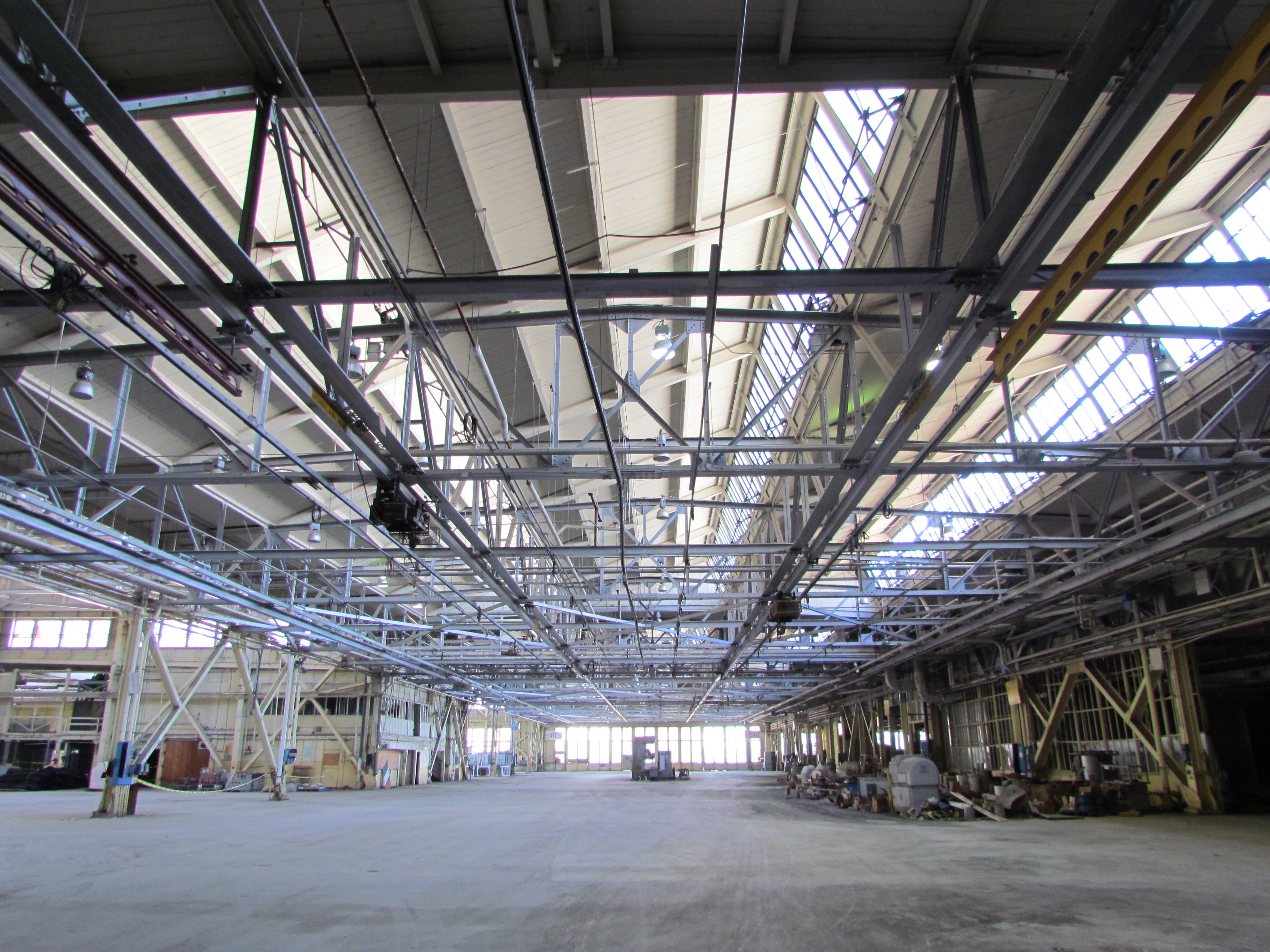
One of the longest-running and most problematic cleanup sites is at the old Naval Air Rework Facility (NARF), also known as Building 5, covering nearly one million square feet. Radium paint used for aircraft dial painting, and chemicals associated with engine repair work led to contamination that is still being remediated. The entire floor area will be scanned again for radiation in 2015, following up on at least three prior scanning surveys of walls, ceilings, pipes, and ducts. The year 2015 will also see the Navy returning to the site for a final round of groundwater cleanup treatments targeting contamination remaining after an intensive cleanup effort a decade ago.
Building 5, also known as Naval Air Rework Facility (NARF), where additional radium-226 and groundwater cleanup is planned. At the corner of West Tower Avenue and Monarch Street.
Next door to the Bladium Sports Club on West Tower Avenue, another previously treated groundwater cleanup site will be treated again. Workers have already begun boring holes in the pavement for a network of hoses that will be used for introducing contaminant-eating bacteria into groundwater along with a bacteria food source.
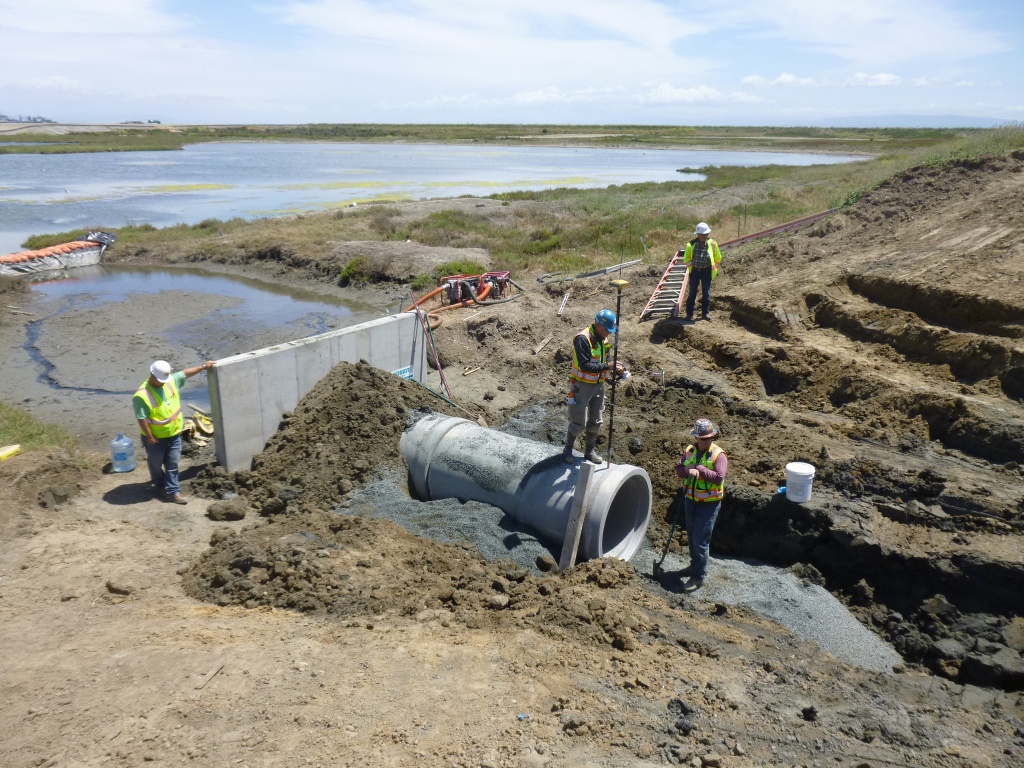
On Saturday, July 12, the Navy’s annual cleanup site tour visited four of the cleanup areas. The most impressive stop was the 110-acre landfill site mentioned above. For the first time in over 15 years, members of the public were allowed to walk around and enjoy the magnificent views from the embankment that is closer to San Francisco than to city hall. The fencing is all gone, and with it the radiological warning signs. The Navy replaced an aging metal culvert that connects the site’s North Pond to San Francisco Bay with a concrete culvert.
New culvert being installed connecting San Francisco Bay, which is to the right, and North Pond of the West Wetland at Alameda Point. Navy photo taken 5/22/14.New culvert being installed. North Pond of West Wetland at Alameda Point in foreground, San Francisco Bay in background. Navy photo.
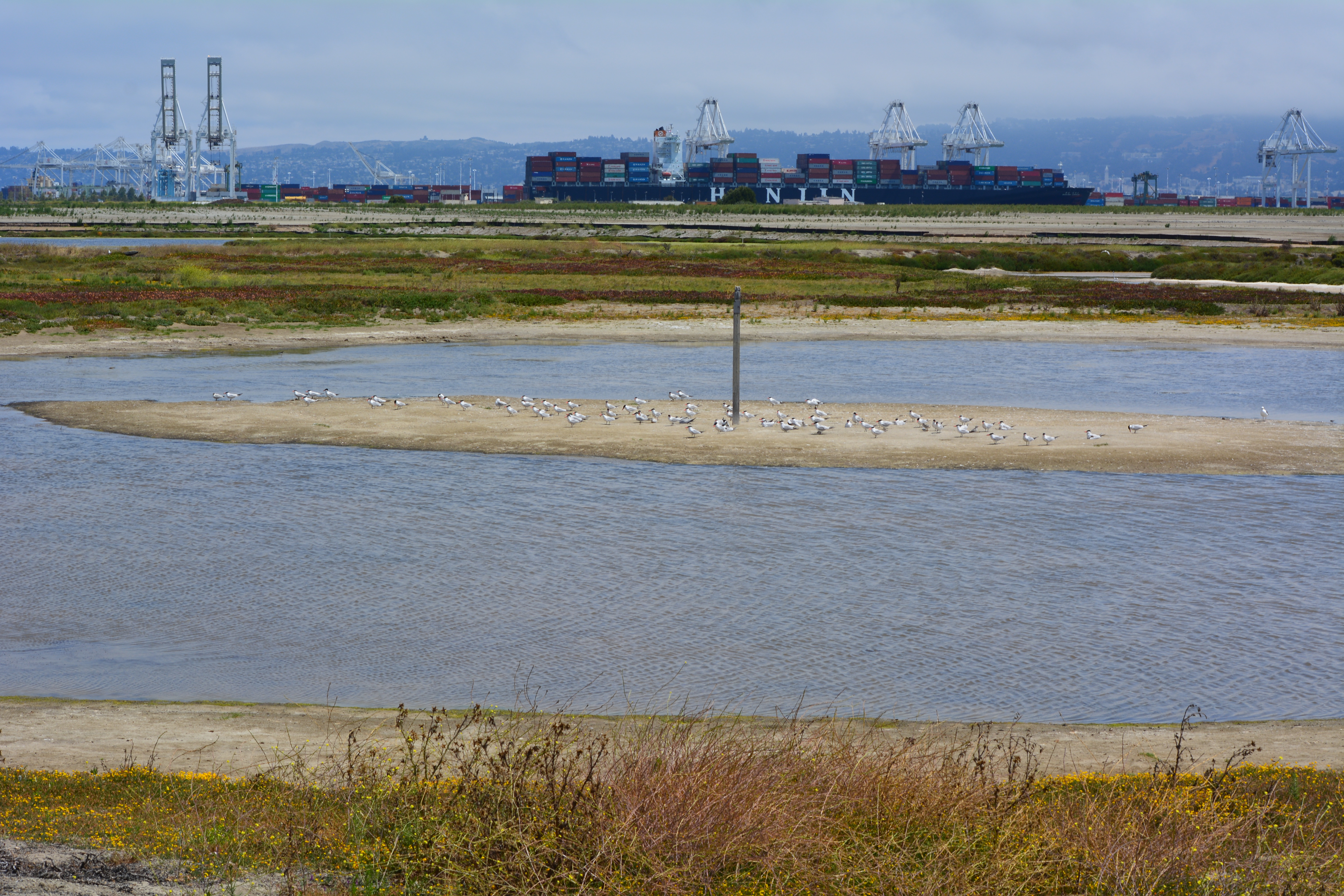
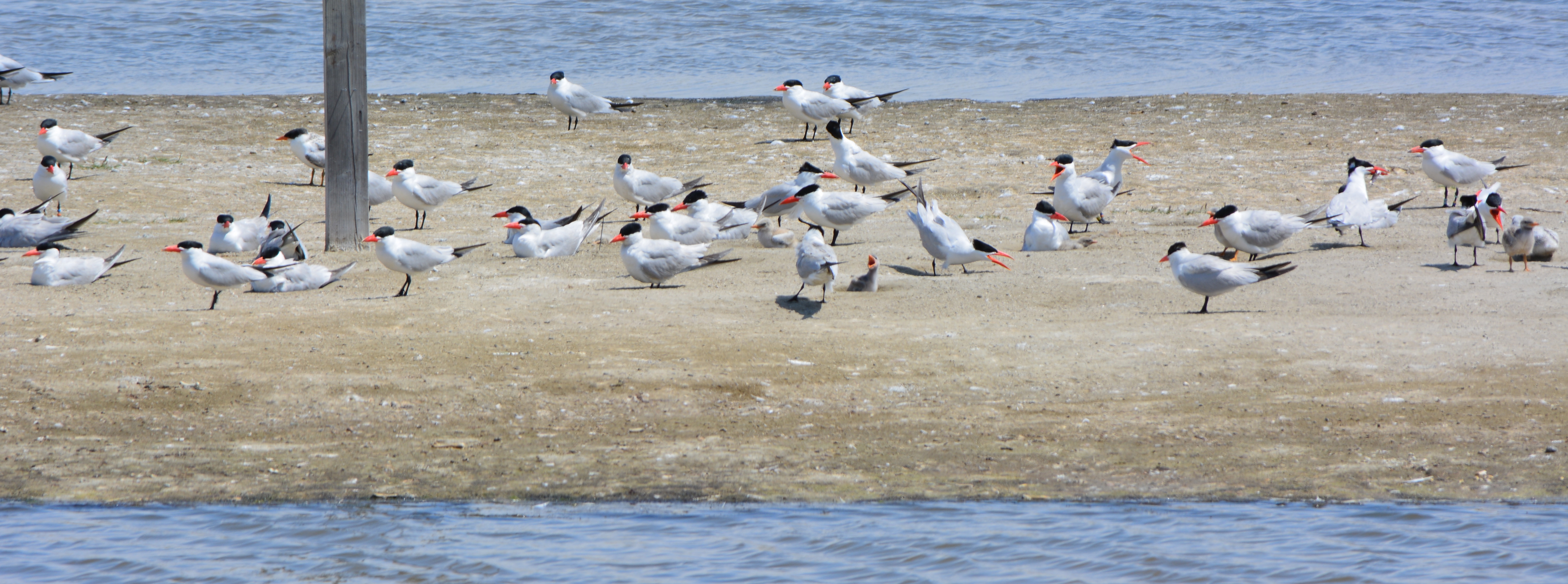
Tour participants were able to see the area’s expanded wetland with a new tiny island. Caspian Terns started nesting on the island a few months ago, another type of milestone. “The last time Caspian Terns were seen in that area nesting was in 1999 when only one nest was detected,” said Alameda wildlife biologist and Alameda Point bird surveyor Leora Feeney. The 79-acre soil cover on the landfill will be seeded with flowering native grasses later this year. The vegetation mix was chosen by the RAB.
South Pond of West Wetland at Alameda Point. Island in pond has become a nesting site for Caspian Terns. Looking north toward Port of Oakland.
According to the Navy’s environmental cleanup coordinator, Derek Robinson, $513 million has been appropriated to date for Alameda Point cleanup, although some of it remains to be spent on upcoming work. His office, the Base Realignment and Closure Program, estimates another $80 million will be needed by the time remaining projects and follow-up monitoring are completed.
Later this year, the Navy is expected to transfer to the city the 33-acre North Housing site and seven-acre former Island High School site that sit next to Alameda Landing and Estuary Park, marking another milestone on the long and winding cleanup road to civilian use.
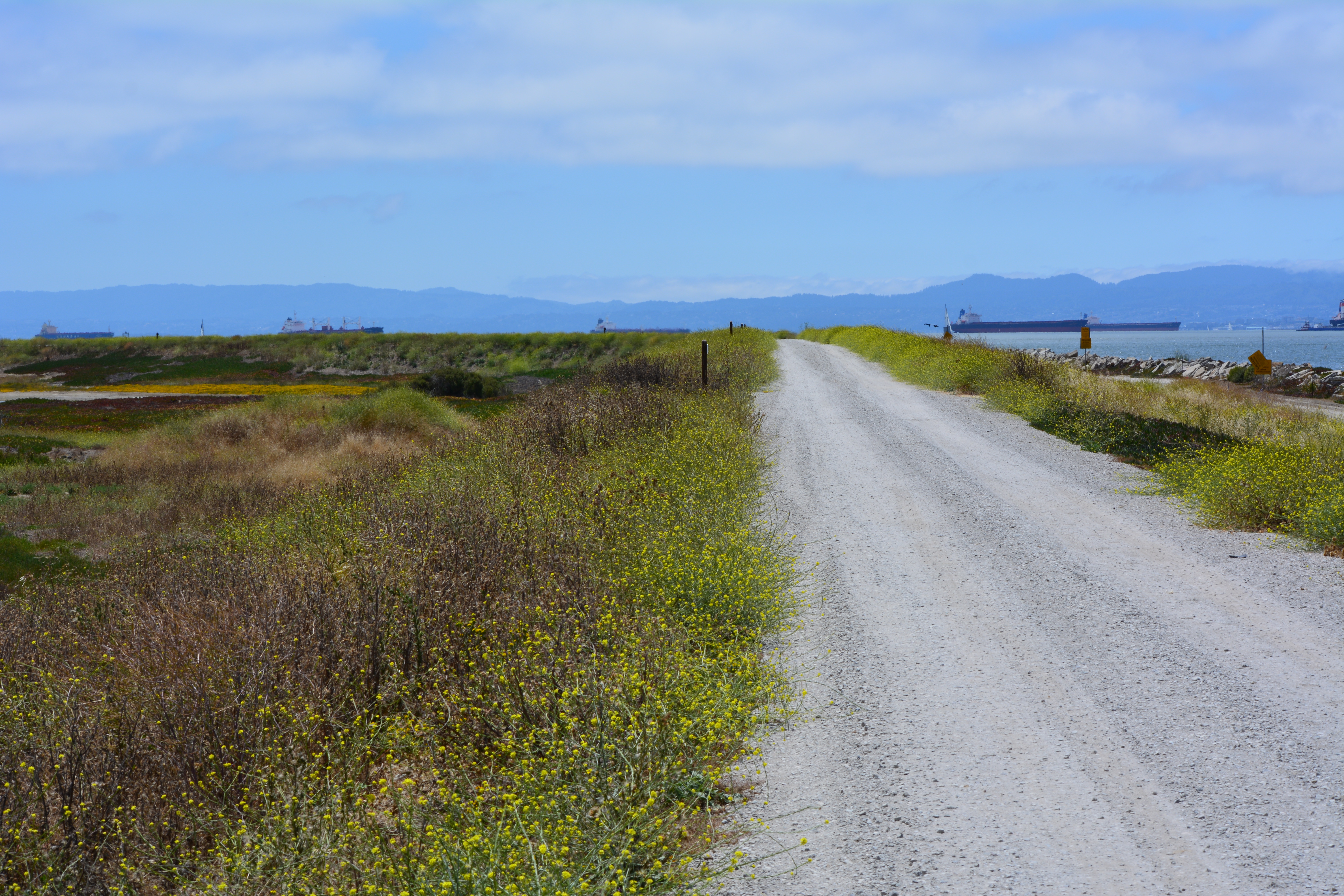
Caspian Terns and chicks at West Wetland, Alameda Point. Click on image to enlarge.Trail on embankment at southwest corner of Alameda Point. Looking south with San Francisco Bay to the right and ahead. Additional trail to the right at riprap elevation.Concrete pad served as a base for conveyor that transferred soil from barge to land for the soil cover at Site 2. Contractor left it in place and added a few amenities for future users of a place they had come to appreciate the beauty of as they worked here for a year. Thank you, TetraTech.Dredging the northwest corner of the Seaplane Lagoon at Alameda Point in February 2012. Tarmac dewatering, drying, and testing area behind black tarp is now being dismantled. All dredging work is completed.
Update notes: Subsequent criticism of the Navy as to the necessity of a security fence by members of the public and regulatory agencies led to the removal of the security fence from the final work plan design. The Navy also agreed to shorten the soil gas vents to two feet, since only trace amounts of methane gas are now emitted from the landfill waste, most of which is industrial and did not produce methane in the first place. Additionally, the Navy agreed to examine the aging metal culvert that connects the North Pond of the West Wetland to San Francisco Bay. The culvert provides the water lifeline for the North Pond habitat and was at risk of collapse and being stopped up with debris. The Navy replaced the metal culvert with a concrete culvert (see photo above) and debris screen.
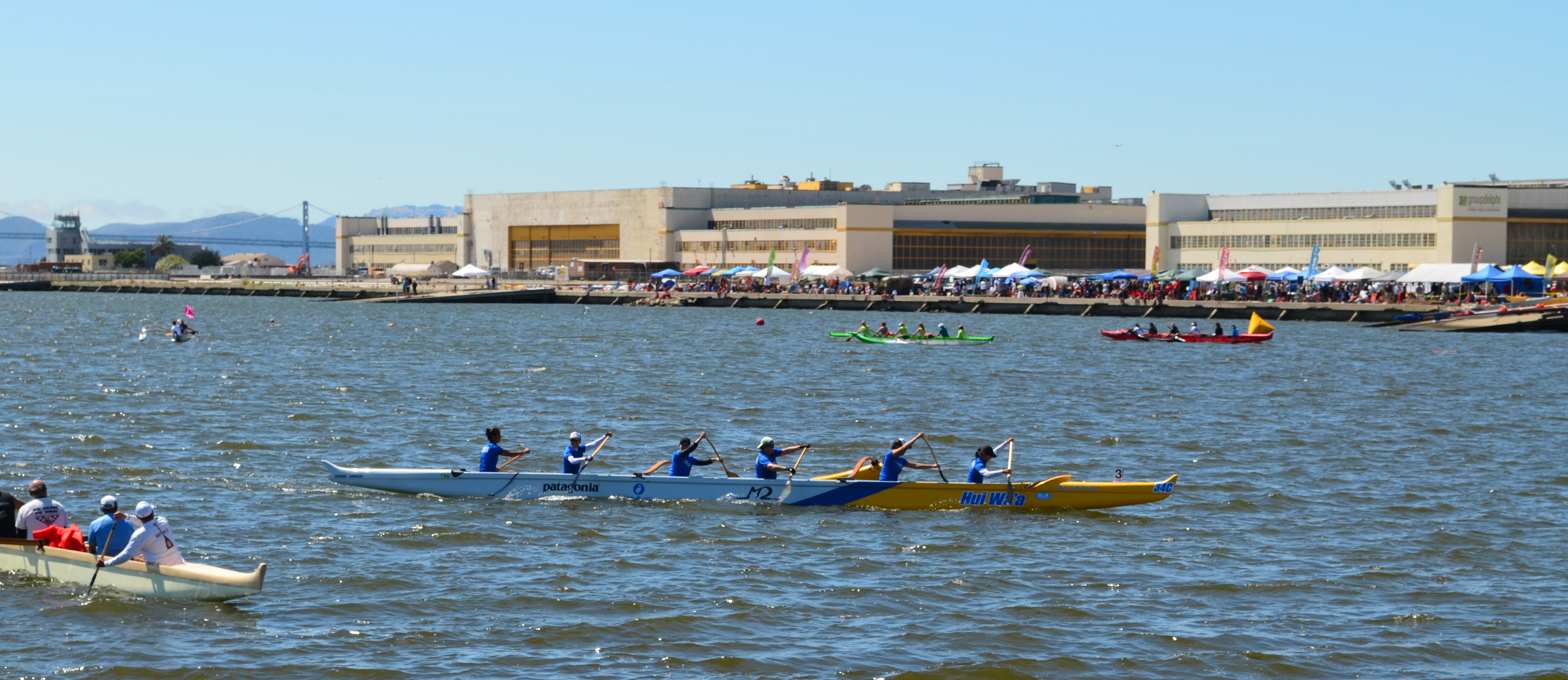
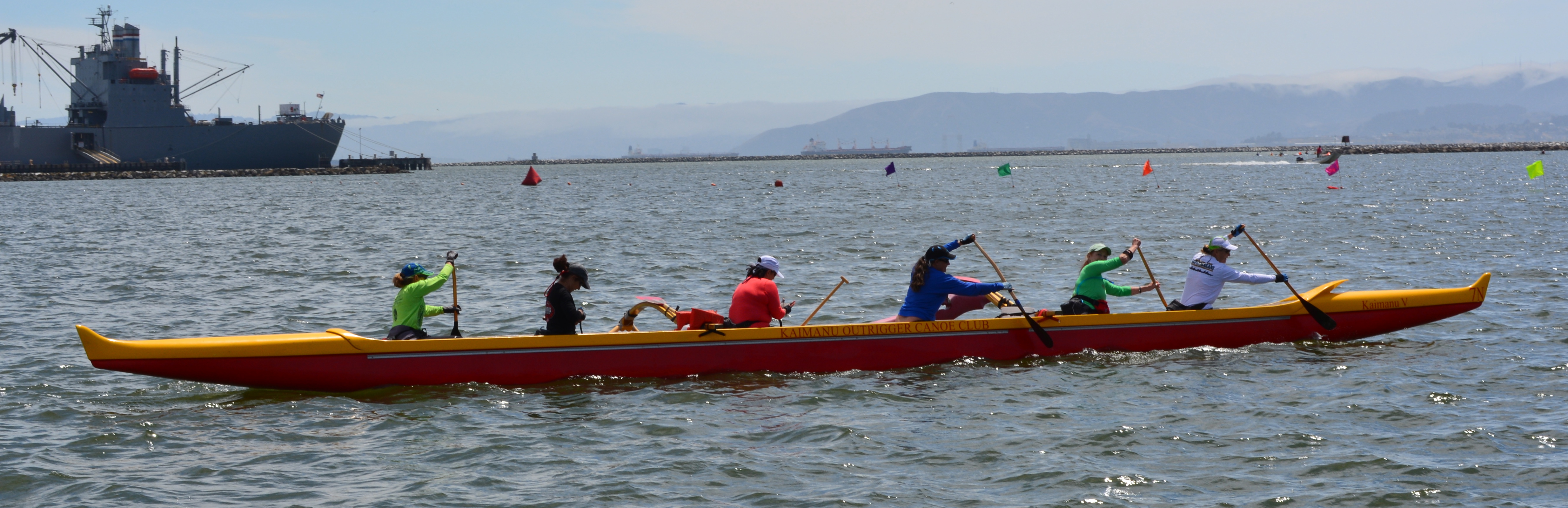
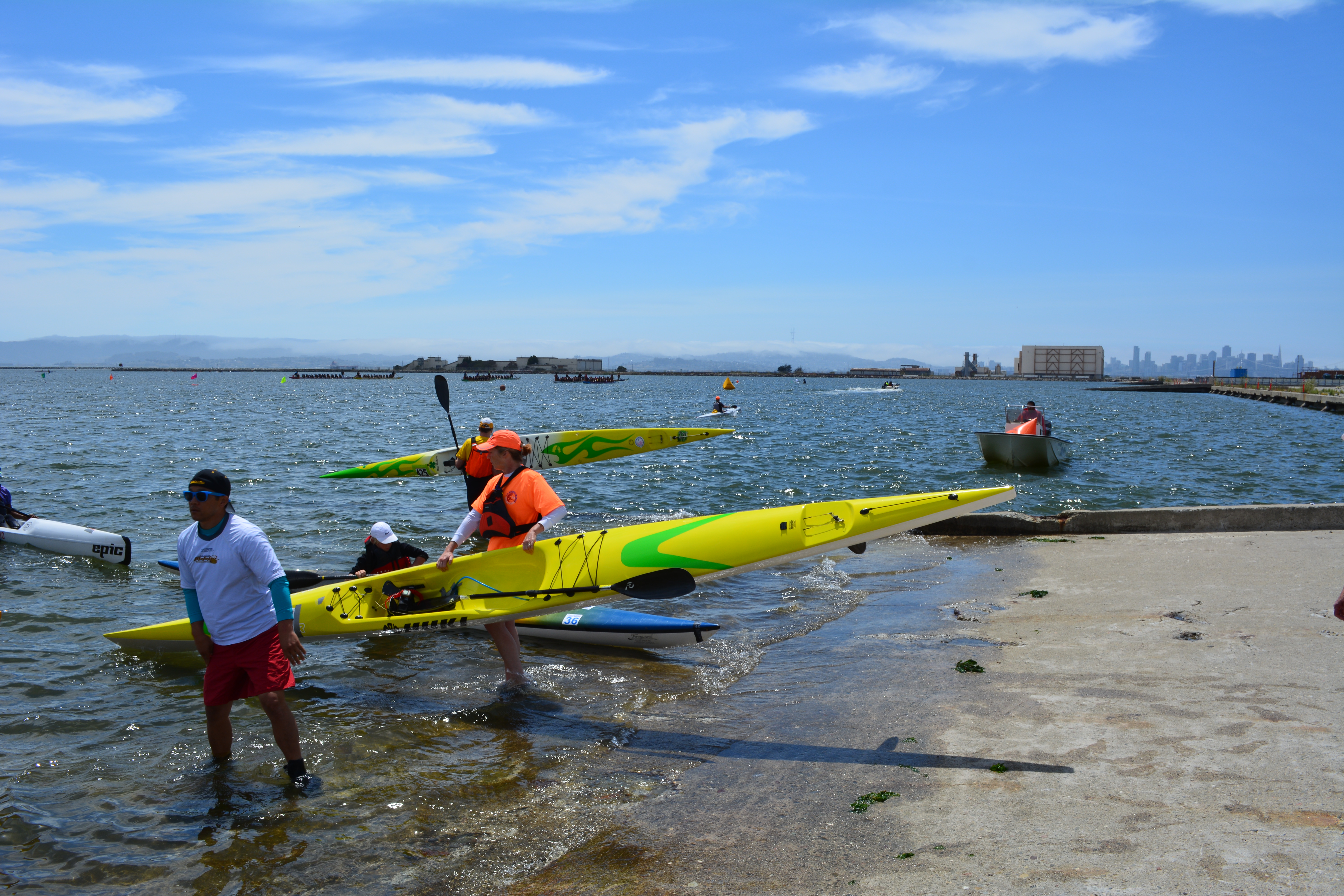
The Seaplane Lagoon was also the launch site on Sunday for outrigger canoes heading out to the tip of Alameda Point for a race to the San Leandro Marina. The Alameda-Point-to-San-Leandro race was sponsored by Wave Chaser.
Here are some photos showing what a great venue the Seaplane Lagoon is for outdoor events like boating.
Note that the temporary dock facility used by the boaters was installed by Artemis Racing when they began training out of Alameda Point for 2013 Americas Cup.
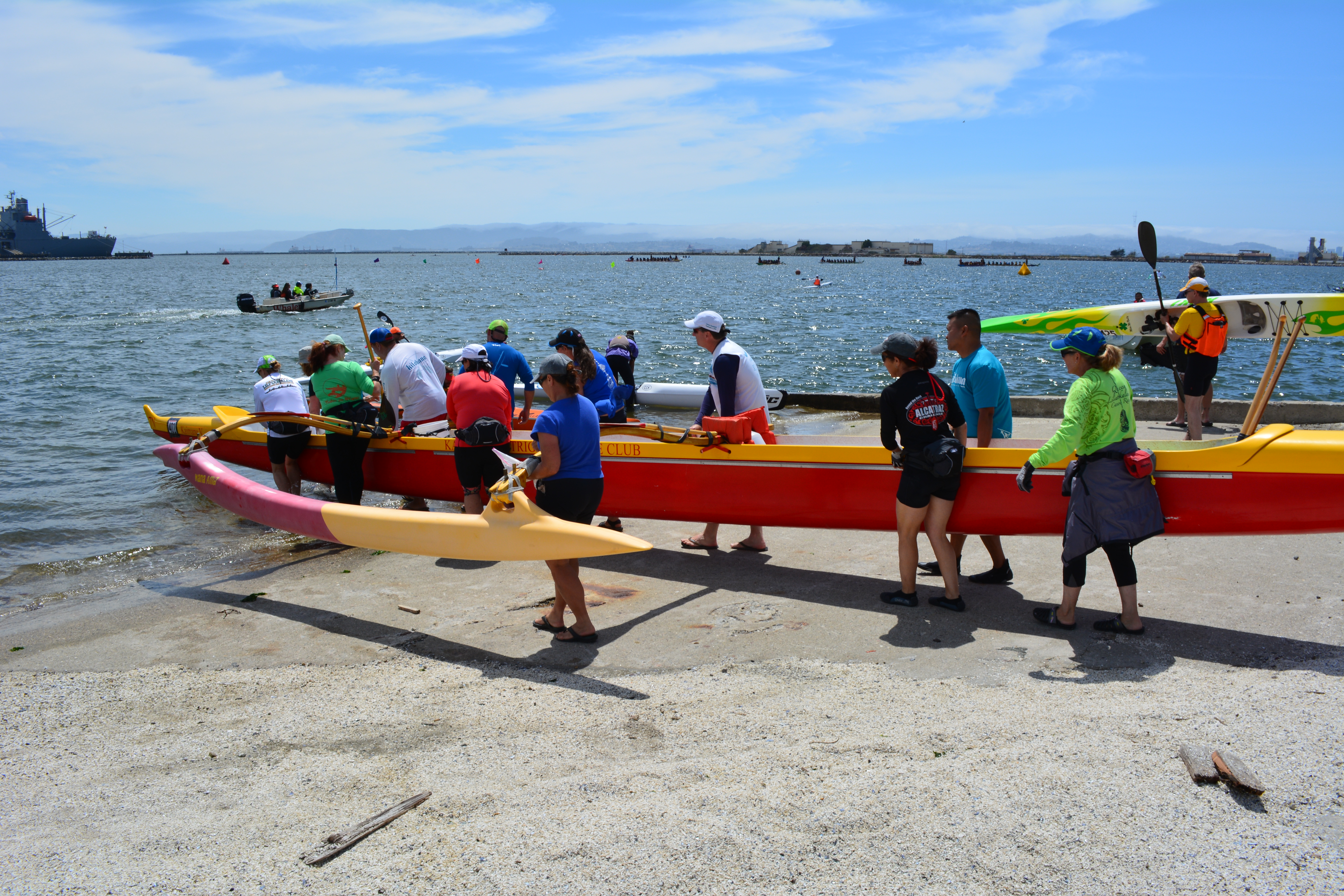
Outrigger canoe race on July 12, 2014 at Alameda Point’s Seaplane Lagoon.
Dragon boat race on July13, 2014 at Alameda Point’s Seaplane Lagoon
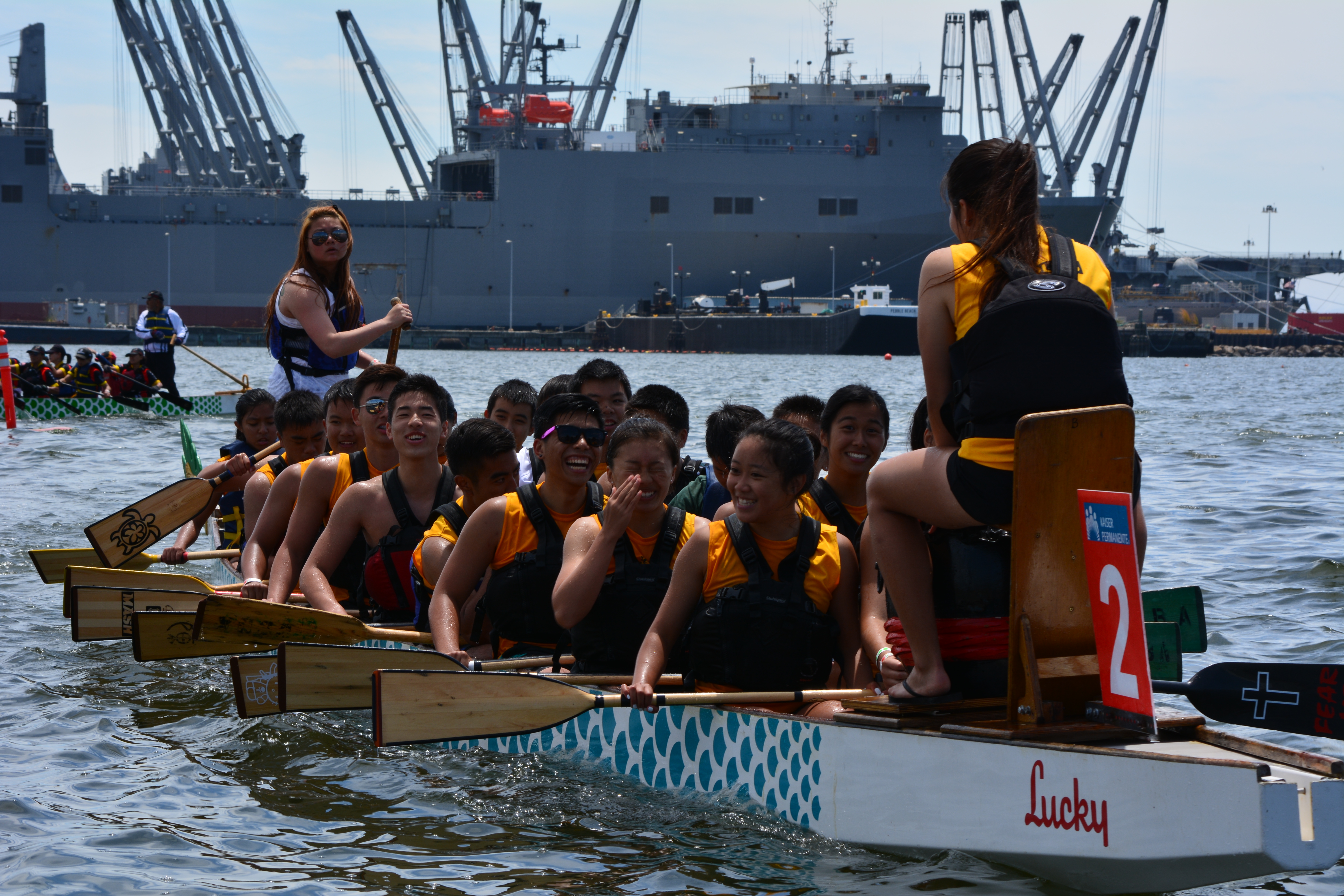
Dragon boat team competing in race at Alameda Point’s Seaplane Lagoon.Dragon boat team heading to starting line.Dragon boat team returning to dock after race.
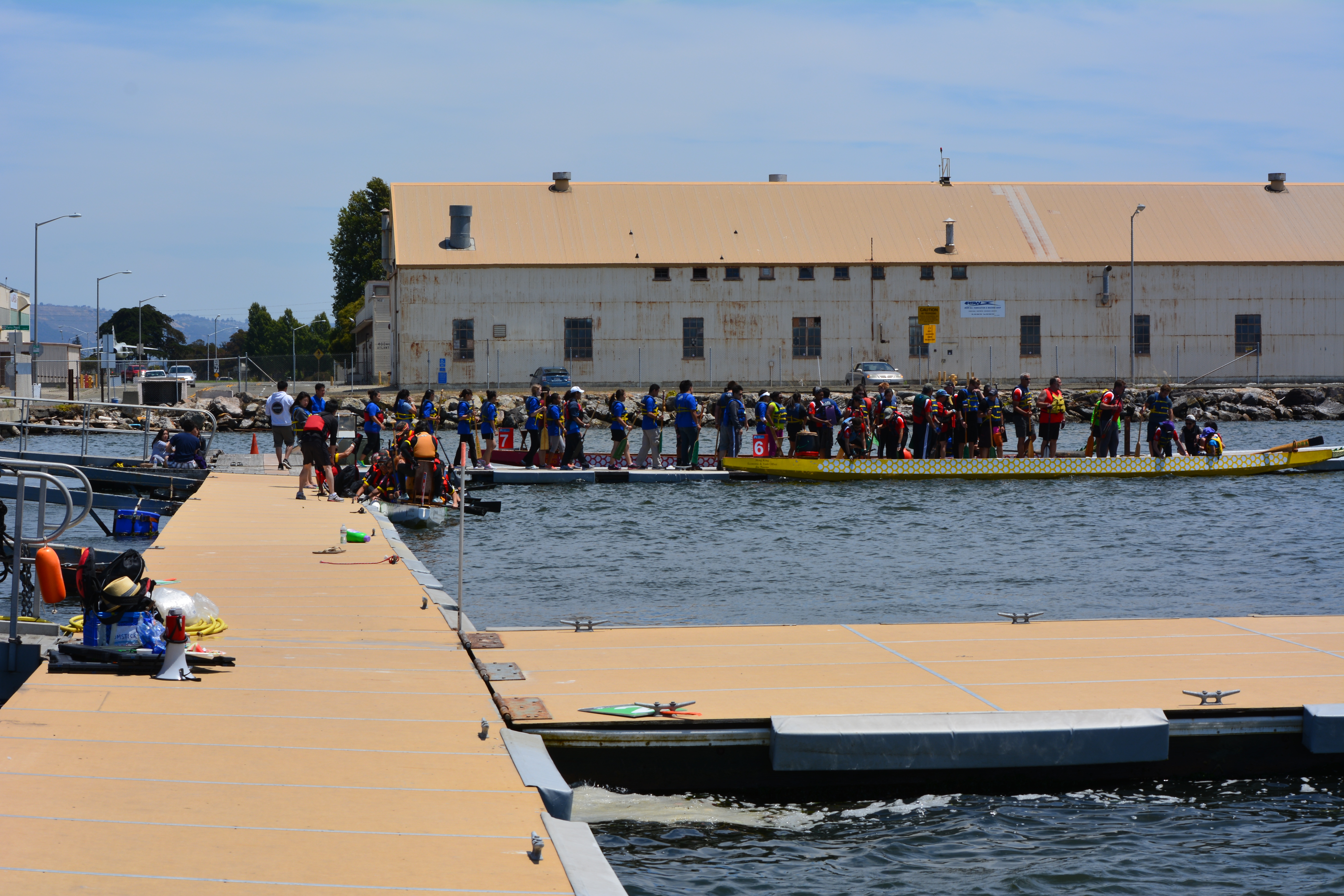
Dragon boat teams queuing up to board their boats for next race.
All-female Wave Chaser team launching boat for race to San Leandro Marina. Alameda Point Seaplane Lagoon.
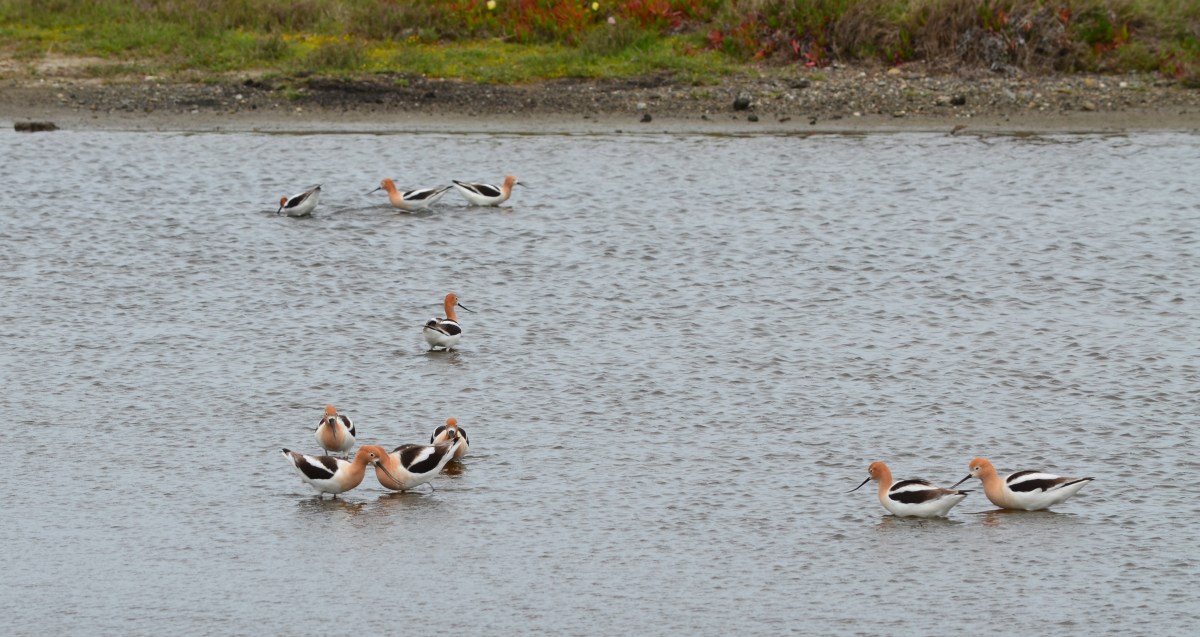
It’s more likely a new wetland will be created on the western shoreline of the Seaplane Lagoon at Alameda Point, thanks to lobbying efforts led by the Sierra Club.
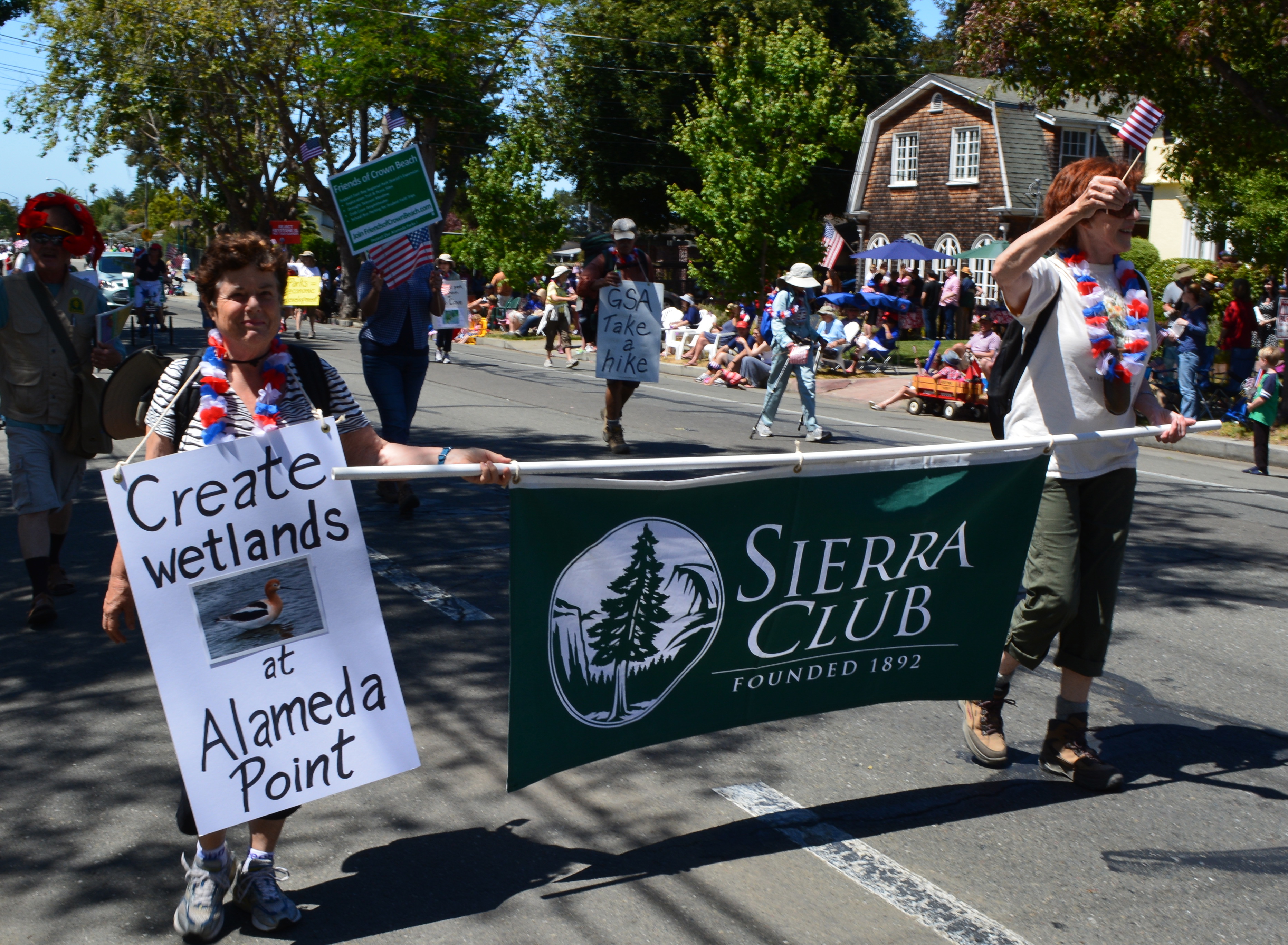
Sierra Club in Alameda’s 4th of July Parade 2014
On July 1, 2014, the Alameda City Council added language to the Alameda Point Town Center and Waterfront Specific Plan that raises the commitment to remove pavement from the western side of the Seaplane Lagoon for wetland—an area called De-Pave Park. Lobbying efforts convinced the council to include the following options to help facilitate the wetland park creation: 1) creating a wetland mitigation bank; 2) adding the area to a possible national wildlife refuge on the federal property; and 3) working with local community members who may identify funding sources for creating the passive park area.Continue reading “Wetland park plan at Seaplane Lagoon gets a boost”