Waterfront plans change at Alameda Landing

~ Developer proposes housing, hotel, and plaza at former Navy supply center

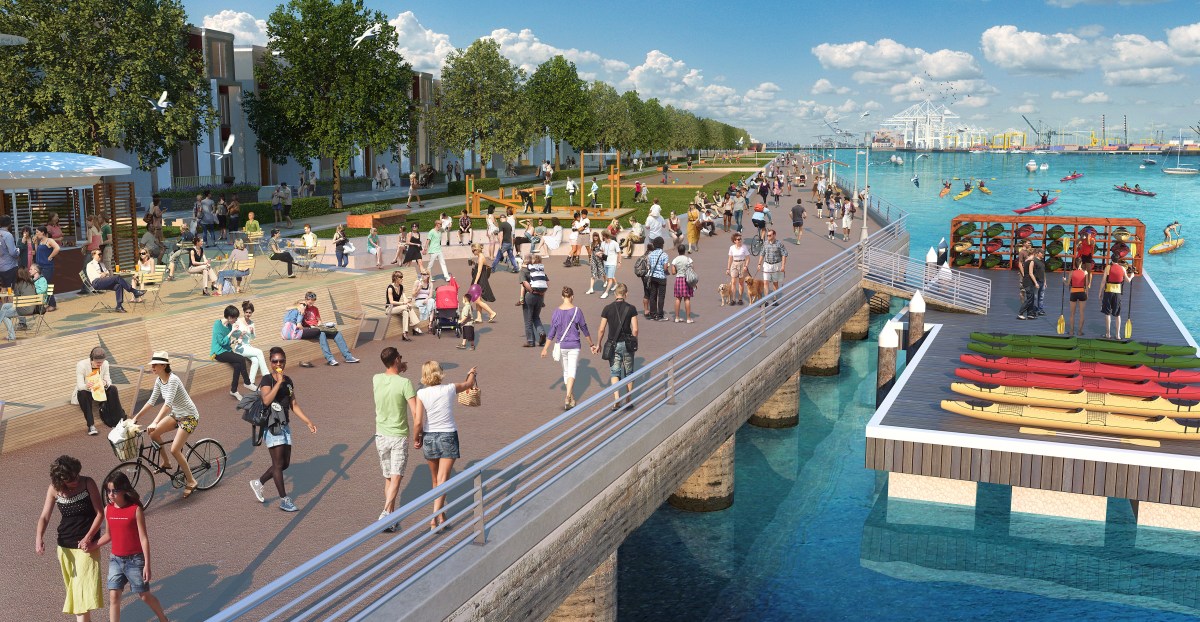
Alameda Landing is about to enter its final phase of development. A 2006 plan that once called for all commercial on the 41-acre waterfront parcel behind Target is being replaced with a new plan. It includes an additional 375 housing units, a 124-room hotel, restaurants, and a small amount of commercial space. An eight-acre waterfront park and promenade remain as the centerpiece.

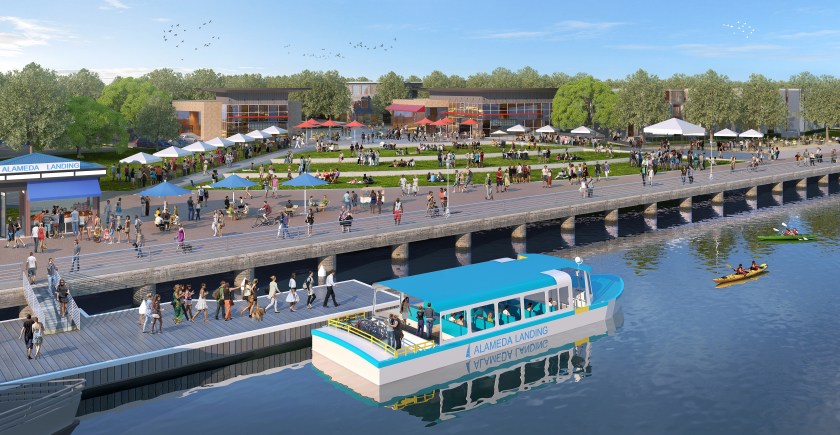
Proposed Fifth Street Plaza with water shuttle. Courtesy of Catellus.

The developer, Catellus, decided to shelve the all-commercial plan due to lack of demand, coupled with high costs to develop the seismically challenged site.

Sean Whiskeman, senior vice president of development for Catellus, points to the fact that zero new office construction is underway along the Interstate 880 and Interstate 80 office corridor. The lack of demand “is a very compelling statistic in our opinion,” said Whiskeman, “especially given the alternative office sites available within Alameda.” Continue reading “Waterfront plans change at Alameda Landing”

Radium safety enhanced at Seaplane Lagoon

The City of Alameda became the new owner of the Seaplane Lagoon at Alameda Point on April 13, 2016. It came from the Navy with a new condition that exceeds normal protocols for dredging in San Francisco Bay.

As with all cleanup sites, the Navy, city and regulators agreed to what areas needed to be cleaned up in the Seaplane Lagoon. The cleanup plan approved in 2006 was based on testing the sediment throughout the 110-acre lagoon. The problem areas were confined to about 10 acres at the northeast and northwest corners of the lagoon where storm sewers dumped contaminants prior to 1970s environmental laws. The agreed upon plan said that there would be no restrictions on the lagoon when cleanup was done.

Dredging the northwest corner of the Seaplane Lagoon in February 2012.

After cleanup was completed, two years of discussions between the Navy, state and federal regulators, and the city led to an amendment to the official cleanup decision to include a detailed management plan for any future dredging in the Seaplane Lagoon. The city led the effort to create a sediment management plan. It stipulates that all dredge sediment brought to the surface will have to be spread out six inches thick on a drying pad and scanned for radium-226 radiation at a cost borne by the city. Continue reading “Radium safety enhanced at Seaplane Lagoon”

Ferry agency, volunteers help the least terns

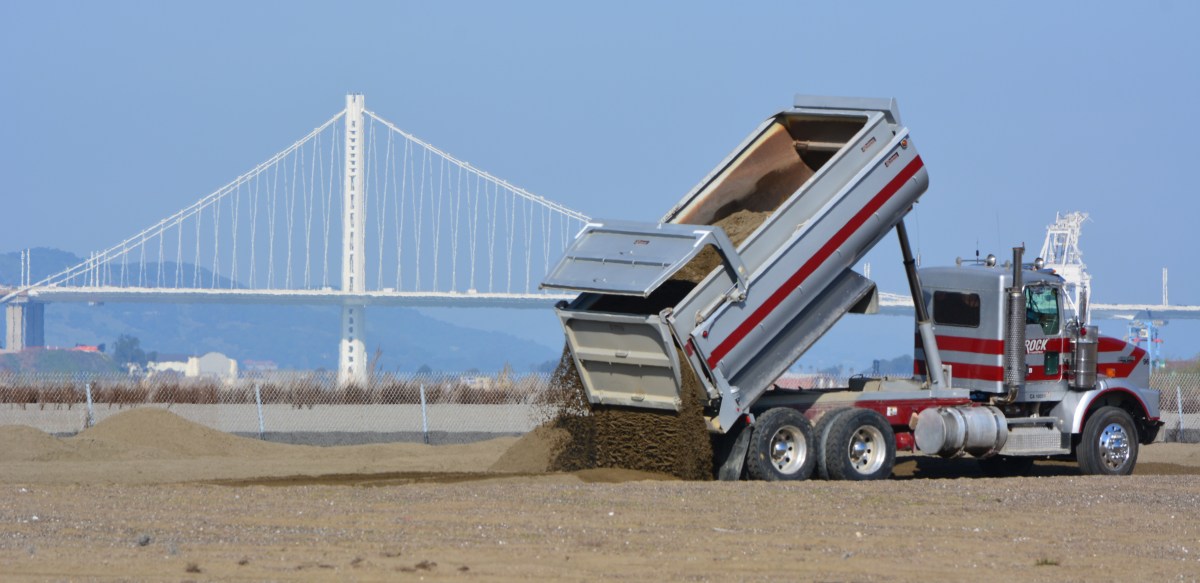
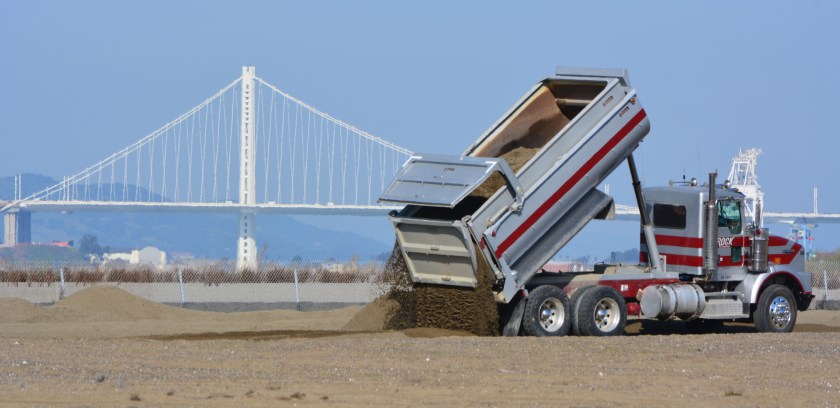
Three thousand tons of sand was added to the nesting grounds for the least terns at Alameda Point in late February and early March. In the weeks that followed, volunteers from St. George Spirits and the Boy Scouts and Cub Scouts came out to help make the site ready for the arrival of the terns in mid-April.

Sand being delivered to the least tern nesting grounds at Alameda Point on February 25, 2016. Bay Bridge in the background.

The Water Emergency Transportation Authority (WETA) paid for enough sand to cover half of the 9.6-acre nesting area with three inches of sand, as well as for grading. The weeklong delivery of sand was a conservation mitigation requirement for the impact that WETA’s new ferry maintenance facility will have on the terns’ feeding area. As many as 12 ferries will make up to four passes per weekday through the Alameda Point Channel where the terns frequently dive for small fish.

Wind and water erosion take their toll on the sand substrate lying atop old airfield taxiway pavement, requiring periodic replenishment. This latest delivery of Angel Island coarse sand has built up the sand depth on much of the site to the point that it’s starting to feel like a real beach underfoot. Beaches are the traditional nesting habitat for terns. Continue reading “Ferry agency, volunteers help the least terns”

Demolition of former Navy apartments begins

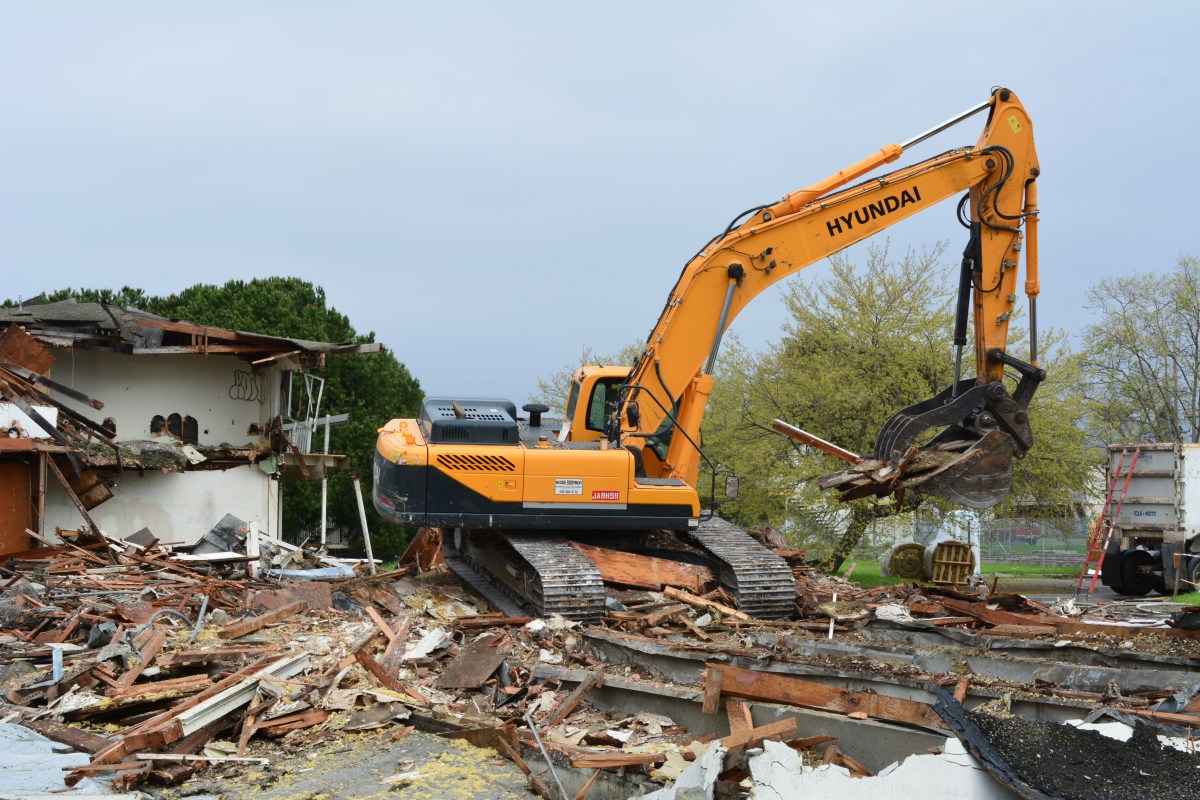
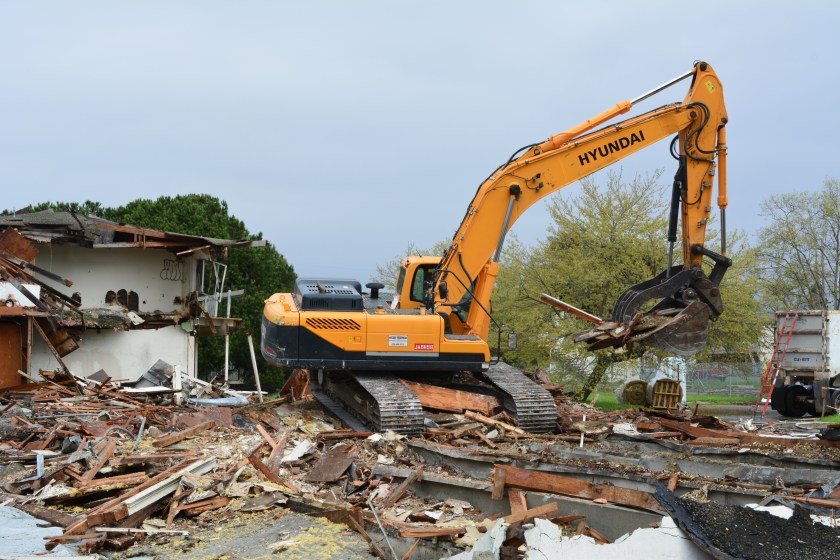
The demolition of 16 former Navy apartment buildings at Alameda Point has begun. On January 5, 2016, the City Council awarded a $547,000 contract to Asbestos Management Group of Oakland to perform the demolition.

Demolition of Navy apartment buildings at West Tower Avenue and Orion Street, Alameda Point.

In April of 2015, the city council directed city staff to come up with a plan to address safety and blight issues after KTVU Channel 2 aired a story about unsafe conditions at the abandoned housing area.

The structures are located on Orion Street, West Tower Avenue, Stardust Place and Pearl Harbor Road. Demolition began during the second week of March and is expected to be completed within 60 days. The job is being paid for out of Alameda Point base reuse funds.
Continue reading “Demolition of former Navy apartments begins”

Navy adds a wetland and grassland

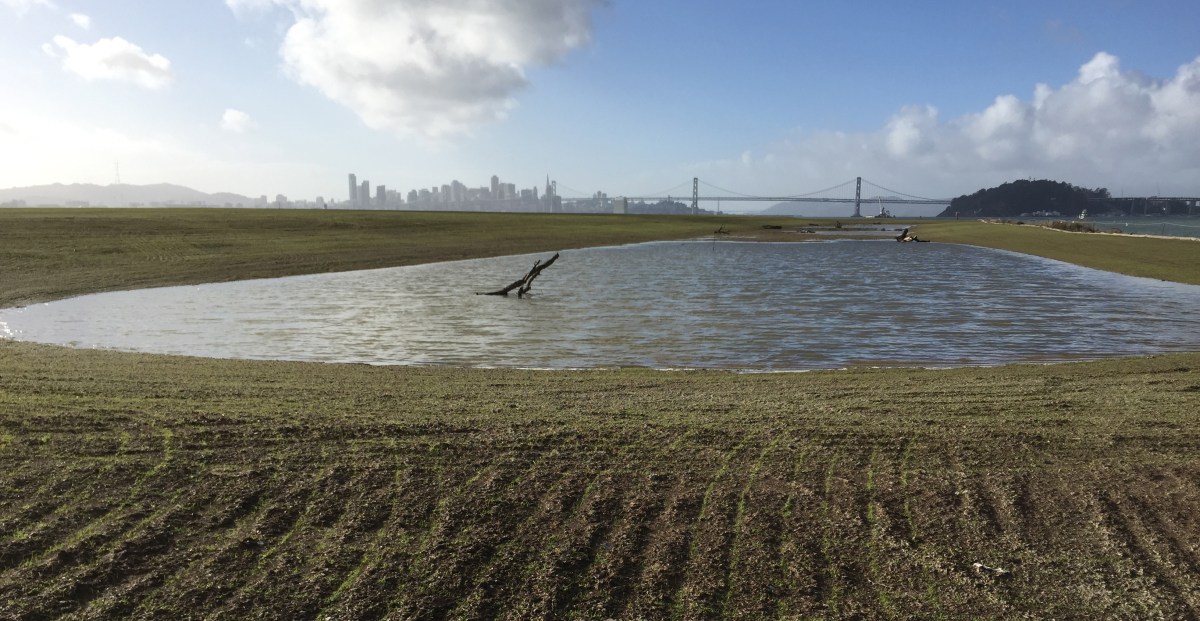
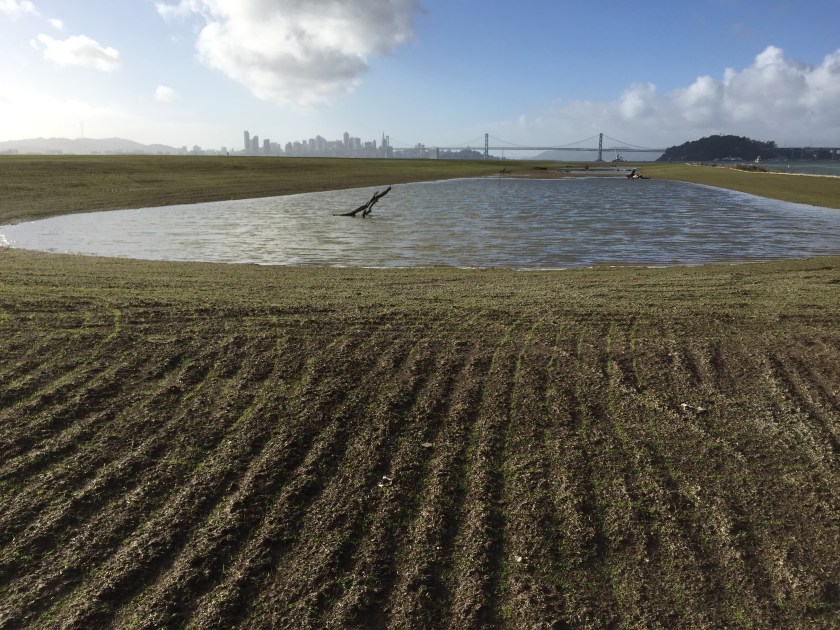
The Navy’s cleanup program has not only removed toxic substances from below ground, it has dramatically improved some of the above ground environment by creating new native grassland and wetlands. January rains filled the Navy’s new seasonal wetland on the northwest shoreline corner of Alameda Point and fostered growth of newly planted native grass seed on the surrounding soil.

New Site 1 wetland on January 13, 2016, with San Francisco in background. Rows in soil with emerging growth were created during sowing of seeds. Navy photo.

The 2.25-acre wetland lies within an approximately 37-acre shoreline cleanup area known as Site 1 at the confluence of the Oakland Estuary and San Francisco Bay. It is where the Navy buried its waste between 1943 and 1956. Most of the waste pits were covered by pavement in the mid-1950s when a new runway was added. Continue reading “Navy adds a wetland and grassland”

Seaplane Lagoon ferry service in limbo

The new residential and commercial developer at Alameda Point has set aside $10 million toward the construction of a passenger ferry terminal at the Seaplane Lagoon. The Bay Area’s ferry agency – the Water Emergency Transportation Authority (WETA) – however, has made it clear there is currently no funding to operate a ferry there.

WETA “will entirely exhaust its available operating subsidies on an annual basis, relying upon projected increases in ridership and fares to cover increasing operating costs for existing services,” stated a draft 10-year Short Range Transit Plan that WETA issued in January for public comment. “WETA’s ability to increase service levels and meet future demand for ferry service will be restricted until new regional or local sources of operating subsidy are secured,” the draft stated.

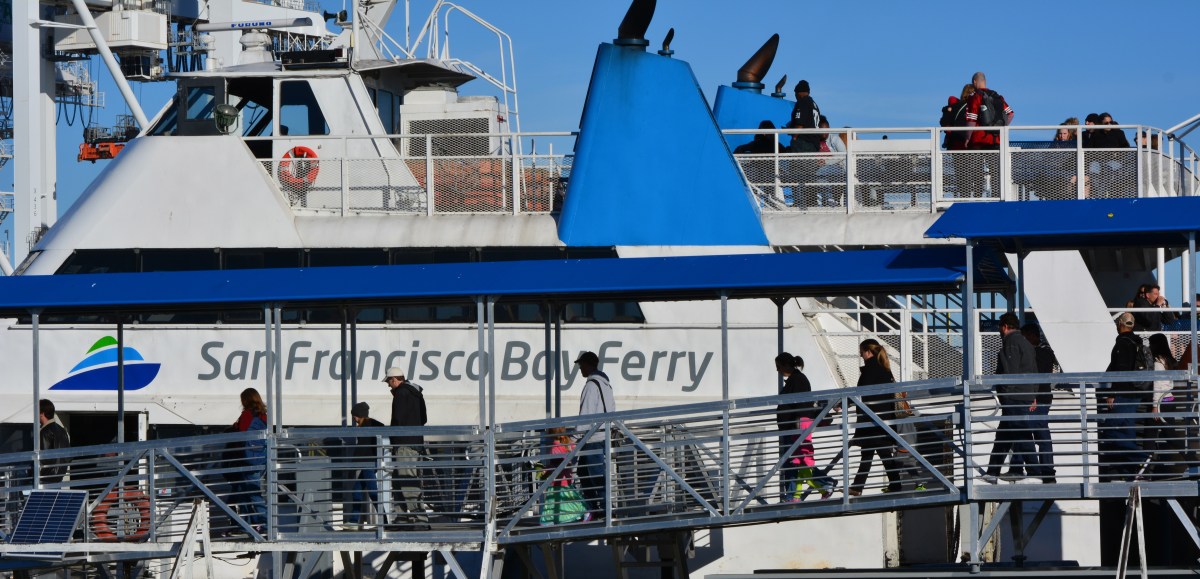
Ferry passengers boarding at the Alameda Main Street Terminal bound for San Francisco. The popular Main Street Terminal at the north side of Alameda Point on the Oakland Estuary will continue in operation, even if new ferry service comes to the Seaplane Lagoon. Parking here will be expanded in mid-2016.

WETA’s revenue picture is more limited than other regional transit agencies, such as BART. In WETA’s case, half of its operations funding comes from fares. Most of the other half — $15.3 million — comes from bridge tolls through Regional Measure 2, which was passed in 2005 adding a $1 bridge toll. A Harbor Bay parcel assessment funds 10 percent of the Harbor Bay service.  Continue reading “Seaplane Lagoon ferry service in limbo”

Artistic expression at Alameda Point

The viewer is left to decide where graffiti ends and art begins in the following images. Regardless of opinion, one thing is clear: There are people looking for an opportunity to artistically express themselves.  And Alameda Point has plenty of abandoned interior and exterior walls to accommodate them.

"Art in the park"
“Art in the park”

Artist Sam Norton created the mural below at City View Skate Park at Alameda Point in 2015 to honor and remember his friend and fellow skateboarder Clay Harding who died the previous year. Continue reading “Artistic expression at Alameda Point”