Google wind energy kite nears launch date

Google-owned Makani, a wind energy company at Alameda Point, moved one step closer last week to full-scale testing of its flying electricity kite. The novel invention made a rare public appearance at the company’s test site near the USS Hornet to fine-tune the docking maneuver. It will be deployed at a test site being readied in Hawaii where it will reach an altitude of 1,100 feet.
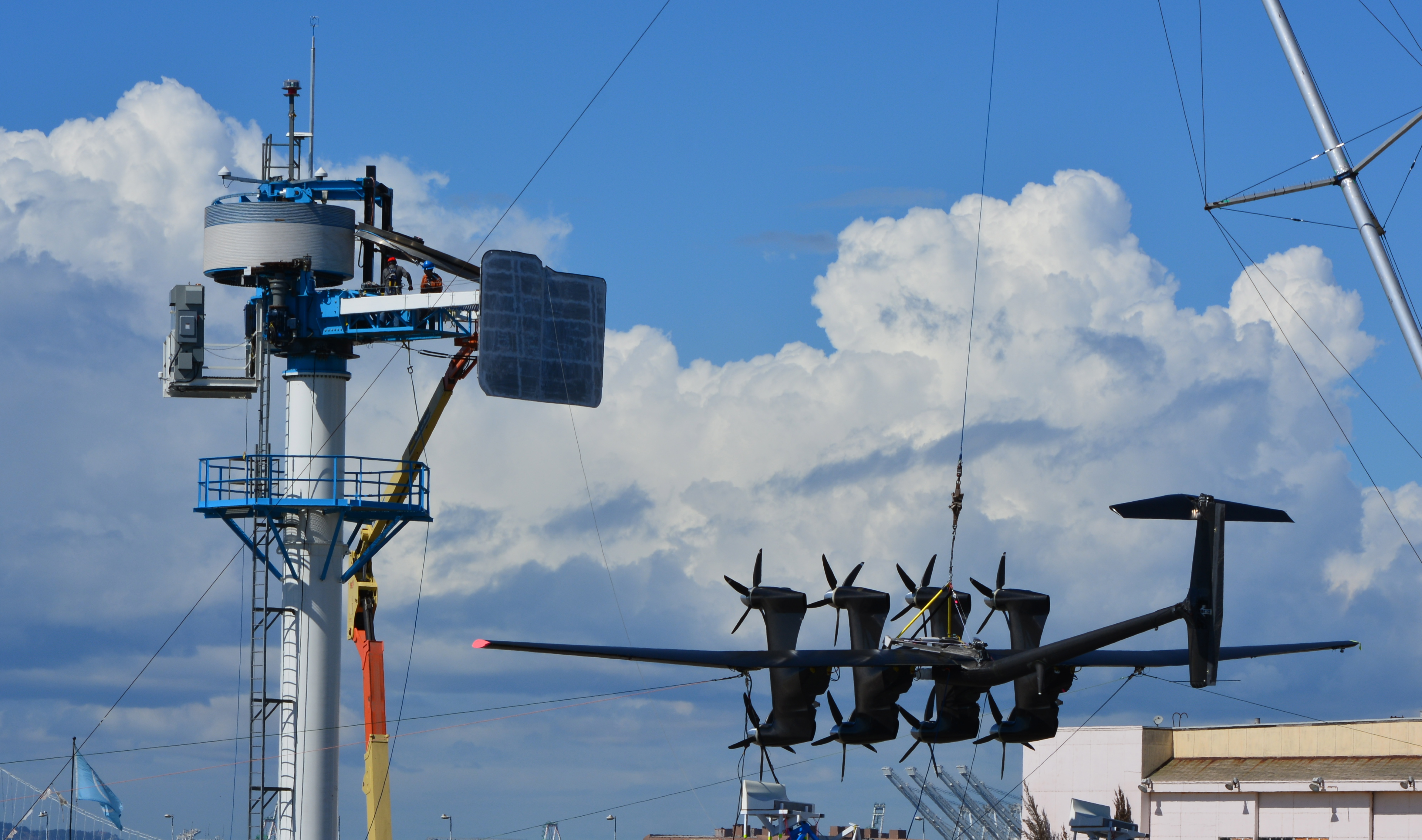
Makani energy kite undergoing testing at Alameda Point on October 1, 2015. Kite is suspended by mast on right. Tower on left is where the kite will be docked with propellers facing upward.

The wind energy craft was pioneered at Alameda Point. It employs the same principle as a stationary wind turbine, using the wind to rotate a blade connected to a generator. But unlike a traditional wind turbine, the tethered energy kite can soar to twice the height, accessing stronger wind force, while using a fraction of the materials. Electricity is transmitted to the base through the tether.

One of the big engineering challenges has been to design how the kite will launch itself into the air from a docking tower and then return when the wind dies down. An earlier prototype was tested on the former Navy airfield while tethered to a truck-mounted base.

The new model has three times the wingspan and twice as many motors and generators as its predecessor. The 84-foot carbon fiber craft uses eight motors to vertically take off and land on its base tower. Once airborne, the motors turn off, and the blades begin driving generators as the kite rotates in the wind.

Makani energy kite on transport trailer at Alameda Point test site.

Makani found an ideal spot to launch its kite at Parker Ranch in Waimea, Hawaii. The 250,000-acre cattle ranch is diversifying into clean energy projects. At a workshop on alternative energy hosted by Parker Ranch in July 2015, they referred to the local wind corridor on the Big Island as a world-class resource. A traditional wind turbine farm is on the drawing board.

Before Makani can send its kite into the sky, it must first gain approval from the Federal Aviation Administration (FAA). Makani representatives have met with local pilots in Hawaii to get their input, according to a story published on October 2 in West Hawaii Today, a daily newspaper circulated on the west side of the Big Island. The test site is five miles from the Waimea Airport.

“Makani has laid out its plans to local groups on the Big Island, including pilots last year who wanted to make sure every measure possible is taken to make sure the kite and tether are visible,” wrote West Hawaii Today’s Bret Yager. Citing Makani project manager Alden Woodrow, Yager stated, “Woodrow said on Thursday the kite will be lighted, the tether will be marked for visibility and that the FAA may provide other guidance for how the kite’s visibility should be enhanced.”
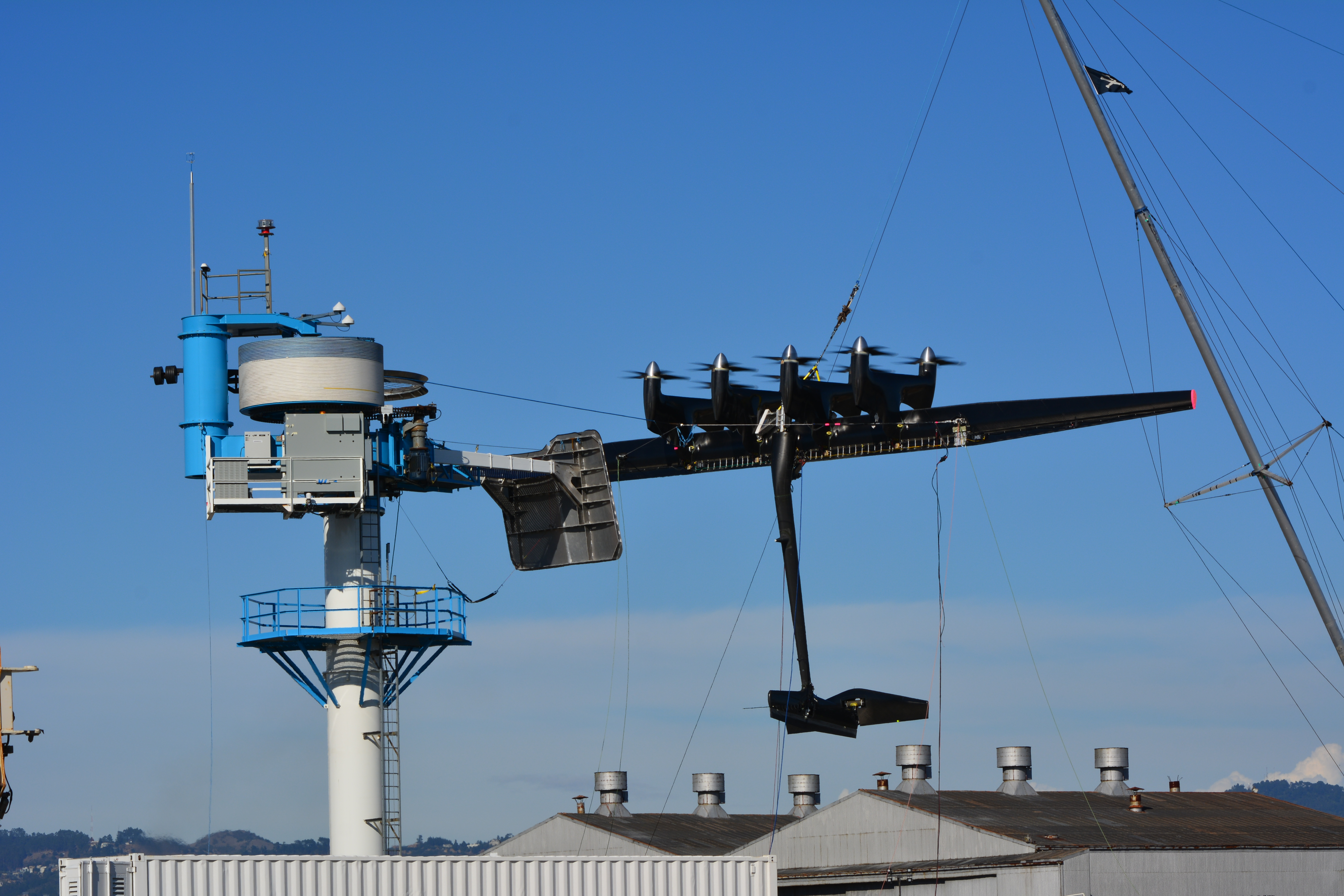
Kite with tether cable extending from tower to belly of kite, with mast suspending the kite during testing. Vertical platform extending from tower is the docking pad for the kite when not flying.

Google’s experimental product division acquired Makani in 2013. Last year they signed a leasing deal with the city for Building 400, the hangar across the street from their office in the old Air Control Tower, where the company is betting on producing a commercially viable clean energy product.

The company’s website points out that conventional wind turbines are limited by height and the available locations where prevailing winds make economic sense. “The wind moves faster and offers exponentially greater power at higher altitudes,” states Makani’s website. “When the wind speed doubles, the amount of available power increases eightfold.” One kite will produce enough electricity to power 300 homes.


Originally published in the Alameda Sun.

Additional reading:

“Google’s Makani:  From Regulatory To Technical To Wildlife Challenges”  by Mike Barnard, February 19, 2014, published on the CleanTechnica website.

Excerpt:

“Finally, a little about wildlife. While the Makani device will be better than fossil fuel generation for wildlife, the reality is that they require a thin, invisible cable to be flying from ground level to 350 meters (1000 feet) for the onshore model or 650 meters (2000 feet) for the offshore product. That cable will be flying through a cone at a speed of around 130-140 kph near the wing, and slowing as it nears the ground. This is likely to be much more difficult to perceive and avoid than any wind turbine blade for birds. The best evidence is that many species of birds including seabirds and many raptors simply adapt to wind farms and avoid them, as there are highly visible masts and blades that they perceive as they do jutting islands and trees. There is no evidence to suggest that this is true for Makani’s relatively small masts, long tethers, and flying wings. The tethers will cover a much, much greater volume of airspace than wind turbine blades. It is difficult to not see greater avian mortality as a likely outcome, with resultant challenges for safe siting.”

Makani submission to Federal Aviation Authority
Navy cleans long-gone gas stations

The Navy has spent more than 15 years cleaning up contaminated groundwater underneath two former gas station sites at Alameda Point. They are still at it, but it’s not because the Navy is slow or lacking in commitment and expertise. It’s the nature of groundwater cleanup, which involves intermittent treatment efforts.

In July, the Navy’s contractor returned to the old gas station and car wash site on West Pacific Avenue at Main Street and to the old commissary gas station site at West Tower Avenue and Main Street across from Bayport. It’s the third visit to these sites to eliminate petroleum hydrocarbon contamination in groundwater, in addition to earlier removal of underground tanks, fuel lines, and soil. The contaminants are located from 2 to 16 feet below ground surface.

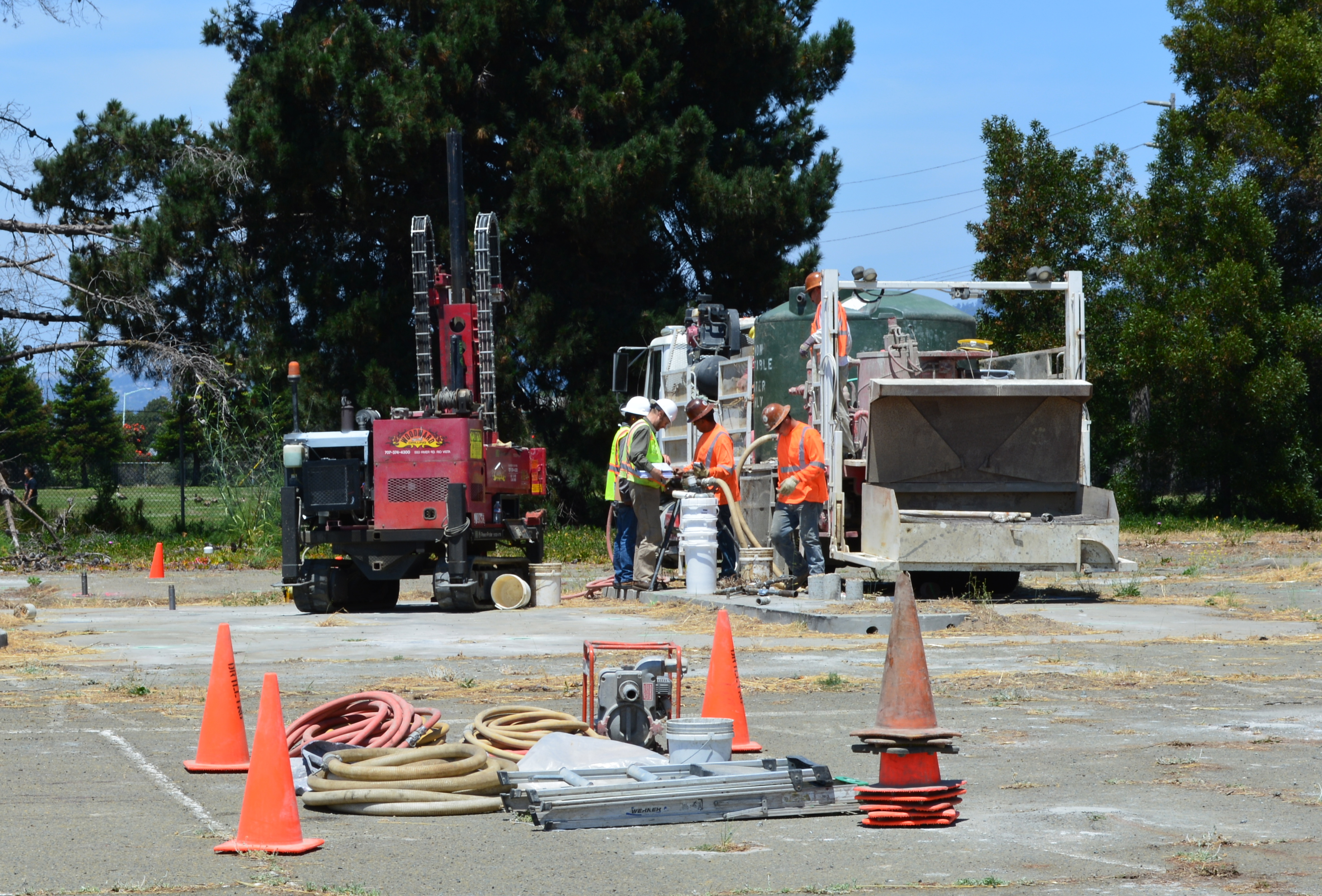
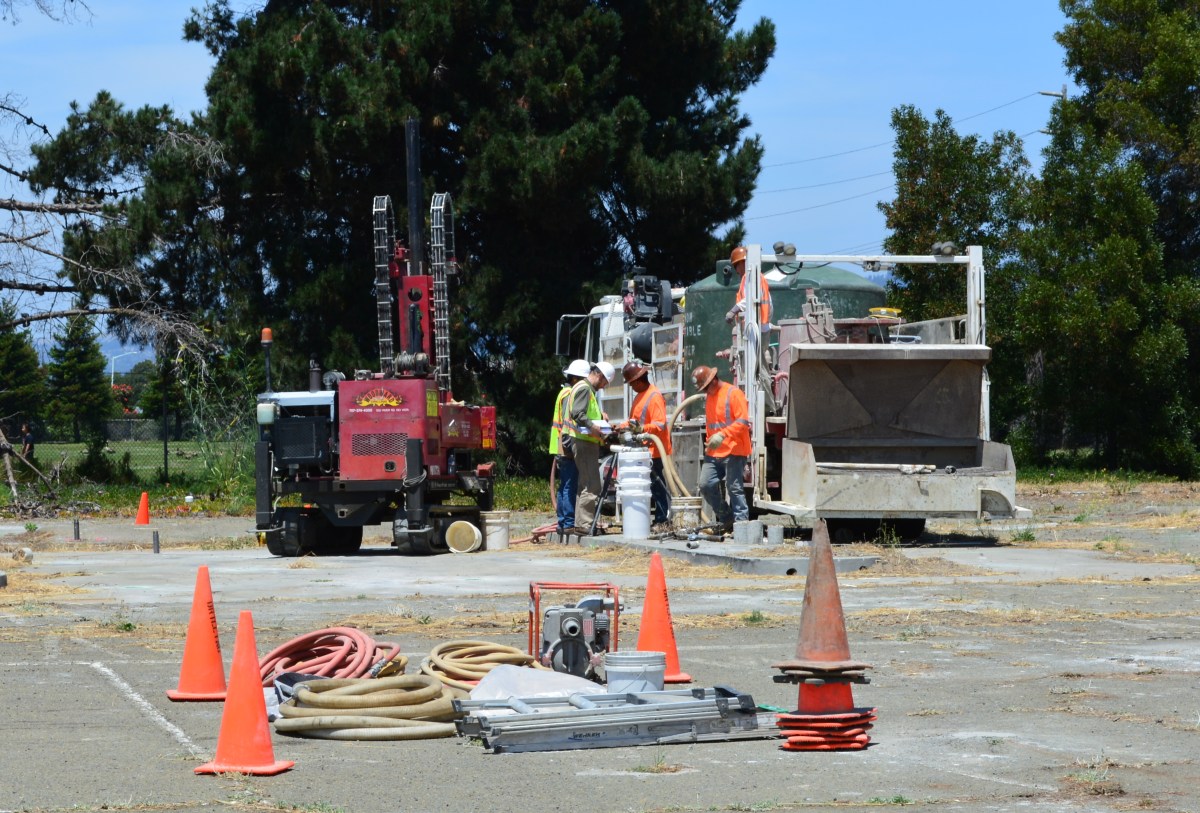
Workers at the old gas station and car wash site on West Pacific Avenue on July 13, 2015 preparing to inject cleanup solutions into the ground. The Navy operated a gas station and car wash on the site from 1971 to 1980. Green tank on truck contains non-potable water for on-site mixing of treatment solution. Soccer field is in the background.

The goal is to bring the property up to the public health and environmental standards required for the future commercial and residential uses previously determined by the city.

“When groundwater contamination is involved, such as at the two former gas stations, cleanups often involve multiple phases, each building upon earlier accomplishments,” said Dr. Peter Russell, who has been reviewing Navy cleanup plans and preparing cleanup-related documents on behalf of, and at the direction of, the city since 1997. “As long as all imminent health and environmental risks are eliminated early on, often the most cost-effective approach to complete remediation is incremental,” explained Russell. “In contrast, a massive initial remedial effort that is sure to achieve all remedial goals in one pass would likely involve over-sizing the treatment system, which is more disruptive and expensive than a phased approach.”

During previous cleanup visits, the Navy used a vapor extraction system to remove the bulk of the petroleum contamination. The process involves pumping air into numerous pipes, called wells, which extend into the water-saturated zone where the contamination is. The air pressure creates vapor that is part air, part water and part petroleum. The vapor is then sucked out through another set of wells, and the petroleum vapors are captured in drums of granulated charcoal, while the water is shunted off to a separate container.

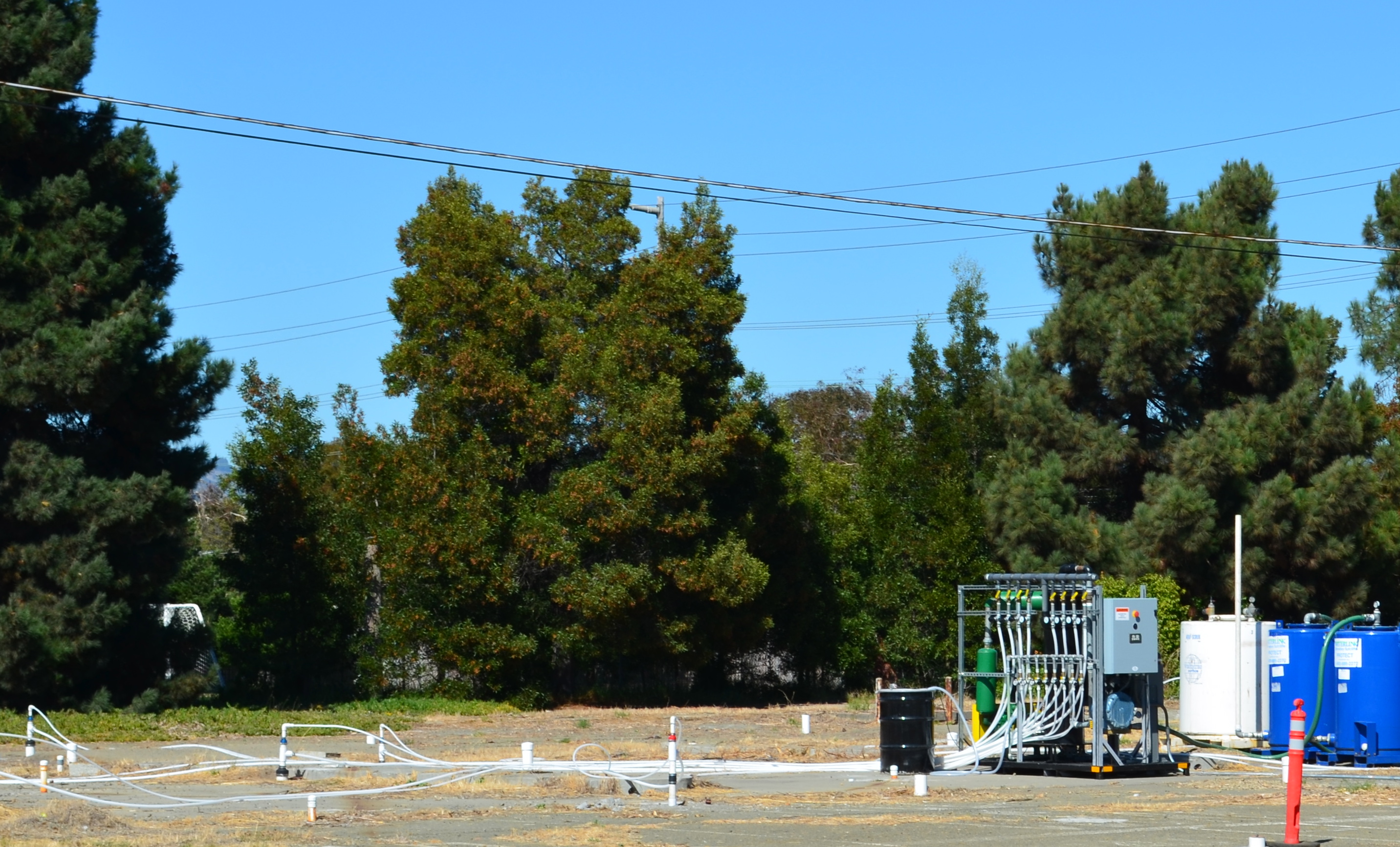
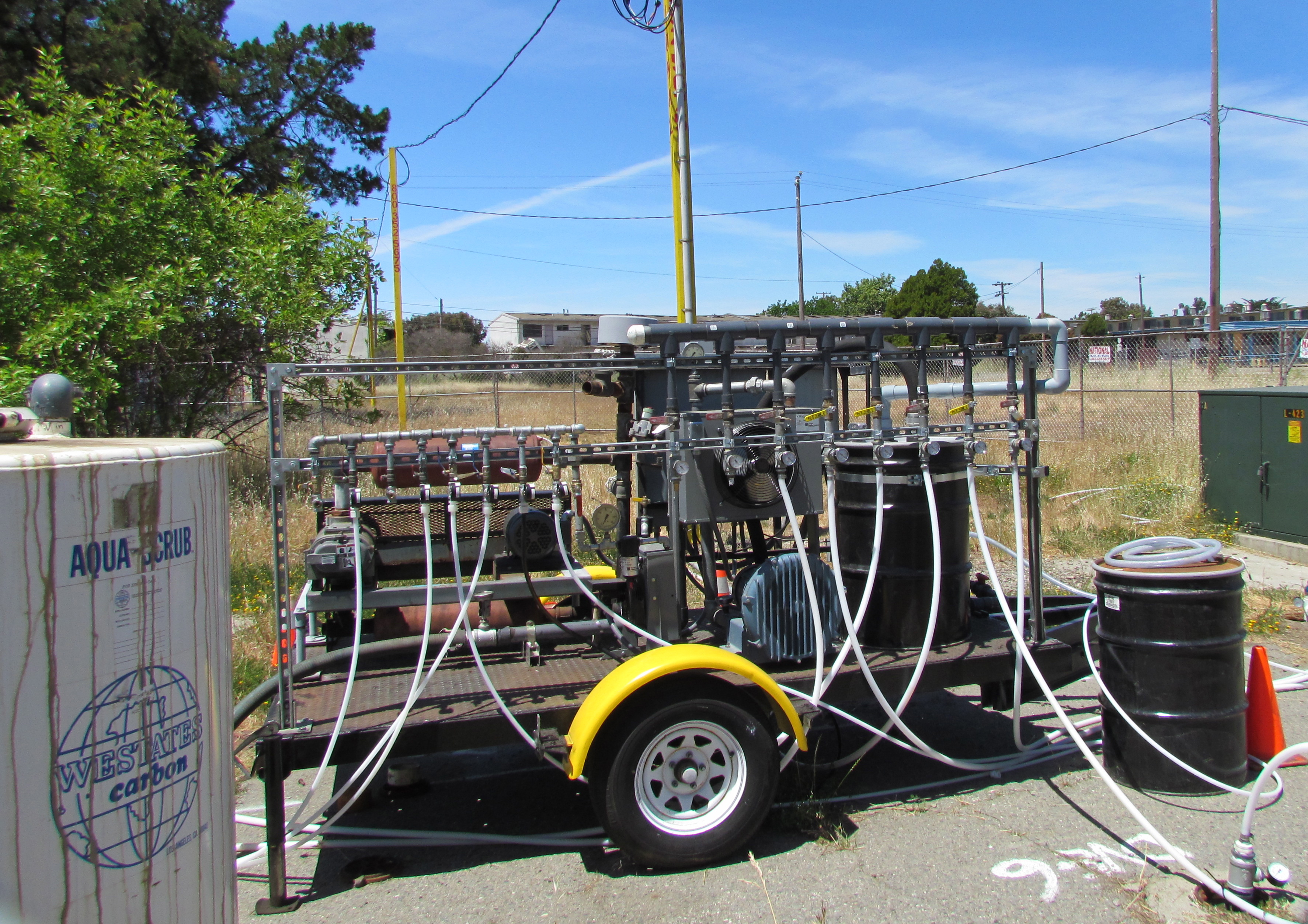
Air injection/extraction system operating at W. Pacific Avenue gas station site in 2013 and 2014. System extracts and captures petroleum vapors.

The method of blowing bubbles in mud and sucking out the air sounds unsophisticated, but it works. After running the system in 2013 and 2014 at the West Pacific Avenue gas station site, for example, the level of one contaminant, benzene, went from around 1,000 micrograms per liter down to 58, bringing the contamination low enough to allow indigenous bacteria to finish the job.

Air injection and vapor extraction system operating at former commissary gas station site in May 2013. Charcoal tank to capture vapors is at left.

The Navy returned to these sites in July and, in this phase, they came to help natural bacteria finish up the job.   Allowing bacteria to clean up petro chemicals through natural digestion is called bioremediation. To be effective and not take a century to eliminate the problem, the bulk of the chemicals need to first be reduced to concentrations that do not overwhelm the bacteria.

At both gas station sites the Navy used a special product designed to foster growth of natural bacteria in the ground, which includes a form of time-release peroxide that turns into oxygen over a period of 12 months. An oxygen environment is necessary for the bacteria to digest petroleum. The bacteria utilize the hydrocarbons (hydrogen and carbon) in the petroleum chemicals as part of their metabolic processes and convert them into carbon dioxide, water, and microbial cell mass. Water samples will be taken at three, six, and nine months after the July injections to evaluate effectiveness.

“The Navy’s gas station remedial program is comparable to the private sector gas station cleanup program,” said Yemia Hashimoto, Engineering Geologist with the San Francisco Bay Water Board. “The cleanup requirements are similar and the required timelines for project completion are similar.” The Water Board is a California state agency and is the lead regulatory agency overseeing the Navy’s petroleum cleanup program.

The other type of groundwater contamination encountered at Alameda Point comes from a chlorinated solvent used in cleaning aircraft parts. Unlike lighter-than-water petroleum products, chlorinated solvents can sink through the upper water zone to a depth of 30 feet or more and complicate cleanup. But solvent cleanup still relies on a phased cleanup approach, often employing bacteria in the final phase.

Originally published in the Alameda Sun.

Complete background and a detailed description of the cleanup process at the two gas station sites is in the Bioremediation Work Plan issued in July 2015.

Main Street Ferry Terminal getting more parking, no buses

Ferry commuters driving to the Main Street Ferry Terminal will find a new parking lot option this fall, pending timely work plan approvals by the city.

Since 2013, passenger boardings have increased by over 50 percent at the Main Street ferry terminal, far exceeding the capacity of the parking lot. Commuters have been filling up an adjacent unpaved parcel next to the dog park, as well as the shoulders of Main Street.

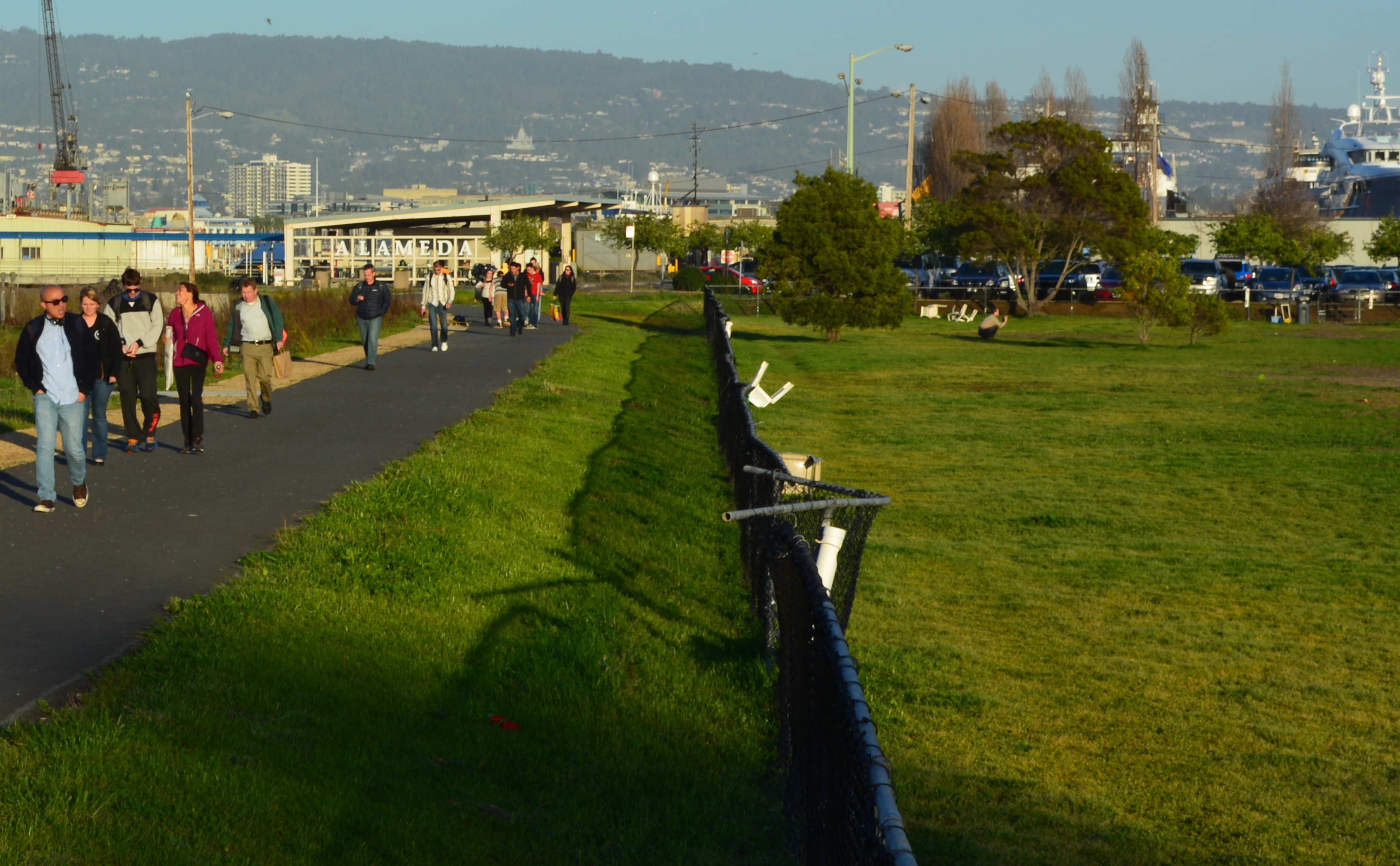
Ferry riders leaving the Main Street Ferry Terminal in the background and walking toward makeshift parking lot.  Dog park is on the right.
Ferry riders leaving the Main Street Ferry Terminal in the background and walking toward makeshift parking lot. Dog park is on the right.

The Water Emergency Transportation Authority (WETA) initiated a ferry terminal access study for the Main Street and Harbor Bay terminals in 2014. They have been discussing access improvements with city staff, the Transportation Commission, and the community.

As a result of the dialogue, the city has offered the use of the nearby O’ Club parking lot, across the street from the terminal, to WETA through a license agreement. The lot is currently used to park city vehicles.
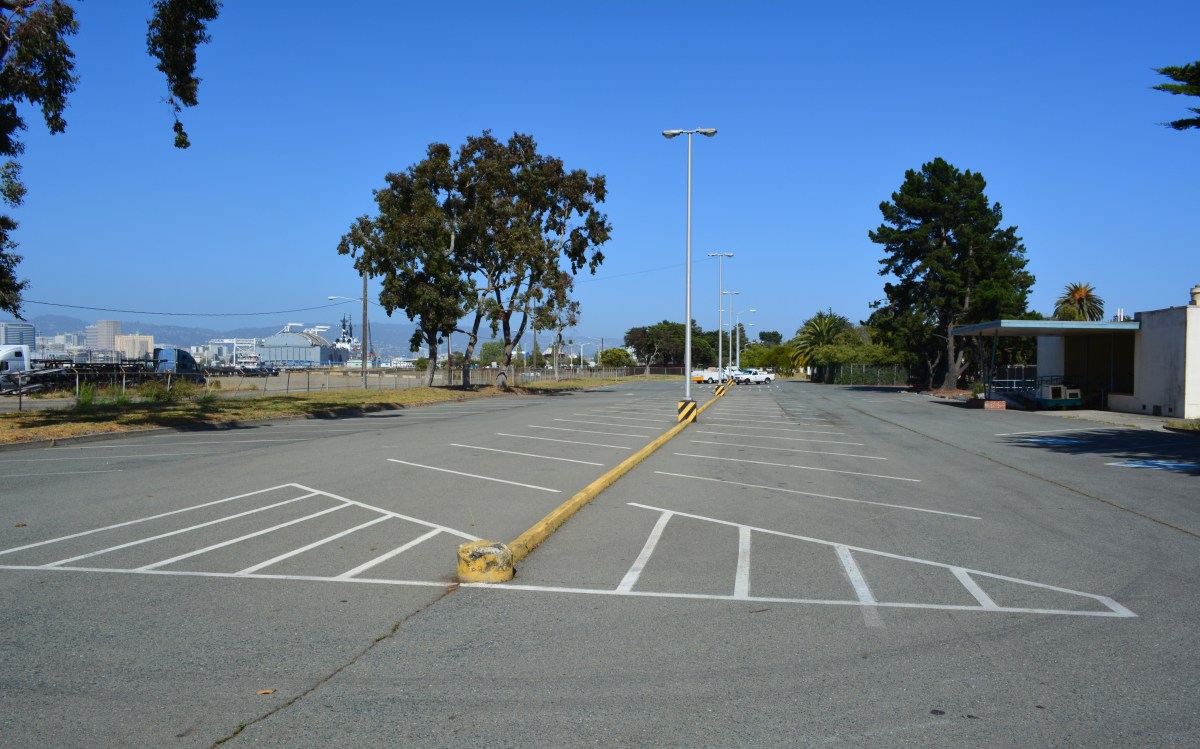
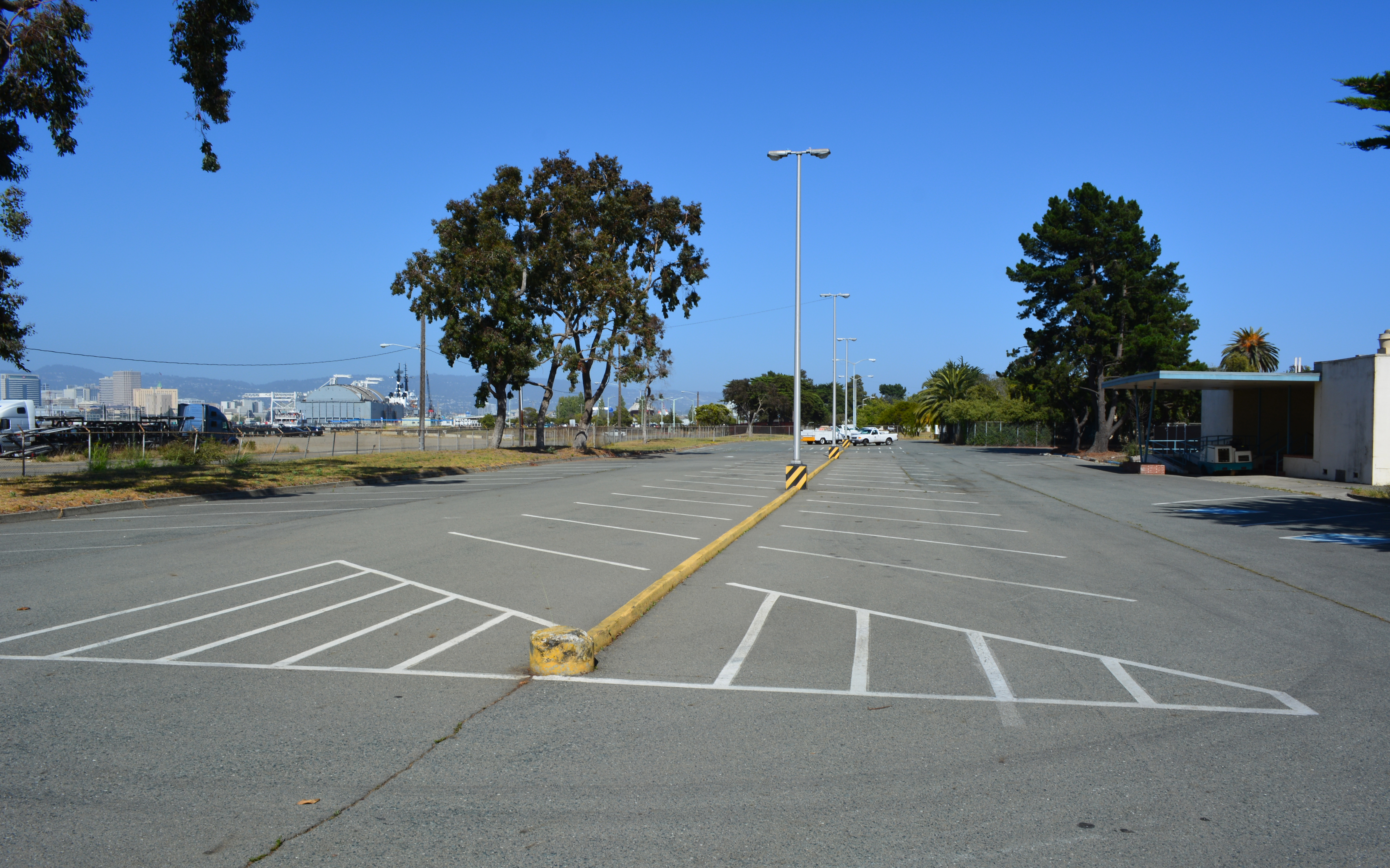
O Club parking lot.  Main Street to the left.
O Club parking lot. Main Street to the left.

At its June 4 meeting, the WETA board of directors approved spending $250,000 to make improvements, in exchange for free use of the lot. WETA will resurface and stripe the lot, construct ADA-compliant walkways that lead to a new crosswalk that WETA will also construct across Main Street.

The crosswalk will connect with an existing paved pathway on the western end of the main parking lot. An existing vehicle entryway on Main Street will become the entrance to the O Club lot.

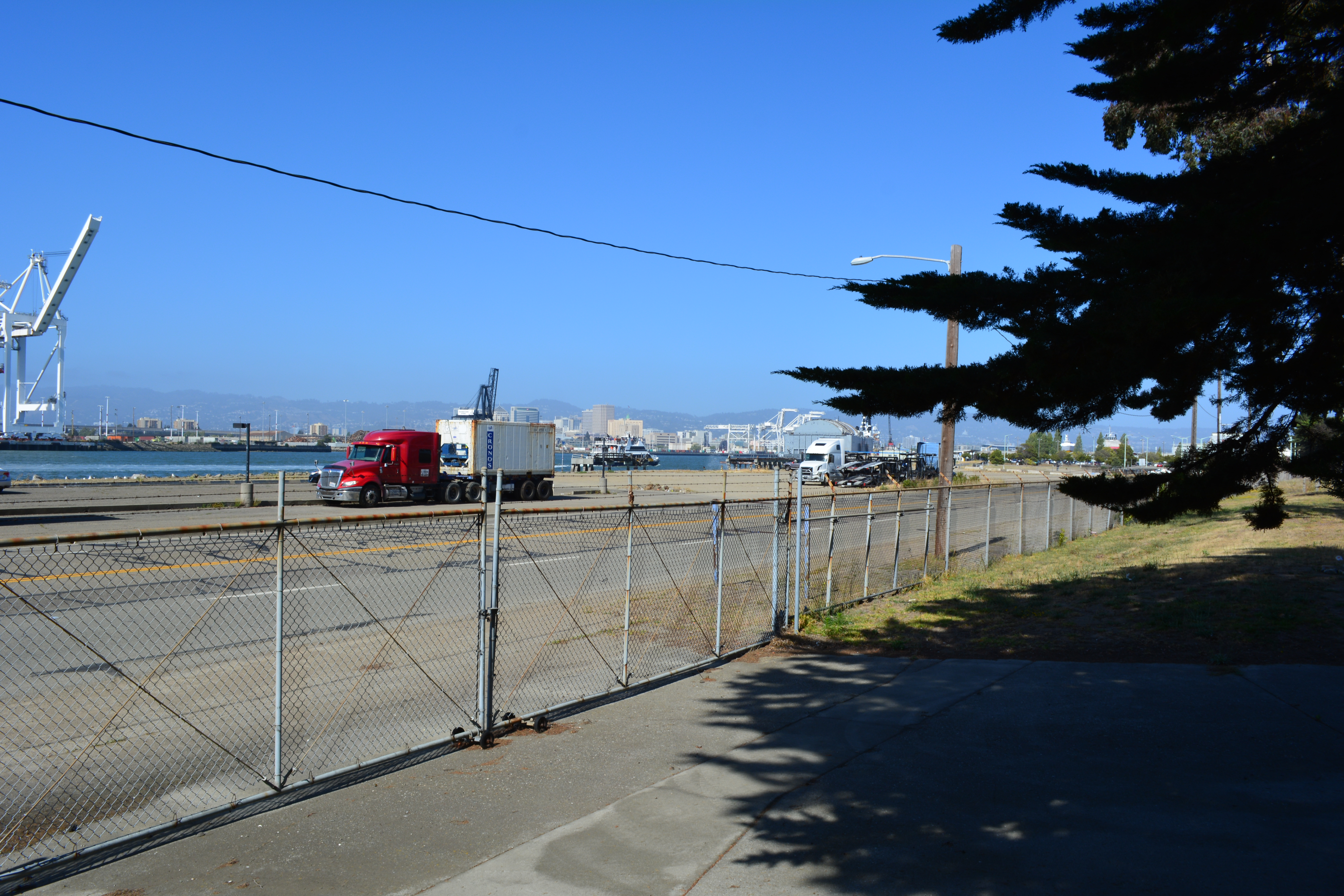
Main Street entrance to O Club parking lot.  Oakland Estuary and arriving ferry on the left.
Main Street entrance to O Club parking lot. Oakland Estuary and arriving ferry on the left.

“In terms of the mid-term improvements at Main Street, the city has let us know that the dog park cannot be converted to parking until a replacement at Estuary Park is open,” said Kevin Connolly, WETA’s manager of Planning & Development. The new home for the dog park at Estuary Park on Mosley Avenue between Singleton Avenue and Alameda Landing is tied to the availability of funds for the second phase of the park. Those funds will be secured through a combination of developer fees and grants.

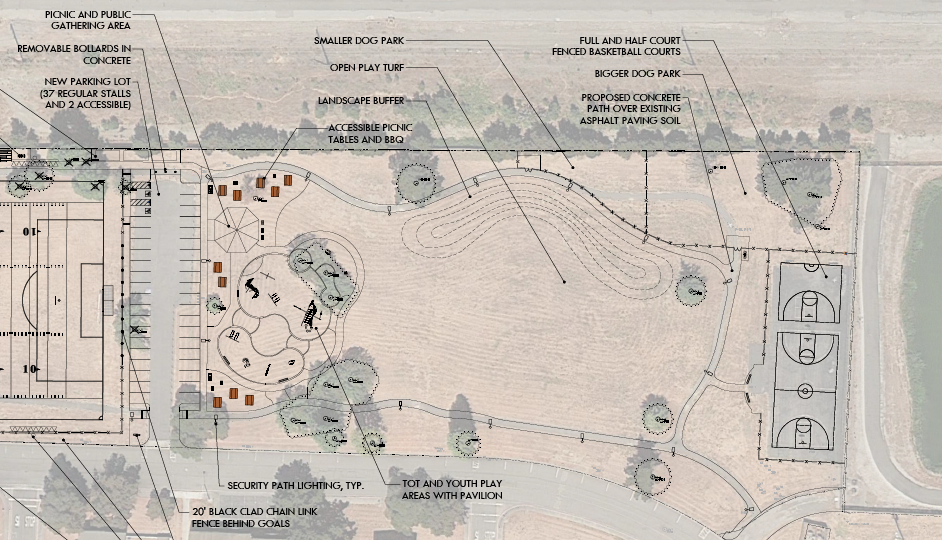
The first phase, four acres of sports fields, is expected to begin in 2016. The four acres of the second phase is designed as a community park space with restrooms, playgrounds, picnic areas, basketball courts, open lawn, and a dog park with sections for big dogs and small dogs.  

Close-up of community park section of Estuary Park, with dog park located in upper portion.

WETA was working with AC Transit to re-introduce bus service to the terminal. However, Connolly said that AC Transit recently scuttled plans for a Line 50 that would have carried passengers in a loop around the Island City to the Main Street ferry terminal. The city learned of this last Wednesday. In explaining its decision, AC Transit told Connolly that when it ran buses to the ferry terminal in 2009 “nobody rode them.”

Connolly points out that in 2009 the ferry carried 350 passengers a day with hourly departures. Today the ferry provides service to some 1,800 passengers with departures every 30 minutes. AC Transit also told Connolly that the bus service was not feasible because WETA does not charge for parking. Connolly questioned that criterion, pointing out that South Shore Center and other shopping malls do not charge for parking and AC Transit serves South Shore Center and these other malls.

“WETA is disappointed that AC Transit cannot see that demand warrants local bus service at the Main Street Terminal,” Connolly said. He added that AC Transit’s proposal would have offered ferry riders more choice in how they get to the terminal.

With parking relief in the pipeline, WETA plans to focus on more non-auto options for getting riders to and from the ferry terminal. “The implementation of an overflow parking lot, in addition to future improvements for pedestrian, bicycle, and transit access are vitally important in terms of WETA’s ability to continue accommodating future ridership demand at the Main Street ferry terminal,” said Nina Rannells, WETA’s executive director, in a June 4, 2015 staff report.

Originally published in the Alameda Sun.

Additional notes:

Measure BB: Voters approved Alameda County Transportation Commission’s Sales Tax, Measure BB on November 4, 2014. It’s priorities are to expand mass transit, improve highway infrastructure, improve local streets and roads, improve bicycle and pedestrian safety, and expand special transportation for seniors and people with disabilities.

Line 50 added, then removed: Line 50 was added in AC Transit’s March 2015 draft alignment plan. At the July 8 meeting of the City of Alameda – AC Transit Liaison Committee, AC Transit announced that is was removing the line. If brought into service, Line 50-Encinal would run between the Fruitvale BART Station and the Alameda Main Street Ferry Terminal every 20 to 30 minutes between 6 am and 10 pm. The route, subject to city approval, would enter Alameda via the Fruitvale Bridge and turn from Tilden Way onto Fernside Blvd. It will continue down Fernside Boulevard, right on High Street, right on Encinal Avenue, into Central Avenue, right on Webster Street, left on Appezzato Memorial Parkway, and right on Main Street to the terminal.  

Line 50 service to schools:  Line 50 would provide bus service to these schools along the route:  Alameda Community Learning Center on 3rd Street at Appezzato Memorial Parkway; Academy of Alameda Middle School on Pacific Avenue on 4th Street; College of Alameda on Appezzato Memorial Parkway at Webster Street; Encinal High School on Central Avenue at 3rd Street.

WETA 2009 Transition Plan: In 2007, WETA was created by passage of SB 976 as the successor to the Water Transit Authority. In June of 2009, WETA issued its transition plan in conjunction with the cities of Alameda and Vallejo, and the Metropolitan Transportation Commission. The 2009 plan anticipated closing down the Main Street Ferry Terminal once a new ferry terminal is built nearby in the Seaplane Lagoon at Alameda Point.  2009 Transition Plan

Due to a surge in ridership, current plans assume that the Main Street Ferry Terminal will continue to operate after the Seaplane Lagoon Terminal is constructed. The recently approved development agreement for Site A, adjacent to the Seaplane Lagoon, includes a $10 million commitment from the developer toward the new terminal. WETA has yet to complete its feasibility study for the new terminal.

Alameda Point vs. Main Street: Alameda Point development will attempt to discourage automobile usage. Residents will be able to walk to the Seaplane Lagoon ferry terminal. Shuttles will offer rides from Alameda Point to Oakland BART stations. AC Transit is expected to operate a rapid transit bus from Alameda Point through the Tube into Oakland. Meanwhile, at the Main Street ferry terminal a mile away, AC Transit will provide no assistance in discouraging automobile usage.

Policies differ on protecting terns

The annual tours to the least tern colony at Alameda Point were sold out again this year. Three groups totaling about 100 people listened to a presentation about the endangered birds before boarding a bus at the Crab Cove Visitors’ Center.

It is the only time that the general public is permitted to enter the federally owned former aircraft runway area to view the terns nesting. Guests are not allowed to leave the bus.

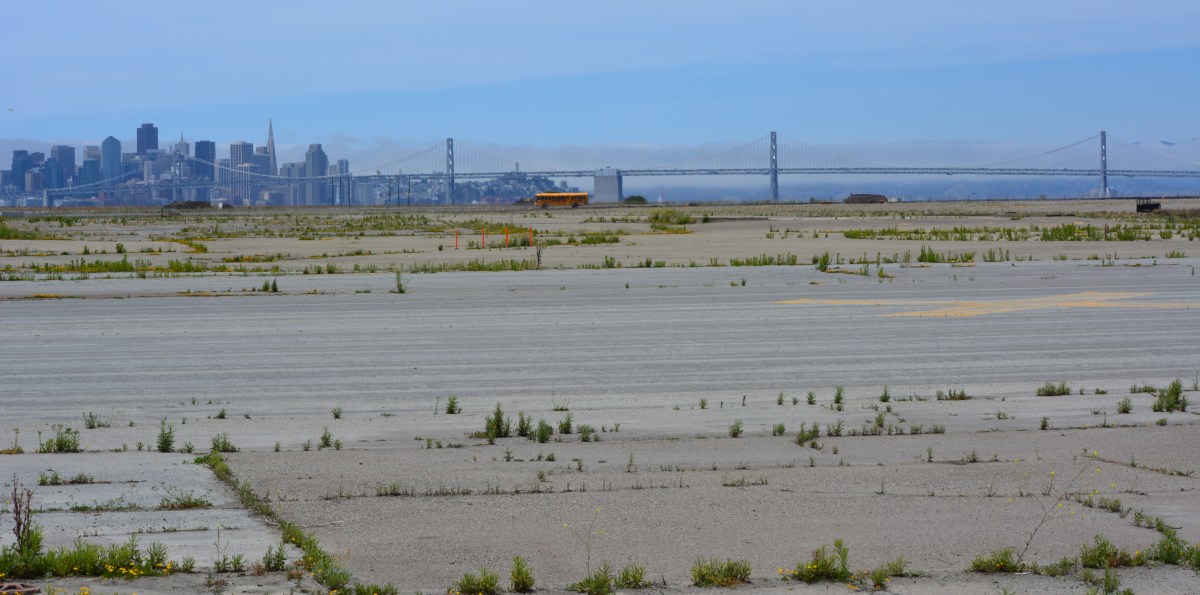
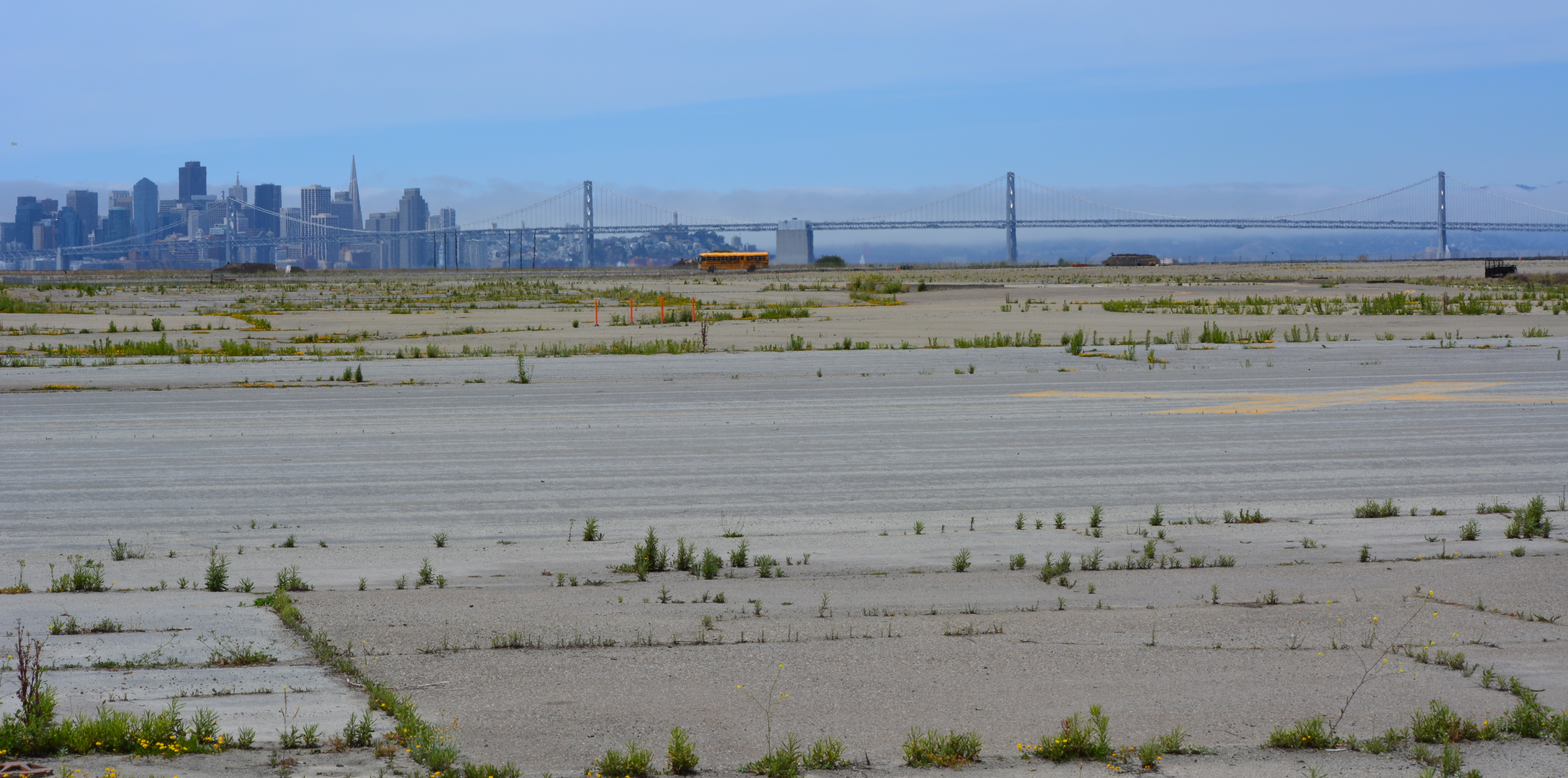
Least tern tour bus parked next to the nesting area on former Navy airfield.  San Francisco is in the background.
Least tern tour bus parked next to the nesting area on former Navy airfield. San Francisco is in the background.

This once-a-year glimpse of Alameda’s colony, managed by the U.S. Fish and Wildlife Service (USFWS), is very different from the daily opportunities to view the Huntington State Beach least tern colony near Los Angeles, managed by the California Department of Parks and Recreation.

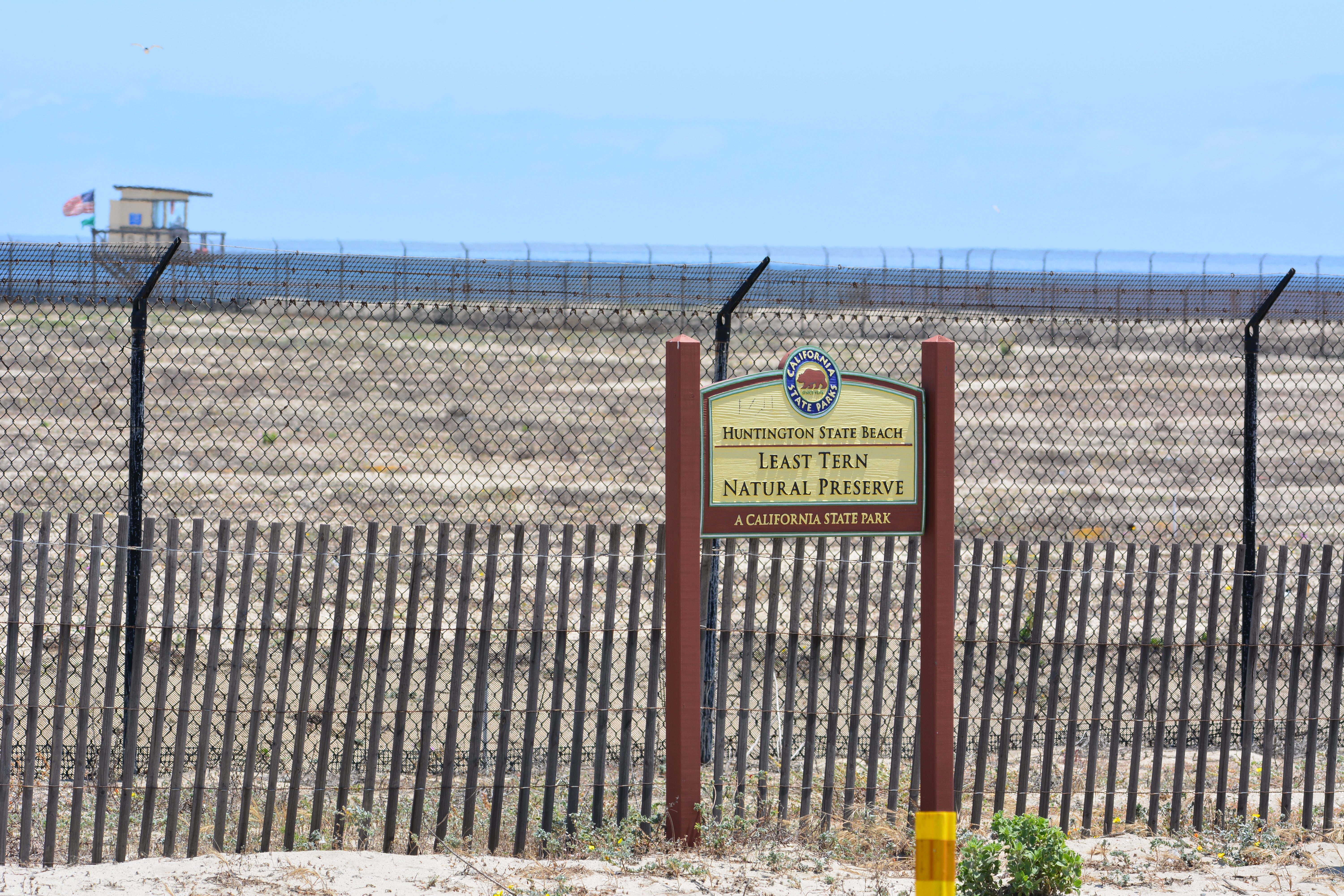
Huntington Beach Least Tern Natural Preserve

The 9.6-acre Alameda Point least tern nesting site has a 500-acre buffer zone. During the nesting season, volunteers monitor and record tern behavior and threats from predators, such as hawks and falcons, while sitting in their vehicles.

The 13-acre Huntington State Beach Least Tern Natural Preserve is protected by a 15-foot buffer zone on three sides. The Huntington Beach Bike Trail hugs the fourth side of the colony, with the busy Pacific Coast Highway only 40 feet away.

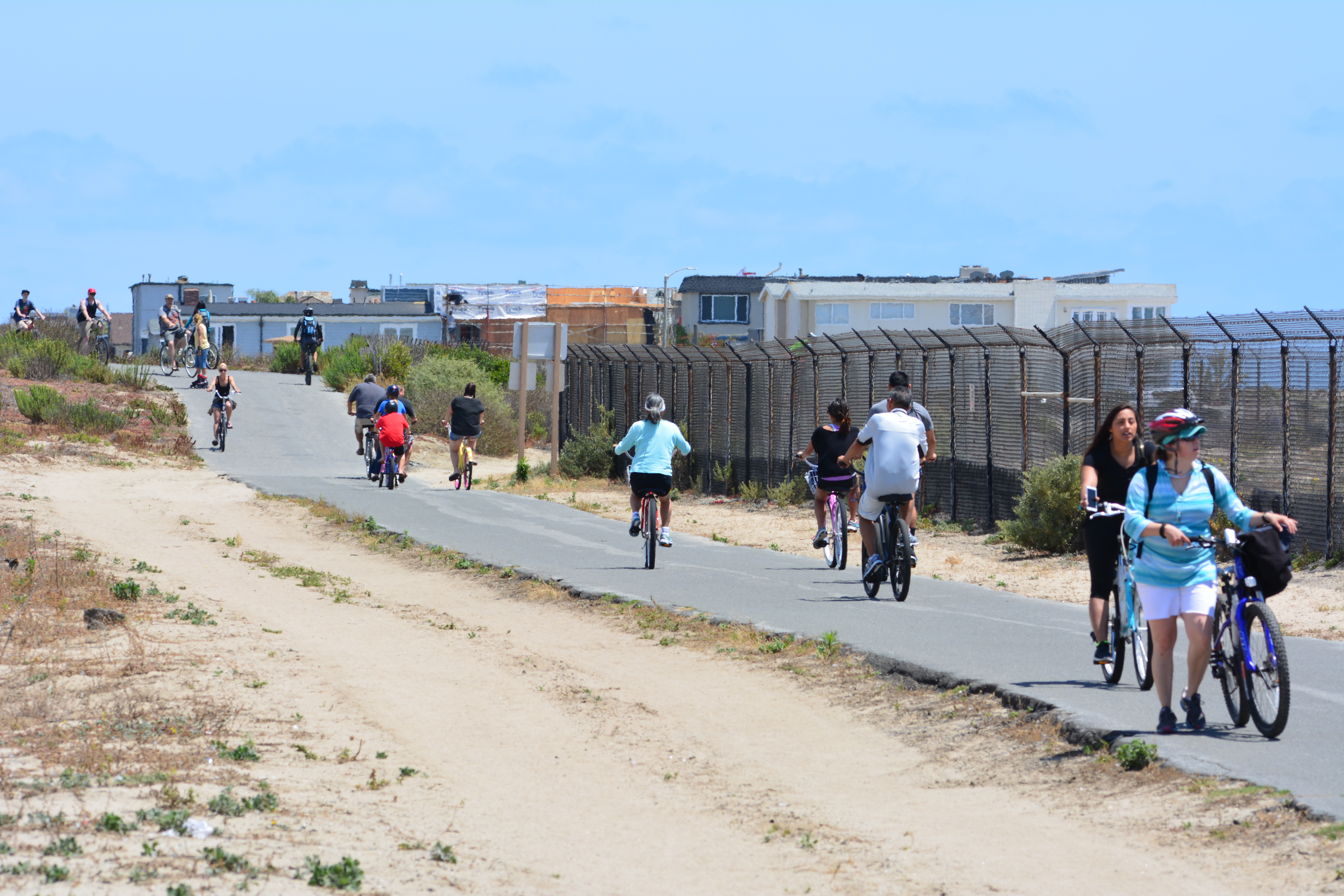
Huntington Beach Bike Trail.  Least tern preserve is on the right.  Pacific Coast Highway is about 20 feet to the left and out of view.  City of Newport Beach is in the background.
Huntington Beach Bike Trail. Least tern preserve is on the right. Pacific Coast Highway is about 20 feet to the left and out of view. City of Newport Beach is in the background.

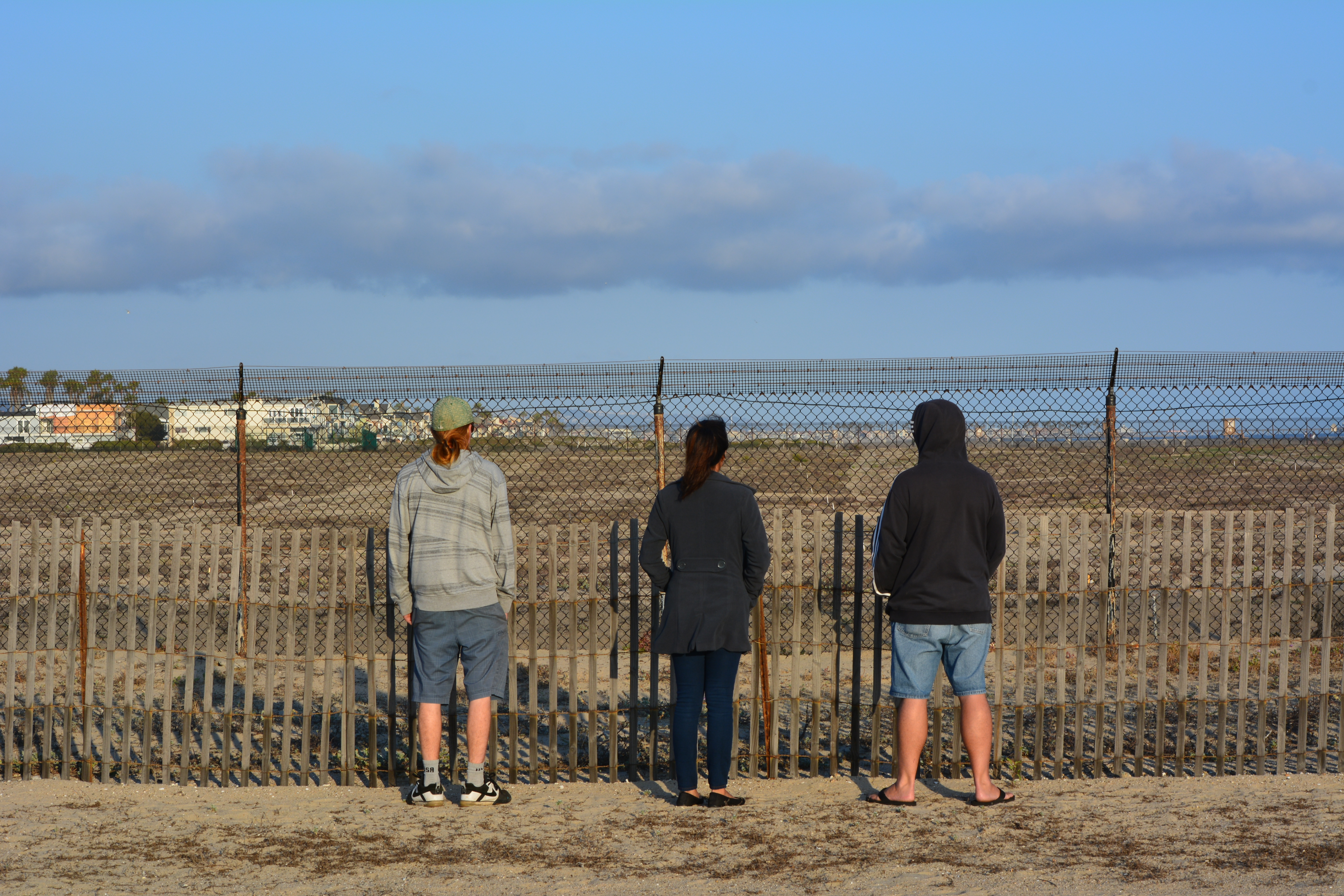
At Huntington State Beach, docents amble around to educate visitors about natural history and conservation while recording observations about predators. Over the recent Memorial Day weekend at Huntington Beach, people casting fishing lines into the ocean, throwing Frisbees, and laying on blankets were often not more than 30 feet from adult least terns loafing and sometimes mating on the beach.

Visitors to Huntington Beach viewing the least tern nesting activity on Memorial Day weekend 2015.

During the non-nesting season in Alameda, volunteers remove weeds by hand, and pick up terracotta tiles, wooden A-frames, and oyster shells used for sheltering the chicks, and then re-distribute them in April before the terns arrive. USFWS sprays an herbicide before the terns arrive to minimize vegetation that sprouts up on the bed of imported sand. This is to help to maintain the look of a beach with good sight lines preferred by terns.

At the Huntington Beach Preserve, the state park department stopped using shelters. They, too, use an herbicide, but only for grasses. The low-growing flowering vegetation on this natural beach is allowed to remain and serves as camouflage for nesting adults and for the chicks when they hatch.

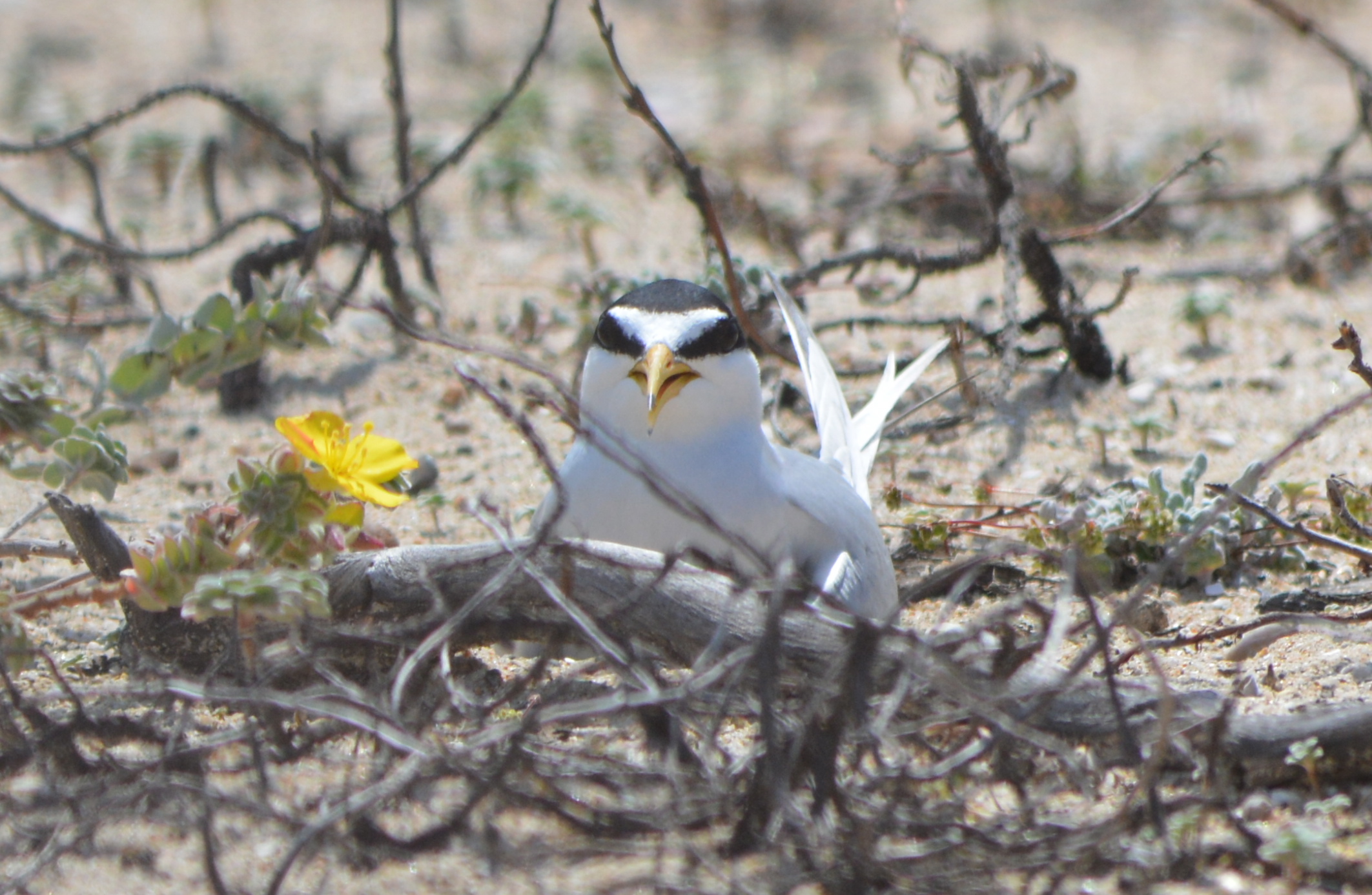
Least tern sitting on eggs at Huntington State Beach.  The nest is simply a depression in the sand.  The vegetation is not part of the nest.
Least tern sitting on eggs at Huntington State Beach. The nest is simply a depression in the sand. The vegetation is not part of the nest.

At Huntington Beach, certified volunteers count the nests, eggs and chicks twice a week. They walk through the site inside of sand-colored canvas blinds held together with PVC pipe that they carry. At Alameda Point, the wildlife biologist does not employ the use of a blind.

The Huntington State Beach Least Tern Natural Preserve was established in 1973 as the first fully protected tern colony in California. This preserve implemented the central tenet of the USFWS-approved recovery plan for the least tern by providing a well-defined nesting site that is secure from casual disturbance, primarily by human recreational activity often accompanied by canine companions. The wisdom of this practice is illustrated at Alameda Point: No least terns have ever nested outside of their fence.

The two other determining factors in the breeding success of the terns are the presence of small fish in nearby waters, which can vary due to climate and current, and the presence of predators, which can vary by location. No scientific formula exists to prescribe how far away human activity must be for successful nesting of the terns.

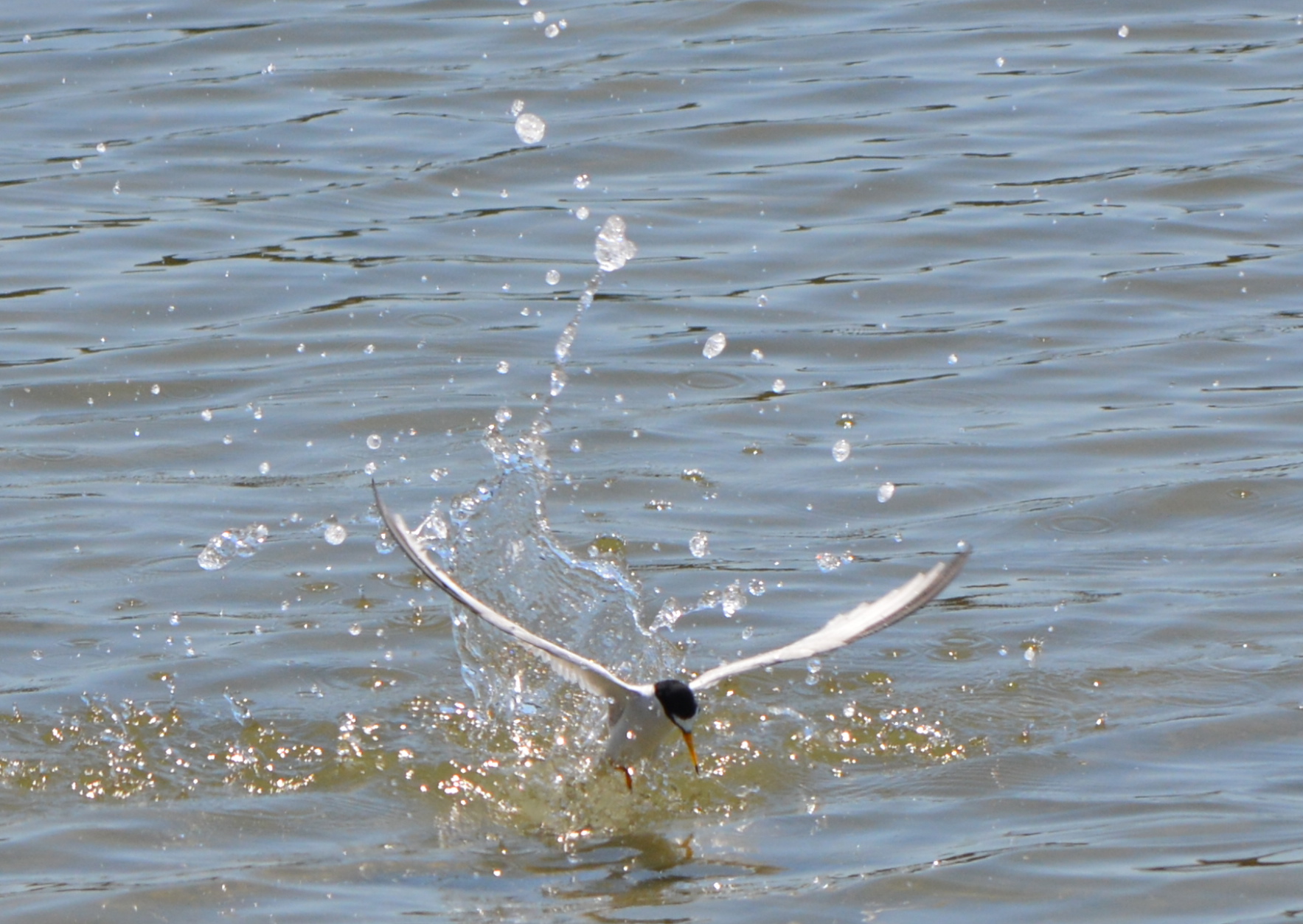
Least tern diving for fish in Alameda Point's Seaplane Lagoon on June 7, 2015 during the nesting season.  Dragon Boat races were occurring nearby.
Least tern diving for fish in Alameda Point’s Seaplane Lagoon on June 7, 2015 during the nesting season. Dragon Boat races were occurring nearby.

This year, as of June 20, there were 500 nests at the Huntington Beach Preserve. Alameda Point had a count of 315. There are 27 sites in California that had 10 or more nesting pairs in 2014. Both Alameda Point and Huntington Beach typically rank in the top five. Huntington Beach least tern nesting news updates are posted on the Sea and Sage Audubon Society website. There are no published news updates or progress reports about Alameda Point least tern nesting activity.

The annual Alameda Point “Return of the Terns” tours happen every June.

Originally published in the Alameda Sun.


Huntington Beach photo gallery

Alameda Point Collaborative hosts luncheon down on the farm

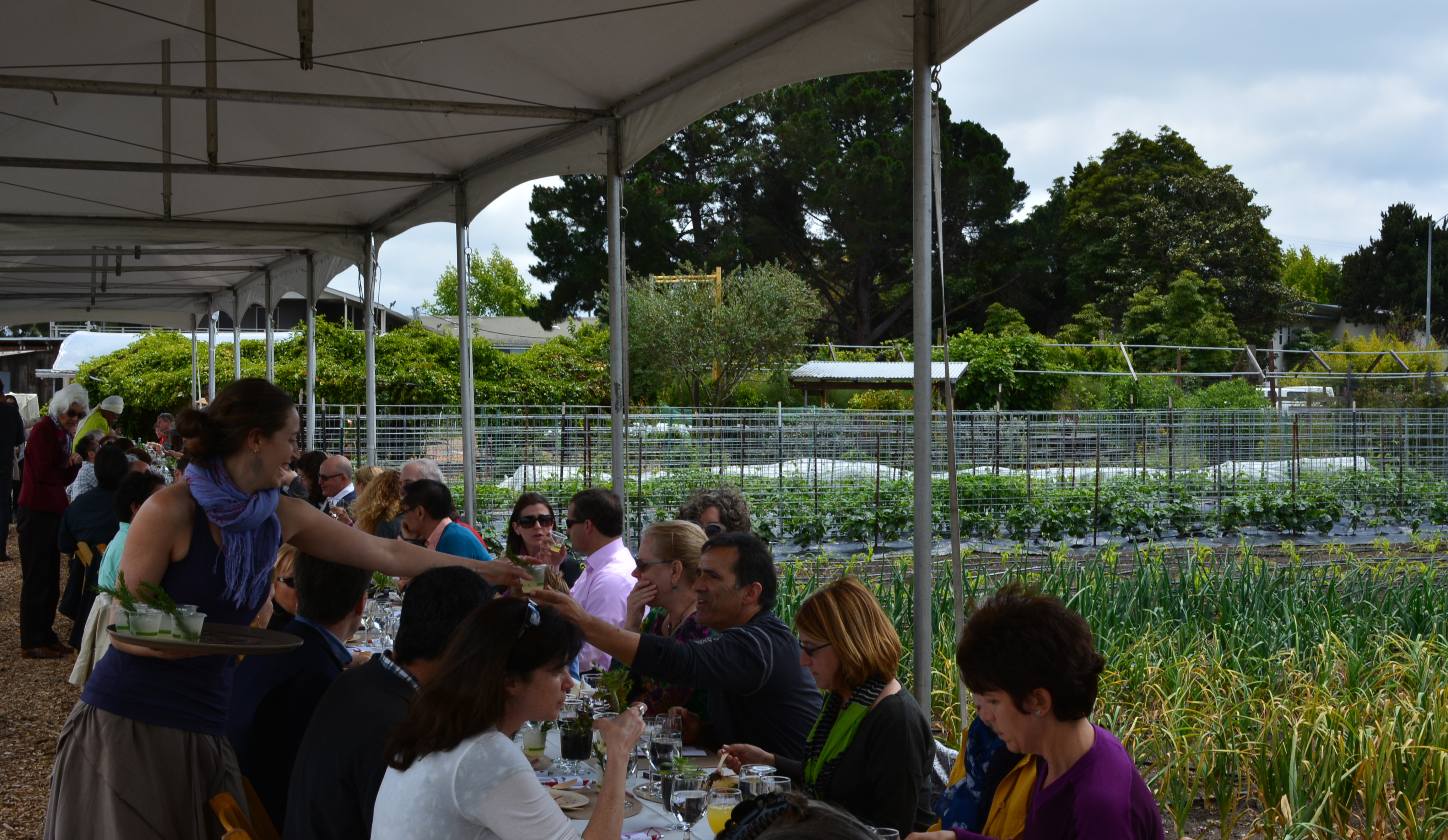
Patrons seated themselves under a canopy between rows of crops at Alameda Point Collaborative’s farm for its fifth annual “Urban Farm Table” fundraising luncheon on Sunday, May 17. A guitar and stringed bass duo provided musical ambience for the arriving guests from within a nearby thicket of blossoming passion fruit vines. Bees went about their business from teeming beehives clinging to the branches of a fruit tree in the farm orchard. It was an earthy affair.

APC farm luncheon

The Collaborative provides supportive housing for homeless individuals, children and youth services, and job training programs, such as selling their farm produce through a subscription service, operating a commercial kitchen, and raising and selling plants at the Ploughshares Nursery.

Bryant Terry at APC farm luncheonNationally known author and sustainable food activist Bryant Terry gave the keynote address. He wove together personal memories of food and culture from the days before the phrase “slow food movement” was coined. Terry characterized APC’s local farm program as a radical idea in an era of corporate agribusiness that harms the environment and shortchanges consumers’ health.

Terry praised the Collaborative’s Farm2Market subscription produce program as a model that should be emulated throughout the country. “There are many urban neighborhoods where it’s easier to find a gun than a fresh apple,” he said. Terry is the author of the critically-acclaimed “Vegan Soul Kitchen: Fresh, Healthy, and Creative African-American Cuisine.”

Terry wrapped up his engaging talk about food and culture by preparing a simple veggie dish over a gas burner. While he was chopping and stirring, he offered a tip for anyone expecting dinner guests. He said no matter what you’re serving, throw some olive oil and garlic into a hot skillet before the guests arrive to get that aroma into the air. “They’ll compliment you every time, even if all you are serving is dessert.”

A cadre of snappily dressed servers delivered a two-course meal. The tricolored beet salad with pistachios, spring greens and radishes was topped with a roasted apricot and Point Reyes bleu cheese vinaigrette and accompanied by a slice of Rosemary focaccia.

Jeff Rosen at left in white.

The gourmet menu was created and supervised by Jeff Rosen, executive chef at Oakland’s Blue Heron Catering. All of the produce was grown at APC’s farm. Joe Pucci Seafood provided the local salmon. The featured beverages came from Rock Wall Wine Company, St. George Spirits, and Petitpot.

As each pan-roasted salmon entre was assembled, chef Rosen personally inspected each plate and spooned on the Tuscan salsa verde before it was hustled off to the table. The nine vegetarians enjoyed the chef’s fresh pea and green garlic cakes with shaved fennel.

Awards were handed out to volunteers and supporters from the Haas School of Business, Buena Vista United Methodist Church, Bay Farm Elementary School, and Alain Pinel Realtors.

The event was sponsored by Alameda Point Partners, Penumbra, SanMan Productions, VF Outdoor, and Assemblyman Rob Bonta.

Published in the Alameda Sun, May 21, 2015

Rooftop solar panels uncertain at Alameda Point

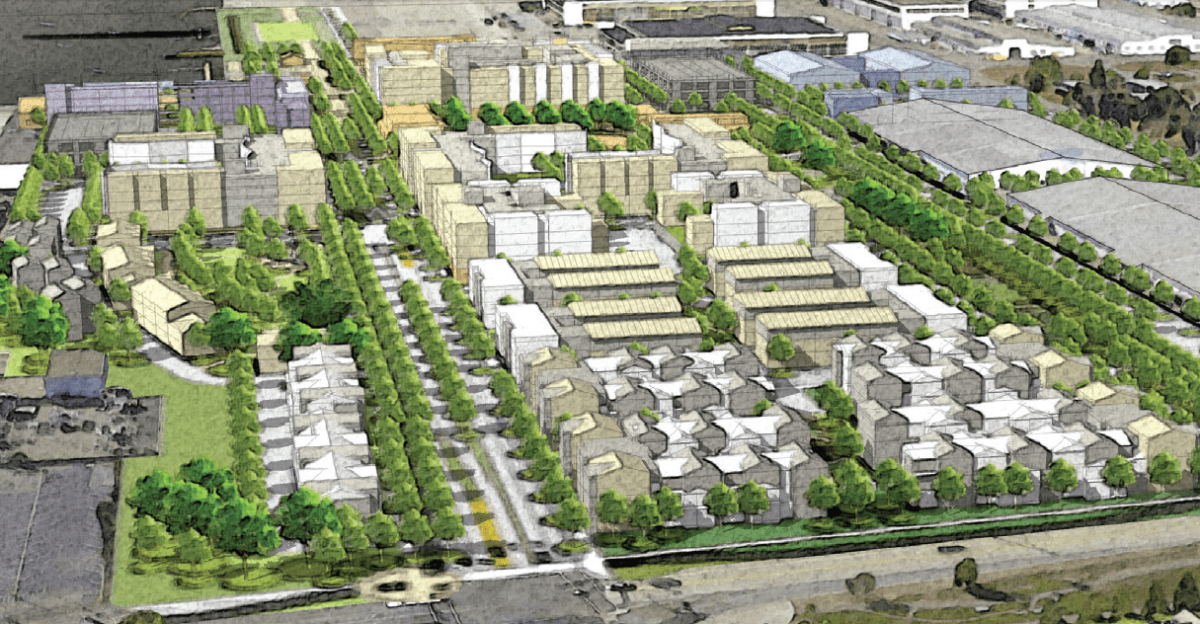
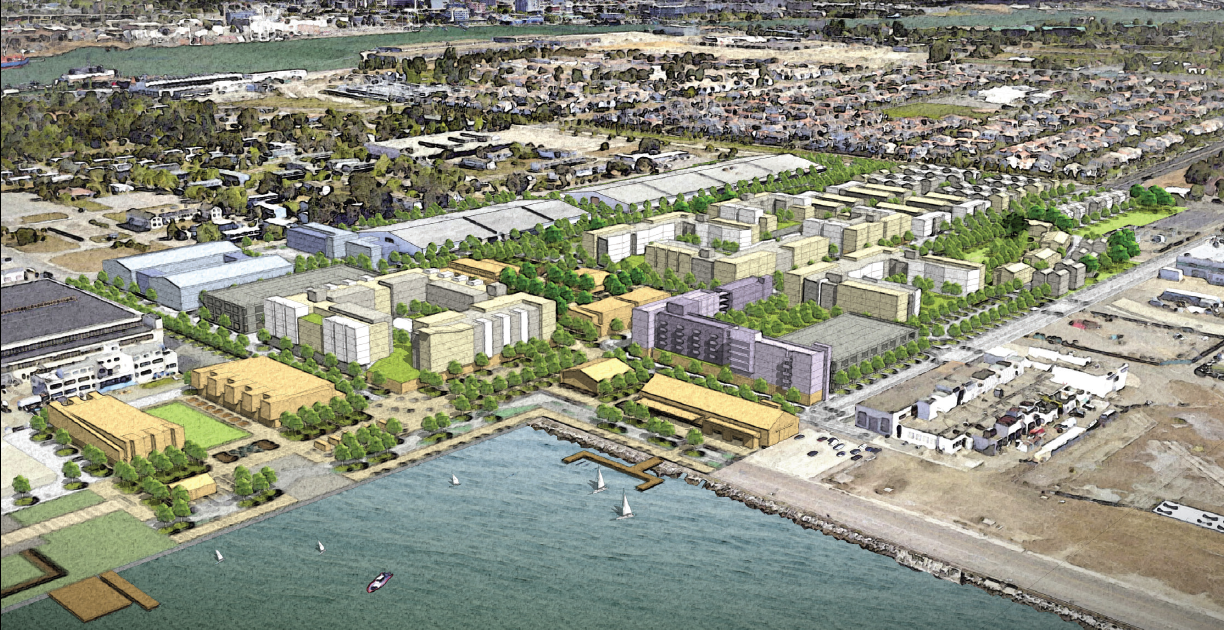
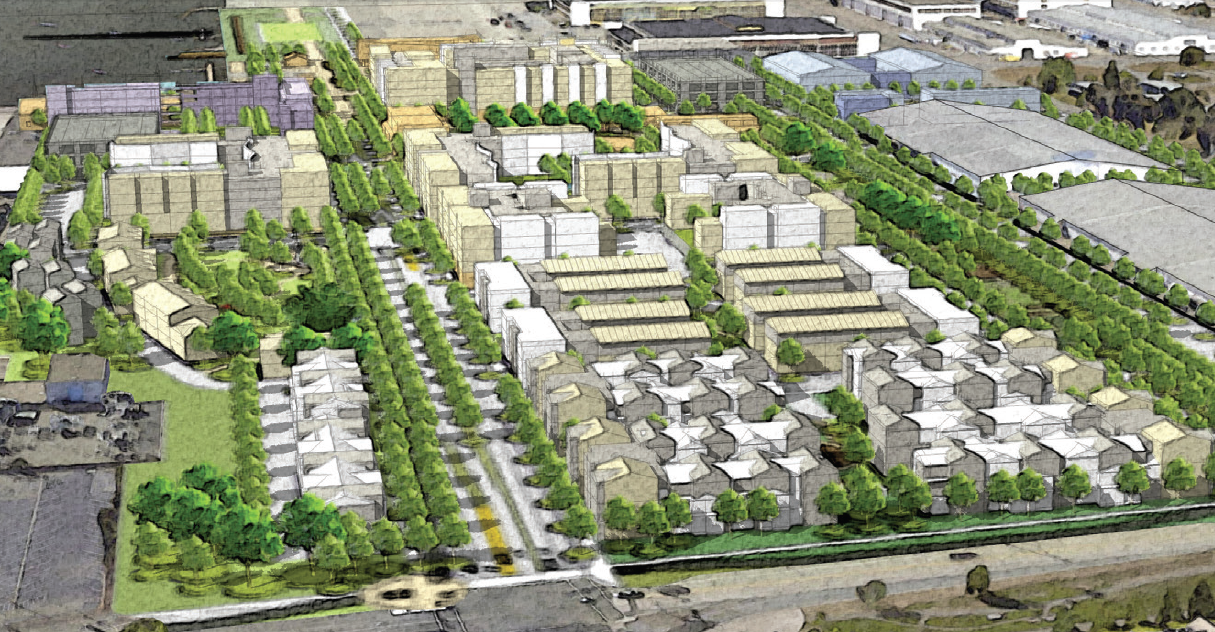
More than 24 new residential and commercial buildings are proposed for construction at the 68-acre Site A project at Alameda Point, which was approved unanimously by the Planning Board on Monday, May 11. All the buildings will be solar ready. But according to Joe Ernst, the project leader for Alameda Point Partners, there is no guarantee there will ever be any solar panels on the rooftops.

Site A aerial view looking northeast

Ernst blames the currently underfunded rebate incentive system and a lack of financing vehicles with tax incentives, which can leave developers having to absorb the full cost of the photovoltaic solar panels. He said it could take anywhere from seven to 10 years to offset the cost of the solar panels through power savings if his company had to fund them out of pocket.

The solar panel rebate programs offered by the State of California and Alameda Municipal Power lag far behind the ambitious goals recently launched by Governor Jerry Brown. The governor’s executive order on greenhouse gas reduction, issued on April 29, 2015, followed through on goals that he outlined a few months earlier in his inaugural address.

“I envision a wide range of initiatives: more distributed power, expanded rooftop solar, micro-grids, an energy imbalance market, battery storage, the full integration of information technology and electrical distribution and millions of electric and low-carbon vehicles,” said Governor Brown in his speech.

But at Alameda Point, the inconsistency between the governor’s goals and the programs to implement them stands in stark contrast. The proposed 68-acre Site A project next to the Seaplane Lagoon is left wanting for solar panels. But a few feet away at Hangar 41, Wrightspeed is preparing to manufacture fuel-efficient electric powertrains for trucks with the aid of $5.8 million in grant funding from the California Energy Commission.

Rooftop solar panelsIn order to limit the onsite production of power, which cuts into a power company’s bottom line, rate structures for buying and selling power from rooftop solar producers can be skewed in favor of power companies. This, in turn, can effect decisions on investing in rooftop solar. One of the hurdles is right here in Alameda.

Alameda’s Public Utilities Board recently held a workshop on rate structure alternatives known as Net Energy Metering (NEM) and Feed In Tariff (FIT) but held off on making any decision. Rooftop solar proponents favor an expansion of NEM.

A nonprofit agency in Palo Alto overcame obstacles to installing rooftop solar with a combination of independent financing and various incentives. In early 2014, the Oshman Family Jewish Community Center completed a rooftop solar project on their campus that was financed through a power purchase agreement and took advantage of available incentives. It required no capital costs to the center.

The company that packaged the deal, THiNKnrg, owns the solar panels. It will deliver electricity at 4 cents a kilowatt, half the current energy rate, saving the center an estimated $1.5 million over the 20-year contract. The deal covers 12 buildings with 1,840 solar panels, which will generate .5 megawatt of power. It is Palo Alto’s second largest rooftop solar system.

The rooftops at Alameda’s Site A project will be designed to accept the weight of solar panels. Conduits, pathways, switchgear and metering will be designed into the buildings. Although this new construction project is a prime candidate to turn on the lights with solar on the first day, it’s unlikely without the support of state incentives and Alameda Municipal Power.

Published in the Alameda Sun, May 14, 2015.

Location of proposed Site A development project at Alameda Point, looking west from Main Street.

Site A aerial view looking west

Signs of the times at Alameda Point

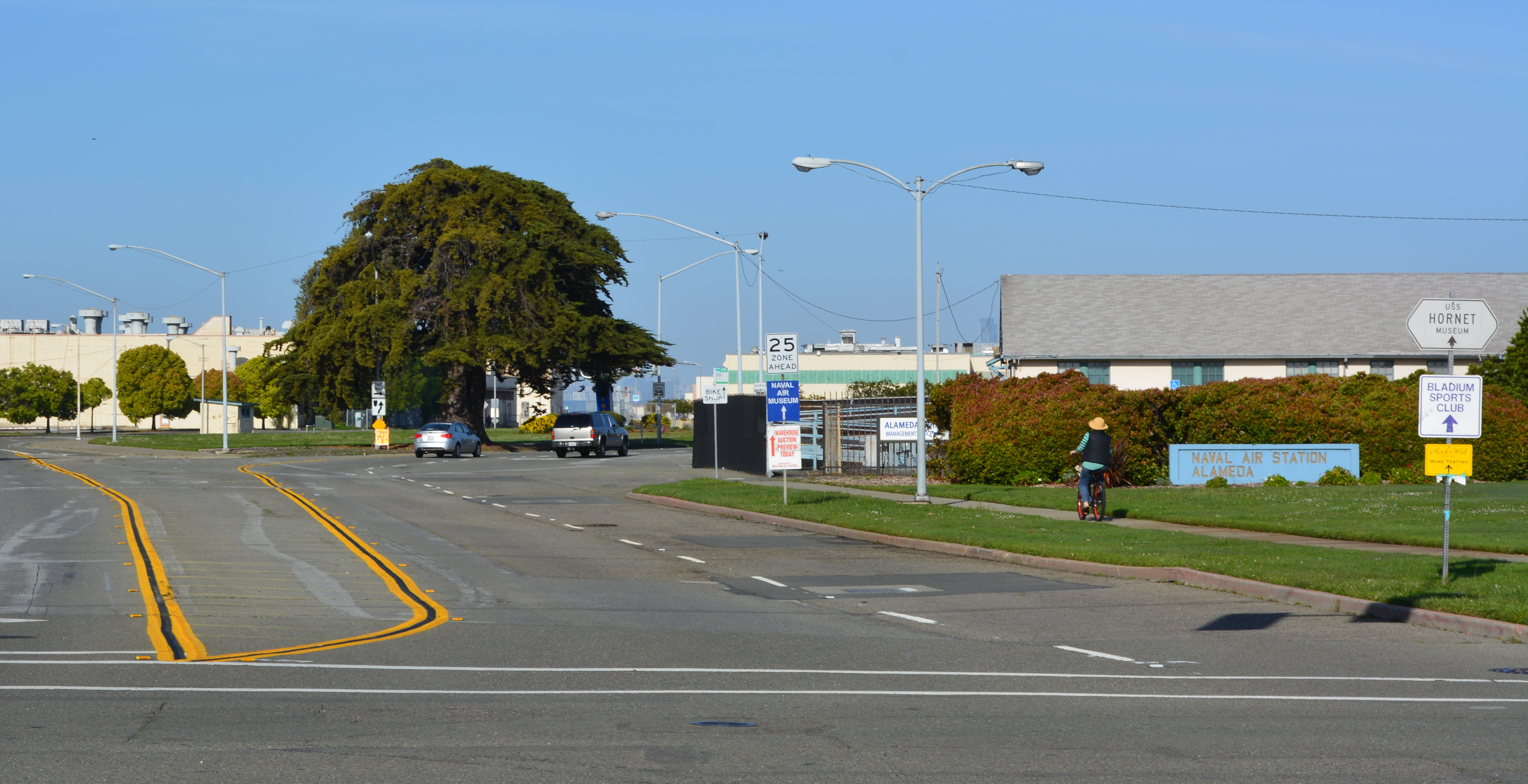
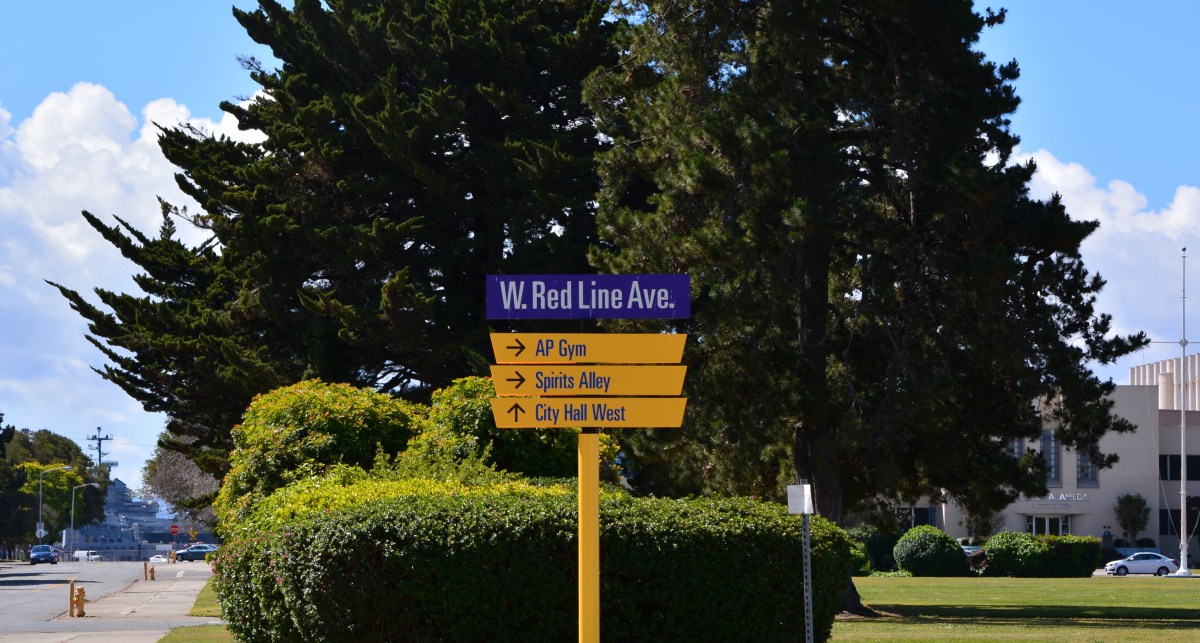
New street signs have been installed at Alameda Point, along with iconic winged emblems painted on the sides of hangars. The purpose of the new signs is for helping visitors find their way around and highlighting attractions and key tenants. The signs also create an enhanced sense of place for current and future tenants.

Square Peg Design, a company based out of Oakland, developed the signage program and describes it as “an interim program that addresses the immediate needs of Alameda Point as a bridge to the ultimate reuse of the site as envisioned in the new Alameda Point Zoning District Ordinance.” They state it will “clean up the confusing signage that has grown over the years and replace it with an organized and comprehensible wayfinding program.”

Aviation-themed Alameda Point signAviation history up to the time of the Naval Air Station provided inspiration for the designs.

The Alameda Point Wayfinding Signage Program project was commissioned in September of 2014. The contract for fabrication and installation was awarded to Ellis and Ellis Sign Systems of Sacramento at a cost of $360,000. No General Fund money was used for the project.

Click on any photo below to enlarge.