Shoreline grassland, wetland: An opportunity now at Alameda Point

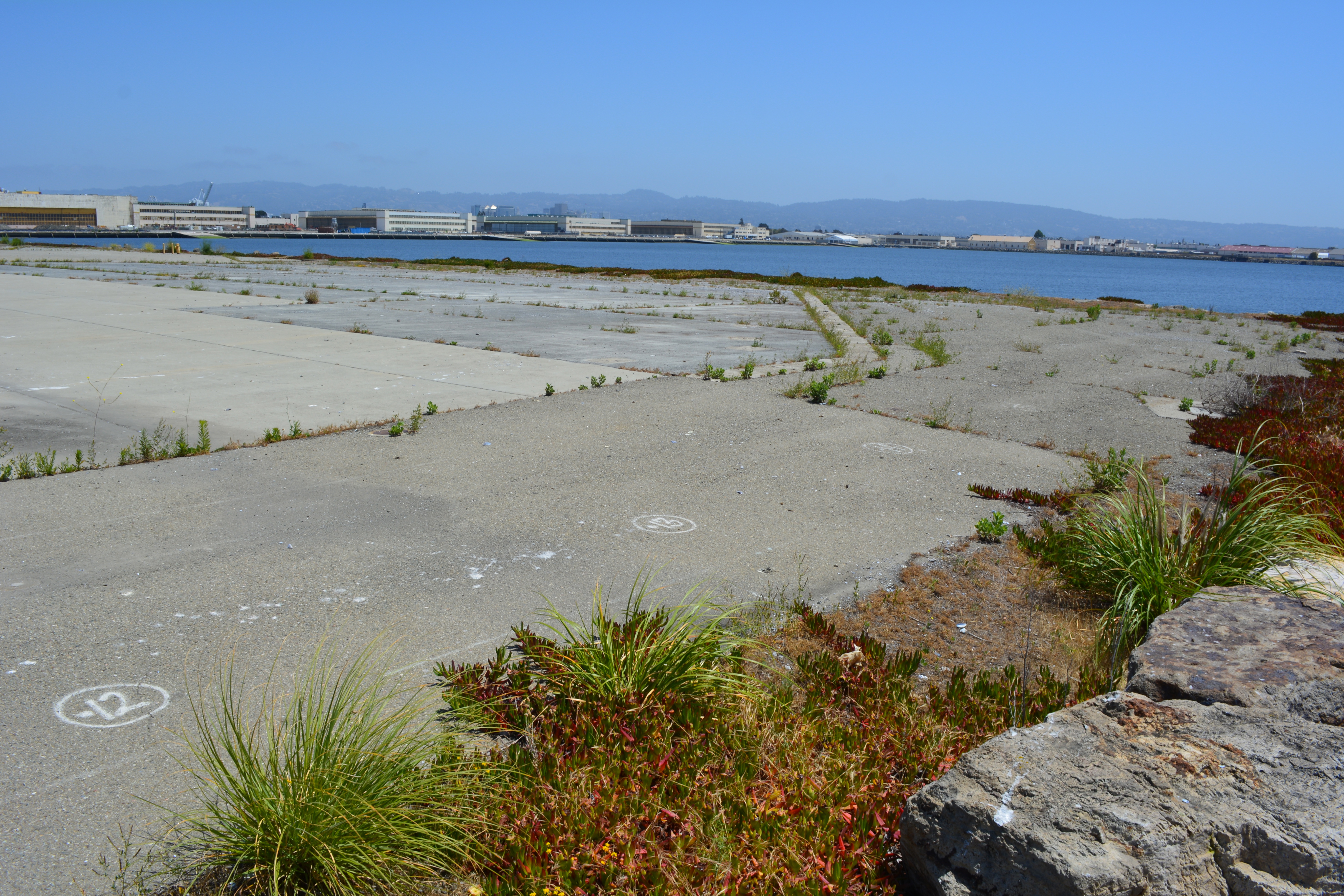
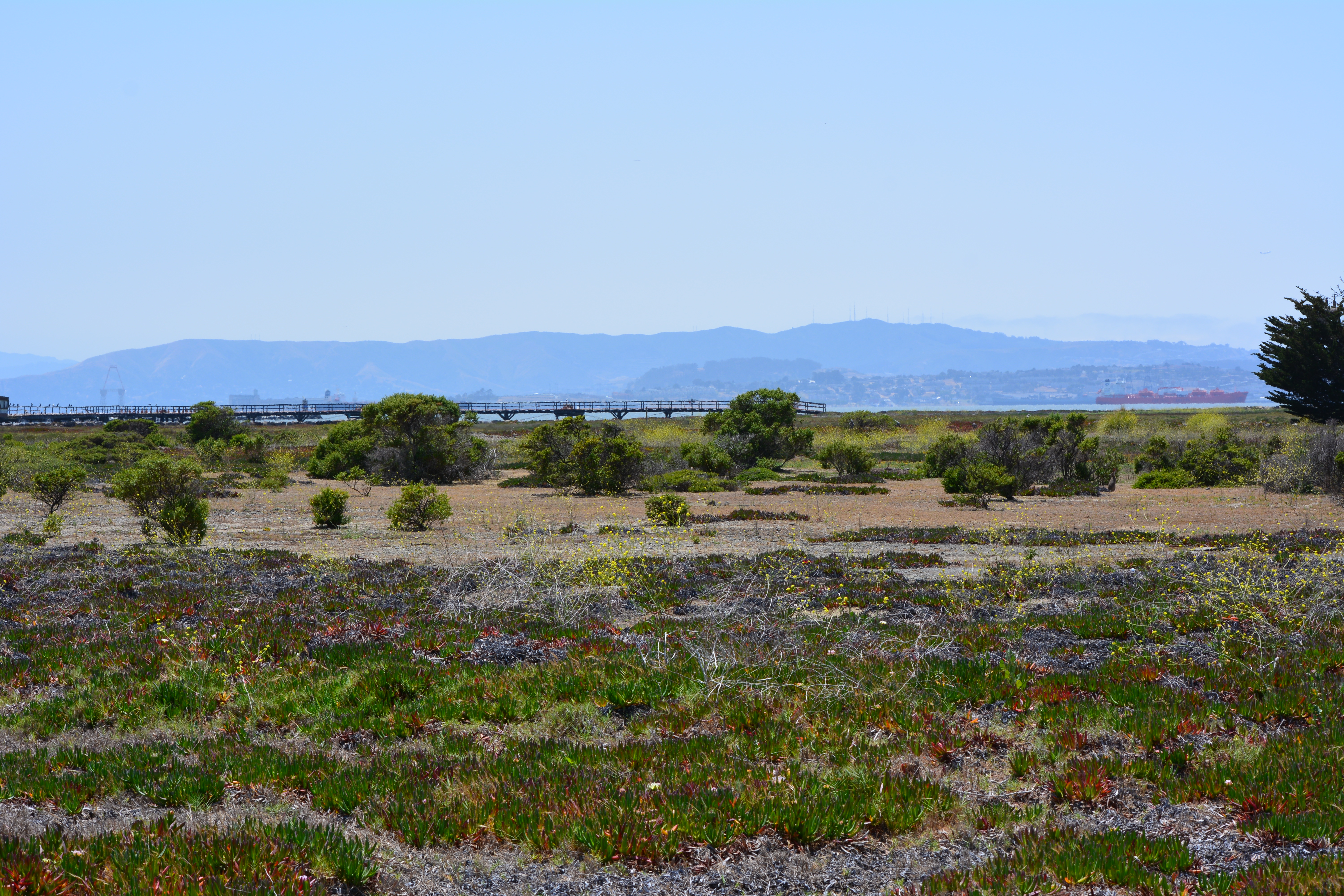
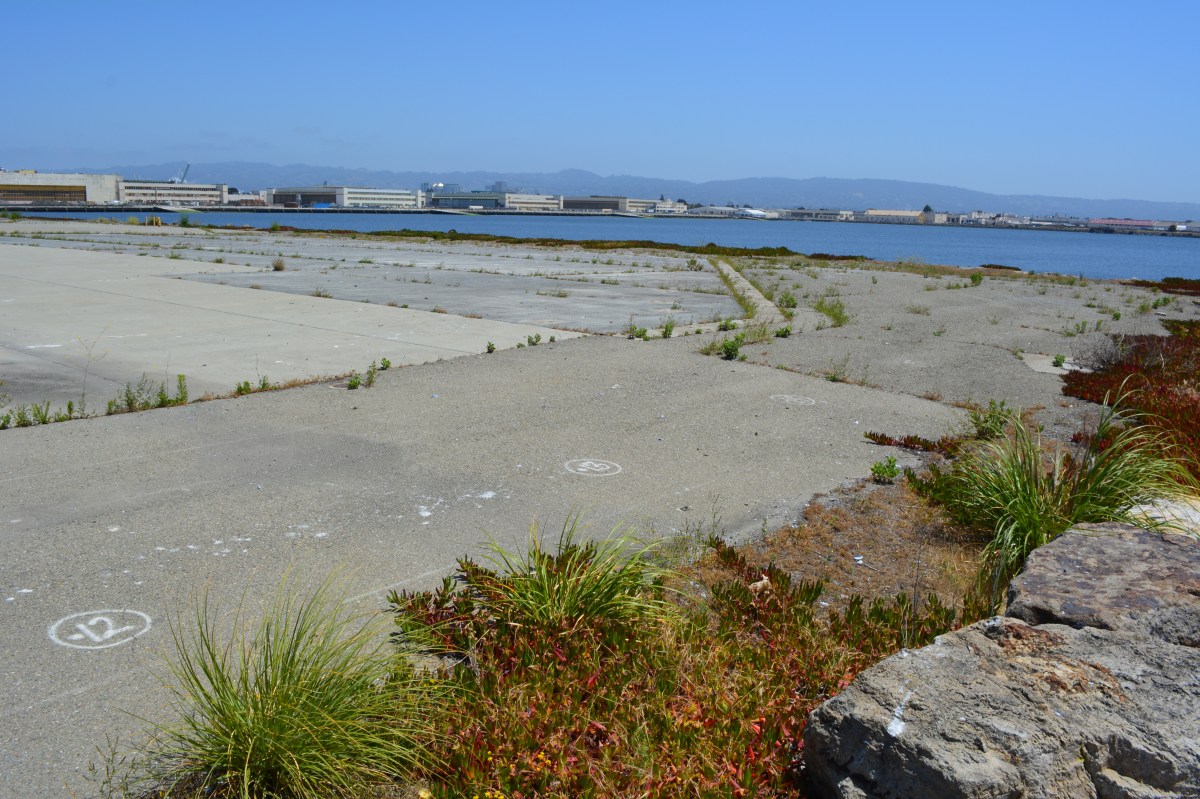
The city’s west side of the Seaplane Lagoon at Alameda Point is mostly pavement – acres of it – with a few old buildings abutting a wetland on the federal property. The city claims its long-range plan for this area features a conversion to a wetland habitat, but their only commitment is to continue leasing the buildings to generate revenue while allowing a sea of unnecessary pavement to remain as an environmental blight.
Seaplane Lagoon west side, looking south.  Seaplane Lagoon on left, Alameda Point Channel and SF Bay in background.
Seaplane Lagoon west side, looking south. Seaplane Lagoon on left, Alameda Point Channel and SF Bay in background.  Temporary fence to be removed by end of 2014.

Opportunities for implementing ecosystem enhancement, both short and long term, have yet to be explored for this area. We need to start moving in a direction now that benefits the environment by reducing climate impacts, improves the atmosphere around nearby businesses, adds to public enjoyment, and increases wildlife habitat.

Proposal for ecosystem enhancement

Short-term plan – Remove all pavement not required for commercial tenants. Recycle the pavement at the VA’s Alameda Point project site where they will be raising elevation and need base rock and fill. Once the pavement is removed and the soil exposed, native vegetation could be planted. Native vegetation will absorb CO2, produce oxygen, eliminate the heat island effect of the former pavement, add wildlife habitat, improve the aesthetic appearance of the property, and make it attractive as a hiking, jogging, and cycling destination.

          Step 1 – Set aside money from lease revenue generated on the west side of the Seaplane Lagoon for pavement removal and introduction of native plant vegetation.

          Step 2 – Explore recycling pavement at Alameda Point.

          Step 3 – Explore grant sources for conversion of paved areas to native vegetation, i.e., state air quality board, EPA, State Lands Commission, etc.
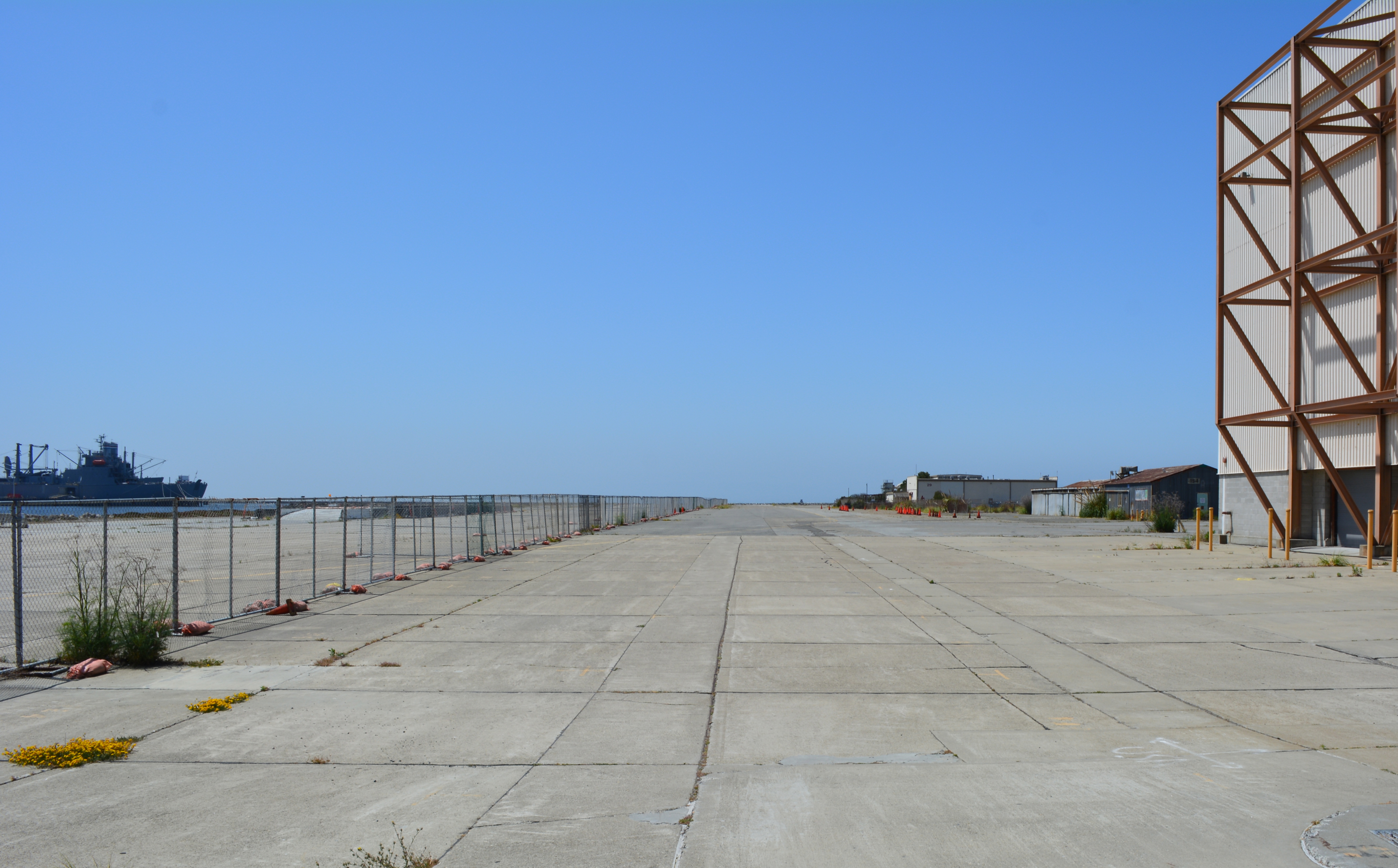
West side of Seaplane Lagoon, looking north.  Seaplane Lagoon on right.  Buildings 29 and 25 on left.  Most of this area could be covered with native grasses with no negative effects on commercial leasing.
West side of Seaplane Lagoon, looking north. Seaplane Lagoon on right. Buildings 29 and 25 on left. Most of this area could be covered with native grasses with no negative effects on commercial leasing.

Long-term plan – Establish an Alameda Point Wetland Mitigation Bank, which would incorporate the west Seaplane Lagoon acreage along with 50 acres on the northwest side of Alameda Point (Northwest Territories). Investment money would provide the capital for wetland creation, with money being recouped when mitigation credits are sold to developers elsewhere in the Bay watershed to offset their project’s impacts. As a general rule, a tidal wetland is worth at least as much as it would cost to create it. That’s why businesses exist that specialize in mitigation banks. In theory at least, the wetland project could be self-funding.

          Step 1 – Commission a study on wetland mitigation bank formation using lease revenue from Buildings 25 and 29.

Information about wetland mitigation banking:

Report To The Legislature – California Wetland Mitigation Banking – Jan. 2012 

U.S. Wetland Banking – Market Features and Rules

Forbes wetland article 4/25/2014 from BCDC
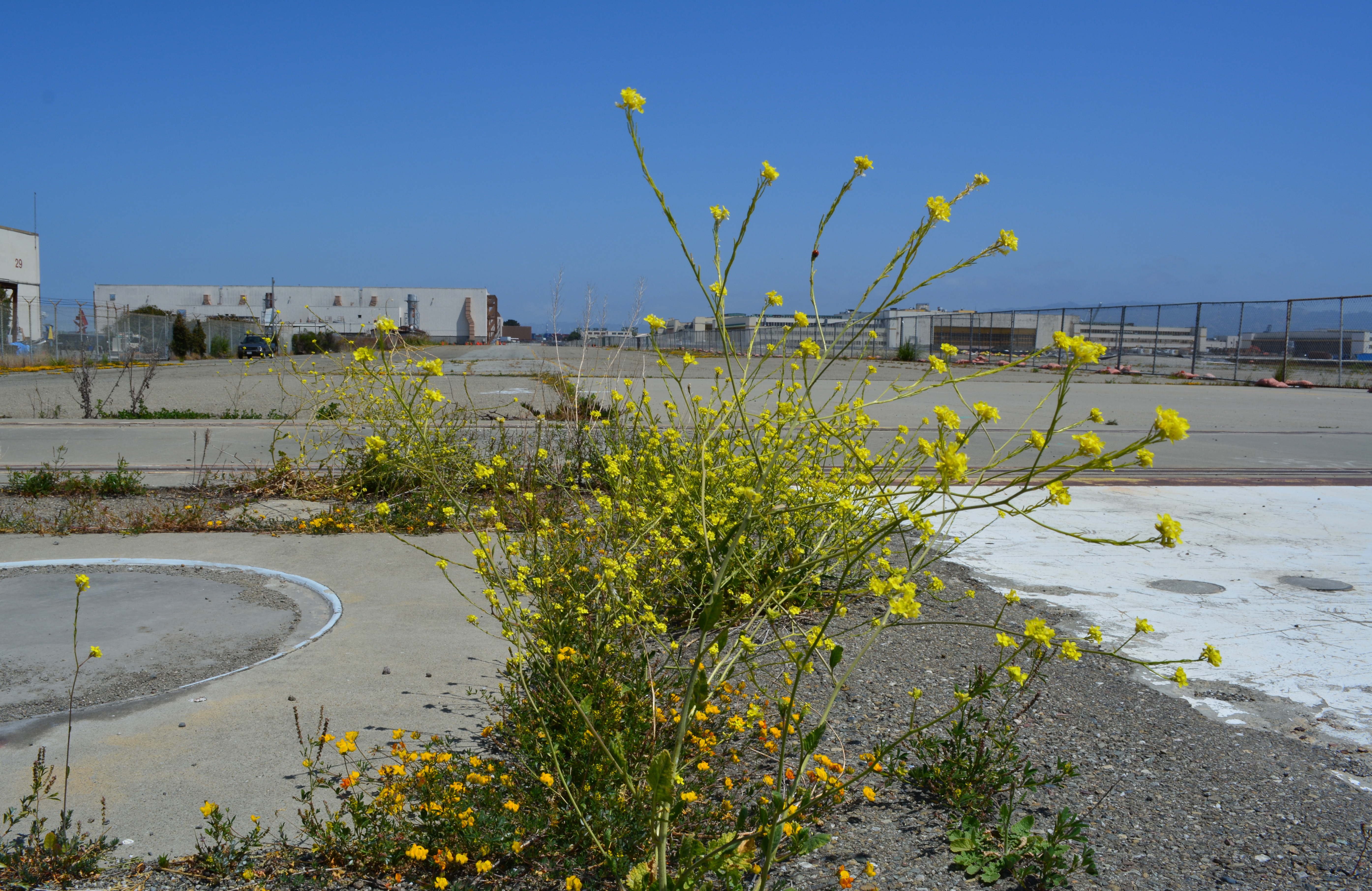
West side of Seaplane Lagoon looking south, with channel and Breakwater Island in background.
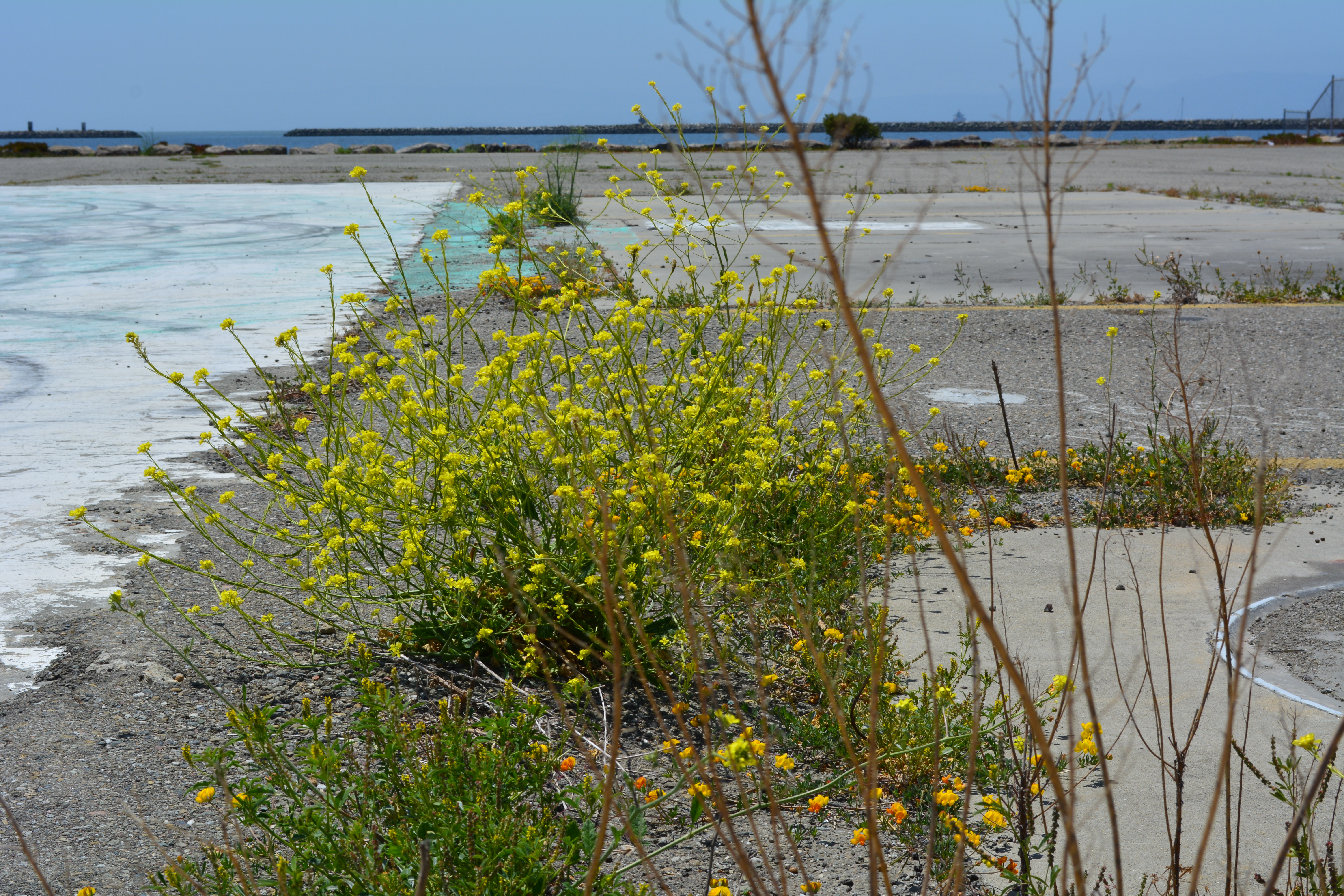
West side of Seaplane Lagoon, looking northeast from shoreline riprap, with lagoon and hangars in background.
West side of Seaplane Lagoon, looking northeast from shoreline riprap, with lagoon and hangars in background.  Pavement here will serve no commercial purpose under current low-impact guidelines.
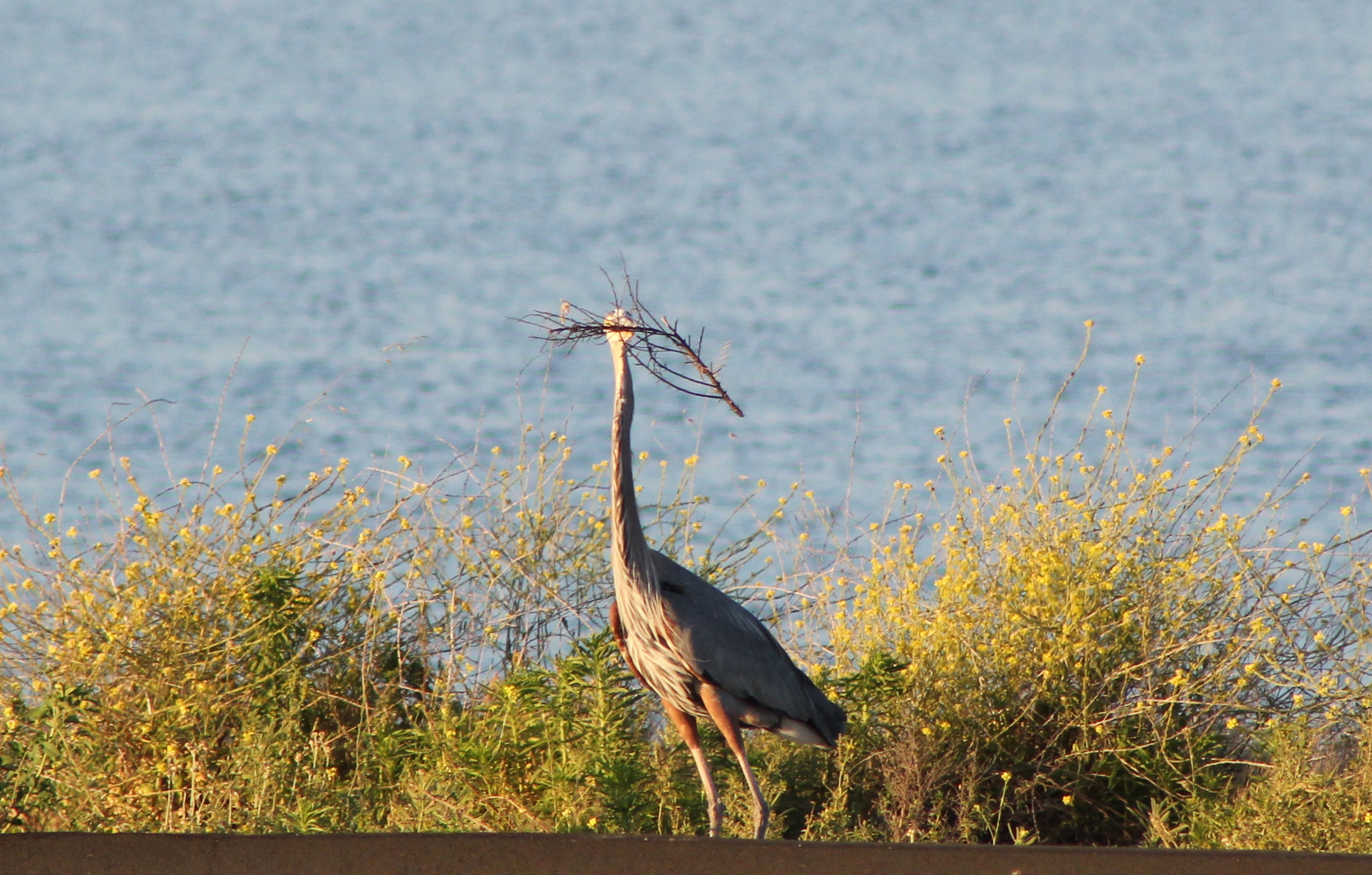
Great Blue Heron gathering nesting material on western edge of Seaplane Lagoon for nearby nest.  Increased vegetation will bring more birds along shoreline.
Great Blue Heron gathering nesting material on western edge of Seaplane Lagoon for nearby nest. Increased vegetation will bring more birds along shoreline.
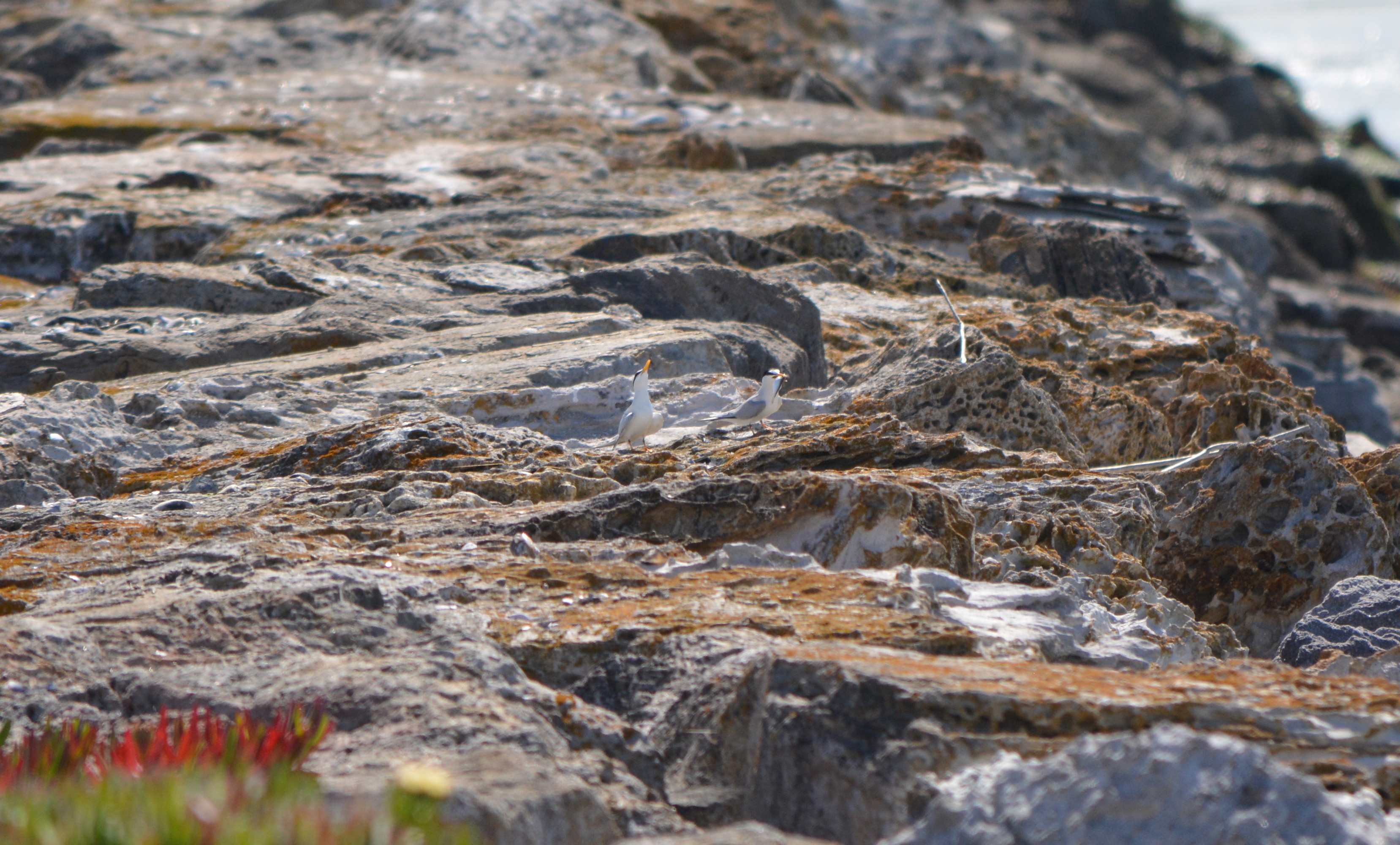
CA Least Terns engaged in courtship ritual of exchanging a fish on jetty adjacent to west side of Seaplane Lagoon - May 2014.
CA Least Terns (center of photo) engaged in courtship ritual of exchanging a fish on jetty adjacent to west side of Seaplane Lagoon – May 2014.
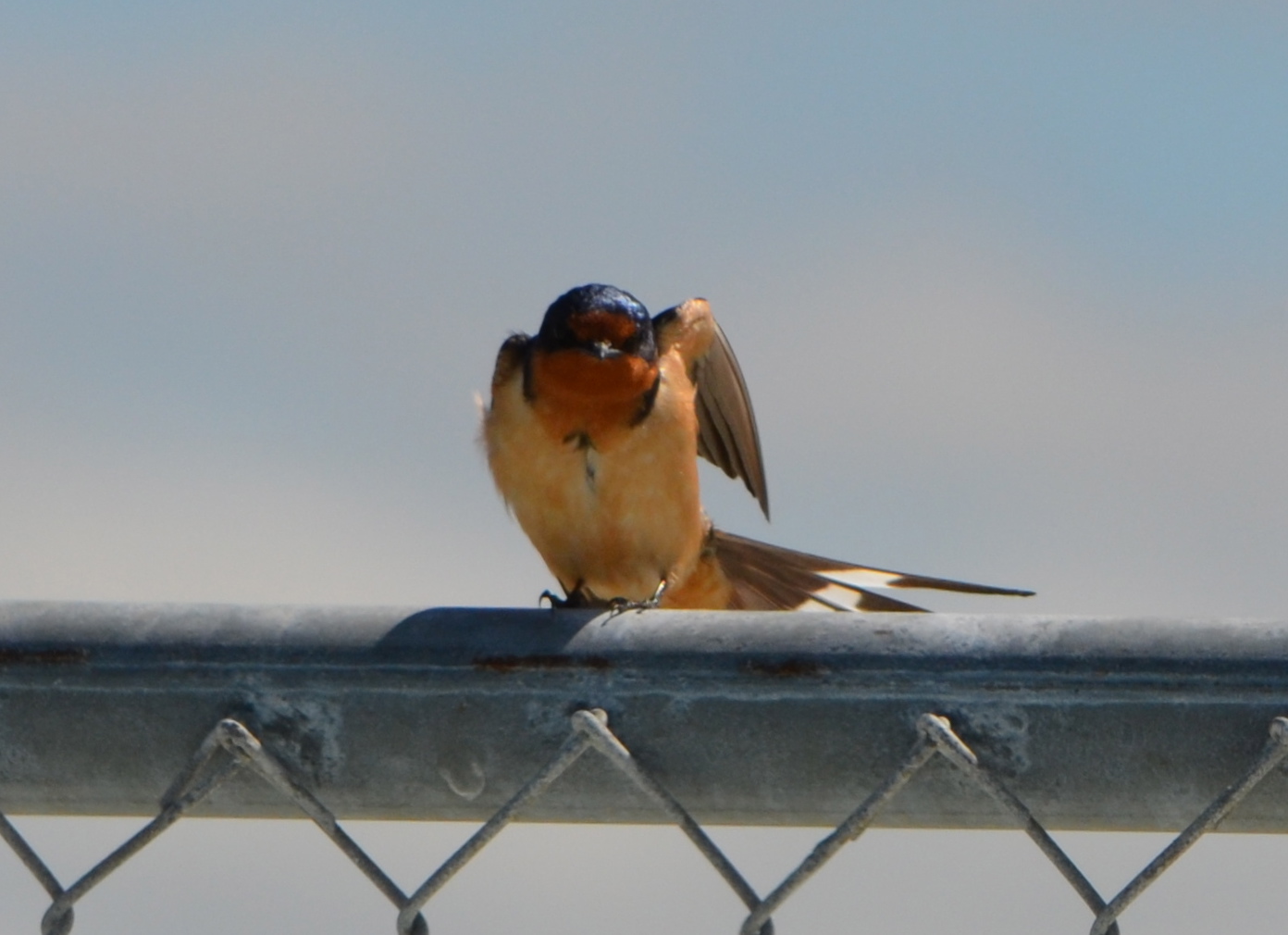
Barn Swallow on fence on west side of Seaplane Lagoon.  Common to the area, often seen flying low over the water looking for flying insects,  nesting almost exclusively on man-made structures, possibly Building 29.
Barn Swallow on fence on west side of Seaplane Lagoon. Common to the area, often seen flying low over the water looking for flying insects, nesting almost exclusively on man-made structures, possibly Building 29.
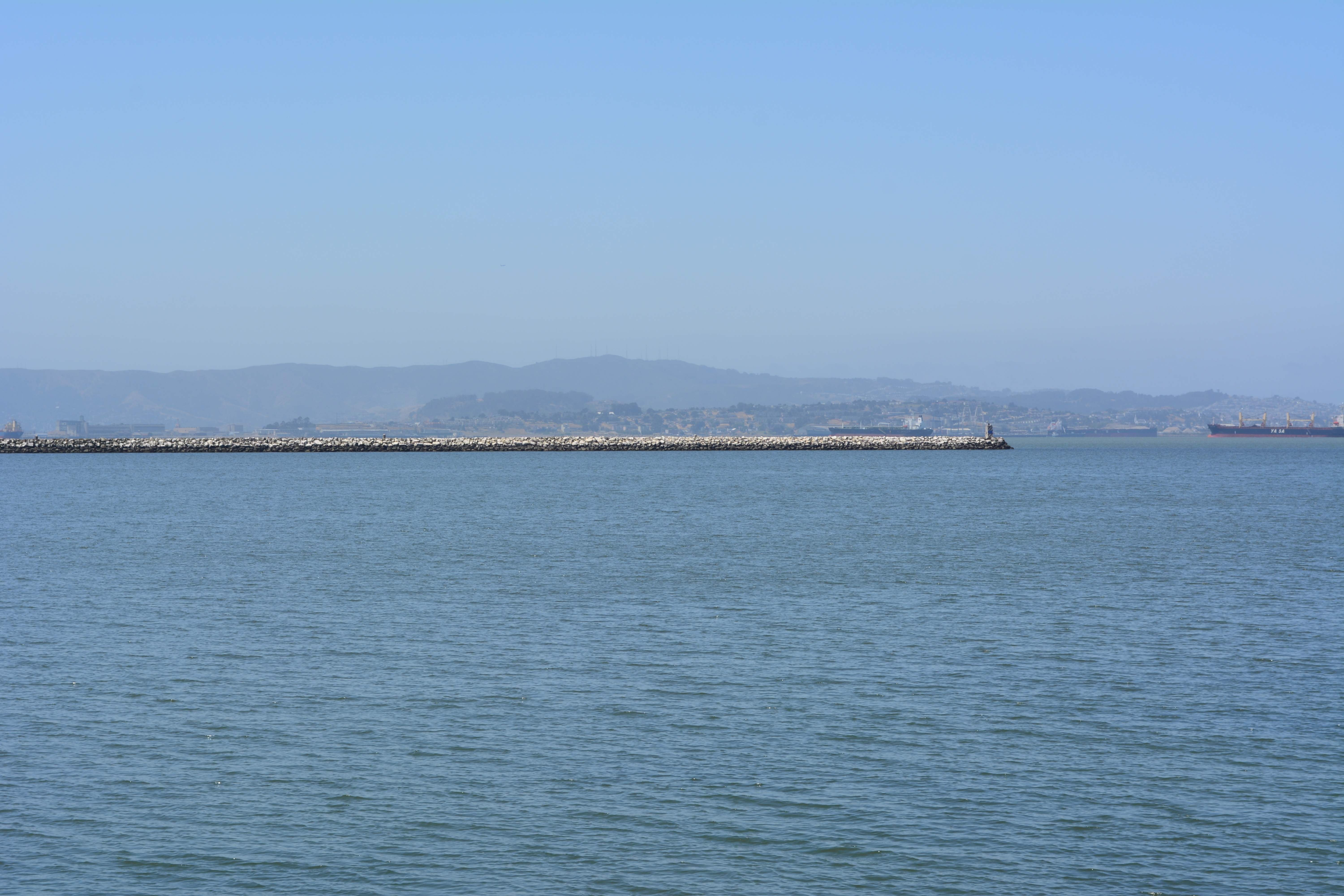
Breakwater Island viewed from shoreline on west side of Seaplane Lagoon.  Breakwater Island is a roosting site for CA Brown Pelicans and other birds.  Island owned by city of Alameda.
Breakwater Island viewed from shoreline on west side of Seaplane Lagoon. Breakwater Island is a roosting site for CA Brown Pelicans and other birds. Island owned by city of Alameda.
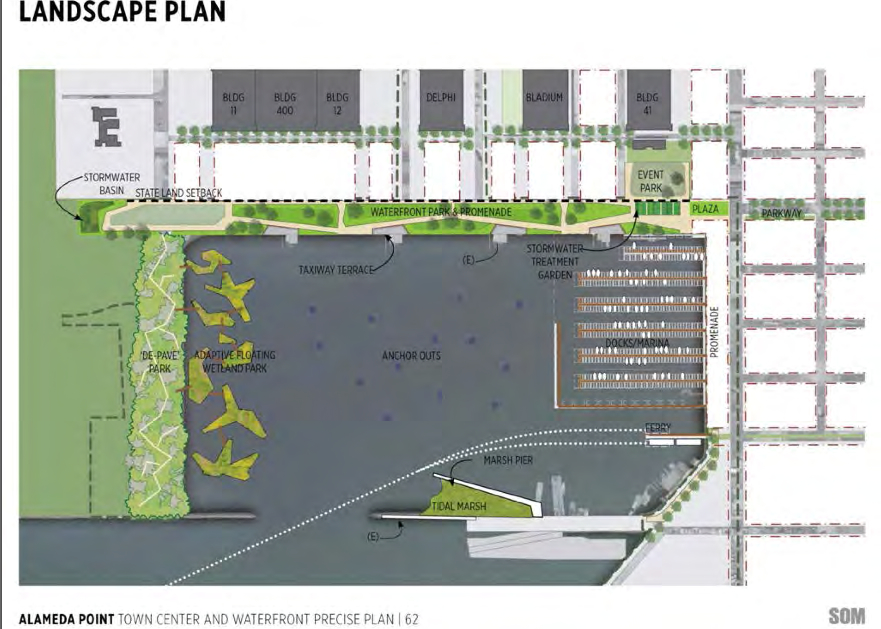
Landscape plan from 2013 showing no buildings on west (left) side of Seaplane Lagoon.  Buildings are now being recommended to stay.  Floating wetlands are a very long-range option if funding is available.
Landscape plan from 2013 showing no buildings on west (left) side of Seaplane Lagoon. Buildings are now being recommended to stay. Floating wetlands are a very long-range option if funding is available.
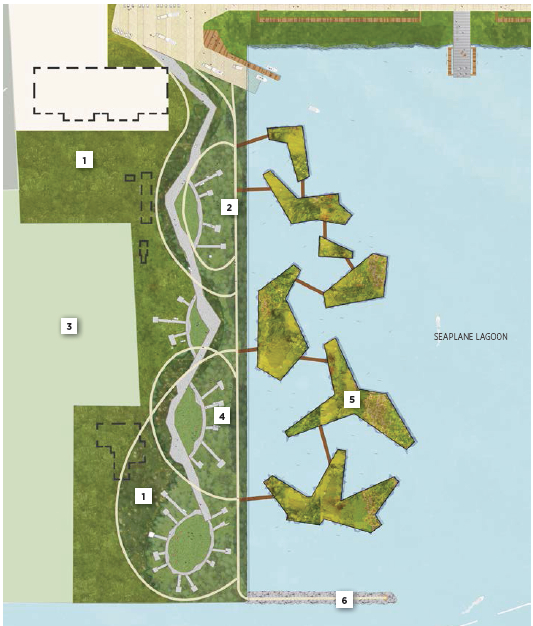
2014 plans for west side of Seaplane Lagoon show buildings in dashed lines.  Active leasing of buildings currently underway suggests buildings should be in solid lines and wetland in gray.
2014 plans for west side of Seaplane Lagoon show buildings in dashed lines. Active leasing of buildings currently underway suggests buildings should be in solid lines and wetland in gray.
Looking west from west side of Seaplane Lagoon.  Bay/Channel on left.  Building 29 on right.  City property extends beyond fence to far edge of Building 29 property line.
Looking west from west side of Seaplane Lagoon. Bay/Channel on left. Building 29 on right. City property extends beyond fence to far edge of Building 29 property line.
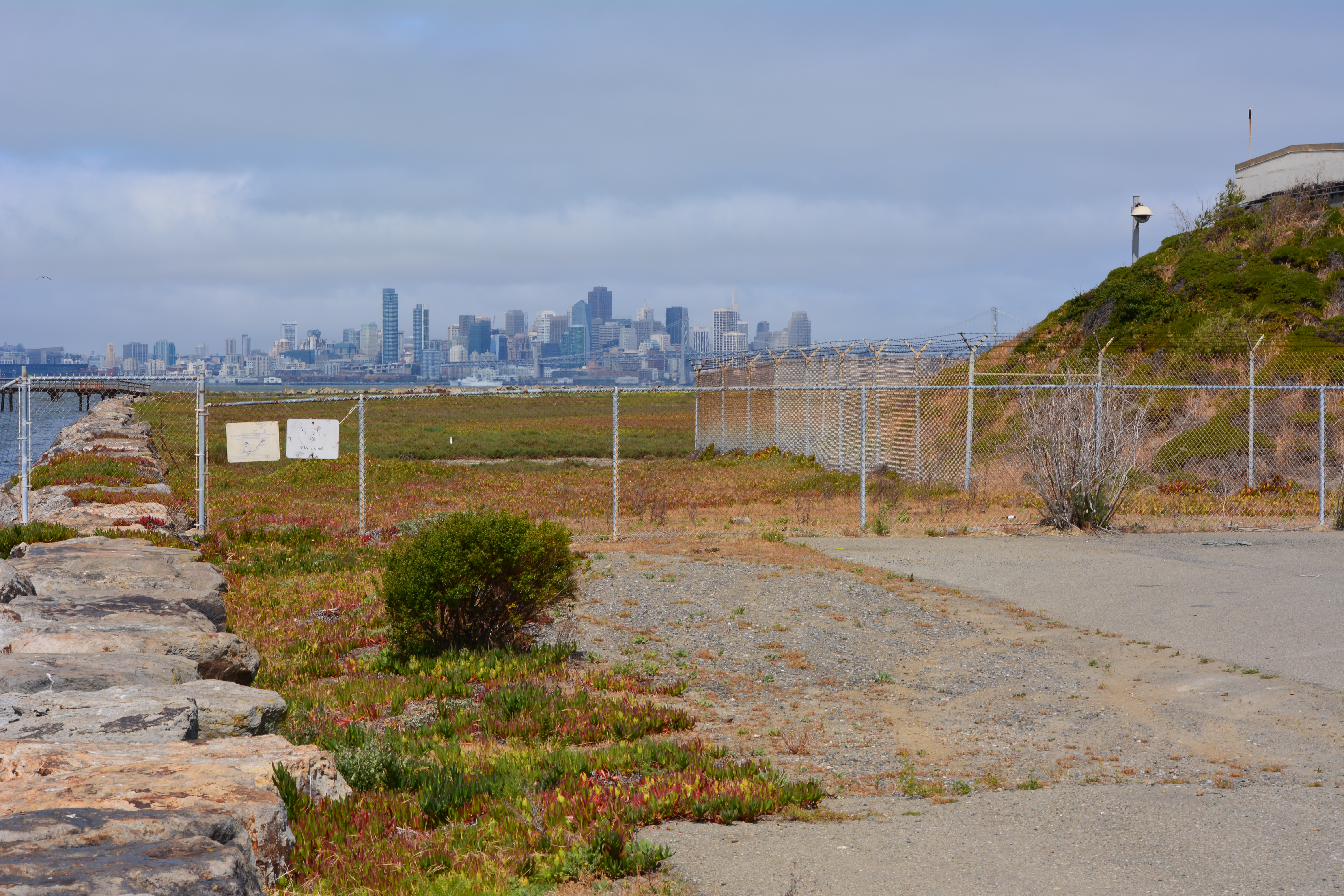
Runway Wetland area on federal property adjacent to Building s 25 and 29 on city property at west side of Seaplane Lagoon.  A naturalized west shoreline of Seaplane Lagoon, with public access, would enhance the greater wildlife habitat in this area.
Runway Wetland area on federal property adjacent to Buildings 25 and 29 on city property at west side of Seaplane Lagoon. A naturalized west shoreline of Seaplane Lagoon, with public access, would enhance the greater wildlife habitat in this area.

Take the plunge!  Remove pavement on the west side of the Seaplane Lagoon and improve our environment.
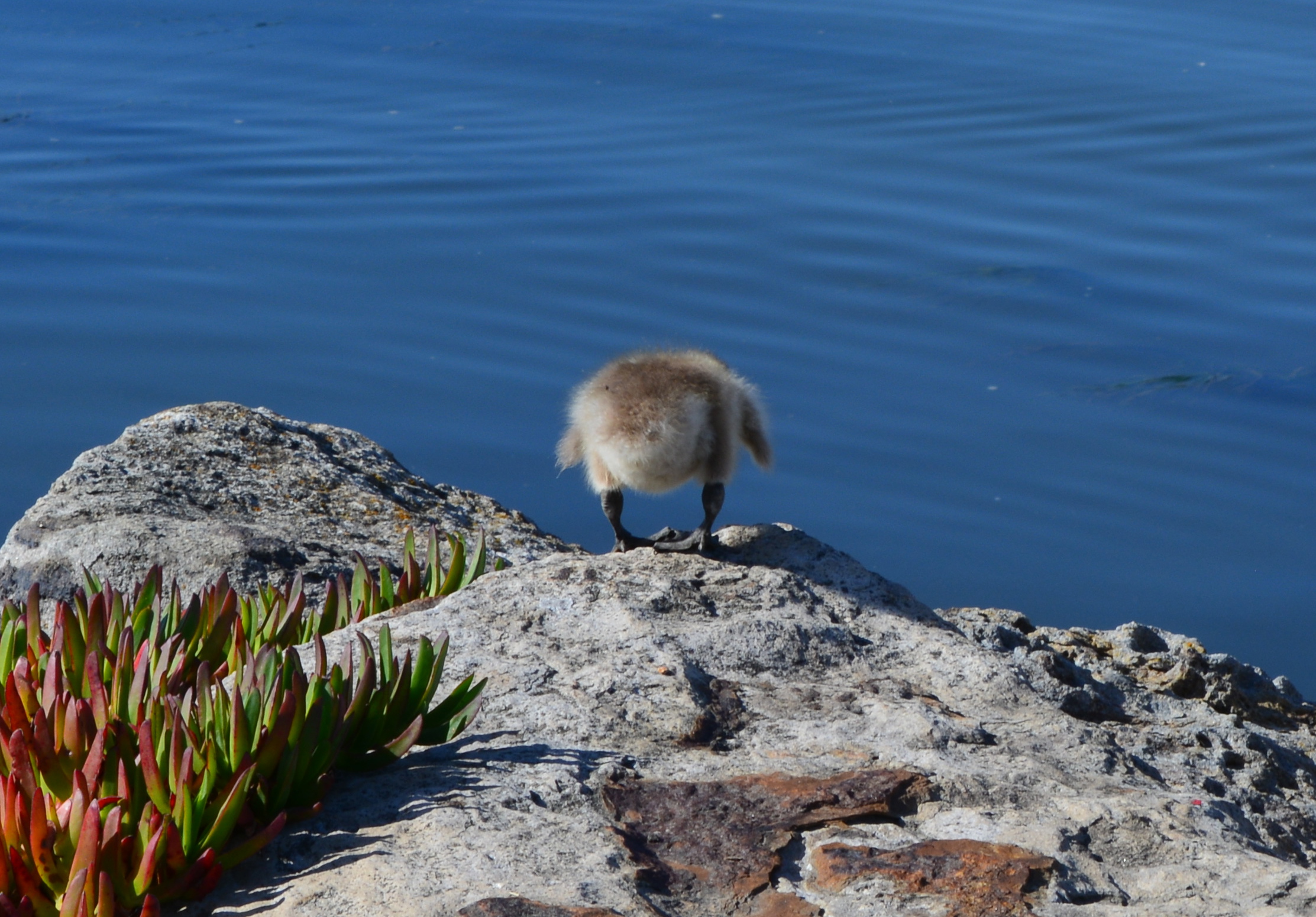
Gosling ready to plunge onto rocks below, on west side of Seaplane Lagoon, to get to parents in the Alameda Point Channel.
Gosling ready to plunge onto rocks below, on west side of Seaplane Lagoon, to get to parents in the Alameda Point Channel.  It was successful.

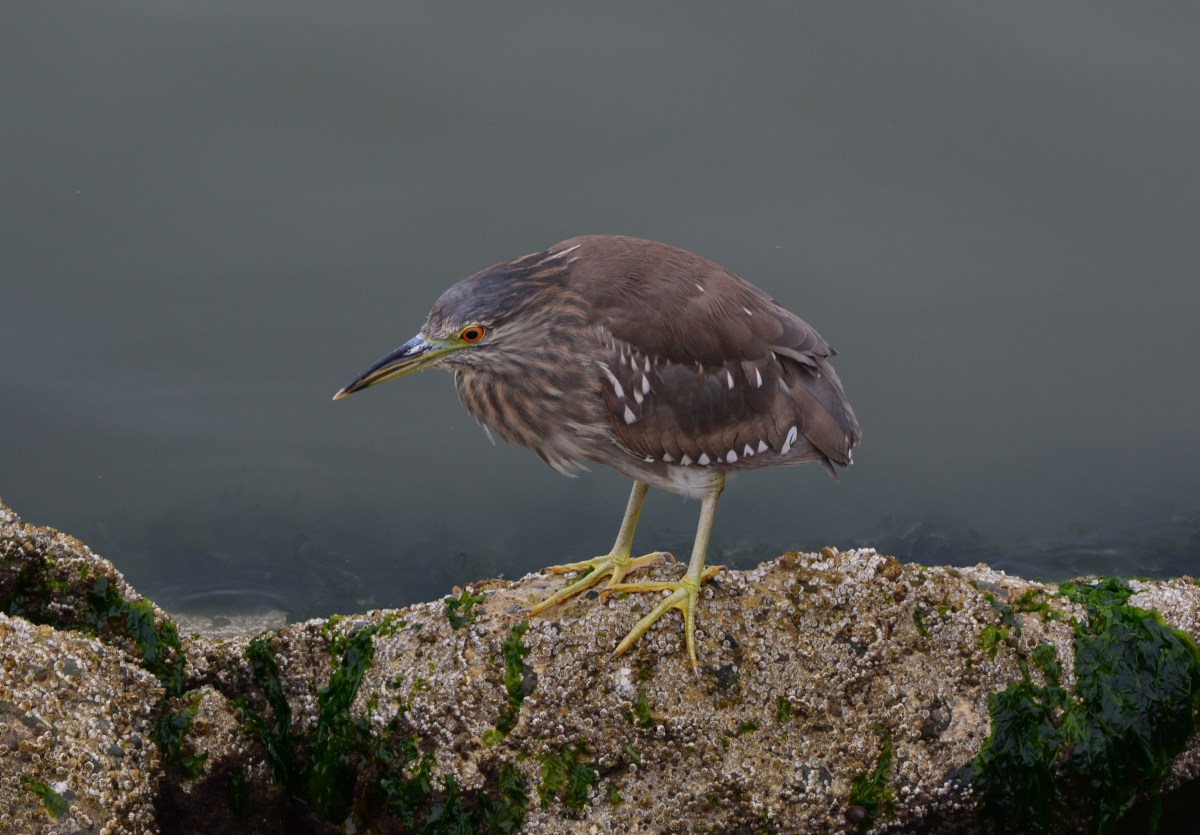
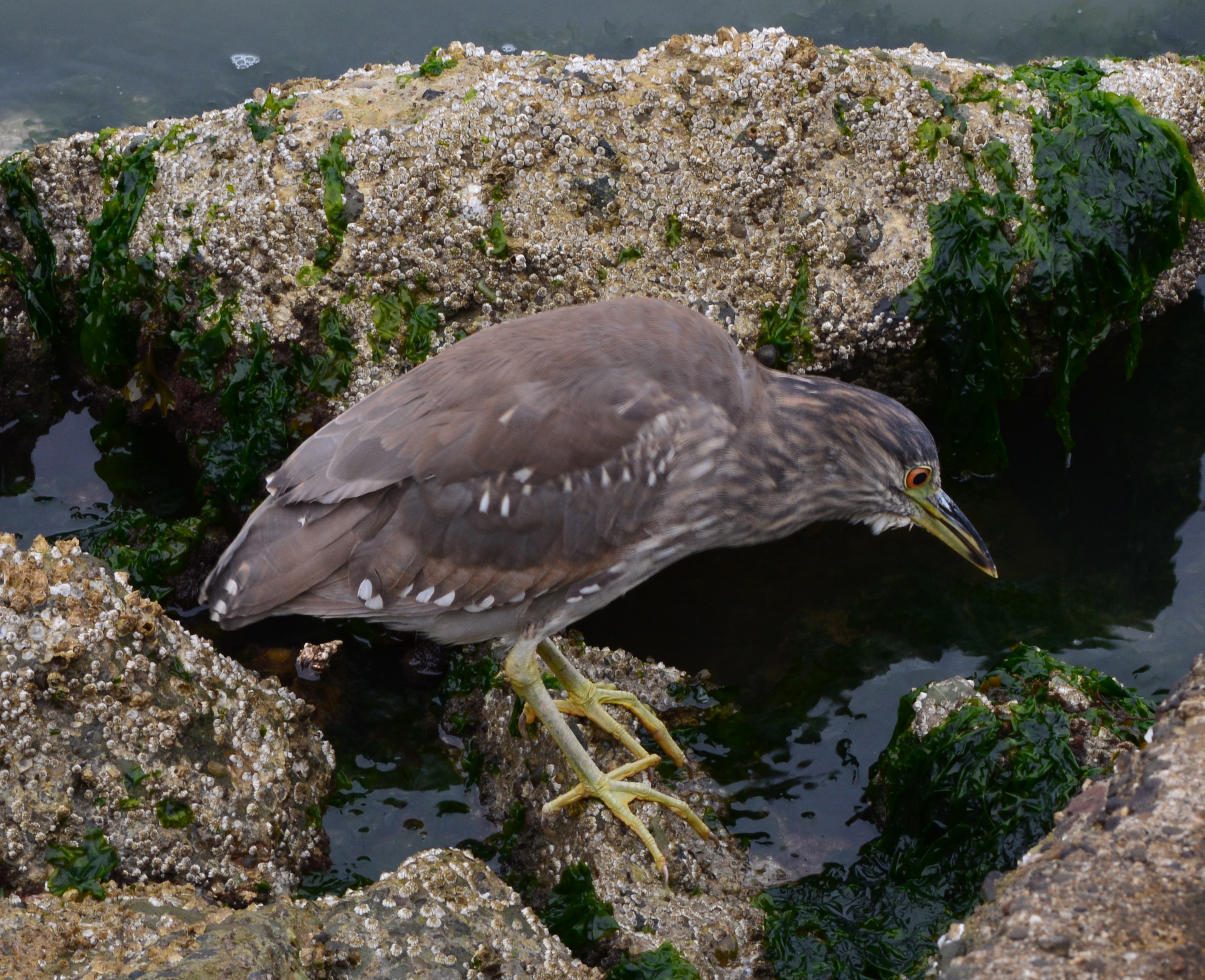
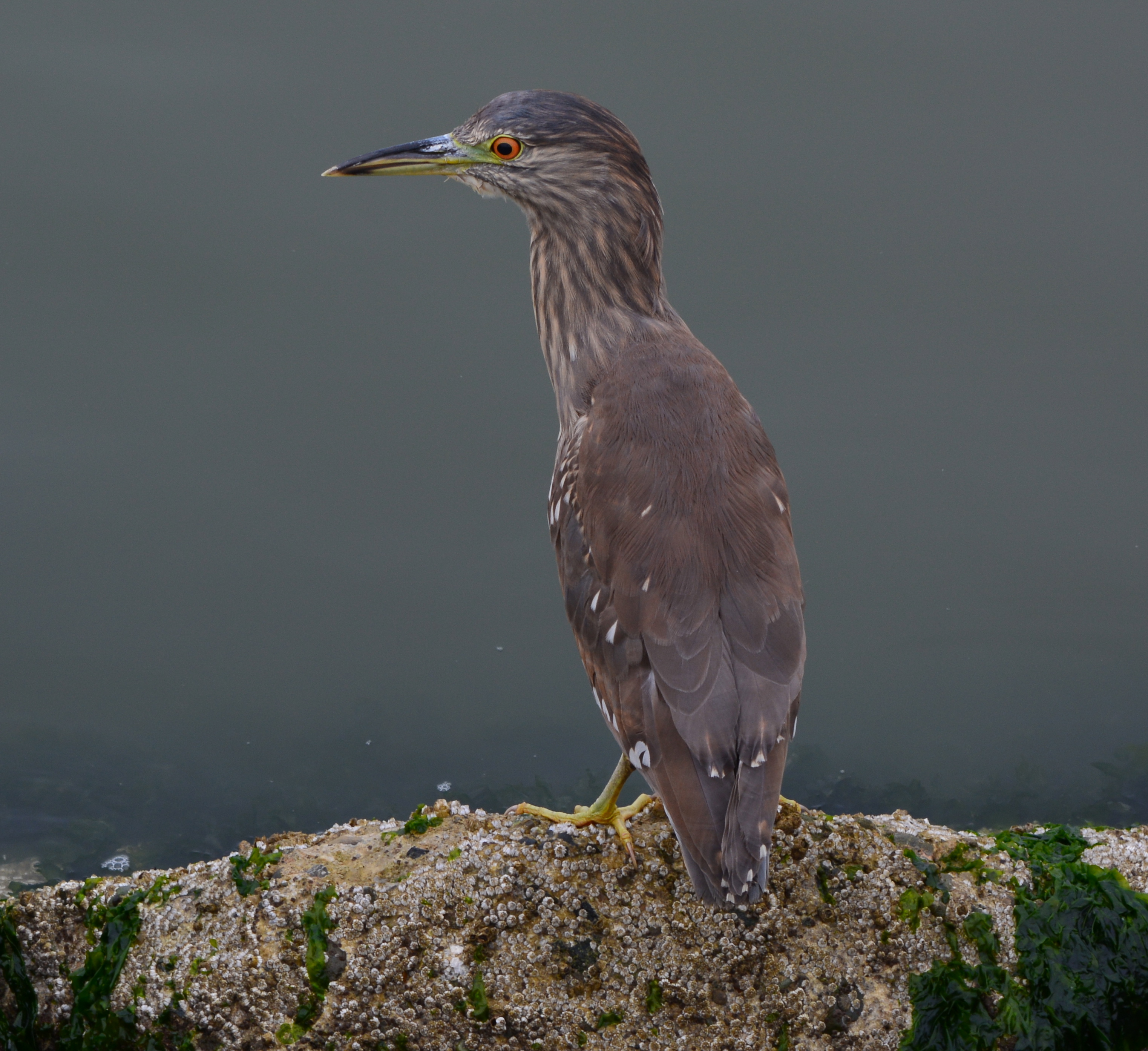
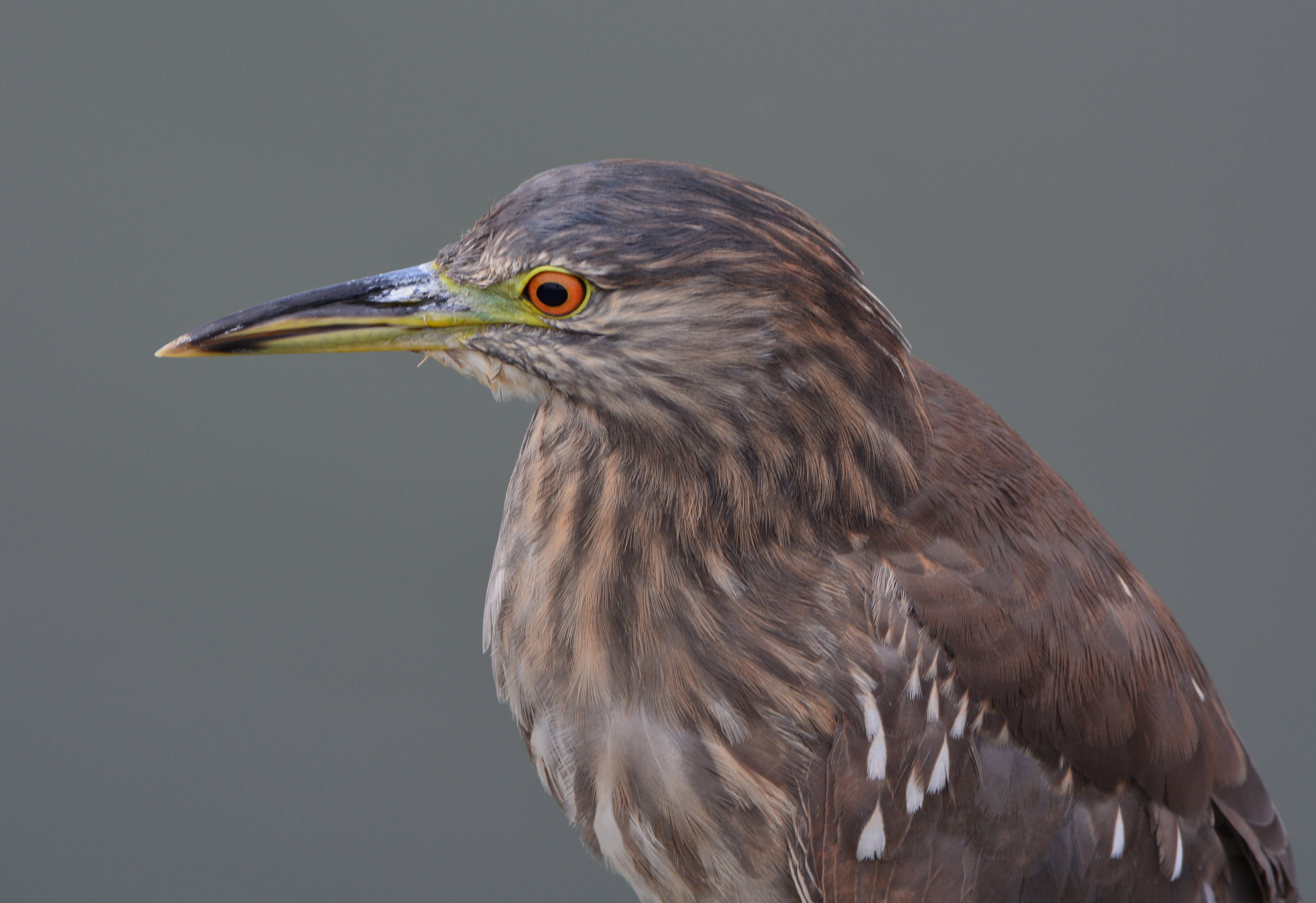
Black-crowned Night Heron Juvenile – Gallery and Video – Spring 2014

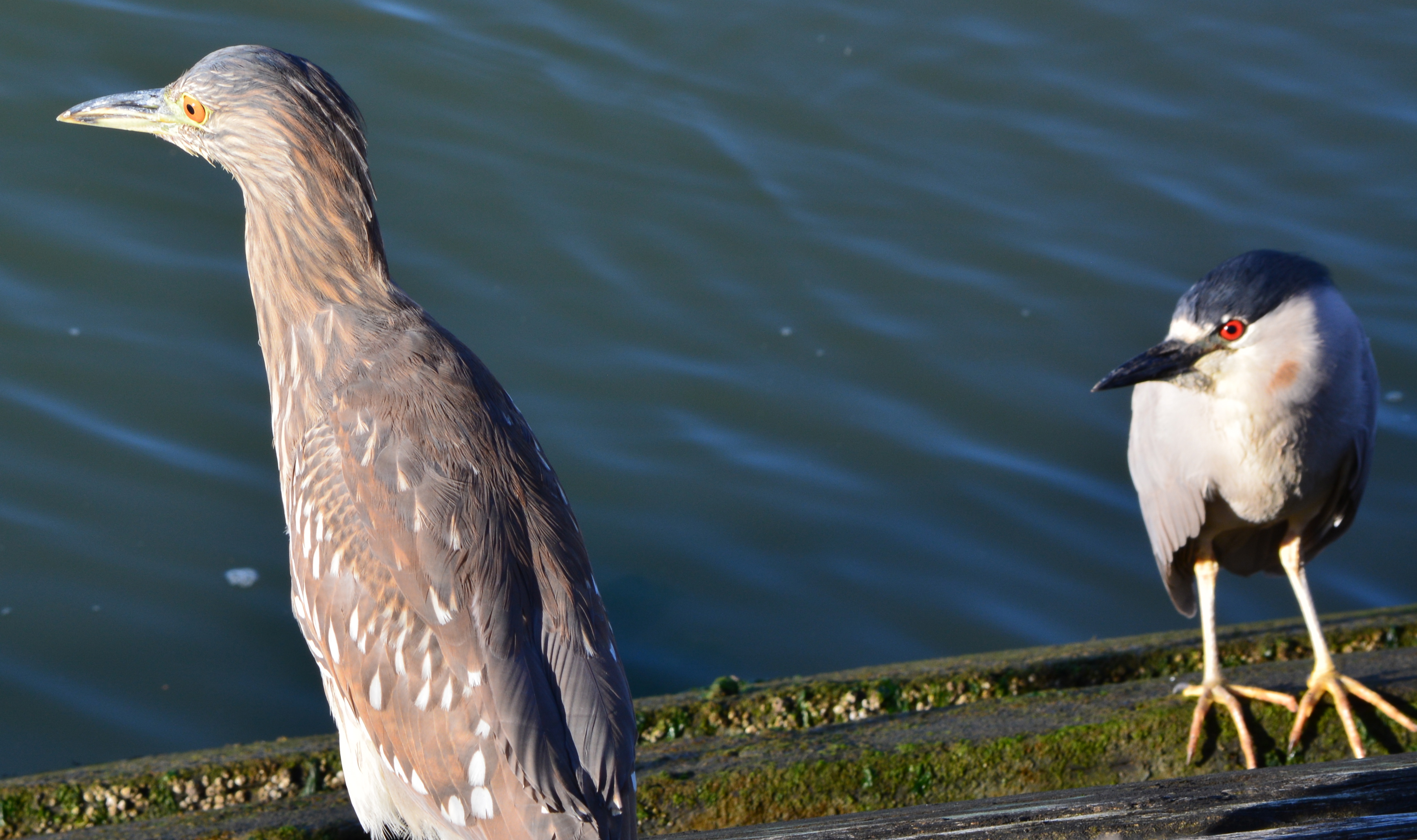
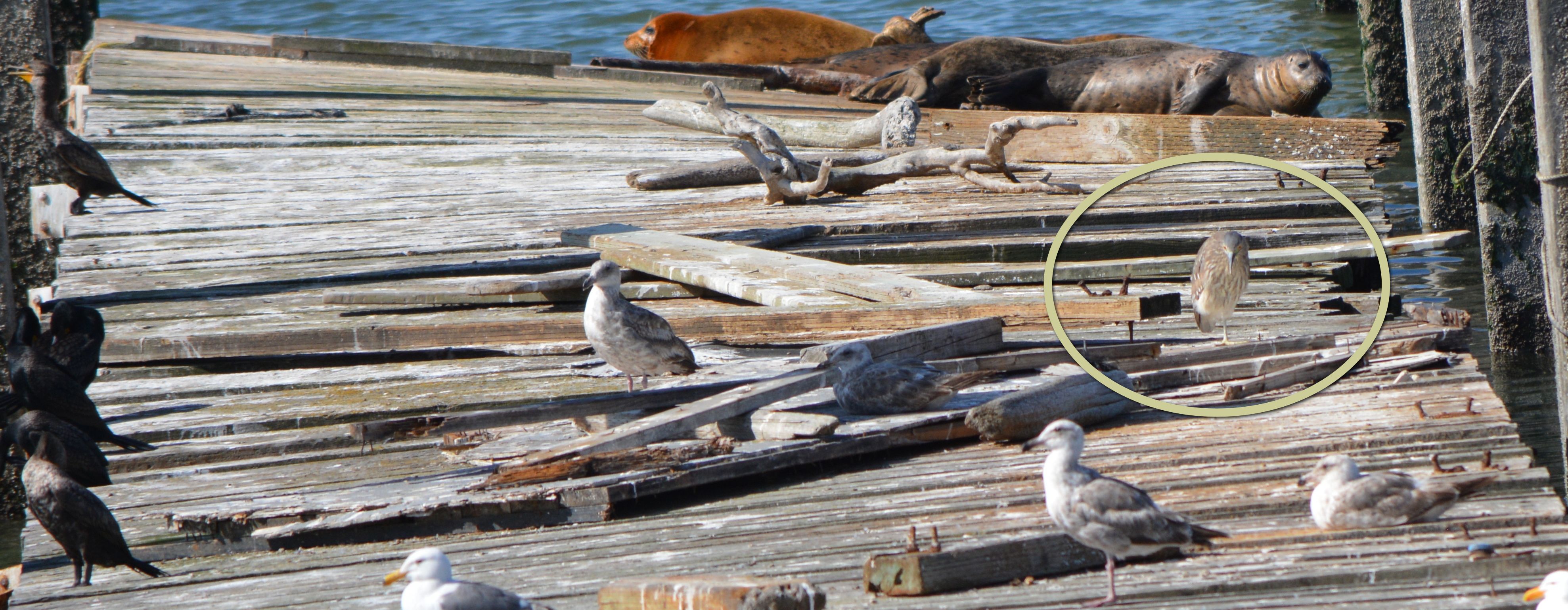
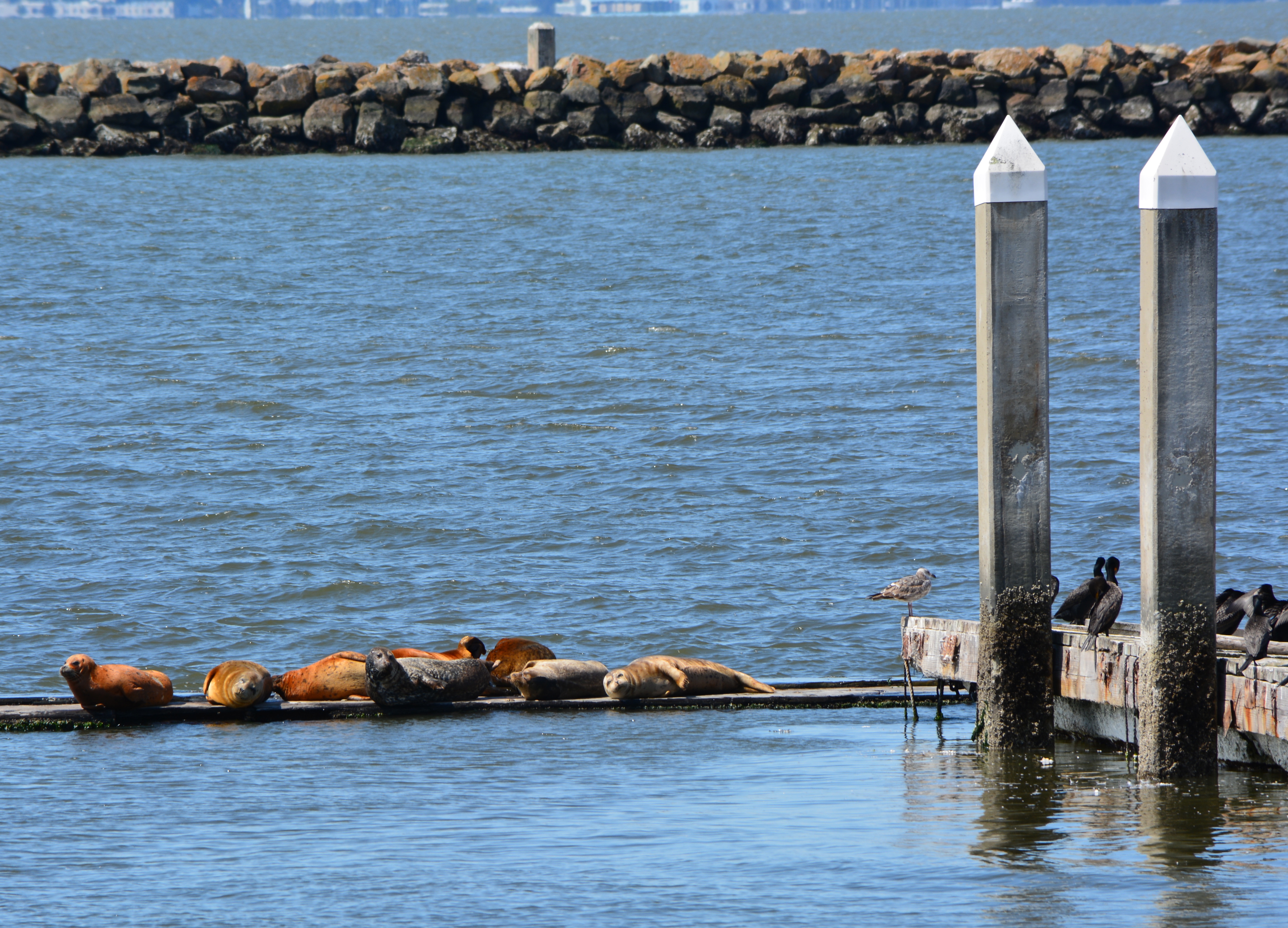
A Black-crowned Night Heron adult and its juvenile offspring were spotted along the south shoreline of Alameda Point during May and June of this year.  The juvenile was seen foraging for food on the shoreline, as well as using the old dock for a resting area.  Use of the old dock by a wide variety of birds, as well as a family of harbor seals, illustrates the habitat value of the waterfront and the wisdom of providing a new wildlife water platform when the Water Emergency Transit Authority removes the old dock for their new maintenance facility this year.

Black-crowned Night Heron juvenile and left and adult on right.  Perched on remnants of old Navy recreational dock in Alameda Point's Inner Harbor on south side.
Black-crowned Night Heron juvenile and left and adult on right. Perched on remnants of old Navy recreational dock in Alameda Point’s Inner Harbor on south side.
Black-crowned Night Heron juvenile foraging on Alameda Point shoreline.

Black-crowned Night Heron juvenile Alameda Point

Black-crowned Night Heron juvenile June 2014

Black-crowned Night Heron juvenile close-up

Black-crowned Nigh Heron juvenile hanging out on dock with other wildlife.
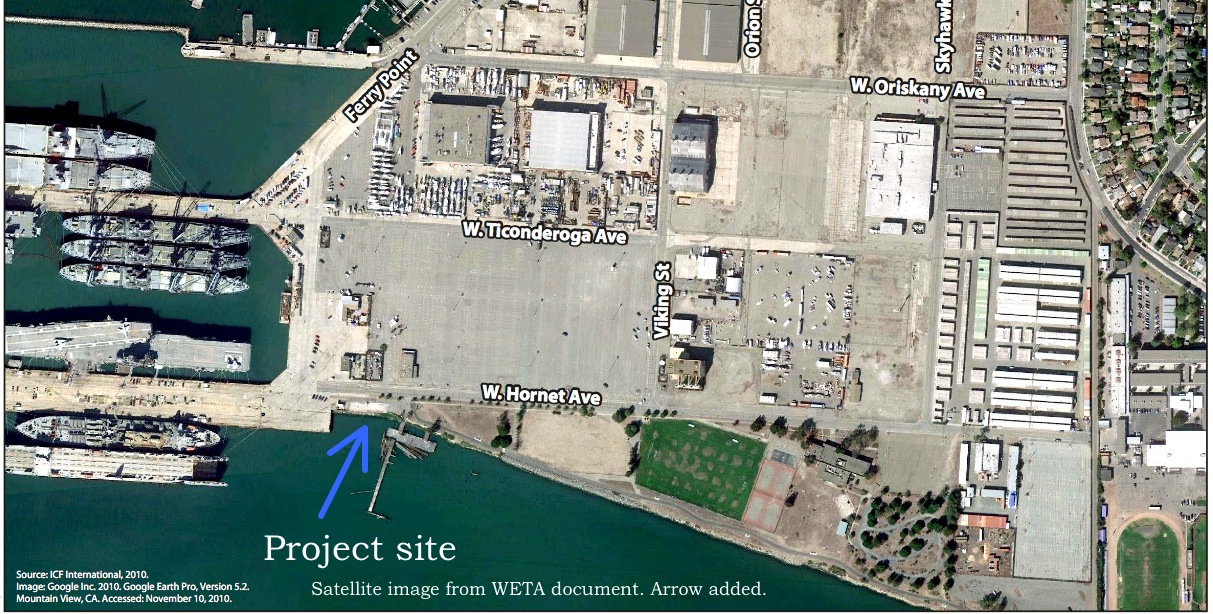
Shoreline area where Black-crowned Night Heron juvenile and adult were viewed next to old dock at blue arrow.
Shoreline area where Black-crowned Night Heron juvenile and adult were viewed next to old dock at blue arrow.  Part of old dock in image has sunk.

Ferry Maintenance Facility Shoreline Public Access Hearing

A public hearing is scheduled for January 6, 2014 in San Francisco to take comments on the proposed facility for Bay ferries at Alameda Point.  It is the Bay Conservation and Development Commission (BCDC) Design Review Board’s first hearing to determine if the project complies with guidelines for ensuring maximum public shoreline access, preserving scenic views, and enhancing the shoreline visual experience through appropriate design appearance.

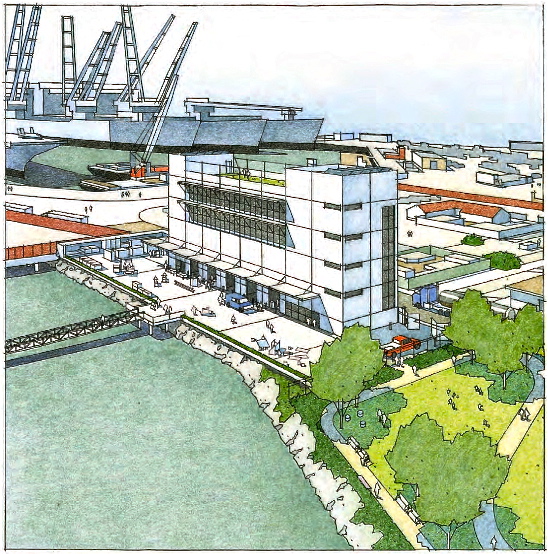
WETA artist's drawing - Alameda Point

Located on Hornet Avenue at Ferry Point Road near the U.S.S. Hornet on a four-acre site to be leased from the City of Alameda, the facility will service and maintain ferries owned by the Water Emergency Transit Authority (WETA) operating in the Central Bay.  The project will include a 70-foot-tall four story building for maintenance, dispatch, and administrative tasks, a service yard, and floating berthing facilities for 12 vessels.  Demolition of the old recreational dock and retaining wall, and dredging of the berthing area is scheduled to begin in the summer of 2014.

Ferry mainenance satellite view-blog image copy
Click on image to enlarge.

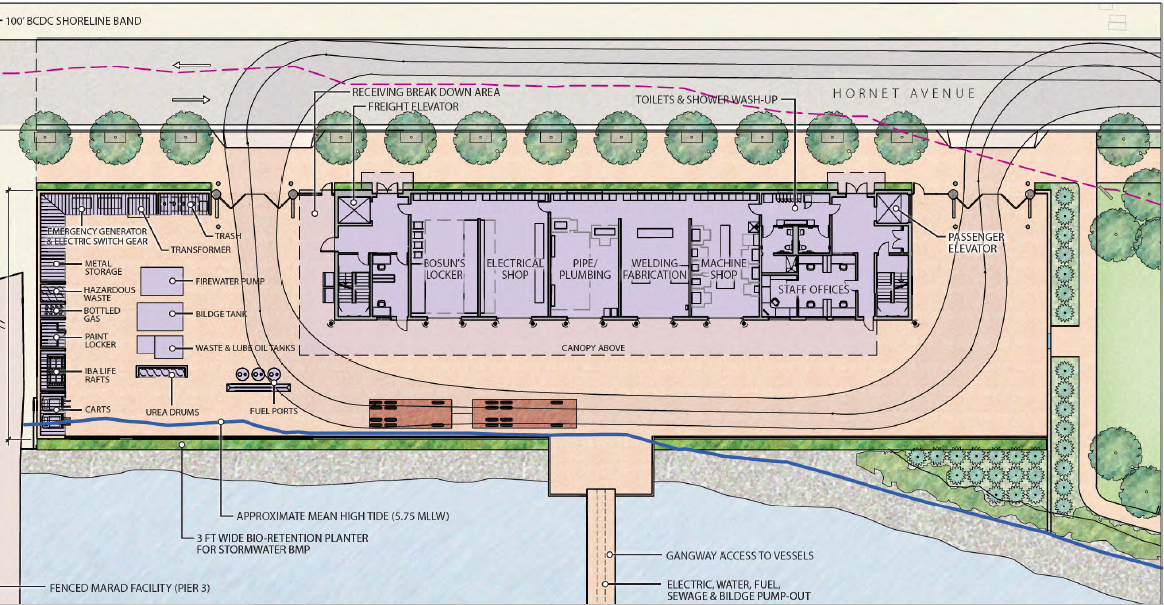
A variety of activities will take place at the facility, including refueling ferries from new underground fuel tanks, bilge and sewer pump-out, fluid replenishment, repair and replacement of vessel equipment, trash disposal, cleaning and painting of vessels, and storage and replenishment of concessionary items for passengers.

WETA On Site facilities
Click on image to enlarge.

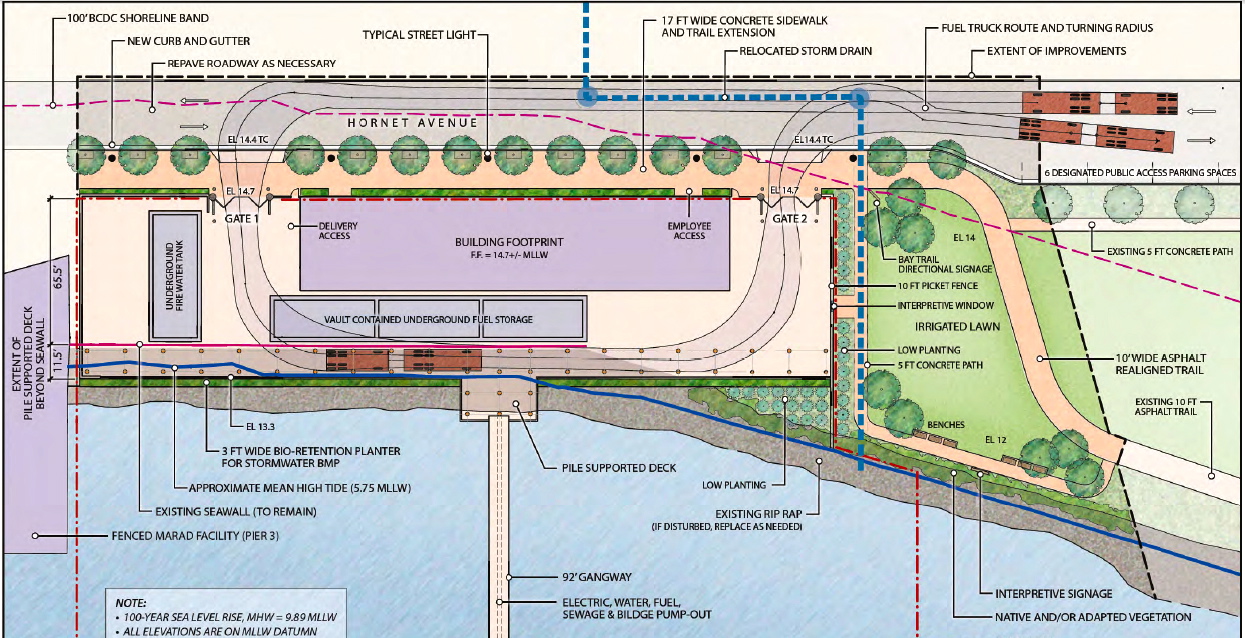
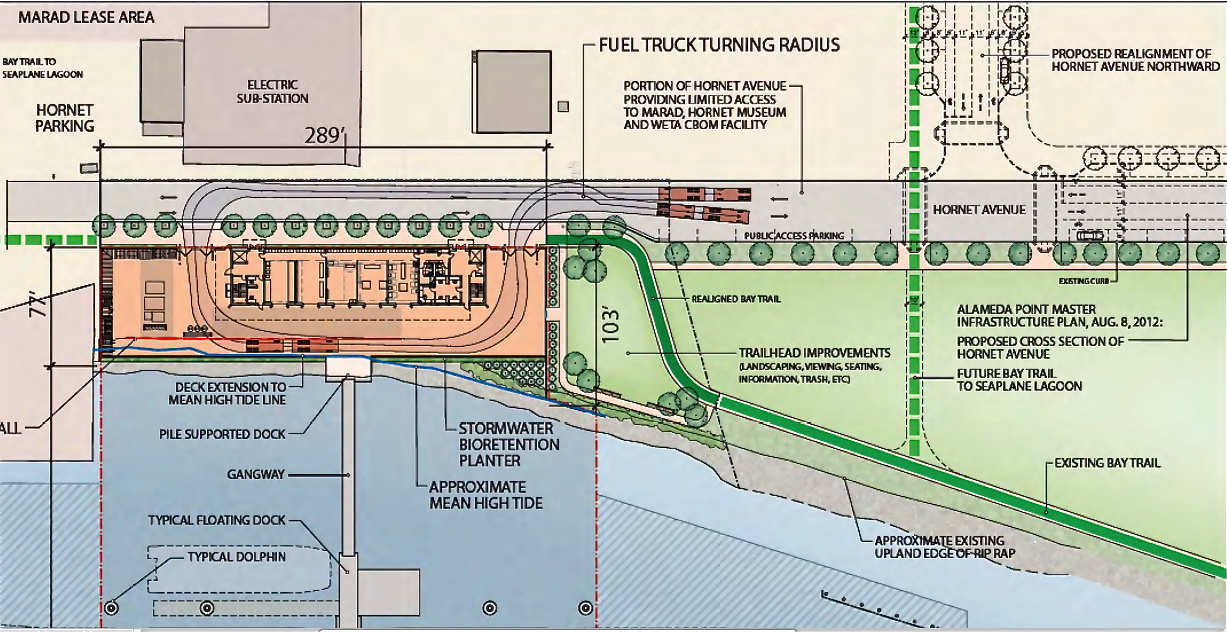
WETA, in consultation with BCDC staff, proposes enhancements to the adjacent park area owned by the city.  The proposal that BCDC is seeking comment on would realign and extend the existing Bay Trail so that it better serves as a connection to the U.S.S. Hornet Museum and the existing public access areas through the maritime ship site to the Seaplane Lagoon.  Approximately 100 feet of the existing trail and path would be removed and replaced with approximately 145 feet of new 10-foot wide trail and path.

According to the BCDC staff report, “In addition, a new 17-foot-wide extension of the Bay Trail would be constructed along the 289-foot northern length of the project site along Hornet Avenue.  This portion of the trail would include a two-foot-wide landscaped area adjacent to the project site, 12 new street trees in three-foot by six-foot tree wells adjacent to a six-inch curb and an 11.5-foot-wide pedestrian and bicycle trail.  Beyond this area and through the Hornet and MARAD [maritime ship] site, signage would indicate the route for pedestrians and bicyclists.”

WETA site plan - Alameda Point
Click on image to enlarge.

The BCDC report continues by saying, “Approximately 6,850 square feet of the park would be landscaped between the realigned trail and the project site, including irrigated turf and low lush planting with a break in the landscaping provided to create ‘windows’ into the work yard.  Interpretive signage would describe the unique working waterfront activities.  Nine trees in three clusters are proposed to better define the spatial qualities of the setting and to provide shade and visual interest.  In addition, six benches are planned along the shoreline.  Opposite the benches will be an interpretive sign describing the role and function of the WETA berthing facilities.”

WETA site adjacent future plans
Click on image to enlarge.

One impact not accounted for in WETA’s state and federal environmental reviews is the displacement of harbor seals when WETA removes the old dock that is used as a haul out.  Constructing an anchored floating platform nearby for harbor seals and birds would make up for the old dock that has served as a wildlife resting site since base closure 16 years ago.  WETA should add a wildlife platform to its budget.  Wildlife and the visiting public will greatly appreciate it.

Harbor Seals on old dock
Harbor Seals on Alameda Point dock in the Spring of 2013. Located on Alameda Point’s south side in the Inner Harbor, the dock will be demolished to build the new ferry maintenance facility. San Francisco Bay is in the background beyond the breakwater. Copyrighted photo by Richard Bangert.

The Monday, January 6, 2014 hearing will be held at the BCDC McAteer-Petris Conference Room, 455 Golden Gate Avenue, Suite 10600, San Francisco.  The hearing begins at 6:30 pm.  For information about the meeting, the public is directed to contact Ellen Miramontes at (415) 352-3643 or ellenm@bcdc.ca.gov.

Background info about the proposed ferry facility is on Alameda Point Info’s Ferry Maintenance Facility site. 

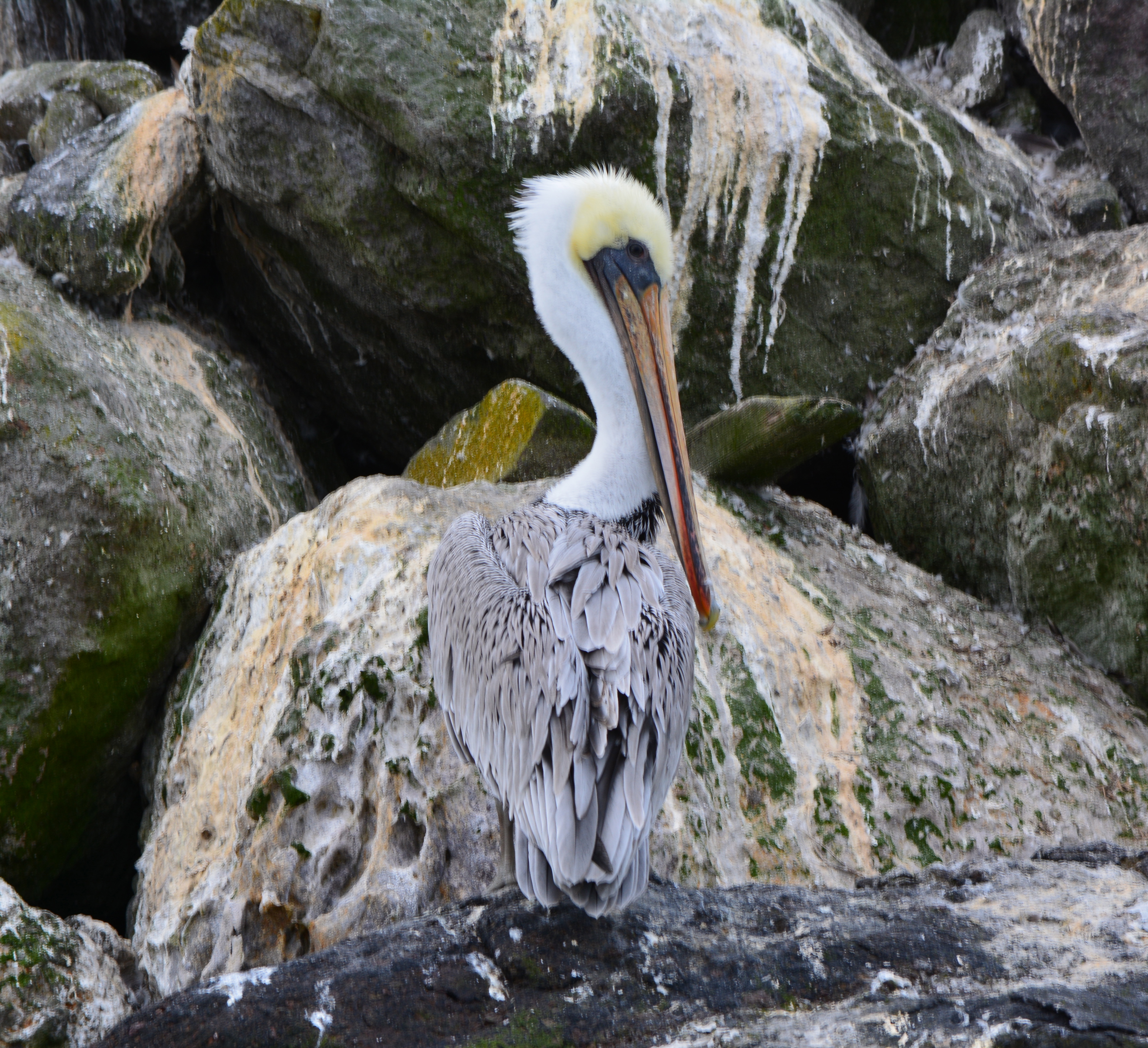
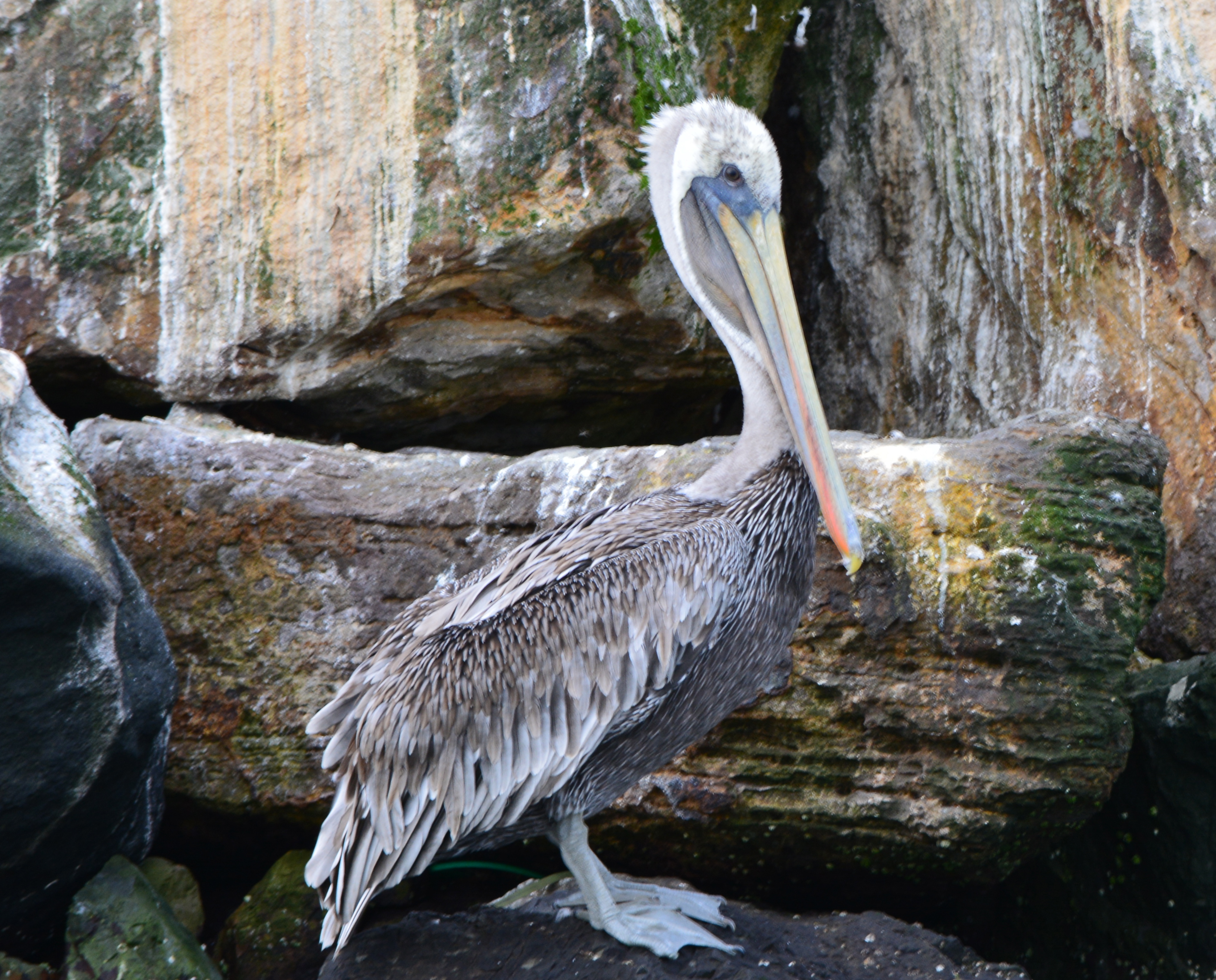
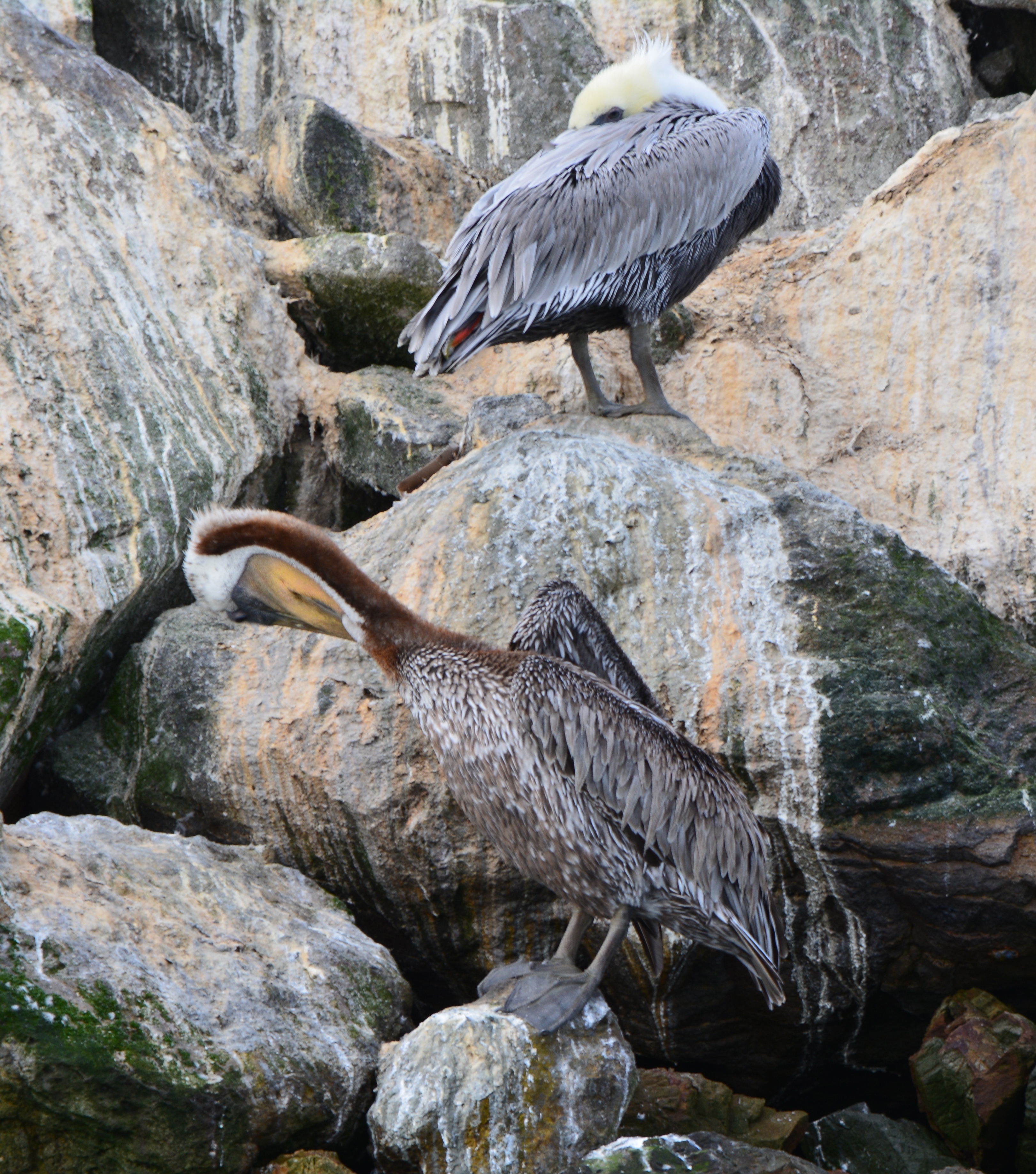
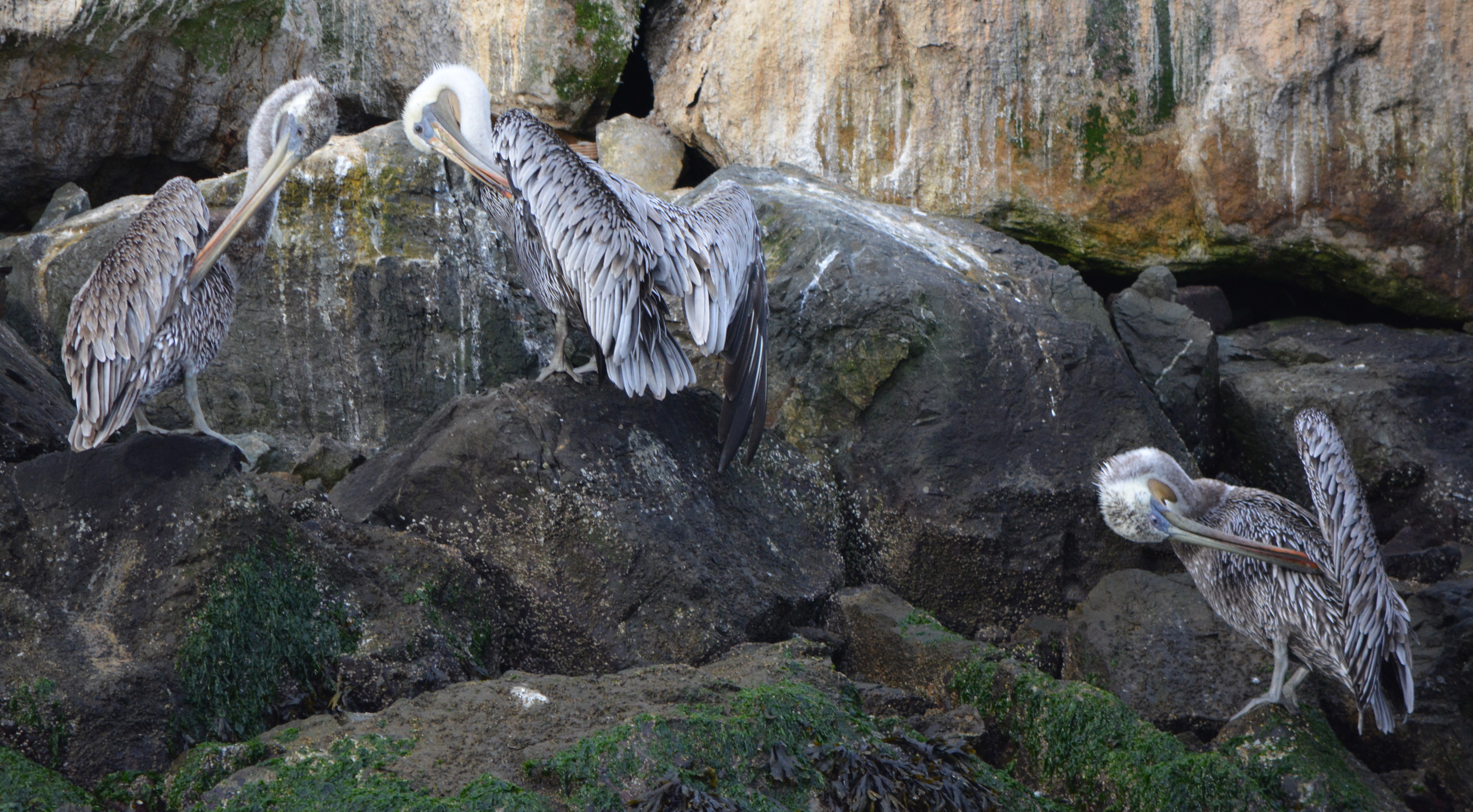
Brown pelicans of Alameda’s Breakwater Island – September 2013

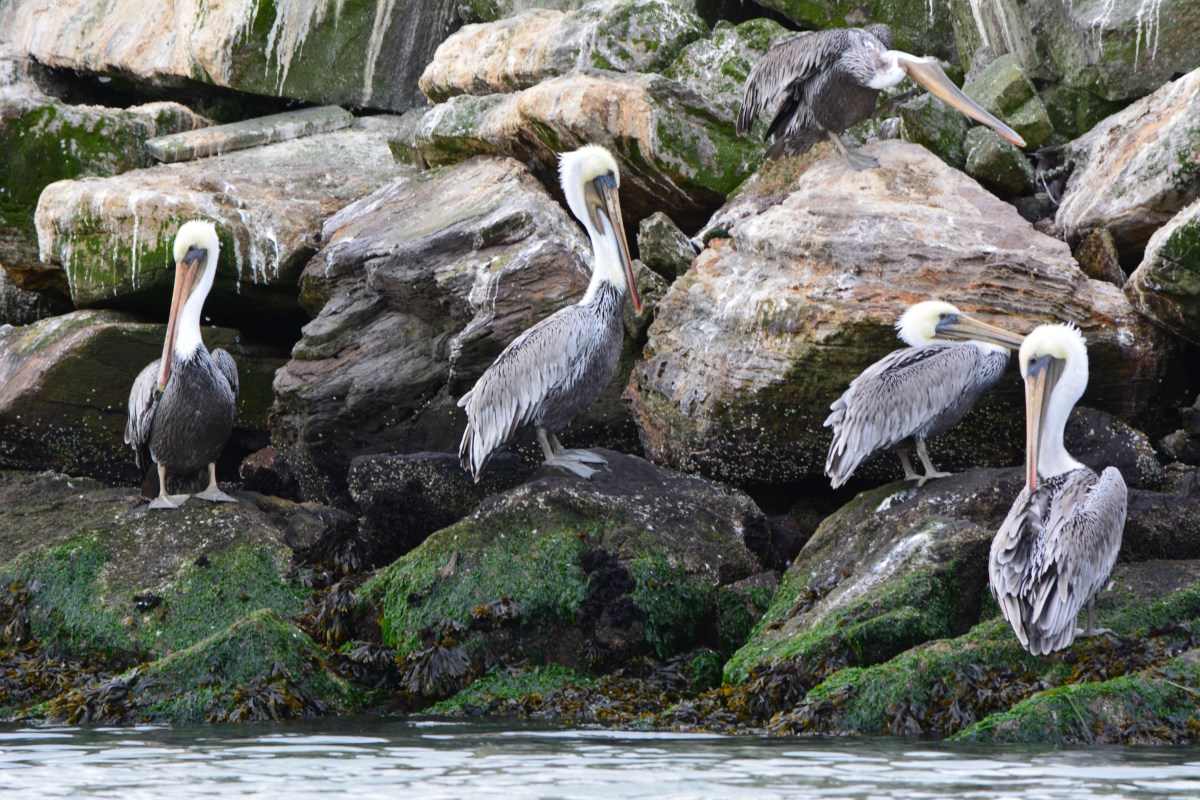
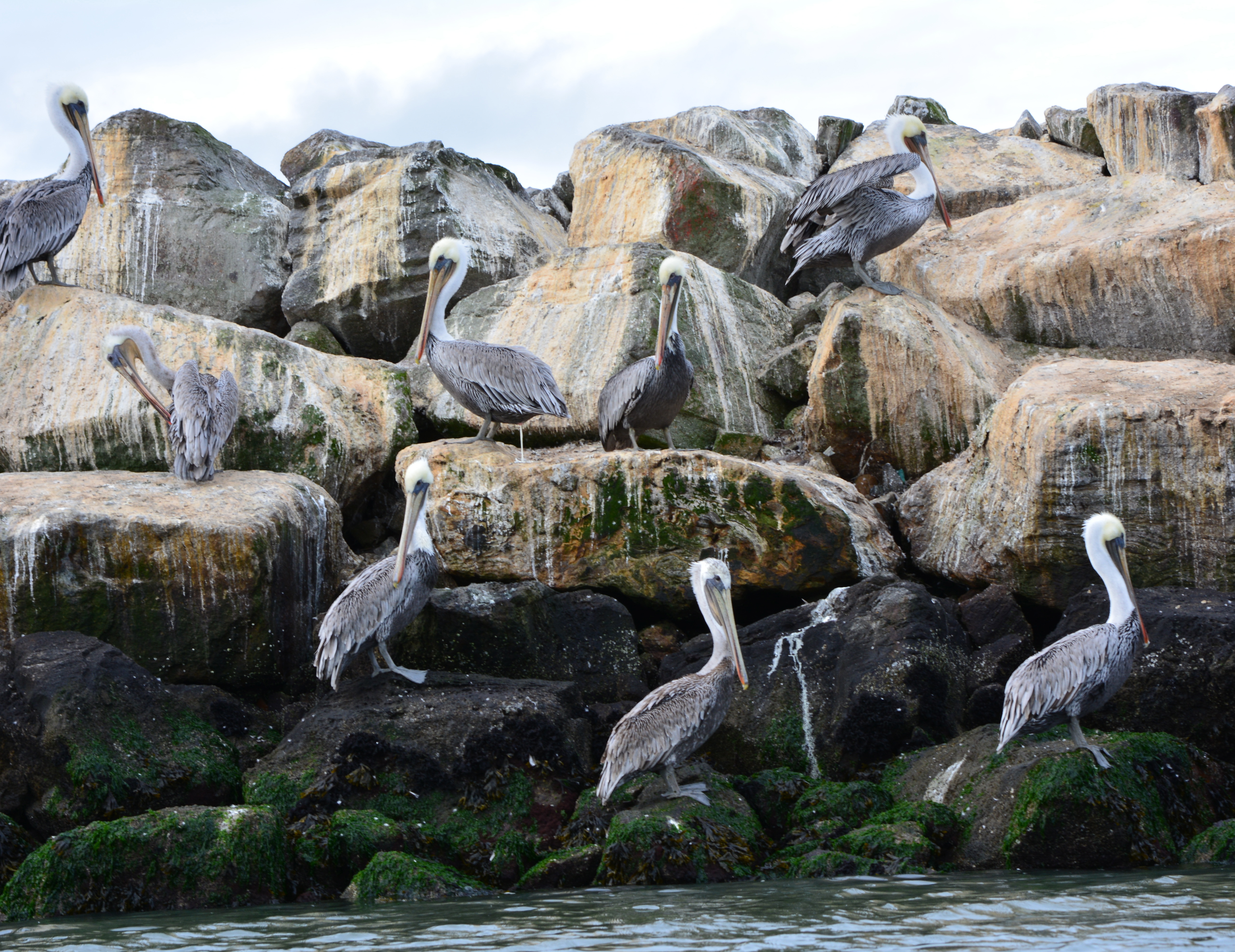
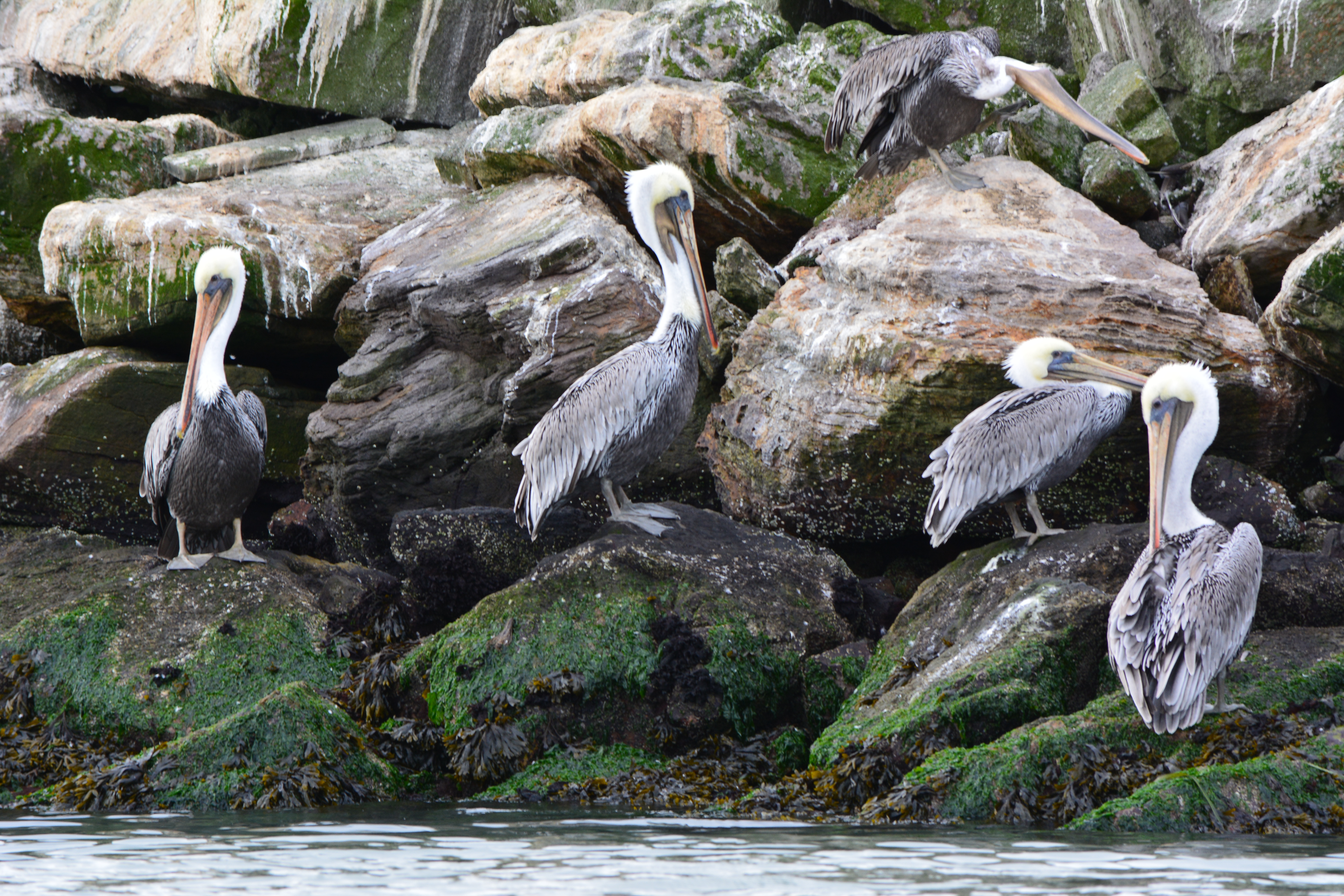
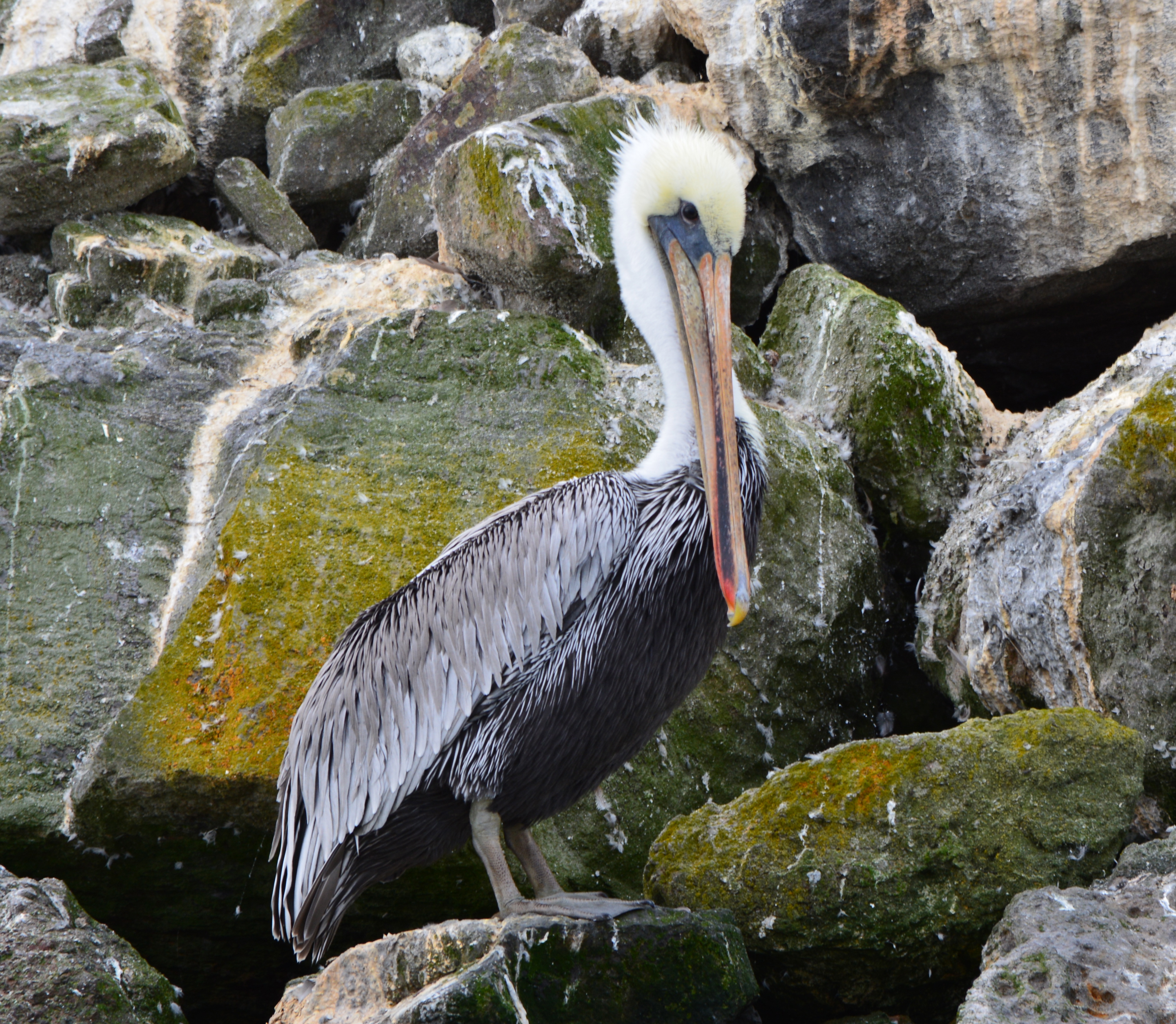
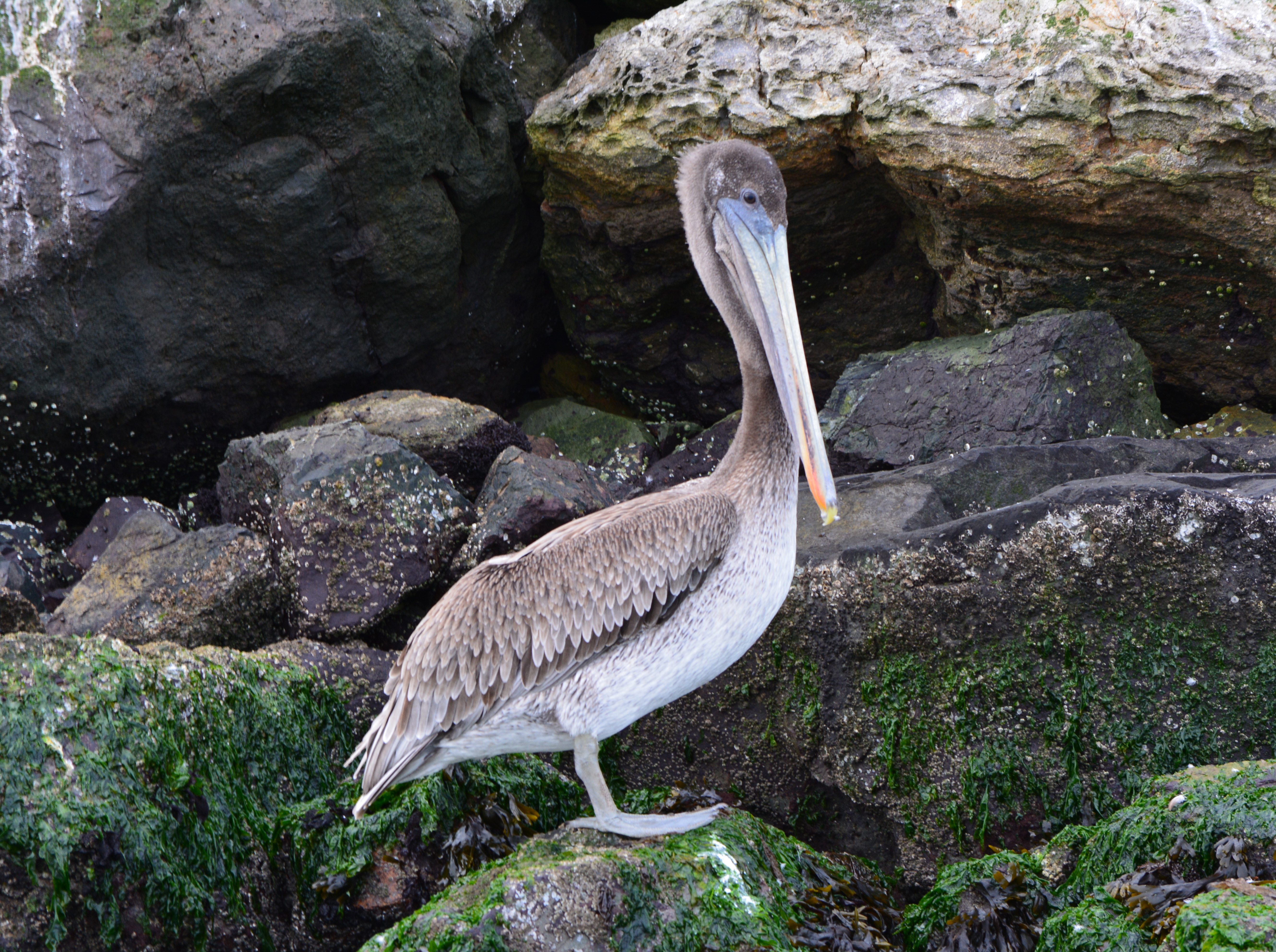
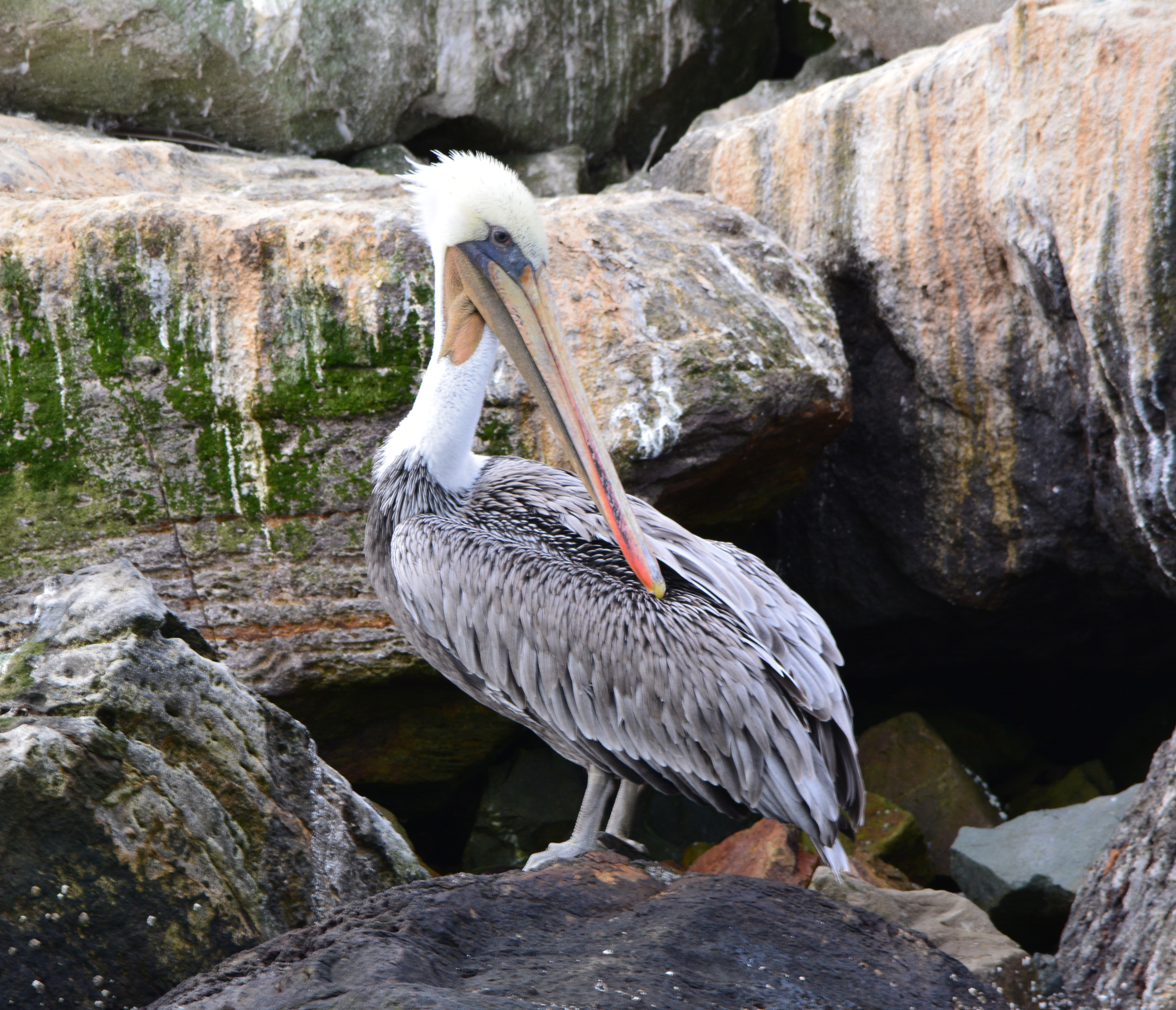
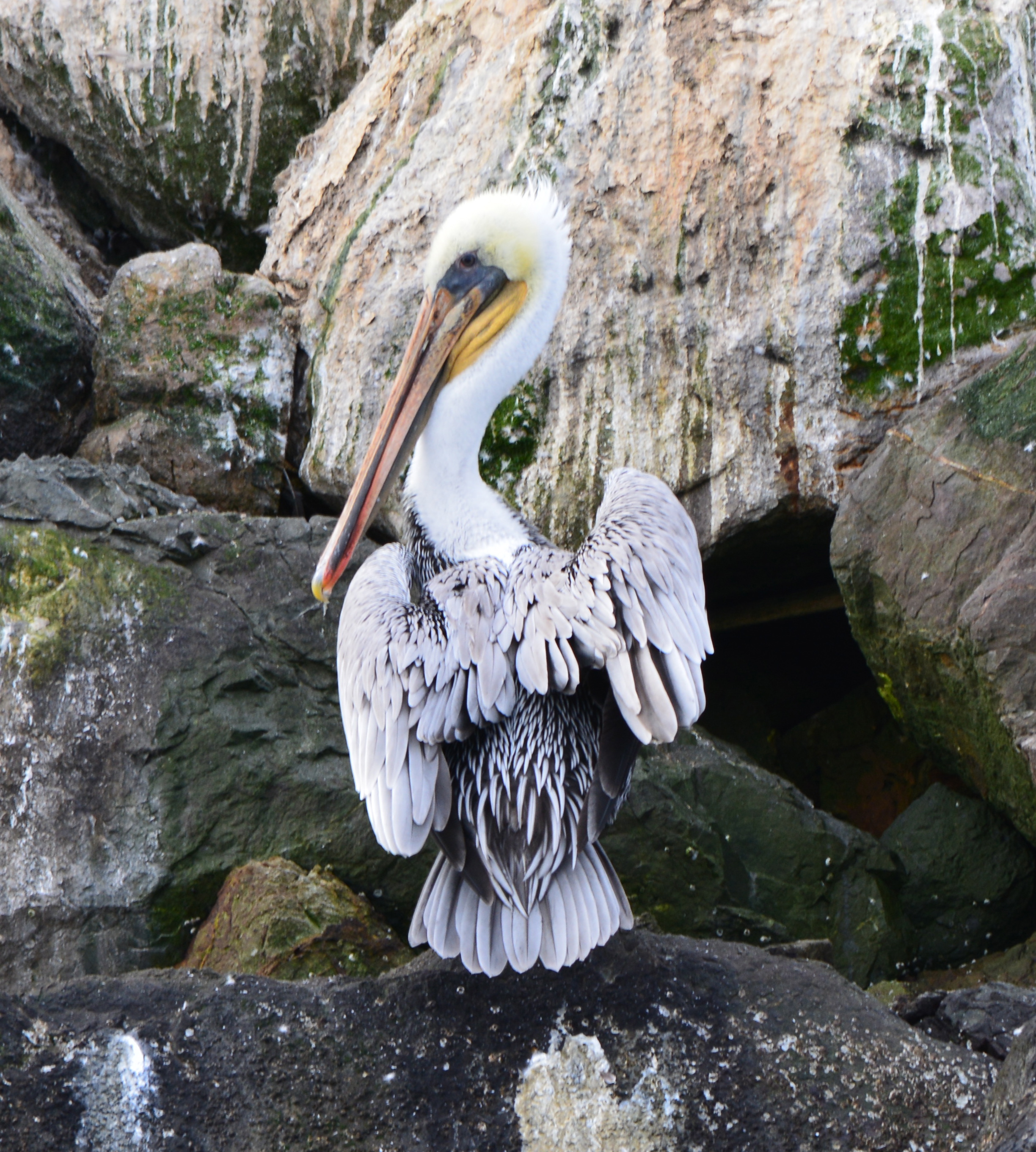
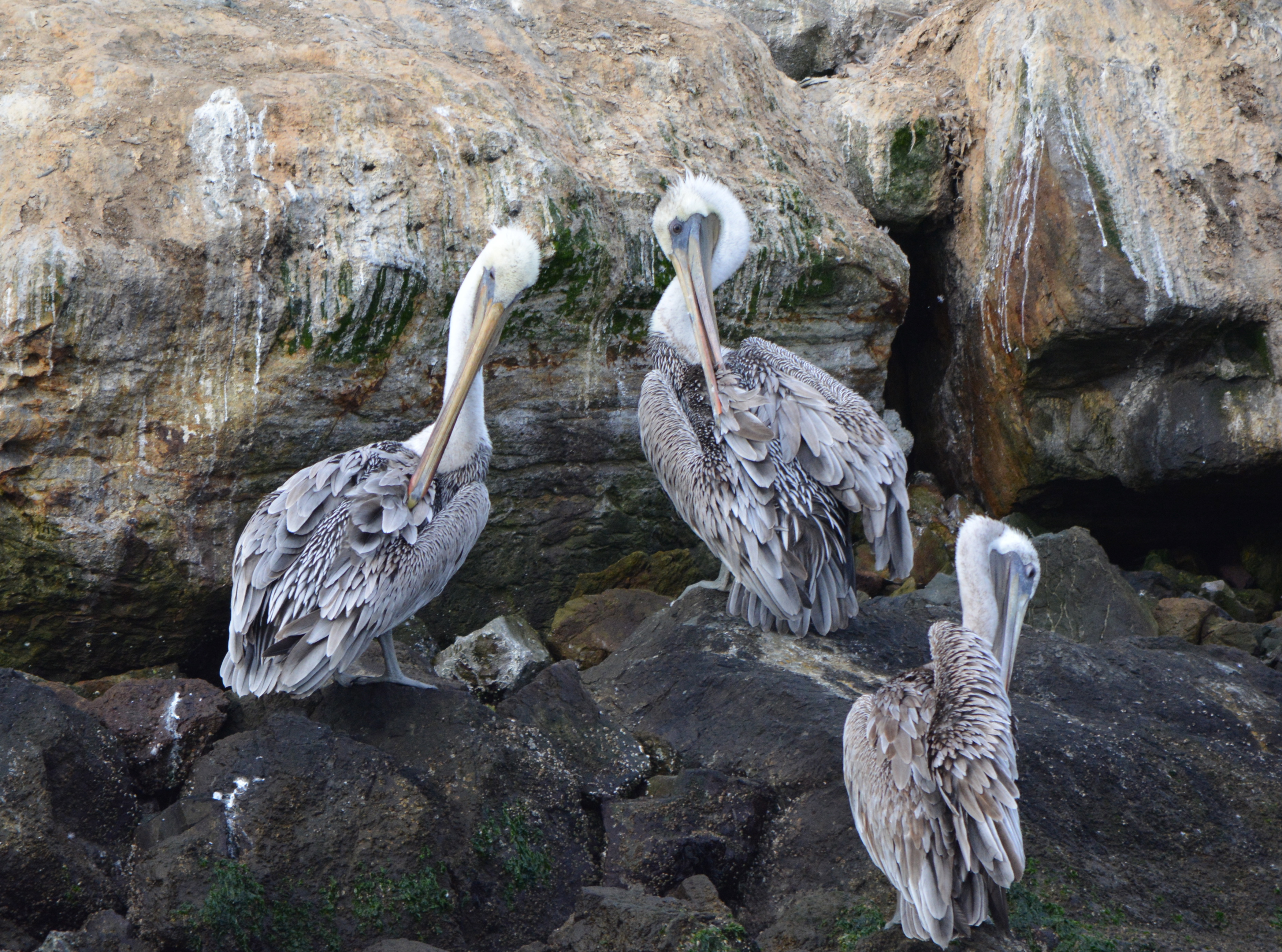
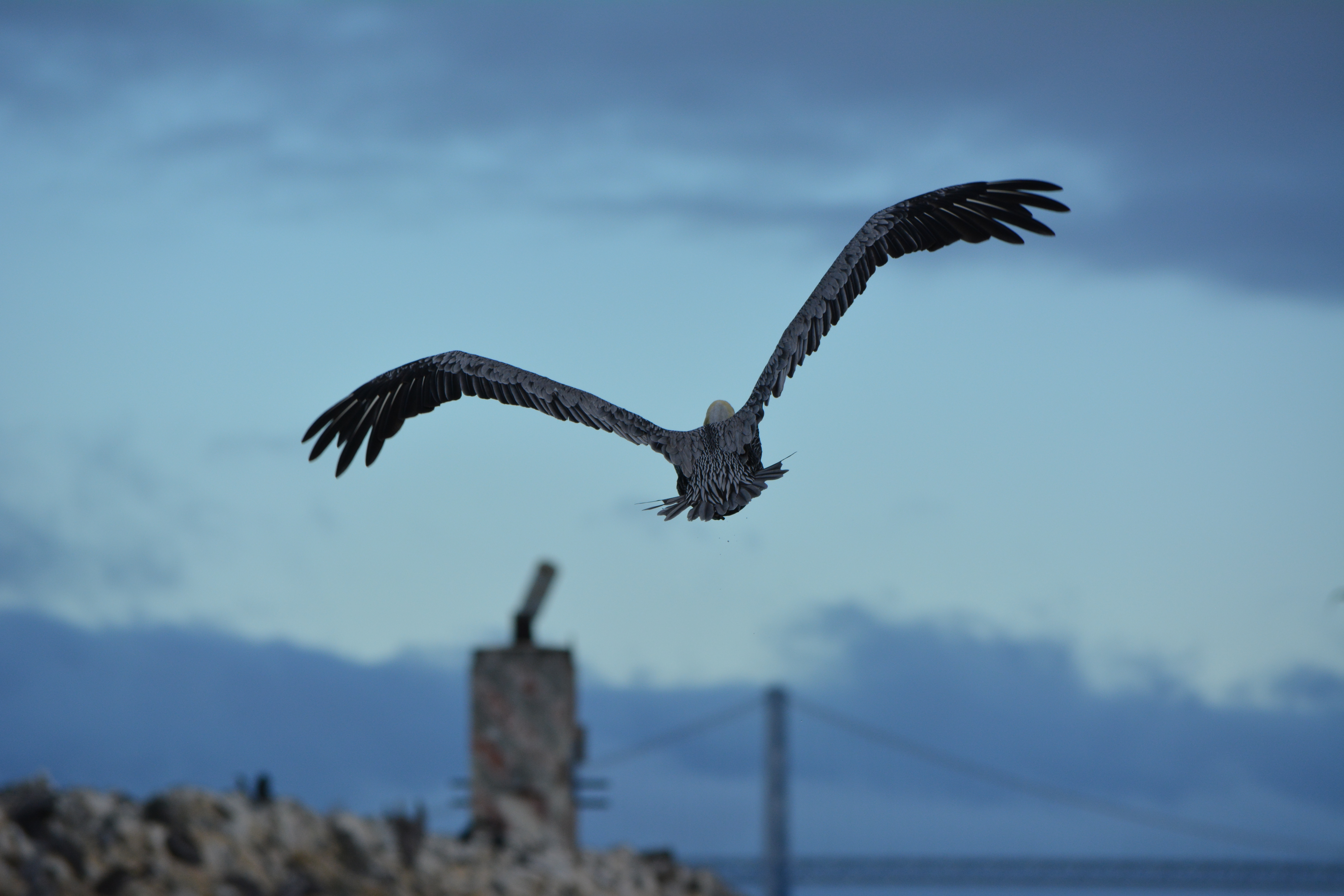
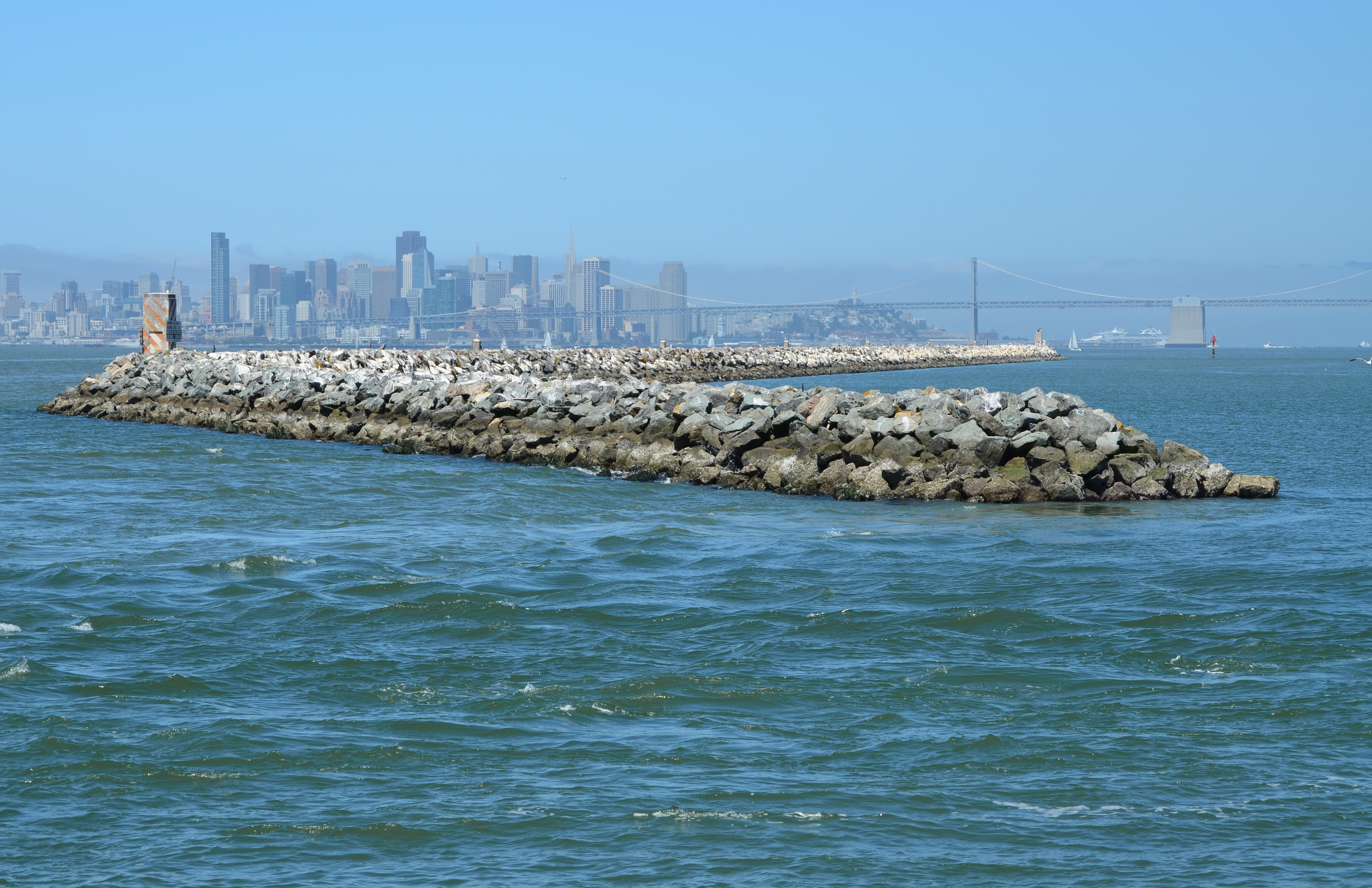
Breakwater Island runs along the south side of the Alameda Point Channel.  It was officially transferred from the Navy to the City of Alameda in June of 2013.  It is the largest night roosting site for California brown pelicans in San Francisco Bay.  During the warm months, hundreds of pelicans can be seen on the breakwater.  An early September kayak trip past Breakwater Island found their numbers down to a few dozen, most likely due to good fishing elsewhere in the Bay Area.  By December most of the pelicans will have migrated south to places such as the Channel Islands where they nest.

Brown pelicans on Breakwater Island, Alameda

Brown pelicans of Breakwater Island, Alameda

Brown pelicans of Breakwater Island, Alameda

Young brown pelican on Breakwater Island, Alameda

Brown pelicans of Breakwater Island, Alameda

Brown pelican on Breakwater Island, Alameda

Brown pelican on Breakwater Island, Alameda

Brown pelican on Breakwater Island, Alameda

Brown pelicans on Breakwater Island, Alameda

Brown pelicans of Breakwater Island, Alameda

Brown pelicans of Breakwater Island, Alameda

Brown pelican flying toward Breakwater Island, Alameda

Breakwater Island.  Alameda Point is to the right.  San Francisco Bay is to the left.  San Francisco is in the background.
Breakwater Island. Alameda Point is to the right. San Francisco Bay is to the left. San Francisco is in the background.

Hawks on the Nature Reserve at Alameda Point

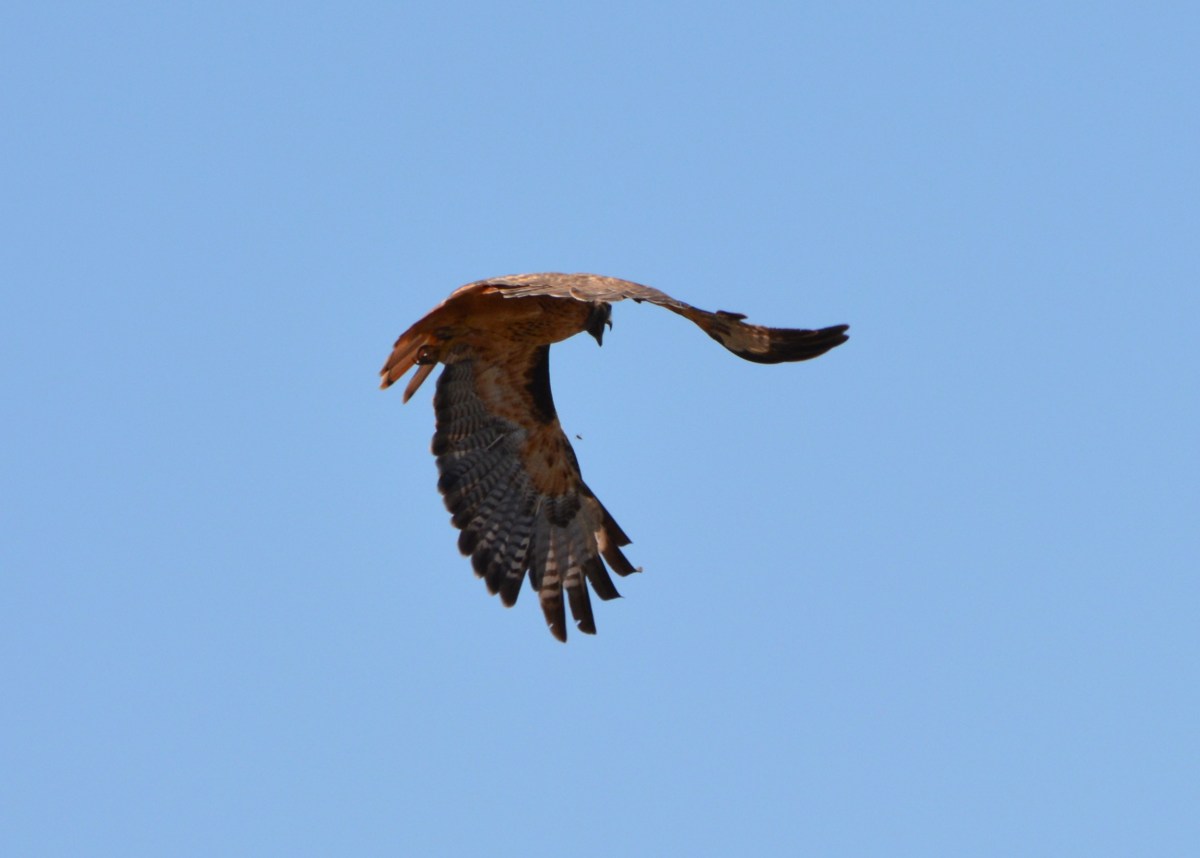
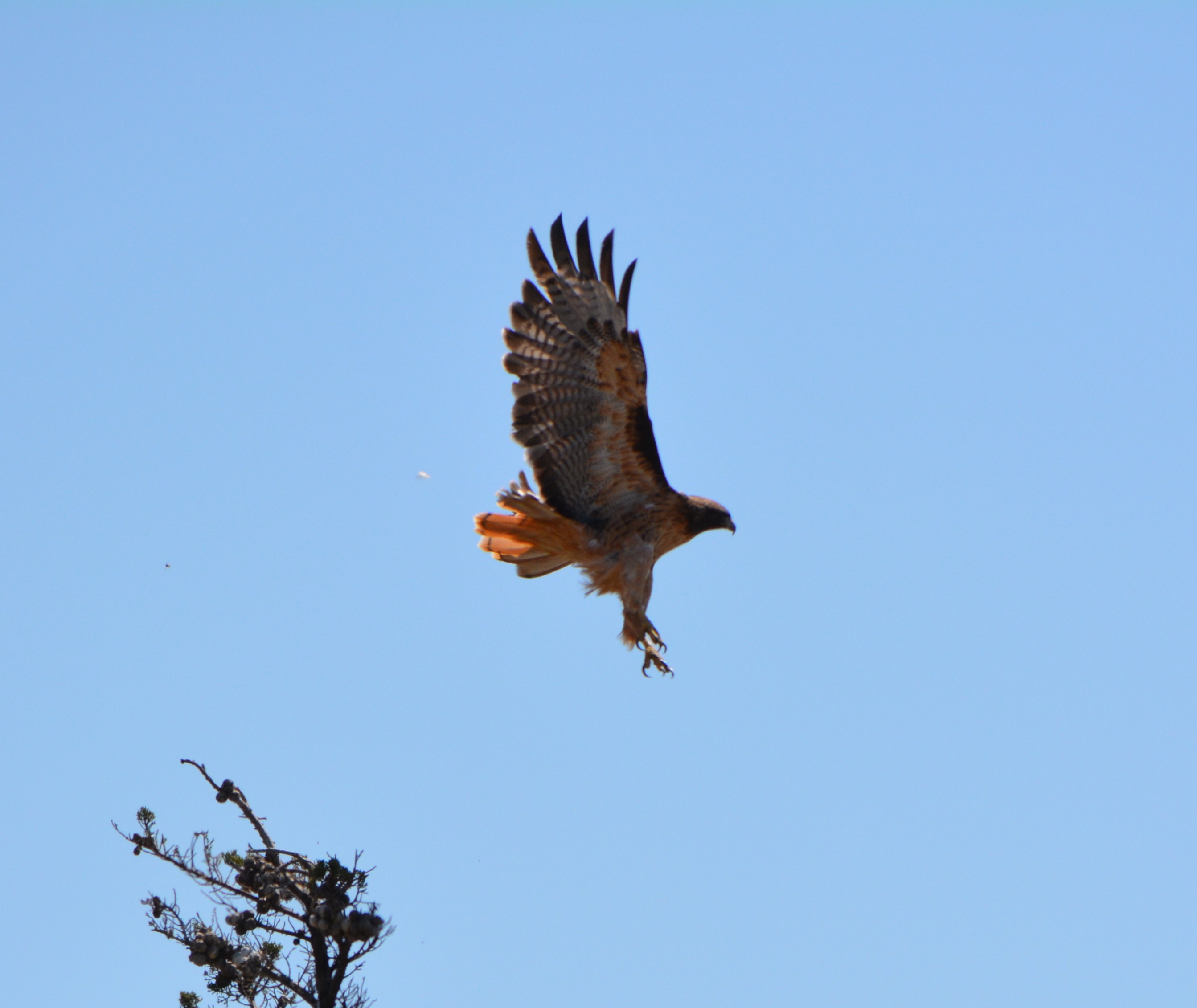
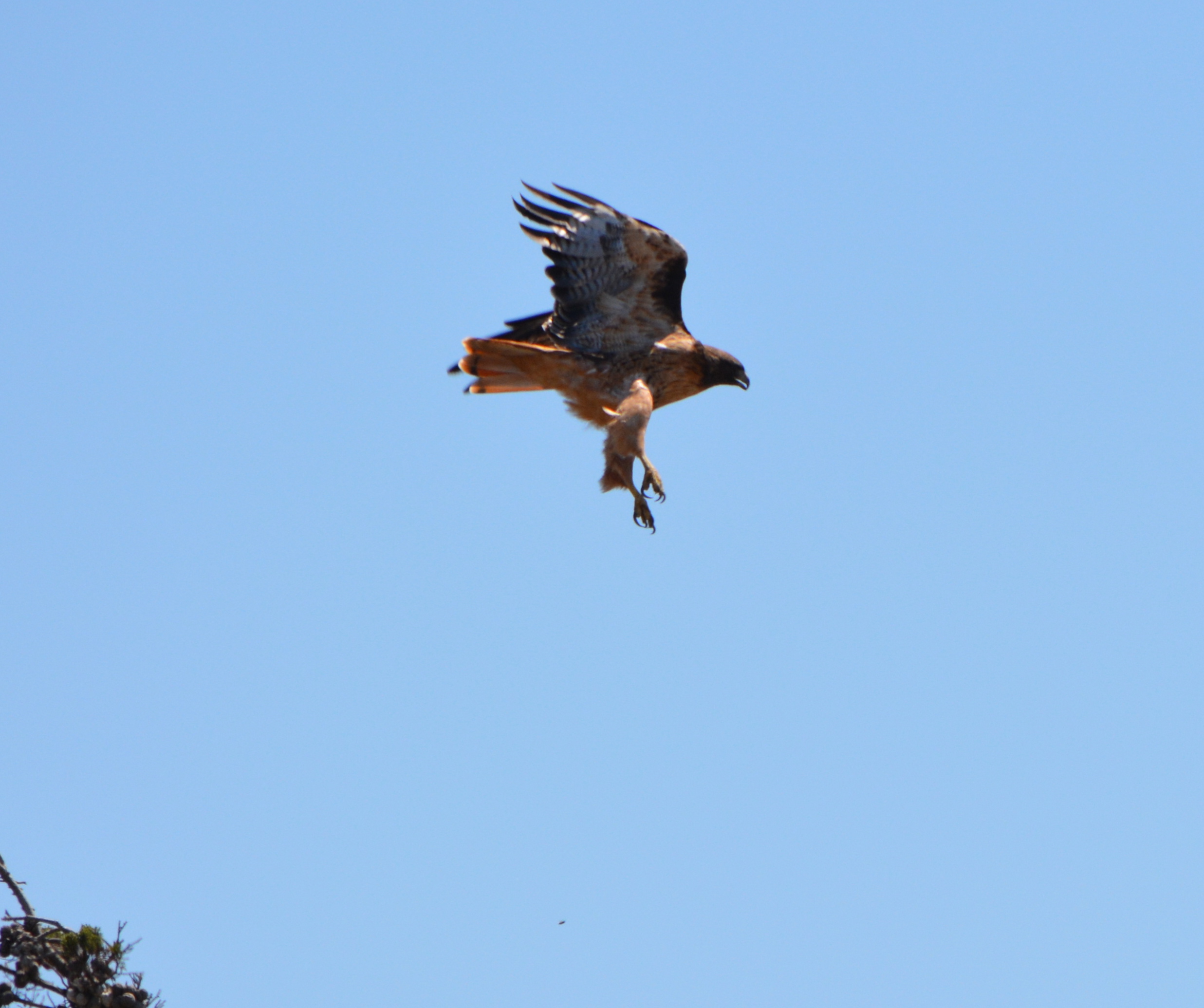
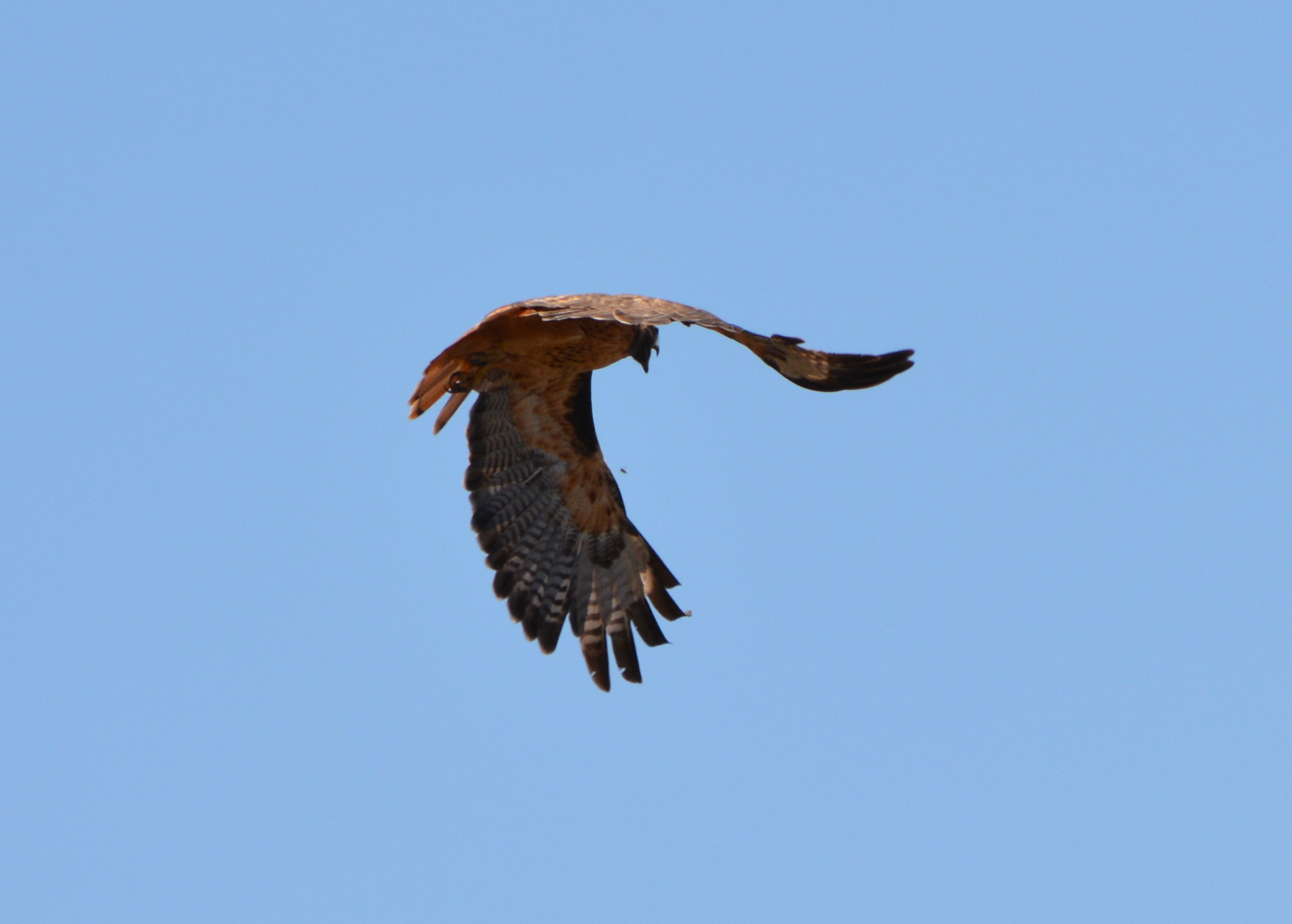
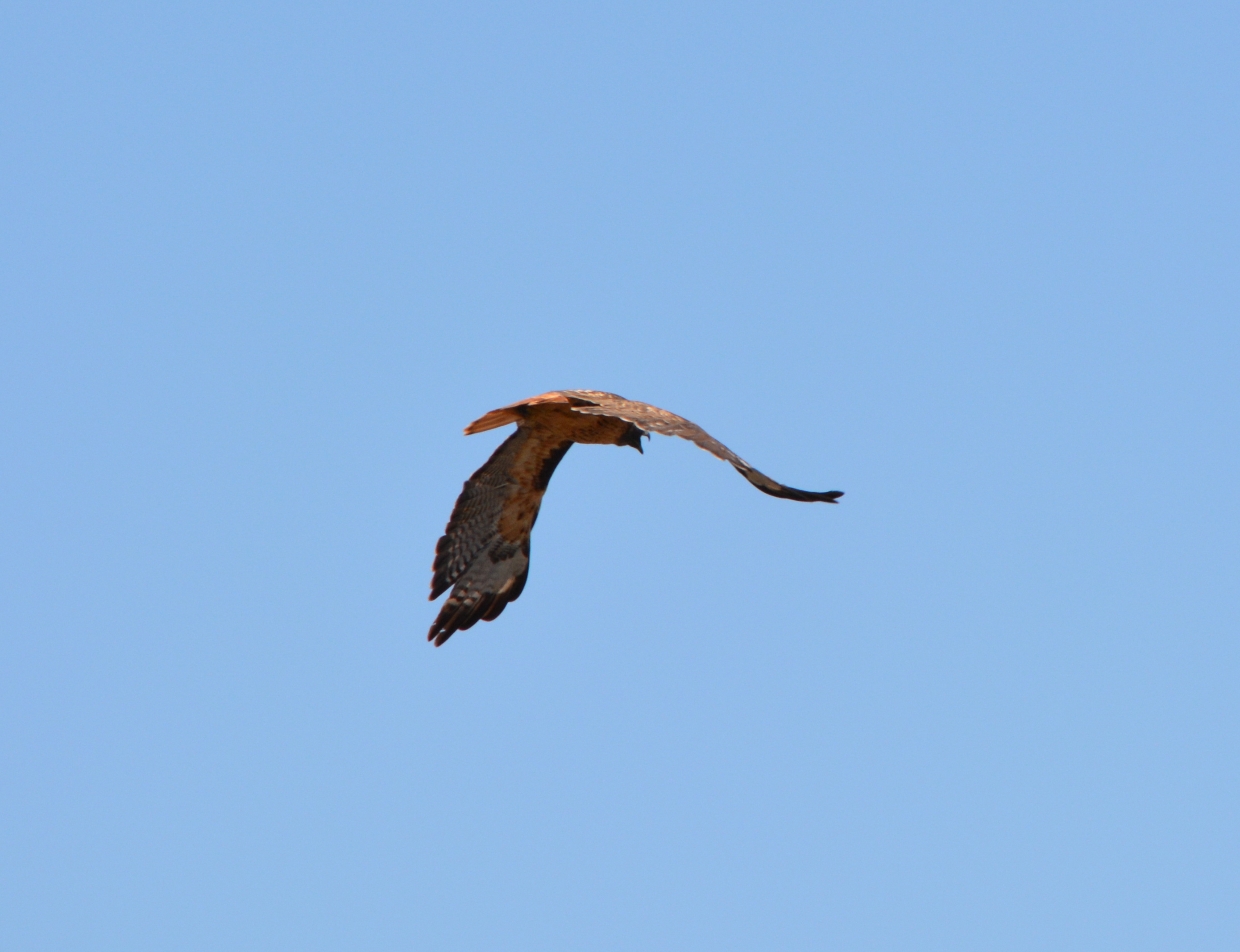
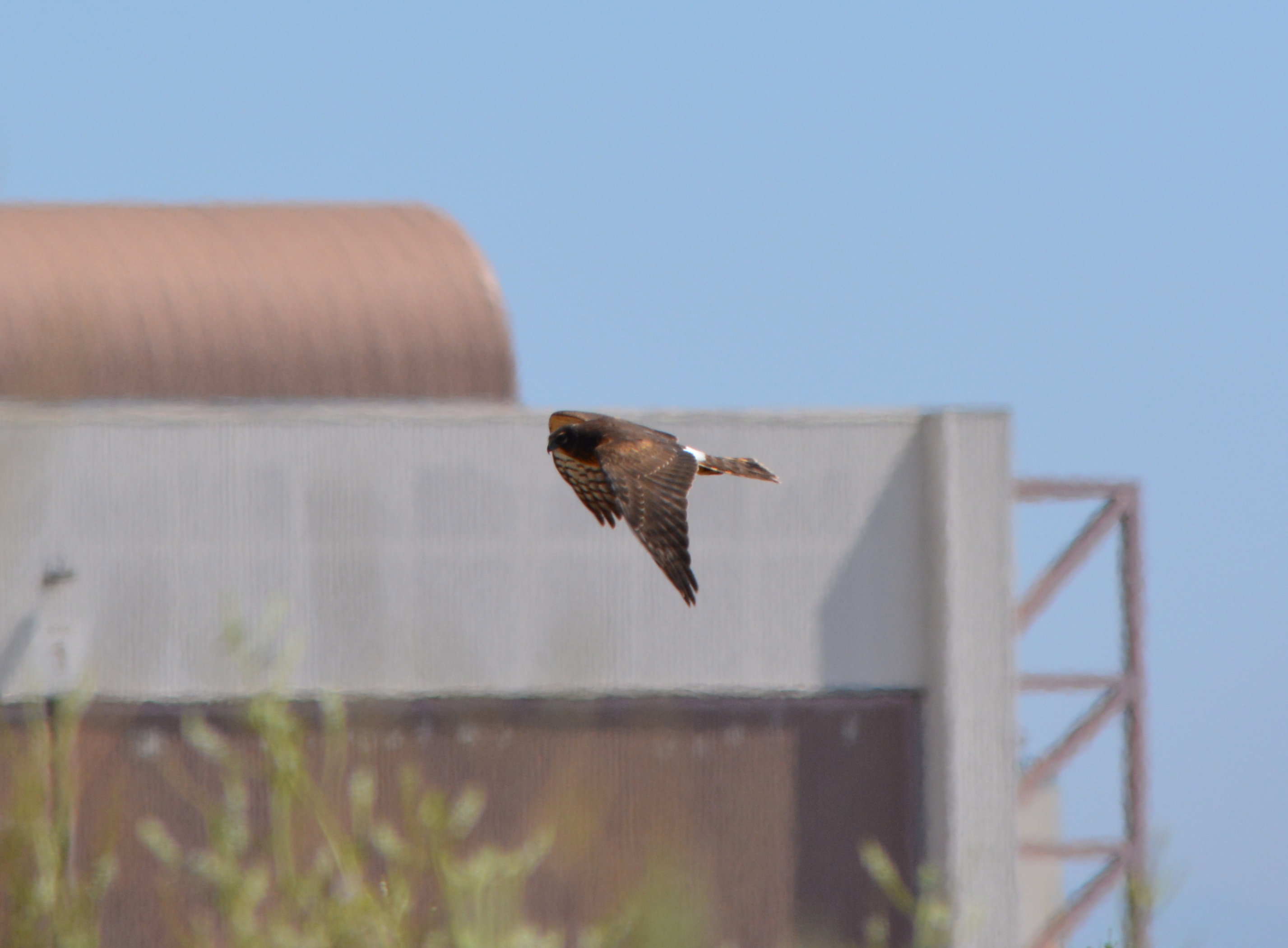
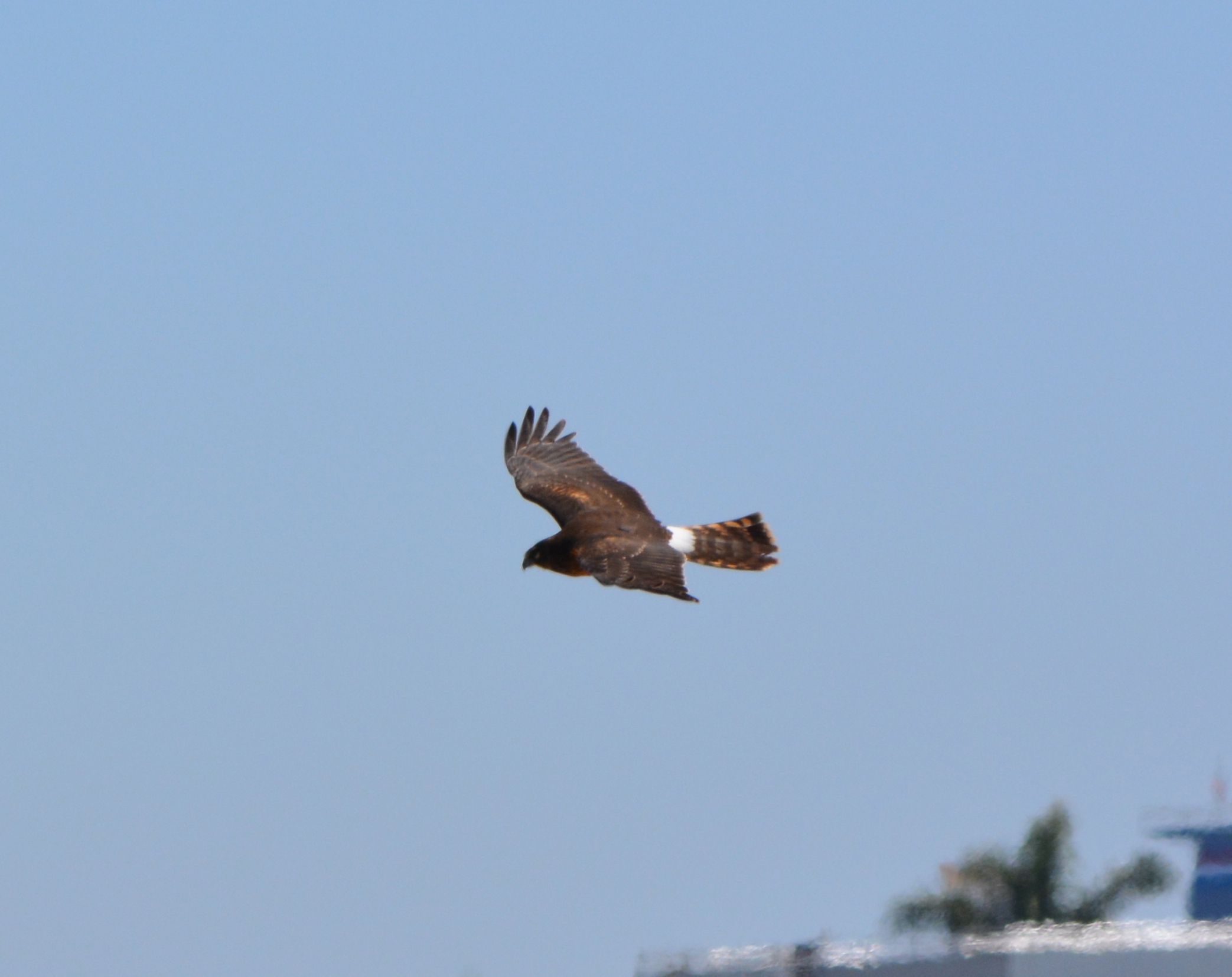
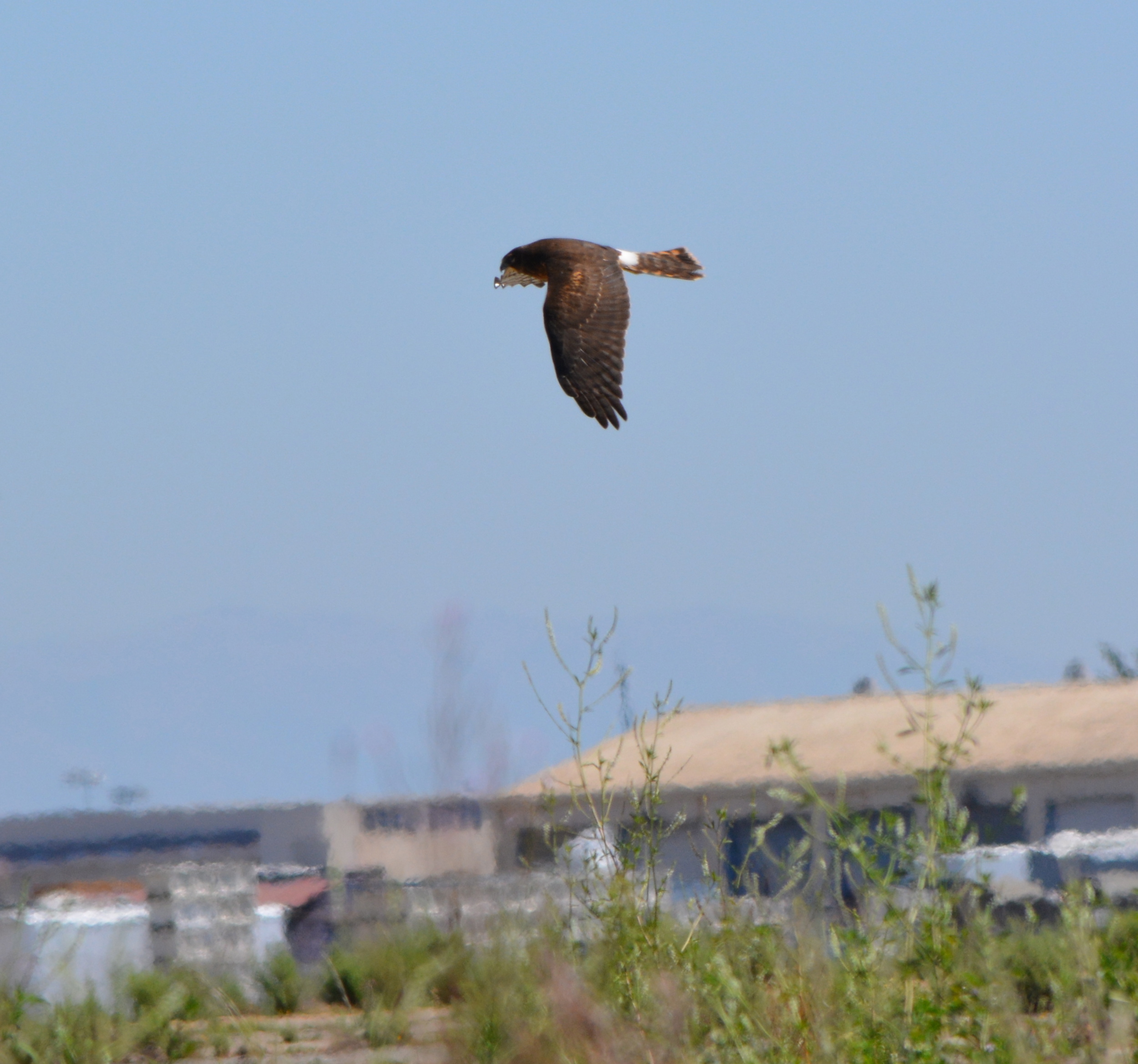
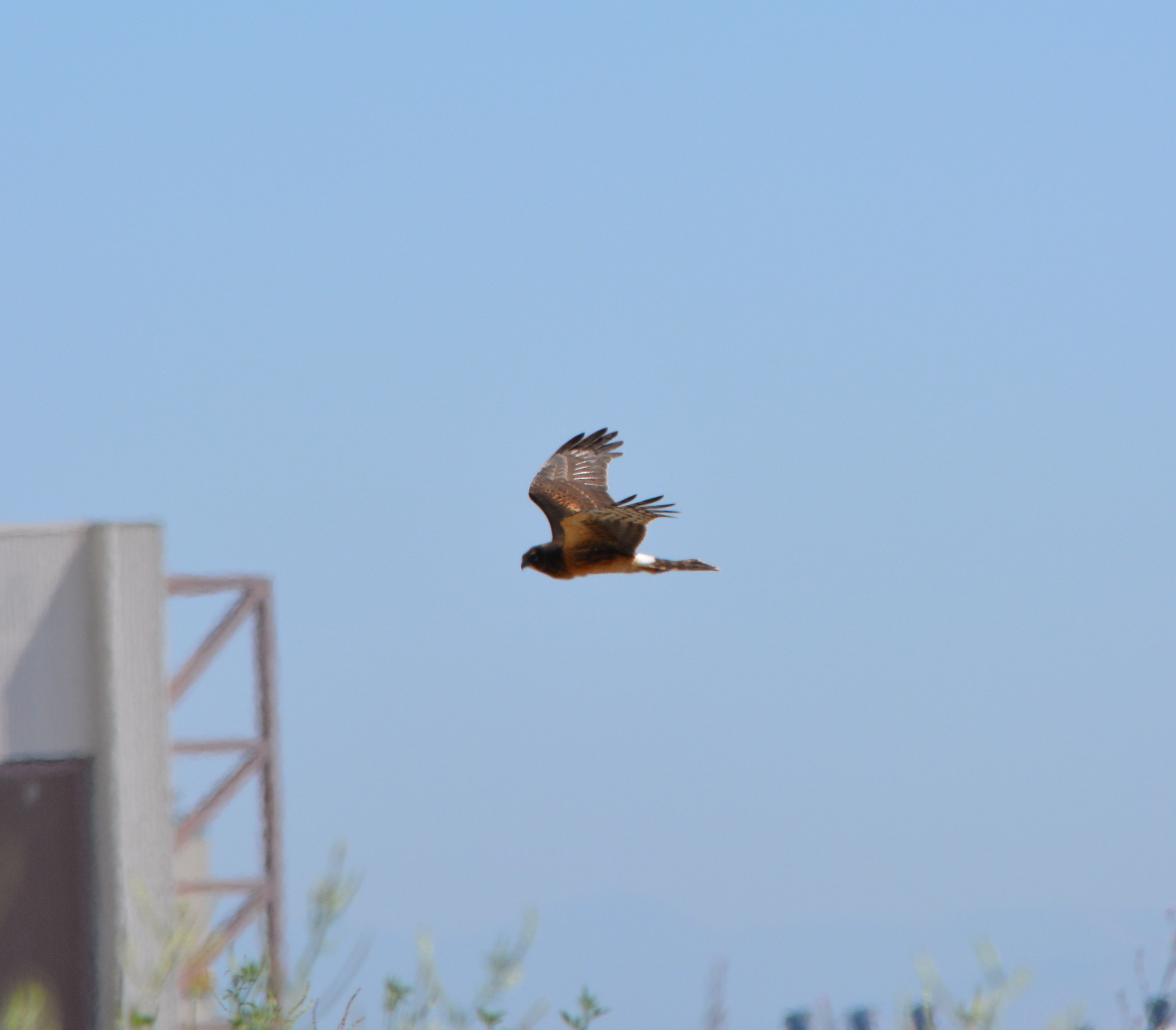
Red-tailed Hawks are regular visitors to the Nature Reserve on the former airfield at Alameda Point.  The Northern Harrier, another type of hawk, also visits the reserve, but are fewer in number and harder to spot.  

Red tails and harriers both like the wide open space and grassland where they hunt for prey, but they differ in their abilities to hunt.  The red tails rely on keen vision and are able to hunt from great heights and distance.  Harriers, on the other hand, rely on hearing in the same way that an owl does.  The harrier’s face has characteristics similar to an owl that allows it to capture sounds and direct them to their ears.  They have the ability to hear the sounds of small animals moving in the grass.  They fly close to ground, sometimes within 10 feet, methodically moving about listening for movement.  
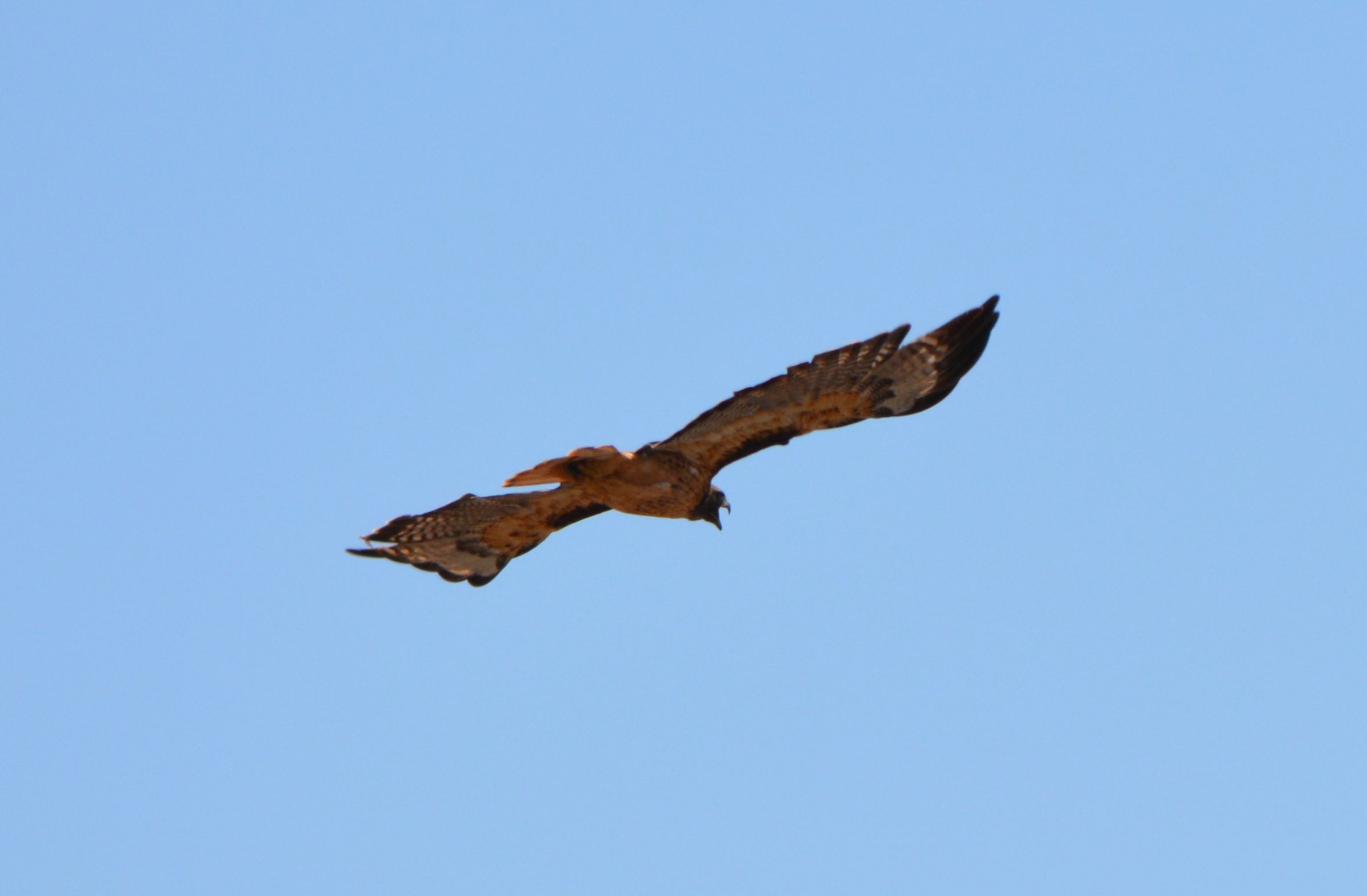
Occasionally during the least tern nesting season red tails and harriers prey on the terns and have been trapped by the Fish & Wildlife Service and relocated further inland.  Red tails can catch jackrabbits, but harriers might have a tough time with a full-grown rabbit and look instead for small rodents.  

Adding more grassland on the periphery of the Nature Reserve would help the least terns by providing more hunting opportunities for predators away from the nesting site.  These wild and magnificent birds are but two examples of why the Nature Reserve offers unique opportunities for wildlife habitat enhancement.
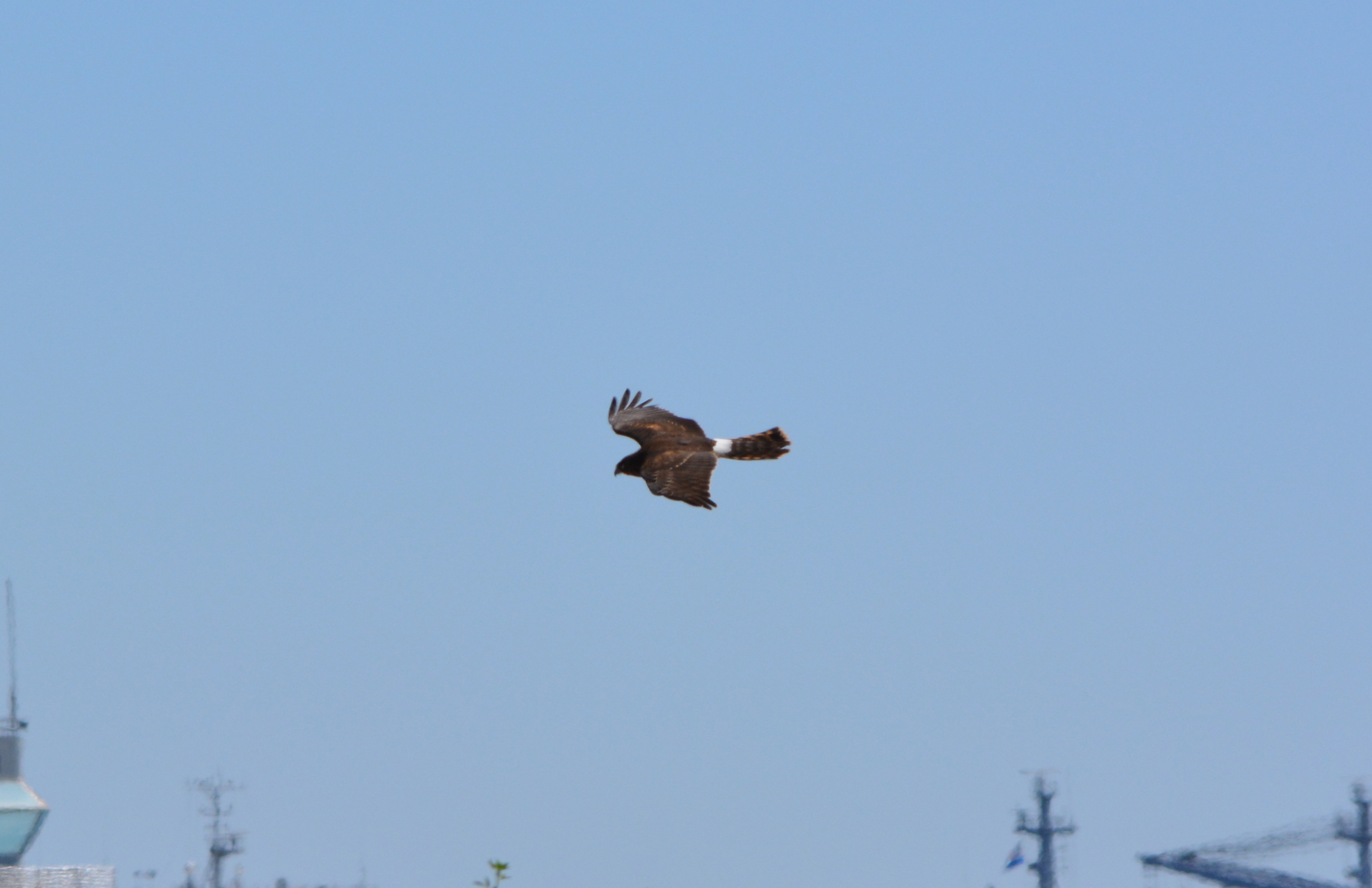
The two birds below were photographed in September of 2013.

Red-tailed Hawk

Red-tailed Hawk #1

Red-tailed Hawk #2 Alameda Point

Red-tailed Hawk #3 Alameda Point

Red-tailed Hawk #4 Alameda Point

Red-tailed Hawk #4 Alameda Point

Northern Harrier

Northern Harrier #1 Alameda Point

Northern Harrier #2 Alameda Point

Northern Harrier #3 Alameda Point

Northern Harrier #4 Alameda Point

Northern Harrier #5 Alameda Point

Ospreys’ nesting effort draws competition atop maritime ship

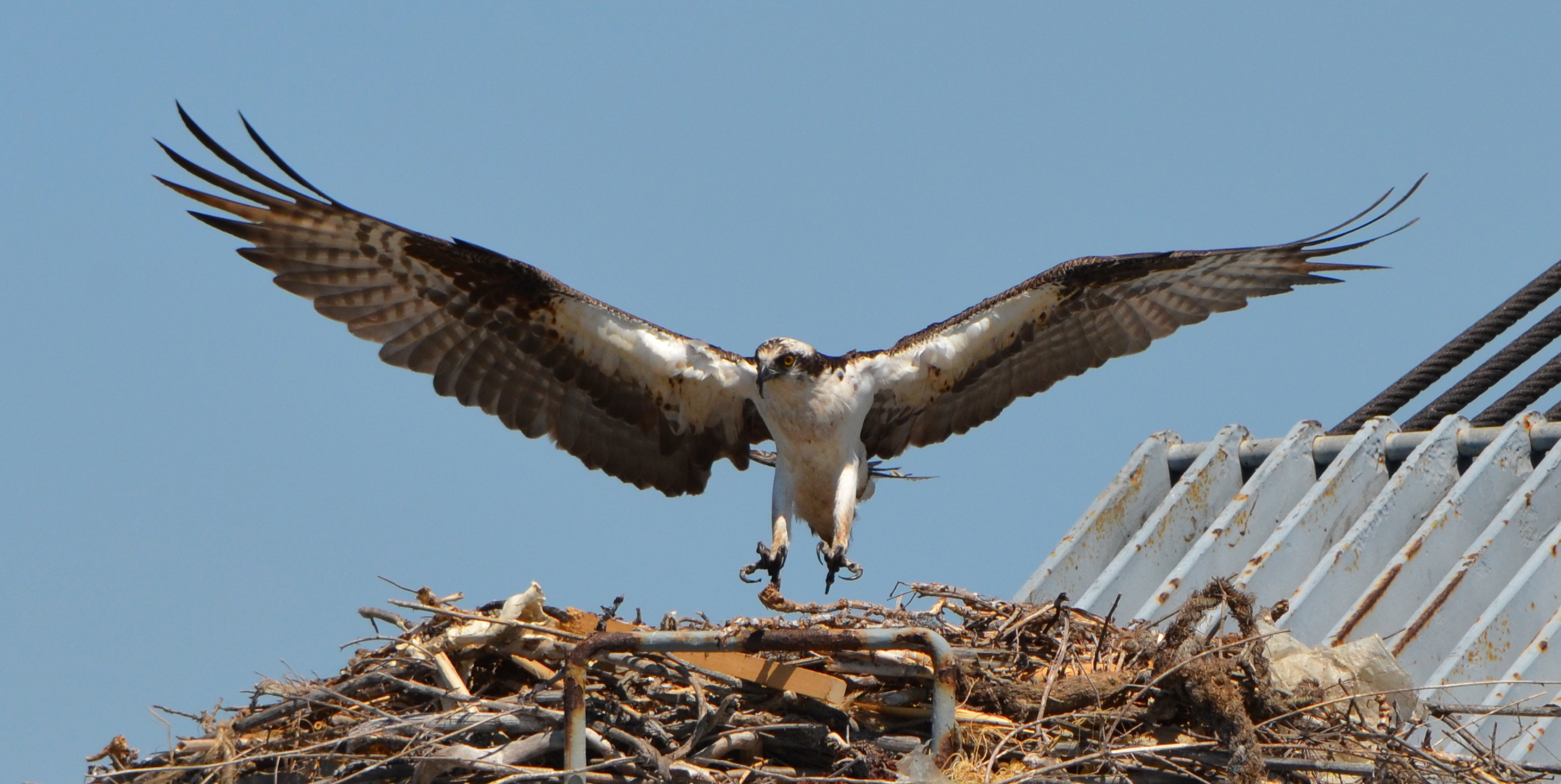
The ospreys returned to Alameda Point again in 2013 to nest, but not at their previous nesting site on the old light stand at the entrance to the Seaplane Lagoon.  This year they settled atop one of the towering kingposts holding a cable and boom hoist on the maritime ship Admiral William Callaghan.  Unfortunately, a third osprey interfered with the nesting pair.

Osprey landing on the kingpost nest on the maritime ship Admiral Callaghan docked at Alameda Point - May 2013.
Osprey landing on the kingpost nest on the maritime ship Admiral Callaghan docked at Alameda Point – May 2013.

As the month of March came in, Alameda wildlife biologist and birdwatcher Leora Feeney began checking to see if the ospreys had returned to their Seaplane Lagoon nest.  While scoping out the surrounding area with her binoculars, Feeney spotted a returning osprey on one of the maritime ready reserve ships docked at Alameda Point.  As the weeks went by, she noted that nest building and fishing were the order of business for the osprey pair on their new shipboard nest.
Osprey bringing in nest material for the Callaghan kingpost nest - 2013.
Osprey bringing in nest material for the Callaghan kingpost nest, with mate in nest – 2013.

On April 4, Feeney recorded in her osprey log that the female had settled deep into the nest as if incubating at least one egg.  But a third osprey spotted two weeks earlier now became trouble, with the nesting male osprey seen escorting the interloper away.

“Incubation seemed the order of business during April, but on May 5th no birds were seen at the nest,” said Feeney.  “This was not a good sign.”  During following observations by Feeney, it became clear that another female osprey was visiting the pair often.  “The pair tried to discourage her by flying around her and escorting her away,” said Feeney.  But in doing so, the effort would leave the nest briefly unattended and vulnerable to the ever-present gulls looking to steal fish scraps or even an egg or a chick. 

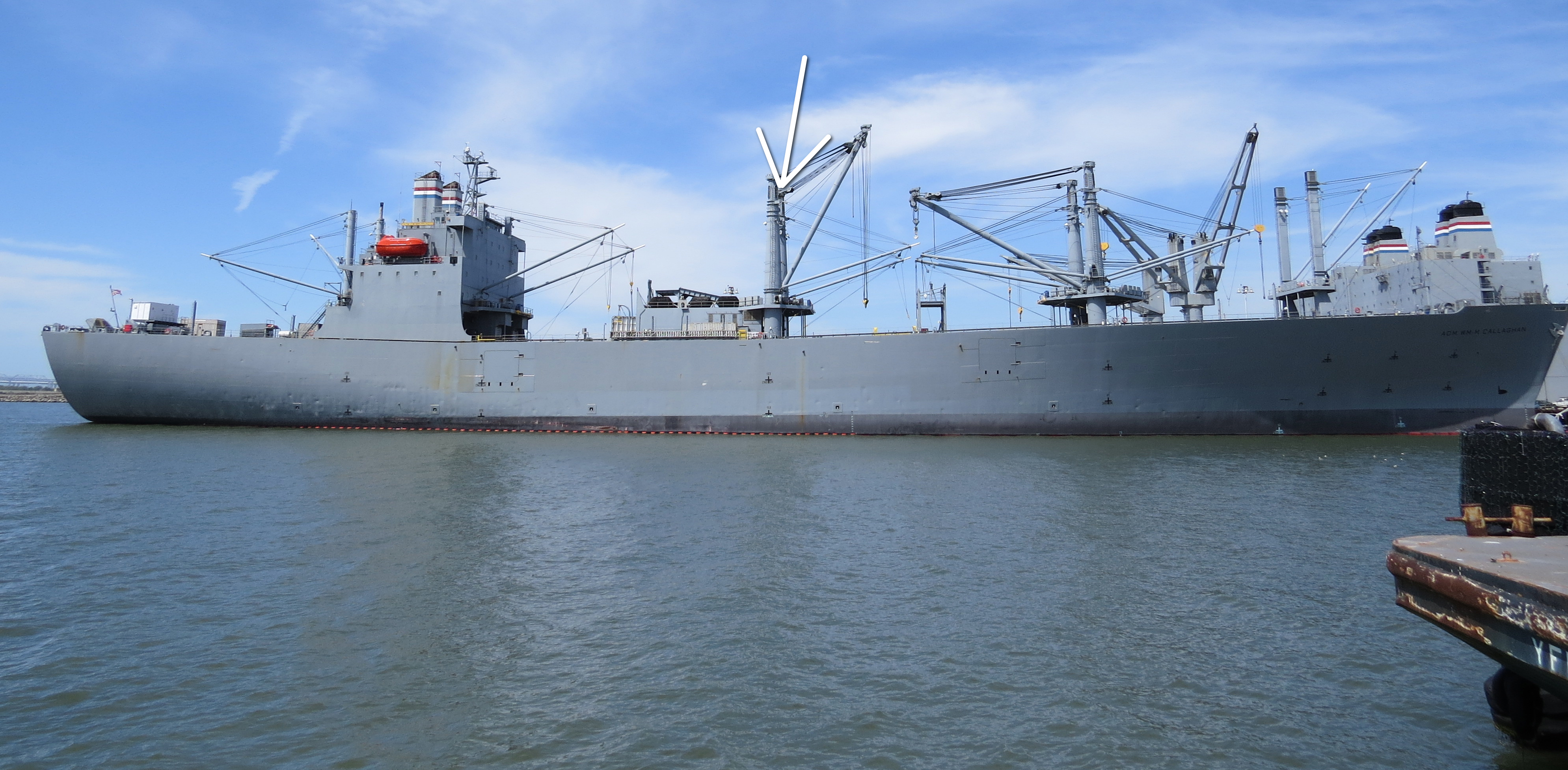
The maritime ready reserve ship Admiral William Callaghan stationed at Alameda Point.  Arrow indicates nest location.  Viewed from Pier 3 next to USS Hornet.
The maritime ready reserve ship Admiral William Callaghan stationed at Alameda Point. Arrow indicates nest location. Viewed from Pier 3 next to USS Hornet.

“The female interloper, however, was persistent.  She appeared dirty, maybe oiled,” said Feeney.  “And it became questionable if the nest had eggs or chicks.  We were no longer seeing brooding,” said Feeney.

On May 20, the captain of the Callaghan generously agreed to allow a few interested parties to climb up to the bridge and higher to look down into the nest to gather more information.  No eggs or chicks were seen.  “But it didn’t help much to understand this year’s osprey story,” said Feeney.  “A strong theory is that the interloper disturbed the nesting pair more often than my brief visits detected,” she said.  “The other ‘woman’ may have allowed enough distraction for the active nest to be pirated by gulls.” 

It was hoped that a second nesting attempt might occur, but it didn’t.  “There is always concern about adequate food availability and sufficient experience when birds nest,” said Feeney.  “And now we see competition is part of the game.” 

No one can say for sure what caused the failure.  “It is interesting, however,” said Feeney, “that two ospreys were still seen standing at both the 2012 nesting site that fledged one healthy big osprey and the 2013 ship nesting site as recently as August 23.”  “This site tenacity gives us hope that they will return in 2014.”

Video of osprey attempting to mate again after earlier nesting effort was disrupted by a second female.


This story also appeared in the Alameda Sun.

Bird life on the Nature Reserve at Alameda Point

The Alameda City Council, on March 19, 2013, unanimously approved a resolution affirming support for a nature reserve at Alameda Point.  The resolution calls for a zoning designation of “Nature Reserve” for the runway area formerly proposed for a national wildlife refuge.

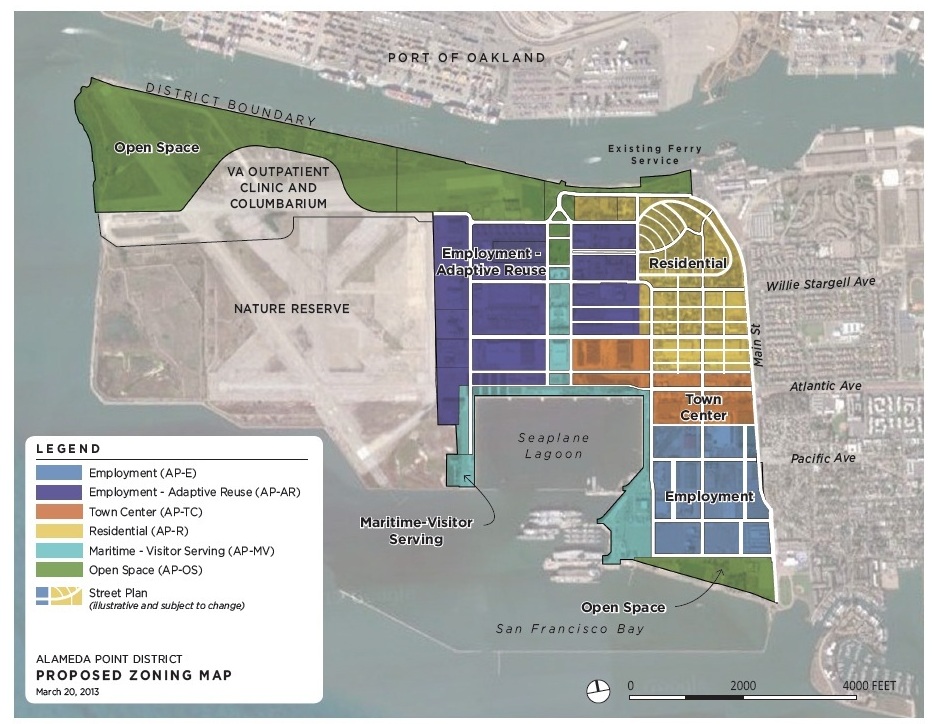
Alameda Point Proposed Zoning MapAfter an impasse was reached in negotiations between the Navy and the US Fish & Wildlife Service for creation of a national wildlife refuge in 2004, the property was offered to the Department of Veterans Affairs (VA).  The VA plans to build an outpatient clinic and columbarium on 112 acres of its land, but the remaining 511 acres of VA land will remain undeveloped.  The undeveloped area is where the endangered California Least Terns come to nest from early April to mid-August every year.  

The city’s nature reserve zoning designation will not have any mandatory impact on the VA, but rather is intended to convey the continuing value that the community places on wildlife conservation at Alameda Point.

March and April 2013 bird sightings on the Nature Reserve at Alameda Point.

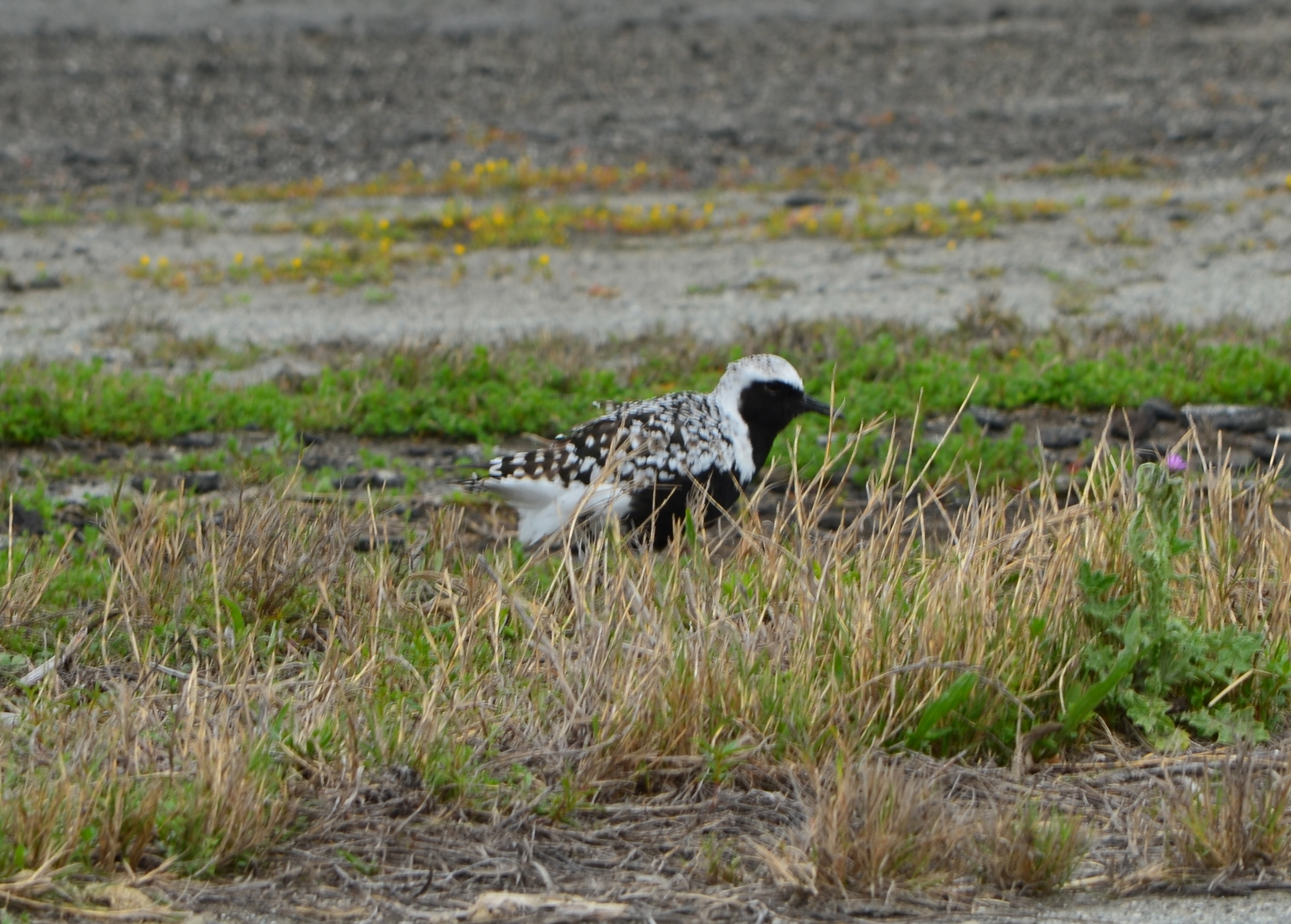
Black-bellied Plover.  Summer breeding range is the north coast of Alaska and the Canadian Arctic.
Black-bellied Plover. Summer breeding range is the north coast of Alaska and the Canadian Arctic.  Seen here on the margins of seasonal wetland that the VA project will impact.
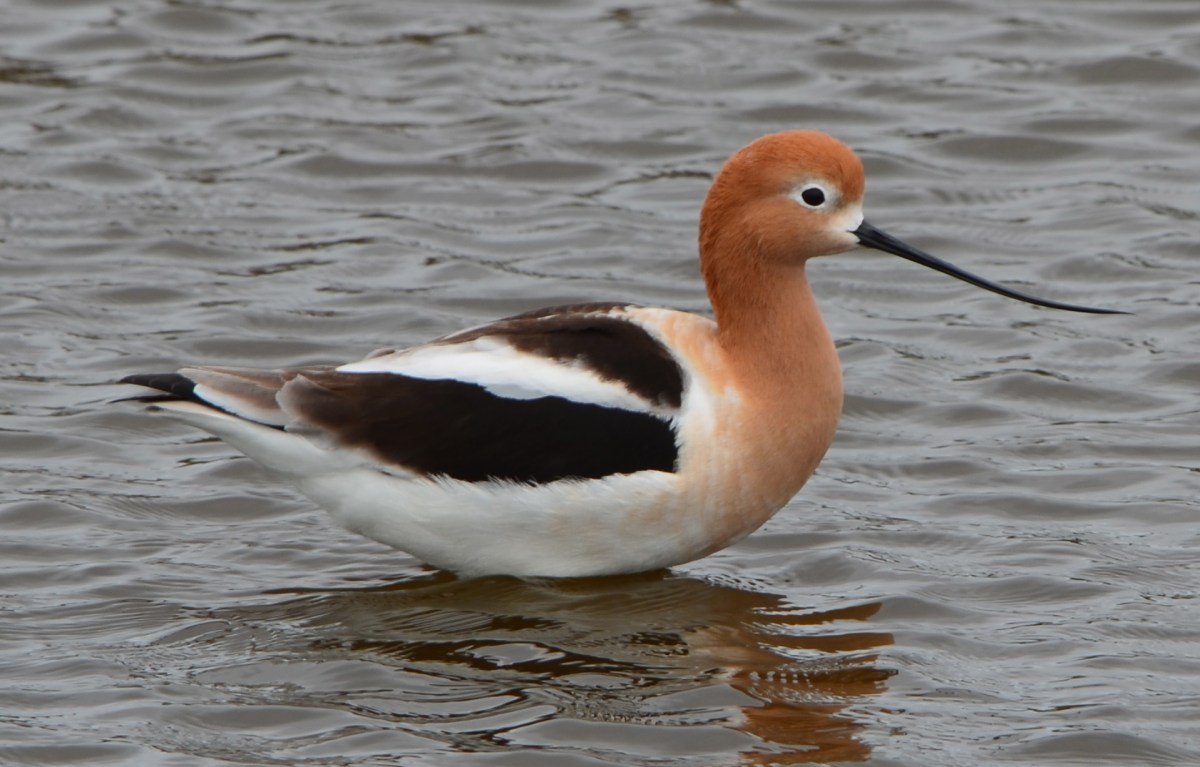
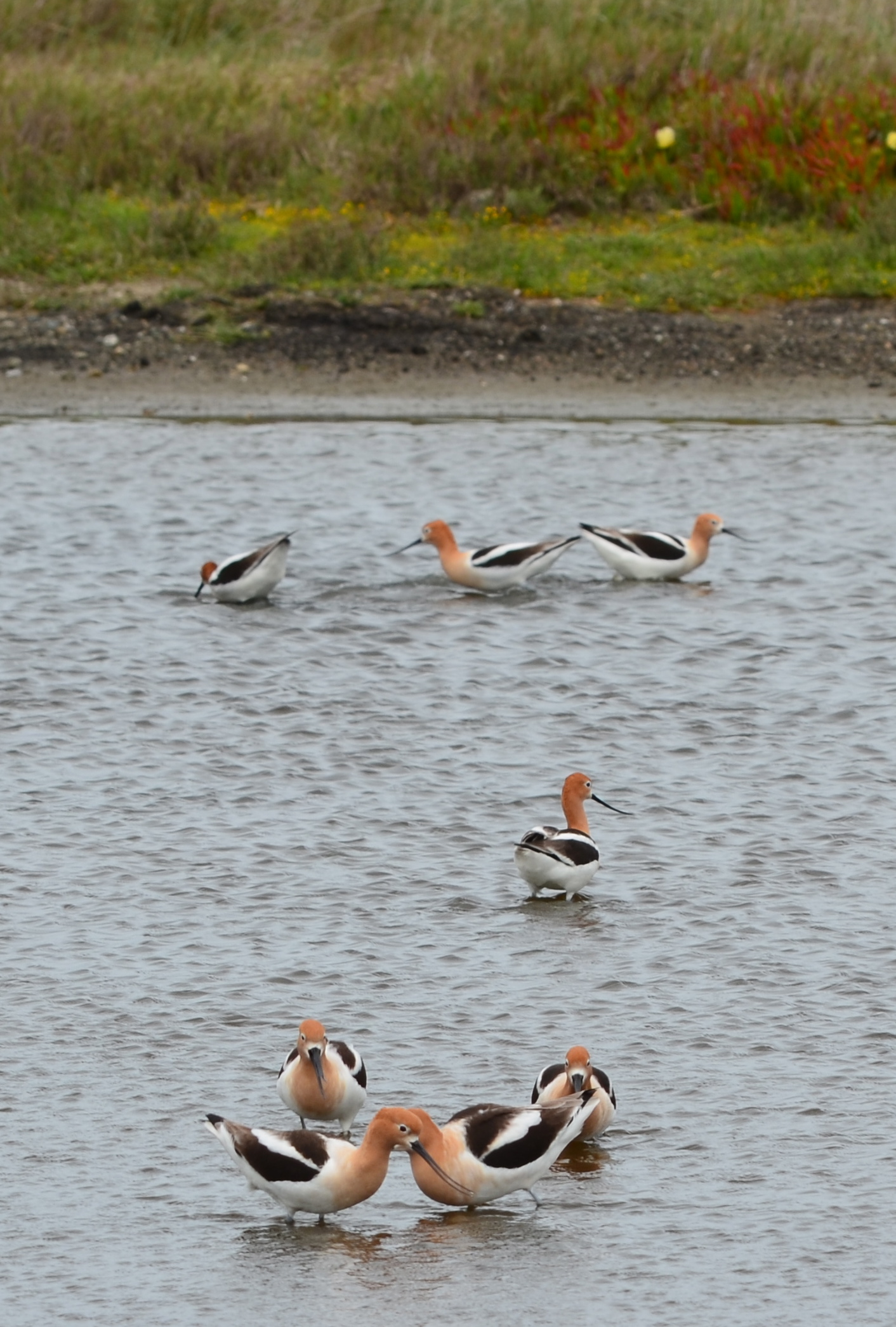
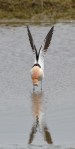
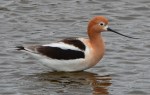
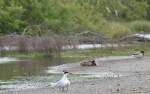
American Avocets on seasonal wetland that will be covered by VA clinic/columbarium project.  Can be replaced elsewhere on Nature Reserve.
American Avocets on seasonal wetland that will be covered by VA clinic/columbarium project. Can be replaced elsewhere on Nature Reserve.
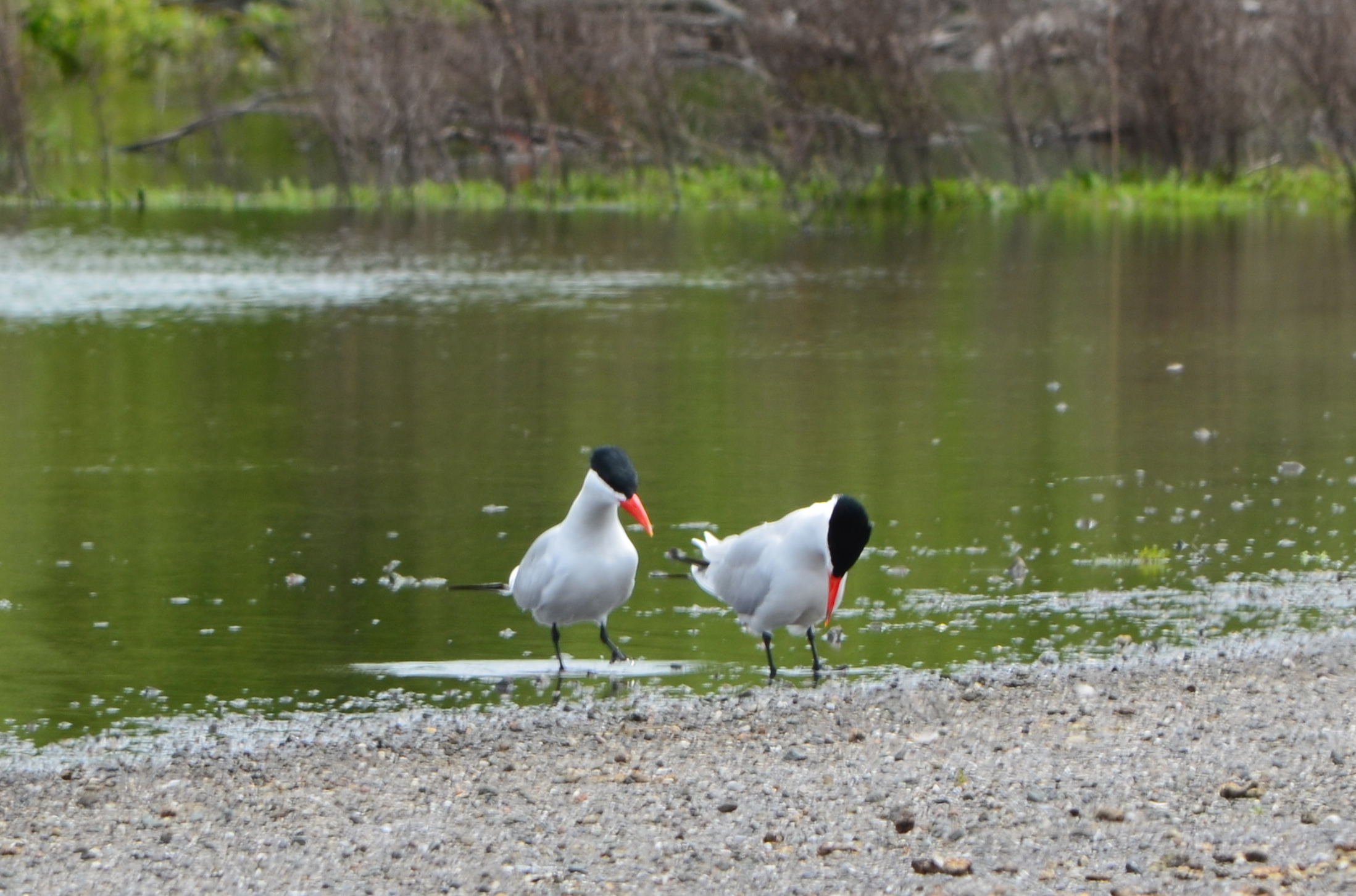
Caspian Terns next to seasonal wetland that will be impacted by VA project.
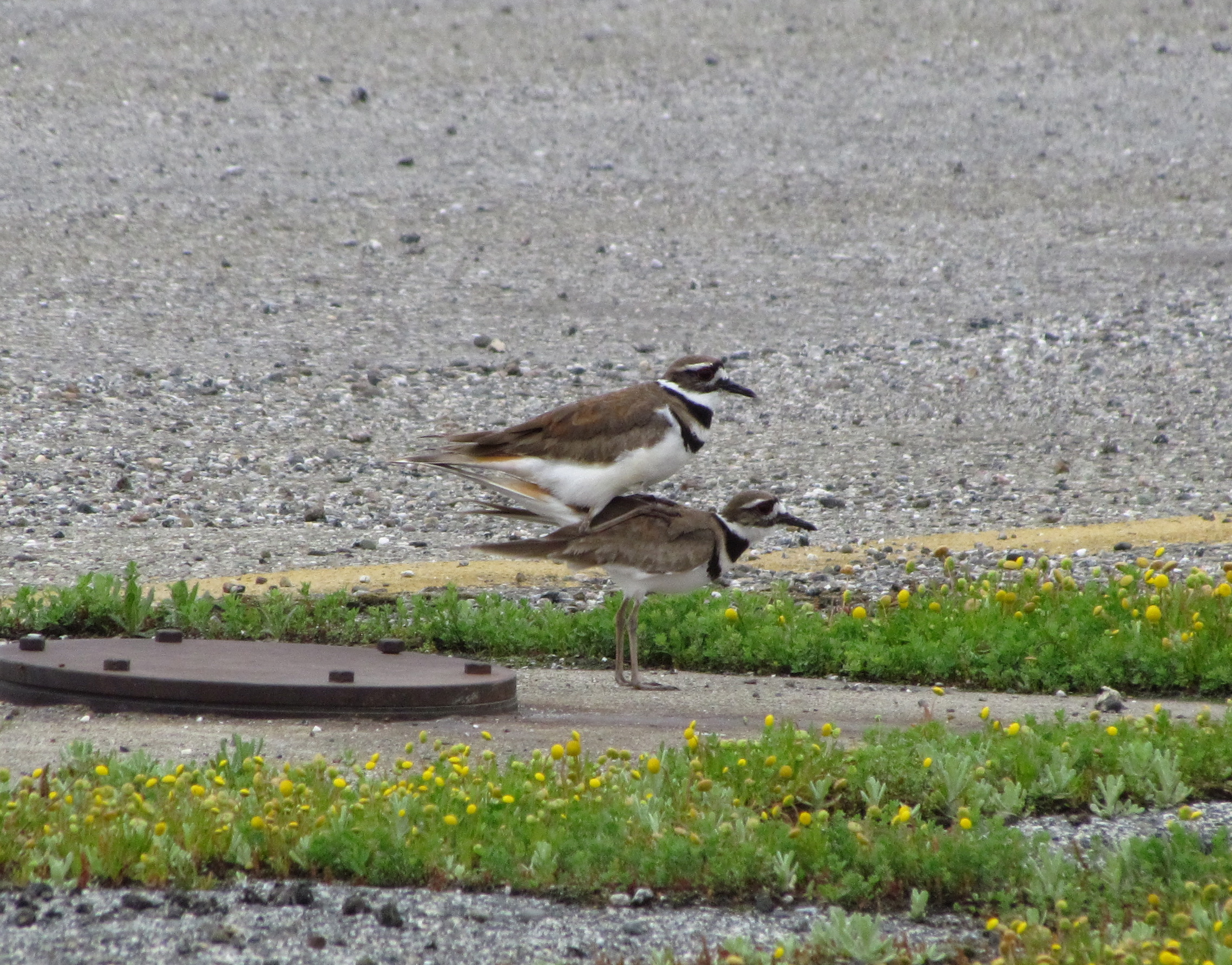
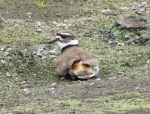
Killdeer mating next to least tern nesting site.  Killdeer often nest inside the least tern area.  Killdeer are attracted to the Nature Reserve in abundance.
Killdeer mating next to least tern nesting site. Killdeer often nest inside the least tern area. Killdeer are attracted to the Nature Reserve in abundance.
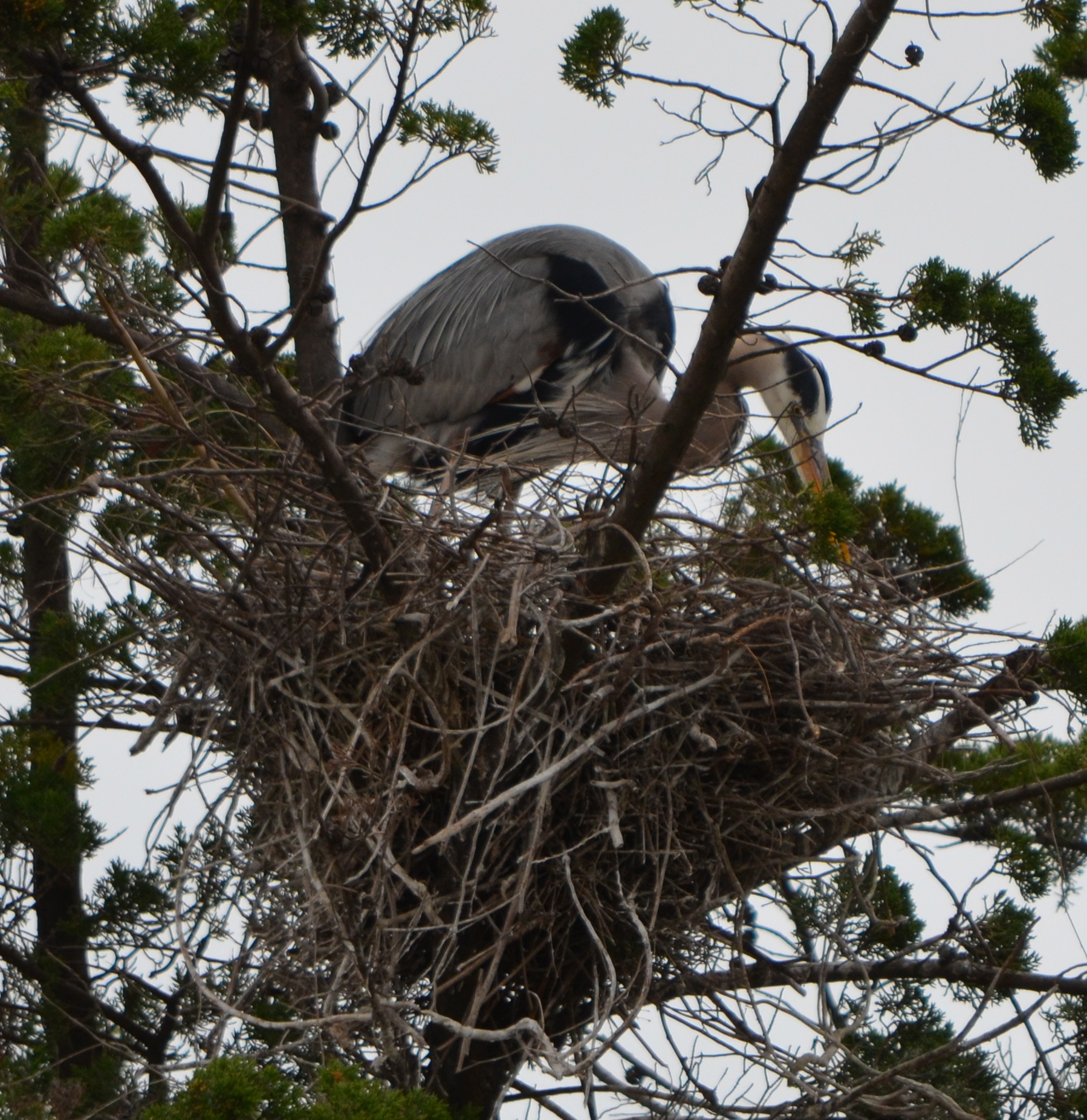
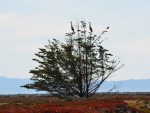
Great Blue Heron nesting in a cypress tree in the Runway Wetland.
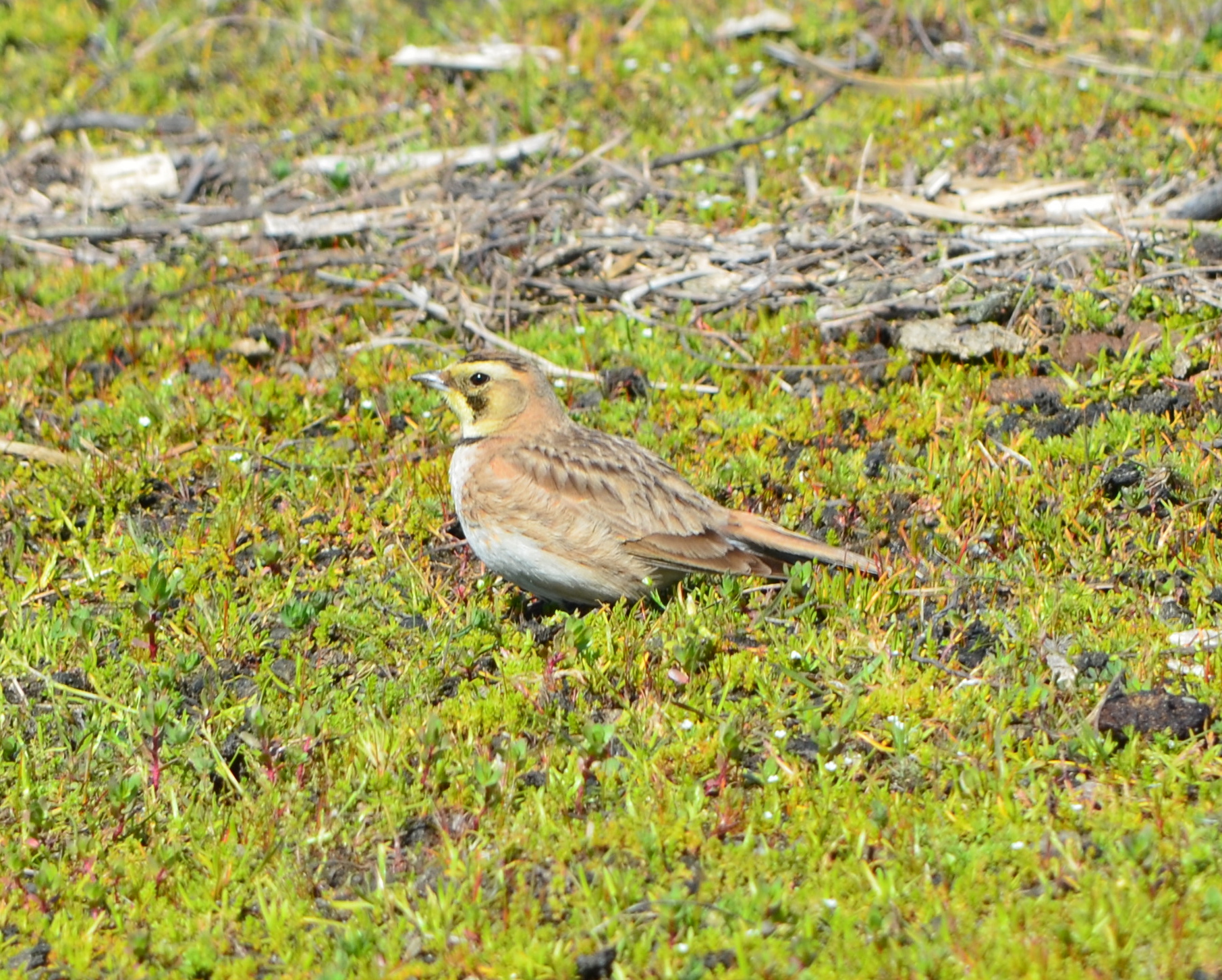
Horned Lark on foraging on grassland, with mate nearby.
Horned Lark foraging on grassland, with mate nearby.
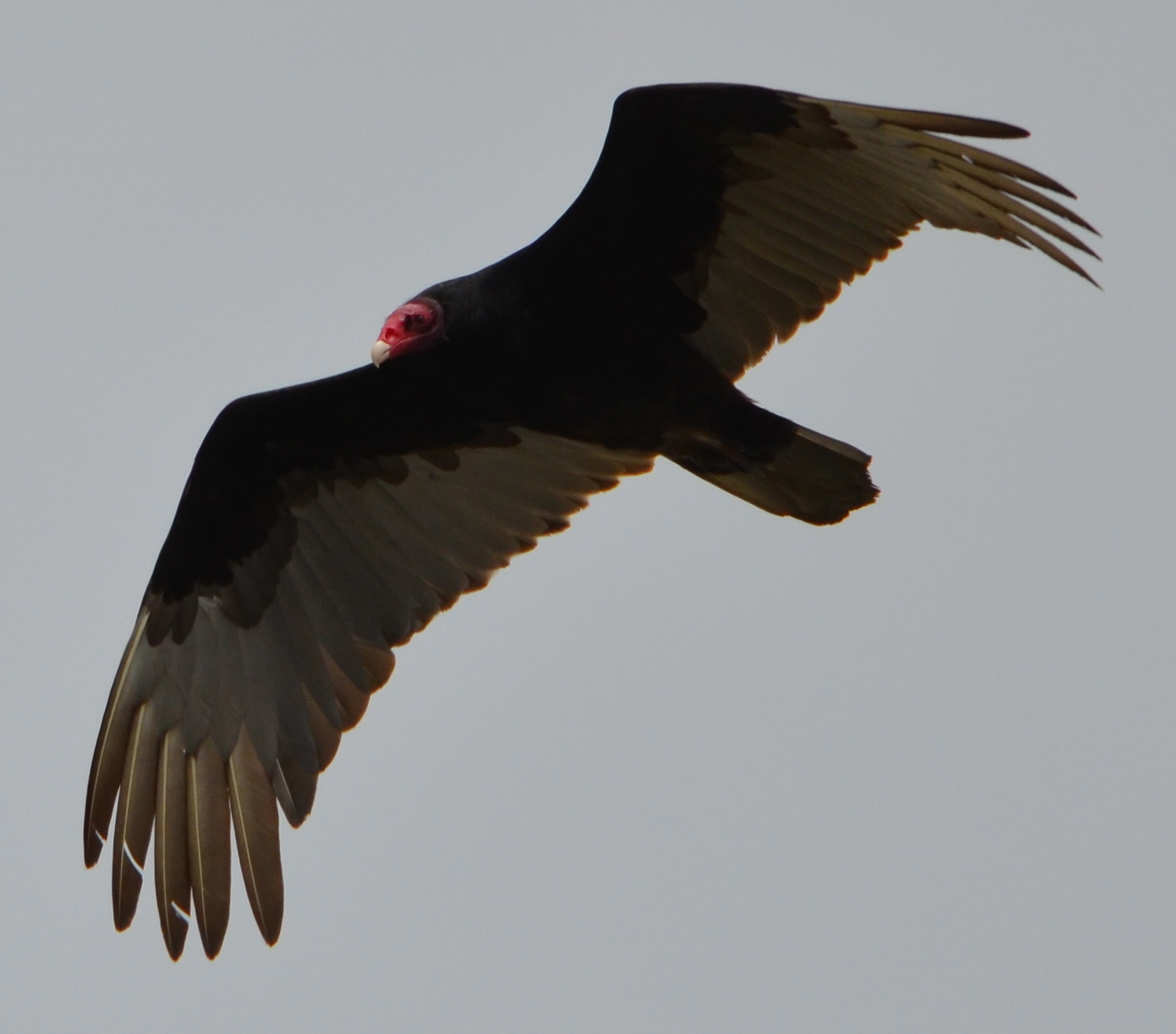
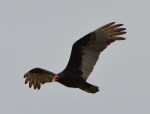
Turkey Vulture soaring over the reserve.  Turkey Vultures feed on animal carcasses, such as rabbits that have been taken by hawks.
Turkey Vulture soaring over the reserve. Turkey Vultures feed on animal carcasses, such as rabbits that have been taken by hawks.