

On December 16, from before dawn until dusk, hundreds of hardy volunteer birders trekked through parks, neighborhoods, wetlands, and woods to count birds during the Audubon Society’s annual Christmas Bird Count in the East Bay. In Alameda, three teams fanned out across the city. One team went to Alameda Point.
Carrying binoculars, spotting scopes, a clipboard, and bird reference books, bird watchers were participating in the annual Christmas Bird Count (CBC) organized by the Golden Gate Audubon Society. While the total number of birds tallied during the count helps to fill out the picture, the main goal of the day was to identify as many different species of bird as possible.
 “This is not just about counting birds,” said Gary Langham, Audubon’s chief scientist. “Data from the Audubon Christmas Bird Count are at the heart of hundreds of peer-reviewed scientific studies and inform decisions by the U.S. Fish and Wildlife Service, the Department of the Interior, and the EPA. Because birds are early indicators of environmental threats to habitats we share, this is a vital survey of North America and, increasingly, the Western Hemisphere.”
The Alameda Point team was led by Alameda resident Leora Feeney, of Friends of the Alameda Wildlife Refuge, and John Luther, one of the most experienced bird watchers in the state. Linda Vallee was responsible for tallying results on her clipboard list of bird species as they were reported.
 John’s 50 years of observing birds in every California county is evident in his quick identifications and economy of movement with his spotting scope. “There’s a Common Loon…and…it just went under…there it is…turn around(as if speaking to the bird)…it’s… a Red-throated Loon,” he would say. “White-crowned Sparrows – two.”
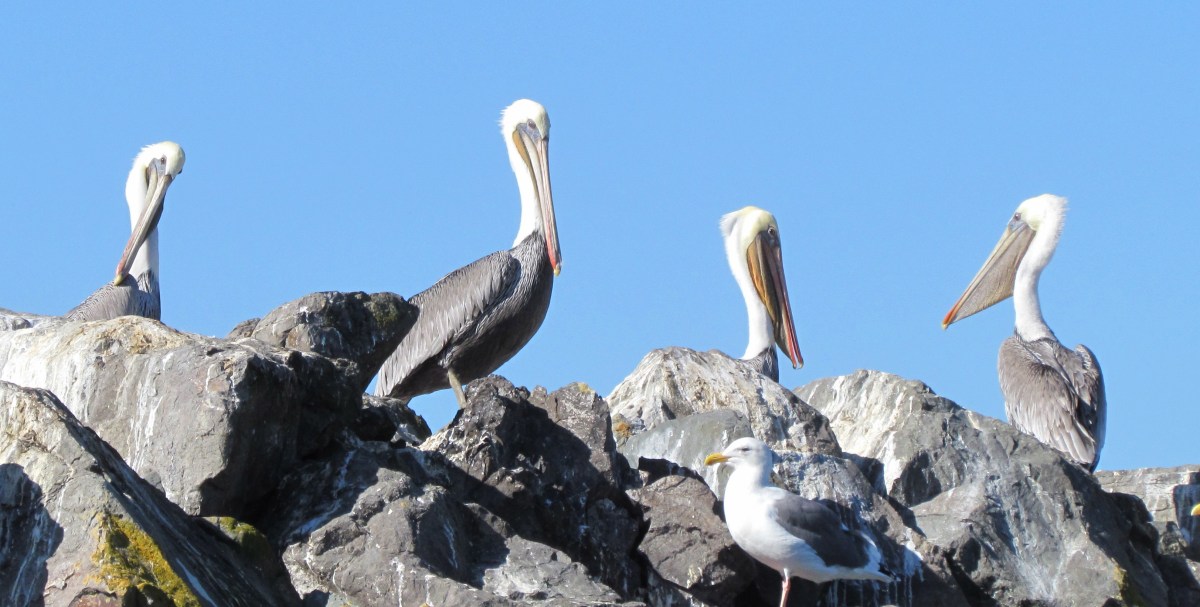
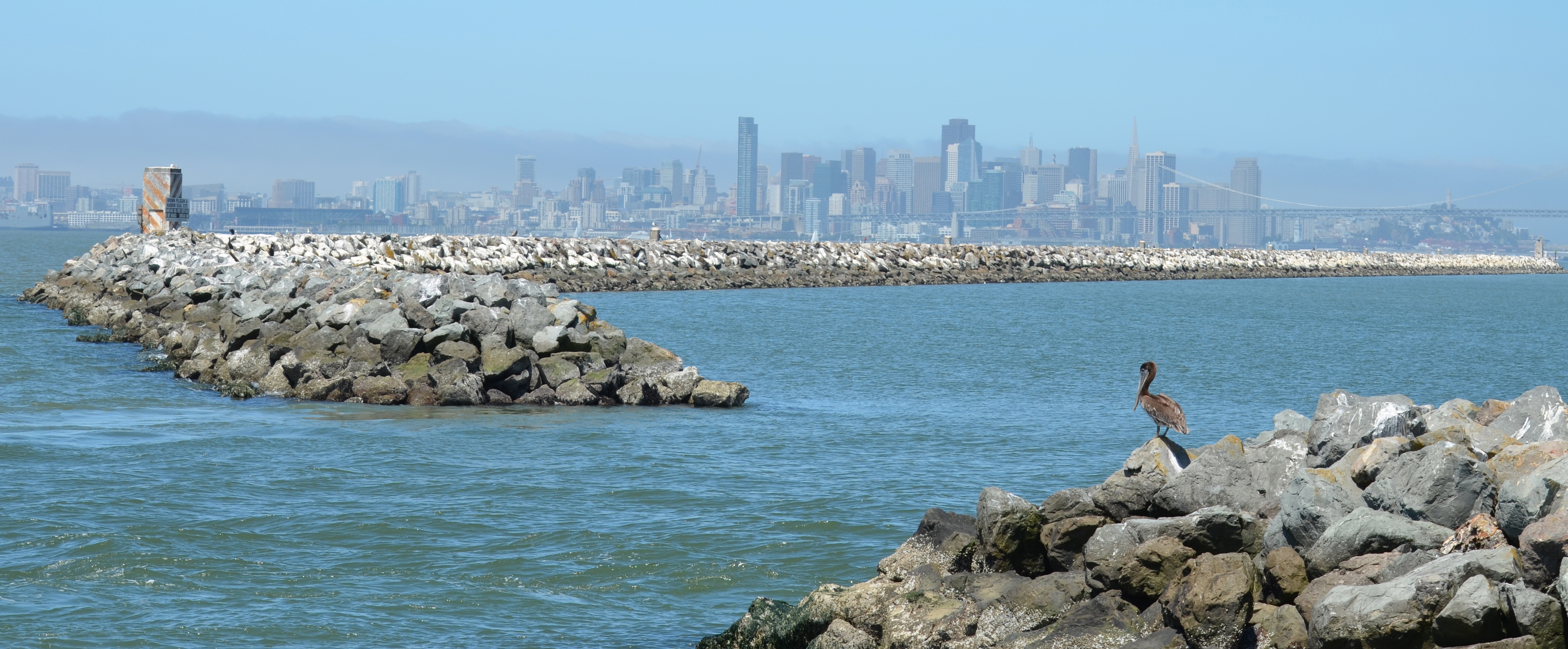
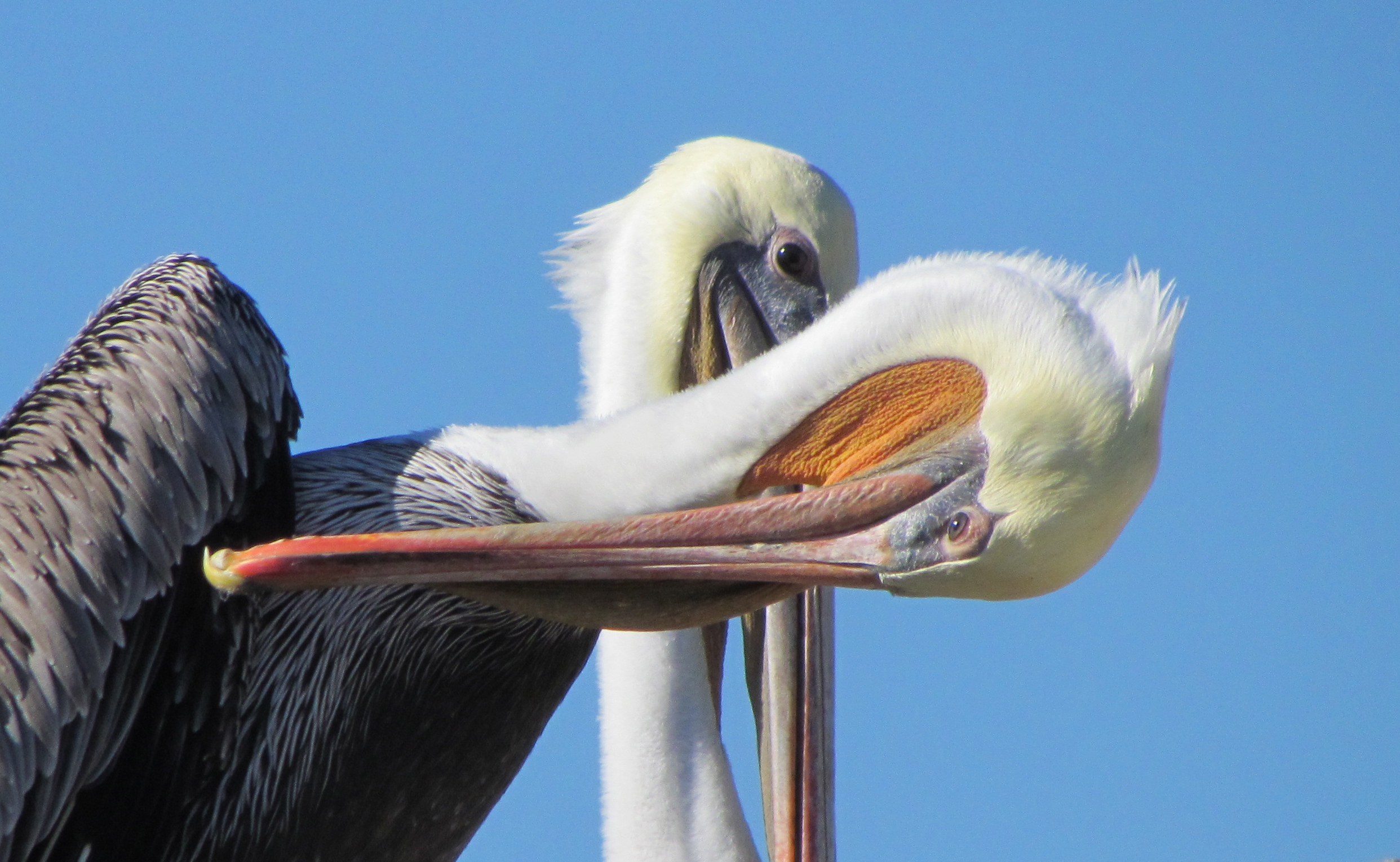
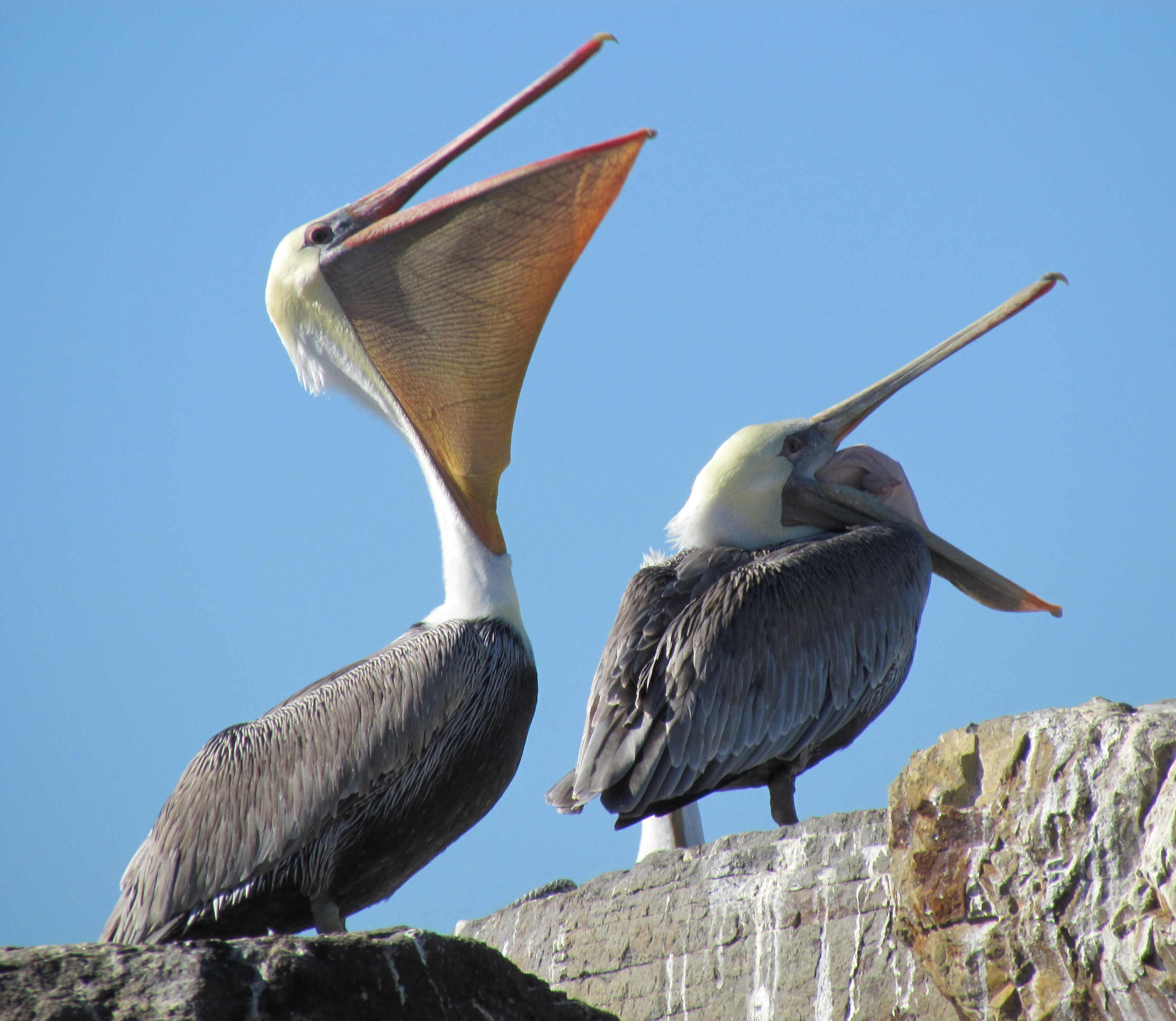
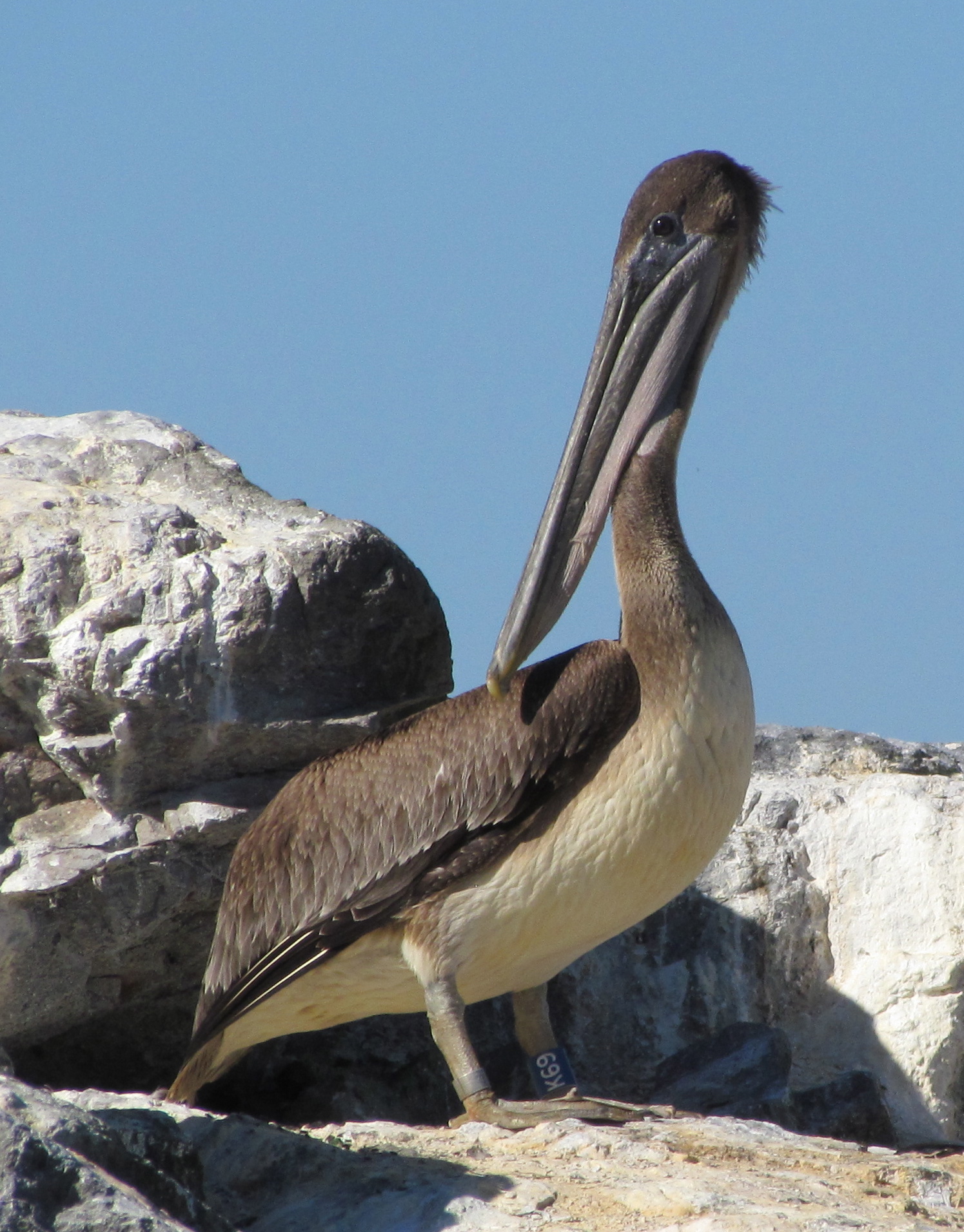
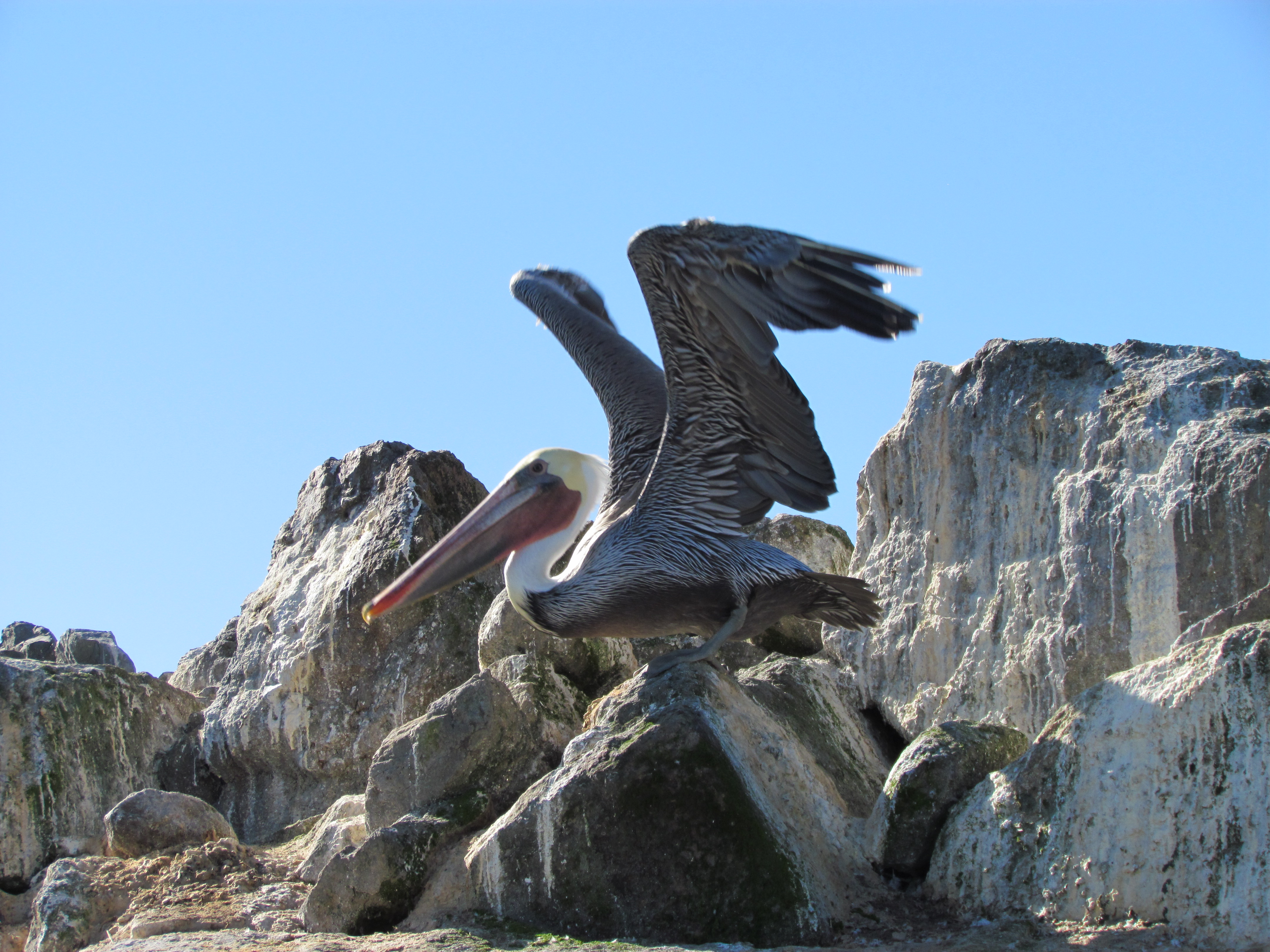
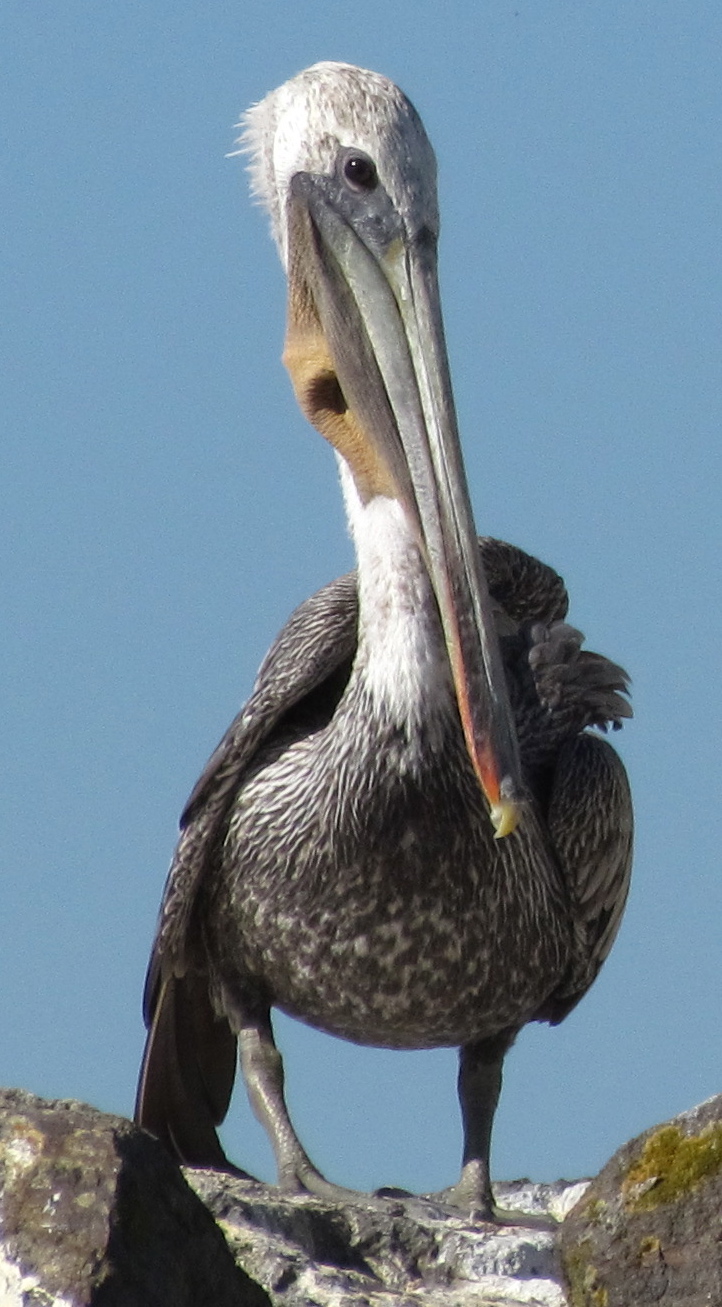
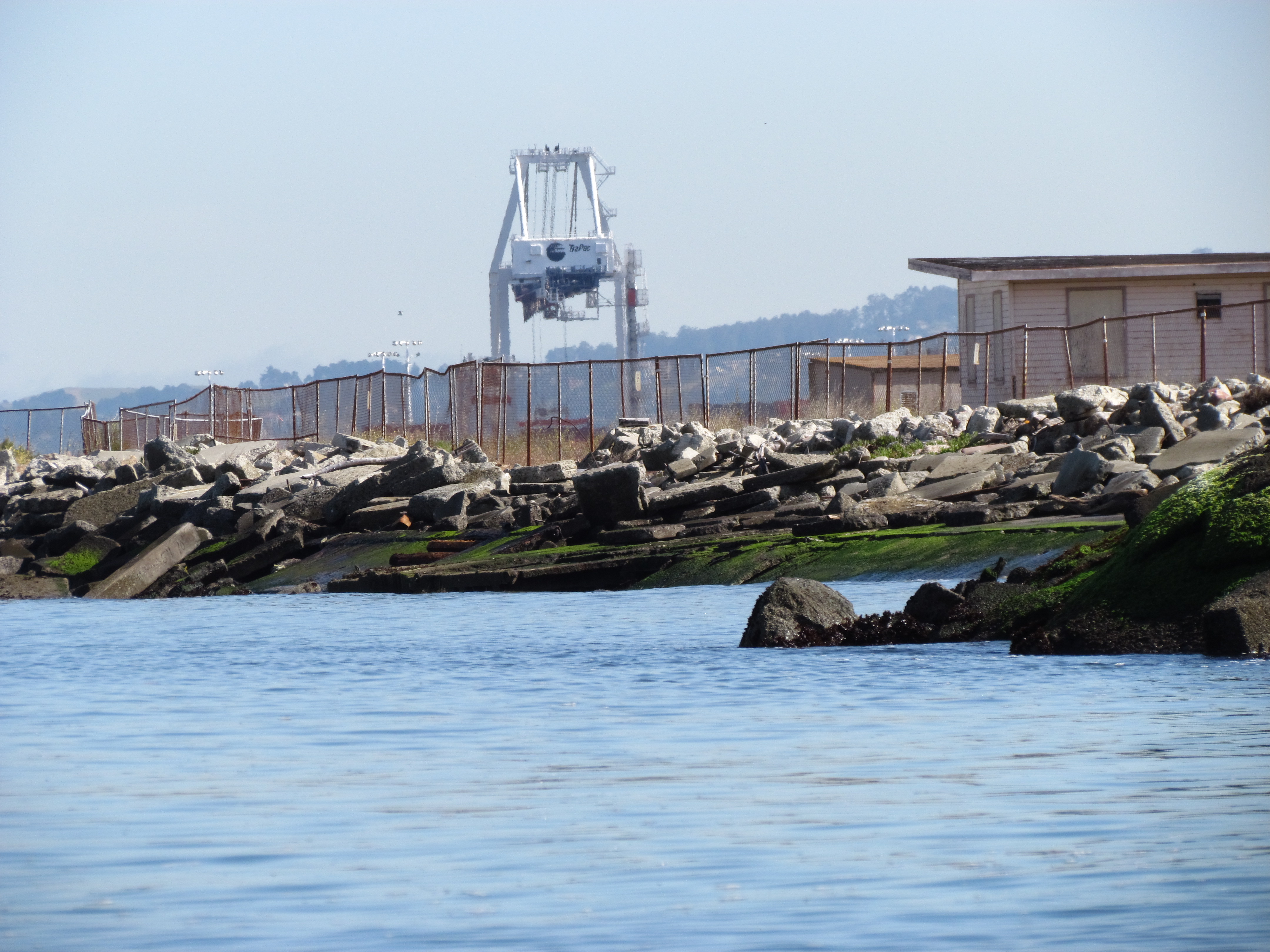
One thing you learn about bird counting etiquette, if you’ve never been to one of these events, is that you should not chit chat with someone while they are staring intently through a scope. They could be trying to systematically count hundreds of birds by adding groups of 5 or 20 or 100 in their head as they keep landmark references in focus. At one stop, attention turned to Breakwater Island on the other side of the Alameda Point Channel where an unusually high number of California brown pelicans (for this time of year) were roosting amongst the cormorants. Leora counted 304 pelicans.
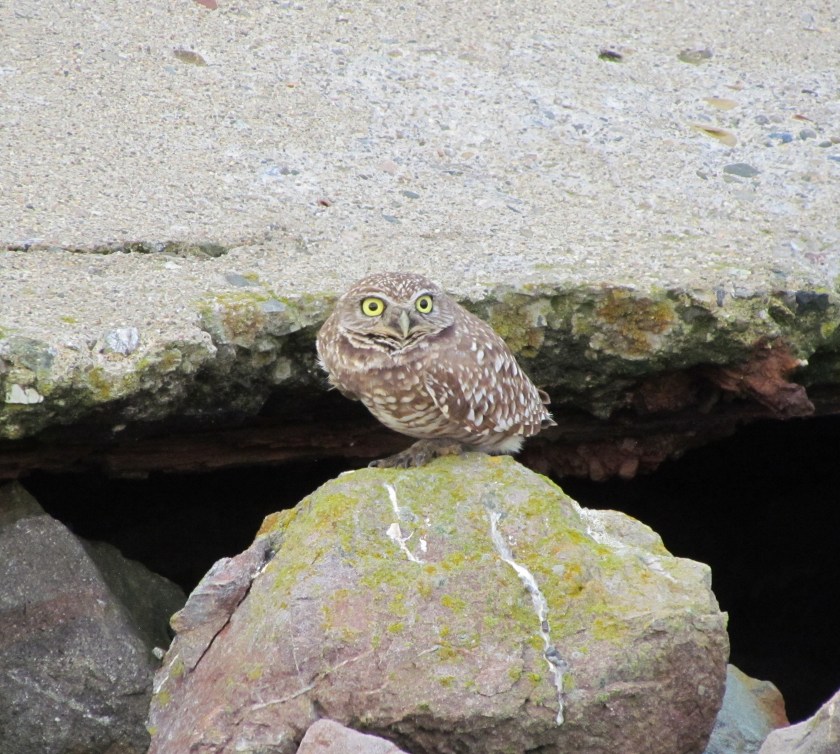
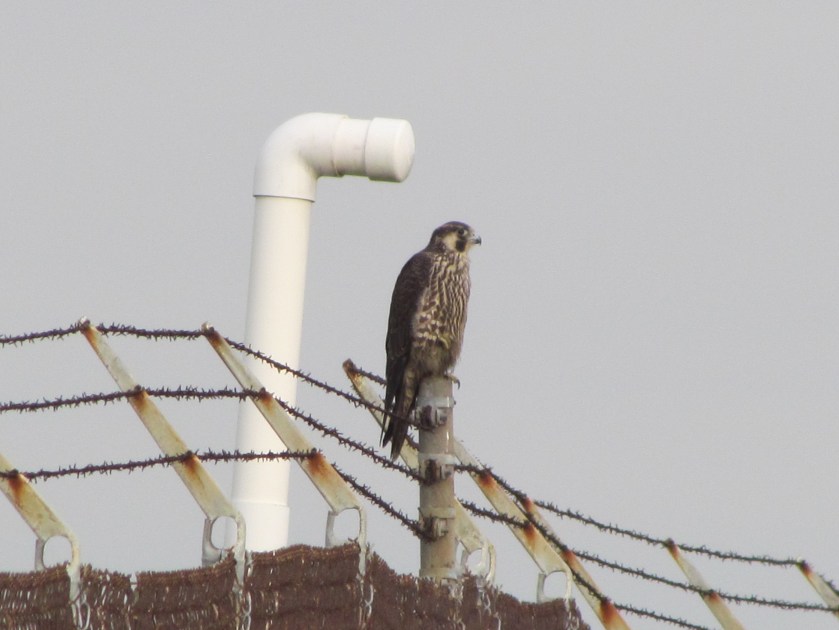
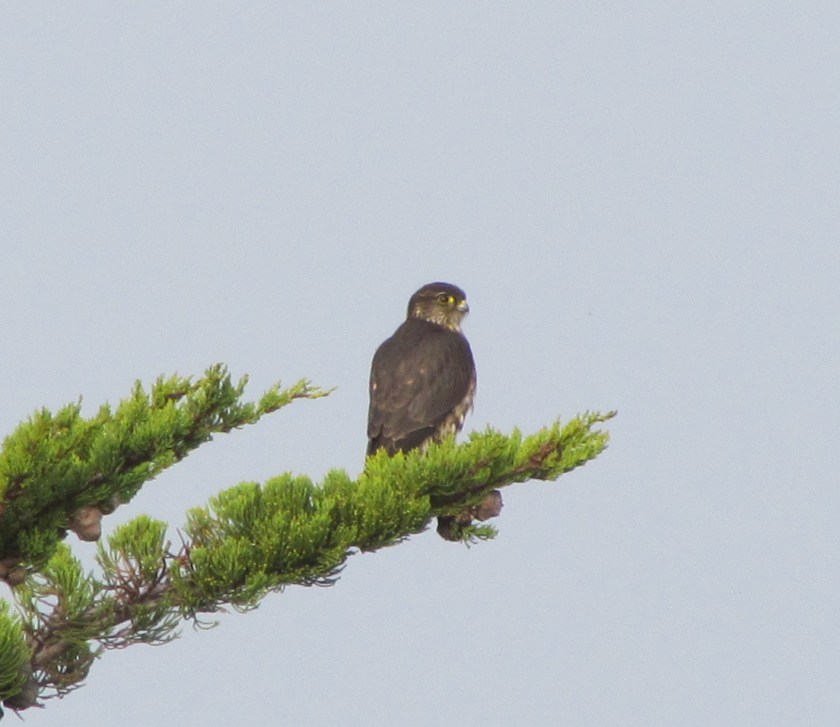
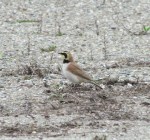
Continuing around the refuge, there were Burrowing Owls, Killdeer, a Horned Lark, a Peregrine Falcon perched on a fence, and a much smaller falcon not commonly seen around Alameda Point called a Merlin. Often the birds were in fast moving groups darting around, landing, skip, skip, pick, pick, and off they flew.
 The biggest surprise came at the thick stand of willows at the north boundary of the refuge. There, just inside the branches was a Great Horned Owl, a bird that Leora said she had never seen in eight years of doing twice-monthly bird surveys on the refuge. Even more surprising was how approachable the owl was as it was being photographed, slowly turning its its head 180 degrees, appearing fearless.
After leaving the refuge, the team made other stops at the Seaplane Lagoon, the Inner Harbor on the south side, Breakwater Beach, and the neighborhood where the Big Whites are located. The Big Whites neighborhood has a very good variety of mature trees, ideal for bird watching.
The preliminary total for all species sighted in the Oakland count area on Sunday (the 15 mile circle that is centered at Lake Merritt and includes Alameda) was 177 species. According to GGAS Communications Director Ilana DeBare, “That is pretty much in line with a normal ‘good’ year. There were 29 teams total, with well over 100 participants.”
“Christmas Bird Counts combine many of the things Golden Gate Audubon stands for,” said GGAS Executive Director Mike Lynes. “It’s a fun day with a serious purpose. Everyday volunteer bird-watchers become citizen scientists, contributing data that will help inform future decisions about Bay Area bird life and habitat.” The San Francisco Christmas Bird Count is on December 27.




Read background info on the Audubon Society’s Christmas Bird Count here.
Follow reports about the Oakland and San Francisco Christmas Bird Counts on the Golden Gate Audubon Society’s website.
Read more about the Christmas Bird Count in Alameda on the Alameda Patch.

 The study went on to extol the intersecting virtues of wildlife habitat protection and economic value. “While important in their own right, the benefits that would be generated by establishment of the wildlife refuge are not limited to habitat and species protection,” stated Hrubes and Associates. “[T]here are indeed potential economic benefits that could derive from a wildlife refuge/day-use recreation area located in the central Bay Area. That is, the wildlife refuge proposal is not an ‘either/or’ choice between environmental quality and economic development. Rather, it constitutes a land use that not only will take optimal advantage of the environmental attributes the site has to offer but also will generate economic activity that benefits the local region. Further, it will enhance the economic value for development of the remainder of the NAS.”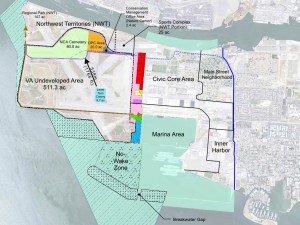
 However, based on public statements from the VA about their timeline for construction, it does not appear that they have any intention of doing a full EIS, and thus their environmental commitment will be limited. This will mean that rather than adding grasslands to perimeter areas that already have pockets of grasslands between runways and taxiways in order to divert hawks and other avian predators away from nesting terns, they will keep the refuge looking as much like a fenced-in stadium parking lot as possible (like it has been for the past decade). The pretext is that it removes habitat for predators, but in this case they would be torturing the concept by making the tern nesting site so conspicuous that it will invite predation. Virtually all of the least tern predation events have been from flying predators—like the peregrine falcons that come from miles away on the other side of Alameda.
 The real reasons for maintaining the industrial look are to reduce maintenance and capital costs, and to exploit the paved areas for









 Alameda Point Environmental Report