City may shift its approach to economic development at Alameda Point

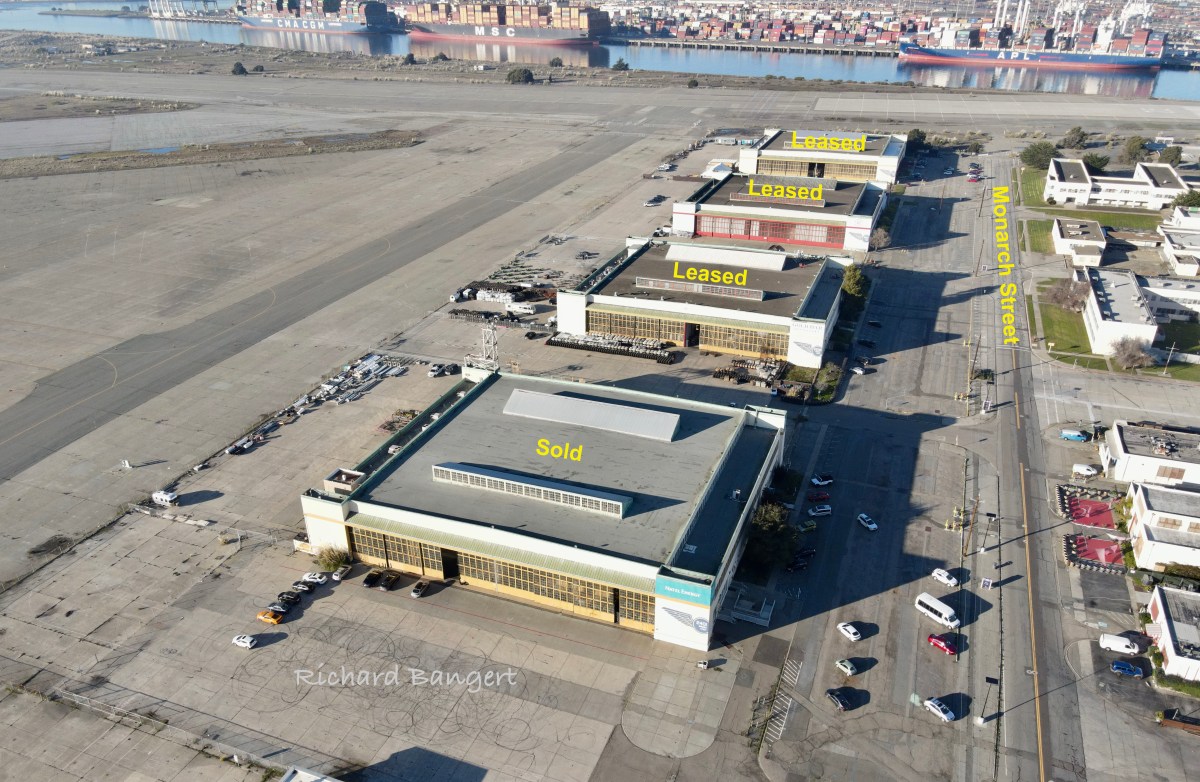
After years of the current city policy not producing the desired pace of building new infrastructure at Alameda Point, the city may change its focus from leasing to selling property.

On January 20, 2026, the City Council will hold a public workshop to discuss plans to boost property sales at Alameda Point that will, in turn, fund new infrastructure in the Adaptive Reuse Area.  So far, there have been only five buildings sold in this area generating approximately $31 million, which has already been spent on upgrading some street infrastructure.  Meanwhile, the total cost for new infrastructure — streets, utilities, parks, levees, stormwater basins — for all of Alameda Point has jumped from $700 million in 2020 to $840 million in 2025, according to the workshop staff report.

Continue reading “City may shift its approach to economic development at Alameda Point”

Two possibilities for Alameda Point VA property following veterans project cancellation

Alameda could find itself back at square one, or at least close to it.

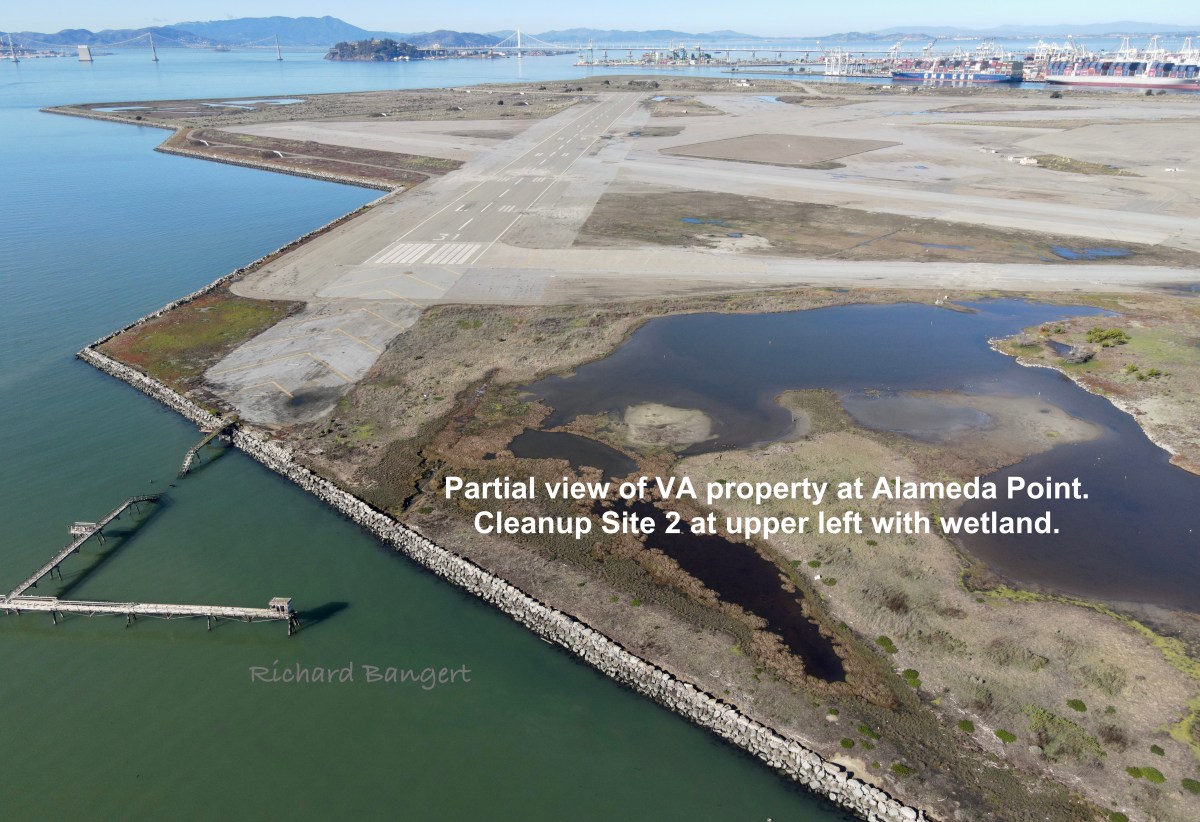
In September 2025, Representative Lateefah Simon informed city officials that the U.S. Department of Veterans Affairs (VA) had decided to cancel plans for a clinic and columbarium cemetery at Alameda Point.  The news became public when a letter to the VA from Congresswomen Lateefah Simon and Nancy Pelosi and Senators Adam Schiff and Alex Padilla was released on December 12, 2025. 

The congressional delegation urged the VA to reconsider its decision to terminate the project.  On December 15, 2025, public officials and representatives of veterans organizations made a similar plea on the steps of Alameda’s Veterans Memorial Building. 

If the VA sticks to its decision to terminate the project, it is unclear what will happen next. But two land-disposal processes are on the table.

The delegation’s letter to the VA questioned why the agency plans to turn over the land to the federal General Services Administration (GSA), which handles disposing of real estate.  The congressional delegation pointed out that the land could go back to the Navy, according to the VA/Navy land transfer agreement.  The letter explained that the “VA and the Navy have a binding agreement that requires VA to notify the Navy of its decision to terminate the project within 30 days of its determination, and permits the Navy to receive the property if VA makes such a decision within fifteen years of this 2014 agreement.” 

This means either the GSA or the Navy will dispose of the federal land.  History and current events will likely play a role in both scenarios.

Continue reading “Two possibilities for Alameda Point VA property following veterans project cancellation”

Harbor seals make use of commercial dock in Seaplane Lagoon

Over the years, harbor seal observers on the former Alameda Point Harbor Seal Monitors Facebook page often asked, “Do we need another harbor seal float?”  It appears the seals have provided their own answer. 

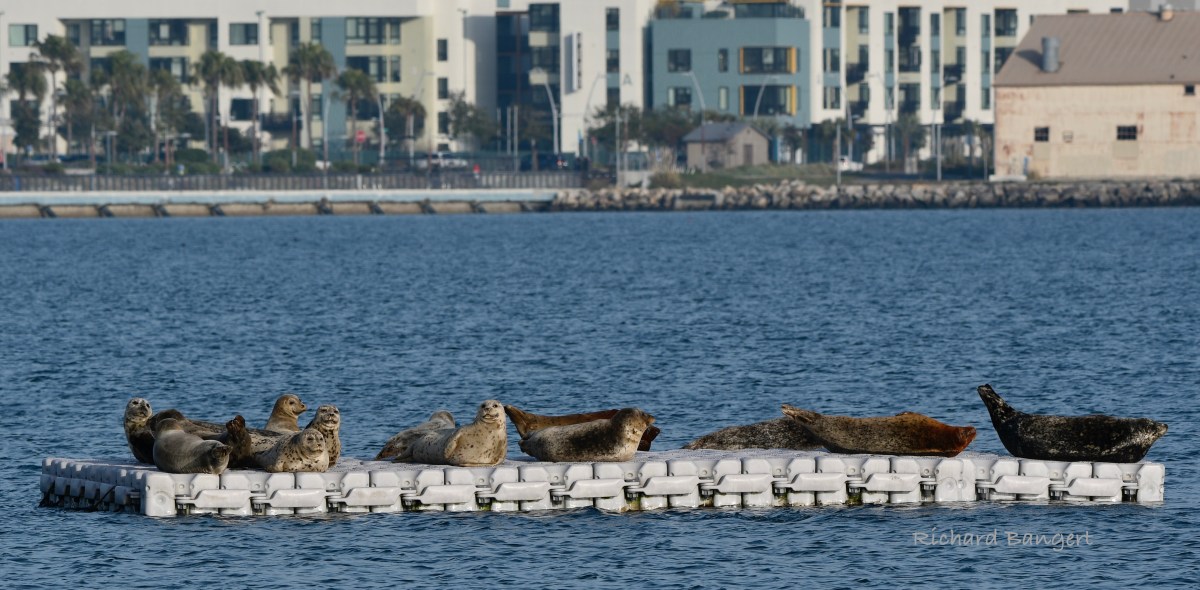
December is when the numbers of harbor seals start increasing at Alameda Point in anticipation of the winter herring spawning in the vicinity.  The influx of seals leads to overcrowding on the specially built float near the ferry maintenance facility and Bay Trail.  It has been happening since the harbor seal float was deployed in the summer of 2016.  Again this December, the float has been fully occupied with as many as 75 seals (verified by numbering a printed photo) during part of the day and not an inch to spare.

Harbor seals arriving at Alameda Point this December found an alternative spot to the overcrowded float when they ventured into the nearby Seaplane Lagoon.  Their additional haul-out location is on a plastic commercial dock owned by Saildrone, the maker of autonomous battery-powered boats capable of gathering marine scientific data around the world.  Saildrone vessels, manufactured in a hangar on West Tower Avenue, can often be seen moored in their leased space in the Seaplane Lagoon.   

Continue reading “Harbor seals make use of commercial dock in Seaplane Lagoon”

City Council sidesteps community planning process for Enterprise Park

During a closed session meeting of the City Council on October 21, 2025, the council unanimously authorized city staff to prepare a long-term lease agreement with a private developer to build a commercial surf pool and associated amenities in Enterprise Park at Alameda Point.  They did so, despite the fact that no community-at-large master planning process for this shoreline park, as was done with other parks, has ever been conducted to find out if Alamedans want a commercial enterprise of this type anchoring the park.

If the project moves forward, a significant part of this public parkland will become fenced off and privatized under a no-bid contract.

Continue reading “City Council sidesteps community planning process for Enterprise Park”

Chevron’s tardy cleanup could lose Pacific Fusion deal for Alameda

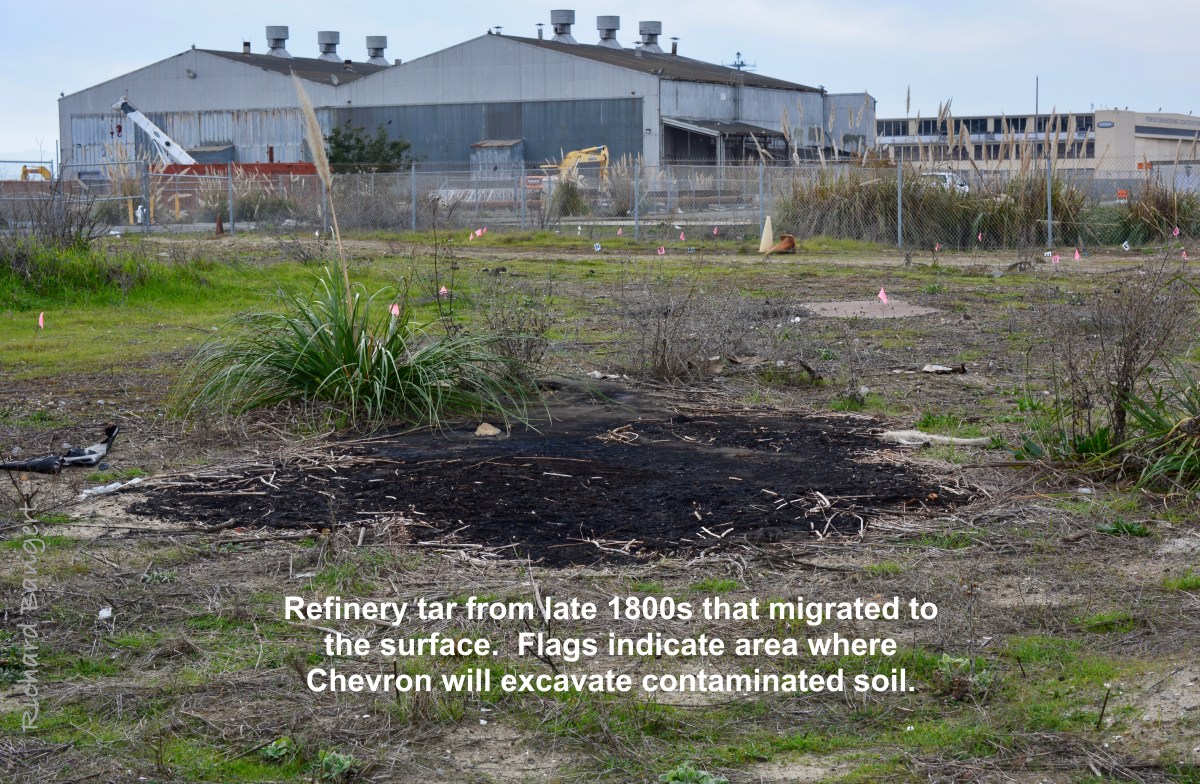
Cleaning up buried tar left behind by an oil refinery at Alameda Point in the early 1900s did not appear to be a top priority until startup company Pacific Fusion came to City Hall in 2024 with a proposal to purchase about 12 acres of land, including the area where the old refinery was located.  The proposal involves building a demonstration research facility, with $900 million in investment capital to back them up. 

Two years earlier, in 2022, the Regional Water Quality Control Board (Water Board) had reached a voluntary agreement with Chevron, which bought the refinery in the early 1900s and subsequently closed it down, to clean up the site to meet regulatory standards.  But Chevron’s two deadlines for producing a cleanup plan, the first on February 28, 2025, and the second on July 18, 2025, were not met.

Continue reading “Chevron’s tardy cleanup could lose Pacific Fusion deal for Alameda”

PFAS contamination successfully blocked from entering Oakland Estuary

On July 23, 2025, the Navy released the results of its pilot study to determine if injecting a specialized carbon solution into the ground would block hazardous PFAS chemicals from migrating into the Oakland Estuary from Alameda Point. 

The area at issue, a stone’s throw from the estuary, had once been used by Navy firefighters to practice putting out fires with firefighting foam that contained PFAS chemicals.  Scientists have figured out a way to contain, but not destroy, these hazardous chemicals.  Follow-up groundwater samples show that the carbon barrier achieved between 99 percent and 100 percent reduction in PFAS moving beyond the barrier.

Continue reading “PFAS contamination successfully blocked from entering Oakland Estuary”

Burst of new development activity underway at Alameda Point

The flurry of new development activity currently underway at Alameda Point is something that hasn’t been seen since 2018 when work began on the Site A residential and commercial project.  The vast majority of demolition taking place is for long-awaited housing projects.  But two buildings were taken down simply because they were unsafe, unusable eyesores.  And a parking lot is being repurposed for the Food Bank’s new store. 

Continue reading “Burst of new development activity underway at Alameda Point”