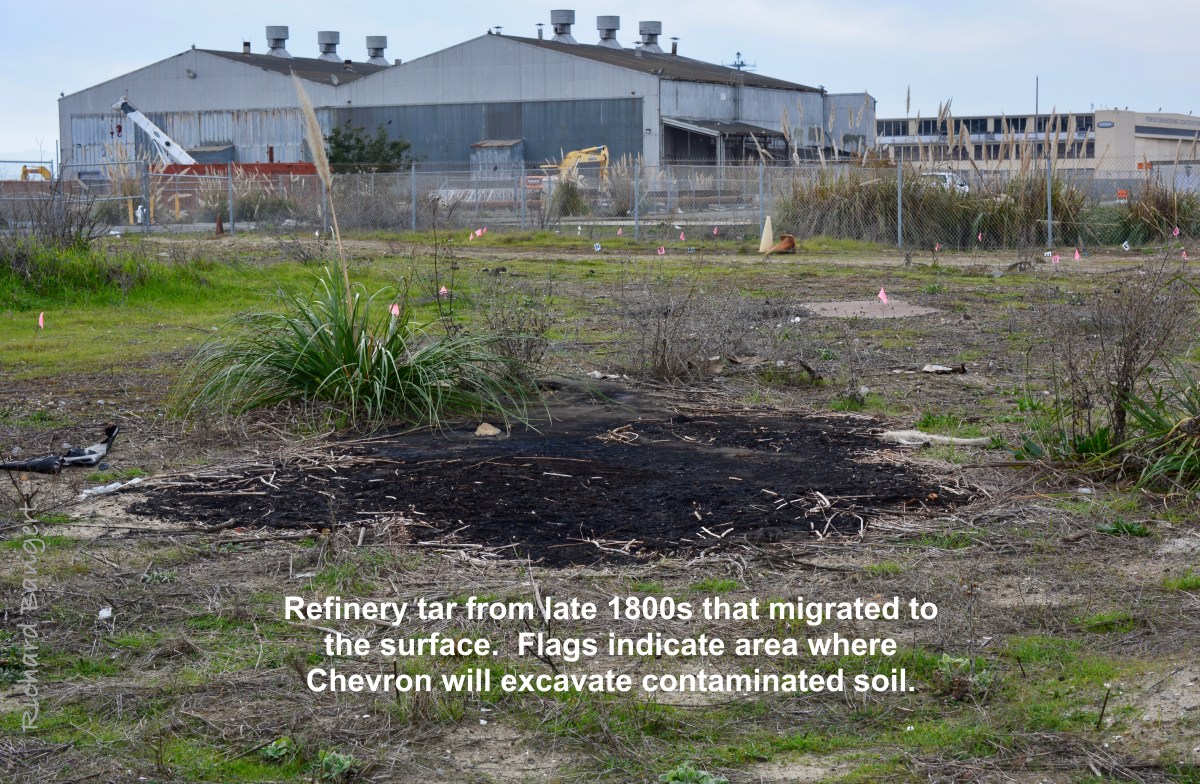
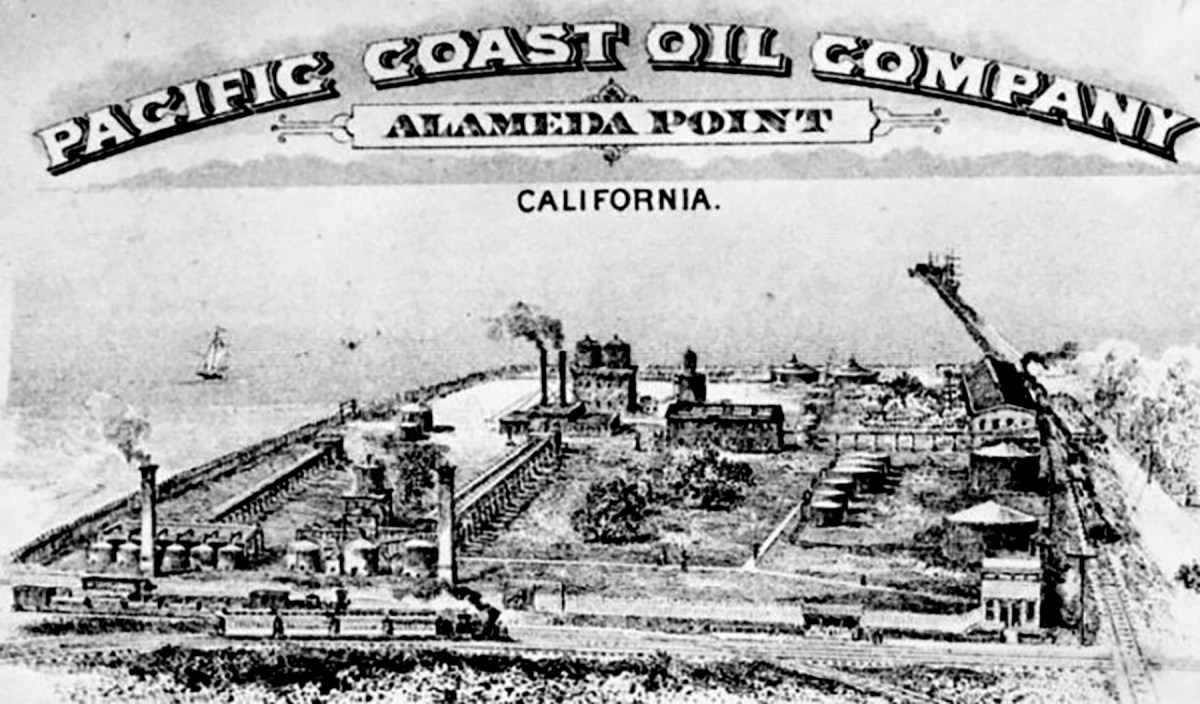
At the urging of the San Francisco Bay Regional Water Quality Control Board (Water Board) in 2021, Chevron agreed to return to Alameda Point and clean up the tar waste left behind when its refinery that produced kerosene was closed in 1903. The site was eventually filled with up to 10 feet of soil during construction of the Naval Air Station.
Chevron began the process of cleaning up buried tar at its old refinery site in May 2023 by taking 43 soil samples to characterize the extent of contamination. The sampling pipes were driven down 20 feet. But a plan for digging up the tar was not submitted to the Water Board until September 2025.
The Water Board and Chevron are currently in the process of ironing out details of the plan, with formal approval by the Water Board expected soon.
Cleaning up buried tar left behind by an oil refinery at Alameda Point in the early 1900s did not appear to be a top priority until startup company Pacific Fusion came to City Hall in 2024 with a proposal to purchase about 12 acres of land, including the area where the old refinery was located. The proposal involves building a demonstration research facility, with $900 million in investment capital to back them up.
Thanks to leadership at the San Francisco Bay Regional Water Quality Control Board (Regional Water Board), Chevron Corporation will be cleaning up residual petroleum at a former refinery site it once owned at Alameda Point.
The true extent of the contamination is unknown, which is why Chevron is first taking soil samples at 43 spots around the open field next to the self-storage business near the intersection of West Oriskany Avenue and Skyhawk Street. The investigation work was announced in a Work Notice/Fact Sheet from the Regional Water Board. Work began on May 15 and will continue until May 26. Their findings will provide the basis for a cleanup plan.
The petroleum cleanup site was put on the shelf until now because the Navy and the City figured that it was not causing any harm, therefore nothing had to be done until a developer purchased the lot. The Regional Water Board, which has sole regulatory authority over petroleum cleanup, instead wanted to close the books on this outstanding cleanup site.
Draining jet fuel from Navy planes, known as defueling, was a routine step before doing maintenance work on the planes. This defueling process at Alameda Point inadvertently contaminated groundwater at one location across the street from the Pottery Barn Outlet on West Oriskany Avenue. During February, the Navy’s cleanup contractor conducted a form of industrial-scale in-ground chemotherapy known as oxidation.
The injected chemical compound breaks apart the fuel molecules, turning them into harmless carbon dioxide, water, and oxygen. The main ingredient in this oxidation process is sodium percarbonate, the same active ingredient in OxyClean™ laundry whitener and stain remover, albeit with a different objective.
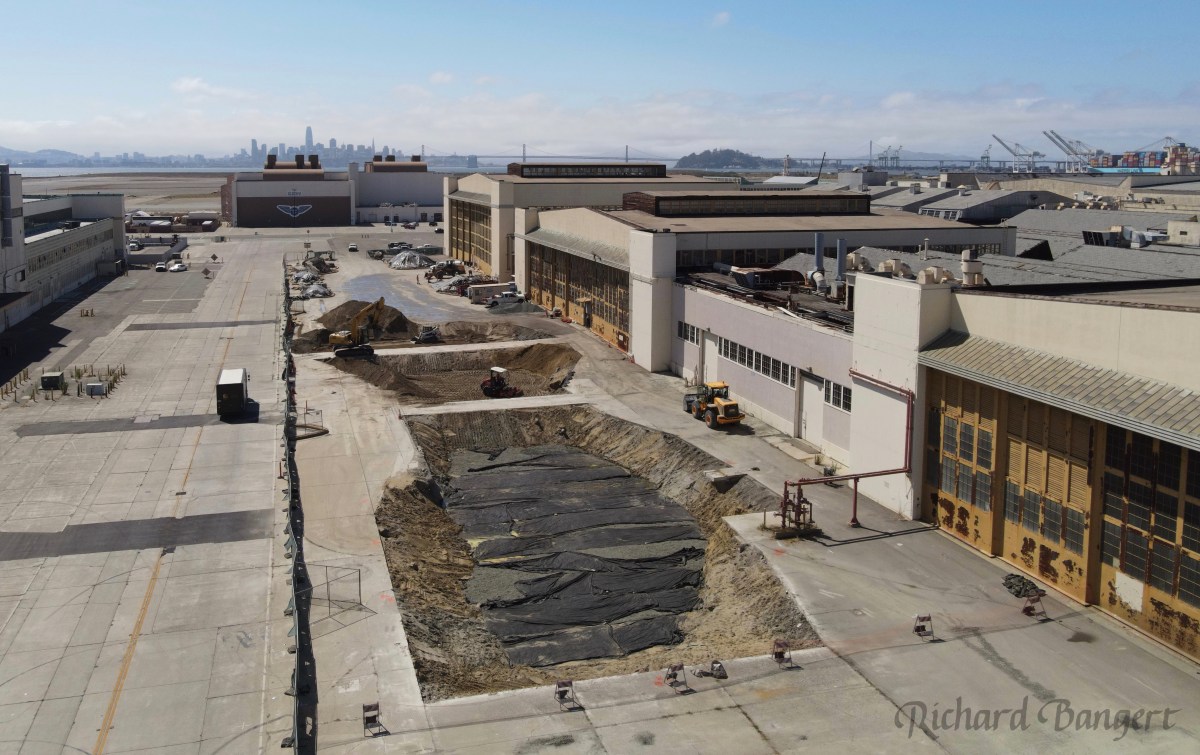
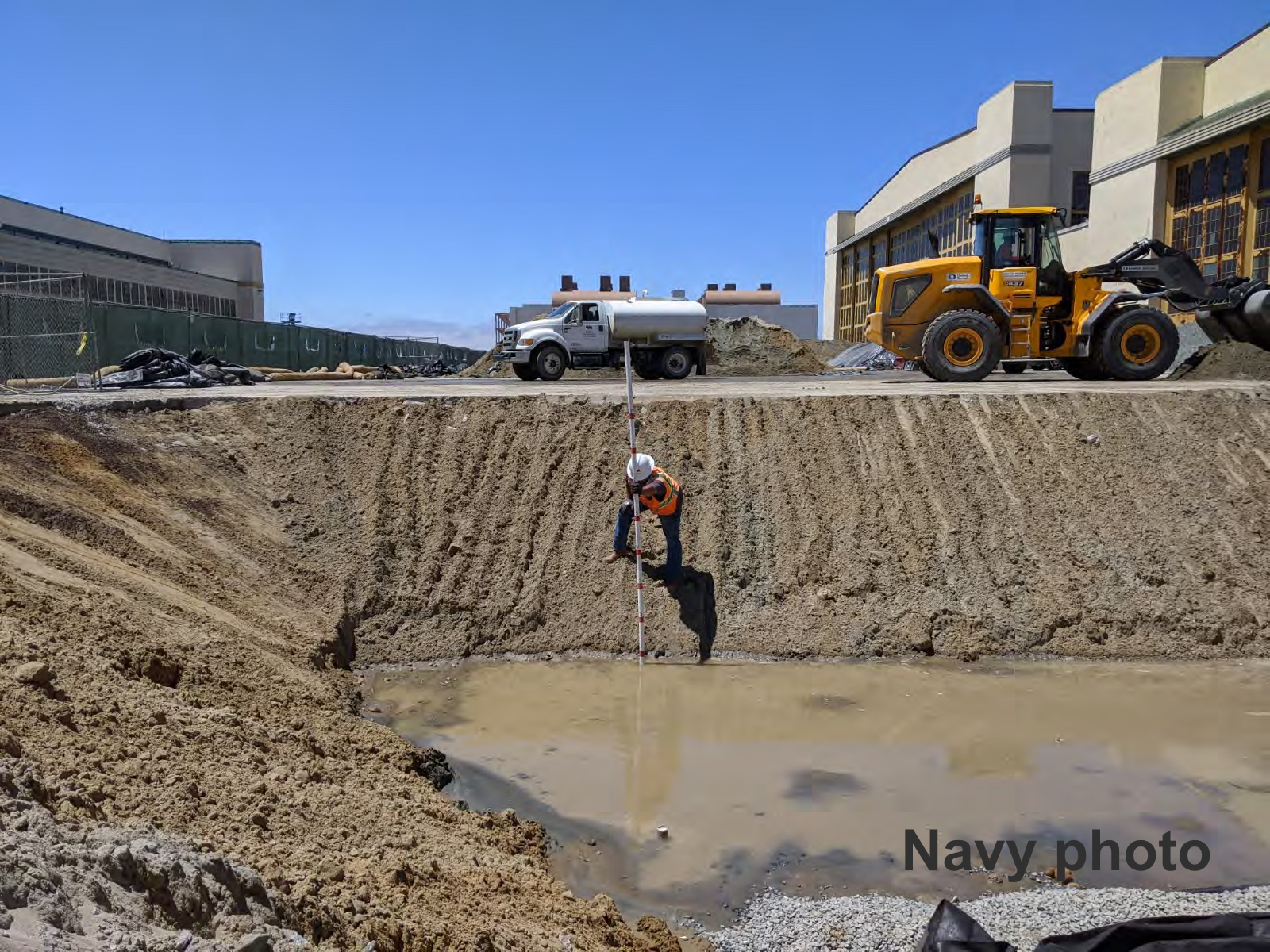
Cleaning up petroleum contamination in soil and groundwater is pretty straightforward. It is usually accomplished by one or more tried-and-proven methods that rely on inserting PVC pipe into the contamination zone for treatment. But multiple efforts outside the sprawling Building 5 hangar complex on West Tower Avenue at Alameda Point failed to reduce contamination to regulatory goals. In August 2020, after almost two decades of investigation and treatment efforts, the Navy resorted to a rarely used option of digging up all of the soil down to the water table and hauling most of it away.
Building 5 was the location of the Navy’s plane refurbishing and overhaul facility where thousands of civilians worked. It was known as the Naval Air Rework Facility. Before an airplane was moved into the hangar, it underwent de-fueling, flushing out fuel lines and cleaning various components with products akin to paint thinner. This preparatory work was the source of the contamination in the soil and groundwater near the big hangar doors. Continue reading “Navy digs up petroleum contamination in rare cleanup action”
The Navy has spent more than 15 years cleaning up contaminated groundwater underneath two former gas station sites at Alameda Point. They are still at it, but it’s not because the Navy is slow or lacking in commitment and expertise. It’s the nature of groundwater cleanup, which involves intermittent treatment efforts.
In July, the Navy’s contractor returned to the old gas station and car wash site on West Pacific Avenue at Main Street and to the old commissary gas station site at West Tower Avenue and Main Street across from Bayport. It’s the third visit to these sites to eliminate petroleum hydrocarbon contamination in groundwater, in addition to earlier removal of underground tanks, fuel lines, and soil. The contaminants are located from 2 to 16 feet below ground surface.
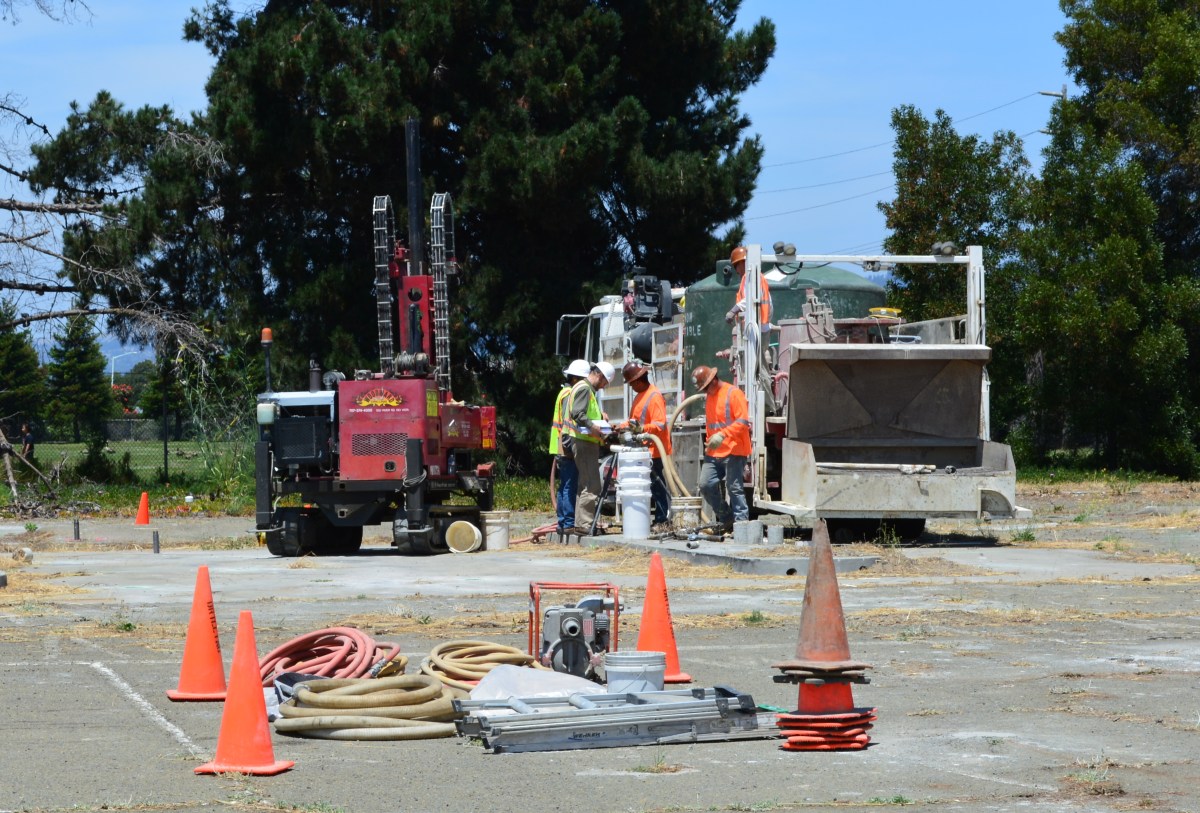
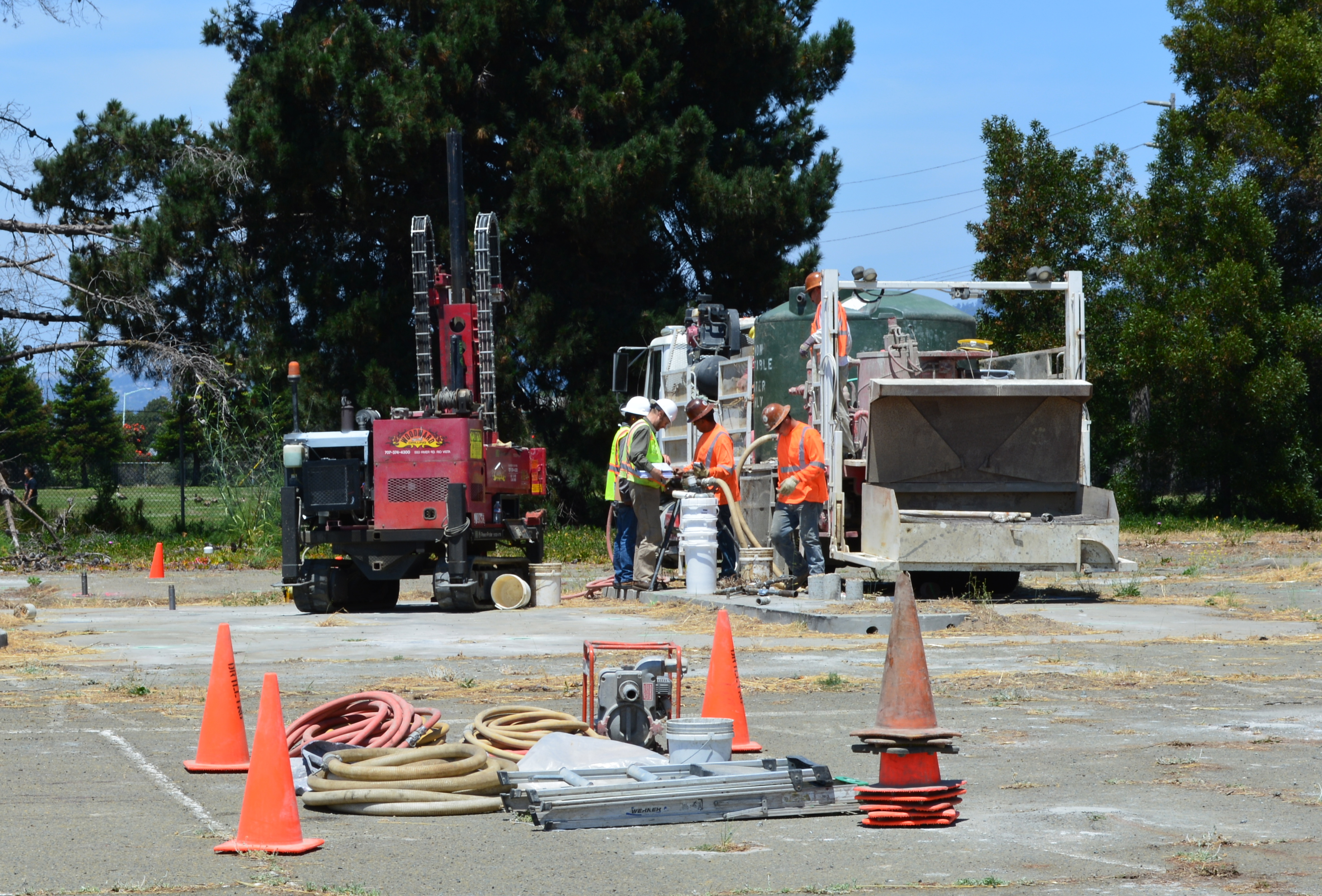
Workers at the old gas station and car wash site on West Pacific Avenue on July 13, 2015 preparing to inject cleanup solutions into the ground. The Navy operated a gas station and car wash on the site from 1971 to 1980. Green tank on truck contains non-potable water for on-site mixing of treatment solution. Soccer field is in the background.
The goal is to bring the property up to the public health and environmental standards required for the future commercial and residential uses previously determined by the city.
“When groundwater contamination is involved, such as at the two former gas stations, cleanups often involve multiple phases, each building upon earlier accomplishments,” said Dr. Peter Russell, who has been reviewing Navy cleanup plans and preparing cleanup-related documents on behalf of, and at the direction of, the city since 1997. “As long as all imminent health and environmental risks are eliminated early on, often the most cost-effective approach to complete remediation is incremental,” explained Russell. “In contrast, a massive initial remedial effort that is sure to achieve all remedial goals in one pass would likely involve over-sizing the treatment system, which is more disruptive and expensive than a phased approach.”
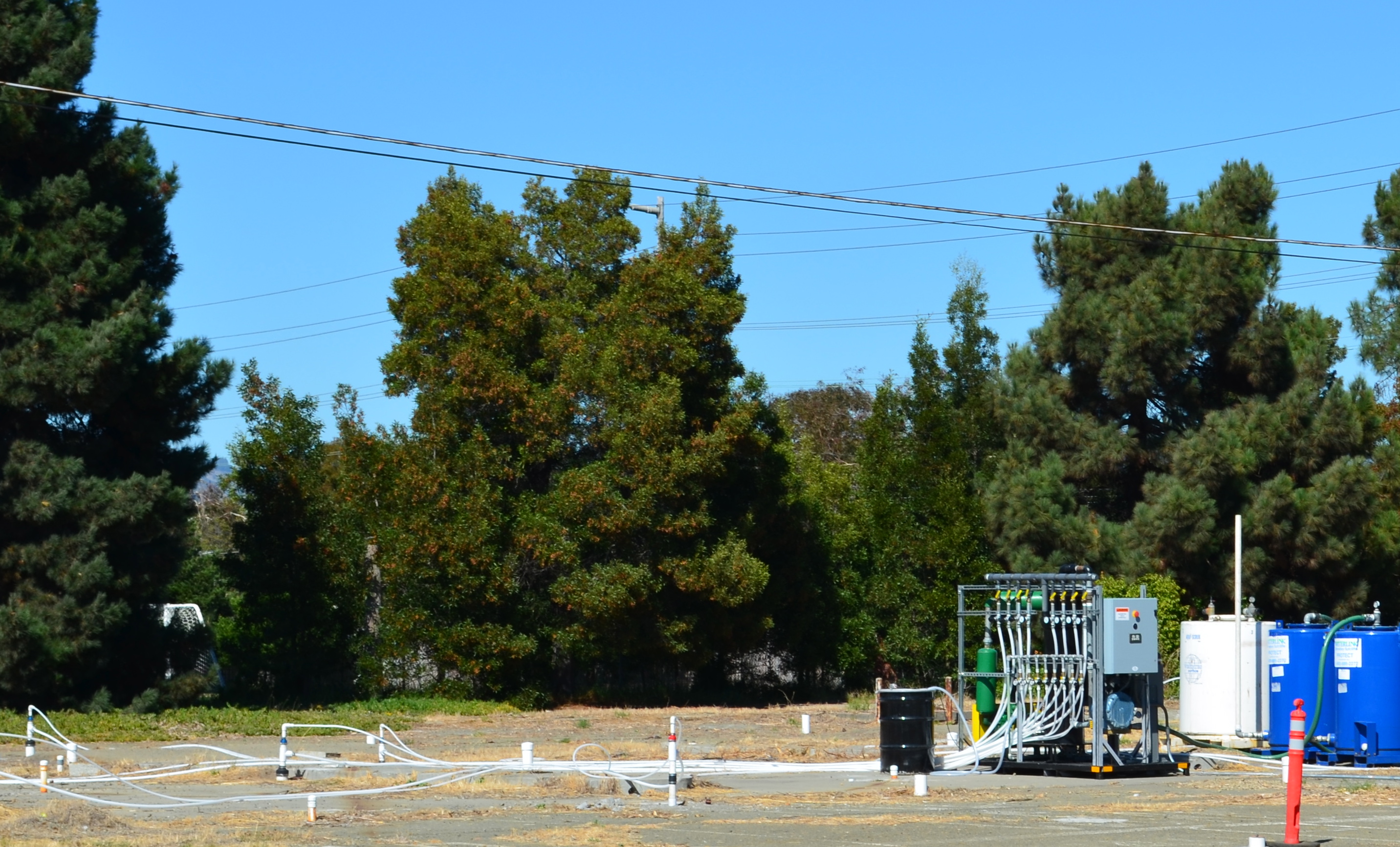
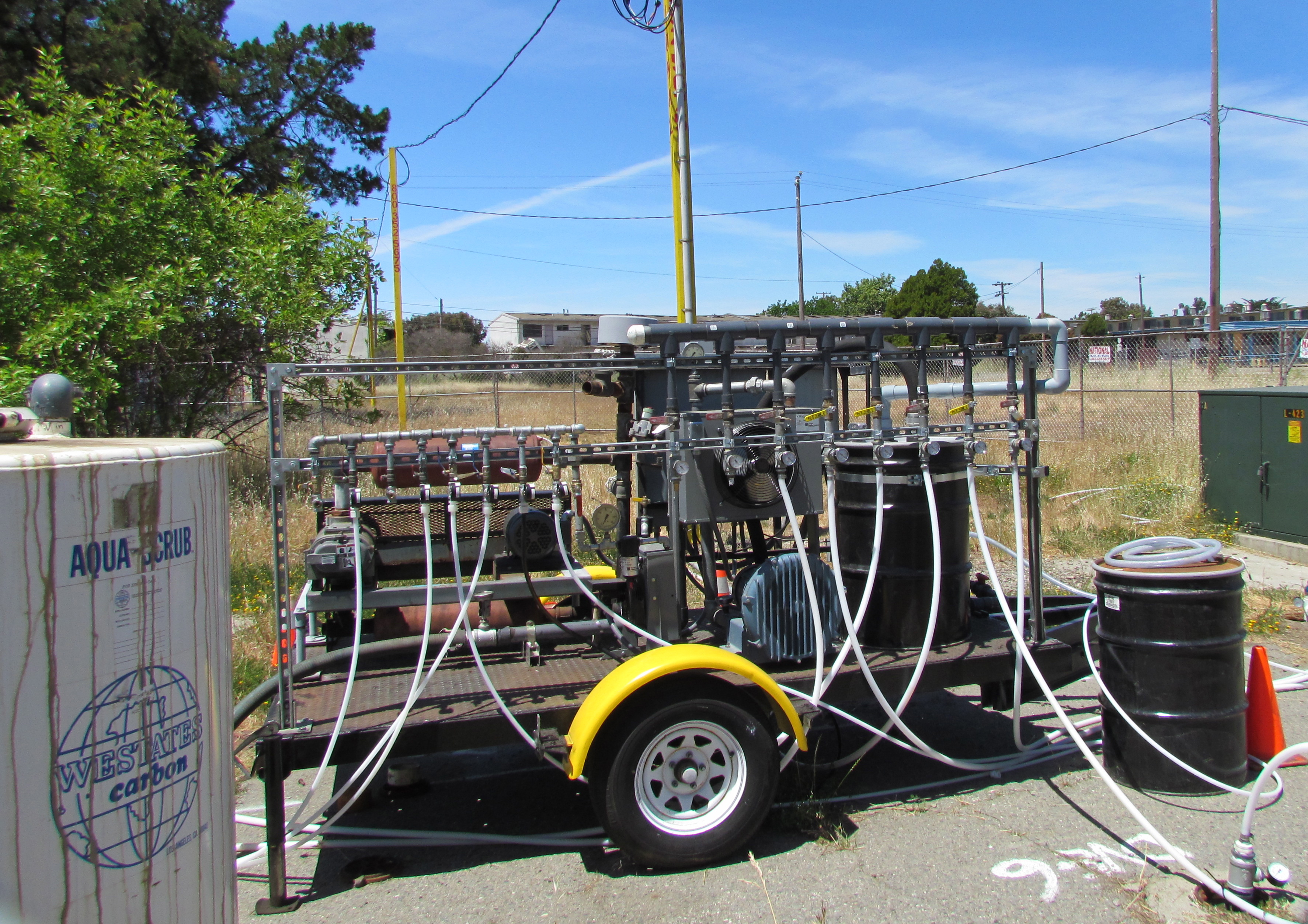
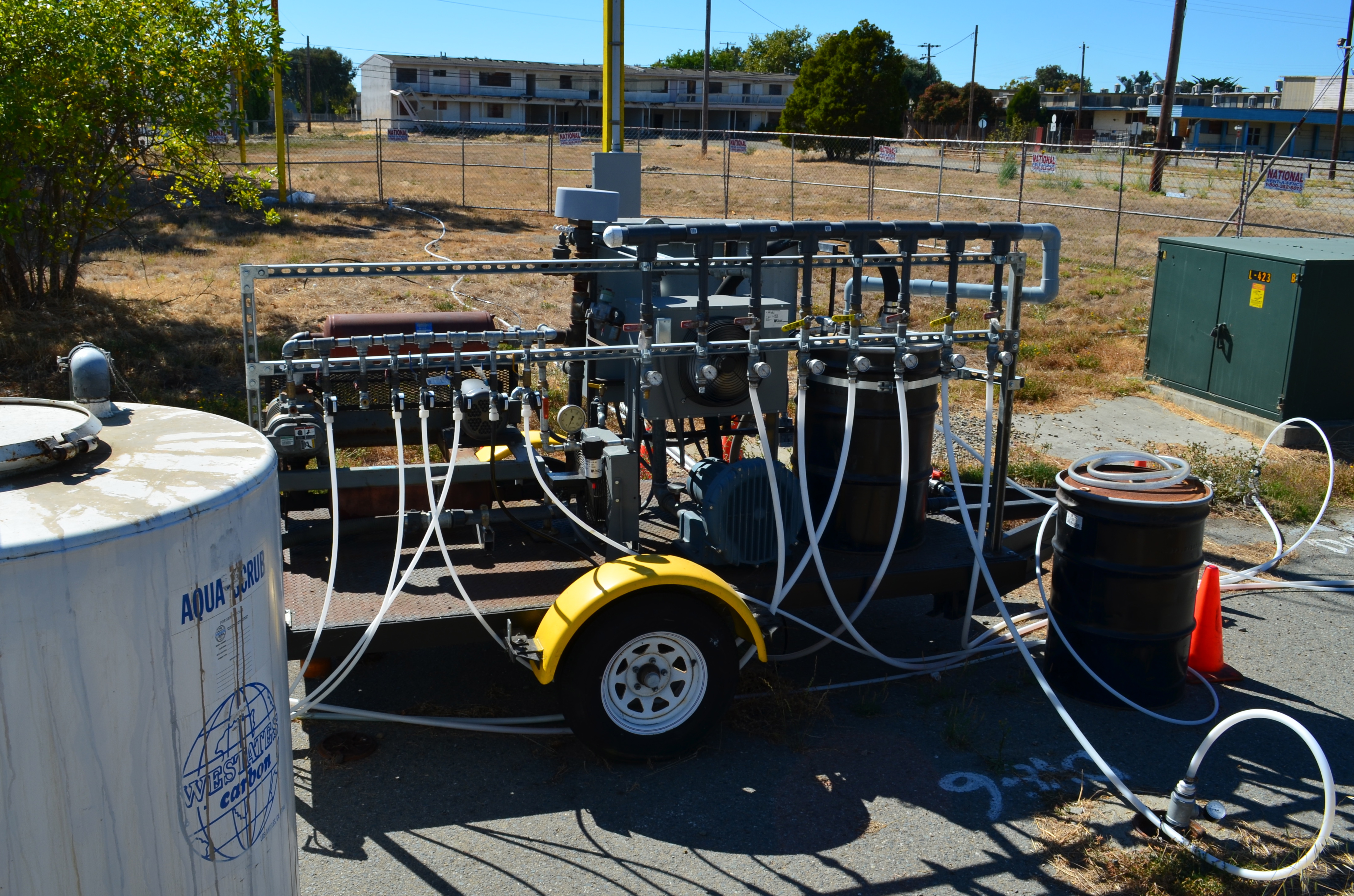
During previous cleanup visits, the Navy used a vapor extraction system to remove the bulk of the petroleum contamination. The process involves pumping air into numerous pipes, called wells, which extend into the water-saturated zone where the contamination is. The air pressure creates vapor that is part air, part water and part petroleum. The vapor is then sucked out through another set of wells, and the petroleum vapors are captured in drums of granulated charcoal, while the water is shunted off to a separate container.
Air injection/extraction system operating at W. Pacific Avenue gas station site in 2013 and 2014. System extracts and captures petroleum vapors.
The method of blowing bubbles in mud and sucking out the air sounds unsophisticated, but it works. After running the system in 2013 and 2014 at the West Pacific Avenue gas station site, for example, the level of one contaminant, benzene, went from around 1,000 micrograms per liter down to 58, bringing the contamination low enough to allow indigenous bacteria to finish the job.
Air injection and vapor extraction system operating at former commissary gas station site in May 2013. Charcoal tank to capture vapors is at left.
The Navy returned to these sites in July and, in this phase, they came to help natural bacteria finish up the job. Allowing bacteria to clean up petro chemicals through natural digestion is called bioremediation. To be effective and not take a century to eliminate the problem, the bulk of the chemicals need to first be reduced to concentrations that do not overwhelm the bacteria.
At both gas station sites the Navy used a special product designed to foster growth of natural bacteria in the ground, which includes a form of time-release peroxide that turns into oxygen over a period of 12 months. An oxygen environment is necessary for the bacteria to digest petroleum. The bacteria utilize the hydrocarbons (hydrogen and carbon) in the petroleum chemicals as part of their metabolic processes and convert them into carbon dioxide, water, and microbial cell mass. Water samples will be taken at three, six, and nine months after the July injections to evaluate effectiveness.
“The Navy’s gas station remedial program is comparable to the private sector gas station cleanup program,” said Yemia Hashimoto, Engineering Geologist with the San Francisco Bay Water Board. “The cleanup requirements are similar and the required timelines for project completion are similar.” The Water Board is a California state agency and is the lead regulatory agency overseeing the Navy’s petroleum cleanup program.
The other type of groundwater contamination encountered at Alameda Point comes from a chlorinated solvent used in cleaning aircraft parts. Unlike lighter-than-water petroleum products, chlorinated solvents can sink through the upper water zone to a depth of 30 feet or more and complicate cleanup. But solvent cleanup still relies on a phased cleanup approach, often employing bacteria in the final phase.
Under the petroleum cleanup program the Navy has been removing tanks and fuel lines and cleaning up spills and fuel leaks dating back to the early 1990s before the base closed. Most of the tanks and fuel lines were removed within three years after the base closed in 1997.
Cleaning up leaked and spilled fuel has been slower, often involving running a vapor extraction pump 24/7 for years. In a few cases, a groundwater contamination site will require a callback after the initial work is completed. The Navy’s routine monitoring of groundwater, even after cleanup work has been completed, is aimed at determining whether there is a rebound in contamination readings and follow-up treatment is necessary. Three such sites needing more work, on land recently acquired by the city, are currently undergoing follow-up treatment at the Navy’s expense.
Two of the sites once served as automobile service stations. The other site is where fuel was removed from planes before they were serviced.
Former location of gasoline service station and car wash operated between 1971 and 1980 where fuel leaked into the ground. Part of the site is receiving follow-up cleanup work. Near intersection of Main St. and Pacific. Soccer field in background.
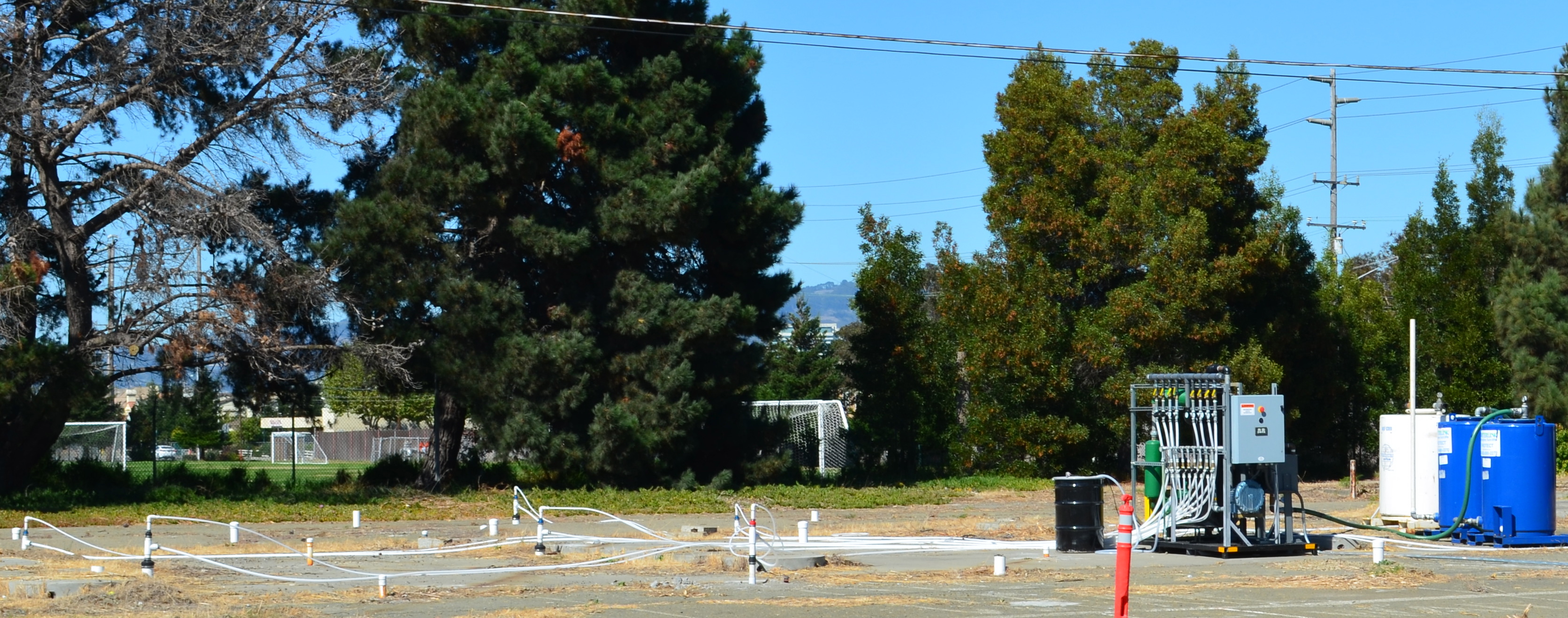
The treatment method is simple. Air is pumped into the ground where the contamination is the highest. This causes the petroleum products to vaporize, and then a suction system draws out the vapors into a barrel of charcoal. The air injected into the ground also helps natural petroleum-digesting bacteria to grow.
Petroleum cleanup site receiving follow-up cleanup next to Main St. across from Bayport. Site was former location of Navy auto service station.
Solar-powered cleanup for the first time at Alameda Point
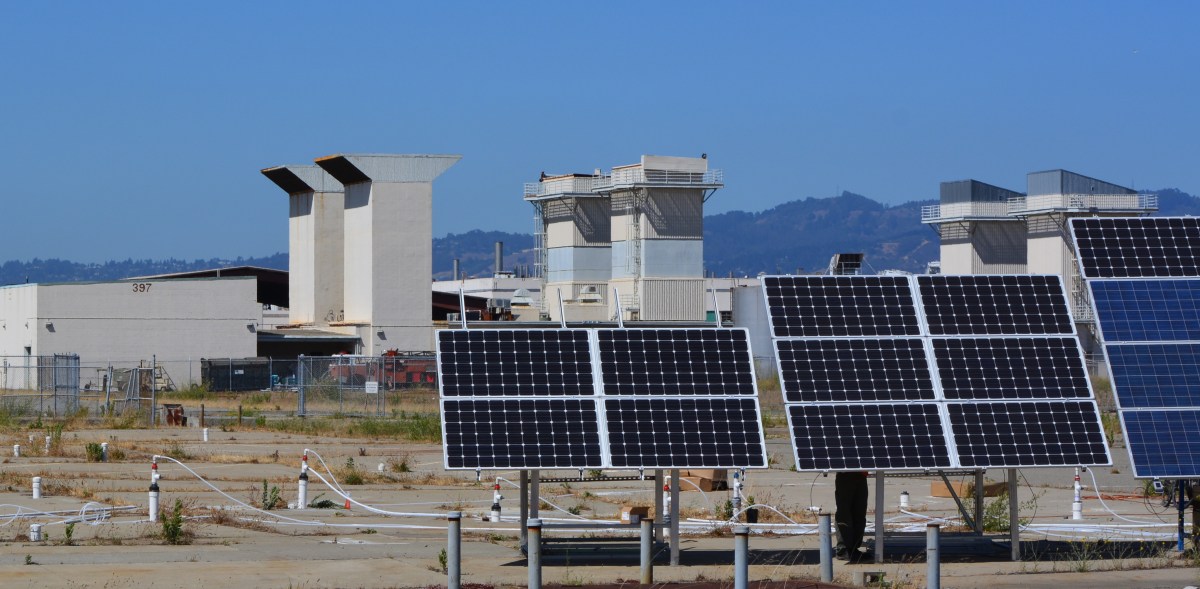
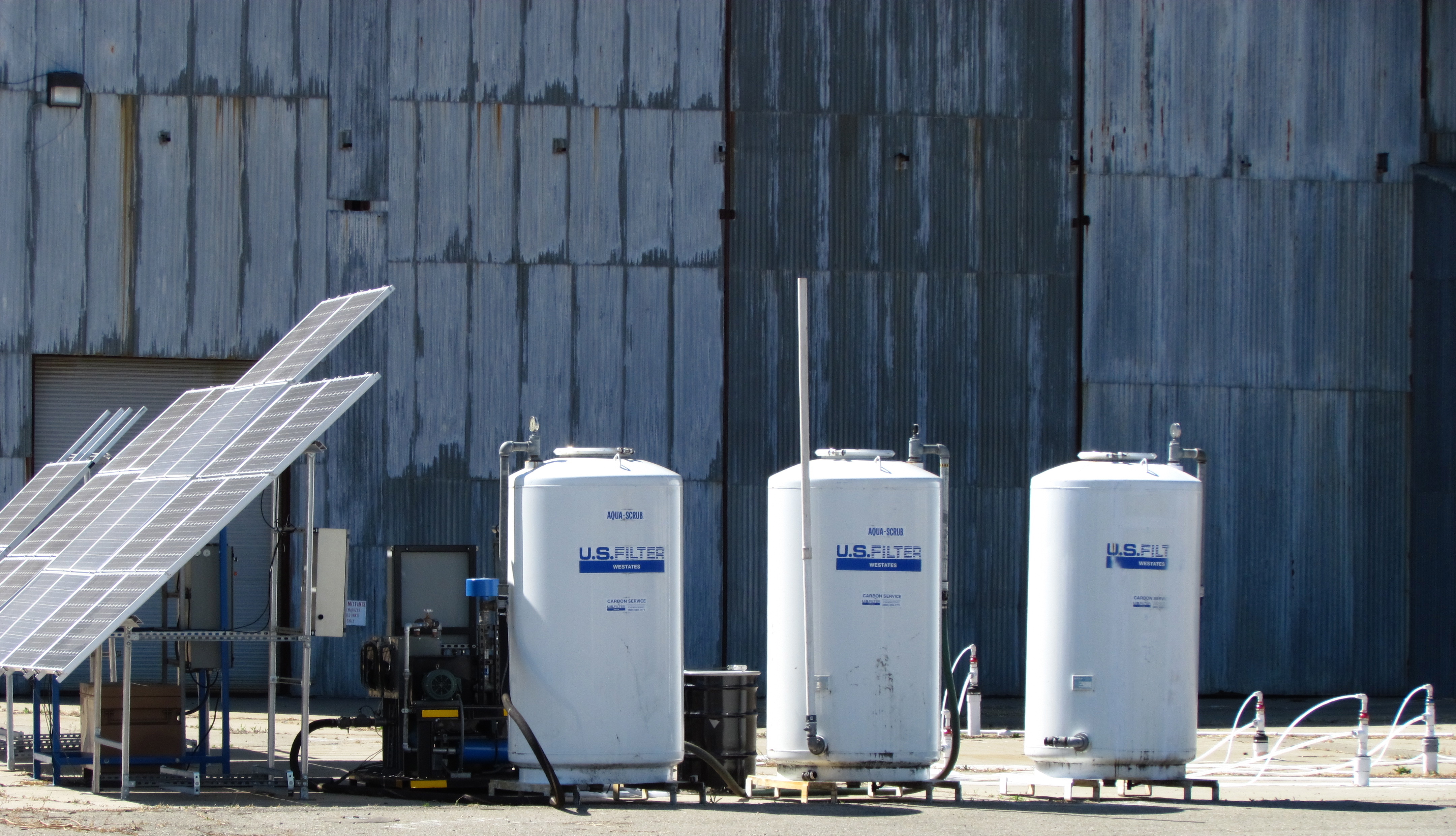
Air injection/extraction pumps at the two former service station sites are running on electricity from the grid. At the former plane de-fueling site next to Building 410, however, the Navy is using a solar-powered pump for the first time anywhere at Alameda Point. Derek Robinson, the Navy’s Environmental Coordinator, explained the solar choice saying, “Electricity is not optimum because the overhead electrical tie-in is located too far away for the system to be tied in to the grid cost effectively. The solar units provide the power necessary to operate the air sparging and soil vapor extraction system at a competitive price.” The only other option was a combustion engine pump running on gas or diesel.
“The battery storage system is traditional lead/acid batteries,” said Robinson. “The solar array charges storage batteries allowing the system to store energy and operate in cloud cover and beyond strictly daylight hours; however, the system is designed to power off the blowers once the voltages drop below a preset level,” he said.
Sustainable Technologies, located just a block away at Alameda Point, constructed the entire rig. It consists of solar panels, a box full of lead-acid batteries, a circuit panel, and a pump. Ironically, Sustainable Technologies is located on a Superfund site that will take another six years to clean up.
Solar-powered cleanup at Building 410.
The area next to Building 410 where the fuel spills occurred has had a number of cleanup actions going back to 2002. “Corrective actions under the petroleum program were conducted in 2002 and 2011 and a remedial action under the CERCLA [Superfund] program was conducted between 2005 and 2006,” said Robinson.
Work will continue until the end of the year. The Navy will always be responsible for returning to do more cleanup work if groundwater testing shows some of the contamination was missed.
Locations of three petroleum cleanup sites currently undergoing more cleanup work.



 Alameda Point Environmental Report