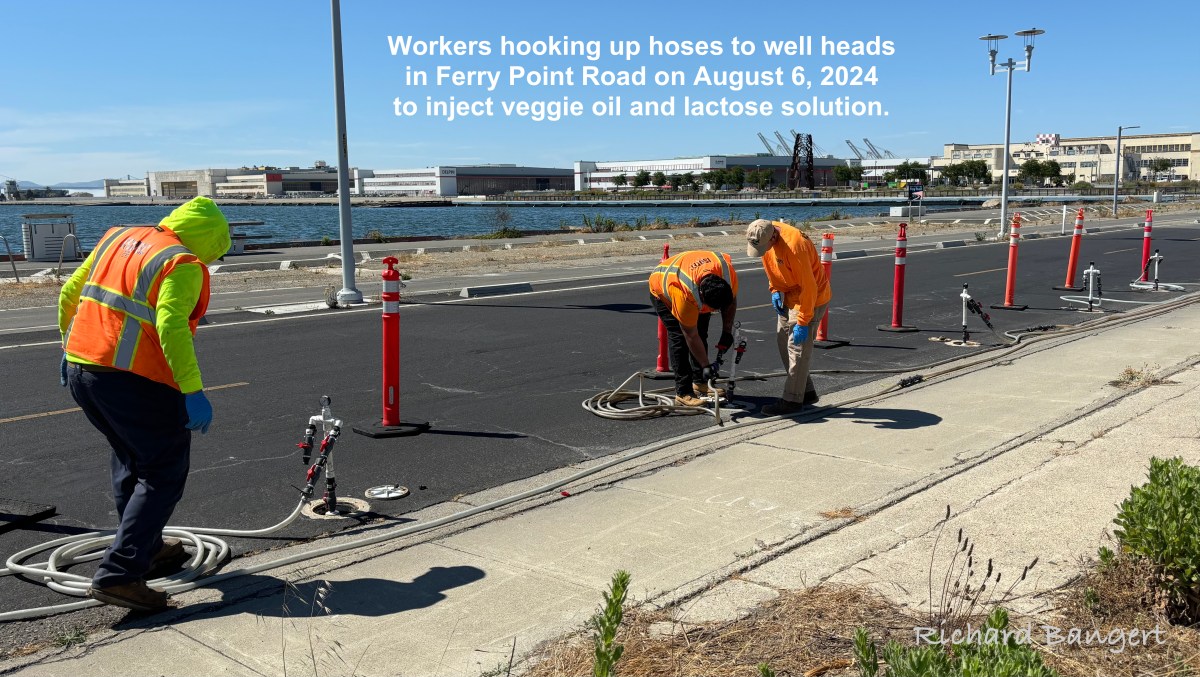
Veggie oil, lactose key to cleaning up toxic groundwater at Alameda Point

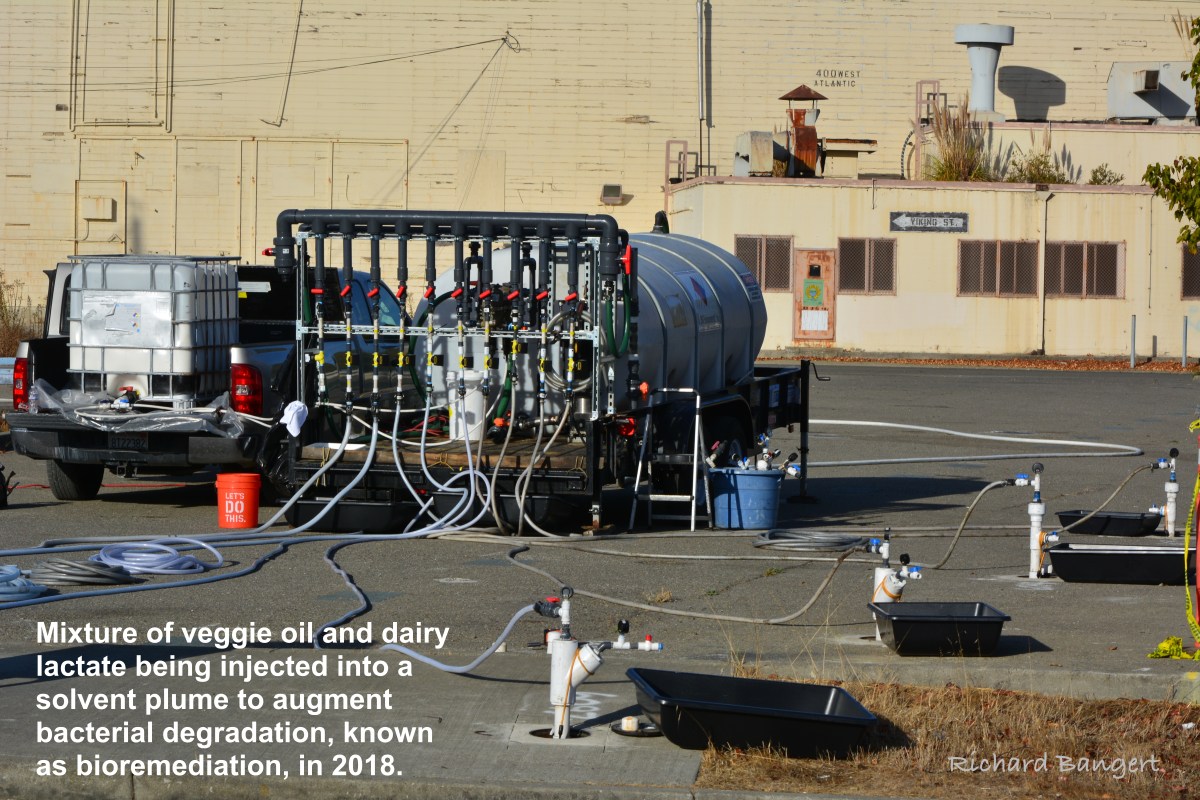
There are faster ways to clean up industrial solvents in groundwater, but the only viable choice for a large contamination site at Alameda Point was to turn the job over to bacteria.  Known as bioremediation, a unique bacteria is breaking apart the solvent trichloroethene (TCE), also known as trichloroethylene, into a harmless substance.

It takes time and the right conditions for the bacteria to thrive—namely, an absence of oxygen and the presence of a carbon source.  Readily-available carbon sources to pump into the contamination area just happen to be soy vegetable oil and dairy lactose.

Continue reading “Veggie oil, lactose key to cleaning up toxic groundwater at Alameda Point”
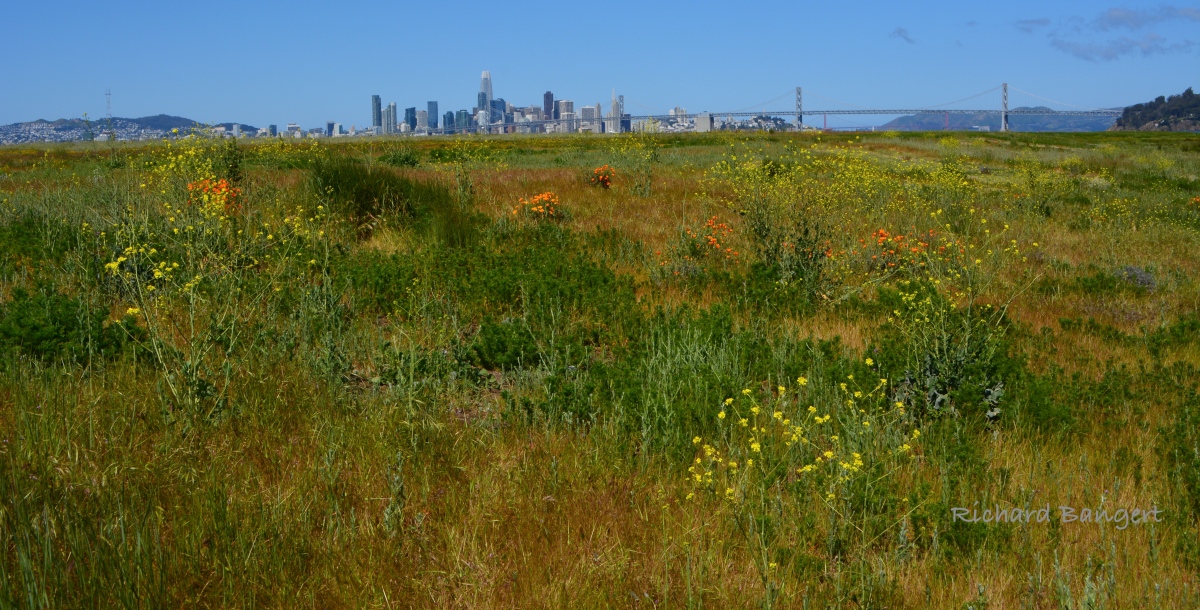
Springtime on the Wild Side of Alameda Point

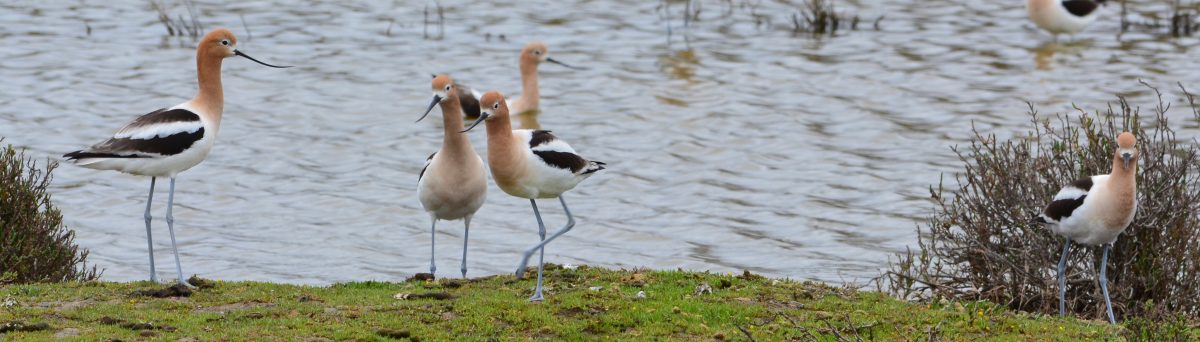
The Navy’s repeated attempts to establish native vegetation on cleanup Site 1 at Alameda Point have finally borne flowers this spring.  Birds are enjoying the nearby seasonal wetland, which is in jeopardy of being destroyed. Someday people will be able to enjoy the space, as well. For now, enjoy the accompanying gallery of photos, along with background info.

Continue reading “Springtime on the Wild Side of Alameda Point”

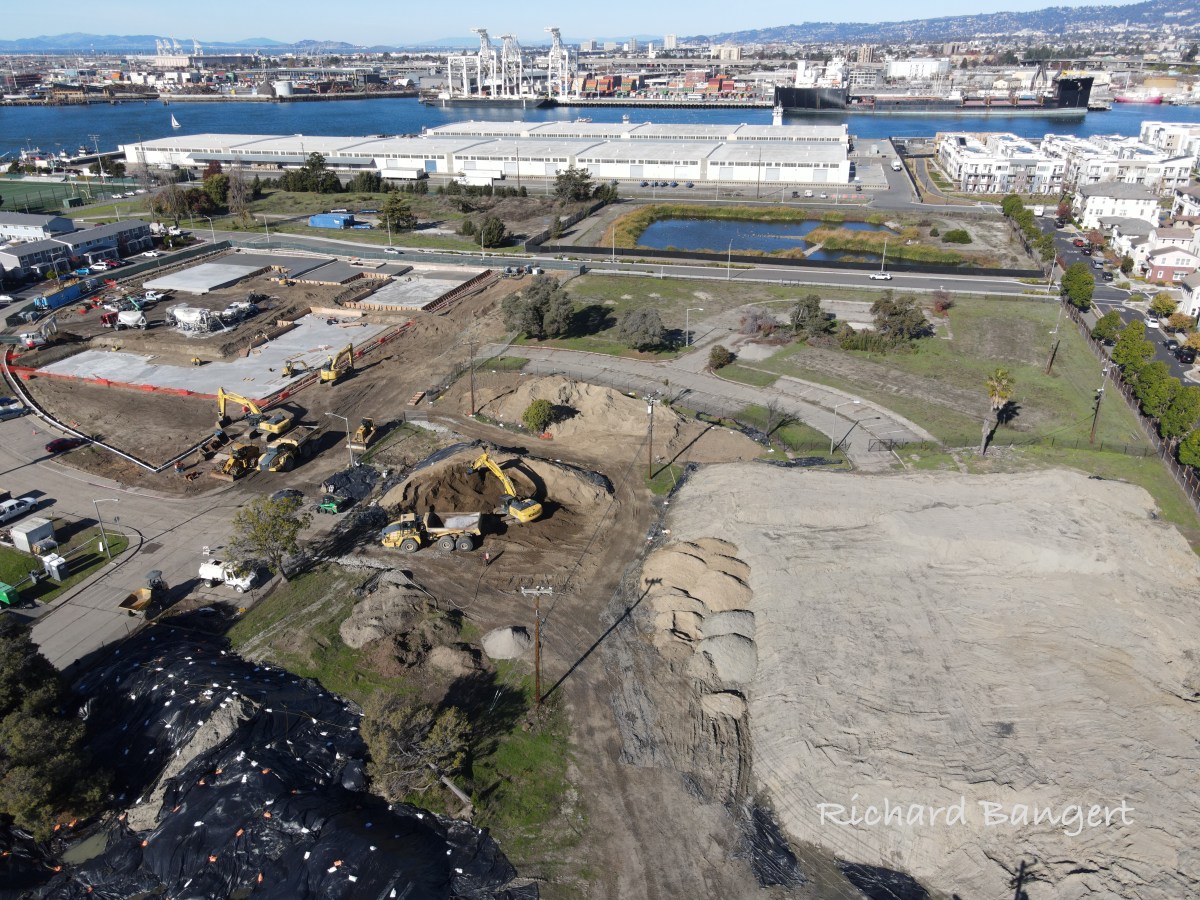
Affordable housing construction begins by unearthing history

Heavy equipment arrived in early November at the corner of Lakehurst Circle and Mosley Avenue, two blocks away from Target, to begin construction of the first block of North Housing, a planned 12-acre affordable housing site owned by the City of Alameda Housing Authority. 

The massive 10.5-foot-thick concrete base of the building, though dramatic in scale and ready for earthquakes and groundwater rise, is only part of the story.  The excavation and exposure of 13 feet of soil layers is a reminder, both figuratively and literally, of the 200 years of social, political, and geographical events that directly influenced what is happening here today.             

This article highlights the history:

  • The days when the whole area was marshland;        
  • Industrialization that brought pollution;                
  • Filling in the marshland;                        
  • Navy ownership; and                        
  • National priorities and a social movement that laid the groundwork for today’s affordable housing plans.
Continue reading “Affordable housing construction begins by unearthing history”

Chevron to clean up buried tar at old refinery site

Thanks to leadership at the San Francisco Bay Regional Water Quality Control Board (Regional Water Board), Chevron Corporation will be cleaning up residual petroleum at a former refinery site it once owned at Alameda Point.

The true extent of the contamination is unknown, which is why Chevron is first taking soil samples at 43 spots around the open field next to the self-storage business near the intersection of West Oriskany Avenue and Skyhawk Street.  The investigation work was announced in a Work Notice/Fact Sheet from the Regional Water Board.  Work began on May 15 and will continue until May 26.  Their findings will provide the basis for a cleanup plan.

The petroleum cleanup site was put on the shelf until now because the Navy and the City figured that it was not causing any harm, therefore nothing had to be done until a developer purchased the lot.  The Regional Water Board, which has sole regulatory authority over petroleum cleanup, instead wanted to close the books on this outstanding cleanup site.

Continue reading “Chevron to clean up buried tar at old refinery site”

Navy plan to destroy wetlands lacks scientific backing

Most Alamedans have read about the Navy’s plan for upgrading and expanding wetlands at Alameda Point where a regional park is planned. Unexpectedly, however, and behind closed doors, a single advisory staff member at a state agency halted the approved wetland expansion plan. He did so as work was already underway, and over 7,000 truckloads of soil had been delivered to upgrade the site. The controversy centers on the health risk that radium-226 luminescent paint waste artifacts may or may not pose to park visitors.

Alameda Post podcast highlights of the story – Friday, January 20, 2023.

Continue reading “Navy plan to destroy wetlands lacks scientific backing”

Navy recruiting volunteers for Alameda Point cleanup board

The Navy is seeking new members to serve on its volunteer Restoration Advisory Board (RAB), which reviews and comments on environmental cleanup of the former Navy base.  The Navy is also conducting an online community survey to better understand the interests and concerns about the environmental cleanup at the base.

Despite all the new construction at Alameda Point, there are still a variety of cleanup issues for the Navy and regulators to address.  Some issues are new, some involve the long-term monitoring of sites that maxed out the active remediation methods and now rely on natural biological degradation of the remaining contaminant.  And sometimes ongoing monitoring results show that the remediation has not sufficiently reduced a contaminant.  This leads to follow-up work plans, which are vetted by the RAB.

Continue reading “Navy recruiting volunteers for Alameda Point cleanup board”

Navy to lock down PFAS in groundwater with carbon

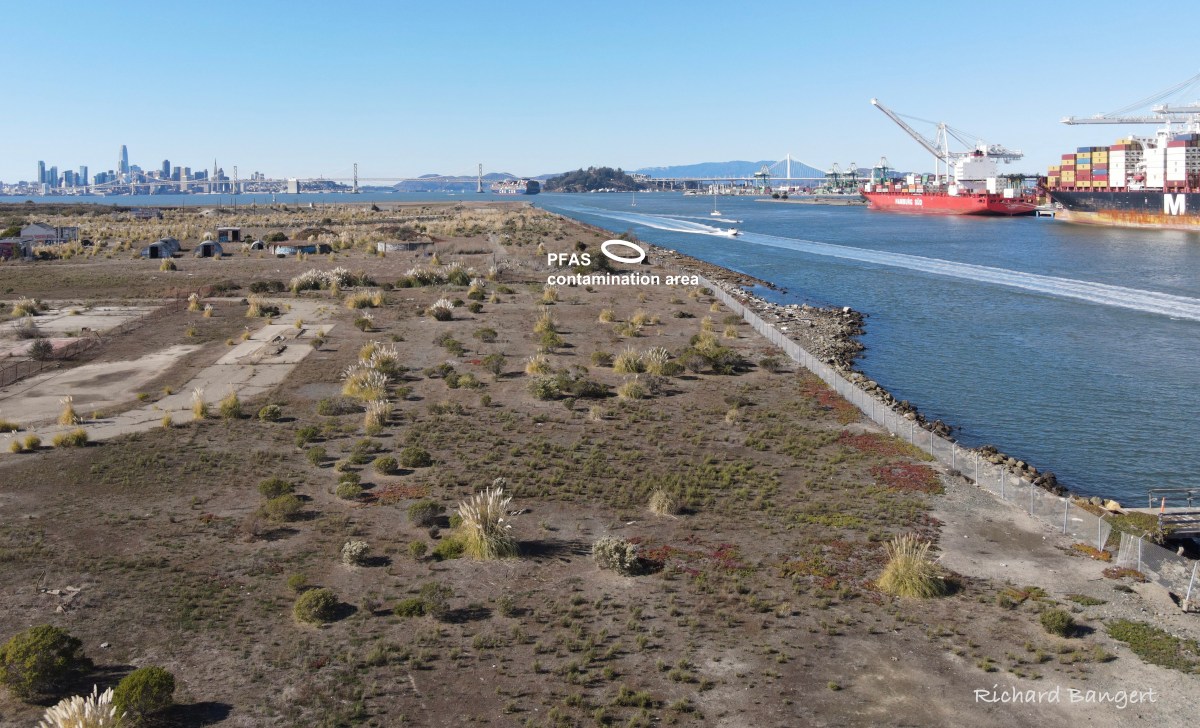
The Navy is ramping up plans to inject a state-of-the-art powdered charcoal product into PFAS-contaminated groundwater at Alameda Point, according to an October 13, 2022, cleanup document posted on the California Department of Toxic Substances Control website.  The project will take place at a small area where Navy firefighters trained with PFAS-containing fire suppression foam next to the Oakland Estuary.  The goal is to prevent the migration of PFAS into the Oakland Estuary.

Continue reading “Navy to lock down PFAS in groundwater with carbon”