City applies for $2.4 million De-Pave Park grant

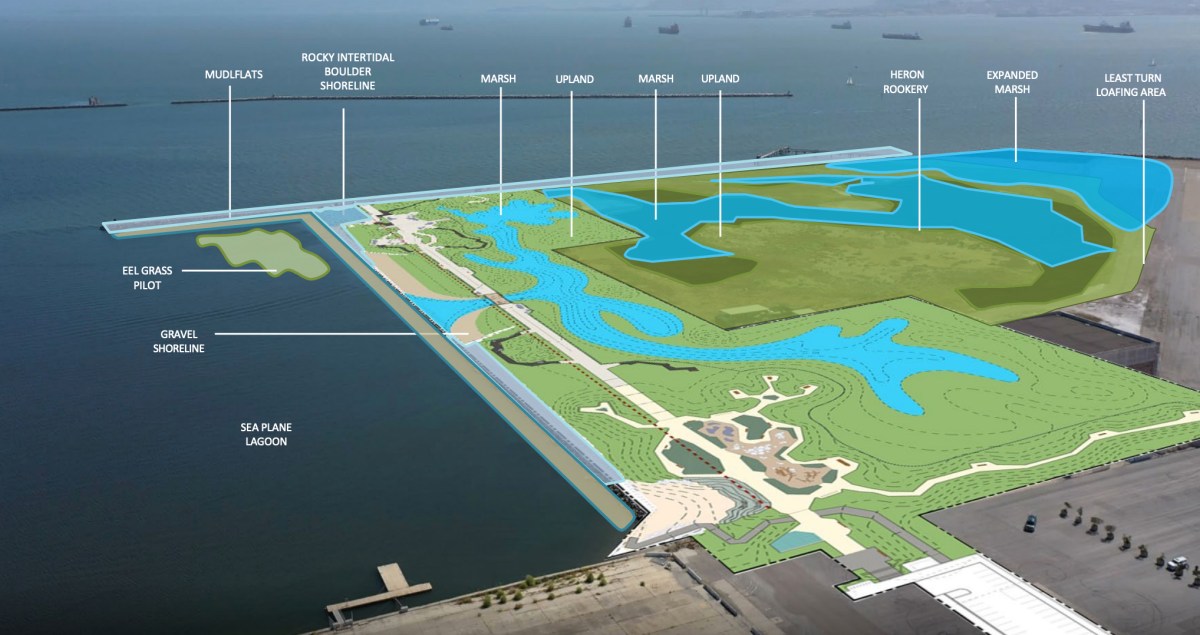
On October 4, 2024, the City of Alameda submitted a grant application to the San Francisco Bay Restoration Authority for $2.4 million.  The purpose of the grant is to advance the level of detail in the De-Pave Park design drawings to support regional and local permit applications.  

“The City plans to complete 60% design and apply for regional permits by early 2026, and complete 90% design and be shovel ready by the end of 2026,” states the application.  “Concurrently, the City will be identifying and securing construction funding.”

Continue reading “City applies for $2.4 million De-Pave Park grant”

PFAS cleanup at Alameda Point unnecessarily delayed

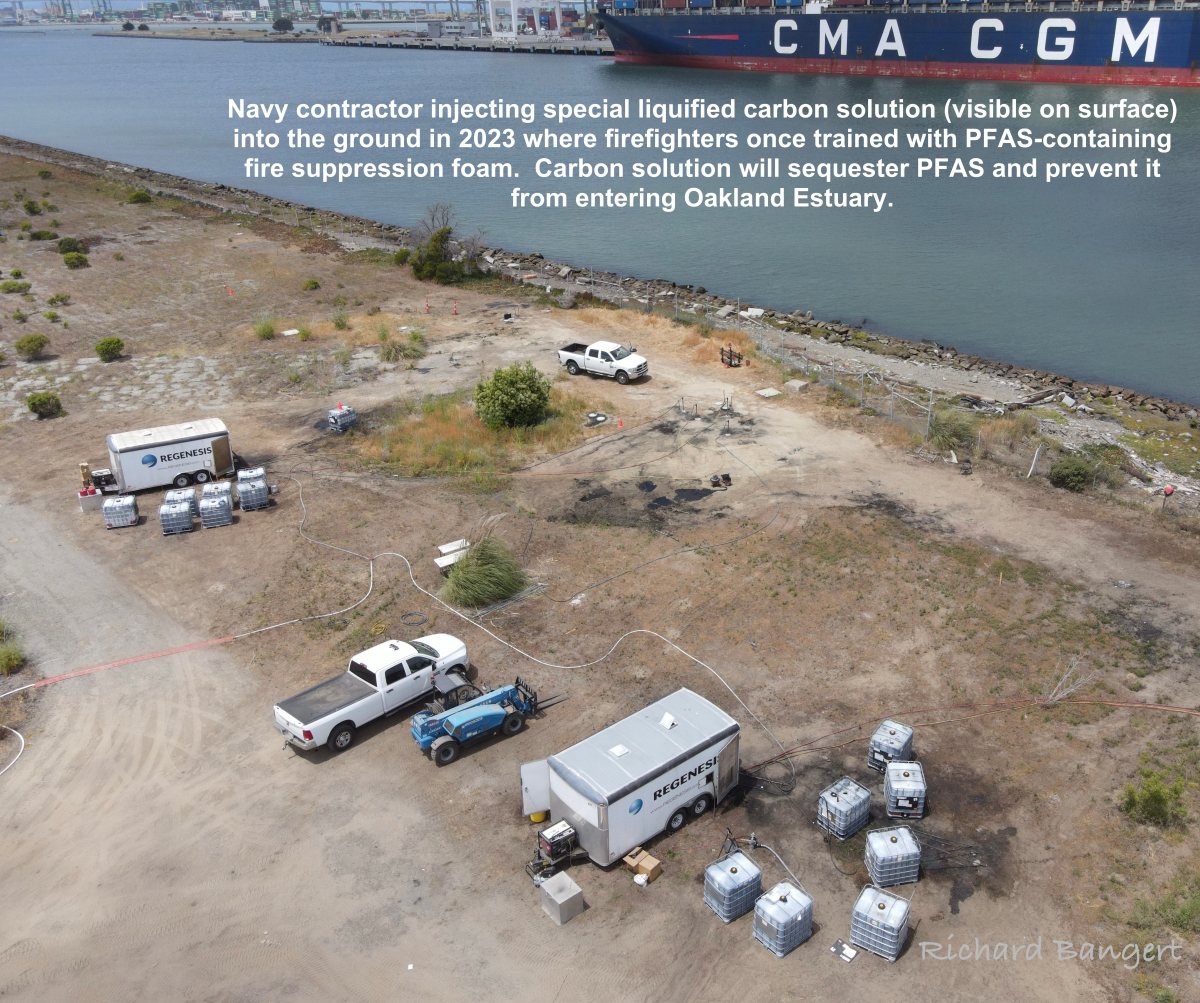
A hazardous substance at Alameda Point would have been cleaned up by now if its manufacturer had not withheld negative health data, and the U.S. Environmental Protection Agency (EPA) had acted sooner.  Instead, a whole new cleanup process has been launched by the Navy, which could take another five years.

The PFAS (Per- and Poly- Fluoro- Alkyl Substances) class of toxic chemicals have been known to be present at several isolated underground locations around Alameda Point for a long time.  There is no alarming presence of PFAS or risk to the public.  Nevertheless, now that PFAS has been designated a hazardous substance by the EPA, the Navy is required to conduct a time-consuming process for remediation.  

Continue reading “PFAS cleanup at Alameda Point unnecessarily delayed”

Veggie oil, lactose key to cleaning up toxic groundwater at Alameda Point

There are faster ways to clean up industrial solvents in groundwater, but the only viable choice for a large contamination site at Alameda Point was to turn the job over to bacteria.  Known as bioremediation, a unique bacteria is breaking apart the solvent trichloroethene (TCE), also known as trichloroethylene, into a harmless substance.

It takes time and the right conditions for the bacteria to thrive—namely, an absence of oxygen and the presence of a carbon source.  Readily-available carbon sources to pump into the contamination area just happen to be soy vegetable oil and dairy lactose.

Continue reading “Veggie oil, lactose key to cleaning up toxic groundwater at Alameda Point”

EPA’s PFAS Ruling Still Leaves Navy Hangar in Limbo

On April 19, 2024, the U.S. Environmental Protection Agency (EPA) elevated the classification of PFAS chemicals from a “pollutant” to a “hazardous substance.”  This should have come as good news to the City because the Navy will be forever responsible for any contamination problems that might arise later, making way for speeding up the city’s efforts to sell a valuable hangar at Alameda Point to gain revenue for replacing outdated and failing infrastructure.  But, not so fast.

Transfer of Building 41 to City awaits Navy PFAS review

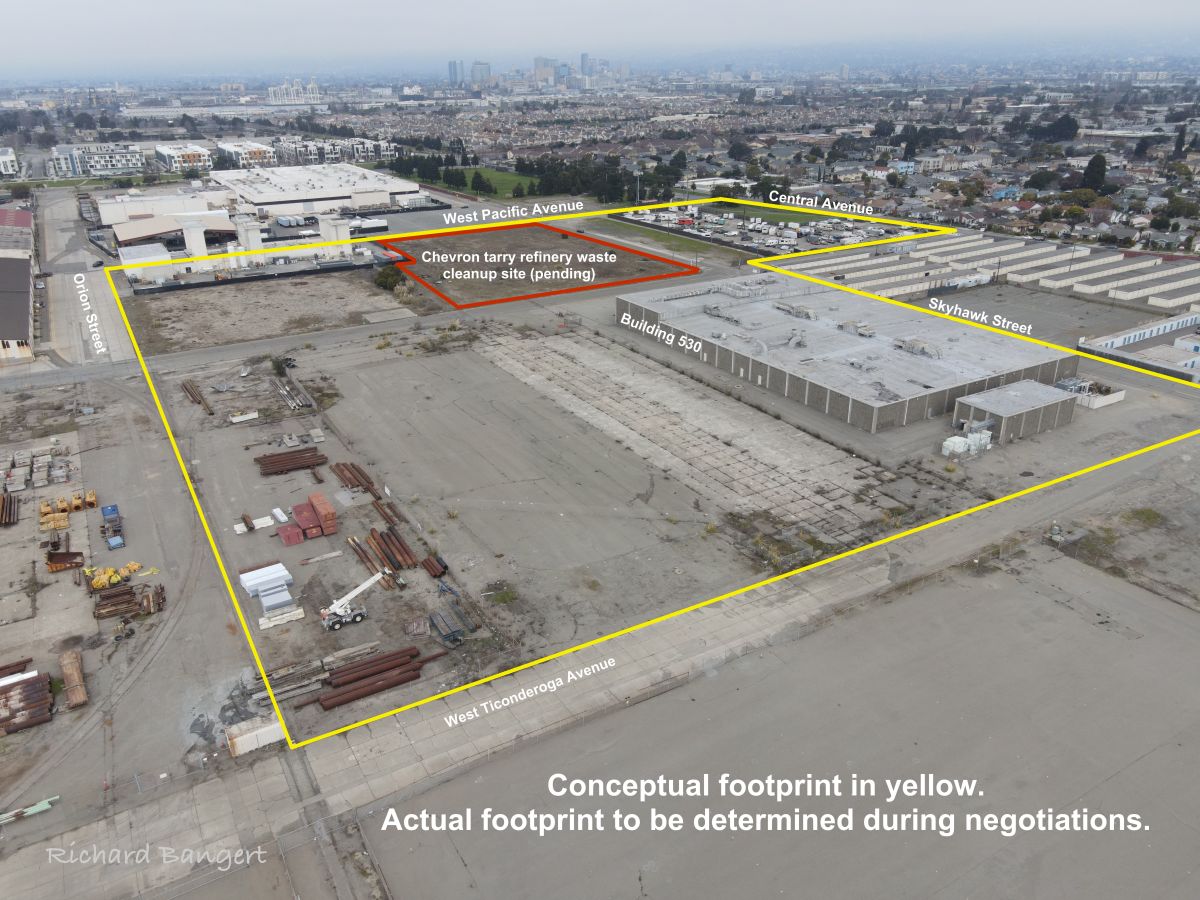
Because the former Naval Air Station, now known as Alameda Point, has been undergoing environmental cleanup under the jurisdiction of  Superfund law, one of the rules requires that the Navy now complete a separate Record of Decision on PFAS before transferring Building 41, the hangar at the corner of West Tower Avenue and Ferry Point Road, to the City.  Had PFAS been listed as a hazardous substance when the cleanup process started, the Navy would have dealt with it along the way by doing PFAS assessments, followed by remediation plans where PFAS is present.  

Continue reading “EPA’s PFAS Ruling Still Leaves Navy Hangar in Limbo”

Springtime on the Wild Side of Alameda Point

The Navy’s repeated attempts to establish native vegetation on cleanup Site 1 at Alameda Point have finally borne flowers this spring.  Birds are enjoying the nearby seasonal wetland, which is in jeopardy of being destroyed. Someday people will be able to enjoy the space, as well. For now, enjoy the accompanying gallery of photos, along with background info.

Continue reading “Springtime on the Wild Side of Alameda Point”

Updated De-Pave Park plan given green light by City of Alameda

In March 2024, after a decade of lobbying by advocates for wildlife and open space, the city council approved a Master Plan for building the ecological wetland park, known as De-Pave Park, at Alameda Point.

Continue reading “Updated De-Pave Park plan given green light by City of Alameda”

Law Enforcement Puts Brakes on Sunday’s Sideshow

They came.  They set up.  But the only show on Sunday, March 11 at Alameda Point was a show of force from the California Highway Patrol (CHP) and the Alameda Police Department (APD). 

Spectators and would-be performers at an anticipated sideshow had to make it past at least five CHP officers on their way to the intersection of Monarch Street and West Tower Avenue without being stopped for a motor vehicle infraction.  Many of them were not so lucky.  The flashing police lights sent a clear message.  

Continue reading “Law Enforcement Puts Brakes on Sunday’s Sideshow”