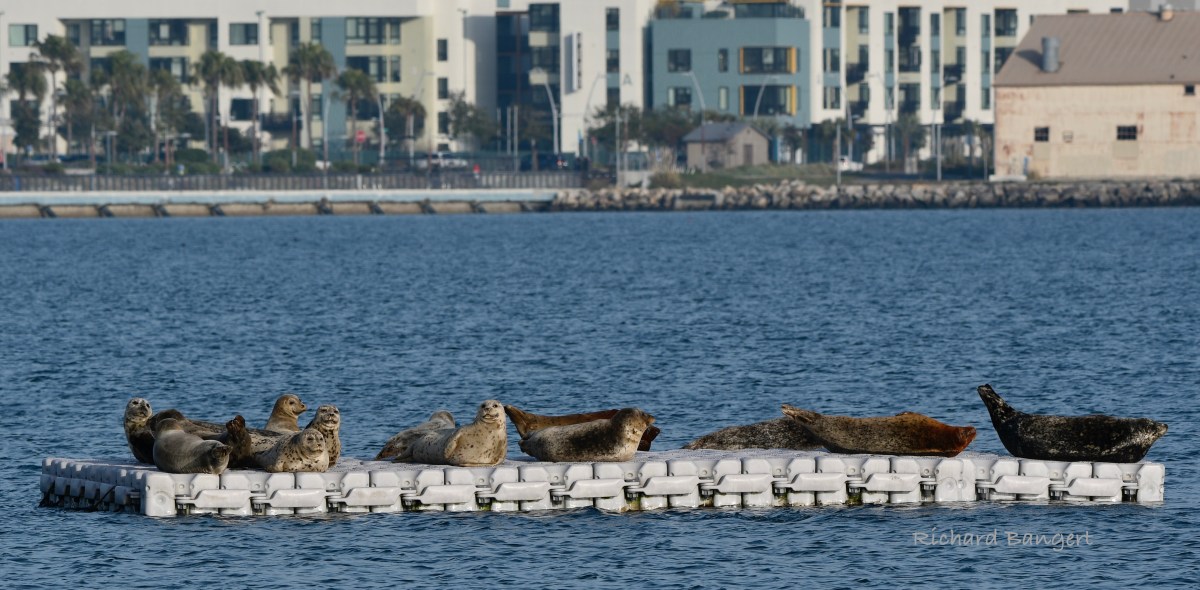
Harbor seals make use of commercial dock in Seaplane Lagoon

Over the years, harbor seal observers on the former Alameda Point Harbor Seal Monitors Facebook page often asked, “Do we need another harbor seal float?”  It appears the seals have provided their own answer. 

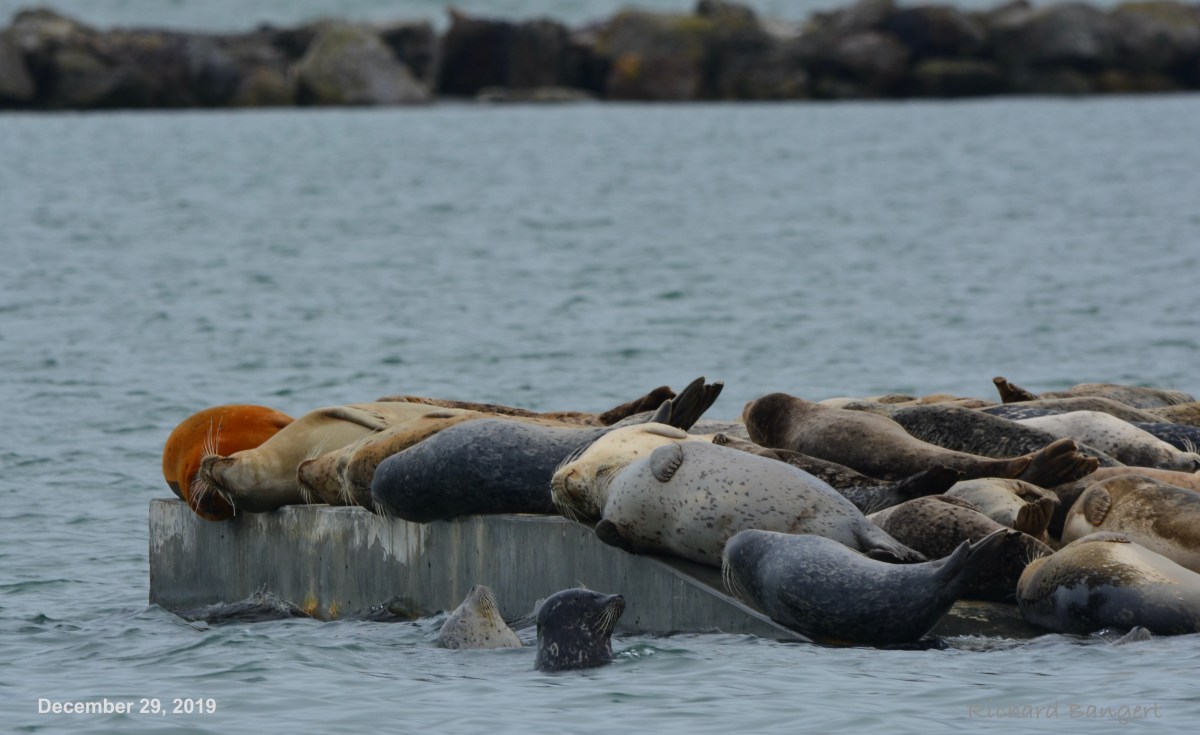
December is when the numbers of harbor seals start increasing at Alameda Point in anticipation of the winter herring spawning in the vicinity.  The influx of seals leads to overcrowding on the specially built float near the ferry maintenance facility and Bay Trail.  It has been happening since the harbor seal float was deployed in the summer of 2016.  Again this December, the float has been fully occupied with as many as 75 seals (verified by numbering a printed photo) during part of the day and not an inch to spare.

Harbor seals arriving at Alameda Point this December found an alternative spot to the overcrowded float when they ventured into the nearby Seaplane Lagoon.  Their additional haul-out location is on a plastic commercial dock owned by Saildrone, the maker of autonomous battery-powered boats capable of gathering marine scientific data around the world.  Saildrone vessels, manufactured in a hangar on West Tower Avenue, can often be seen moored in their leased space in the Seaplane Lagoon.   

Continue reading “Harbor seals make use of commercial dock in Seaplane Lagoon”
Best time to view the harbor seals at Alameda Point

Late autumn and early winter is a great time to view harbor seals from the Bay Trail along Enterprise Park at Alameda Point. 

It is the only place on San Francisco Bay where harbor seals can be easily observed from a public trail.  The floating dock offers a visual connection with a timid and seldom-seen marine mammal, which is often mistaken for the gregarious attention-loving sea lions at San Francisco’s Pier 39.

Continue reading “Best time to view the harbor seals at Alameda Point”

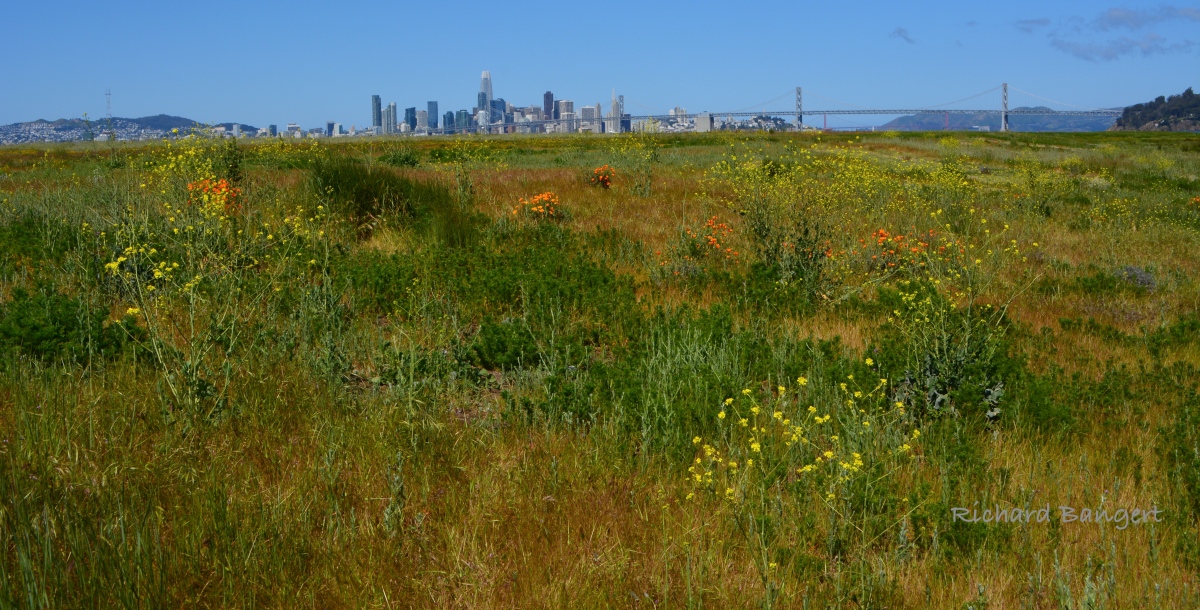
Springtime on the Wild Side of Alameda Point

The Navy’s repeated attempts to establish native vegetation on cleanup Site 1 at Alameda Point have finally borne flowers this spring.  Birds are enjoying the nearby seasonal wetland, which is in jeopardy of being destroyed. Someday people will be able to enjoy the space, as well. For now, enjoy the accompanying gallery of photos, along with background info.

Continue reading “Springtime on the Wild Side of Alameda Point”

Harbor seal molting and mating behavior up close

Shedding and replacing fur coats

Every summer, and even into the fall, harbor seals go through a biological process known as molting, in which they shed their fur and grow a new layer to keep their fur healthy.  You can tell when they are molting by the patchy appearance of their fur.

Continue reading “Harbor seal molting and mating behavior up close”

Maximum tidal wetland design approved for De-Pave Park

Environmental groups are celebrating an historic decision on what is now destined to become a model for shoreline ecological adaptation around San Francisco Bay.

At issue was whether to keep Building 25, a 55-foot-tall hangar, as a source of lease revenue, or remove it to maximize natural habitat. 

On November 7th, ten years after the De-Pave Park concept was first introduced, the City Council approved moving forward with a plan to remove the building to make way for a park that will welcome sea level rise.  The term “de-pave” refers to the removal of paving.  The paving will be recycled on site to provide the elevated observation overlook and the elevated entrance.  The decision was the latest step in the process of developing a Master Plan that will provide the foundation for receiving a multitude of regulatory permits and construction grant funds. 

Continue reading “Maximum tidal wetland design approved for De-Pave Park”

It’s growing season for plants, birds, and insects at Alameda Point farm

Tilling the land to grow food for people at the Alameda Point Collaborative farm also provides food opportunities for birds and butterflies. 

Continue reading “It’s growing season for plants, birds, and insects at Alameda Point farm”

New shoreline landscaping is benefiting wildlife

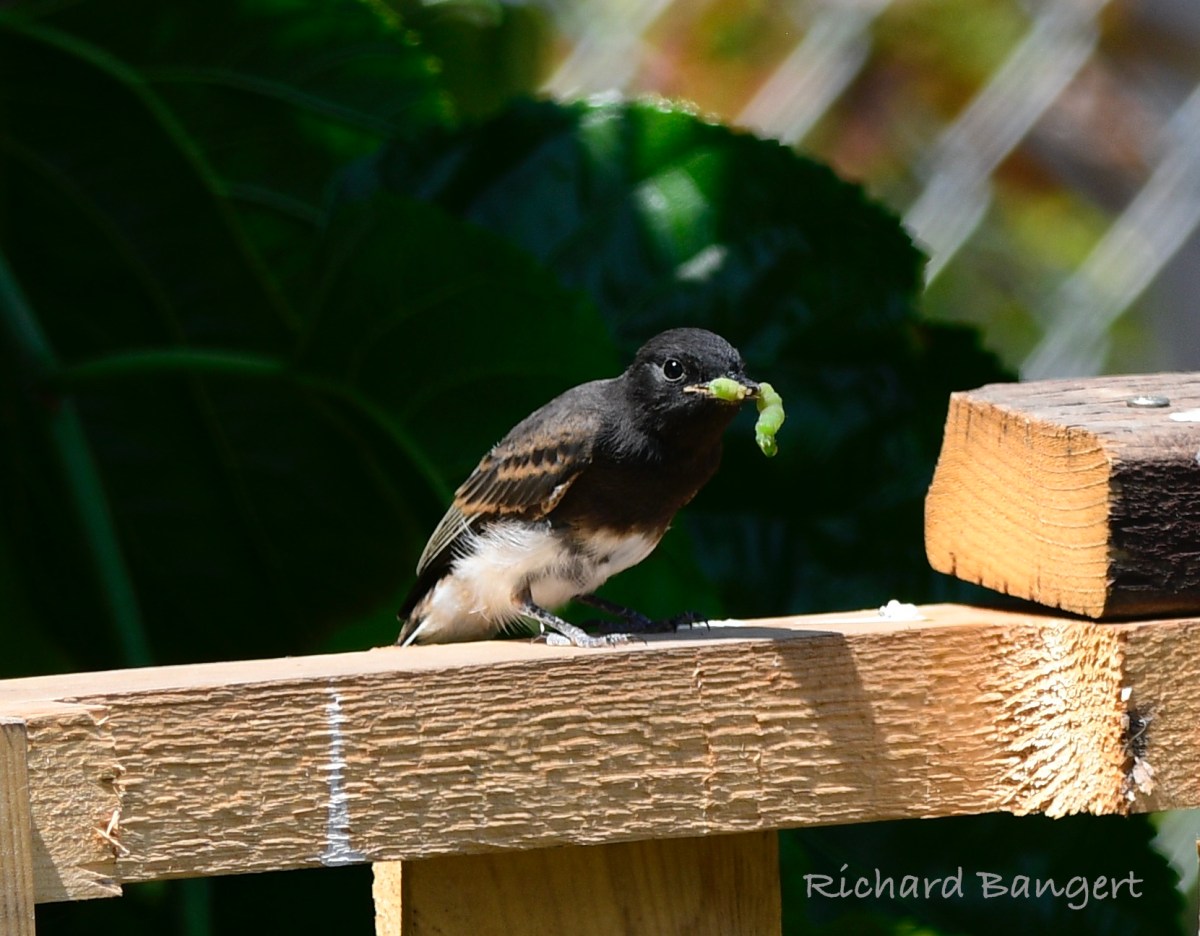
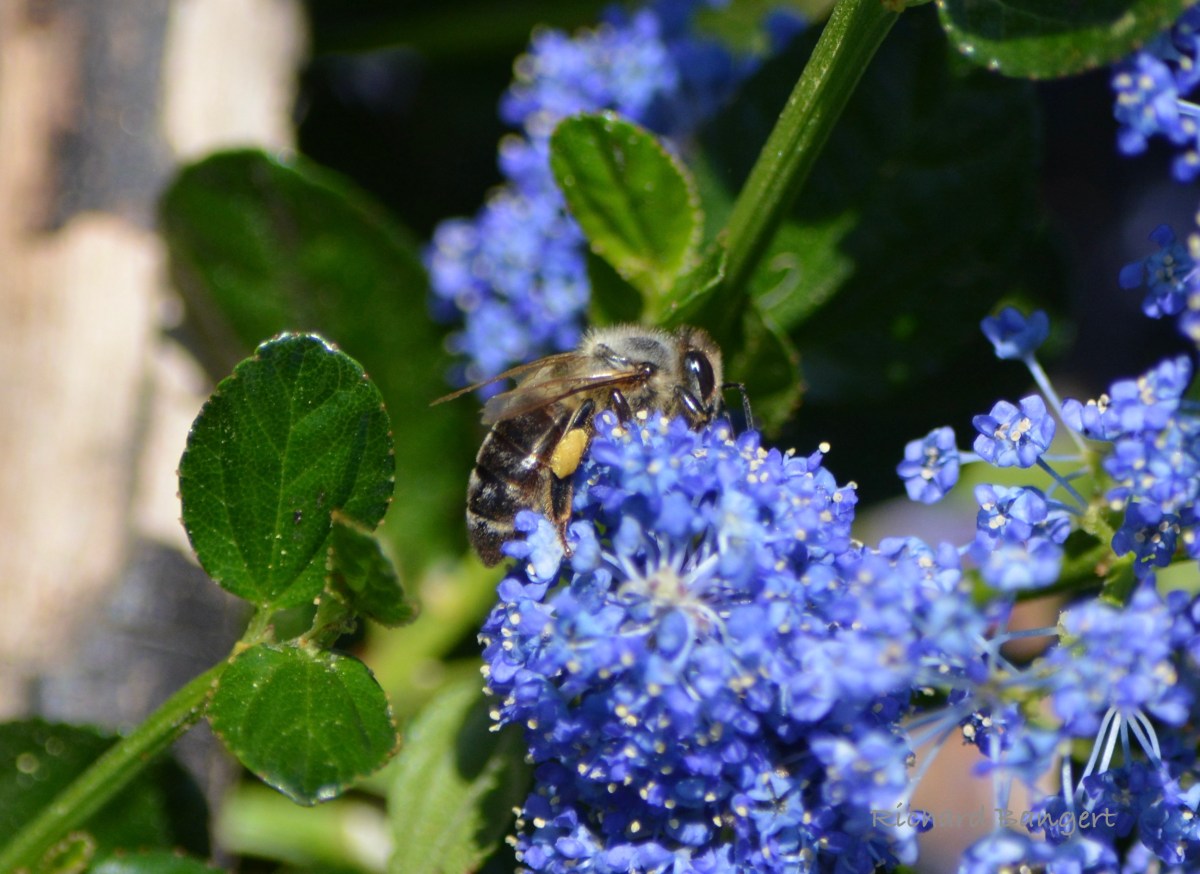
The landscaping next to the Encinal Boat Ramp restrooms has added eye appeal for humans, while providing sources of food and shelter for wildlife.  Bugs, bees, and birds come and go through the seasons, taking advantage of the mulch-covered ground and different shrubs and flowers.  This area and the adjacent dune and beach were enhanced by the East Bay Regional Park District in 2020.

Taking a closer look at the activity in this micro habitat reveals life that may not be readily apparent or appreciated.

Continue reading “New shoreline landscaping is benefiting wildlife”