Dispute Over Radium-226 Cleanup Hinders Progress at Closed Navy Bases

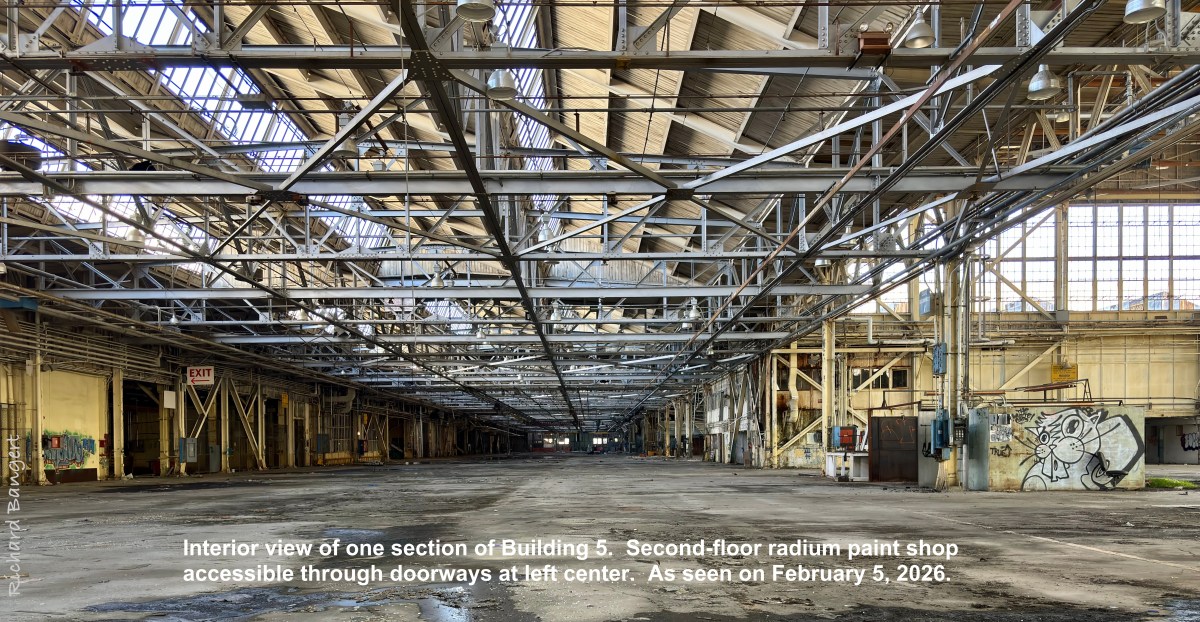
Recent state guidelines for remedial cleanup of radium-226 at closed Navy bases have affected completing work at Alameda Point and other bases across California. 

Since 2019, the Navy has not been able to determine the cleanup goal for radium-226 to allow for unrestricted use of facilities.  Repeated attempts by the Navy to get an answer suggest that the new California Department of Public Health (CDPH) standard is based upon the location of the site rather than the risk to human health.  CDPH is a sister agency that provides the California Department of Toxic Substances Control (DTSC) with expertise on radiological cleanup issues.

In order to achieve satisfactory cleanup, CDPH has changed how it determines the goal for the allowed safe amount of radium in building structures, saying it should be comparable to the amount naturally found in nearby soil, according to a February 2025 letter to DTSC from now retired Gregory C. Preston, former Director of the Navy’s Base Realignment and Closure (BRAC) Program.  This has led to “inconsistent application of cleanup criteria,” resulting in “property transfer delays and unnecessary costs,” according to Preston.

Continue reading “Dispute Over Radium-226 Cleanup Hinders Progress at Closed Navy Bases”
Chevron plans to clean up tar at Alameda Point refinery site in Spring 2026

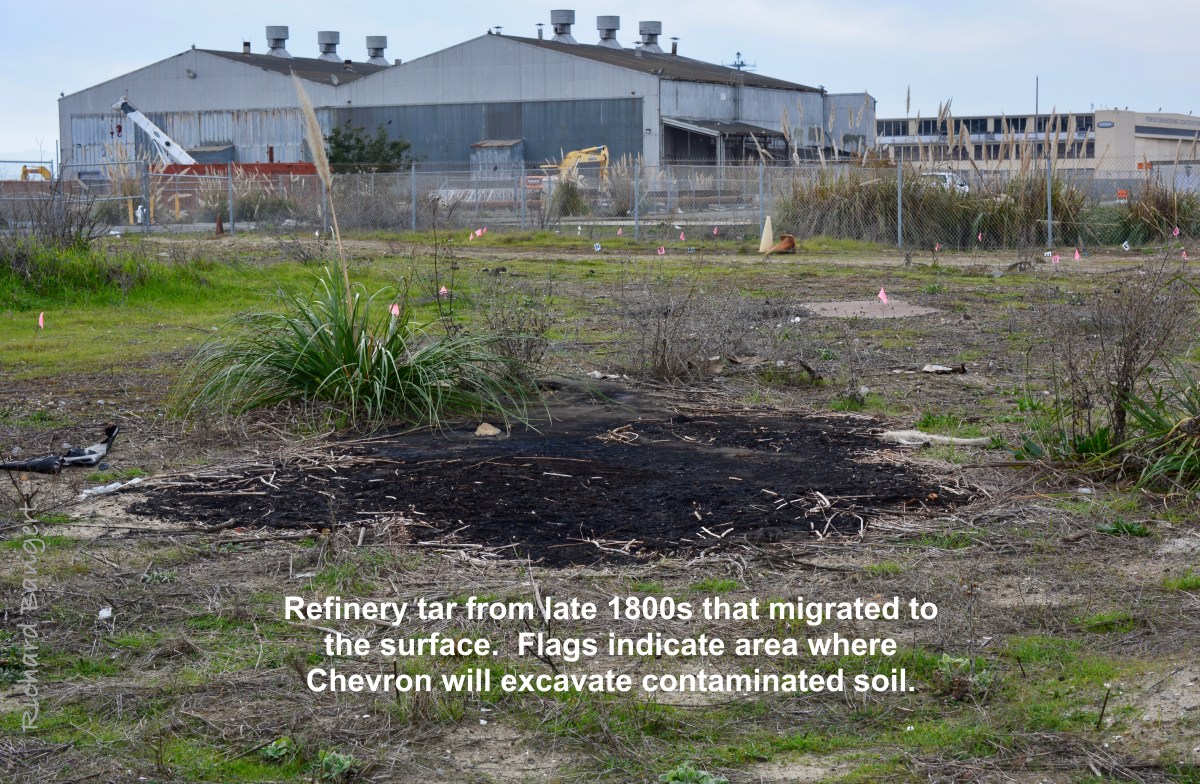
At the urging of the San Francisco Bay Regional Water Quality Control Board (Water Board) in 2021, Chevron agreed to return to Alameda Point and clean up the tar waste left behind when its refinery that produced kerosene was closed in 1903.  The site was eventually filled with up to 10 feet of soil during construction of the Naval Air Station.

Chevron began the process of cleaning up buried tar at its old refinery site in May 2023 by taking 43 soil samples to characterize the extent of contamination.  The sampling pipes were driven down 20 feet.  But a plan for digging up the tar was not submitted to the Water Board until September 2025. 

The Water Board and Chevron are currently in the process of ironing out details of the plan, with formal approval by the Water Board expected soon.

Continue reading “Chevron plans to clean up tar at Alameda Point refinery site in Spring 2026”

Chevron’s tardy cleanup could lose Pacific Fusion deal for Alameda

Cleaning up buried tar left behind by an oil refinery at Alameda Point in the early 1900s did not appear to be a top priority until startup company Pacific Fusion came to City Hall in 2024 with a proposal to purchase about 12 acres of land, including the area where the old refinery was located.  The proposal involves building a demonstration research facility, with $900 million in investment capital to back them up. 

Two years earlier, in 2022, the Regional Water Quality Control Board (Water Board) had reached a voluntary agreement with Chevron, which bought the refinery in the early 1900s and subsequently closed it down, to clean up the site to meet regulatory standards.  But Chevron’s two deadlines for producing a cleanup plan, the first on February 28, 2025, and the second on July 18, 2025, were not met.

Continue reading “Chevron’s tardy cleanup could lose Pacific Fusion deal for Alameda”

PFAS contamination successfully blocked from entering Oakland Estuary

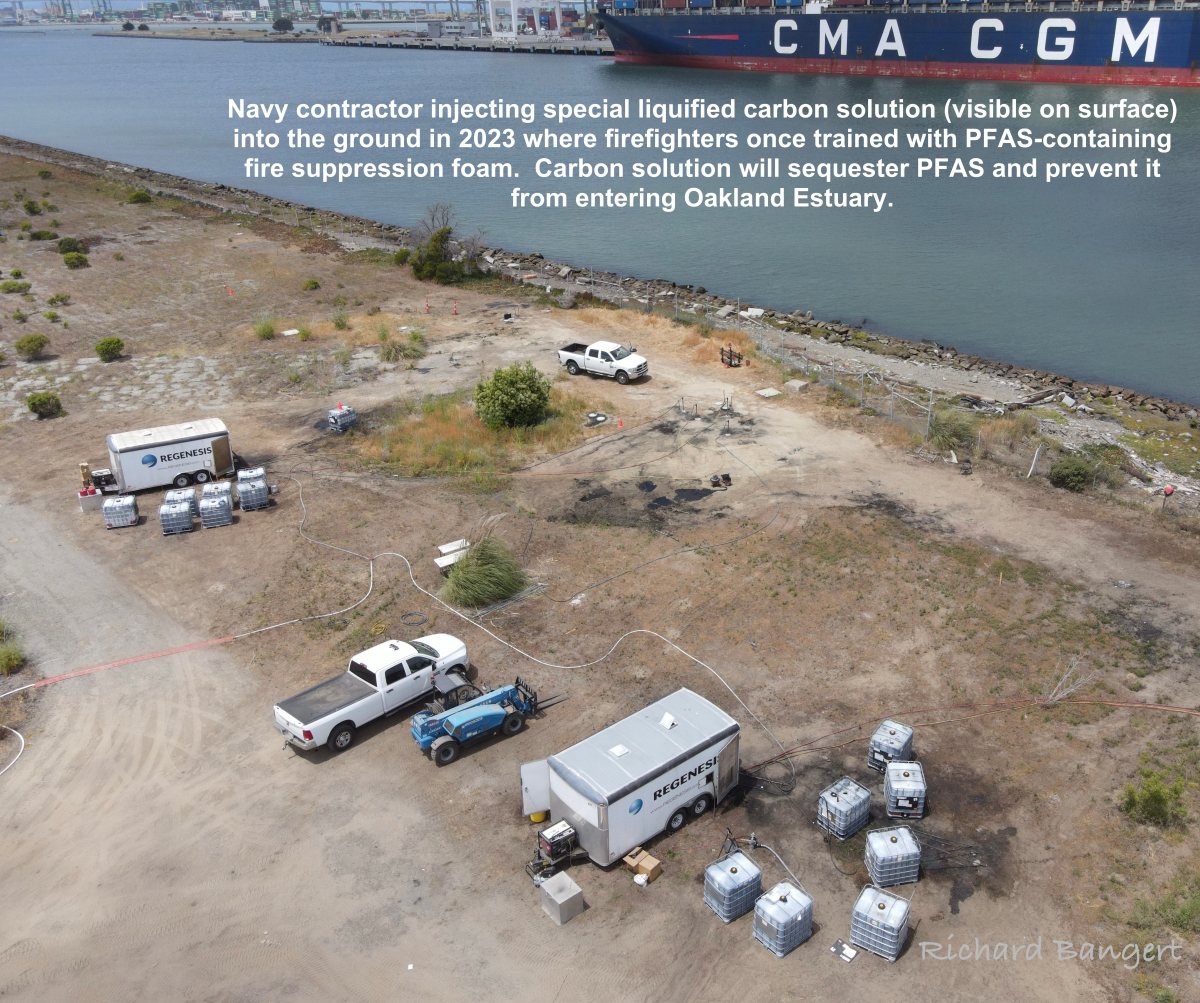
On July 23, 2025, the Navy released the results of its pilot study to determine if injecting a specialized carbon solution into the ground would block hazardous PFAS chemicals from migrating into the Oakland Estuary from Alameda Point. 

The area at issue, a stone’s throw from the estuary, had once been used by Navy firefighters to practice putting out fires with firefighting foam that contained PFAS chemicals.  Scientists have figured out a way to contain, but not destroy, these hazardous chemicals.  Follow-up groundwater samples show that the carbon barrier achieved between 99 percent and 100 percent reduction in PFAS moving beyond the barrier.

Continue reading “PFAS contamination successfully blocked from entering Oakland Estuary”

PFAS cleanup at Alameda Point unnecessarily delayed

A hazardous substance at Alameda Point would have been cleaned up by now if its manufacturer had not withheld negative health data, and the U.S. Environmental Protection Agency (EPA) had acted sooner.  Instead, a whole new cleanup process has been launched by the Navy, which could take another five years.

The PFAS (Per- and Poly- Fluoro- Alkyl Substances) class of toxic chemicals have been known to be present at several isolated underground locations around Alameda Point for a long time.  There is no alarming presence of PFAS or risk to the public.  Nevertheless, now that PFAS has been designated a hazardous substance by the EPA, the Navy is required to conduct a time-consuming process for remediation.  

Continue reading “PFAS cleanup at Alameda Point unnecessarily delayed”

Veggie oil, lactose key to cleaning up toxic groundwater at Alameda Point

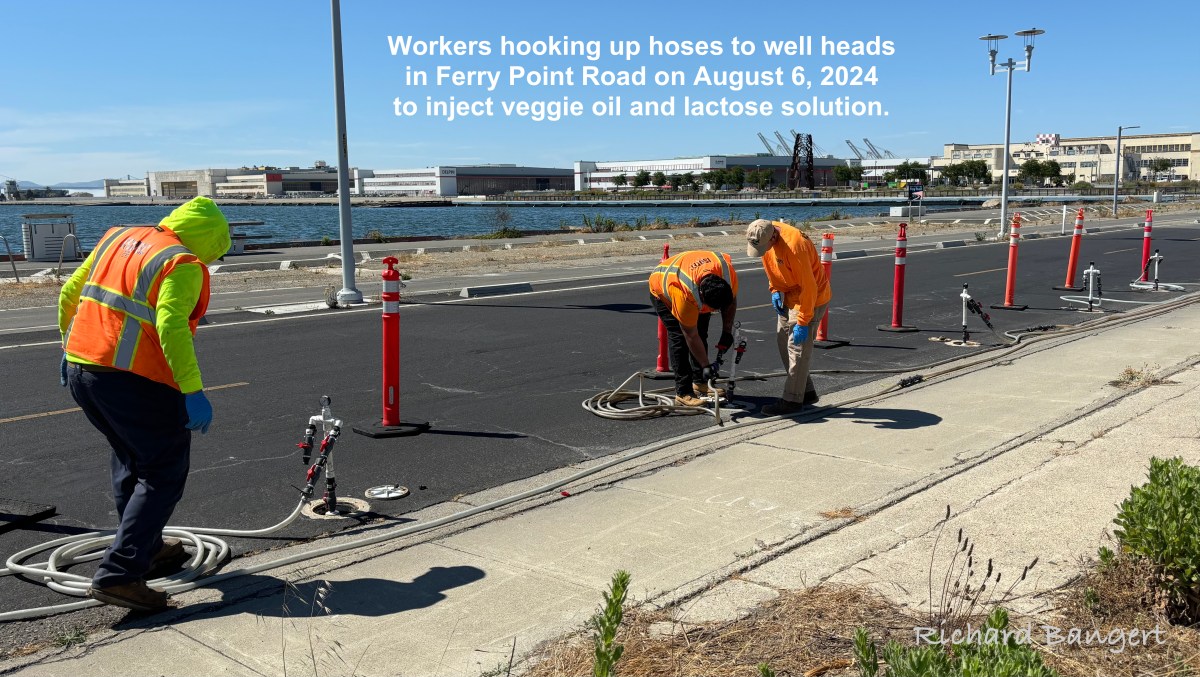
There are faster ways to clean up industrial solvents in groundwater, but the only viable choice for a large contamination site at Alameda Point was to turn the job over to bacteria.  Known as bioremediation, a unique bacteria is breaking apart the solvent trichloroethene (TCE), also known as trichloroethylene, into a harmless substance.

It takes time and the right conditions for the bacteria to thrive—namely, an absence of oxygen and the presence of a carbon source.  Readily-available carbon sources to pump into the contamination area just happen to be soy vegetable oil and dairy lactose.

Continue reading “Veggie oil, lactose key to cleaning up toxic groundwater at Alameda Point”

EPA’s PFAS Ruling Still Leaves Navy Hangar in Limbo

On April 19, 2024, the U.S. Environmental Protection Agency (EPA) elevated the classification of PFAS chemicals from a “pollutant” to a “hazardous substance.”  This should have come as good news to the City because the Navy will be forever responsible for any contamination problems that might arise later, making way for speeding up the city’s efforts to sell a valuable hangar at Alameda Point to gain revenue for replacing outdated and failing infrastructure.  But, not so fast.

Transfer of Building 41 to City awaits Navy PFAS review

Because the former Naval Air Station, now known as Alameda Point, has been undergoing environmental cleanup under the jurisdiction of  Superfund law, one of the rules requires that the Navy now complete a separate Record of Decision on PFAS before transferring Building 41, the hangar at the corner of West Tower Avenue and Ferry Point Road, to the City.  Had PFAS been listed as a hazardous substance when the cleanup process started, the Navy would have dealt with it along the way by doing PFAS assessments, followed by remediation plans where PFAS is present.  

Continue reading “EPA’s PFAS Ruling Still Leaves Navy Hangar in Limbo”