
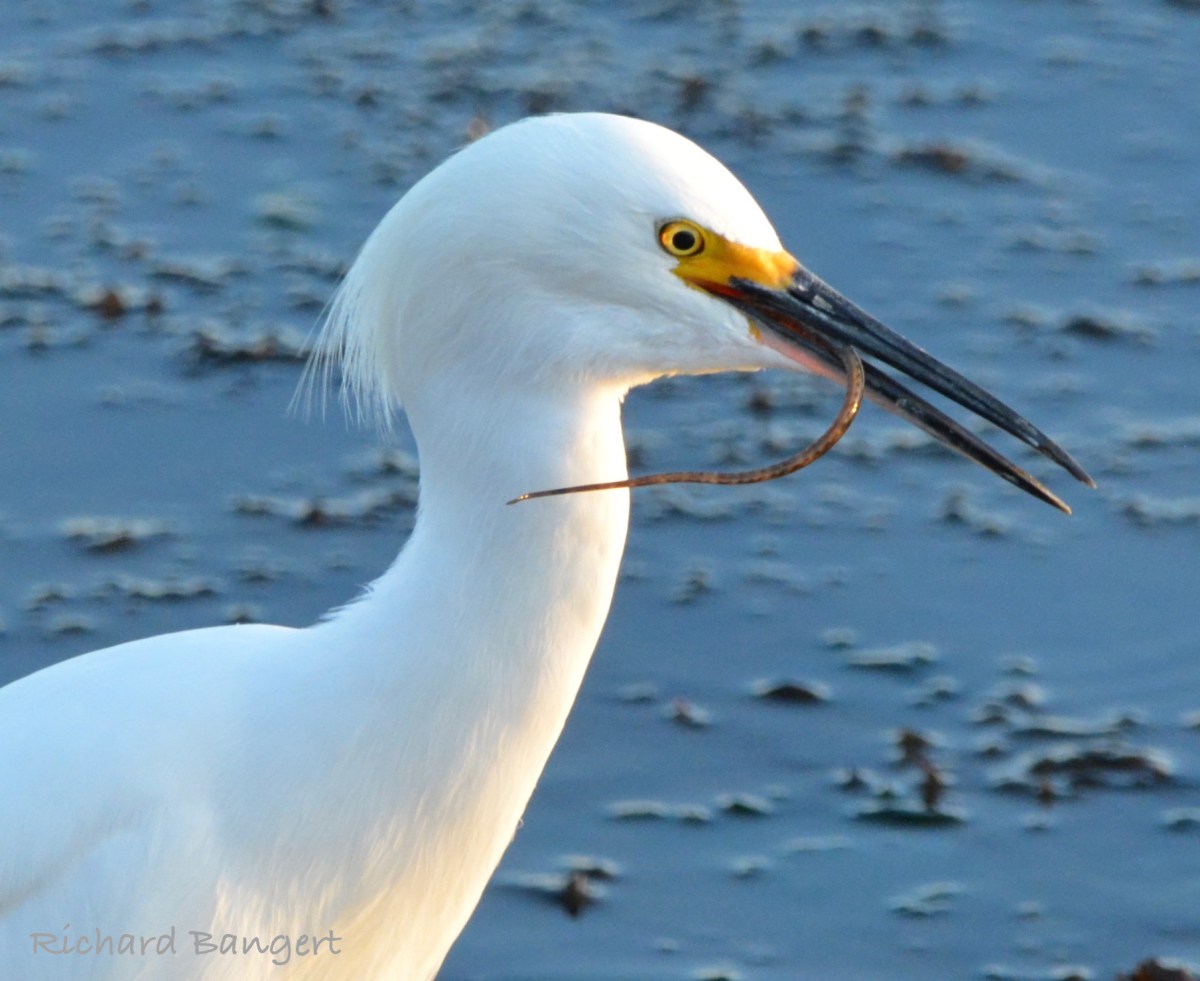
A Snowy Egret caught two Bay pipefish in quick succession along the shoreline next to the Hornet Soccer Field on Sunday, November 24. This sighting of the Snowy Egret catching a pipefish is evidence that eelgrass, a special status marine vegetation, is present in the harbor east of the ferry maintenance facility. Pipefish “do not wander far from the eelgrass bed where they were born,” according to Bay Nature magazine. Eelgrass is pipefish habitat, in part, because pipefish are able to avoid predators as their slender bodies blend in with the narrow blades of eelgrass. Continue reading “Bay pipefish indicates eelgrass in Alameda Point harbor”
Author: richard94501
My blog is Alameda Point Environmental Report covering parks and open space, environmental cleanup, wildlife, and sustainability at the former Navy base in Alameda now called Alameda Point.
Articles on my blog are frequently posted on the Alameda Post news site.
I also host a Flickr photo site, which is accessible via the sidebar wildlife photo gallery.
I hope you find my stories and photos of interest.
Richard Bangert
Alameda, California
VA Project delayed again

The City of Alameda recently disclosed that it is not going to proceed with the preparation of an environmental impact report on the Veterans Affairs (VA) outpatient and columbarium project at Alameda Point, as previously announced in February.
The City hopes to instead rely on its 2014 Alameda Point Environmental Impact Report that contemplated the VA’s storm water drains. “The City of Alameda has no jurisdiction over this project approval,” said Andrew Thomas, Assistant Community Development Director. “Since it is not approving or denying the project, it does not need to do CEQA.”
A California Environmental Quality Act (CEQA) impact report is required for the City to legally issue easements for the VA to lay new storm water drains across City property leading to the Oakland Estuary.

Red-breasted Nuthatch in fall feeding mode
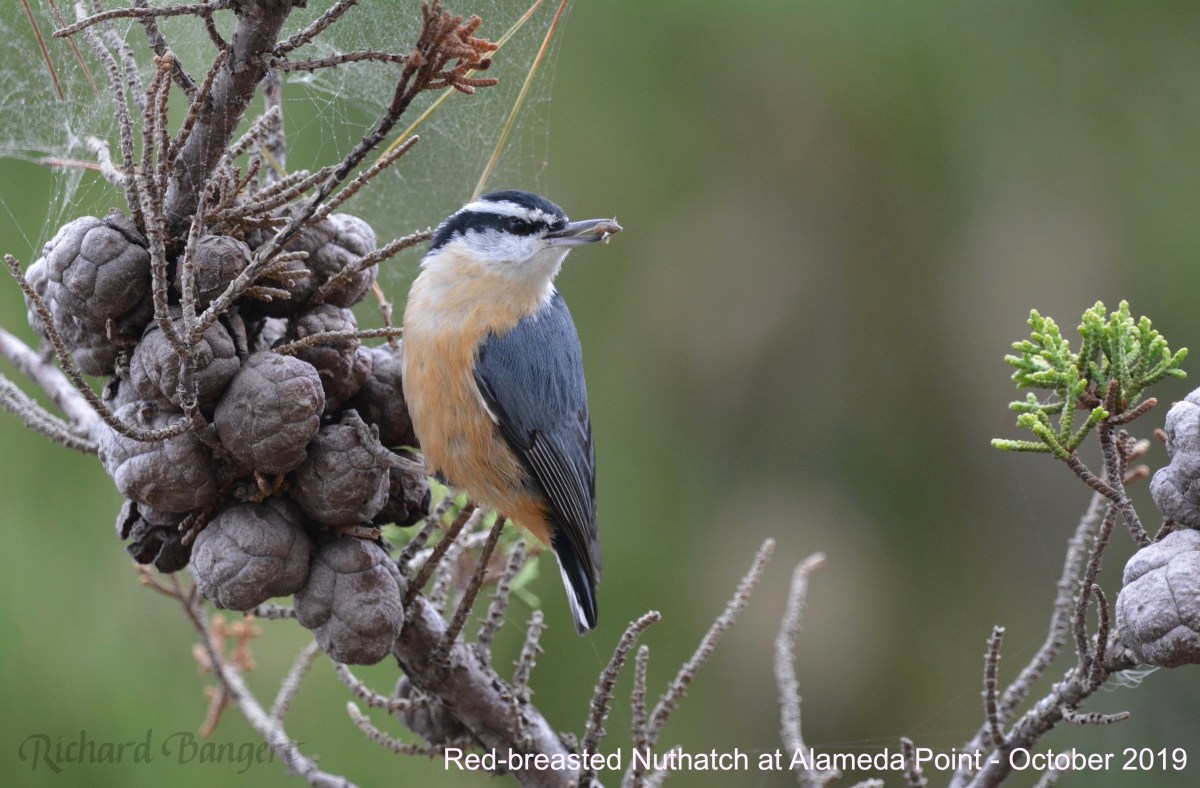
This Red-breasted Nuthatch was part of a small flock busily feeding in an evergreen tree in the old campground next to the Bay Trail on October 15th. Notice the bird’s legs in the first two photos. It looks like it is standing on long stick-like legs, which is an illusion.

Continue reading “Red-breasted Nuthatch in fall feeding mode”
Soil cover being installed at future park site

The Navy made significant headway in June and July on its third and final environmental remediation soil-cover project on the Alameda Point airfield, with 7,289 truckloads of soil being hauled in from an East Bay Municipal Utility District soil-storage site in Castro Valley. The frenzy of truck traffic through the Tube and down Main Street led to complaints of speeding trucks and running red lights, prompting the Navy to warn truck drivers that they could be removed from the job for violating traffic laws, and the City of Alameda Police Department to step up traffic enforcement.
A temporary mountain of approximately 200,000 cubic yards of stockpiled soil is visible on the western end of the airfield during a ferry ride to San Francisco from the Main Street Ferry Terminal. Another 100,000 cubic yards of cover soil and 60,000 cubic yards of top soil for new vegetation is expected to be delivered by November. The soil will be used to create a three-foot cover over the 60-acre cleanup site by the end of 2020. Continue reading “Soil cover being installed at future park site”
Word on the street about Alameda Point cleanup
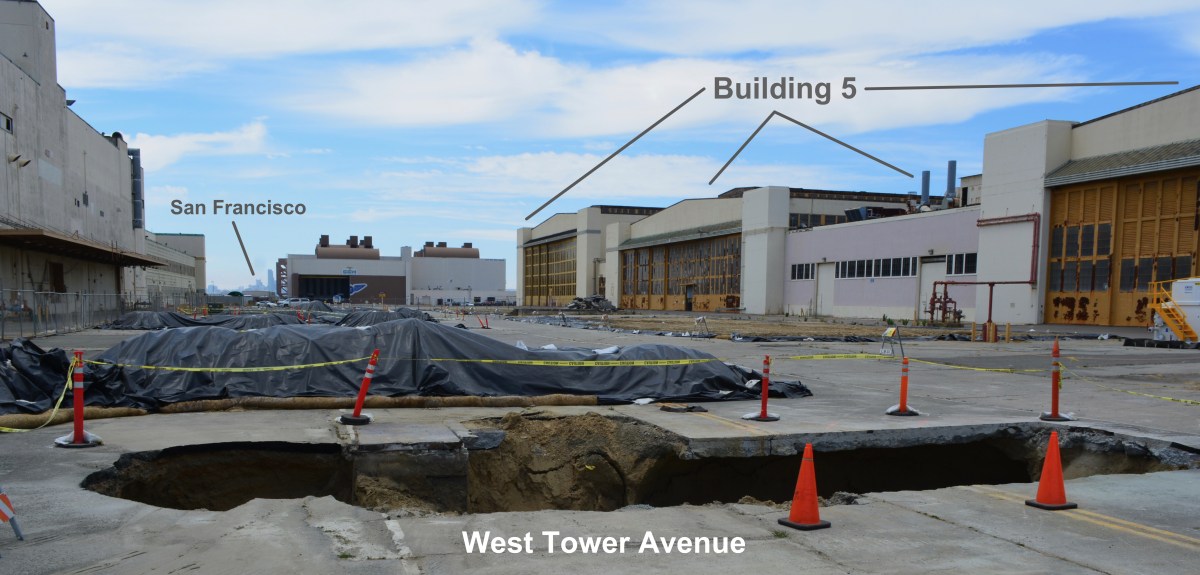
Commercial hangar reuse
The massive aircraft hangar at the end of West Tower Avenue moved one step closer to commercial leasing last week. The California Department of Public Health (CDPH) performed random radiation scanning inside the building to certify that the Navy’s cleanup of paint residue containing radium-226 was complete. The other regulatory agencies have already signed off on the radiation cleanup after the Navy performed an inch-by-inch scanning effort.
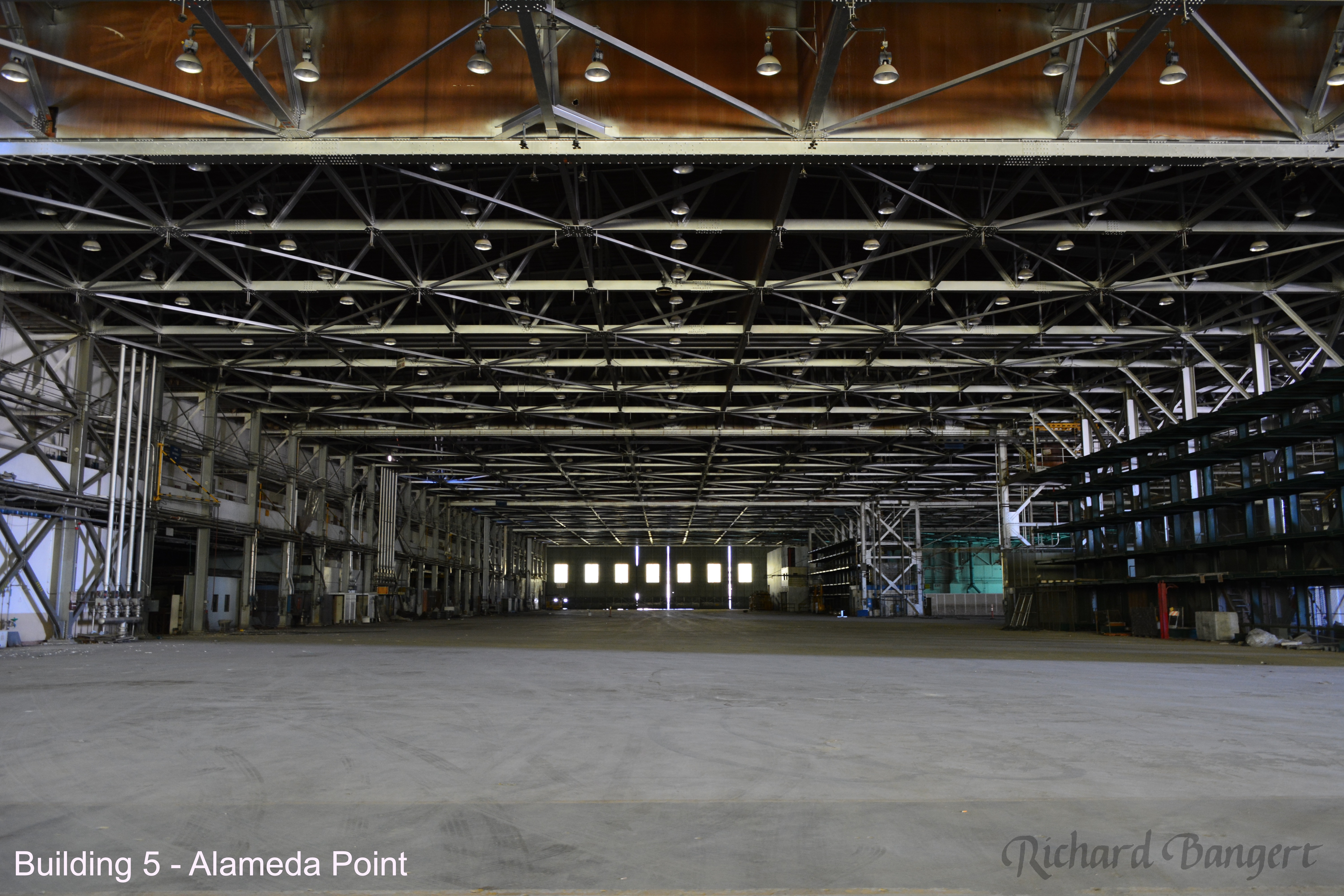
As soon as this fall, CDPH could issue a letter that would allow the city to lease the building. The nearly million-square-foot building complex (Building 5) has been unavailable to the city for leasing for more than a decade. Other buildings on the base have been leased to the city by the Navy under what’s known as the Lease in Furtherance of Conveyance agreement, which has allowed the city to sublease the buildings until transfer of ownership. Continue reading “Word on the street about Alameda Point cleanup”
Environmentalists sink Nautilus data center
The proposal by Nautilus Data Technologies to set up a water-cooled data storage facility at Alameda Point was soundly rejected by the Alameda City Council on June 18. The facility would have pumped over 14 million gallons of water a day through its facility to cool computer servers. The company said water cooling is better for the environment than existing air conditioning technology. But by the time the environmental community was finished weighing in, it was clear that the Nautilus once-through cooling system would have replaced one problem by creating a new one.
The screen on the intake pipe underneath Pier 2 sounded good, until you consider that all the water coming out the other end in the Bay would have been filtered water that would have upset the natural ecological balance. Marine life would have been pasted against the intake screen and periodically scraped off. Tiny organisms would have made it through the screen and potentially been killed by the heat. The heated water at the point of discharge was another big concern, since warming water is one of the conditions in which toxic algae blooms occur.
Below are excerpts from letters sent by environmental groups to the city council and excerpts of public comments at the meeting. Thank you to all who spoke up for the natural world and our fragile Bay ecosystem. Continue reading “Environmentalists sink Nautilus data center”
10 reasons why data center should change water cooling pipe location

Open Letter to Mr. James Connaughton
Chief Executive Officer
Nautilus Data Technologies
Dear Mr. Connaughton,
The Alameda City Council has granted you approval of moving forward with your data storage facility at Alameda Point. Please reconsider the route for discharging warm water from the cooling system. Instead of heading south under the Bay Trail and through the harbor near the ferry maintenance facility, send the water discharge pipe north to the Oakland Estuary.
As someone who was instrumental in protecting large tracts of the Pacific Ocean during your tenure as environmental advisor to President George W. Bush, I believe the alternative route will appeal to your marine conservation values. Continue reading “10 reasons why data center should change water cooling pipe location”
 Alameda Point Environmental Report