Chevron’s tardy cleanup could lose Pacific Fusion deal for Alameda

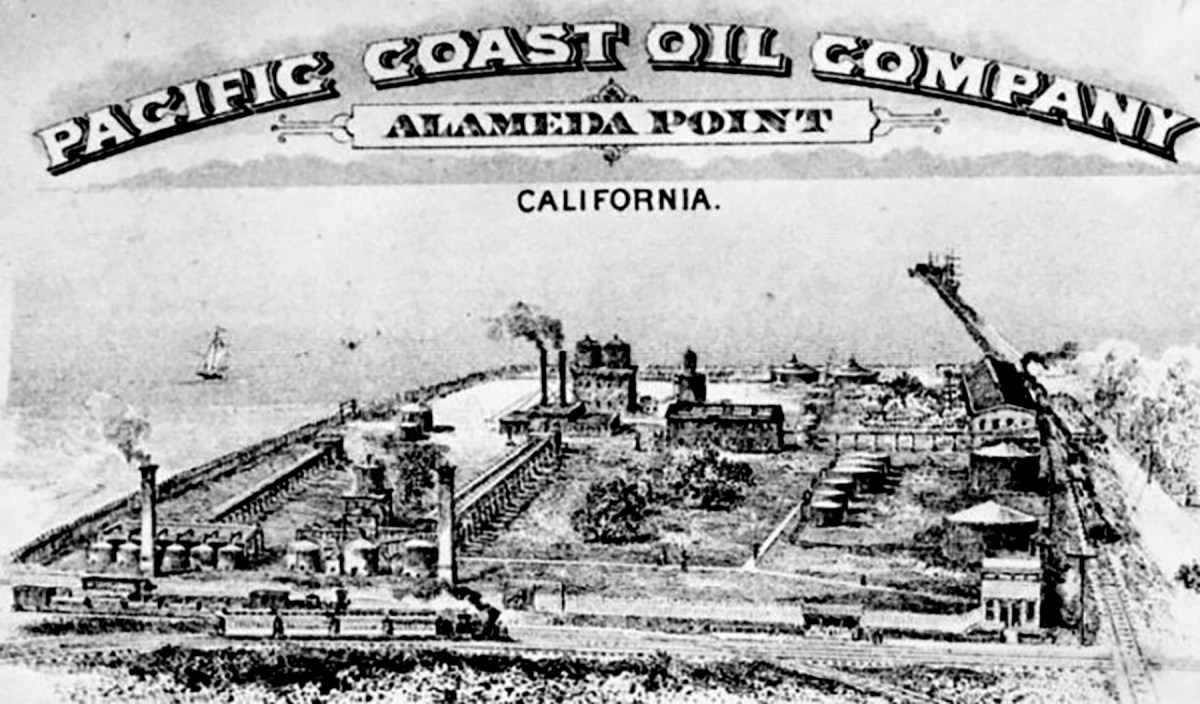
Cleaning up buried tar left behind by an oil refinery at Alameda Point in the early 1900s did not appear to be a top priority until startup company Pacific Fusion came to City Hall in 2024 with a proposal to purchase about 12 acres of land, including the area where the old refinery was located.  The proposal involves building a demonstration research facility, with $900 million in investment capital to back them up. 

Two years earlier, in 2022, the Regional Water Quality Control Board (Water Board) had reached a voluntary agreement with Chevron, which bought the refinery in the early 1900s and subsequently closed it down, to clean up the site to meet regulatory standards.  But Chevron’s two deadlines for producing a cleanup plan, the first on February 28, 2025, and the second on July 18, 2025, were not met.

Continue reading “Chevron’s tardy cleanup could lose Pacific Fusion deal for Alameda”

PFAS cleanup at Alameda Point unnecessarily delayed

A hazardous substance at Alameda Point would have been cleaned up by now if its manufacturer had not withheld negative health data, and the U.S. Environmental Protection Agency (EPA) had acted sooner.  Instead, a whole new cleanup process has been launched by the Navy, which could take another five years.

The PFAS (Per- and Poly- Fluoro- Alkyl Substances) class of toxic chemicals have been known to be present at several isolated underground locations around Alameda Point for a long time.  There is no alarming presence of PFAS or risk to the public.  Nevertheless, now that PFAS has been designated a hazardous substance by the EPA, the Navy is required to conduct a time-consuming process for remediation.  

Continue reading “PFAS cleanup at Alameda Point unnecessarily delayed”

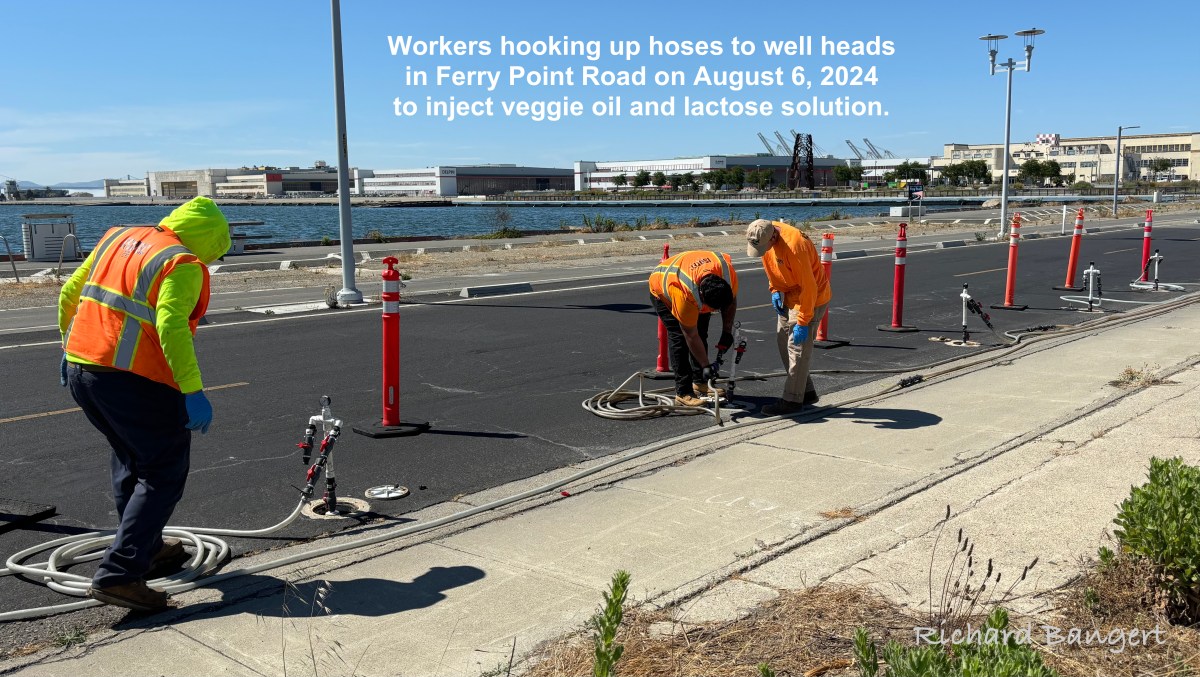
Veggie oil, lactose key to cleaning up toxic groundwater at Alameda Point

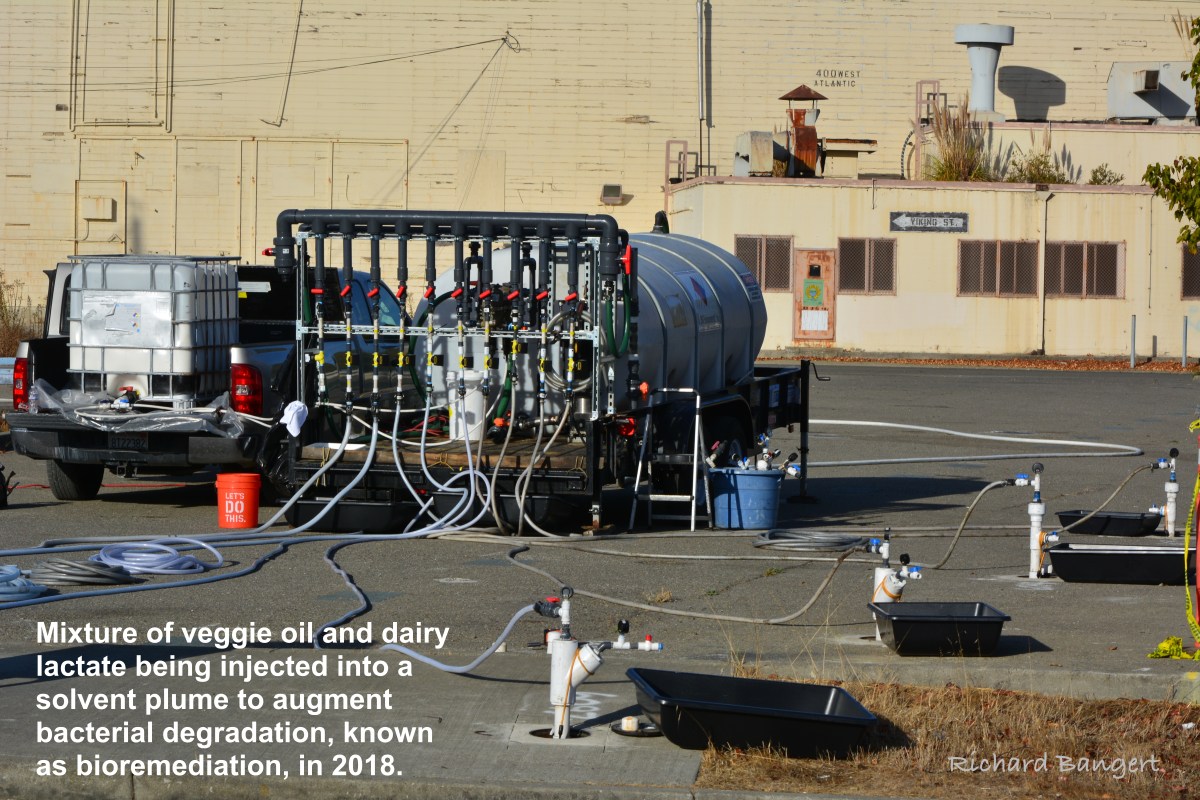
There are faster ways to clean up industrial solvents in groundwater, but the only viable choice for a large contamination site at Alameda Point was to turn the job over to bacteria.  Known as bioremediation, a unique bacteria is breaking apart the solvent trichloroethene (TCE), also known as trichloroethylene, into a harmless substance.

It takes time and the right conditions for the bacteria to thrive—namely, an absence of oxygen and the presence of a carbon source.  Readily-available carbon sources to pump into the contamination area just happen to be soy vegetable oil and dairy lactose.

Continue reading “Veggie oil, lactose key to cleaning up toxic groundwater at Alameda Point”

PFAS remediation work underway next to Alameda Point shoreline

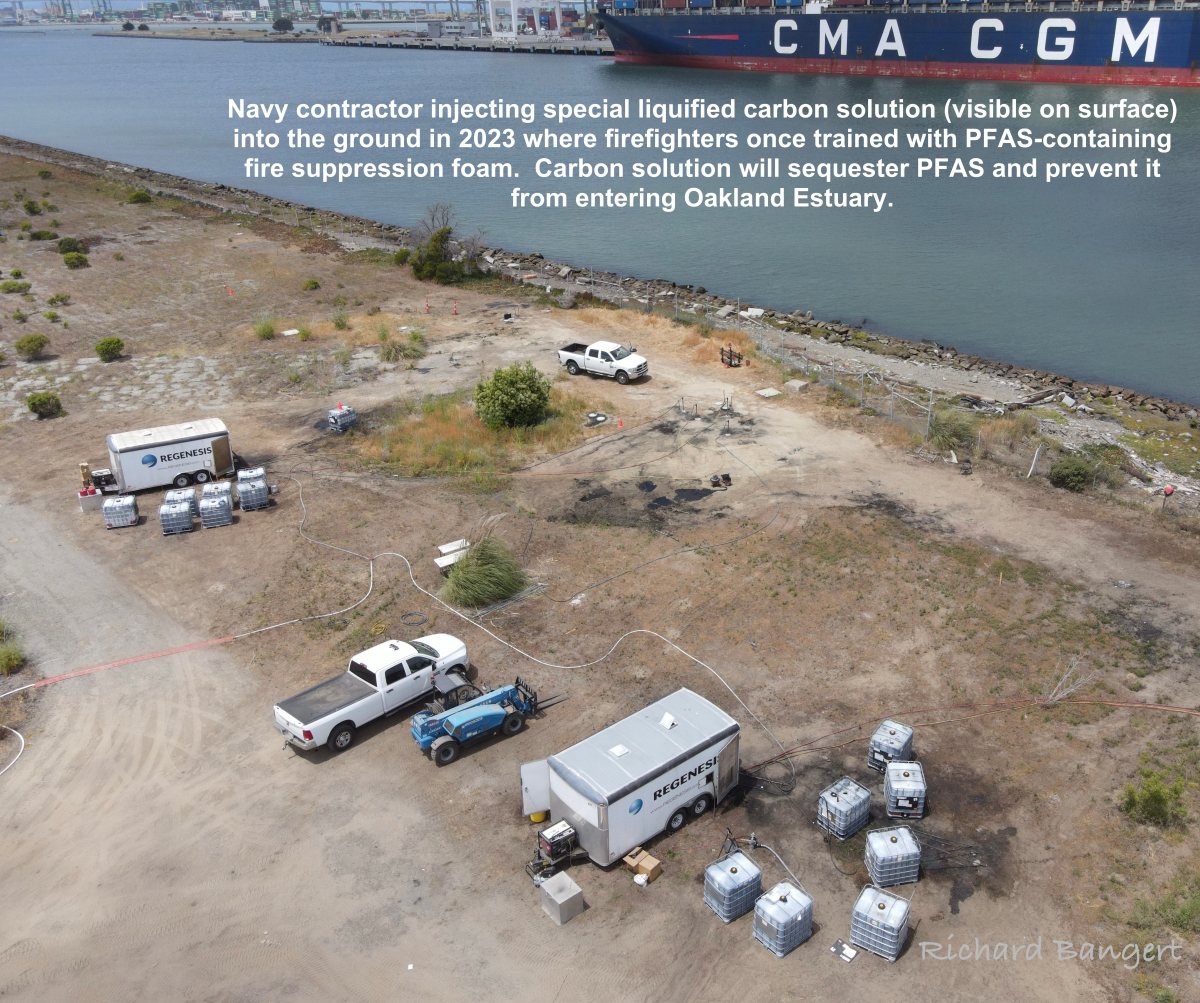
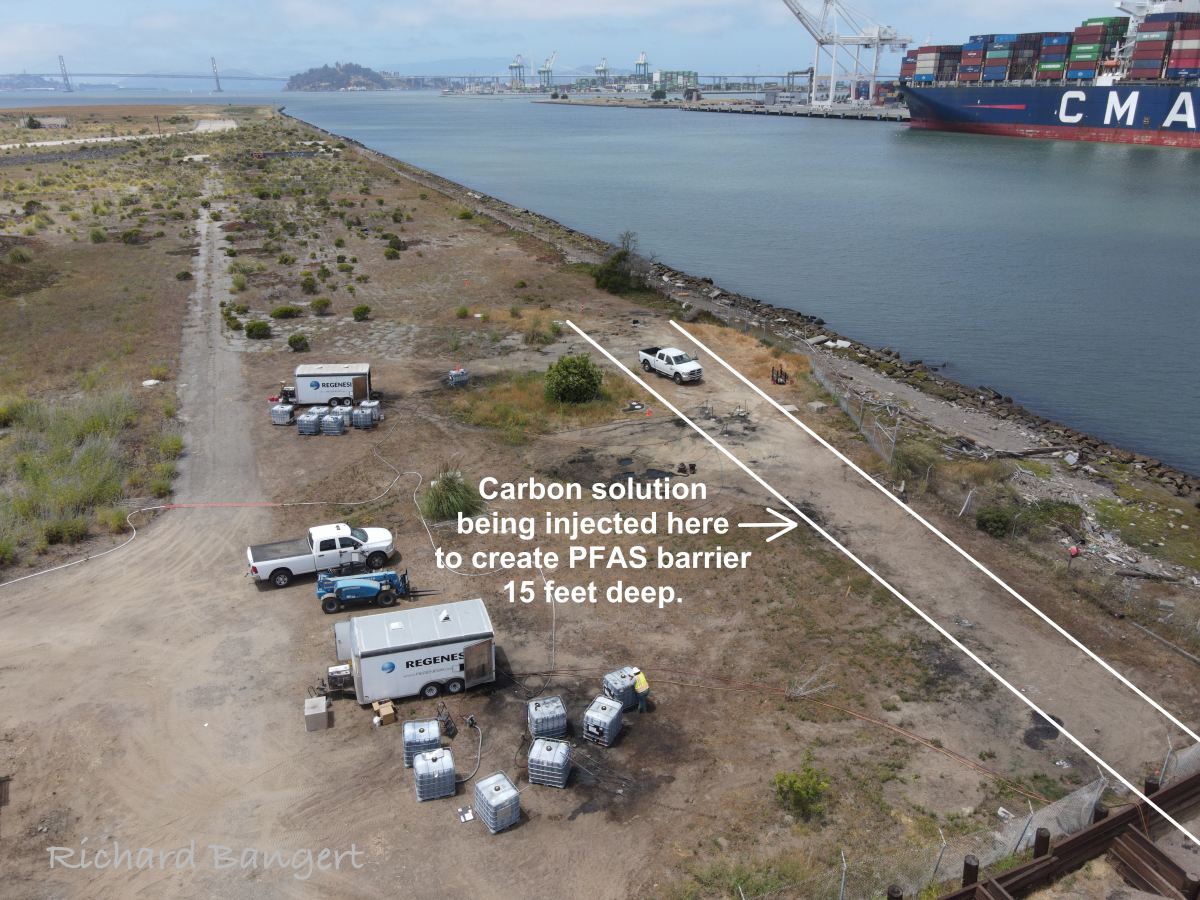
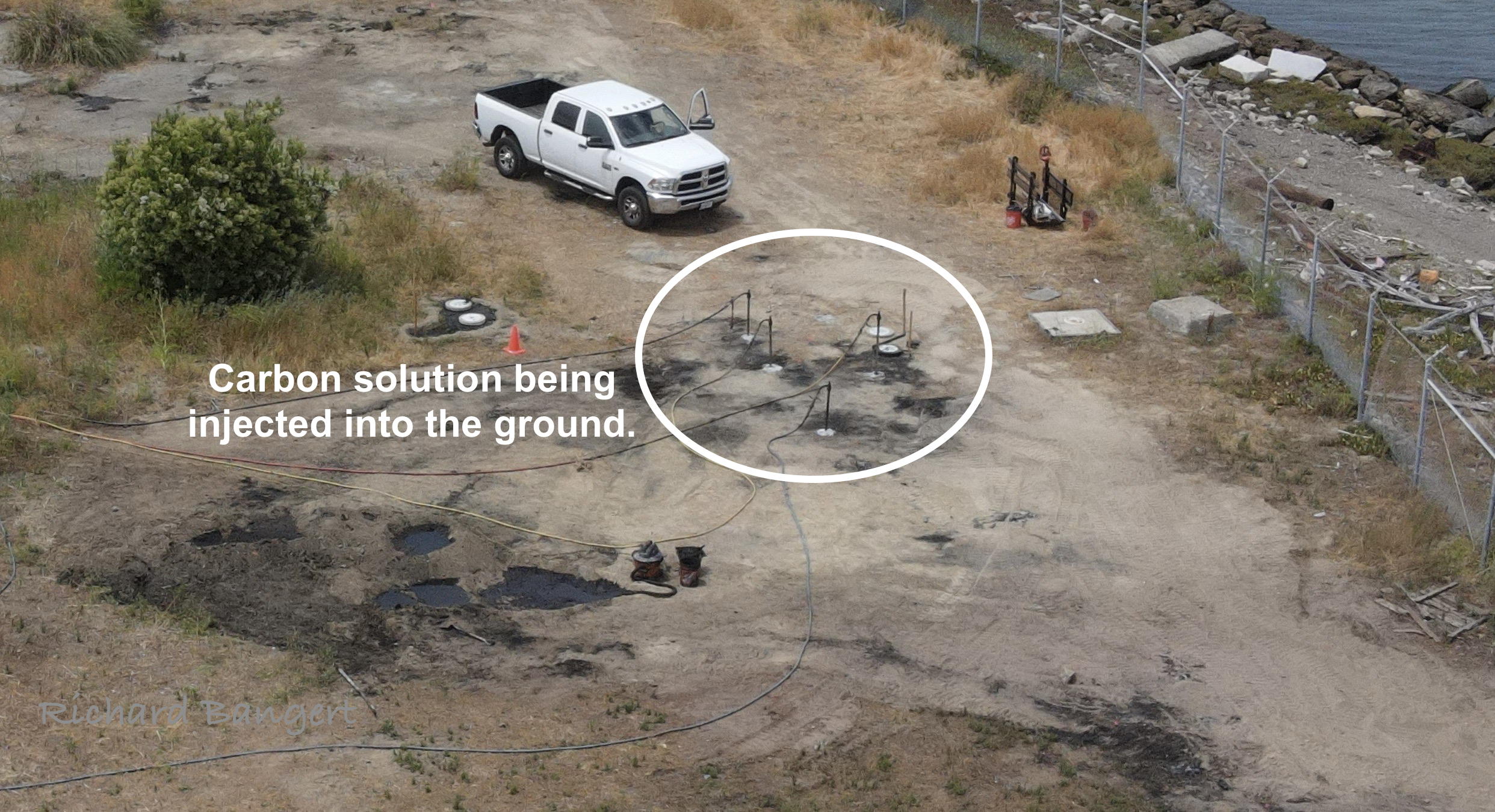
In late June, a Navy contractor began the month-long process of injecting over 180,000 gallons of activated carbon solution into the ground at Alameda Point to prevent a hazardous substance called PFAS (Perfluoroalkyl and Polyfluoroalkyl Substances) from entering the Oakland Estuary.

Continue reading “PFAS remediation work underway next to Alameda Point shoreline”

Chevron to clean up buried tar at old refinery site

Thanks to leadership at the San Francisco Bay Regional Water Quality Control Board (Regional Water Board), Chevron Corporation will be cleaning up residual petroleum at a former refinery site it once owned at Alameda Point.

The true extent of the contamination is unknown, which is why Chevron is first taking soil samples at 43 spots around the open field next to the self-storage business near the intersection of West Oriskany Avenue and Skyhawk Street.  The investigation work was announced in a Work Notice/Fact Sheet from the Regional Water Board.  Work began on May 15 and will continue until May 26.  Their findings will provide the basis for a cleanup plan.

The petroleum cleanup site was put on the shelf until now because the Navy and the City figured that it was not causing any harm, therefore nothing had to be done until a developer purchased the lot.  The Regional Water Board, which has sole regulatory authority over petroleum cleanup, instead wanted to close the books on this outstanding cleanup site.

Continue reading “Chevron to clean up buried tar at old refinery site”

Navy recruiting volunteers for Alameda Point cleanup board

The Navy is seeking new members to serve on its volunteer Restoration Advisory Board (RAB), which reviews and comments on environmental cleanup of the former Navy base.  The Navy is also conducting an online community survey to better understand the interests and concerns about the environmental cleanup at the base.

Despite all the new construction at Alameda Point, there are still a variety of cleanup issues for the Navy and regulators to address.  Some issues are new, some involve the long-term monitoring of sites that maxed out the active remediation methods and now rely on natural biological degradation of the remaining contaminant.  And sometimes ongoing monitoring results show that the remediation has not sufficiently reduced a contaminant.  This leads to follow-up work plans, which are vetted by the RAB.

Continue reading “Navy recruiting volunteers for Alameda Point cleanup board”

Navy Forced to Destroy Wetlands at Alameda Point

A recently released Navy document reveals that an implausible last-minute health-risk theory killed the Navy’s plan for upgrading and expanding wetlands at Alameda Point where a regional park is planned (Navy To Create New Wetlands,” Jan. 3, 2019).

A 60-acre cleanup site, known as Site 32, was on track to include 15 acres of seasonal wetlands, along with a doubling of watershed drainage into the wetlands.  The regulatory agencies overseeing cleanup — namely, the U.S. Environmental Protection Agency, Regional Water Board, and Department of Toxic Substances Control — had signed off on the plan in 2018.  But nothing has been done since the tons of clean soil for the project were delivered there in 2019.

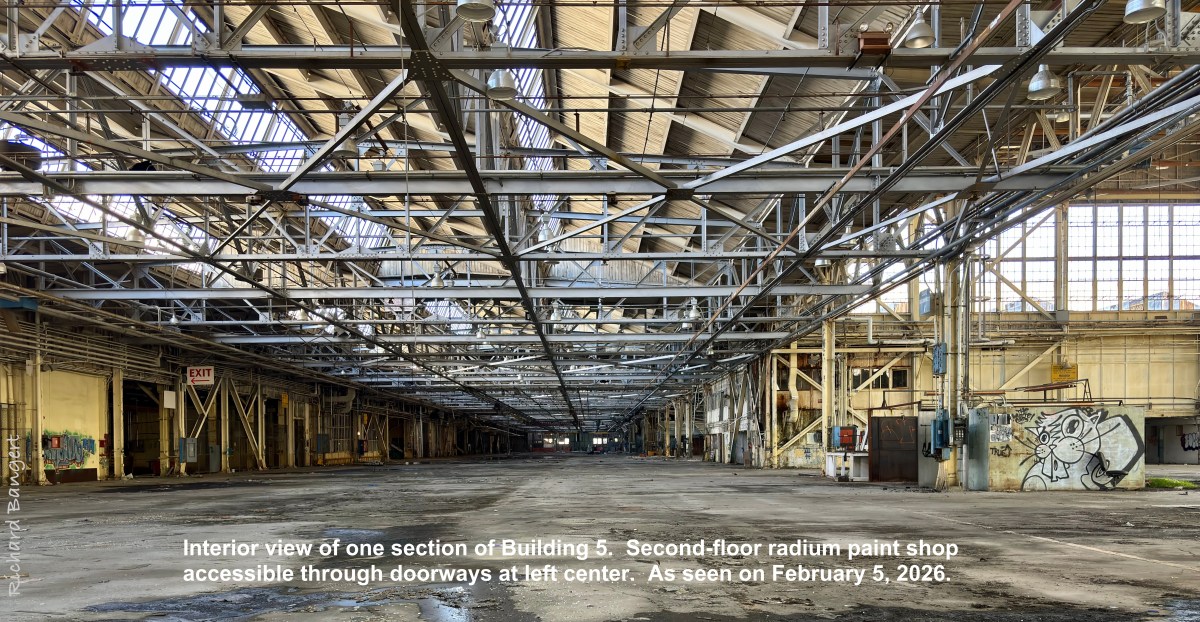
A support agency, the CA Department of Public Health (CDPH), interjected claims that trees, other vegetation, and burrowing animals could compromise the proposed soil cover underneath the 15 acres of proposed new wetlands, exposing people and animals to radiological contaminants from paint residue on scattered objects that have been buried there for 65 years.

Continue reading “Navy Forced to Destroy Wetlands at Alameda Point”