PFAS contamination successfully blocked from entering Oakland Estuary

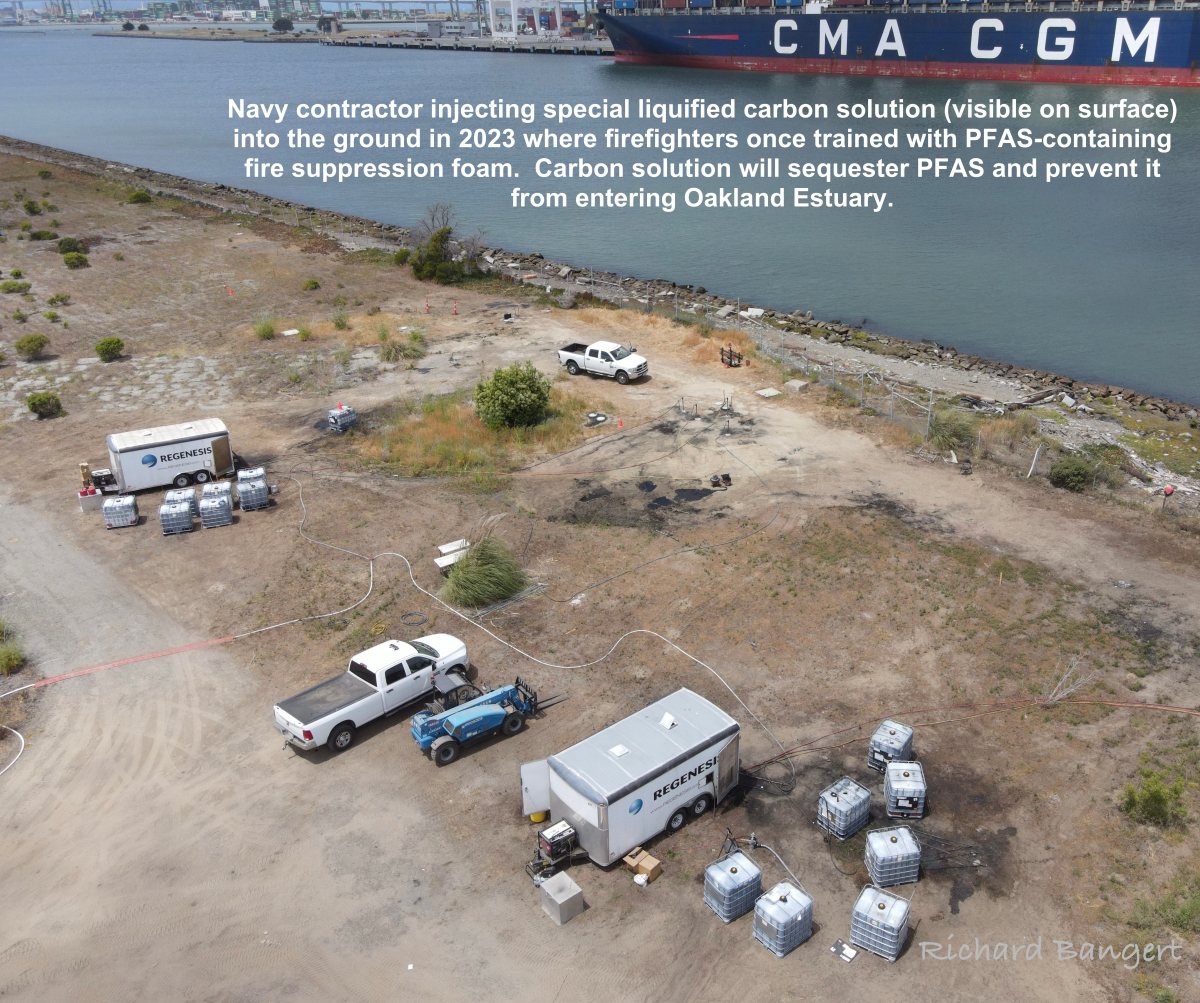
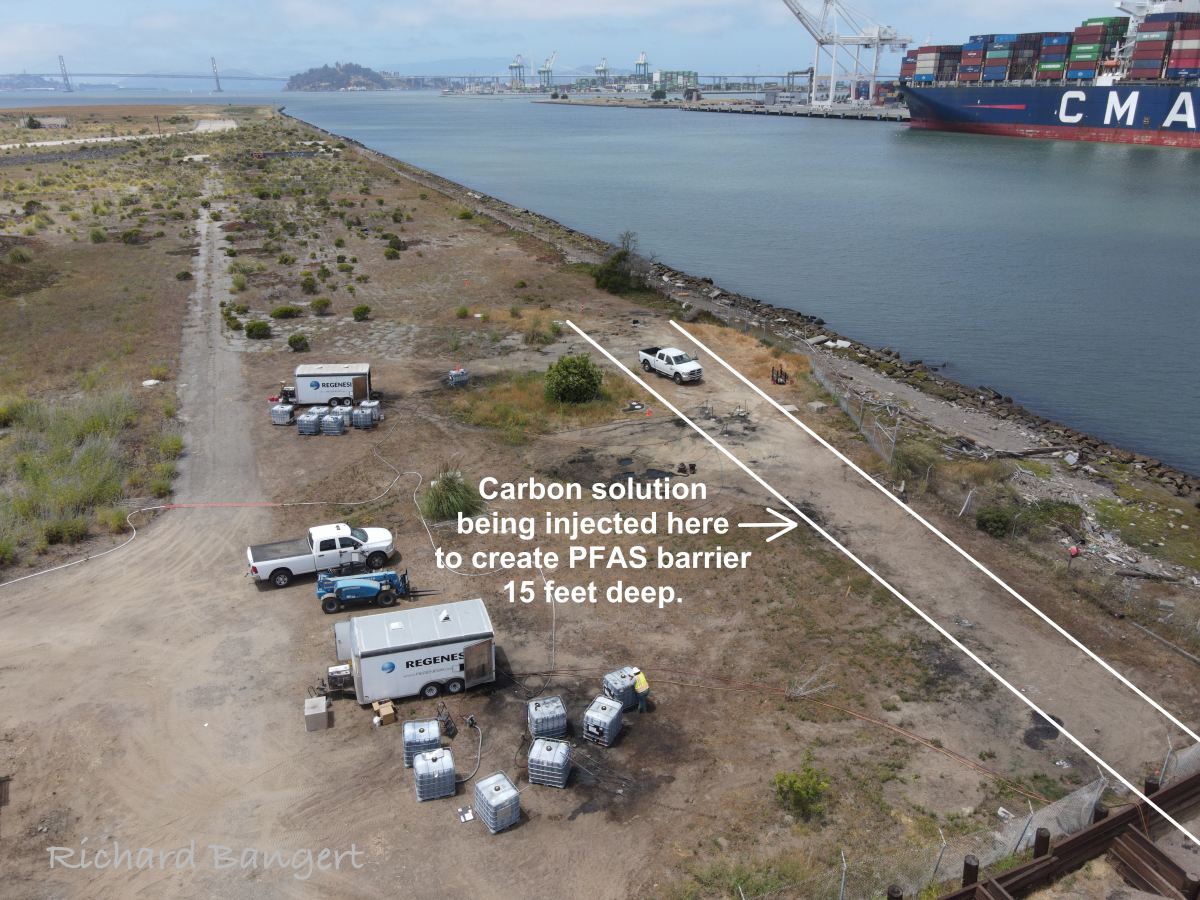
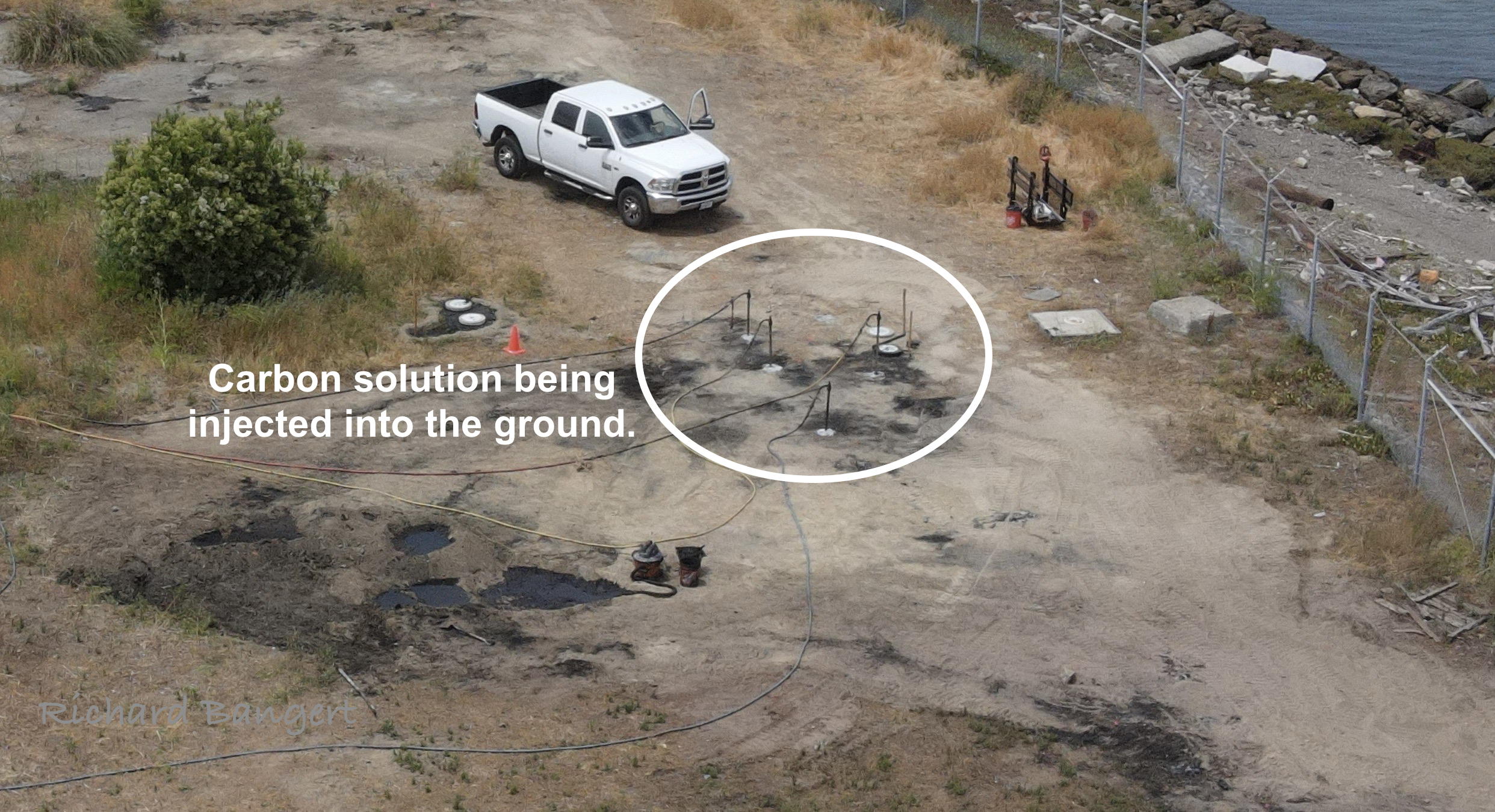
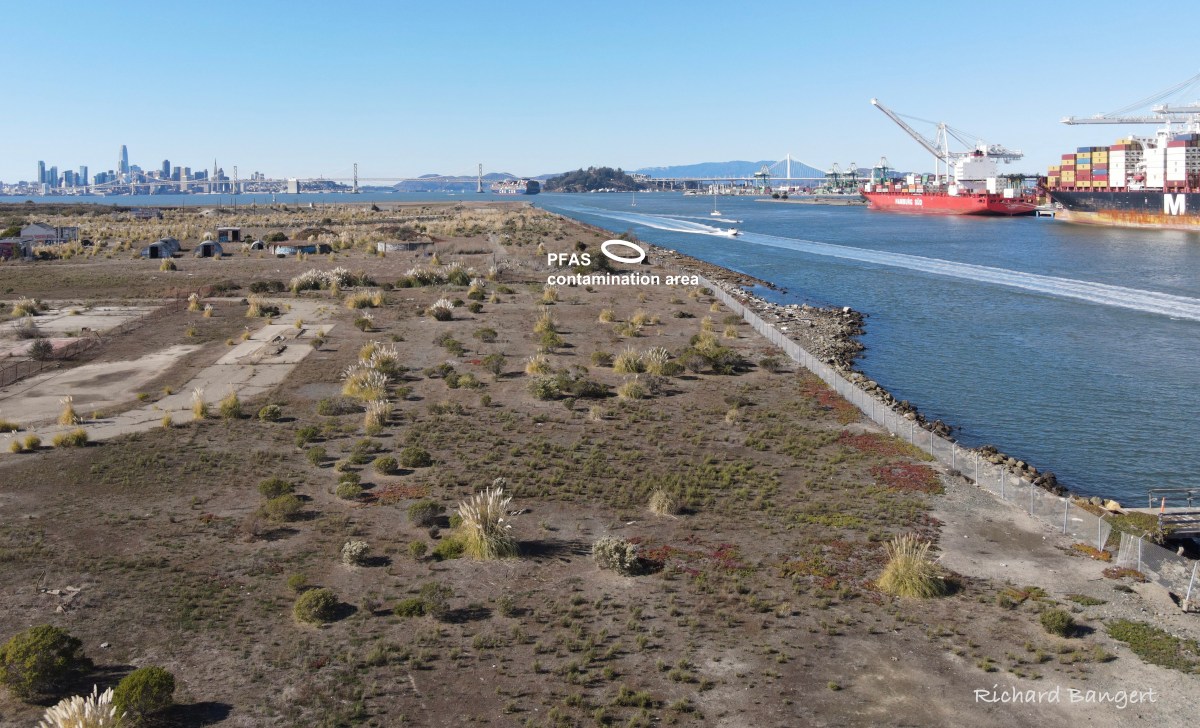
On July 23, 2025, the Navy released the results of its pilot study to determine if injecting a specialized carbon solution into the ground would block hazardous PFAS chemicals from migrating into the Oakland Estuary from Alameda Point. 

The area at issue, a stone’s throw from the estuary, had once been used by Navy firefighters to practice putting out fires with firefighting foam that contained PFAS chemicals.  Scientists have figured out a way to contain, but not destroy, these hazardous chemicals.  Follow-up groundwater samples show that the carbon barrier achieved between 99 percent and 100 percent reduction in PFAS moving beyond the barrier.

Continue reading “PFAS contamination successfully blocked from entering Oakland Estuary”

PFAS cleanup at Alameda Point unnecessarily delayed

A hazardous substance at Alameda Point would have been cleaned up by now if its manufacturer had not withheld negative health data, and the U.S. Environmental Protection Agency (EPA) had acted sooner.  Instead, a whole new cleanup process has been launched by the Navy, which could take another five years.

The PFAS (Per- and Poly- Fluoro- Alkyl Substances) class of toxic chemicals have been known to be present at several isolated underground locations around Alameda Point for a long time.  There is no alarming presence of PFAS or risk to the public.  Nevertheless, now that PFAS has been designated a hazardous substance by the EPA, the Navy is required to conduct a time-consuming process for remediation.  

Continue reading “PFAS cleanup at Alameda Point unnecessarily delayed”

Veggie oil, lactose key to cleaning up toxic groundwater at Alameda Point

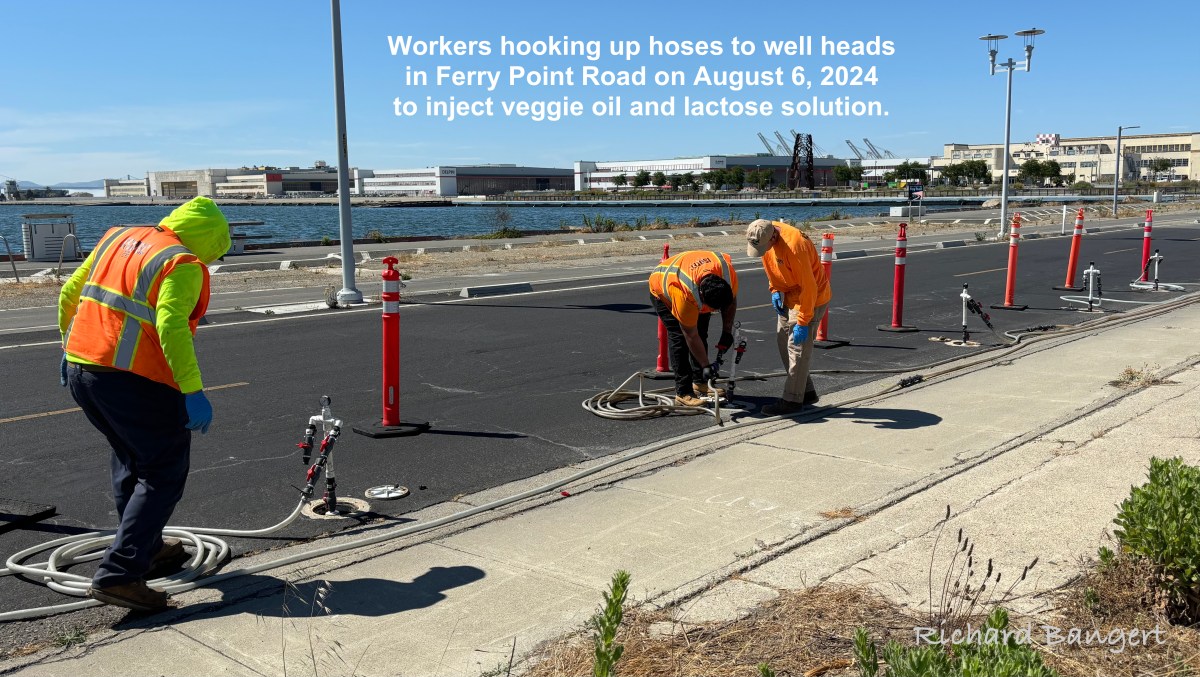
There are faster ways to clean up industrial solvents in groundwater, but the only viable choice for a large contamination site at Alameda Point was to turn the job over to bacteria.  Known as bioremediation, a unique bacteria is breaking apart the solvent trichloroethene (TCE), also known as trichloroethylene, into a harmless substance.

It takes time and the right conditions for the bacteria to thrive—namely, an absence of oxygen and the presence of a carbon source.  Readily-available carbon sources to pump into the contamination area just happen to be soy vegetable oil and dairy lactose.

Continue reading “Veggie oil, lactose key to cleaning up toxic groundwater at Alameda Point”

PFAS remediation work underway next to Alameda Point shoreline

In late June, a Navy contractor began the month-long process of injecting over 180,000 gallons of activated carbon solution into the ground at Alameda Point to prevent a hazardous substance called PFAS (Perfluoroalkyl and Polyfluoroalkyl Substances) from entering the Oakland Estuary.

Continue reading “PFAS remediation work underway next to Alameda Point shoreline”

Navy to lock down PFAS in groundwater with carbon

The Navy is ramping up plans to inject a state-of-the-art powdered charcoal product into PFAS-contaminated groundwater at Alameda Point, according to an October 13, 2022, cleanup document posted on the California Department of Toxic Substances Control website.  The project will take place at a small area where Navy firefighters trained with PFAS-containing fire suppression foam next to the Oakland Estuary.  The goal is to prevent the migration of PFAS into the Oakland Estuary.

Continue reading “Navy to lock down PFAS in groundwater with carbon”

Jet fuel cleanup relies on laundry detergent booster

Draining jet fuel from Navy planes, known as defueling, was a routine step before doing maintenance work on the planes.  This defueling process at Alameda Point inadvertently contaminated groundwater at one location across the street from the Pottery Barn Outlet on West Oriskany Avenue.  During February, the Navy’s cleanup contractor conducted a form of industrial-scale in-ground chemotherapy known as oxidation. 

The injected chemical compound breaks apart the fuel molecules, turning them into harmless carbon dioxide, water, and oxygen.  The main ingredient in this oxidation process is sodium percarbonate, the same active ingredient in OxyClean™ laundry whitener and stain remover, albeit with a different objective.

Continue reading “Jet fuel cleanup relies on laundry detergent booster”

Navy to investigate fire suppression foam contamination

When an airplane is coming in for a belly landing or has an engine on fire, the only way to prevent the entire plane from becoming engulfed in flames is by dousing the runway or the plane with fire suppression foam.  Navy firefighters were trained in the use of fire suppression foam near the airplane runways at Alameda Point.

Over the past two decades, there has been one bad news story after another about the foam’s toxic ingredients contaminating drinking water.  These same toxic ingredients are also found in common consumer products.  The Centers for Disease Control estimates that as many as 95 percent of the population have traces of these cancer-causing, endocrine-system-disrupting chemicals in their body. 

That’s partly because consumer products with the same chemical compounds, such as water repellant outdoor wear, carpets, food packaging, and even cosmetics, are still on the market.  Some household brand names that pioneered the marketing of products with the harmful chemicals, like Scotchgard and Teflon, have been reformulated and claim to be safe.  Environmental advocacy groups like Earthjustice are not convinced.

As the science about the human health effects has become more compelling and public awareness so great, the military is now embarking on a cleanup program at active and former military bases, including Alameda Point.

Continue reading “Navy to investigate fire suppression foam contamination”