Ospreys nesting at Alameda Point interrupted again in 2014

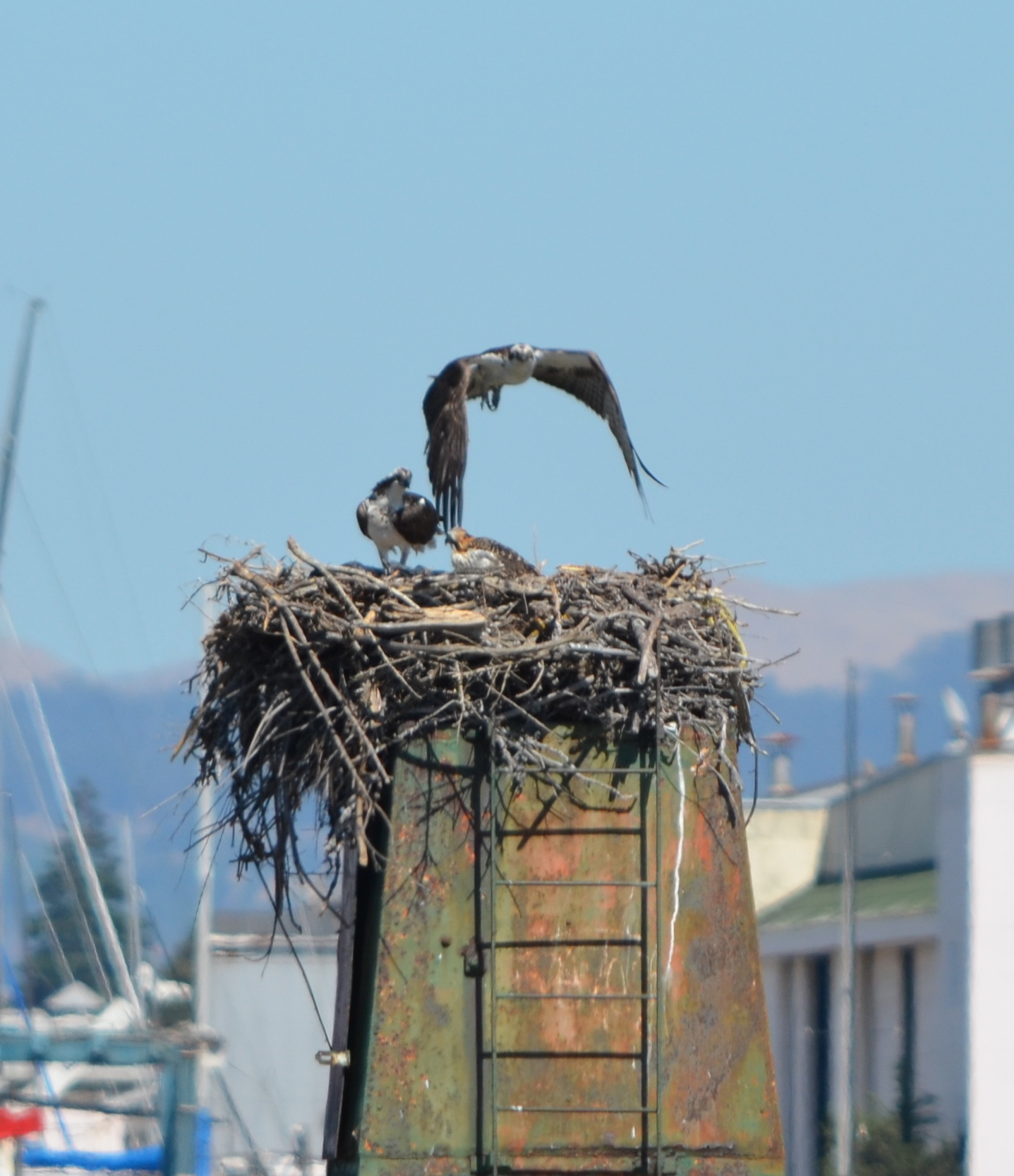
In early June a pair of returning ospreys looked ready for the day in their newly made nest atop a parking lot light pole at Alameda Point, but they had no chicks to attend to. The pair’s first nest this season — on a nearby ship — had been removed during construction.  Their second attempt faced interference from another osprey.  By June, hopes for fledglings this year had faded.  An ad hoc group of osprey watchers is hoping a dedicated osprey platform can be erected at Alameda Point in a spot where competing interests and annoyances of daily commotion don’t intrude into the reproductive efforts of the ospreys.
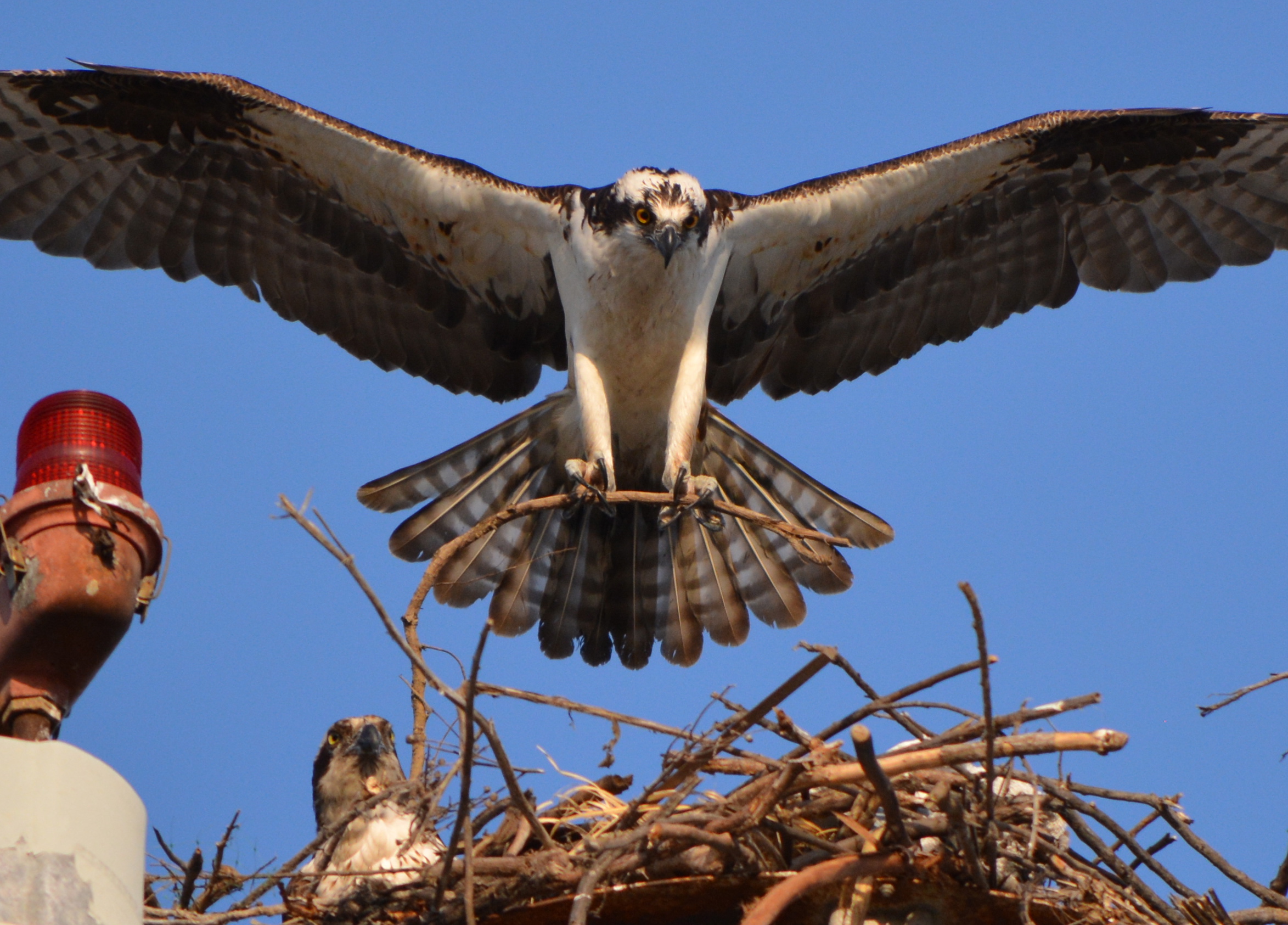
Male osprey bringing nesting material to light pole near maritime ships at Alameda Point with female looking on.

In early March the osprey pair began building their first nest this year where they had nested last year — on a kingpost high atop the maritime ship Admiral Callaghan. The ship’s owner, the Maritime Administration (MARAD), had removed last year’s nest. This year MARAD moved quickly to stop the nest building to avoid potential delay to relocate a nest if ordered into service. “The Maritime Administration worked closely with the California Department of Fish and Wildlife on dismantling the nest and installing deterrence devices on March 19 prior to any eggs being laid,” said Alameda resident Harvey Wilson, who has been monitoring the ospreys at Alameda Point.
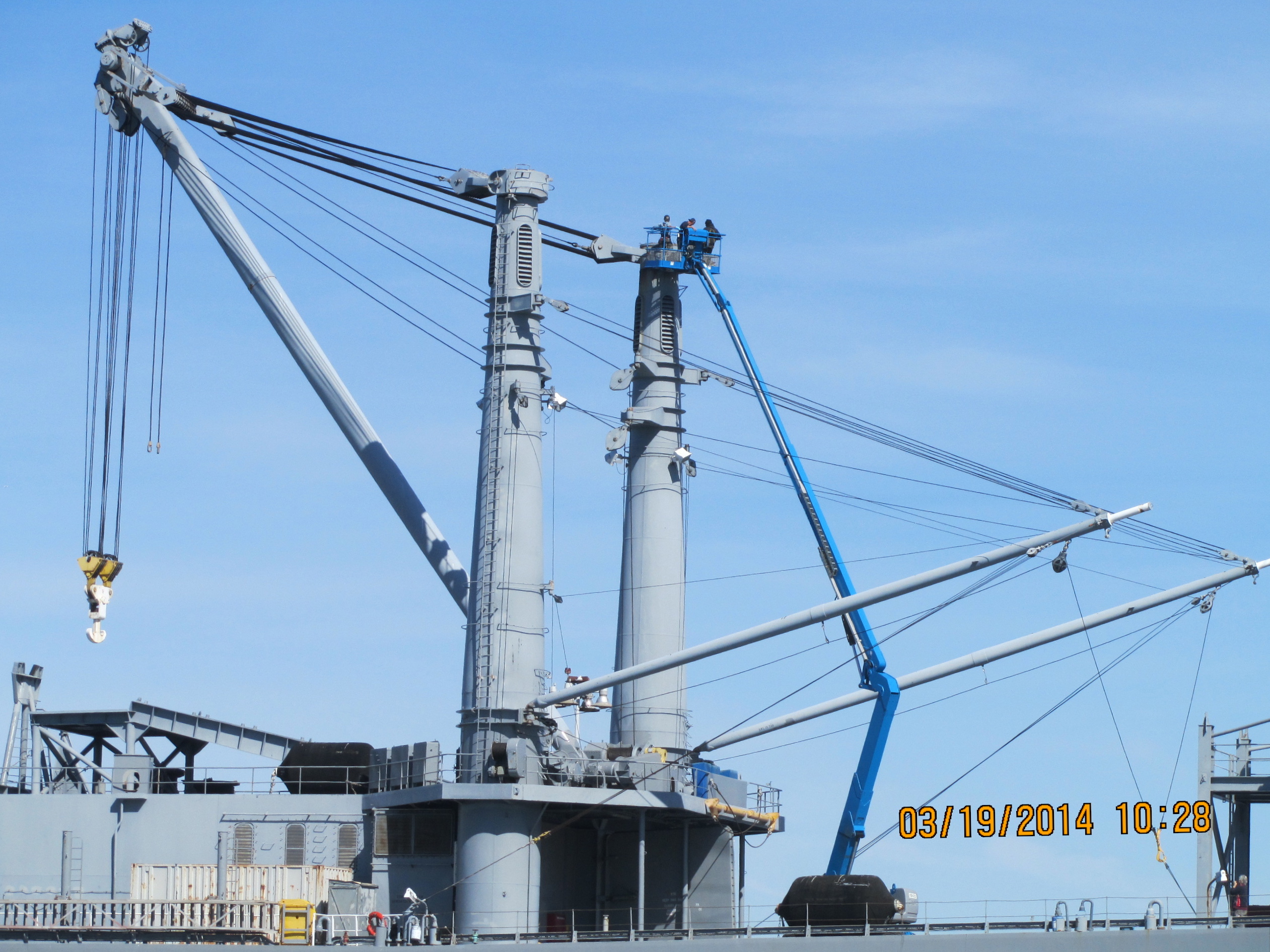
Crew removing osprey nesting material from kingpost on Admiral Callaghan maritime ship at Alameda Point, March 2014.
Crew removing osprey nesting material from kingpost on Admiral Callaghan maritime ship at Alameda Point, March 2014.  Photo by Harvey Wilson.

But that removal didn’t end the ospreys’ interest in the ship, at least not for the male osprey. He soon started bringing sticks to a lower-level hoisting post on the ship. The female, on the other hand, took a liking to a light pole in the parking lot next to the wharf. After weeks of back and forth episodes of mating and nest building at both sites, the female won, and nest building started ramping up on the light pole. At one point, it appeared that the female was hunkering down in the nest, a sign that eggs had been laid and incubation had started. But soon another female osprey appeared, trying to lure the male from his duties and disturbing the composure of the female.  
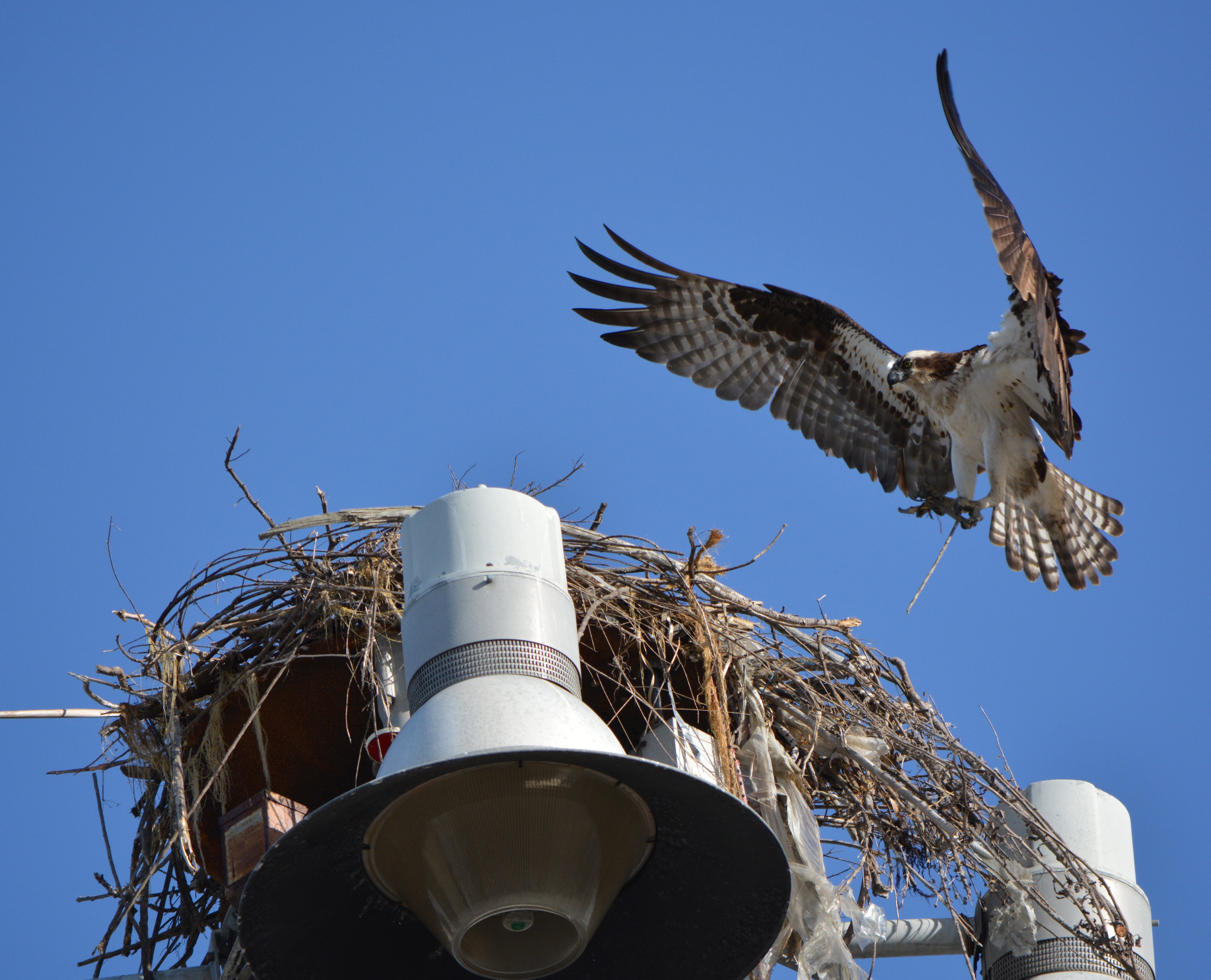
Female osprey bringing nesting material to nest on parking lot light pole near maritime ships at Alameda Point - May 2014.
Female osprey bringing nesting material to nest on parking lot light pole near maritime ships at Alameda Point – May 2014.

The third osprey now seems to have moved on, and the original pair has continued to visit the nest, but the lateness of the season offers little hope that eggs will be laid again, if they ever were, this year.
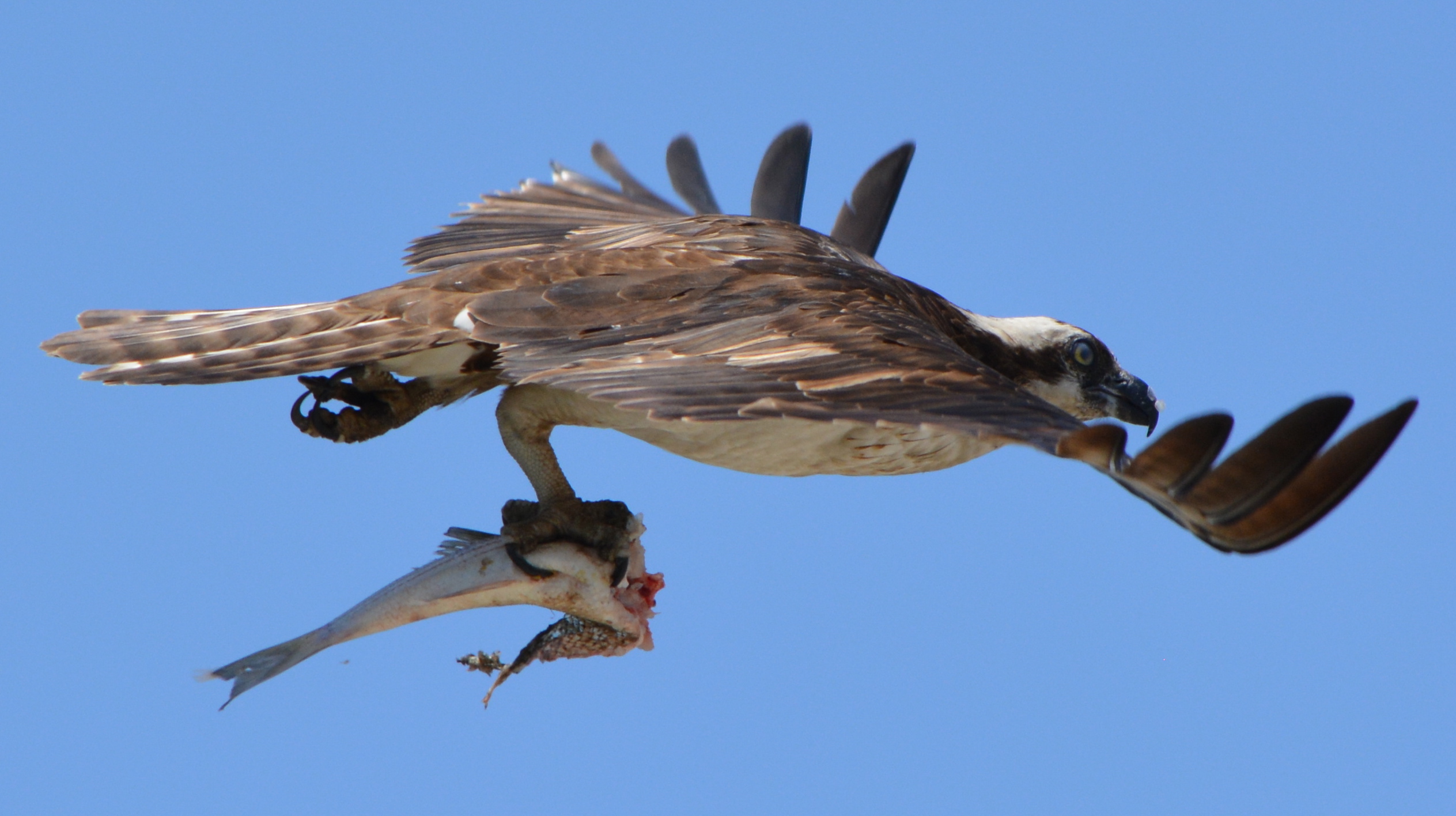
Osprey with striped bass in early June 2014 near maritime ships at Alameda Point.

The appearance of ospreys at Alameda Point, first documented in 2010, is part of larger Bay Area phenomenon of ospreys beginning to nest on the shores of San Francisco Bay. Osprey first began nesting in the San Francisco Bay Area in the year 2000, having moved their nesting range further south. There are currently 24 active nests on San Francisco Bay. One theory for the ospreys’ Bayside nesting interest is a reduction of silt in the Bay, making it easier for osprey to catch fish, their primary food source. The high silt levels are a legacy of the gold mining era during which streambeds emptying into the Sacramento River were blasted with water canons to expose gold particles. Ospreys normally return to the same nest every year, but the Alameda Point pair has now used three different sites. In 2012 they successfully raised their lone chick on an old light stand on the western jetty of the Seaplane Lagoon, their regular nest for three years.   For unknown reasons, they chose the heights of a maritime ship in 2013, and in 2014 a parking lot light pole.
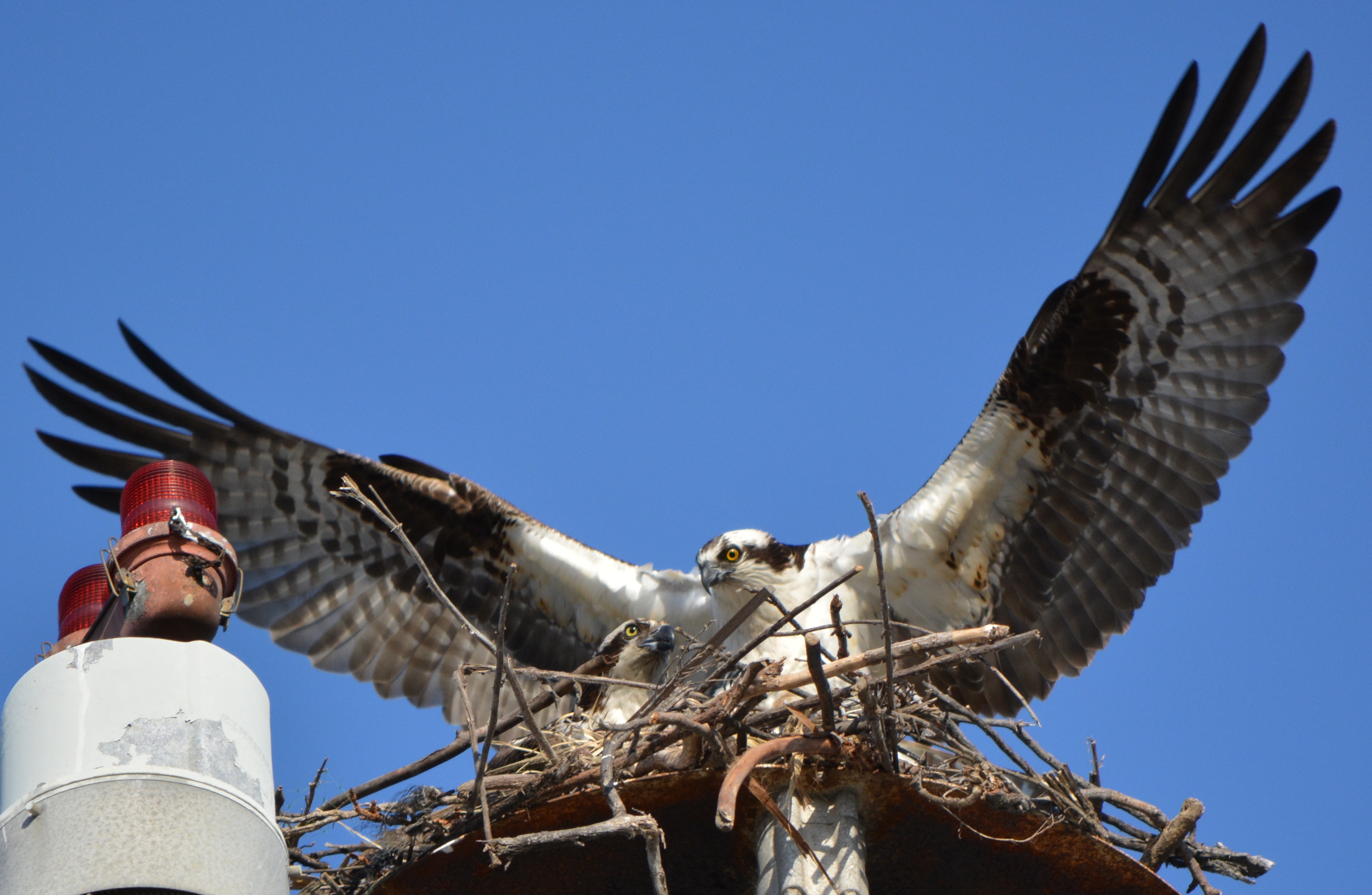
Osprey pair on their light pole nest April 18, 2014 as nest building continued.

An ad hoc group of osprey watchers that includes members of the Golden Gate Audubon Society have been discussing with the city the possibility of erecting a permanent osprey nesting platform on the western side of the Seaplane Lagoon. “City staff has been and is willing to continue to work with interested members of the local community to potentially establish an osprey platform at Alameda Point,” said Jennifer Ott, Chief Operating Officer for Alameda Point.  “The identification of an appropriate location for this platform will depend on a number of factors, including approval by the United States Fish and Wildlife Service.” In March of this year, the city of Richmond’s Public Works Department assisted with the installation of an osprey platform at Pt. Molate, which helped divert nesting efforts from a utility pole with live wires. PG&E, with extensive raptor nesting diversion experience throughout California, has offered to install a pole and nesting tub at Alameda Point for free.
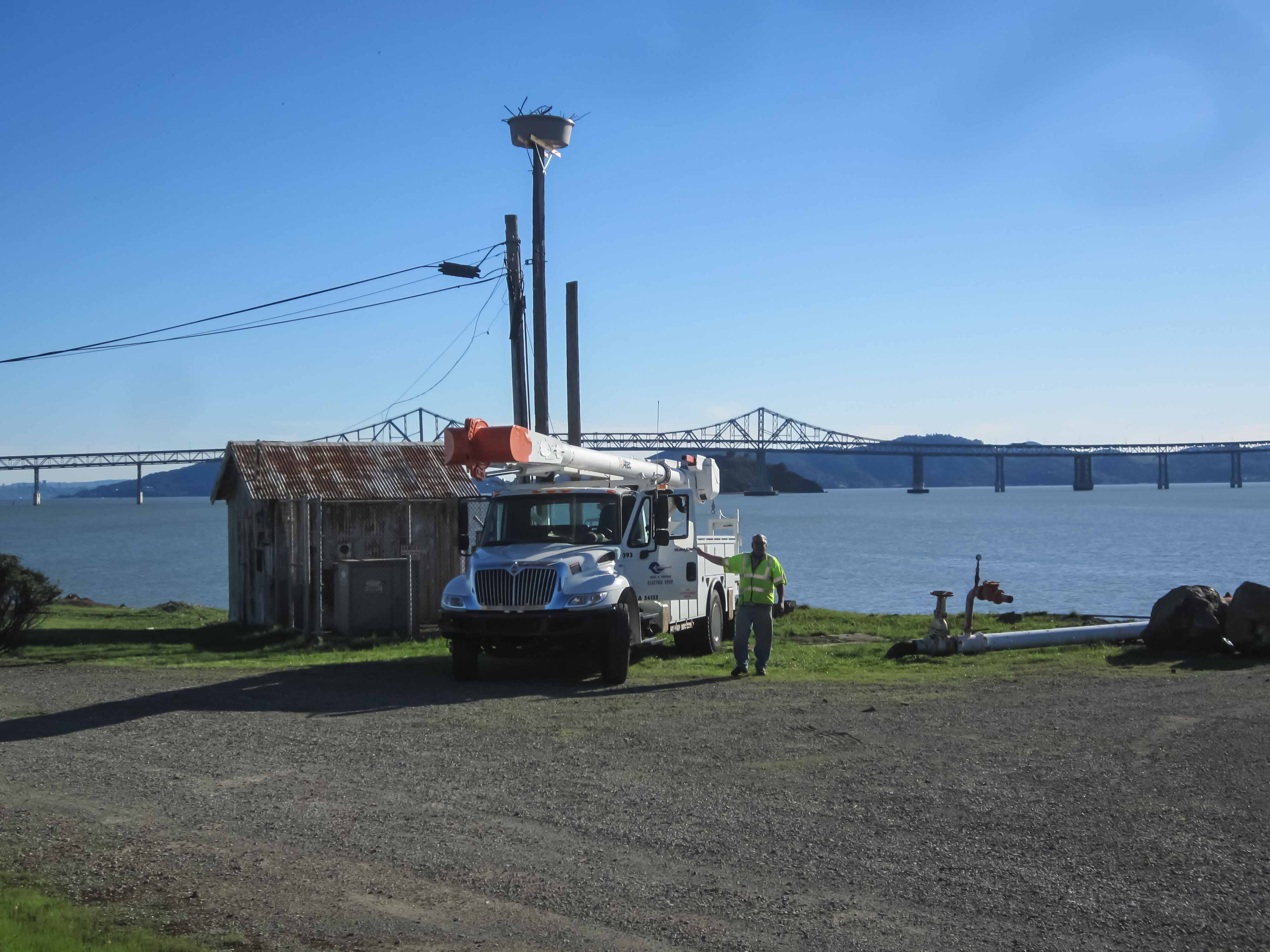
City of Richmond public works employee after installation of nesting tub at Pt. Molate.
City of Richmond public works employee after installation of nesting tub at Pt. Molate – March 2014.  This photo and three below are by Tony Brake.

“It is difficult to know what the ospreys feel or how they respond or what their capacity is for all the activity that goes on around them, but this season certainly challenged them,” said Alameda wildlife biologist Leora Feeney.  “Providing safe platforms for them out of busy corridors would serve everyone better.”
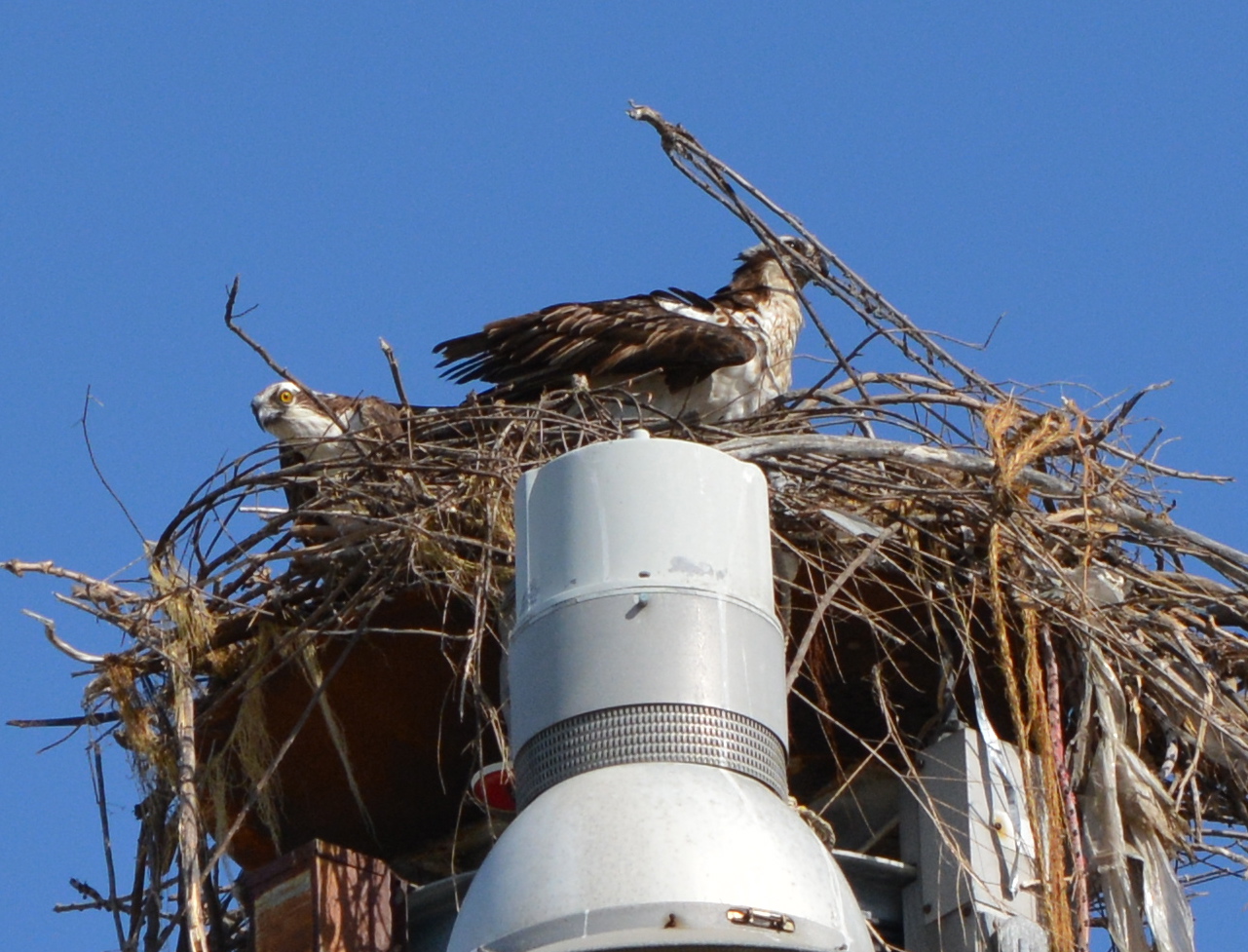
Female osprey arranging nesting material with male looking on.

Published on the Golden Gate Audubon Society’s blog Golden Gate Birder.

See also:

Least tern nesting area refurbished and ready for 2014 at Alameda Point

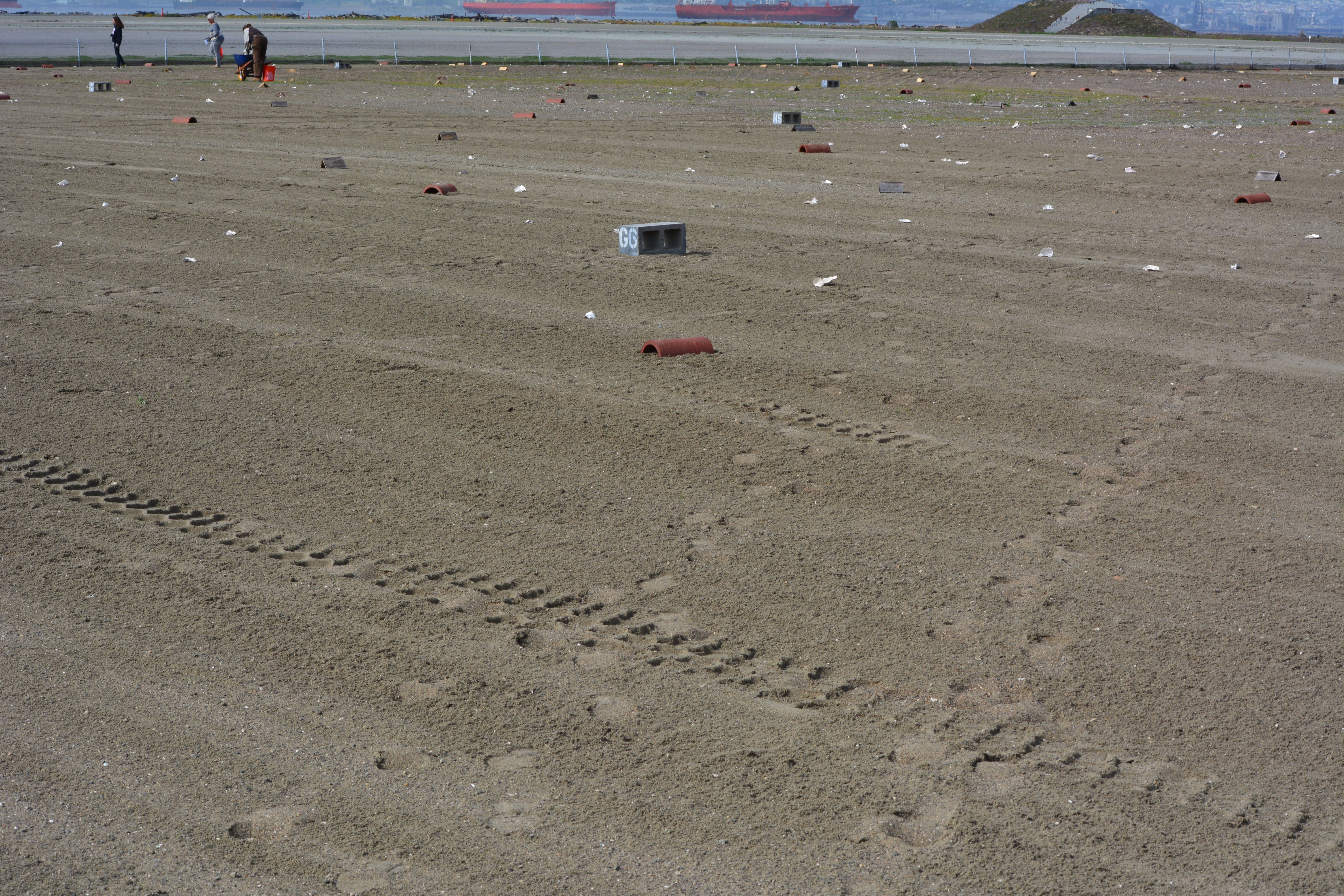
The 9.7-acre nesting area for the endangered California least terns at Alameda Point received a new layer of sand this year. Sixty dump truck loads of sand were delivered to the site on the old Navy airfield in March, paid for by the U.S. Fish & Wildlife Service (USFWS).

Fresh layer of sand on Alameda Point least tern nesting site.  Looking south, with ships in San Francisco Bay in background.
Fresh layer of sand on Alameda Point least tern nesting site. Looking south, with ships in San Francisco Bay in background.

After the sand was moved into place, USFWS and volunteers set up a numbered cinderblock grid system used for recording behavior and also distributed chick shelters and oyster shells for the chicks to use as protection from the elements and predators.

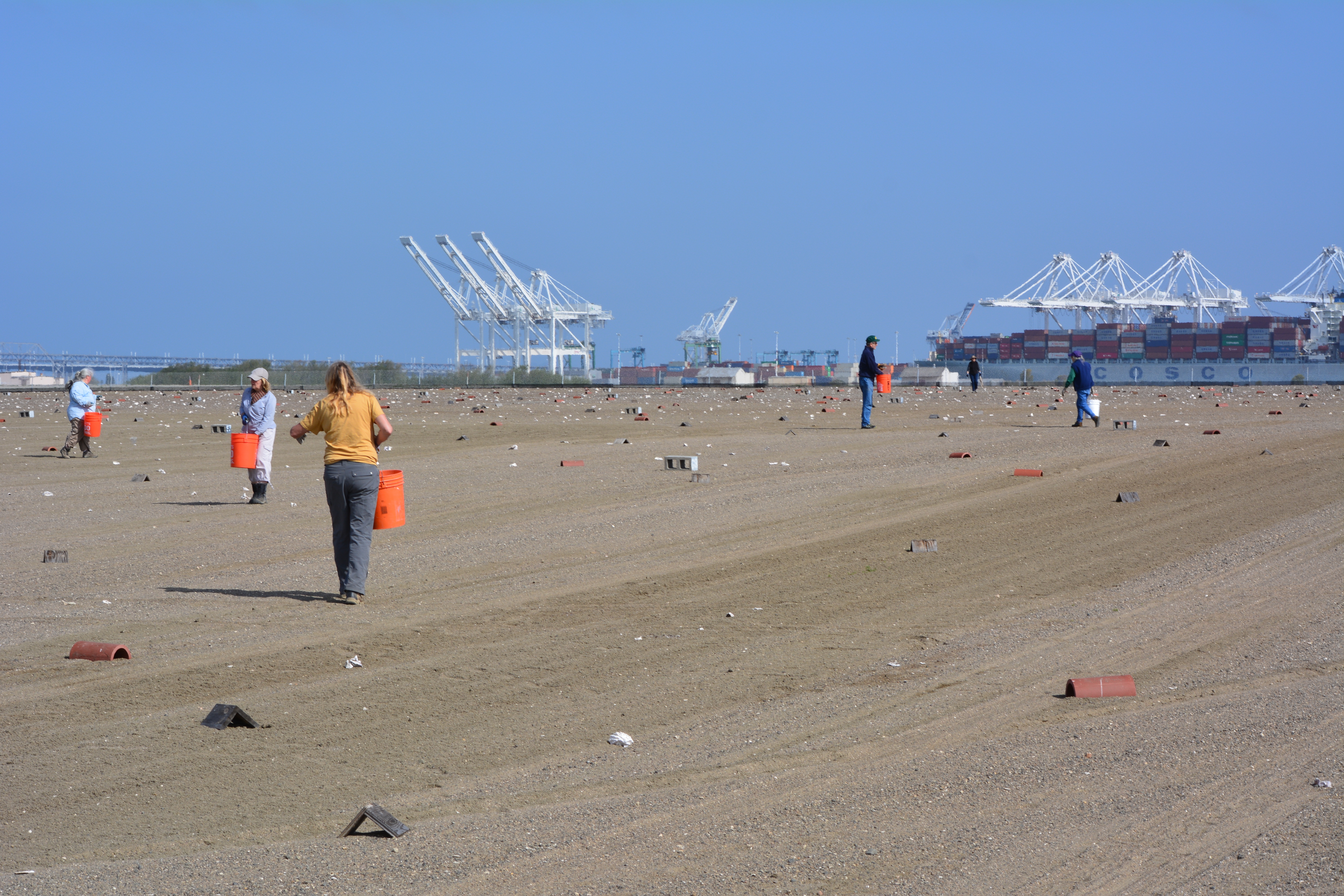
On Sunday, April 13 a dozen volunteers showed up for the last work party prior to nesting. The task of the day was distributing oyster shells around the site, which provide a nominal amount of sun protection for chicks and, in theory, helps make it more difficult for avian predators like red-tailed hawks and peregrine falcons to spot the chicks amongst all the white shells.

Distributing oyster shells at tern colony

From now until the end of the nesting season in mid-August, volunteers will be participating in another program called the Tern Watch Program. Participants monitor behavior and watch for predators from their vehicles outside the nesting area.

Throughout the nesting season a USFWS biologist makes periodic walks through the site and places numbered plaster markers next to nests so that the number of eggs and success rates can be accurately recorded. If there are three eggs in a nest one week, for example, and one egg the next week with no chicks, it’s an indication that predators have grabbed the eggs.

Each year following the end of the nesting season in August, volunteers at monthly work parties gather up the oyster shells, the wooden A-frames, drain tiles, grid markers, and the hundreds of numbered markers used to identify nests. Clearing the site makes it easier to remove weeds and grade the sand, which can erode during rains. The volunteers pull weeds from inside and around the perimeter of the fenced-in site. The volunteer program during the non-nesting season is organized by the Golden Gate Audubon Society’s Friends of the Alameda Wildlife Reserve committee, in conjunction with the USFWS biologist in charge of the Alameda Point tern colony.

The effort to protect the least terns was begun by the Navy when nesting activities were first noticed in the 1980s. The likely reason for the terns choosing such an unlikely place to nest was the absence of people who might trample on the nests. The nesting site was chosen by the terns, not by the Navy or USFWS, and has been expanded to its current size as the colony expanded. The sandy substrate that approximates the traditional beach nesting habitat for terns is on top of old airfield pavement. Due to erosion caused by wind and rain, the sand has to be periodically replaced, as it was in 2009 and 2011.

Training sessions for this year’s Tern Watch Program will be held at the USFWS office at Alameda Point on April 26, April 30, May 28, and May 31. Volunteers do not have to be a bird expert, just be very interested in observing and reporting about them. Participants are required to attend one training session and commit to signing up for a minimum of three of the 3-hour shifts. Also required are binoculars, cell phone, and personal vehicle. Reservations for the training sessions can be made by calling Susan Euing at 510 521-9717 or by emailing susan_euing@yahoo.com. Directions and registration materials will be sent by email.

The annual Return of the Terns bus tour to the nesting area will be held on June 14 this year. The tour departs from the Crab Cove Visitor Center in Alameda. Registration required through the East Bay Regional Park District’s website or at the visitor center.

Reprinted on the Golden Gate Audubon Society’s Golden Gate Birder blog.

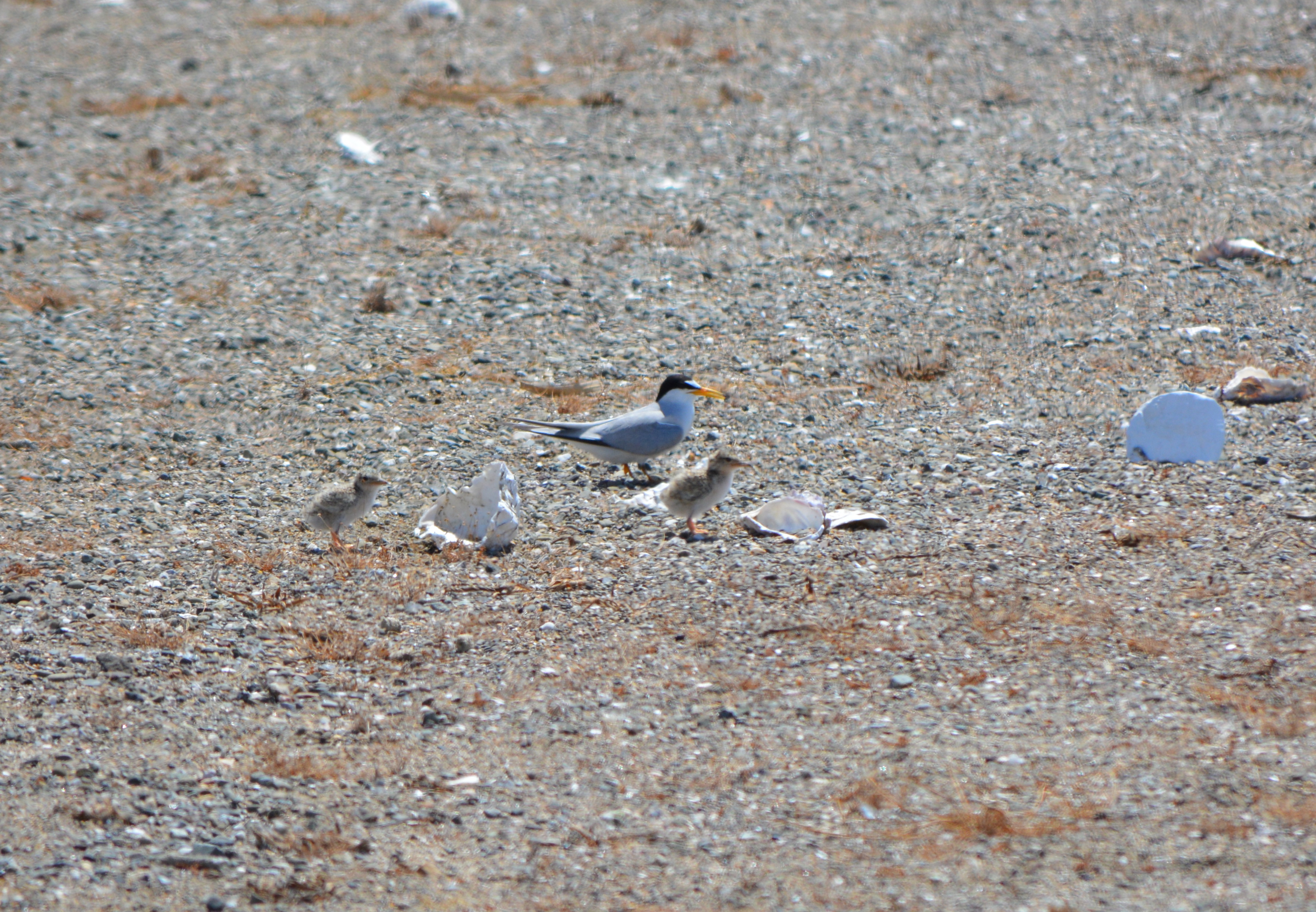
Adult least tern with chicks next to oyster shells at Alameda Point, June 15, 2013, during the Return of the Terns tour.  Plaster marker with number on reverse side is to the right.
Adult least tern with chicks next to oyster shells at Alameda Point, June 15, 2013, during the Return of the Terns tour. Plaster marker with number on reverse side is to the right.
April 13, 2014 work party, with Port of Oakland in background.
April 13, 2014 work party, looking north, with Port of Oakland in background.
Killdeer sitting on four eggs in the least tern nesting area on April 13, 2014.  It is not uncommon for a few killdeer to nest among the terns.  Killdeer lay their eggs about a month before the terns lay eggs.
Killdeer sitting on four eggs in the least tern nesting area on April 13, 2014. It is not uncommon for a few killdeer to nest among the terns. Killdeer lay their eggs about a month before the terns lay eggs.

Bird Life at Alameda Point – Fall 2013

Featured here is a sampling of the wide variety of birds that enjoy the Alameda Point environment, from the wooded residential neighborhood and wooded parkland, to the shoreline, to the wide open runway area.  Most notable of recent sightings is the Golden Eagle, which has been seen off and on for at least a year hunting for rabbits and other prey on the runway area Nature Reserve.

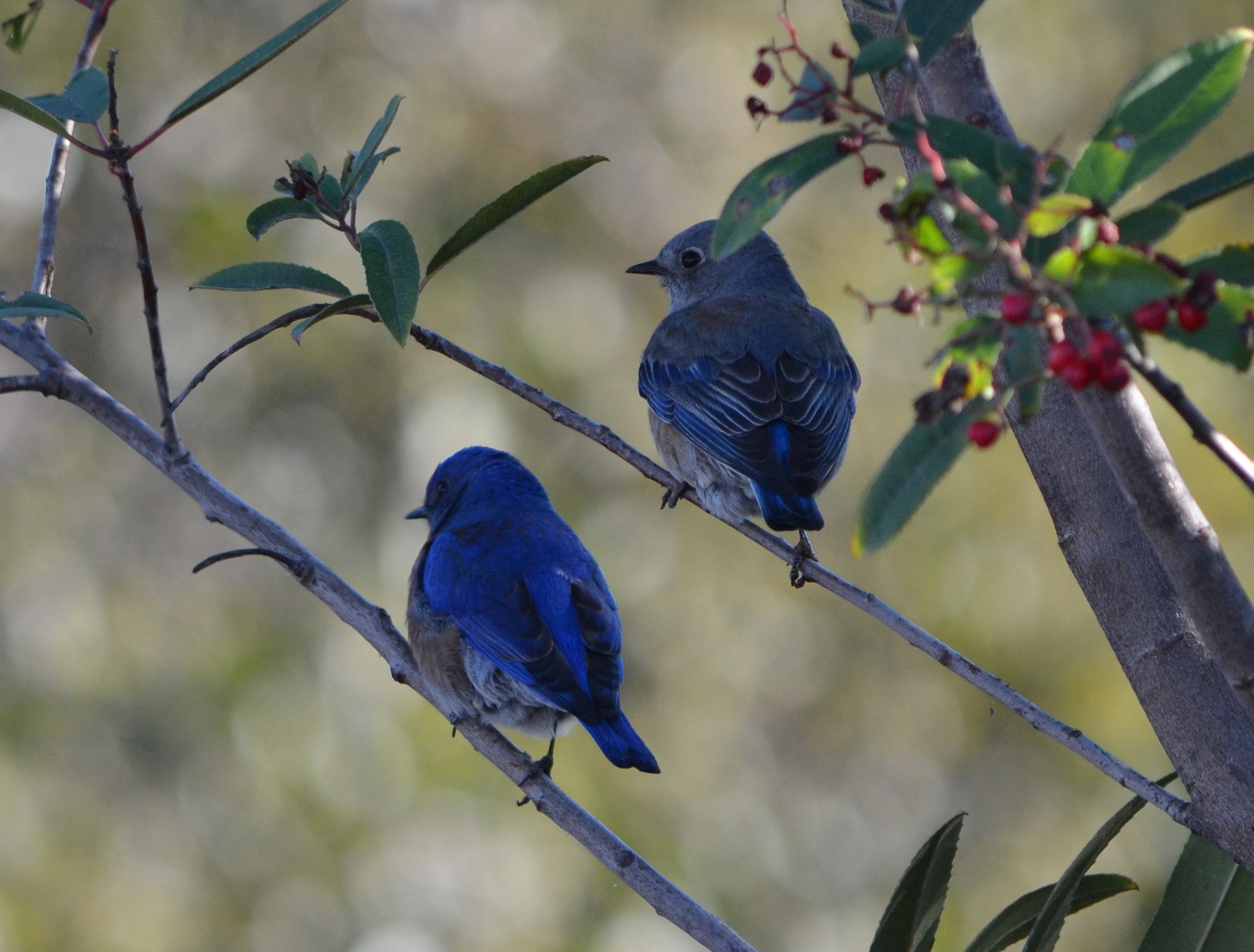
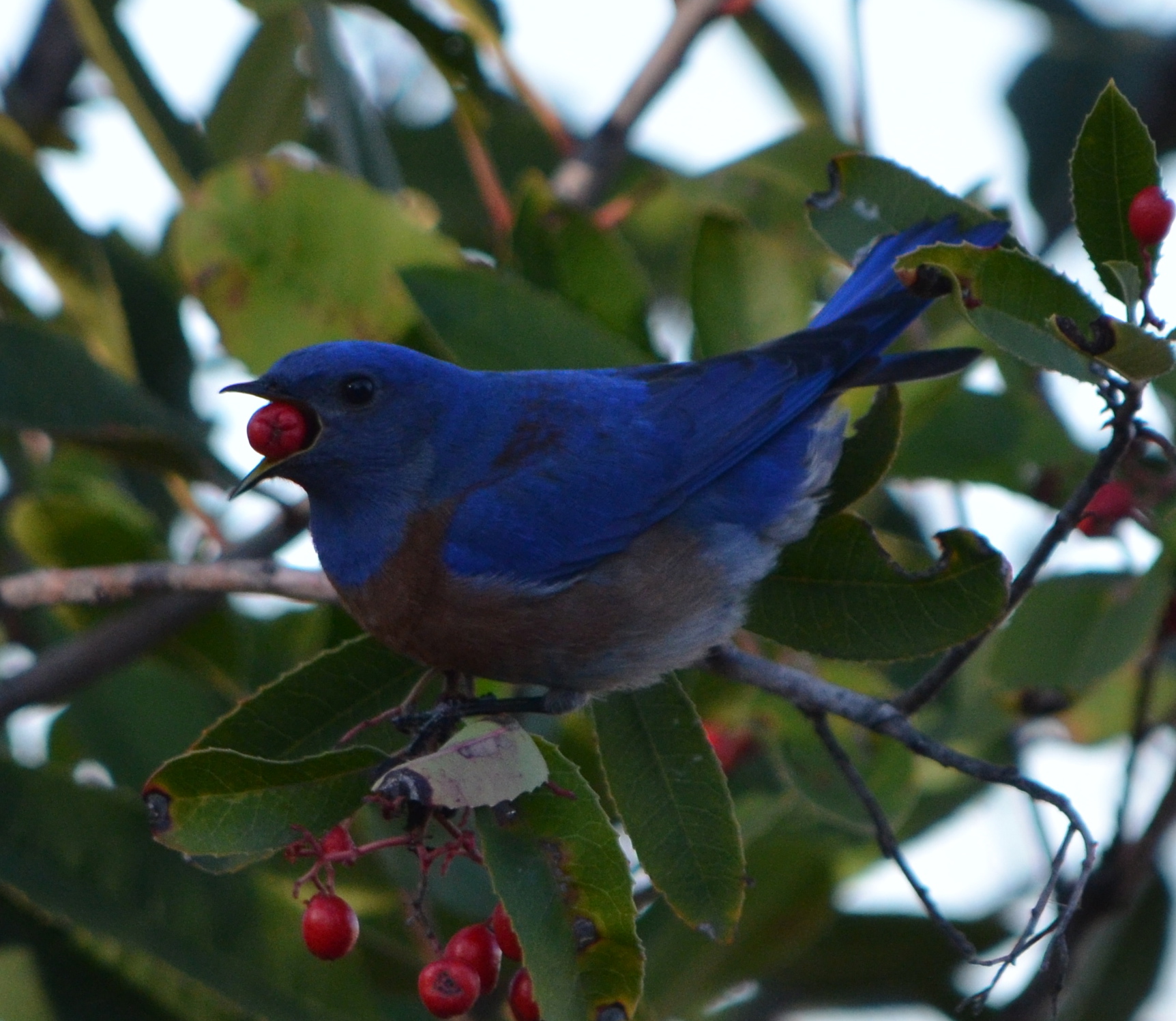
Western Bluebirds
Western Bluebirds
Western Bluebird on pyracantha bush
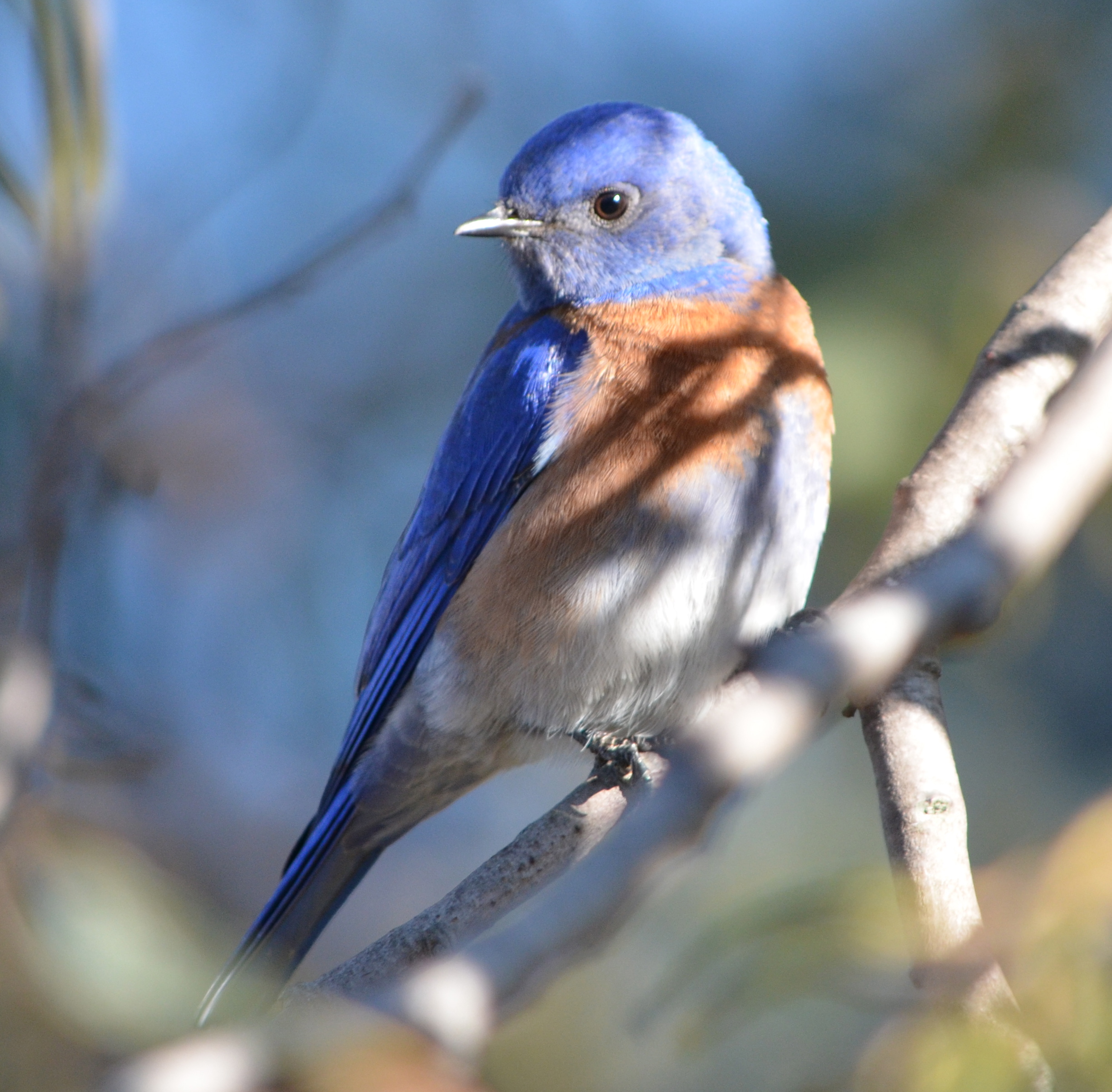
Western Bluebird
Western Bluebird
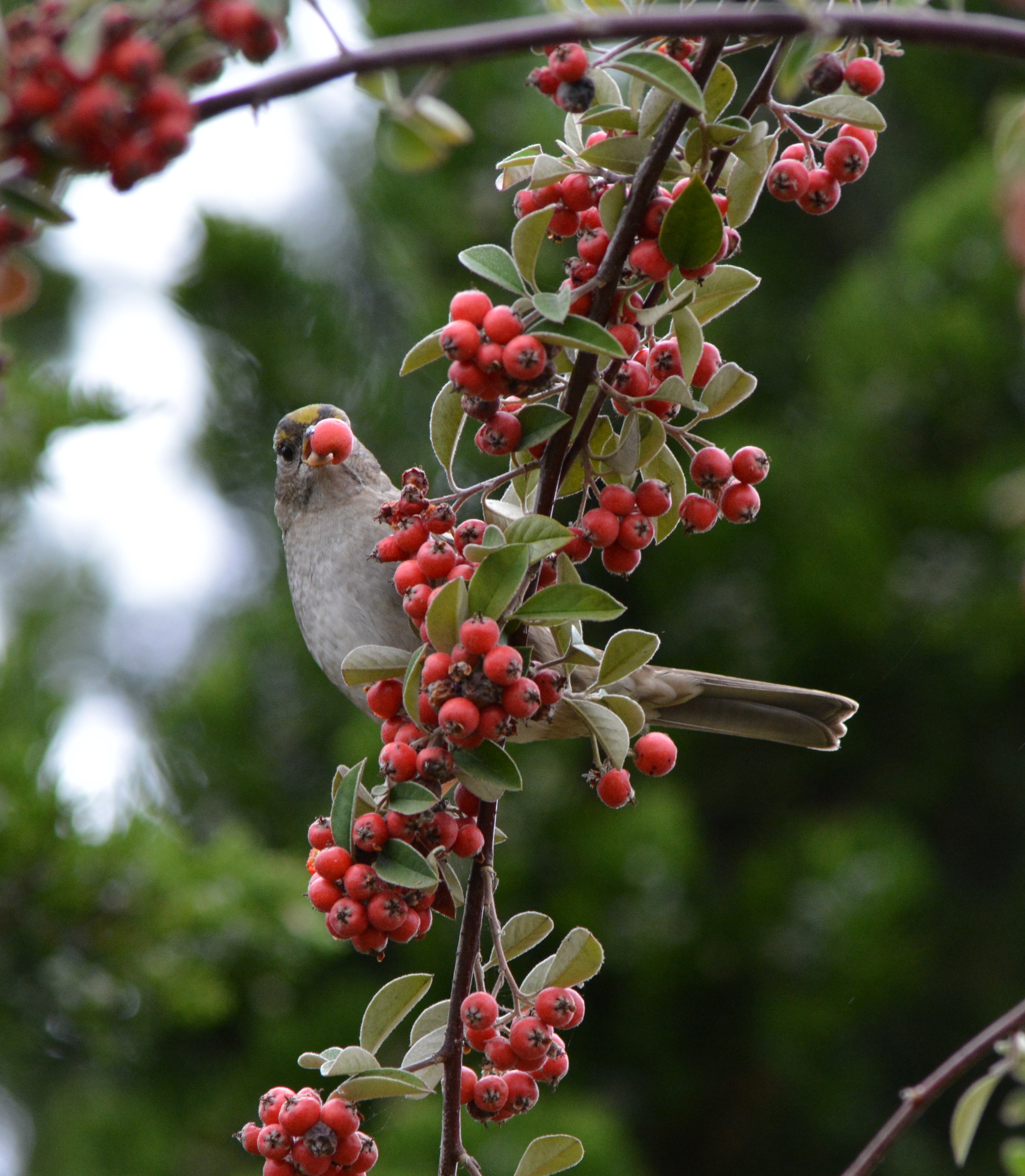
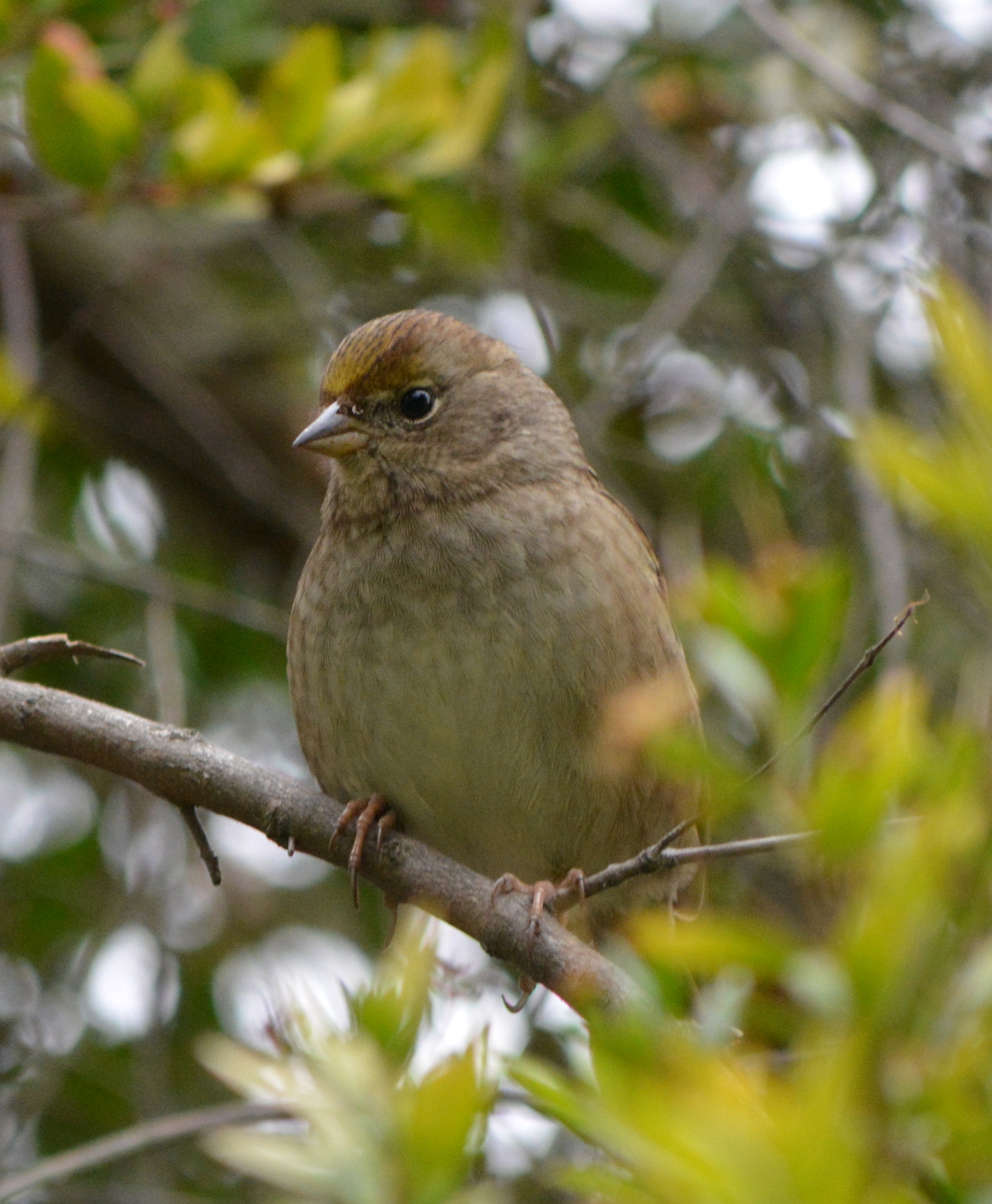
Golden-crowned Sparrow on pyracantha
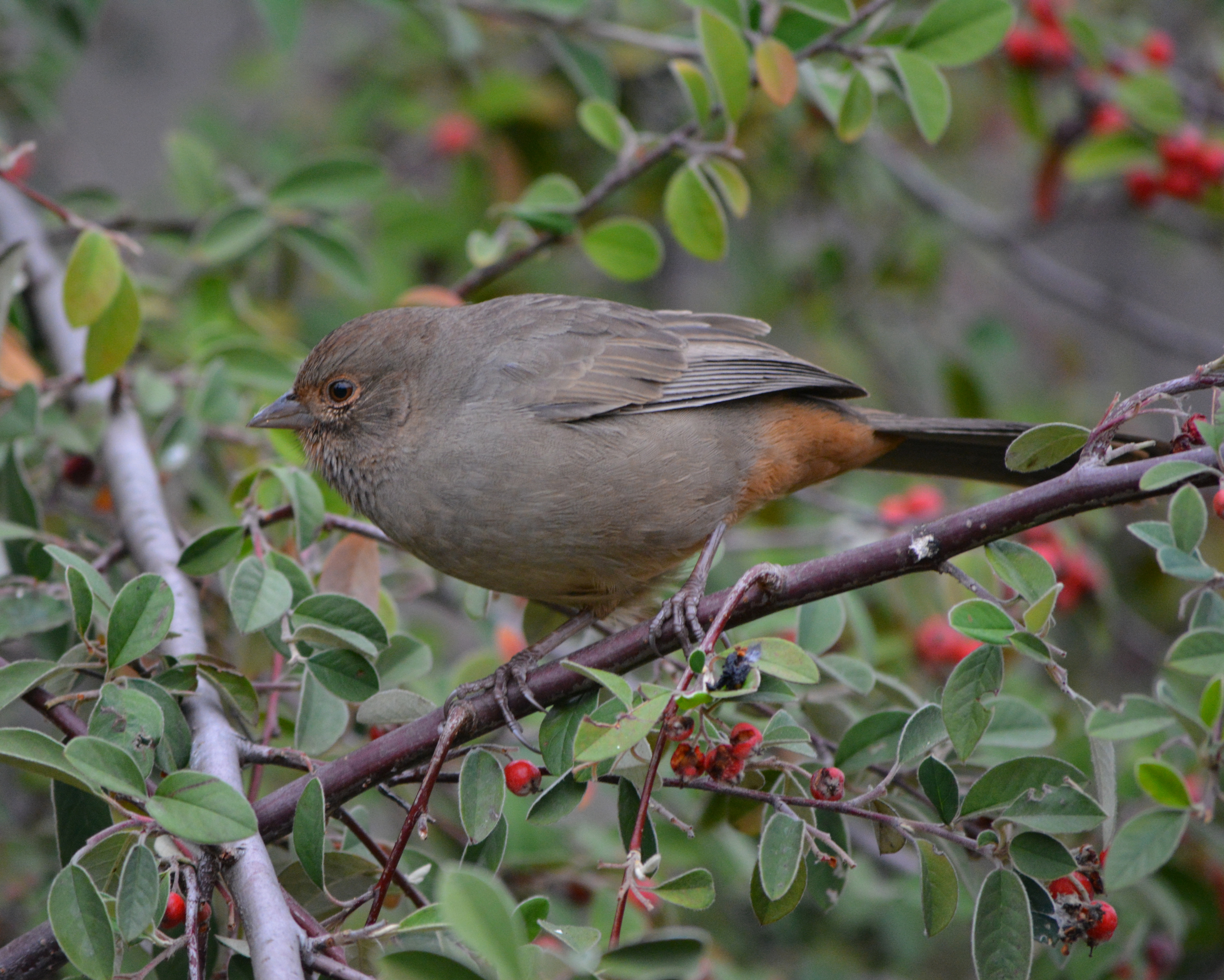
California Towhee
California Towhee
Golden-crowned Sparrow
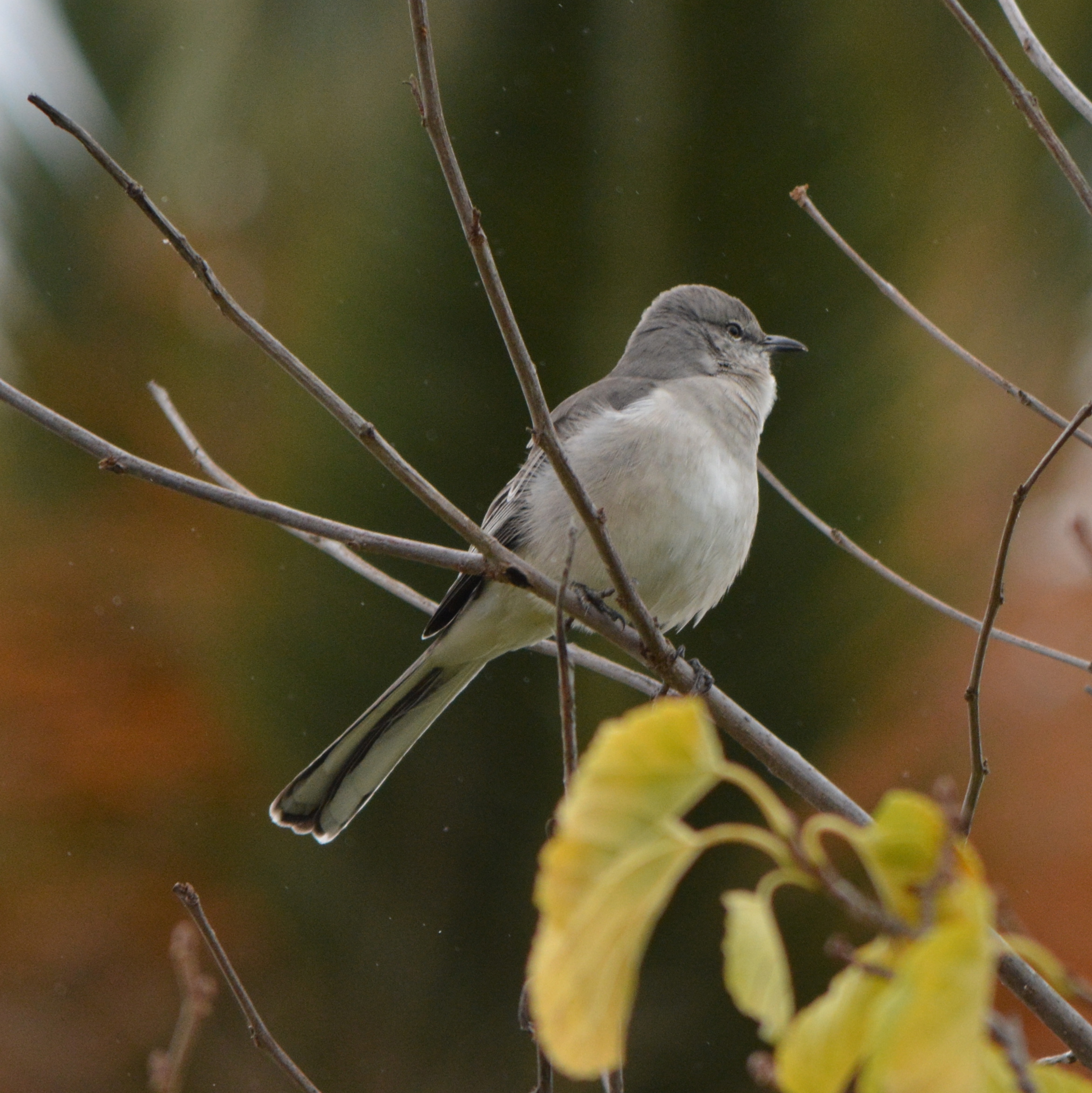
Mockingbird
Mockingbird
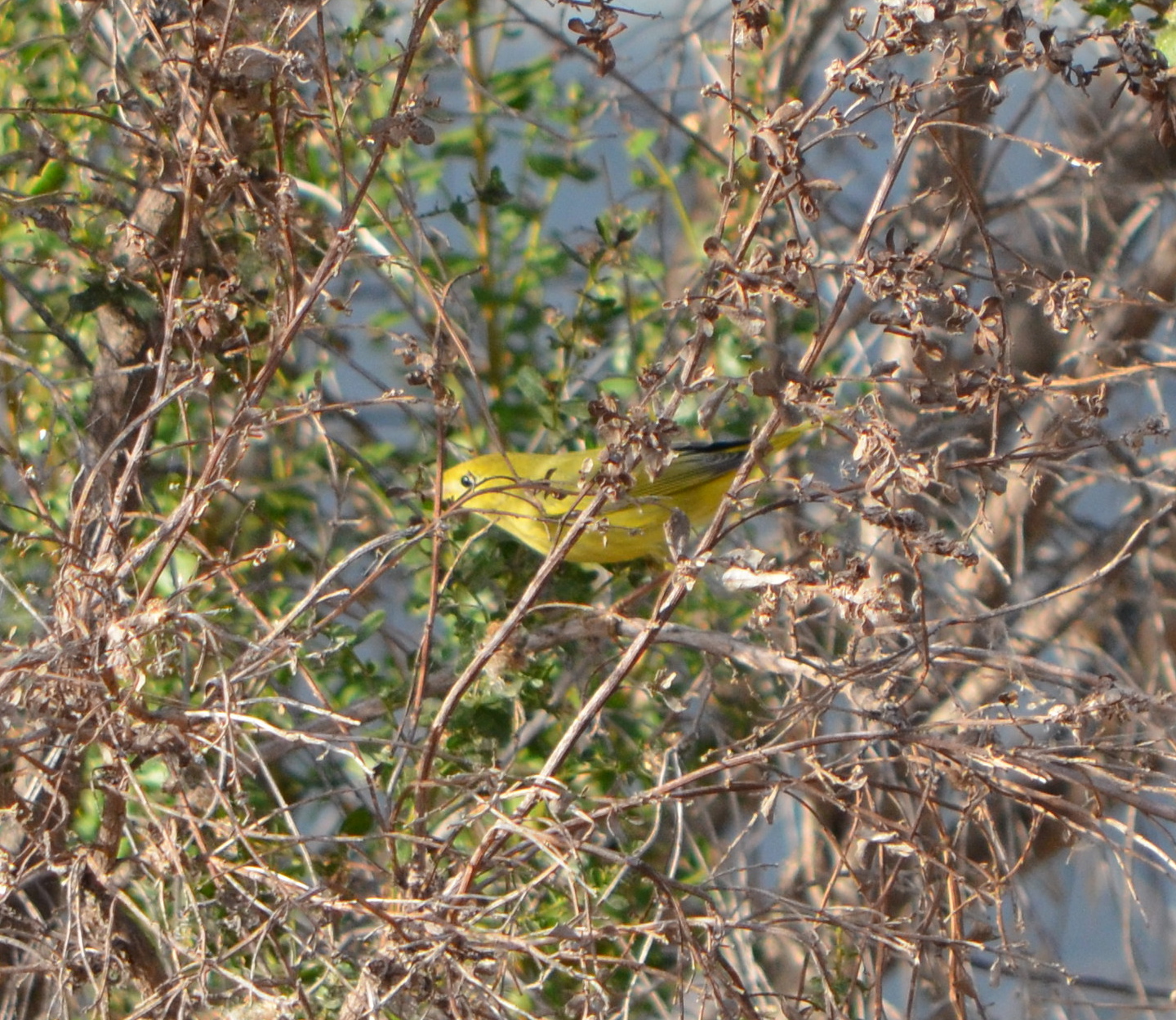
Yellow Warbler
Yellow Warbler
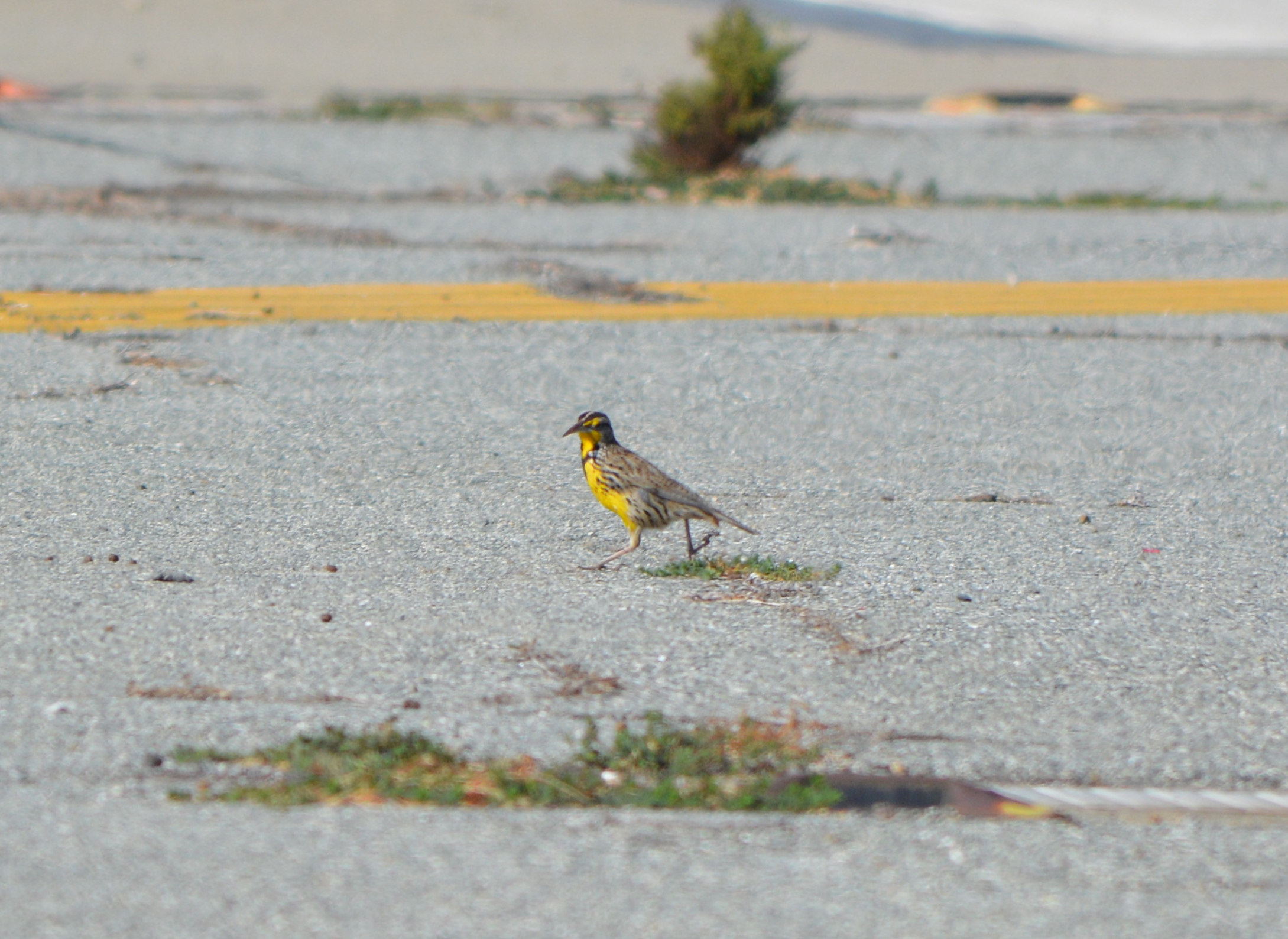
Meadowlark
Meadowlark
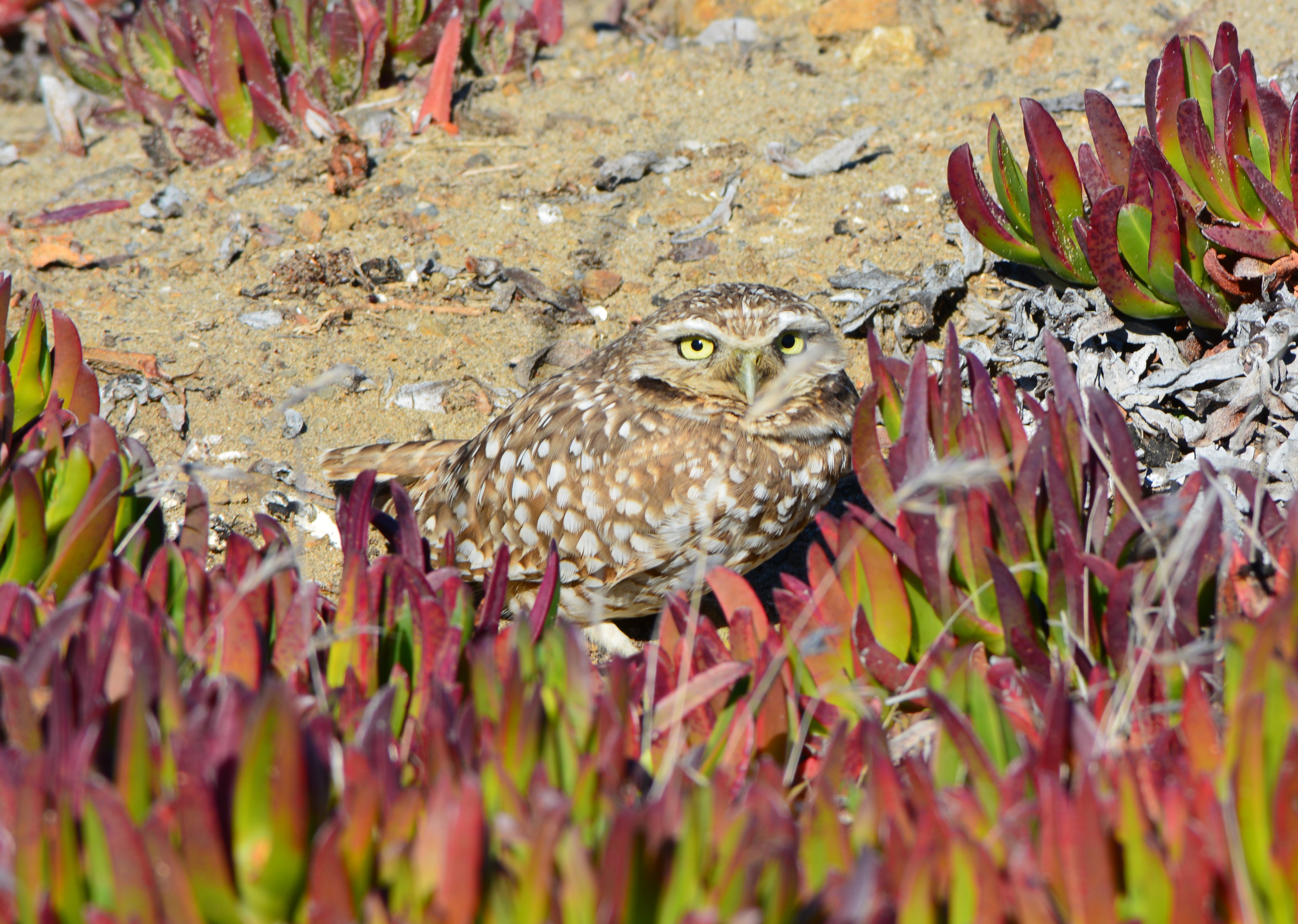
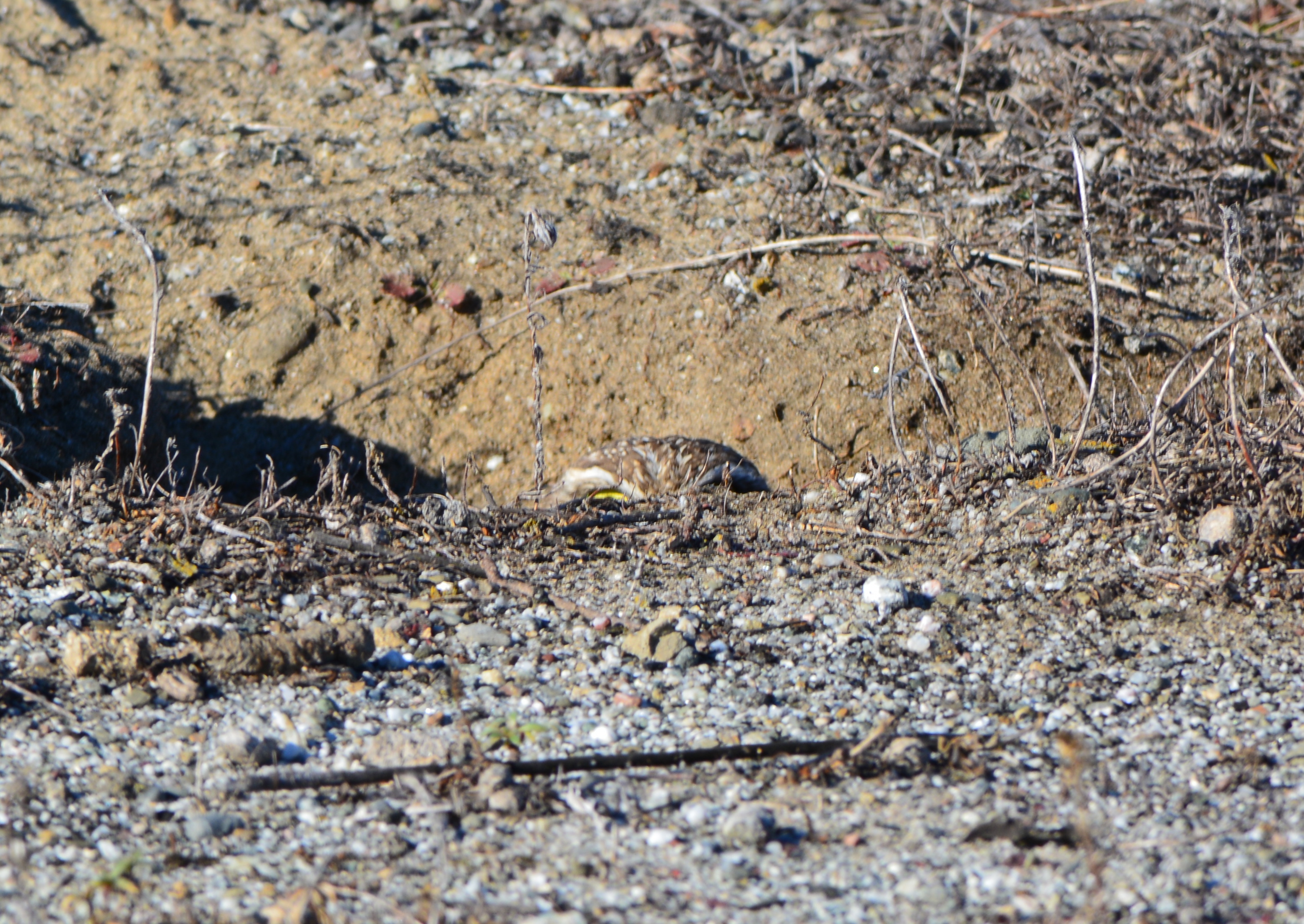
Burrowing Owl
Burrowing Owl
Burrowing Owl
Burrowing Owl
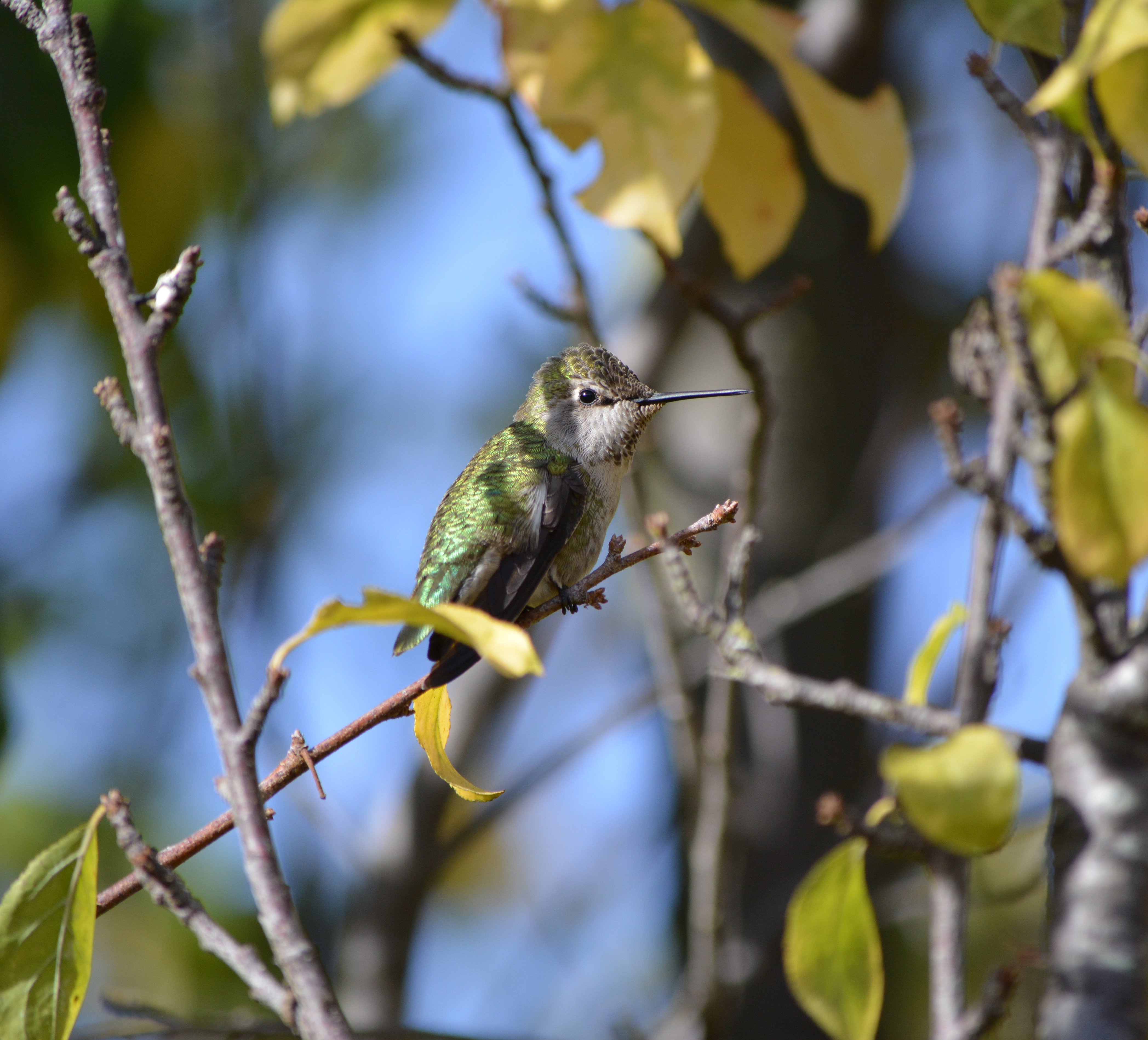
Anna's Hummingbird
Anna’s Hummingbird
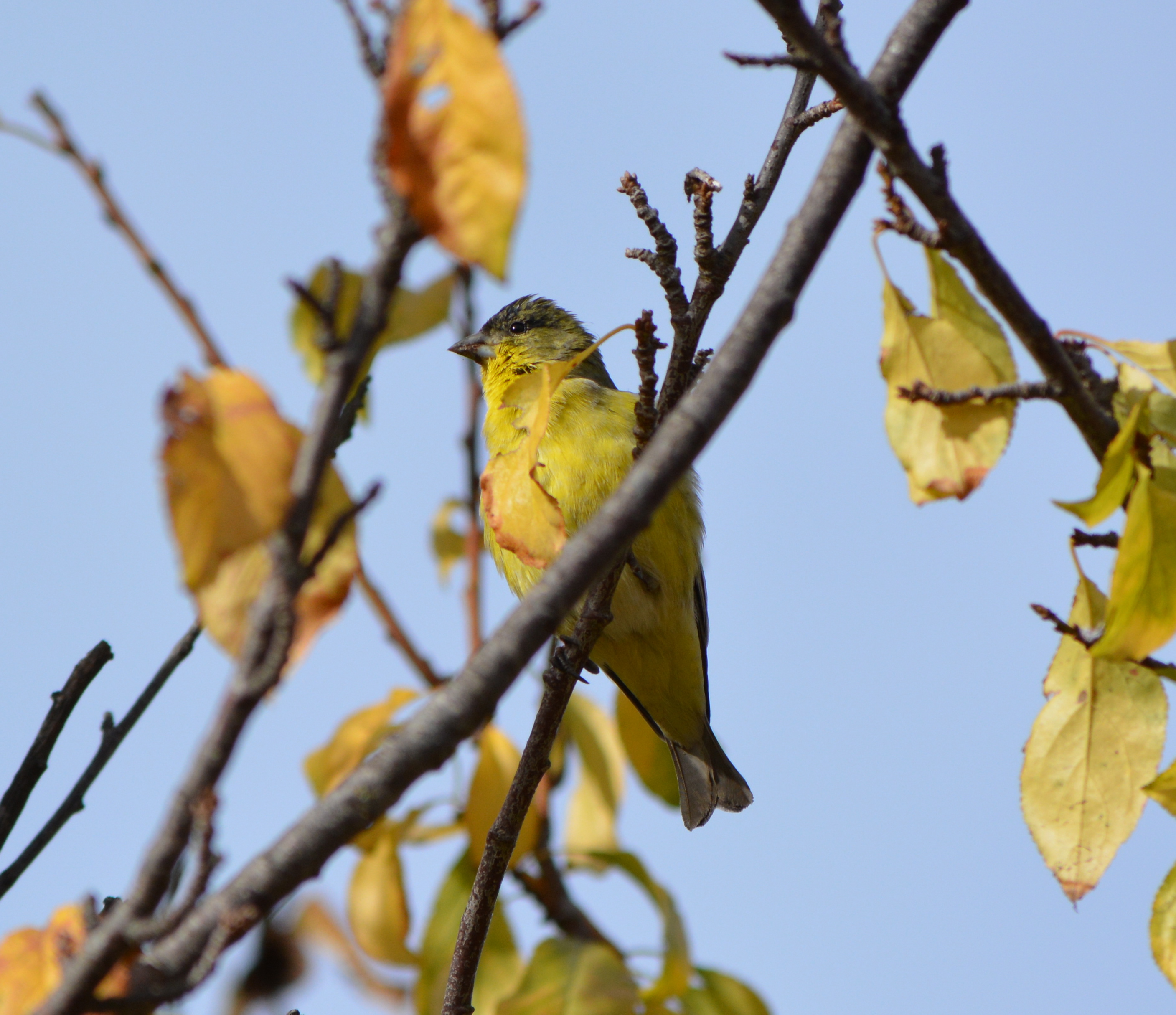
Lesser Goldfinch
Lesser Goldfinch
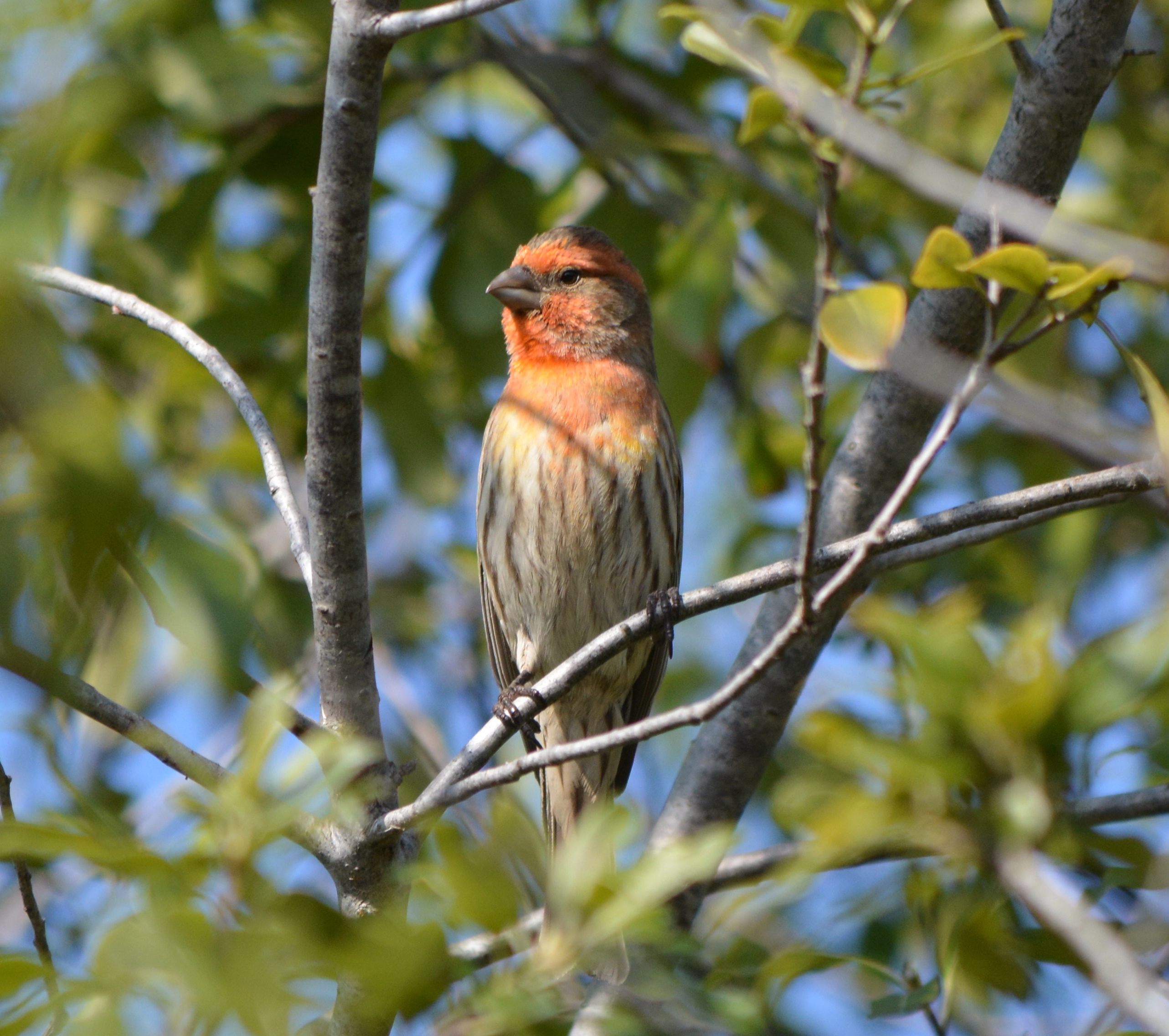
House Finch
House Finch
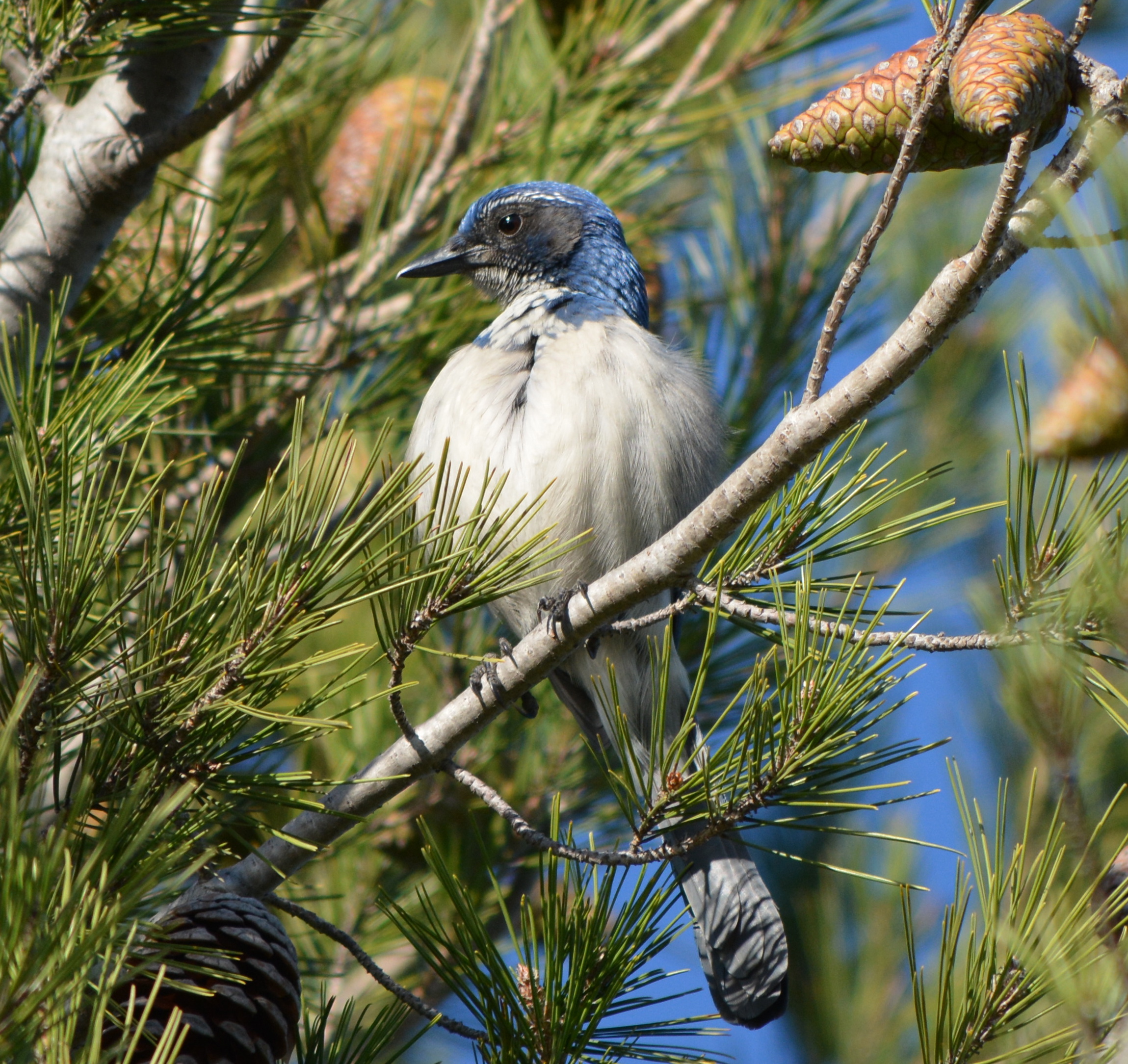
Western Scrub-Jay
Western Scrub-Jay
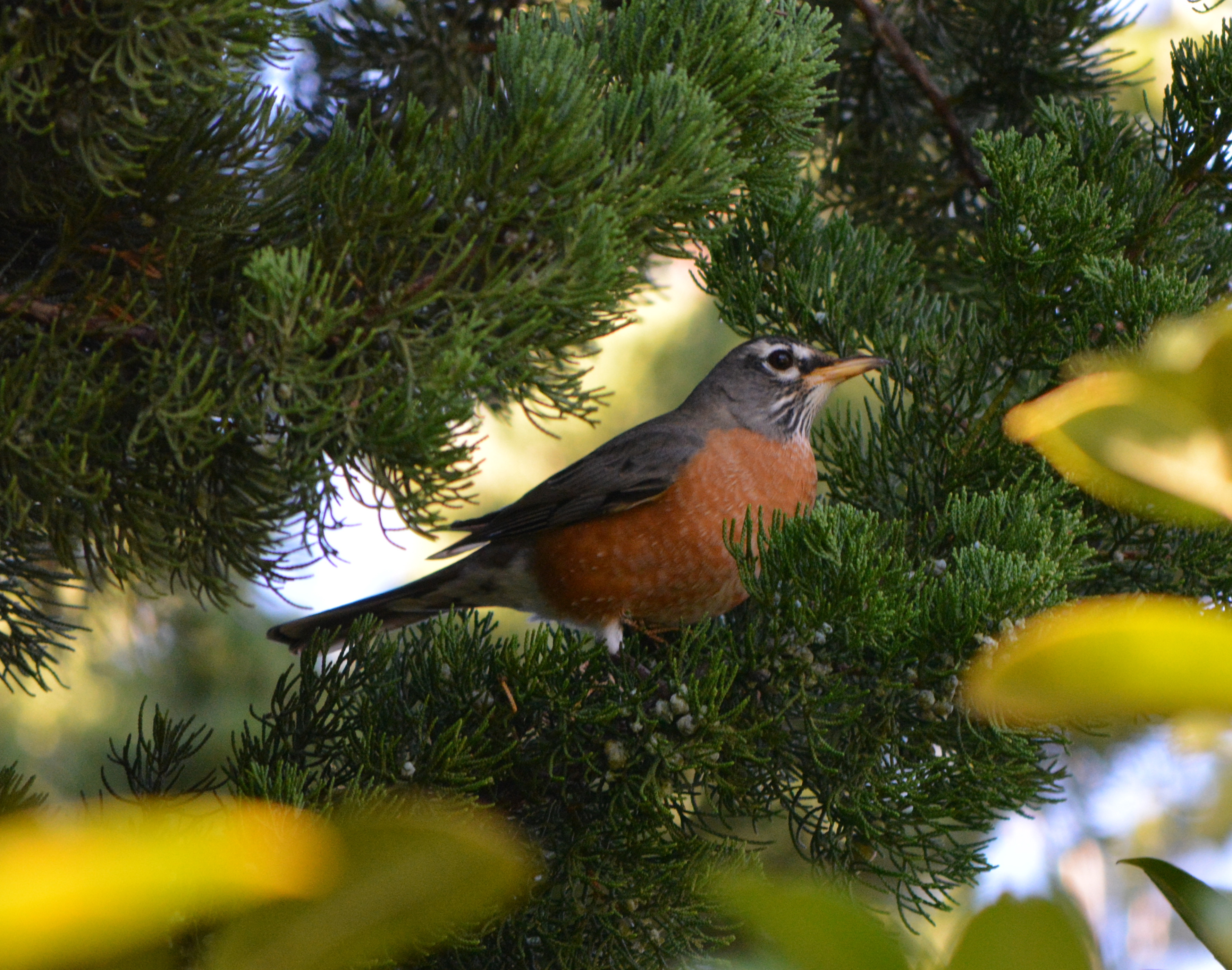
Robin
Robin
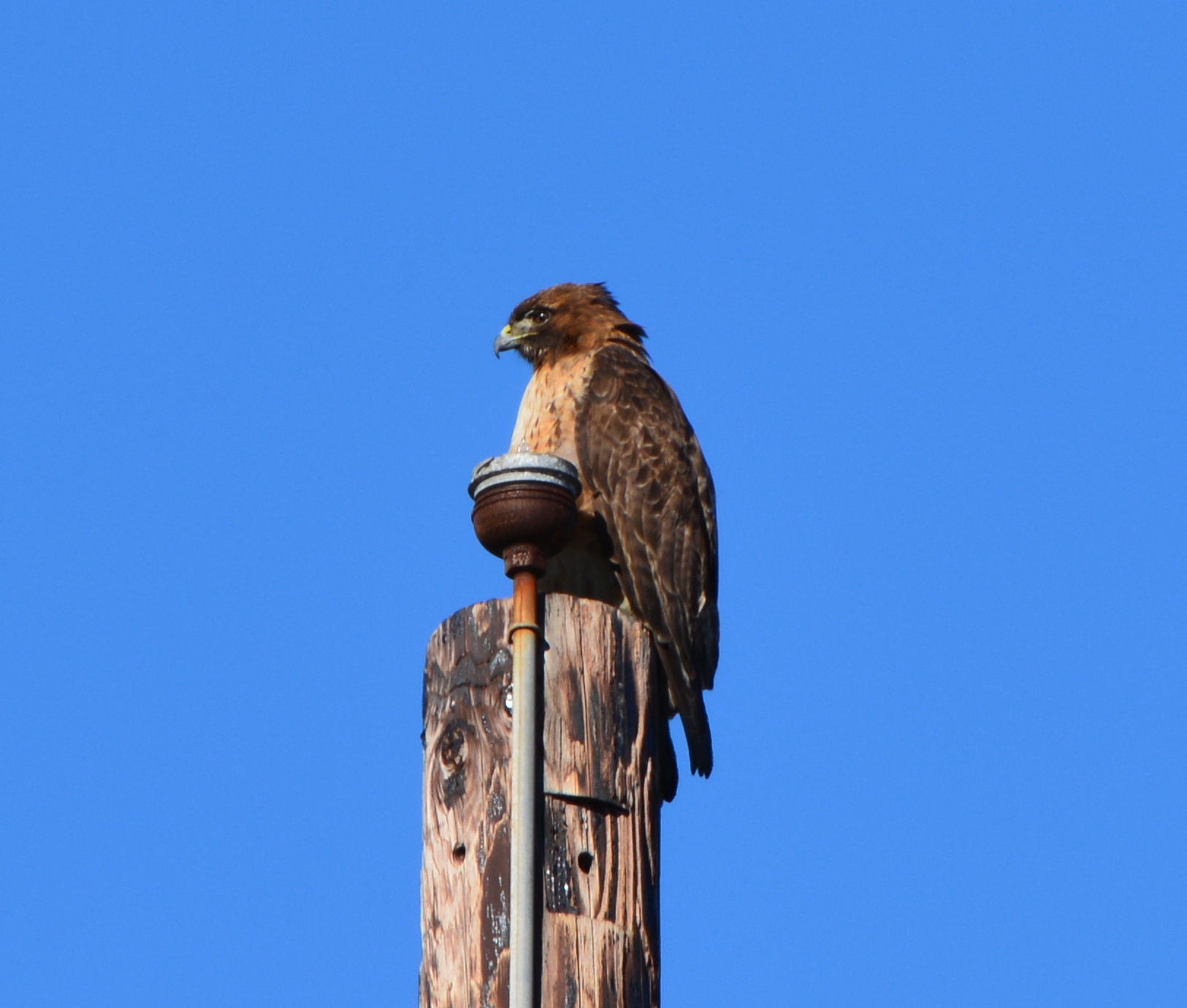
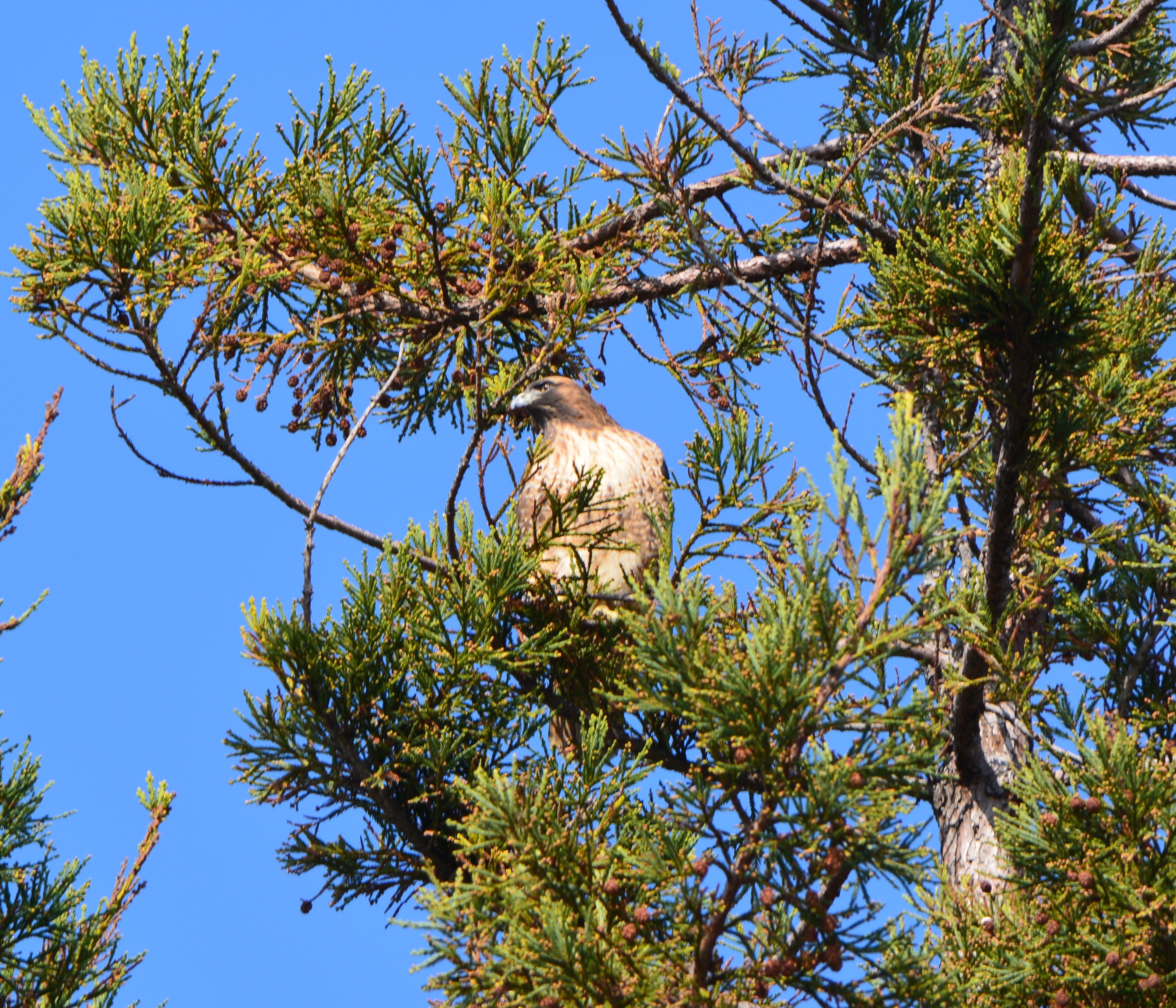
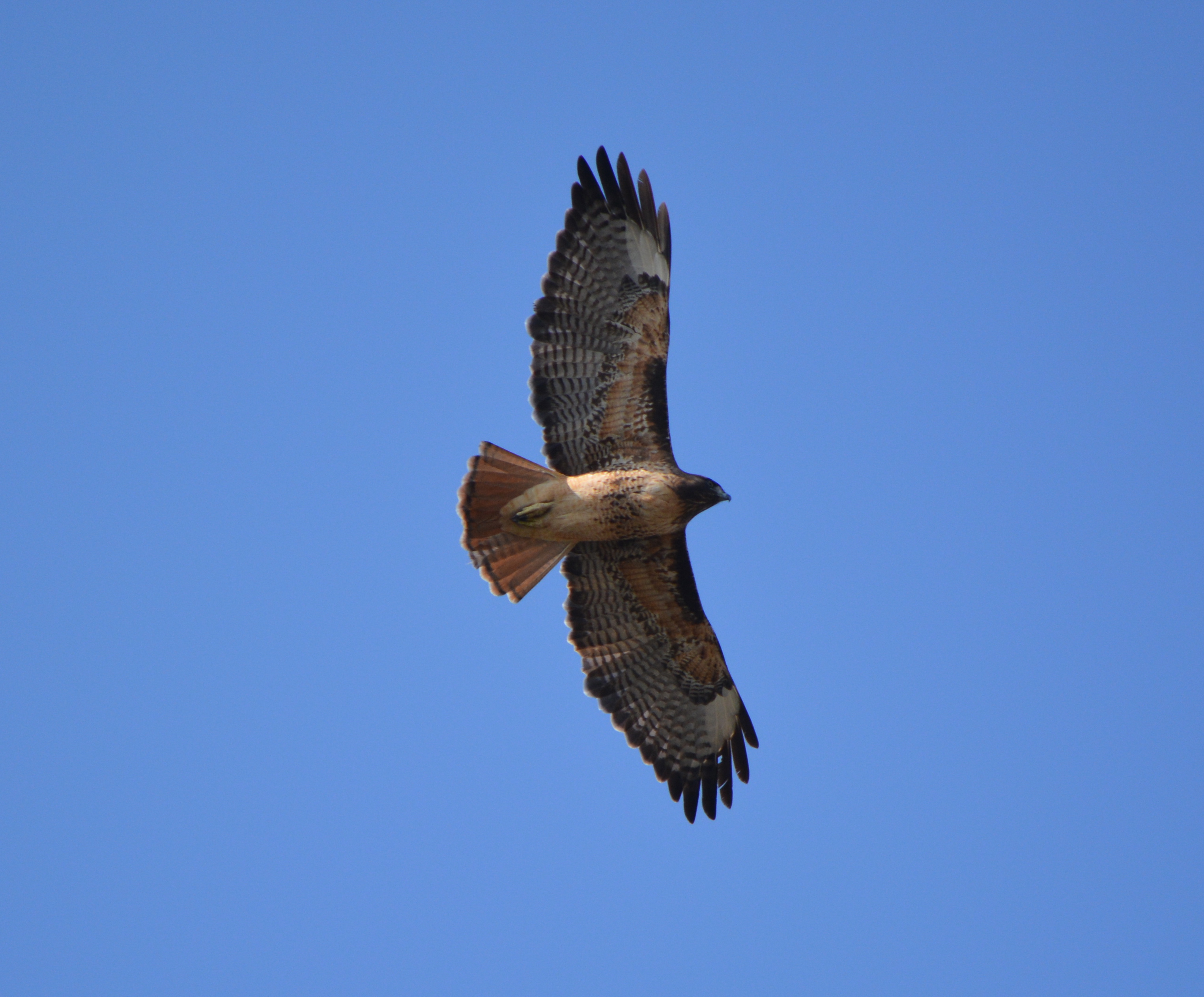
Red-tailed Hawk
Red-tailed Hawk
Red-tailed Hawk
Red-tailed Hawk
Red-tailed Hawk
Red-tailed Hawk
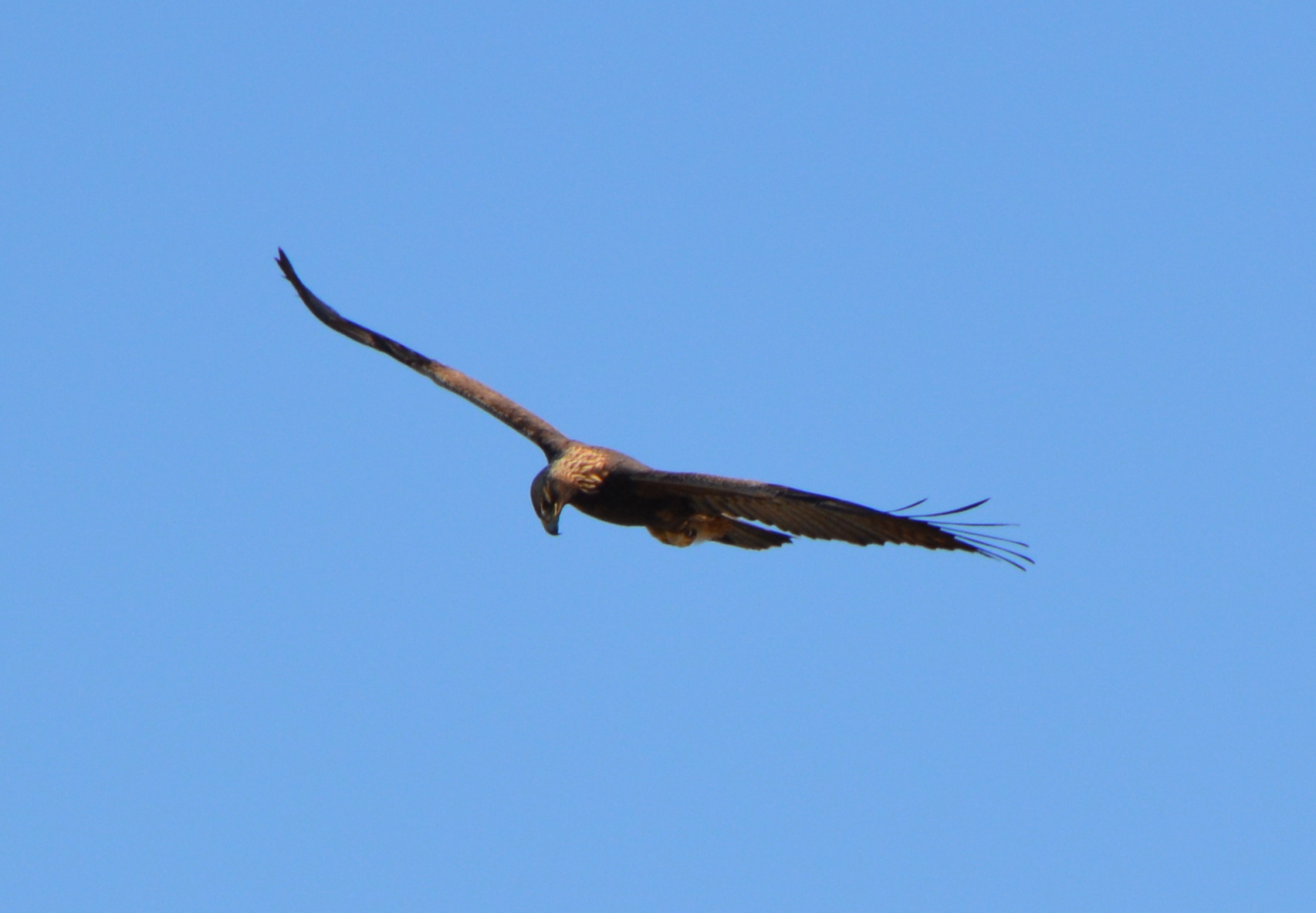
Golden Eagle
Golden Eagle
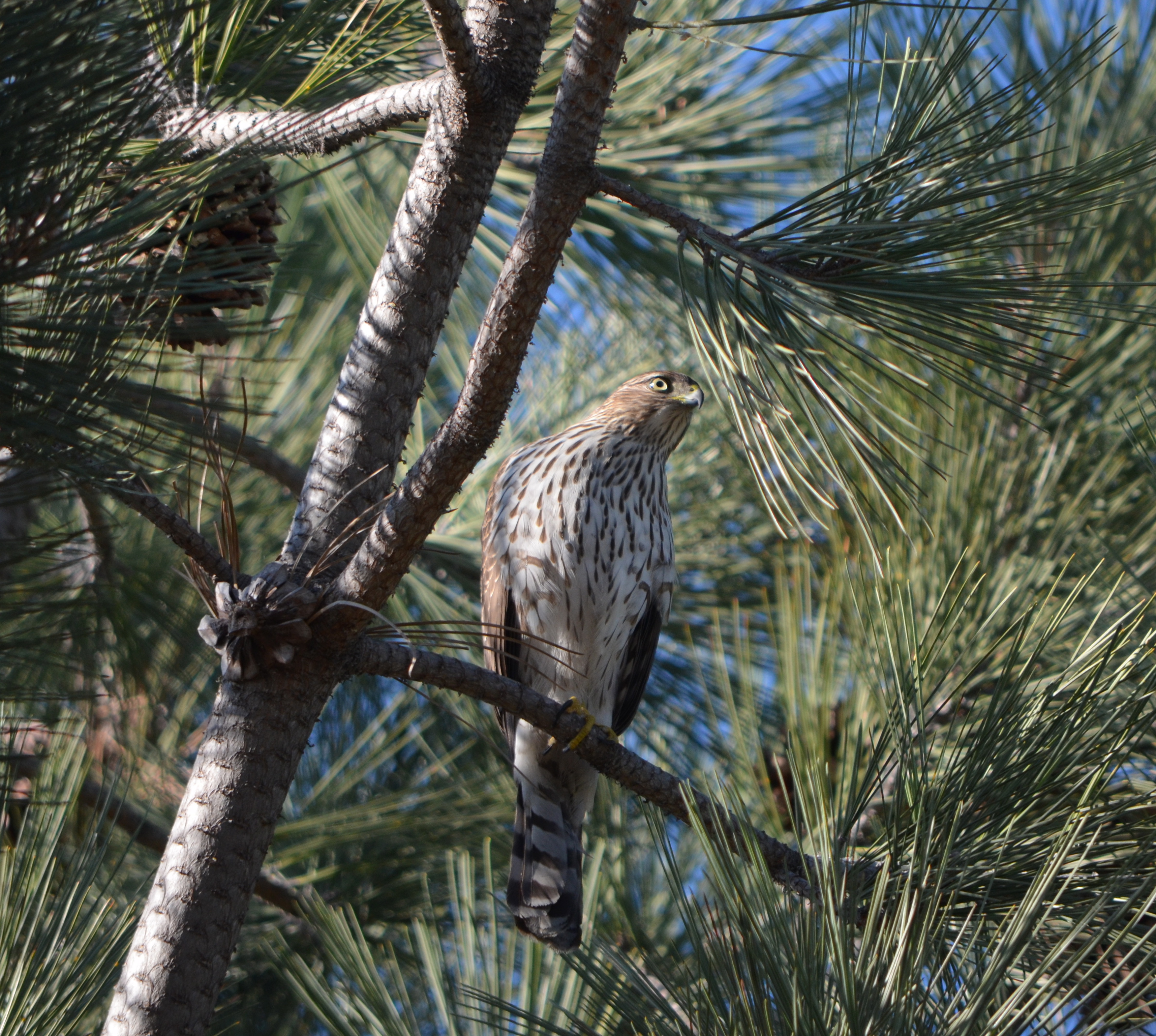
Cooper's Hawk
Cooper’s Hawk
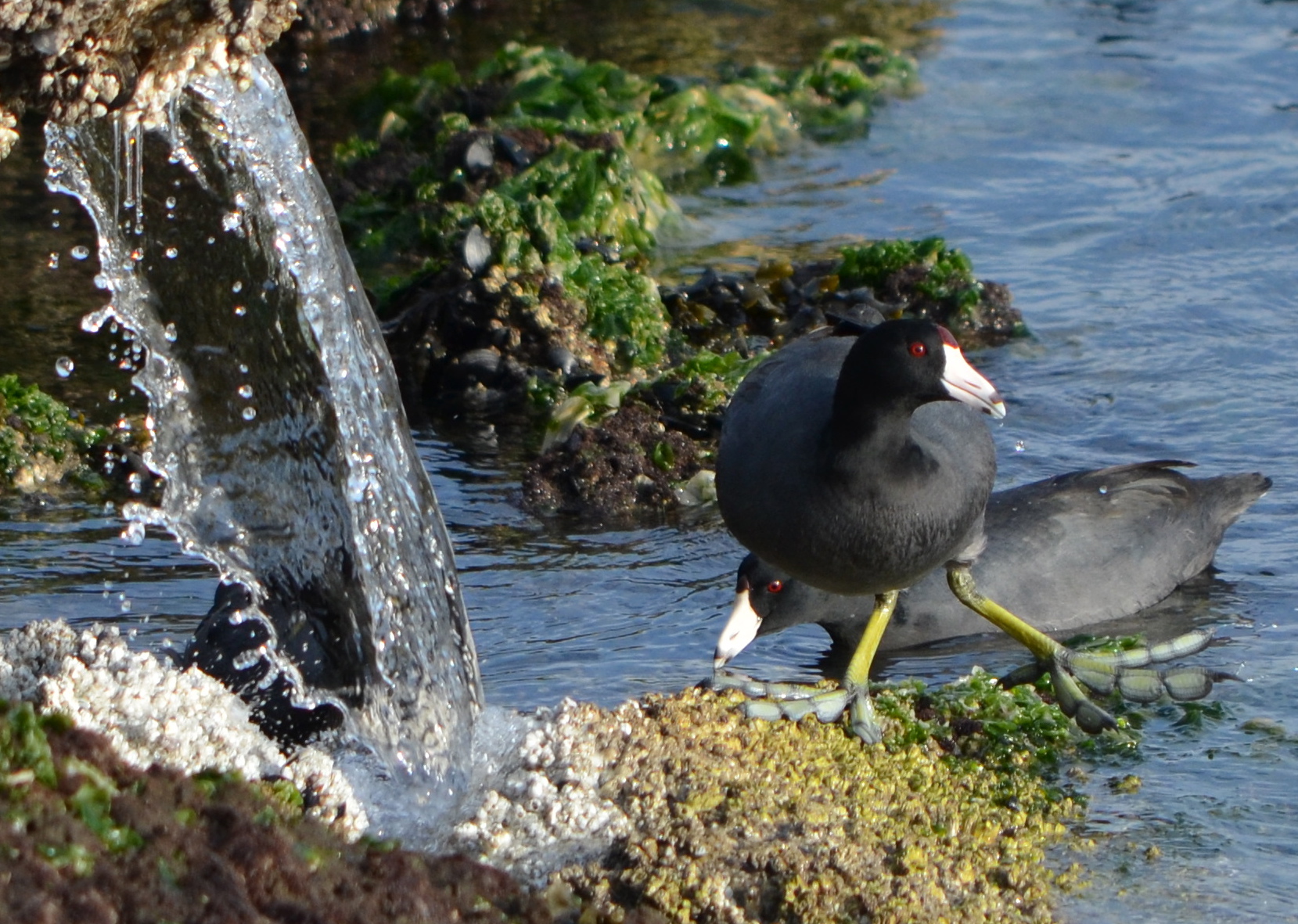
American Coot
American Coot
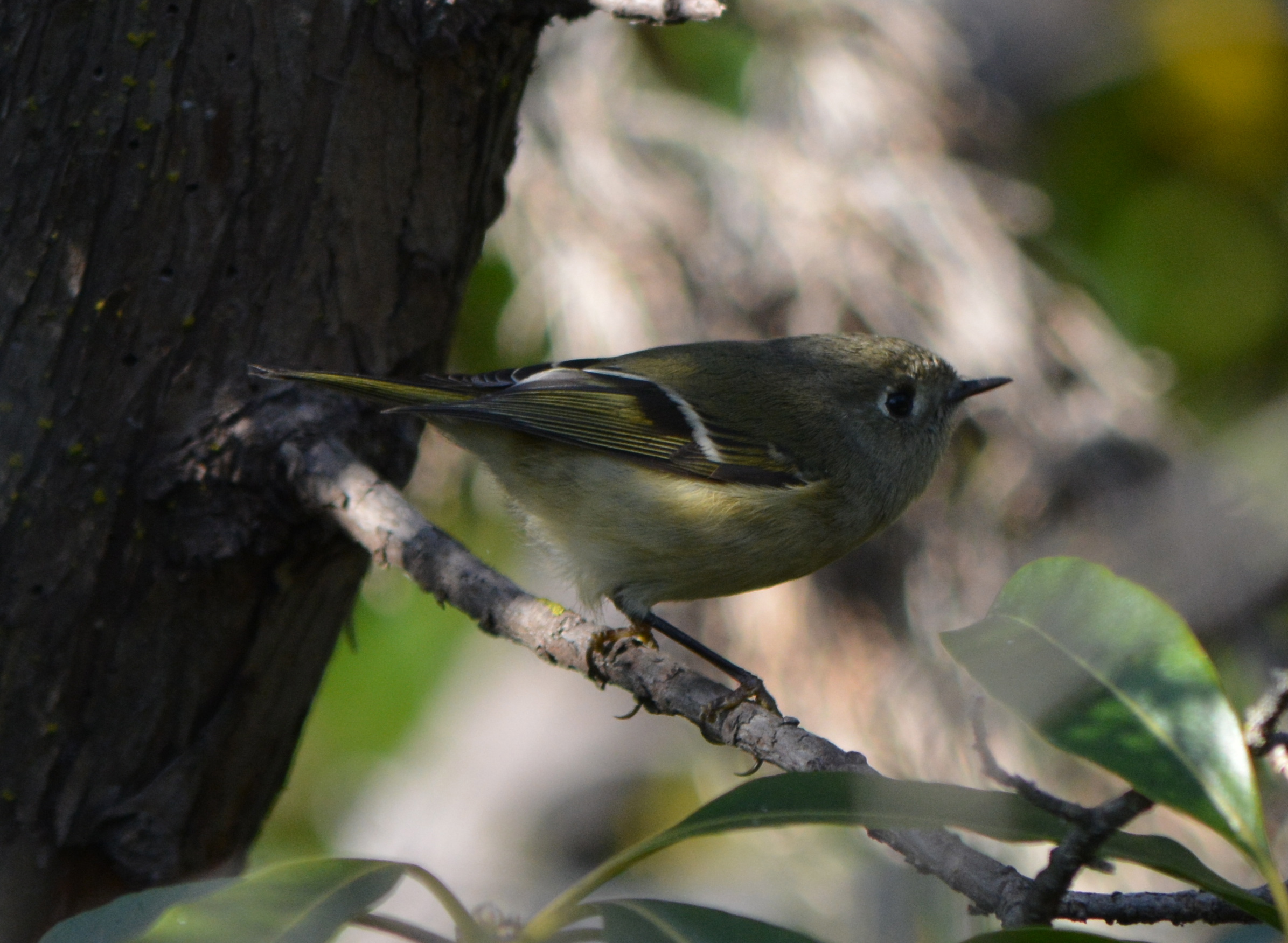
Ruby-crowned Kinglet

Young osprey at Alameda Point leaving soon

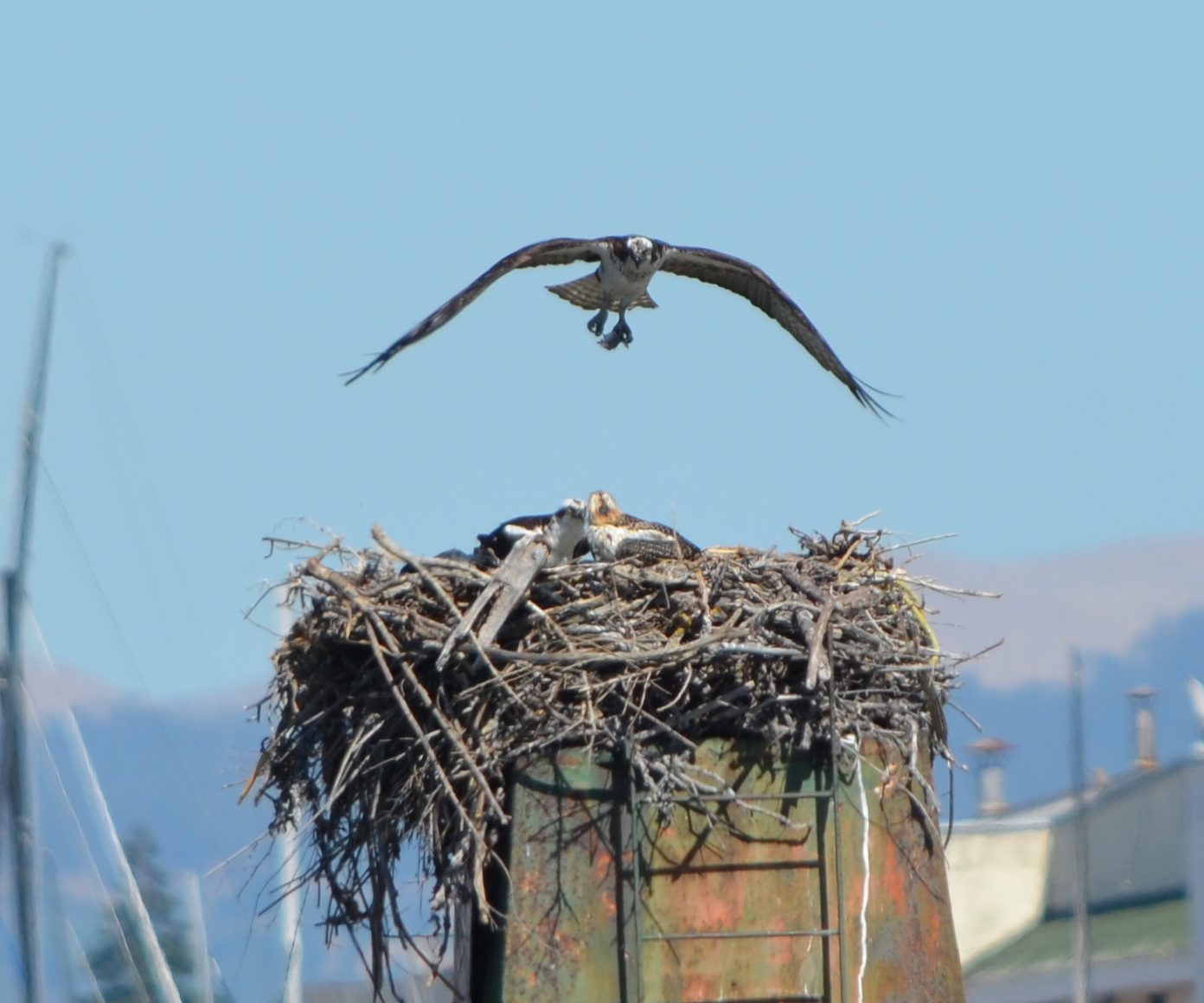
Parent osprey landing with fish as fledgling waits on right, with parent looking on.

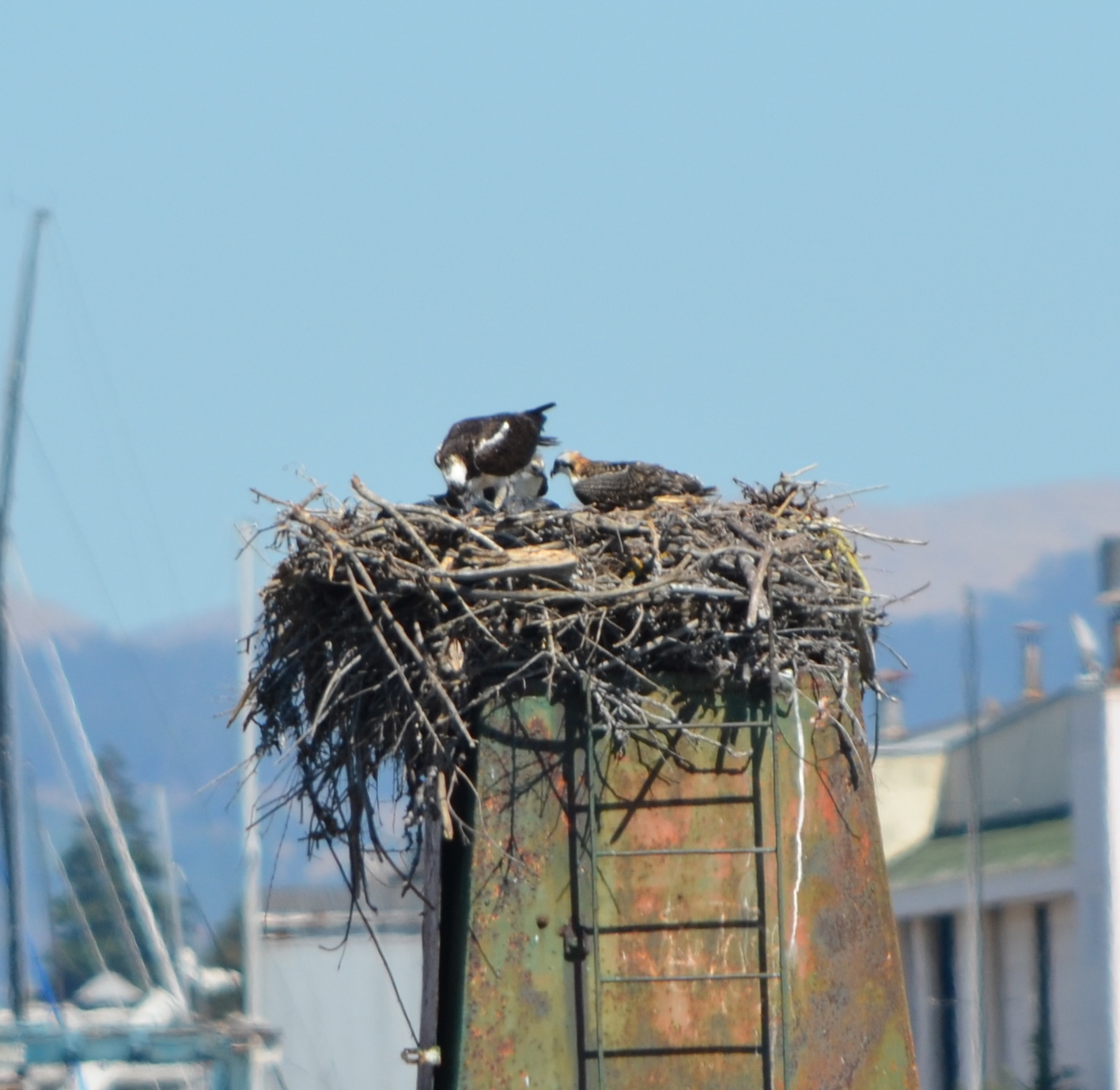
This is the third year that a pair of ospreys has nested on the old light stand at the entrance to the Seaplane Lagoon.  This year’s mating effort produced one fledgling. 

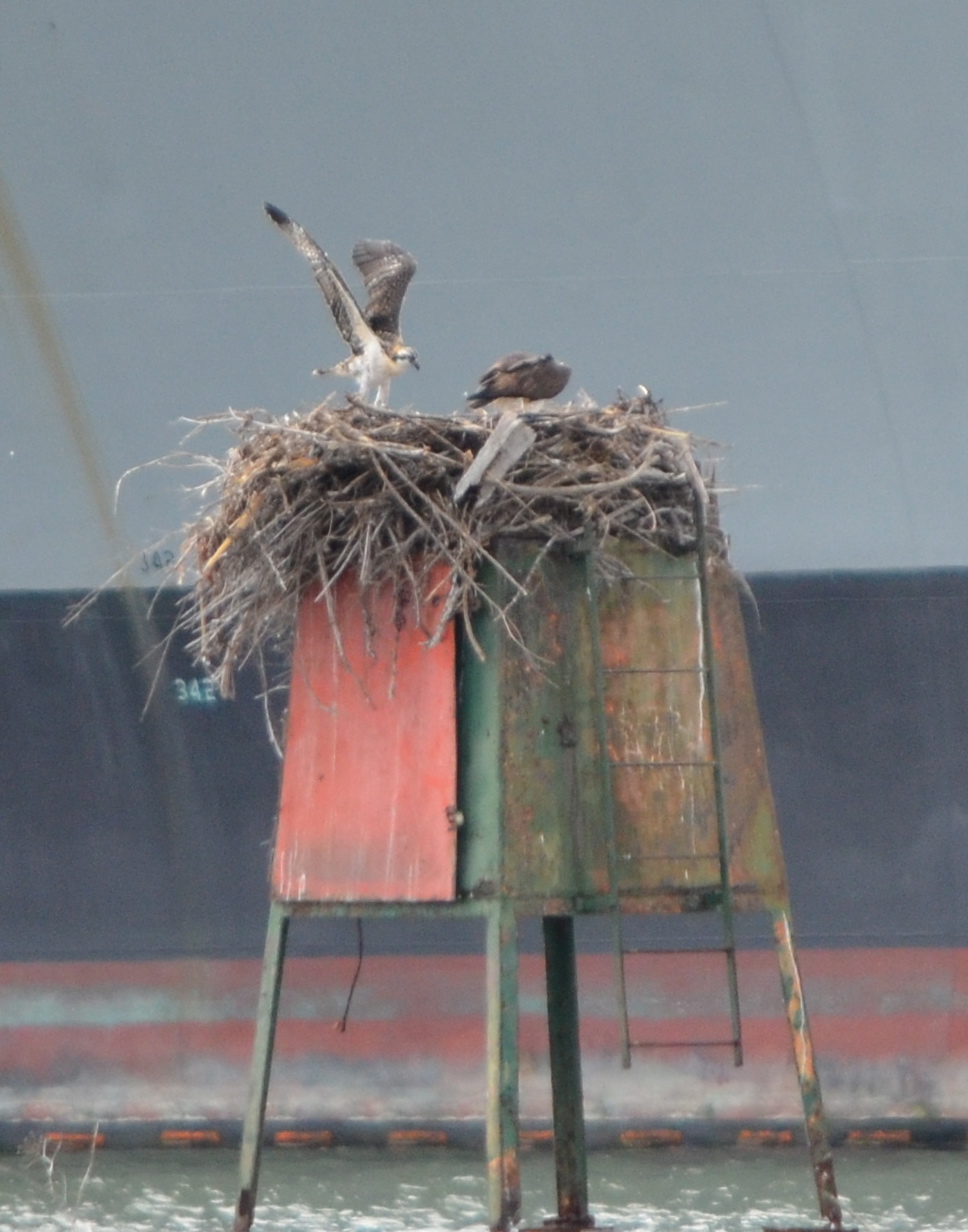
As June draws to a close, the fledgling can been seen standing on the nest and going through a series of wing calisthenics as one of the parents looks on.  Occasionally a parent will fly in a circle around the nest as if to say, “Look, this is how it’s done.  It’s easy.”   Spending most of its time hunkered down in the nest, often with brisk winds coming in across the Bay, the fledgling waits patiently for the high points of the day – its parents returning to the nest with a fish.  It won’t be long before this osprey family will be winging their way back to the wild.

Fledgling osprey watching and waiting for its turn as parent eats fish.

Fledgling osprey exercising its wings above, while parent looks on.

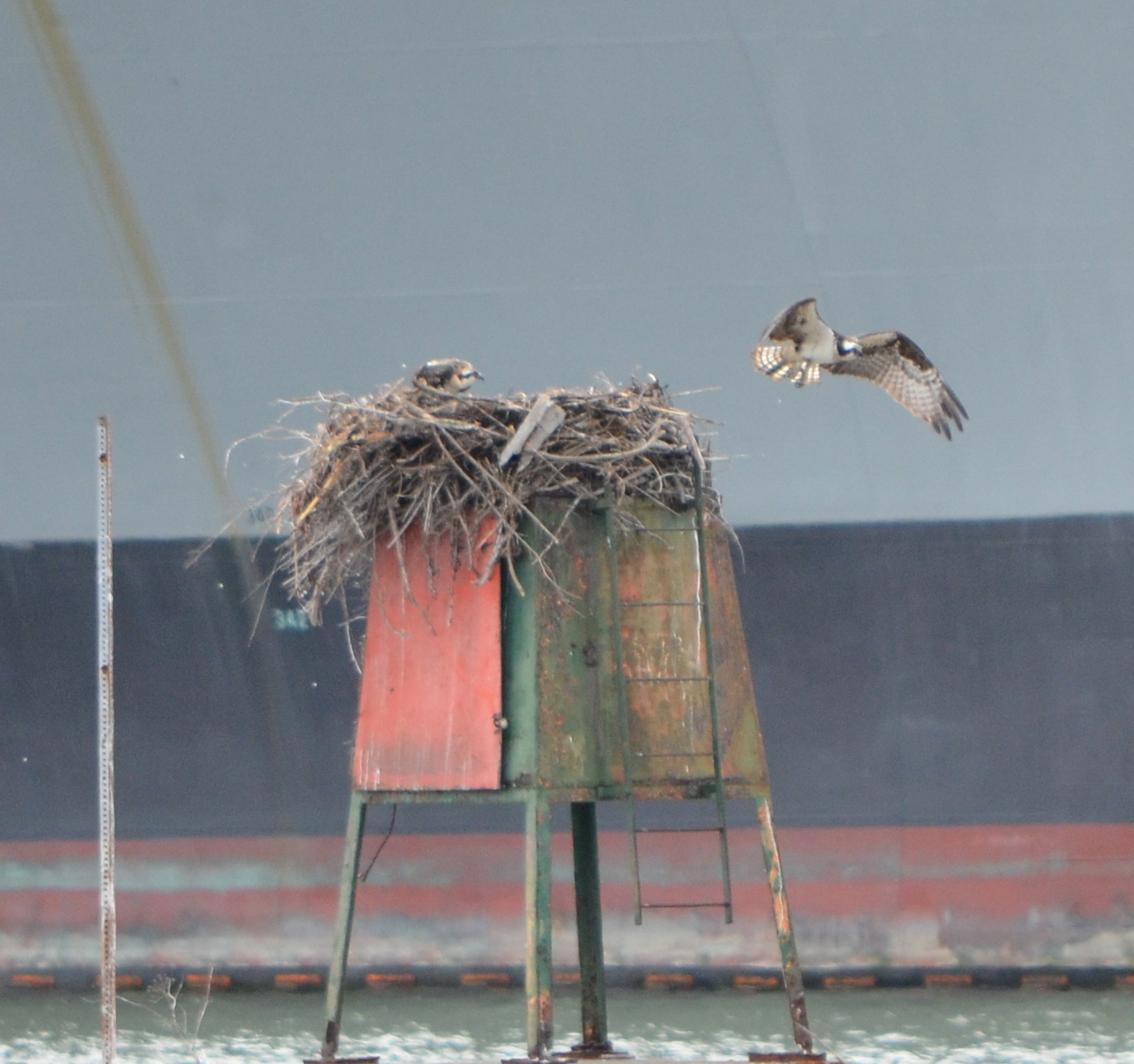
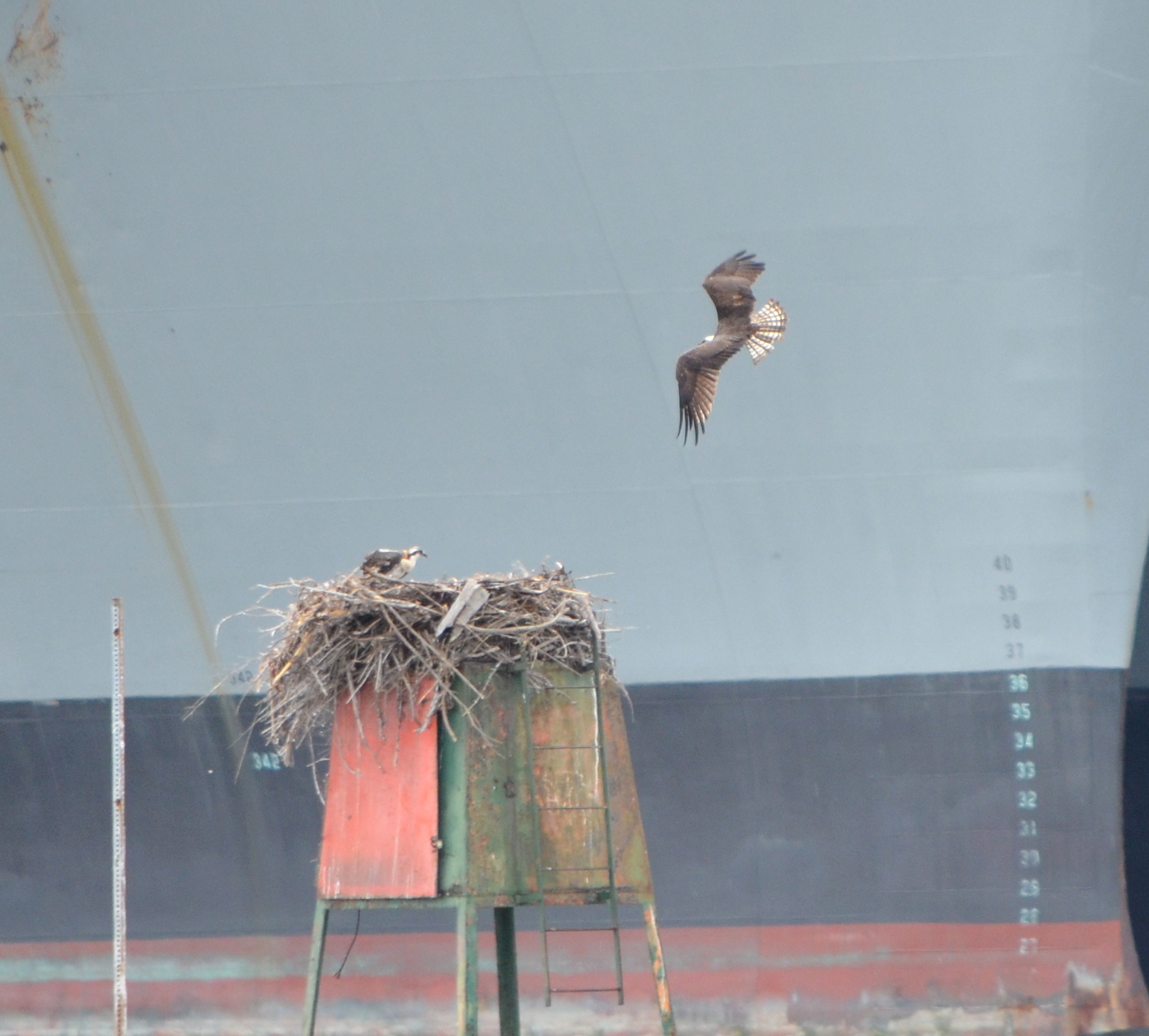
Above and below – parent osprey appears to be giving flight demo as it circles nest with fledgling looking on.

Parent osprey lifting off from nest as fledgling sits, with other parent looking on.  Note juvenile colors and wing spots.

This slideshow requires JavaScript.

See also 2011 osprey nesting at Alameda Point.