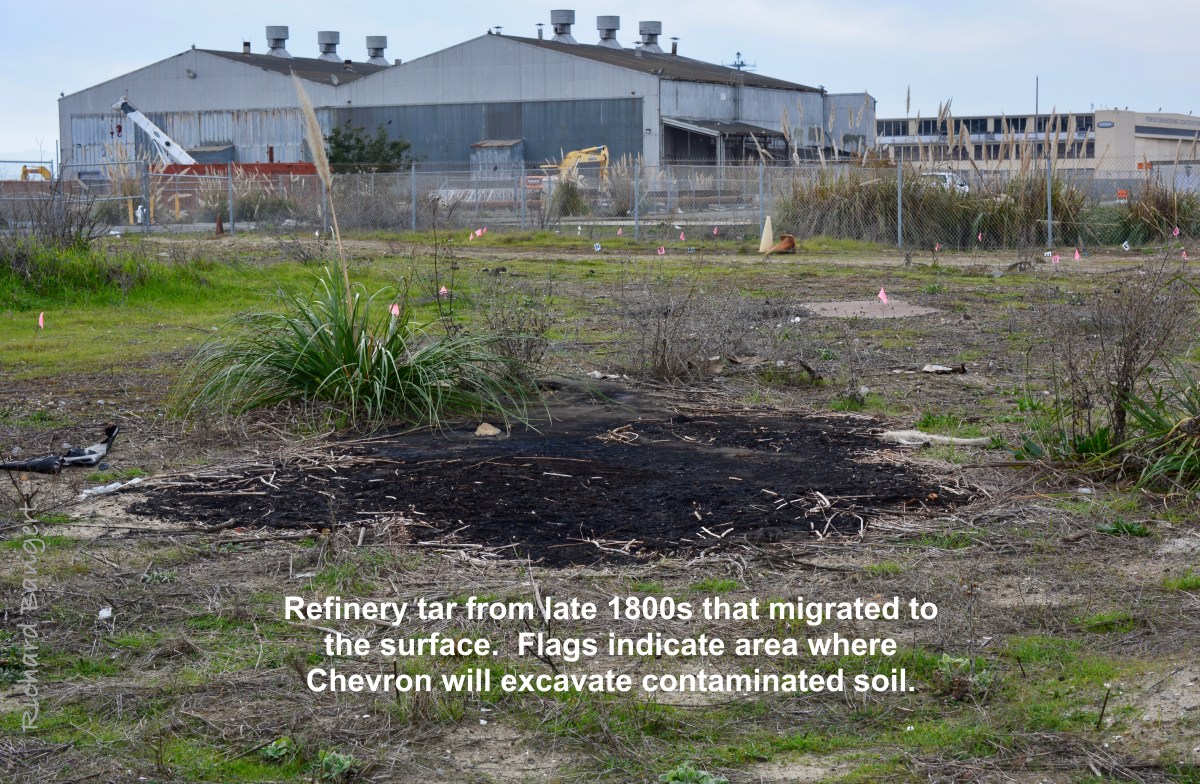
At the urging of the San Francisco Bay Regional Water Quality Control Board (Water Board) in 2021, Chevron agreed to return to Alameda Point and clean up the tar waste left behind when its refinery that produced kerosene was closed in 1903. The site was eventually filled with up to 10 feet of soil during construction of the Naval Air Station.
Chevron began the process of cleaning up buried tar at its old refinery site in May 2023 by taking 43 soil samples to characterize the extent of contamination. The sampling pipes were driven down 20 feet. But a plan for digging up the tar was not submitted to the Water Board until September 2025.
The Water Board and Chevron are currently in the process of ironing out details of the plan, with formal approval by the Water Board expected soon.
Tar cleanup to begin in Spring 2026
Chevron’s plan calls for excavating targeted areas this Spring (2026), following the rainy season. The project is expected to take from one to two months to complete.
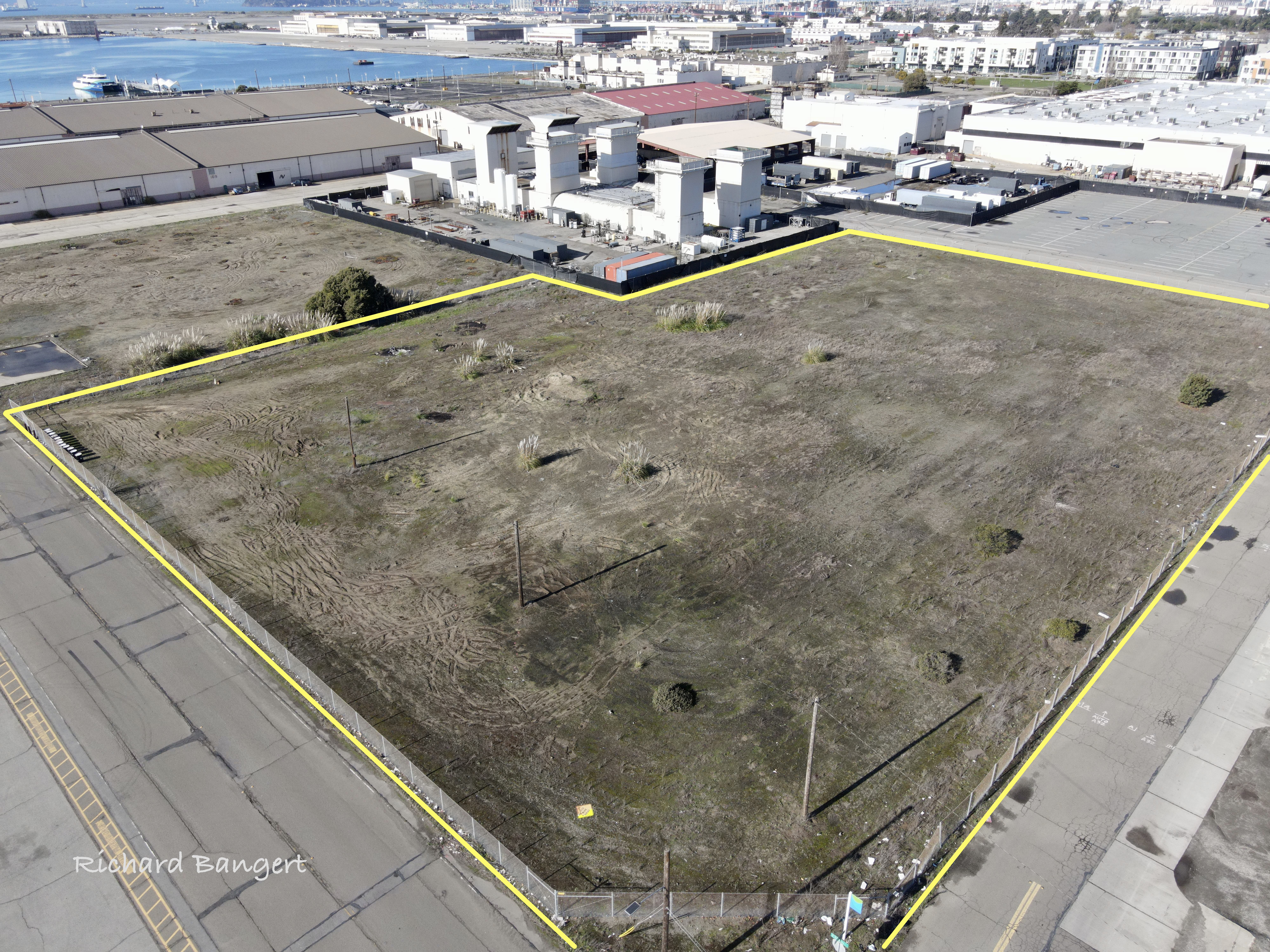
Chevron’s investigation found that most of the old tar is located in about one-third of the former refinery site, roughly parallel with the area where the original shoreline was located when the refinery was in operation.
The plan is to excavate soil down to a depth of seven feet. Since very little, if any, tar was found in the upper three feet of soil, “it is anticipated that the top 3.0 feet of soil will be able to be reused as backfill,” the cleanup plan states. The soil will be set aside and tested for various potential contaminants.
Gypsum to be added to soil
If the soil is clean, gypsum will be mixed in with the reusable soil before filling in the bottom 2.5 feet of the excavation area. Gypsum, which is the main ingredient in Sheetrock® for walls, is also one of the oldest forms of agricultural fertilizer. Clean soil will be used to fill in the remainder of the pits.
The addition of gypsum soil amendments has been proven to increase the natural biodegradation of petroleum hydrocarbons in the ground. “Gypsum (calcium sulfate) provides a source of sulfate for the microbial community, thus aiding in the breakdown of petroleum hydrocarbon constituents dissolved in the groundwater,” states Chevron’s cleanup plan. “Calcium sulfate will then be dispersed in the soil and groundwater through natural fluctuations in the groundwater elevation over time.”
Rising groundwater impact evaluated
In addition to providing a plan of action for removing the tarry waste, the Water Board required Chevron to evaluate the potential impact of rising groundwater on any tar not excavated below seven feet. Chevron’s Sea Level Rise Vulnerability Assessment looked at scenarios at years 2050 and 2100. The assessment pointed out that recent groundwater testing did not show the tar has caused elevated concentrations of petroleum from the tar.
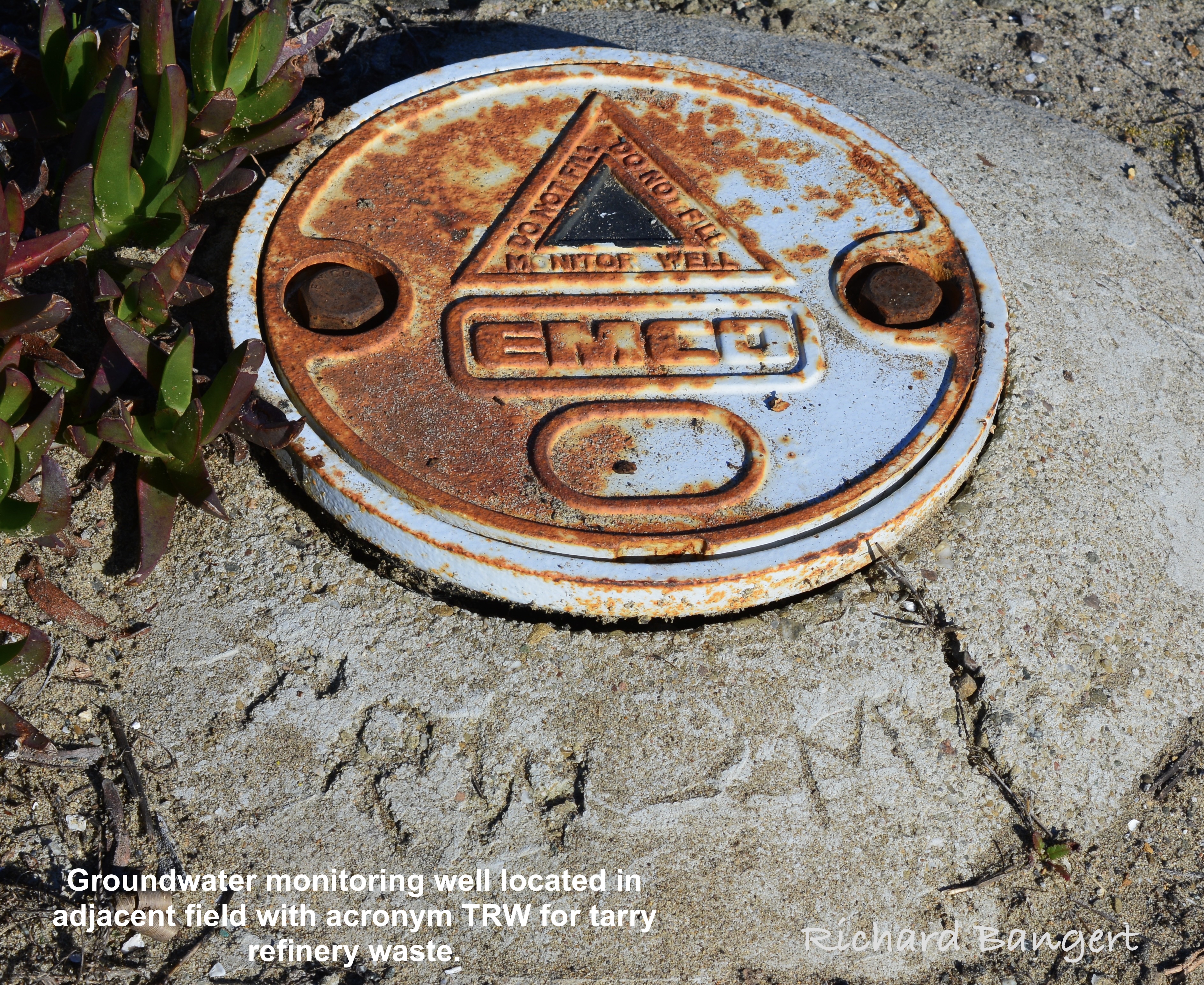
“Any tarry material that originated from petroleum-refining activities has been in place for more than 120 years,” states the assessment. “Due to natural attenuation processes, residual tarry material in soil is expected to have significantly reduced volatile constituents over that time.” Because there will be seven feet of clean soil placed in the ground, “Future groundwater rise will not lead to potential leaching of contaminants to groundwater associated with the tarry material,” the assessment concluded.
Previous tar removal by the Navy
In 1940, the year the Naval Air Station opened, the Navy undertook the excavation of tarry refinery waste at the site after hot weather caused gases to be produced in the tar leading to expansion of the soil and noticeable impact at the surface. The Navy excavated an area approximately 30 feet by 30 feet, about the size of a three-car garage, according to a 2005 Navy cleanup memorandum. “Upon completion of the excavation, a concrete slab was emplaced in the bottom of the excavation,” states the memorandum. But the specific location of the excavation area was never recorded on a map, according to the memorandum.
Chevron’s soil sampling throughout the site did not encounter the concrete slab barrier that was placed in the bottom of the pit in the 40’s, Water Board engineering geologist Yemia Hashimoto told the Alameda Post. “If this slab is encountered within that depth, it will be removed as part of the excavation,” said Hashimoto. “If it is not encountered, then it will remain in place as it has been since 1940.”
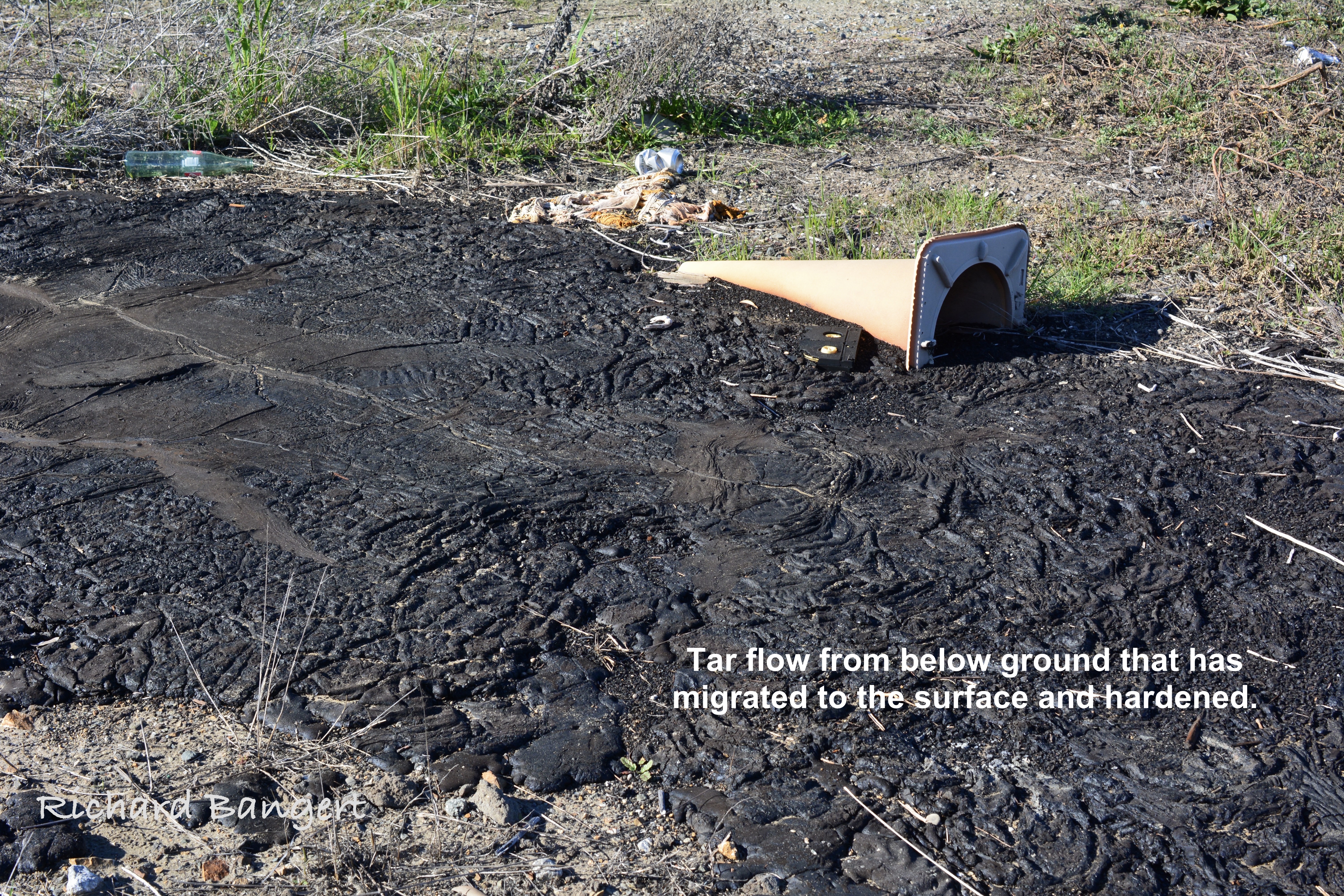
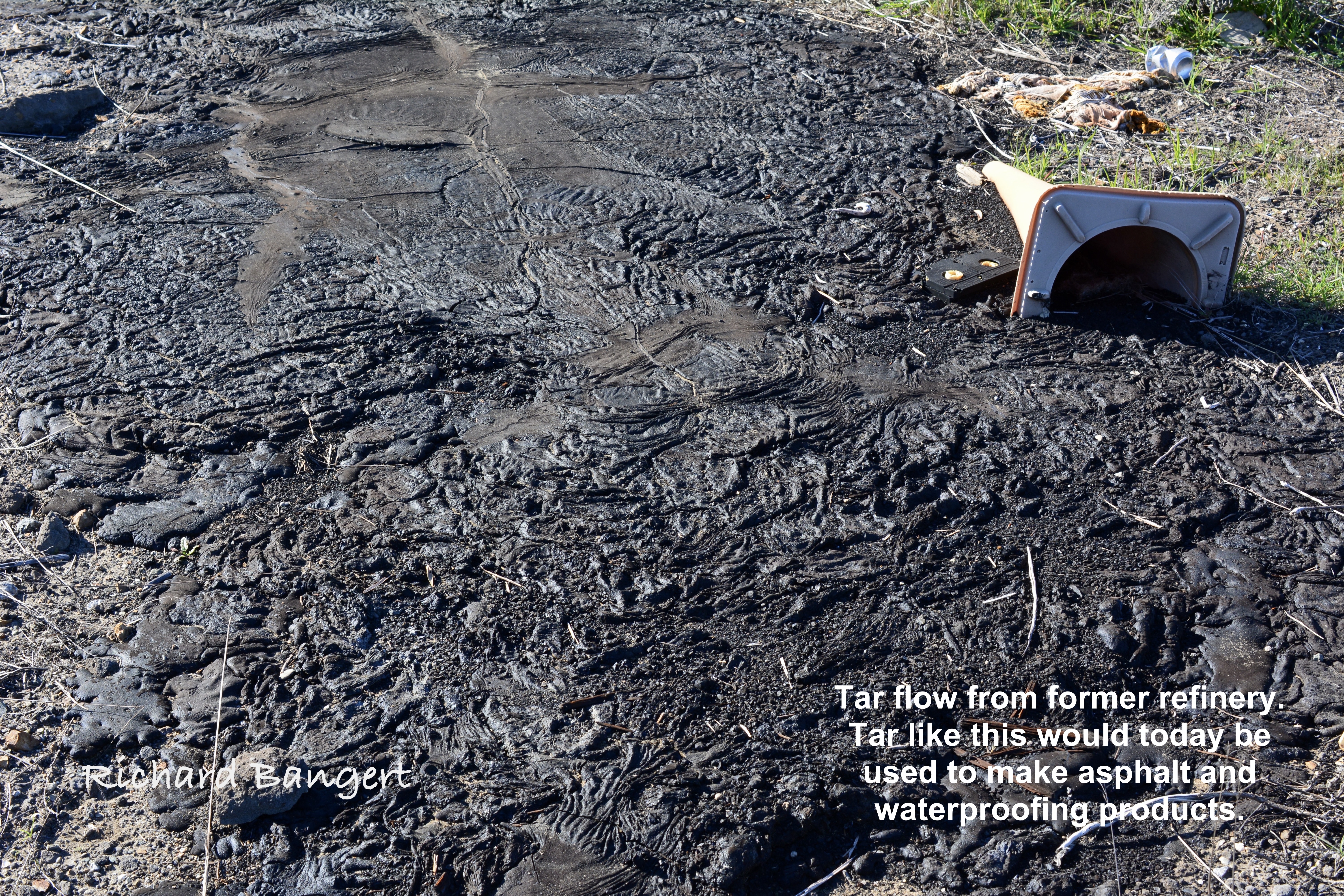
The Navy memorandum also notes other incidents when tar that had risen to the surface was removed and disposed of in 2002 and 2003, and steel plates were placed over the areas. A chain link fence was subsequently installed around the open field located near the intersection of West Oriskany Avenue and Skyhawk Street in 2005 to prevent anyone from stepping in tar that might seep to the surface. Three other surface areas with dried tar are visible today.
Tar is a useful byproduct today
Today’s oil refineries would not discard thick oil as waste after producing kerosene, as was done at Alameda in the late 1800s. After a little more refining to extract products like gasoline, the remaining “bottom of the barrel” thick tar, known as bitumen, would today be sold to producers of asphalt for road construction. The bitumen is mixed with sand, gravel, and stones, acting as the glue to hold it together. Other uses of bitumen include waterproofing products for roofs.
Originally published on the Alameda Post.
 Alameda Point Environmental Report