
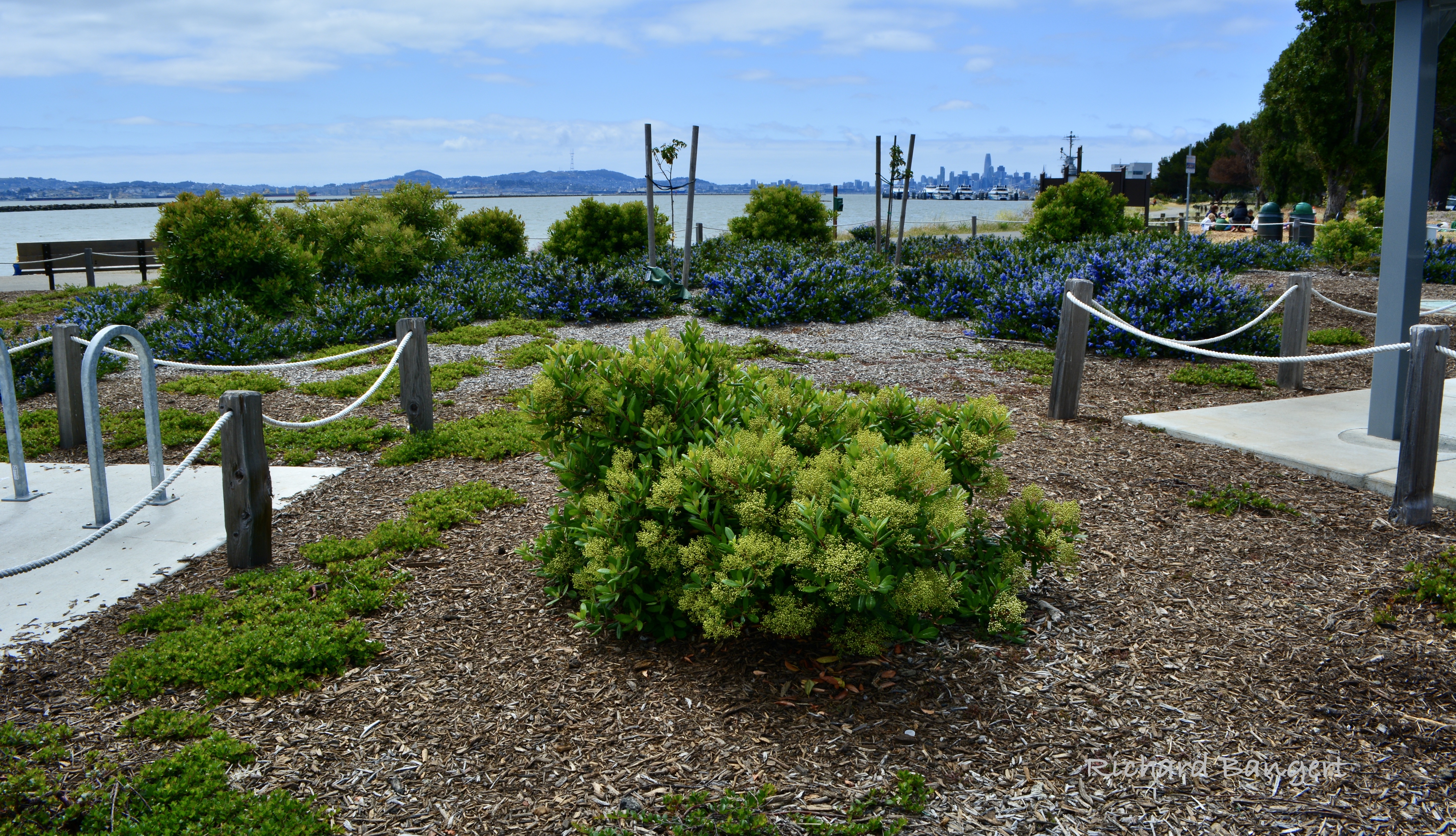
The landscaping next to the Encinal Boat Ramp restrooms has added eye appeal for humans, while providing sources of food and shelter for wildlife. Bugs, bees, and birds come and go through the seasons, taking advantage of the mulch-covered ground and different shrubs and flowers. This area and the adjacent dune and beach were enhanced by the East Bay Regional Park District in 2020.
Taking a closer look at the activity in this micro habitat reveals life that may not be readily apparent or appreciated.
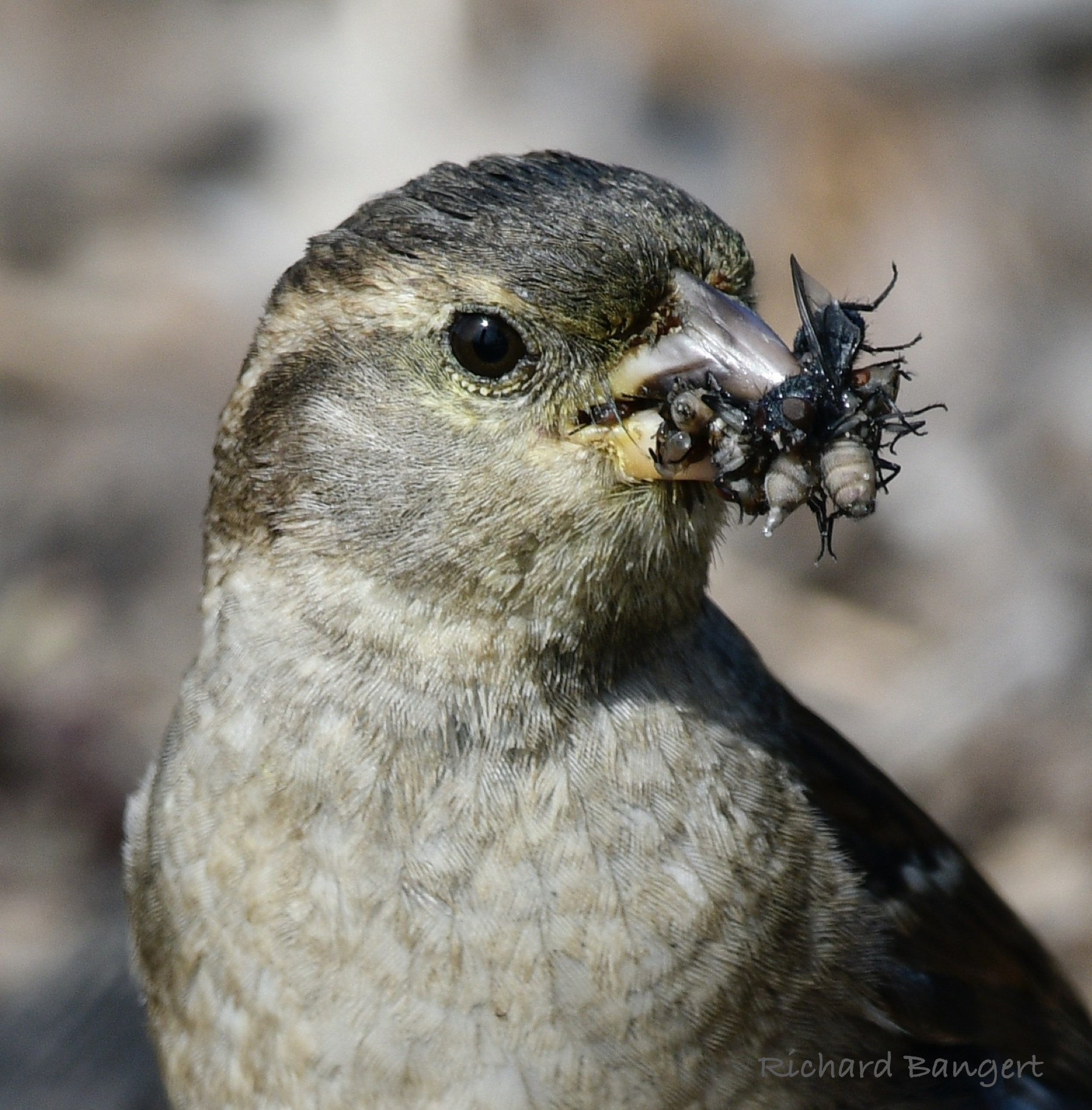
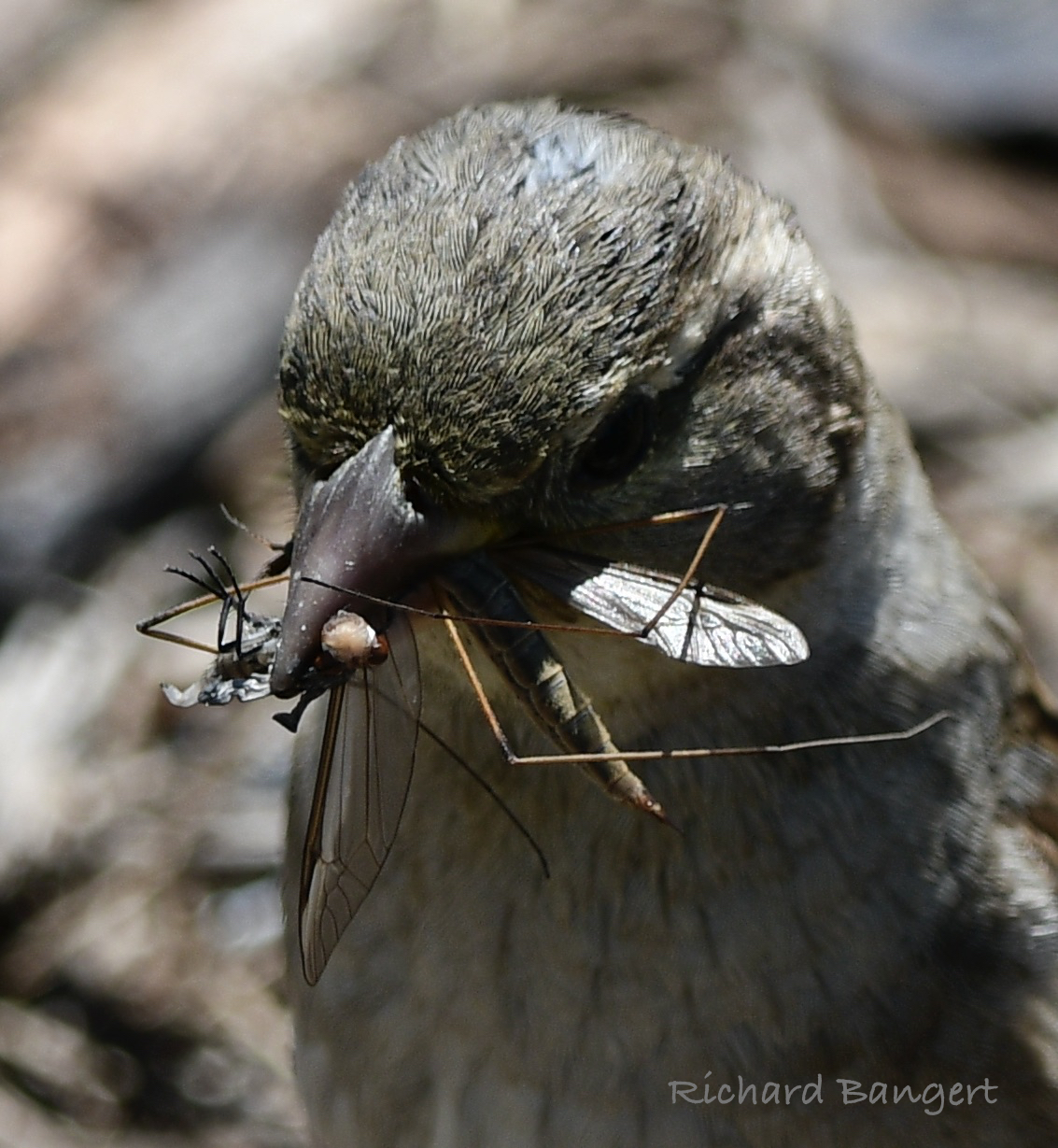
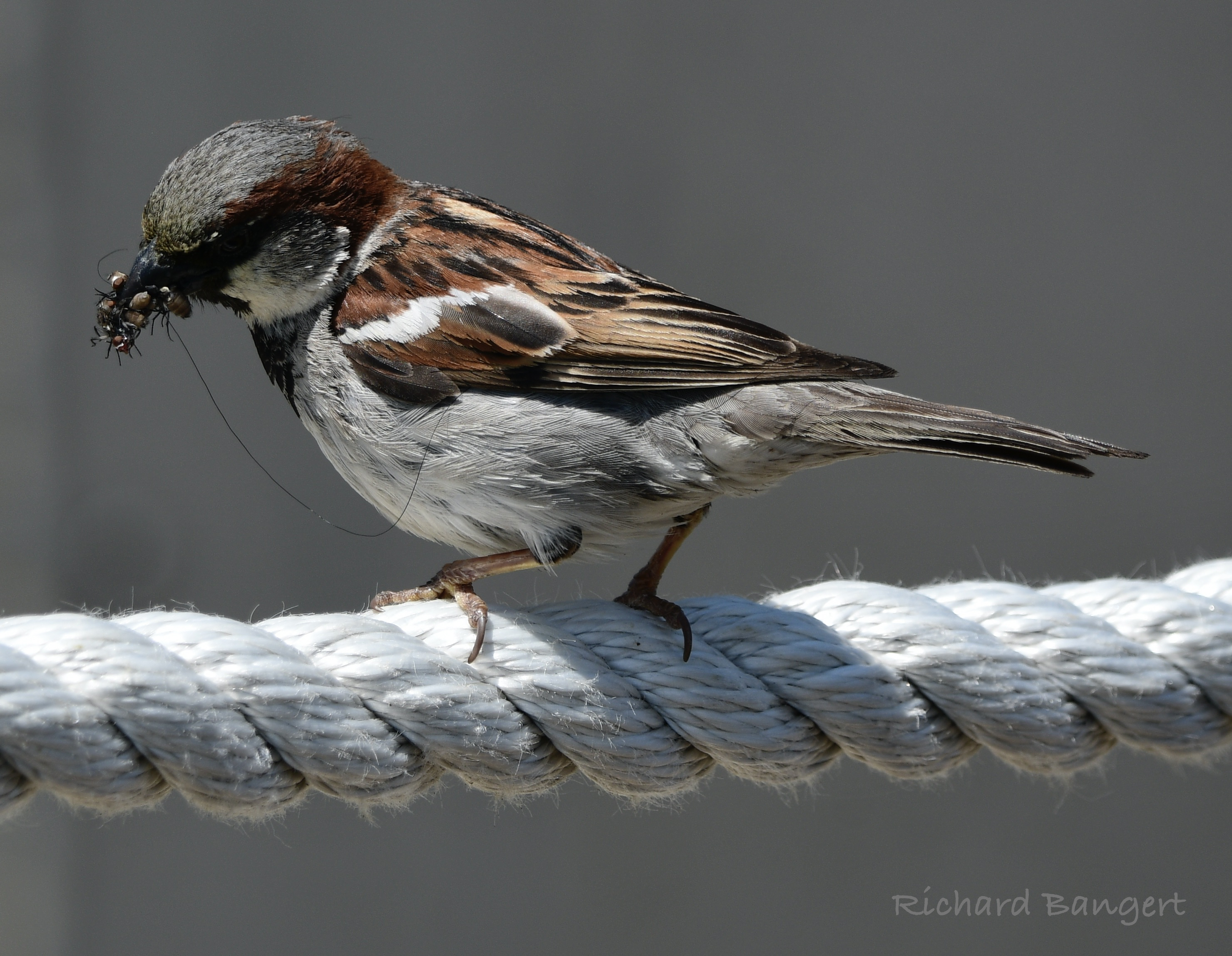
In late May, for example, a flock of small brown birds were darting around the mulch-covered roped-off area. They were either migrating and stopping to fuel up, or they were a local flock making the rounds foraging for food for themselves. Or so it appeared. Zoomed-in photos showed beaks full of bugs, a clear sign they were taking them back to their chicks in the nest. During the following week, the same behavior was repeated hourly — gathering bugs from the ground and flying off in the same direction over Willie Stargell Field.
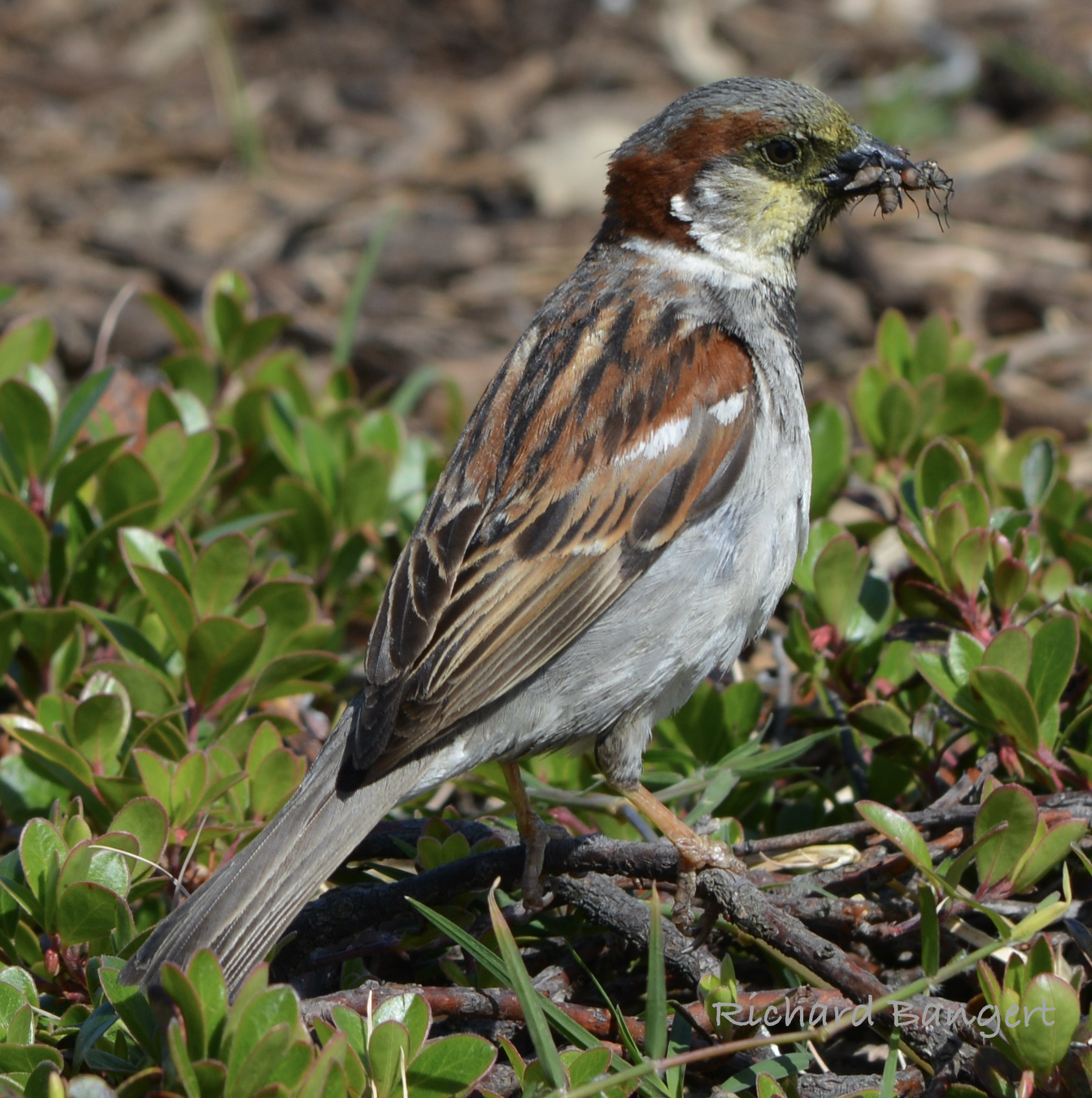
A review of the 29 species of sparrows found in California identified these birds as House Sparrows. This sparrow is one of the more common sparrows and can been seen throughout the year. “The House Sparrow prefers to nest in manmade structures such as eaves or walls of buildings, street lights, and nest boxes instead of in natural nest sites such as holes in trees,” according to the Cornell Lab of Ornithology’s All About Birds website.
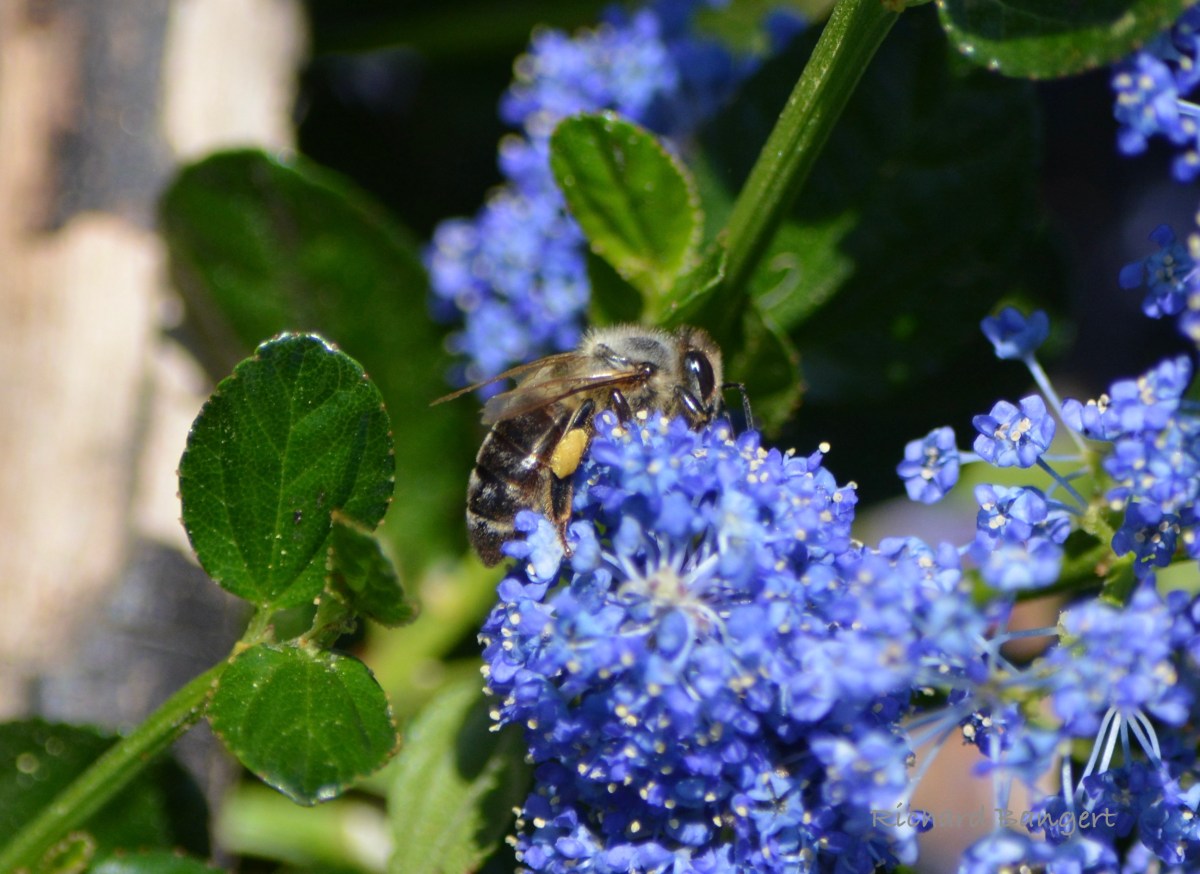
Meanwhile during the same late-May early-June period, three species of bees could be seen harvesting pollen from the California lilacs in full bloom – namely, bumblebees, ligated furrow bees, and honey bees.
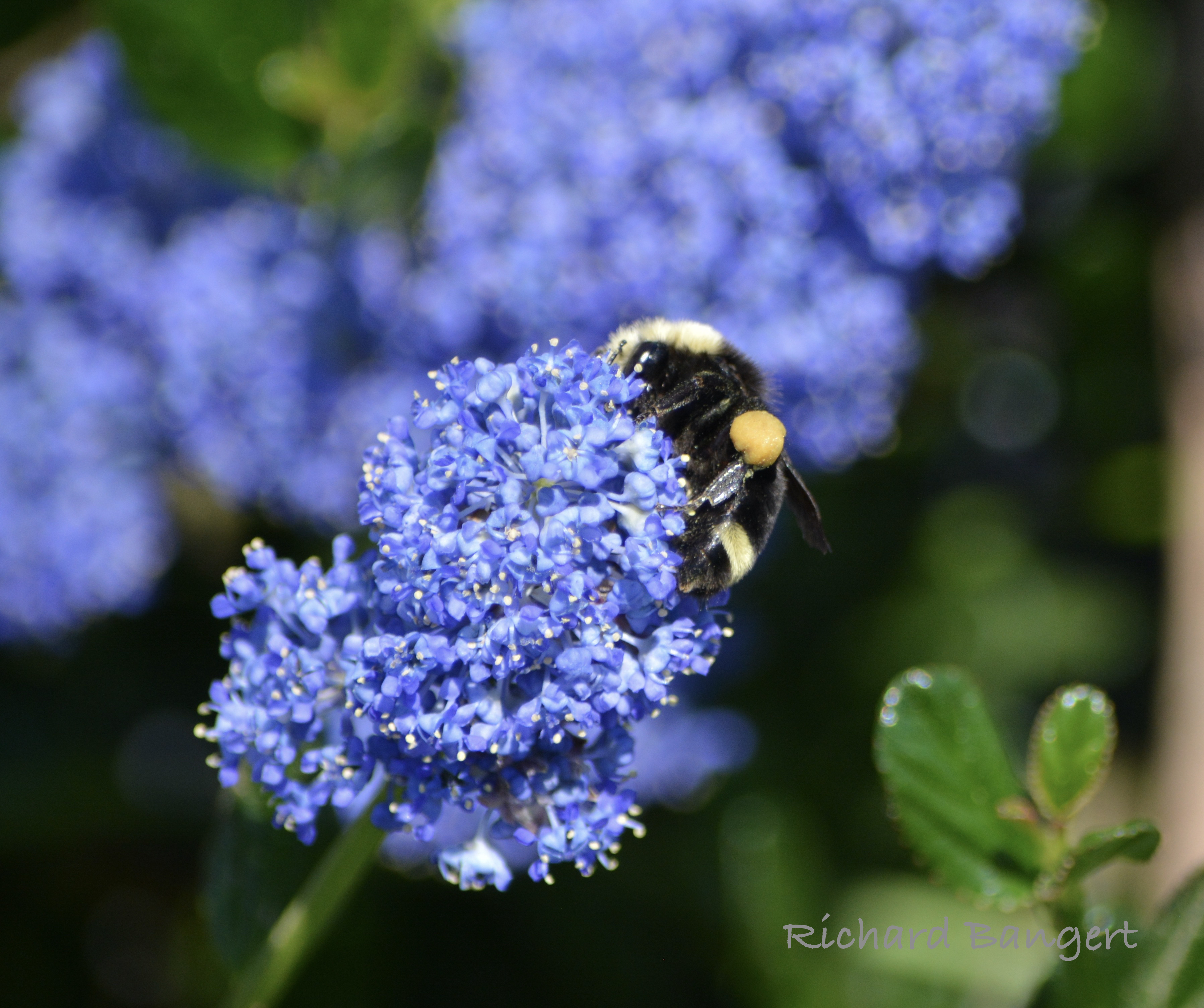
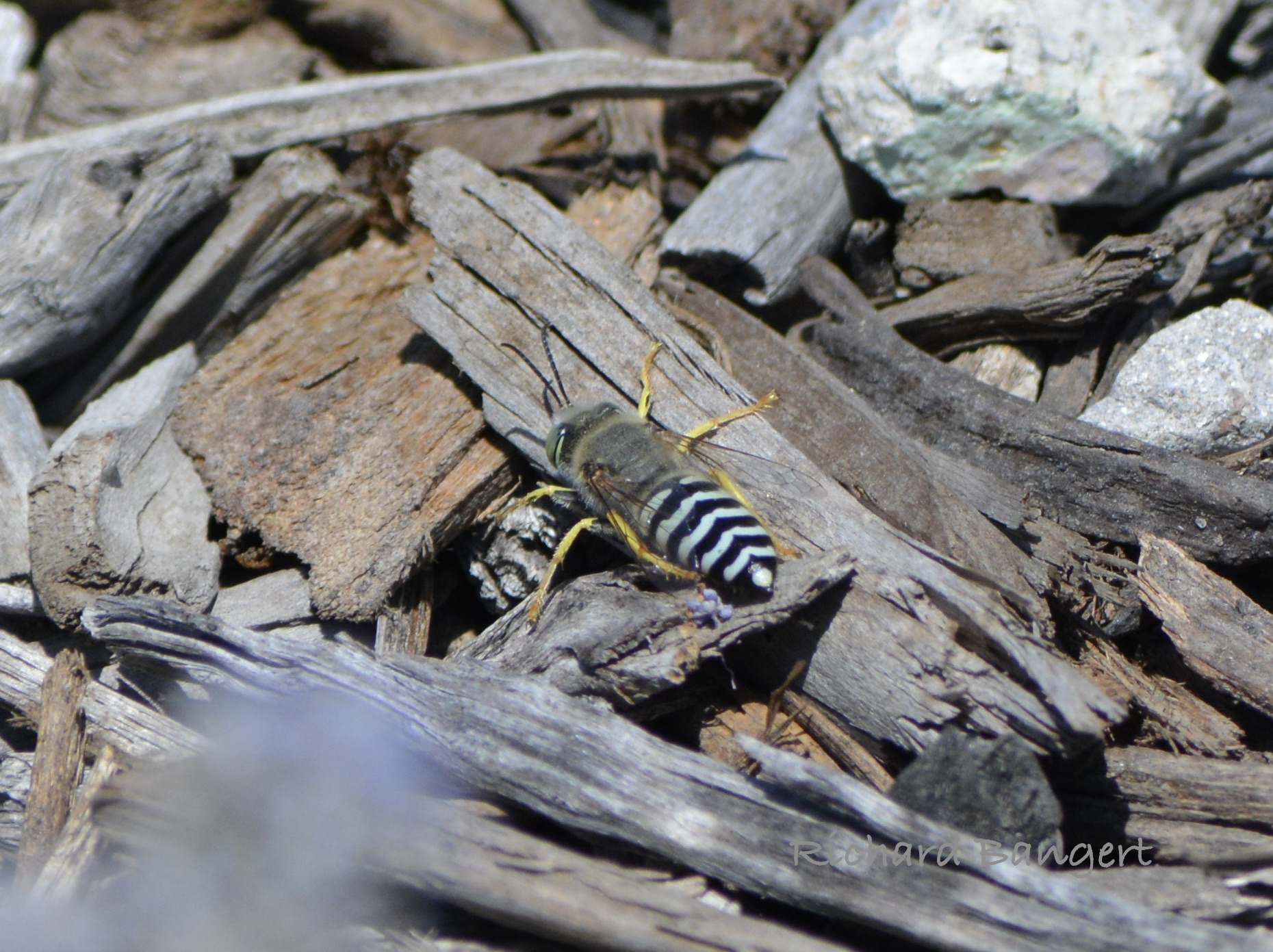
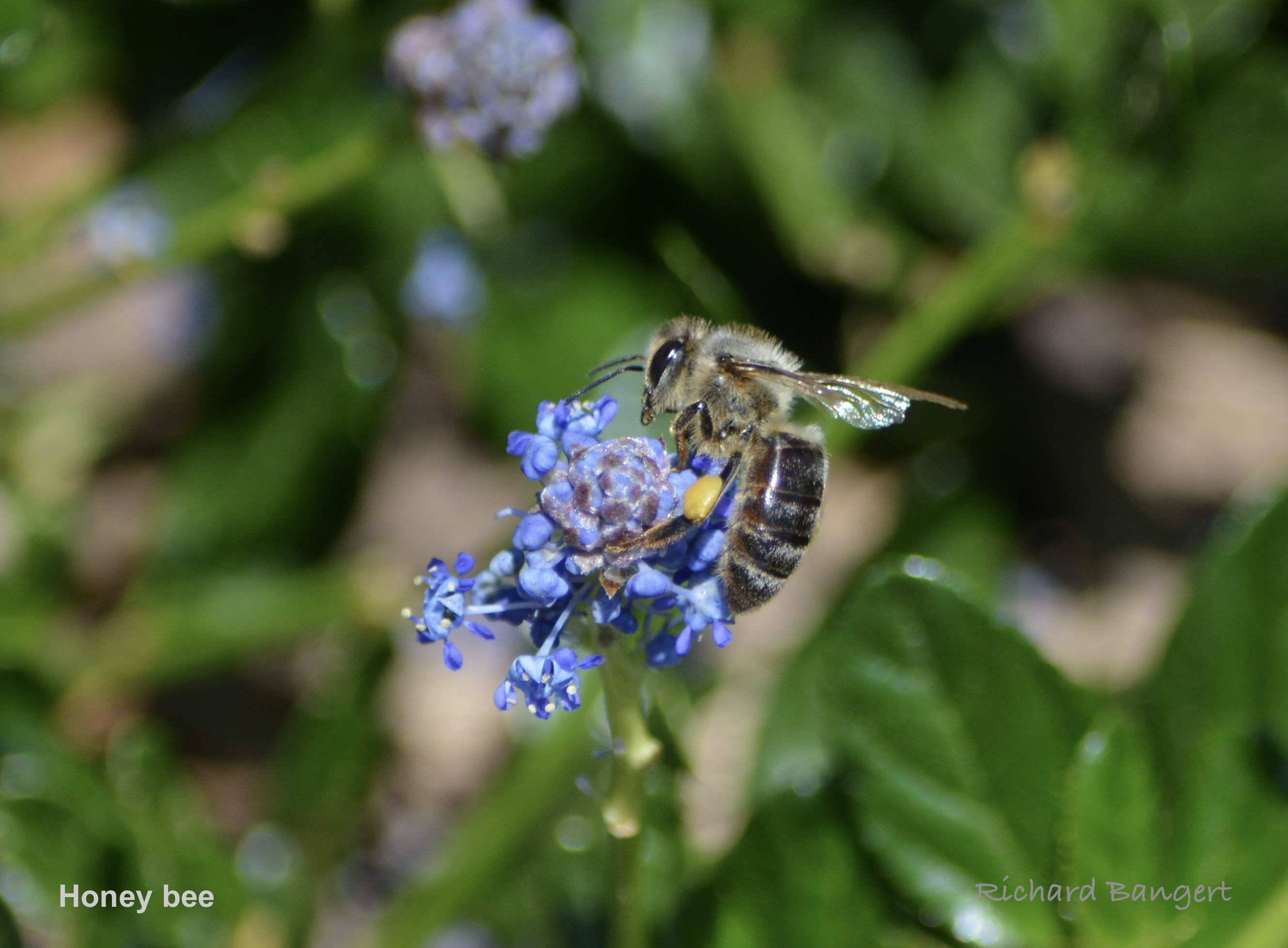
Bumblebees were the most numerous and easy to spot with their black and yellow markings. The ligated furrow bees are easily identifiable because of their yellow legs. The adjective “furrow” comes from the fact that they live in underground hives, which is probably why it was the only bee species photographed directly on the mulch and soil.
The bumblebees were having a good time plunging into the center of the California poppies.
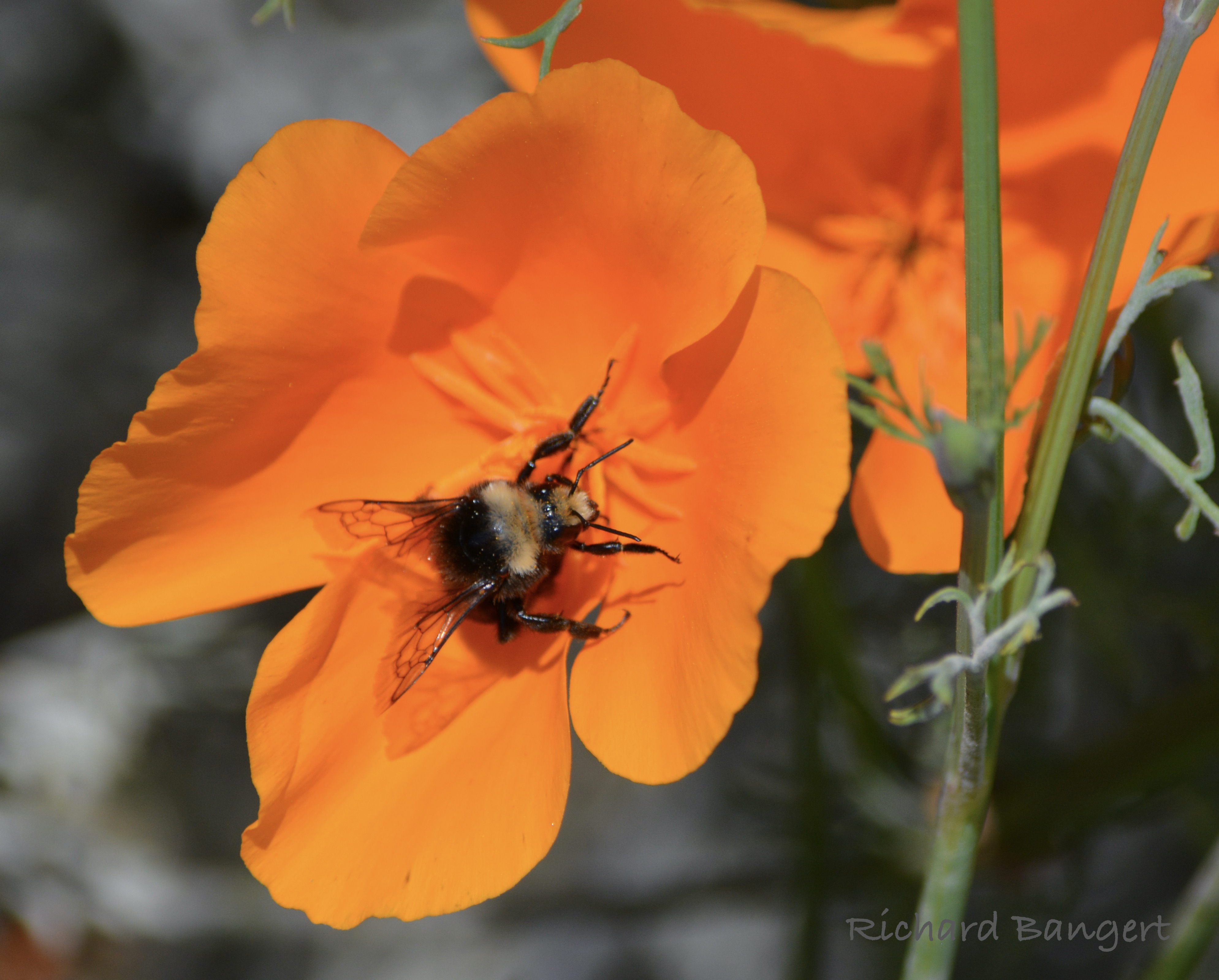
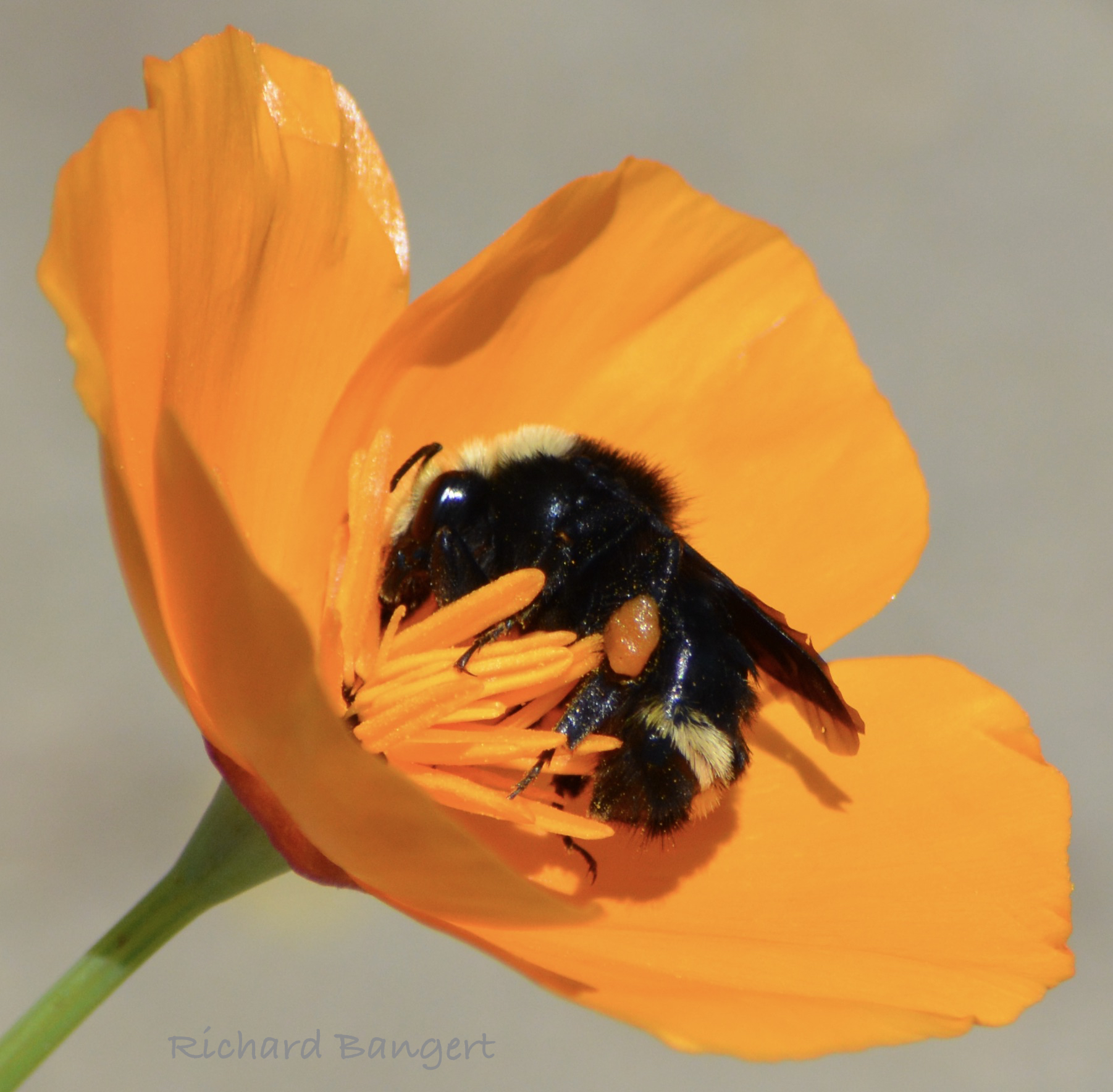
The yellow/orange clumps on the legs of bumble bees and honey bees is where they carry pollen, according to BuzzAboutBees website.
As for the main bugs being gathered by the sparrows, most of them appear to be the small size of honey bees. This would explain why there were not many honey bees there but plenty of bumble bees. Whatever these insects were, the birds always plucked from the mulch.
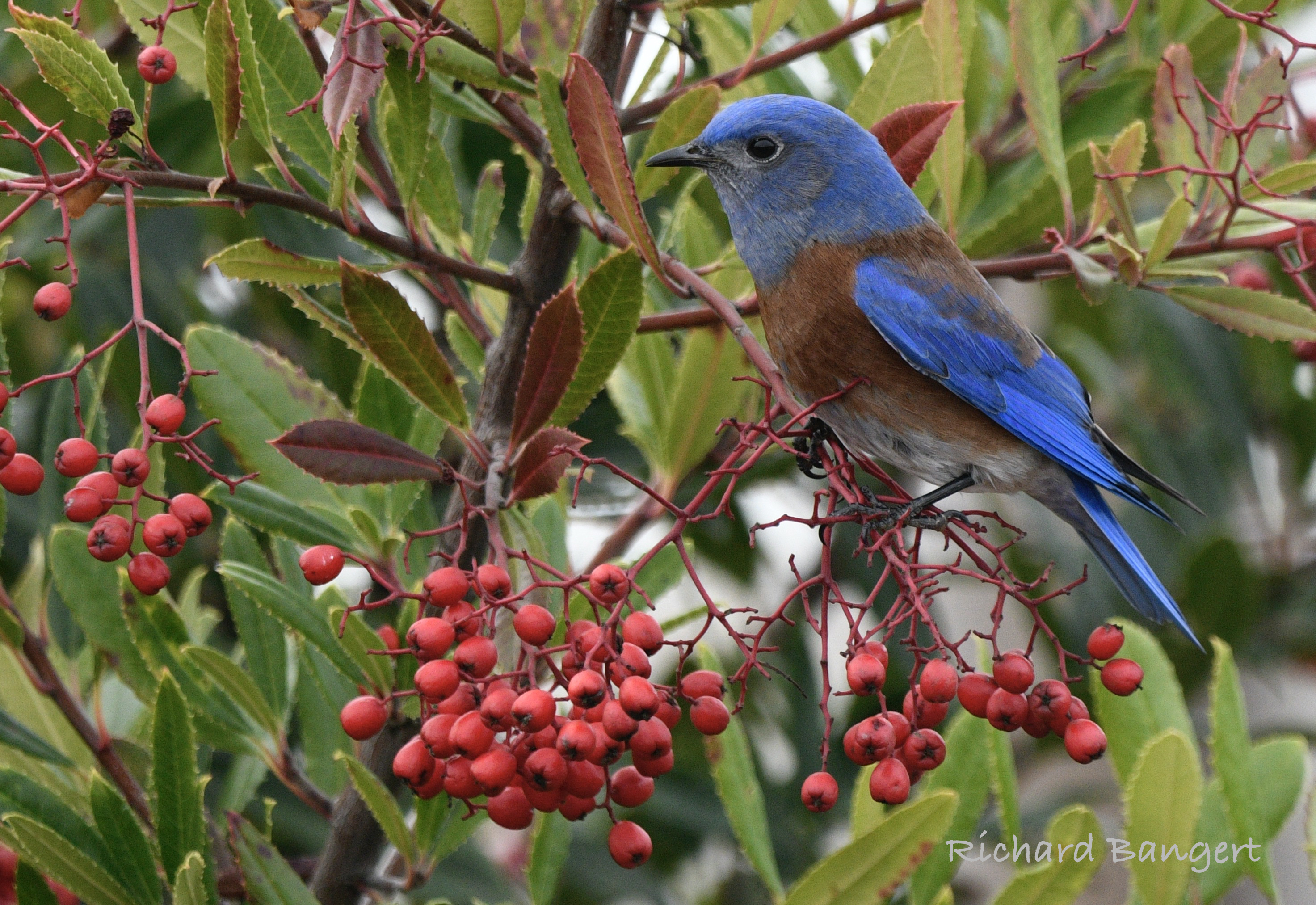
The Western Bluebird is another bird species that finds this landscaped area attractive but later in the year when the bright orange berries appear on the pyracantha bushes.
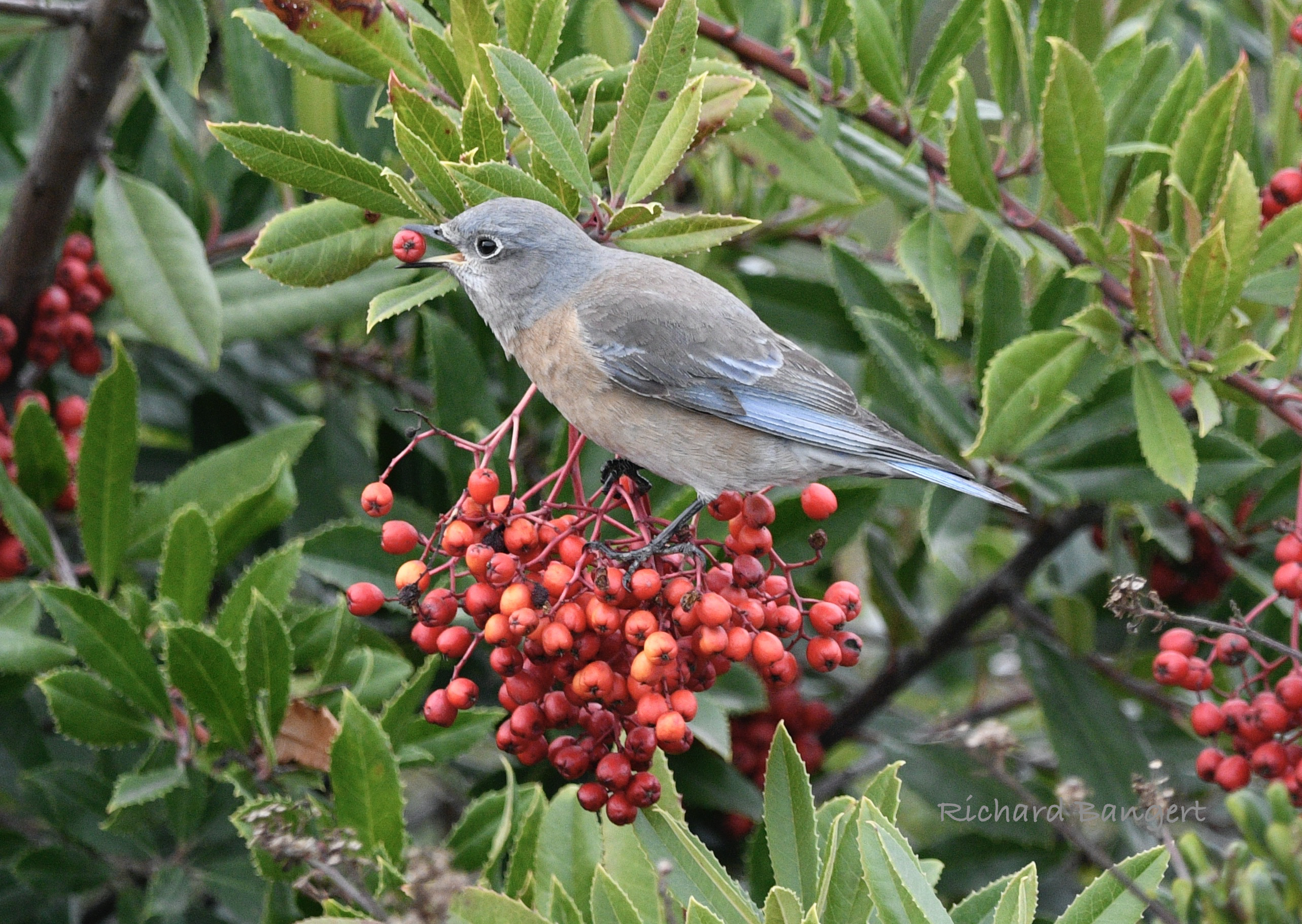
Western Bluebirds, female above and male below, on pyracantha bushes next to Encinal Boat Ramp in late Fall 2022 .
This simple landscape shows the value of planning for the needs of wildlife throughout all the seasons.
Originally published on the Alameda Post.
 Alameda Point Environmental Report
This article is a great example of how a small, landscaped area can provide an important habitat for wildlife throughout different seasons. It’s wonderful to see nature being incorporated into everyday spaces.
LikeLike