
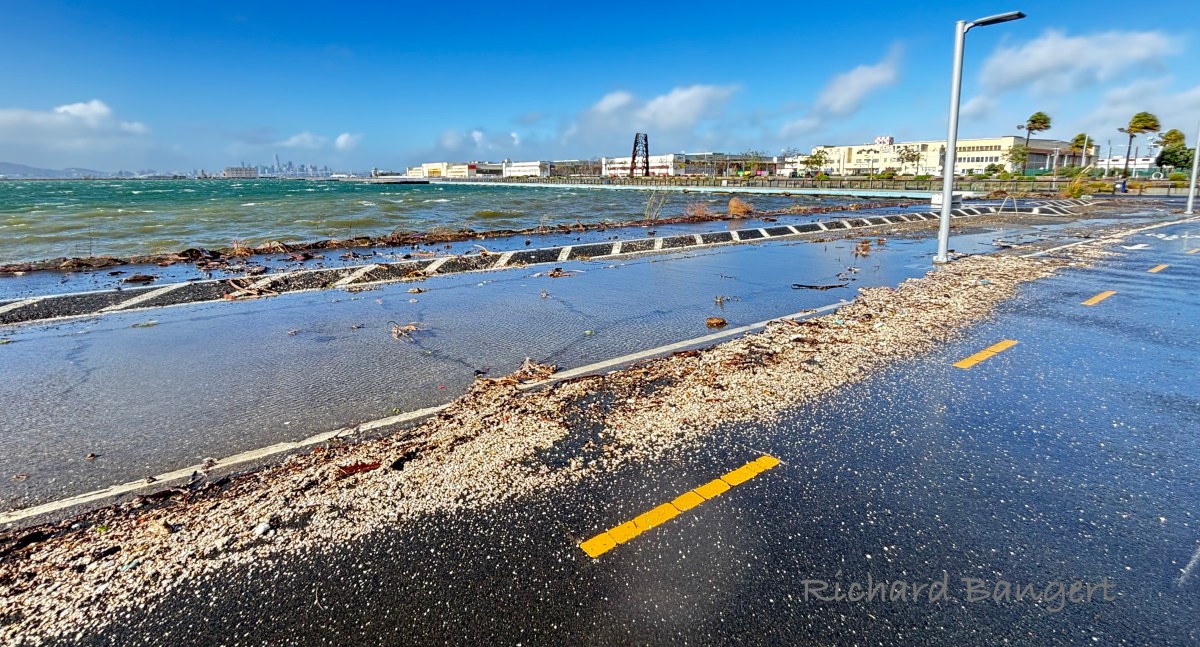
A deluge of plastic trash, including Styrofoam pellets, was heaved onshore at Alameda Point during high-tide storms.
On Saturday and Sunday, December 14 and 15, King Tide storms managed to flush huge amounts of plastic pollution out of the Bay and onto land. In some areas, such as along the paved trails on the ferry terminal side of the Seaplane Lagoon at Alameda Point, the storm reminded us that we have a huge plastic pollution problem right here in San Francisco Bay.
Possibly the worst plastic contaminant of all is polystyrene, commonly referred to by the trade name Styrofoam. Styrofoam breaks down into microplastics that do not biodegrade and can be ingested by marine life.
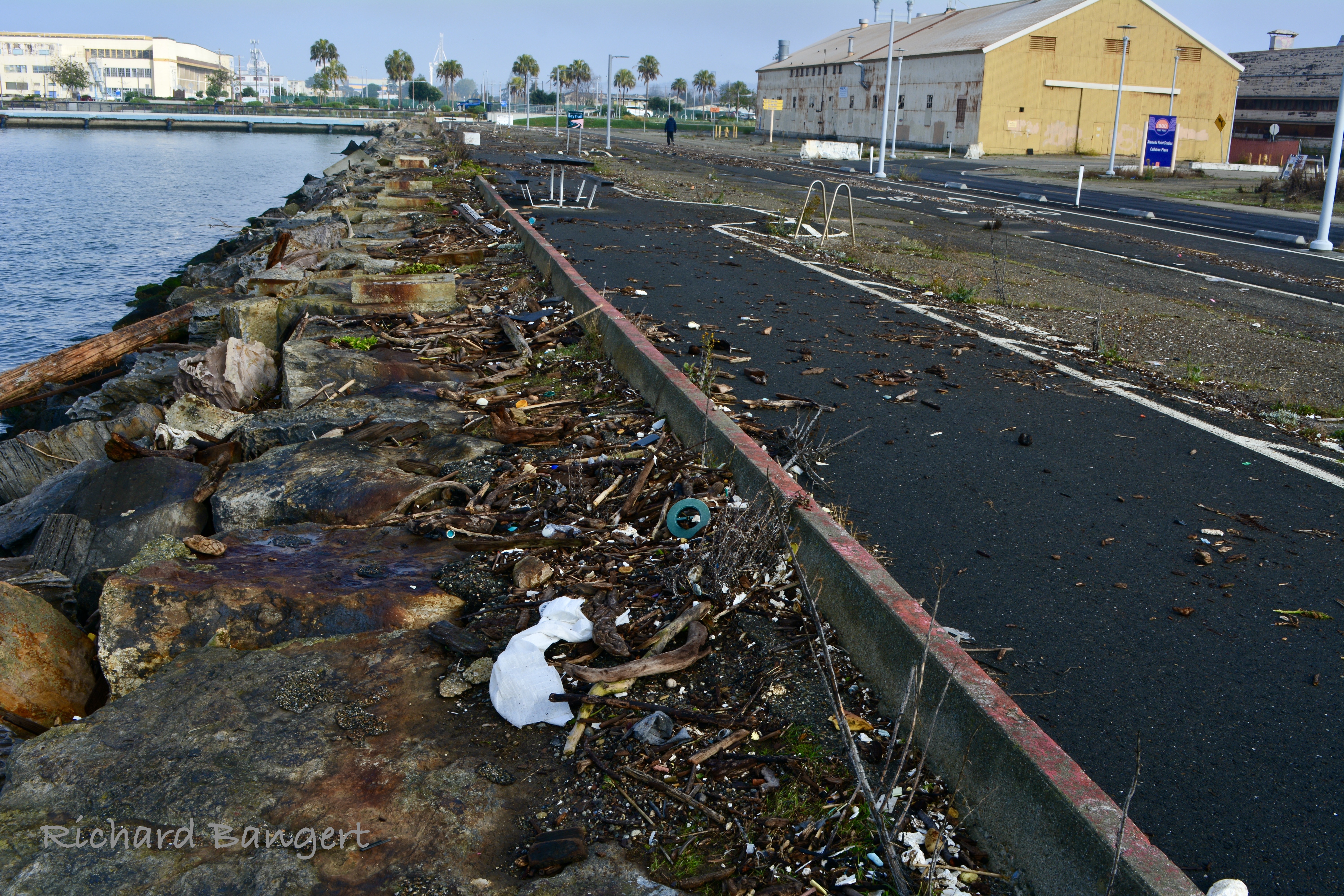
The sheer scale of the pernicious problem of degrading Styrofoam products in our waterways was displayed like a communique from Mother Nature saying, “Here’s your garbage back.” It will likely require a vacuum truck to suck it all up before it ends up back in the water.
There are two types of manufactured polystyrene products. One is used for food containers, the other for a variety of uses.
Much focus has been on stopping Styrofoam pollution caused by takeout food containers, a thinly compressed material. The problem lends itself to local and state ordinance-based solutions like those enacted in Alameda.

The pellets of Styrofoam washed up onto land during last weekend’s storms, however, was mostly the type of Styrofoam used in packing material, foam boards for insulation, ice chests, and boating-related floatation equipment. This type of Styrofoam is much harder to regulate. It is an expanded form of polystyrene that is expanded in a steam and gas process that ends up making the pellets mostly air.
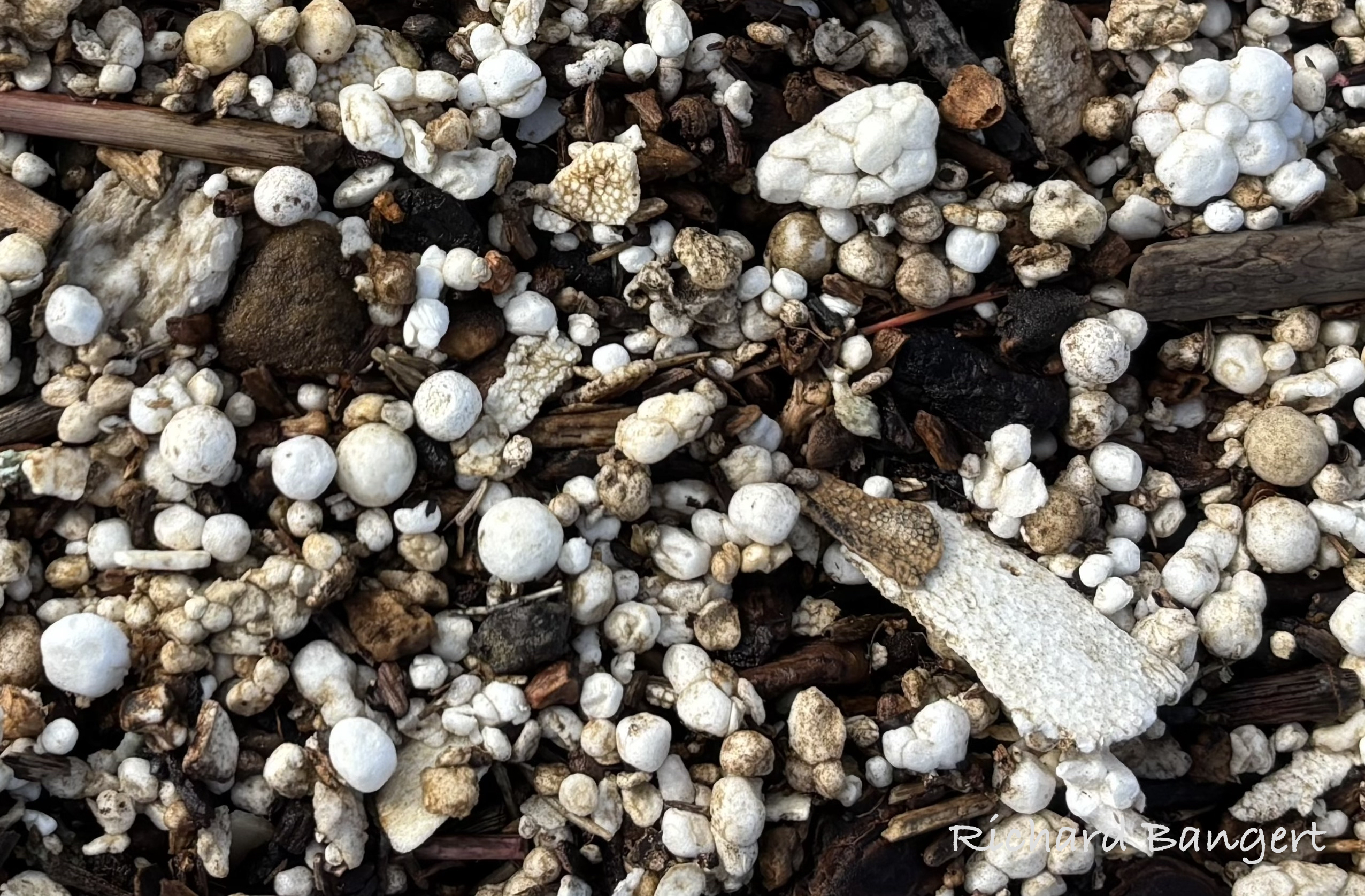
All Styrofoam breaks apart easily. It eventually ends up in tiny particles called microplastics that can take over 500 years to break down. It can leach toxic chemicals into the environment. It’s made from petroleum, is mostly air and, therefore, is difficult to recycle.

Also, among the human litter displayed along the shoreline is the more common hard plastic found in everyday consumer products that missed its chance to be recycled. Separating out the colorful plastic gumbo from the woody debris is a near impossible task.


A shorter version of this photo essay was published in the Alameda Post.
 Alameda Point Environmental Report
Well done! We were out on AWR for Christmas Bird Count and of course encountered similar flotsam line of plastics some 20 feet from shore. Rip rap was also lifted and replaced leaving gaps for continued erosion to happen. It is hard to imagine the miles of shoreline that look like these images, but we know they exist. I really like the language you use. “Gumbo” is a good word. I’m just letting you know how much I appreciate you.
Leora
LikeLike
That is a lot of Styrofoam pellets! Do you think they originated from the port?
LikeLike