

It is no secret that the only way for the city to build the necessary new infrastructure at Alameda Point is by selling its property. Nevertheless, city leaders drag their feet, unable to let go of the broken strategy of leasing buildings to startup companies. It does not matter how promising or green a business is. Leasing will never pay for infrastructure.
Yet Building 11, a valuable hangar that sits at a key intersection for surrounding infrastructure upgrades, has been listed for lease rather than for sale. It is indicative of the city’s lackadaisical approach for redeveloping Alameda Point.
The current pace of infrastructure replacement has barely kept ahead of inflation and, if it continues at this pace, it will be another 40 to 50 years before all the new infrastructure, including a levee system, is in place. This could mean that one day, long before 40 years from now, Alamedans will likely be asked to pass an infrastructure bond so that the city can fulfill its responsibility to provide the promised new infrastructure.
Thanks for memories, but time to move on
When the Navy base closed in 1997, the city began chasing the dream of having cutting-edge startup companies blossom in some of the old buildings, creating jobs, and eventually becoming successful enough to purchase the buildings. Unfortunately, leasing as a transitional strategy has fared poorly over the intervening 27 years.

A few of many examples come to mind, not to mention other hangars being leased on Spirits Alley.
The Alameda International Electric Vehicle Exposition was staged at Alameda Point in 1998 with great fanfare. It was cohosted by CALSTART, whose mission was to jumpstart clean transportation technology by providing a shared work-space hub for 14 different business startups in Hangar 20 at the end of Monarch Street. A high-level federal delegation and local officials, as well as base workers and the general public, showed up for the lease-signing ceremony, according to this archive article. The enterprise was short-lived, however, and today the hangar is leased to Michaan’s Auctions, which could easily purchase that property.
There was also great fanfare in 2015 at the lease-signing ceremony for the promising electric powertrain company Wrightspeed at the Building 41 hangar across the street from Almanac Brewery. The mayor and city manager rode around the tarmac in an electric truck. “Wrightspeed’s relocation to Alameda Point is part of the trend that is fueling Alameda’s continuing growth as a hub of innovation in the alternative energy and advanced manufacturing sectors,” said City Manager John Russo in a January 20, 2015 company news release. “Moving to Hangar 41 will facilitate Wrightspeed’s creation of 280 new Bay Area jobs by 2018.” The company folded in 2023, leaving the contents of the hangar for the city to sell.
One of the most highly celebrated green tech companies was Makani, with their flying energy kite. You may have seen the novel aircraft being tested at Alameda Point. Makani’s energy kite showed promise in 2006 when they signed a lease for part of the Air Traffic Control Tower, then added the Building 11 hangar across the street after being acquired by Google’s experimental division. In February 2020, Google’s parent company Alphabet shut down Makani. The company said, “Despite strong technical progress, the road to commercialization is longer and riskier than hoped,” according to Wikipedia.
Wrightspeed and Google/Makani both had options to buy their buildings, a clause that turned out to be worthless and placed the future of Alameda Point infrastructure in their hands, not the city’s.
City repeating the past, expecting different results
Vacant Building 11, Makani’s former digs, is a highly desirable commercial and light-industrial building with a clear span roof and a carbon-free electrical supply that is four times the capacity that is typical for a building this size. But rather than seek out a buyer who might potentially offer around $20 million, which could be used for new street infrastructure, the city has instead been negotiating a lease.
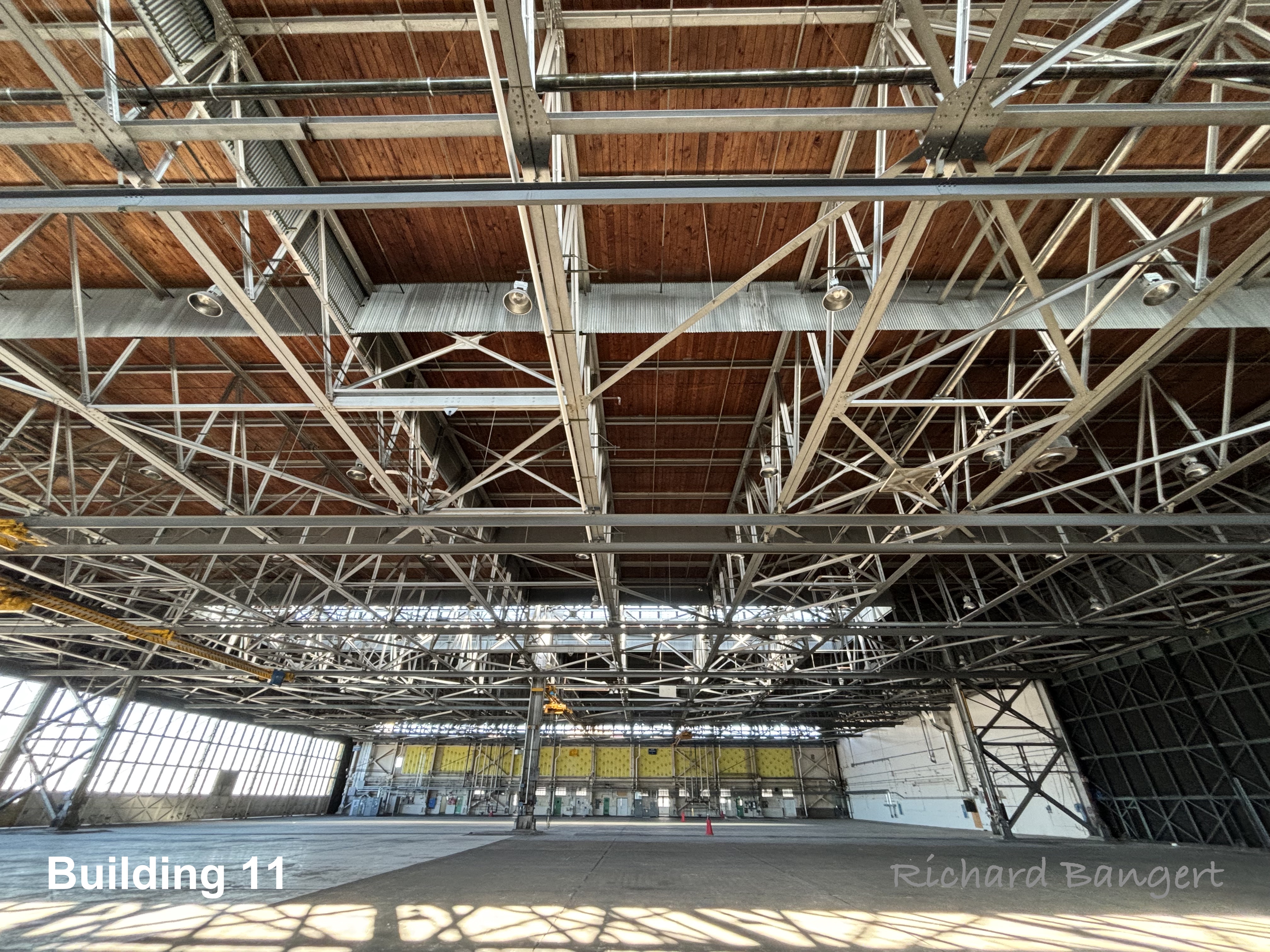
They first tried to lease Building 11 to Science Corp., a medical device company, but that didn’t pass city council approval due to animal testing. Now they are negotiating a lease with another startup company called Wisk Aero, whose parent Boeing could easily afford to purchase the building.
What is city staff’s rationale for again rolling the dice that a startup will be successful and buy the building some day? They first want to sell a different building at the other end of the street once occupied by Wrightspeed. But the Navy still owns that building due to a thorny cleanup issue. The city one day (who knows when) wants to use those sale proceeds to fund infrastructure on the streets next to Building 11. Supposedly this will make Building 11 worth more before selling it. Unfortunately, this strategy involves leasing the building for another 10 years, while aging infrastructure deteriorates and costs escalate.
Second, the infrastructure on the streets next to Building 11, and those nearby, could be funded by the sale of this building. Modern streets could be built where sideshows are now staged. If Boeing bought (rather than leased) the building to house its startup company Wisk Aero, which expects to produce autonomous air taxis, and the company goes belly up, the building will be worth more than what Boeing paid for it, after its sales proceeds have funded new streets.
Instead of trying to get this property off the city’s books and onto the tax rolls, with sales proceeds funneled into building new streets and utilities, the city wants to continue the risky strategy of tying Alameda Point’s future to another new company that has posted no profits.
Infrastructure replacement treading water
Some recent numbers help make the point that the city’s pace of selling property is unsustainable. In 2014, when the Alameda Point Master Infrastructure Plan was adopted, total cost of new infrastructure was estimated at a little under $600 million. By March 2023, just nine years later, the city estimated the total cost had risen to $700 million in its Leasing and Selling Presentation. During this same time period, commitments have been made to fund roughly $130 million in new infrastructure, barely outpacing inflation.
With a scant inventory of valuable buildings to sell to fund infrastructure, the city is again planning to forfeit the opportunity to sell Building 11 for the foreseeable future. Continuing on this road of handpicking tenants is a luxury the city can no longer afford. It’s time to start aggressively selling more property and handpicking buyers, like the company that purchased and renovated Building 8 into the General Storehouse (see photo below).

The city should stick to providing services, not micromanaging a business park.
Originally published on the Alameda Post.
 Alameda Point Environmental Report