
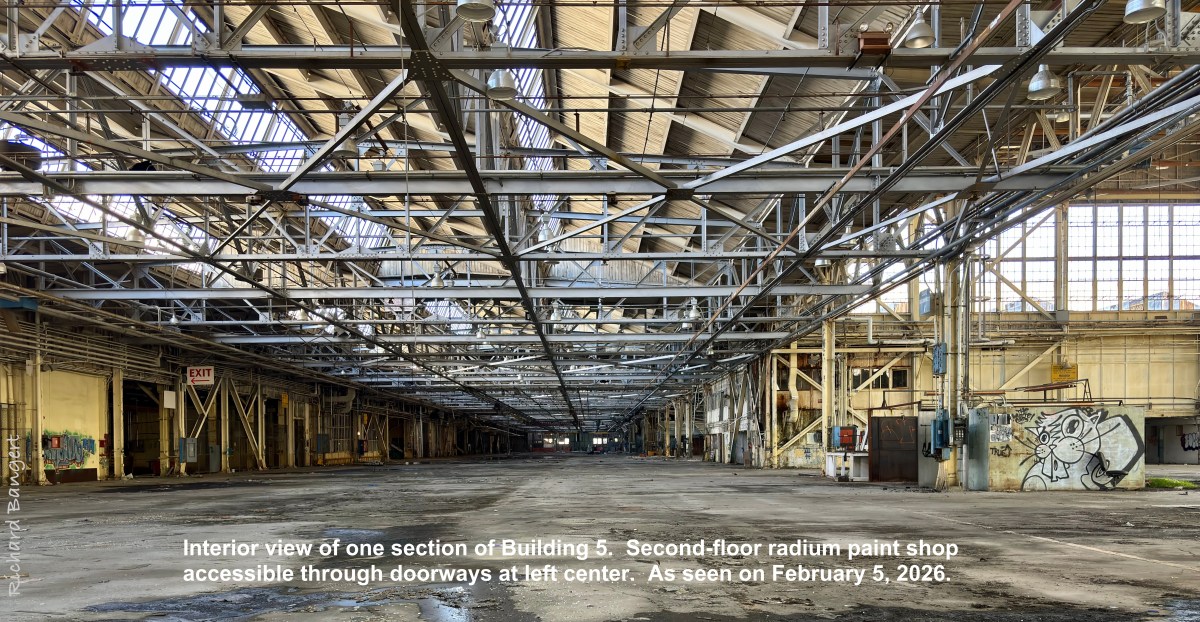
Recent state guidelines for remedial cleanup of radium-226 at closed Navy bases have affected completing work at Alameda Point and other bases across California.
Since 2019, the Navy has not been able to determine the cleanup goal for radium-226 to allow for unrestricted use of facilities. Repeated attempts by the Navy to get an answer suggest that the new California Department of Public Health (CDPH) standard is based upon the location of the site rather than the risk to human health. CDPH is a sister agency that provides the California Department of Toxic Substances Control (DTSC) with expertise on radiological cleanup issues.
In order to achieve satisfactory cleanup, CDPH has changed how it determines the goal for the allowed safe amount of radium in building structures, saying it should be comparable to the amount naturally found in nearby soil, according to a February 2025 letter to DTSC from now retired Gregory C. Preston, former Director of the Navy’s Base Realignment and Closure (BRAC) Program. This has led to “inconsistent application of cleanup criteria,” resulting in “property transfer delays and unnecessary costs,” according to Preston.
Radium is a naturally occurring element found in soil that varies in amount from place to place depending on underlying geology and historic erosion of rocks. The soil at Alameda Point consists mainly of sand and silt dredged from the Bay to construct the Navy base. Having a cleanup goal pegged to soil at Alameda Point would mean a goal artificially more stringent than the established and agreed upon CERCLA Remedial Goal, according to Preston.
For decades CDPH had agreed to accept the U.S. Environmental Protection Agency (EPA) protocol for determining the health risks of getting cancer from radiation exposure. The human health risk determines the level of cleanup required at federal Superfund sites, such as at Alameda Point. Guidelines for cleanup are spelled out in the federal law known as CERCLA (Comprehensive Environmental Response, Compensation, and Liability Act).
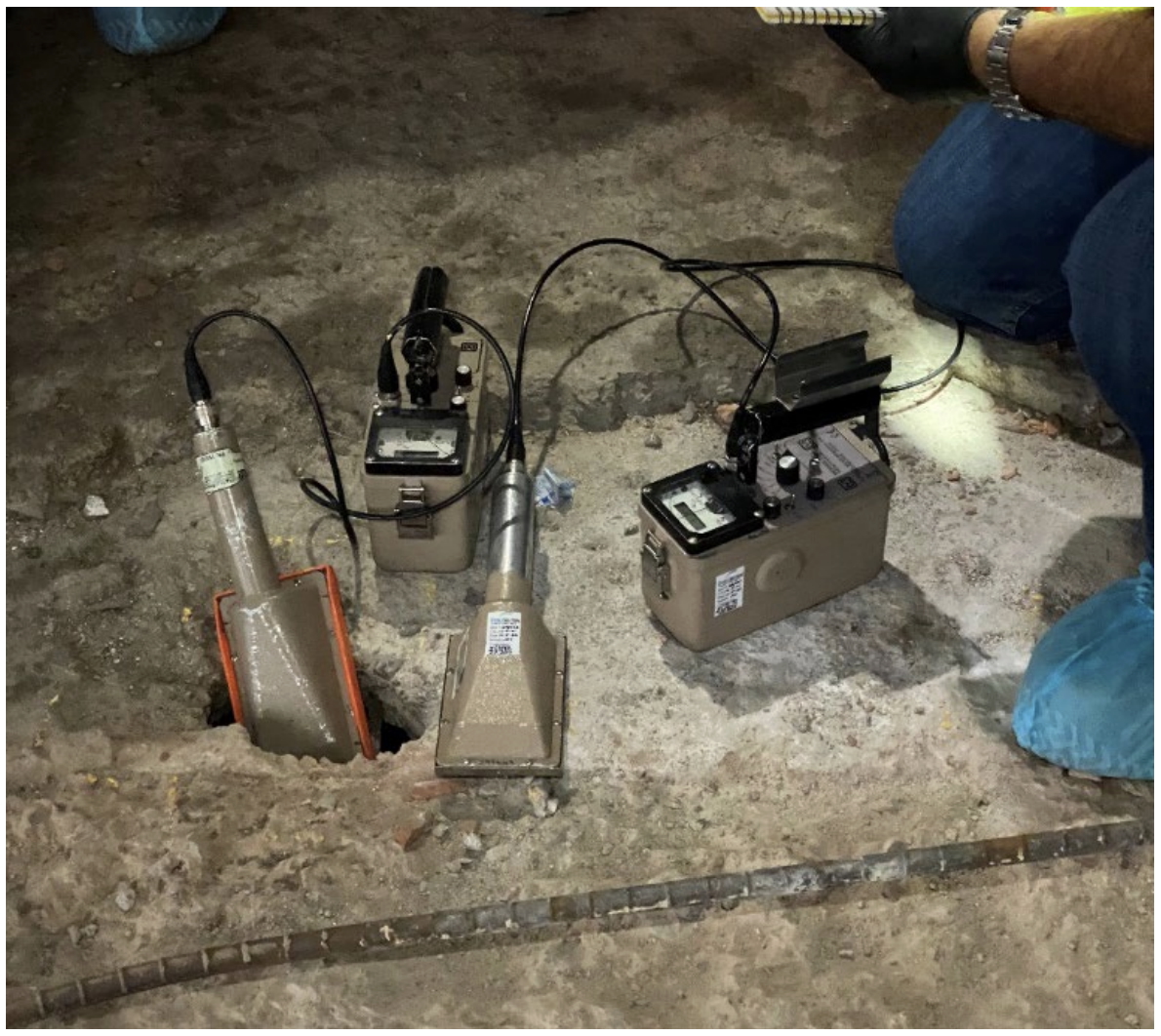
in August 2022.
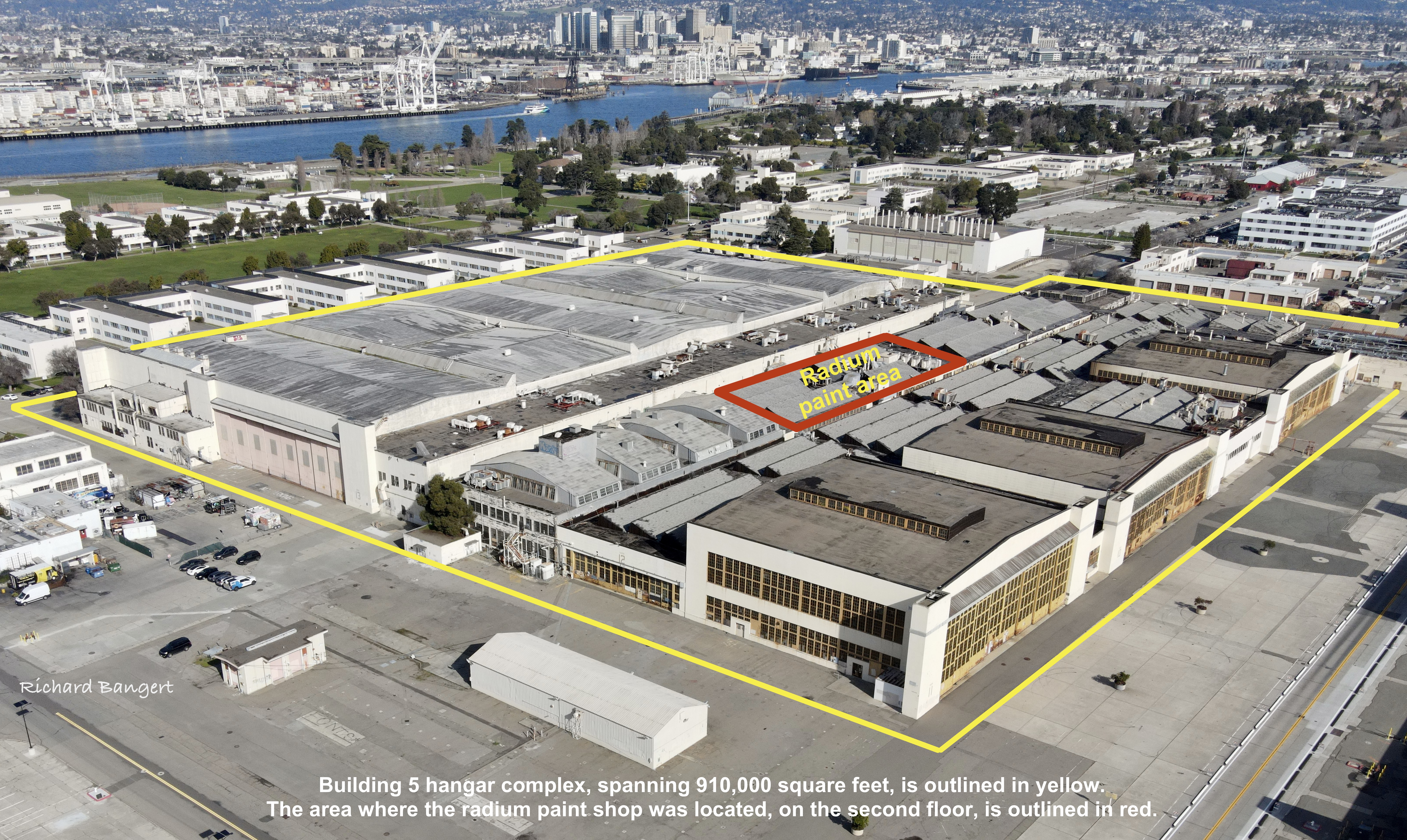
Navy contractors have carried out numerous radium-226 cleanup actions in two buildings at Alameda Point where glow-in-the-dark instrument paint containing radium-226 was handled. Cleanup in Building 400 was deemed completed in November 2018 and made available for unrestricted use. Soon thereafter, however, CDPH decided that the agreed upon cleanup criteria no longer applied to the building across the street, Building 5 (shown below). The agency has yet to provide the Navy with a numerical goal to reach so that the Navy can “provide assurances to future property owners that the radiological remediation is complete,” explained Preston.
The uncertainty also effects Treasure Island. “Although nearly 70% of Treasure Island’s sites have successfully undergone cleanup and transfer through coordinated efforts, the land conveyance for Site 12 … is now approximately six years overdue and currently stalled,” San Francisco’s Deputy City Administrator Jennifer Johnston stated in a December 2024 letter to the Department of Toxic Substances Control. “This delay is not due to new environmental discoveries, but rather the lack of specific, actionable guidance from CDPH on achievable remediation standards.”
Navy’s radium paint cleanup at Alameda Point spans more than a decade
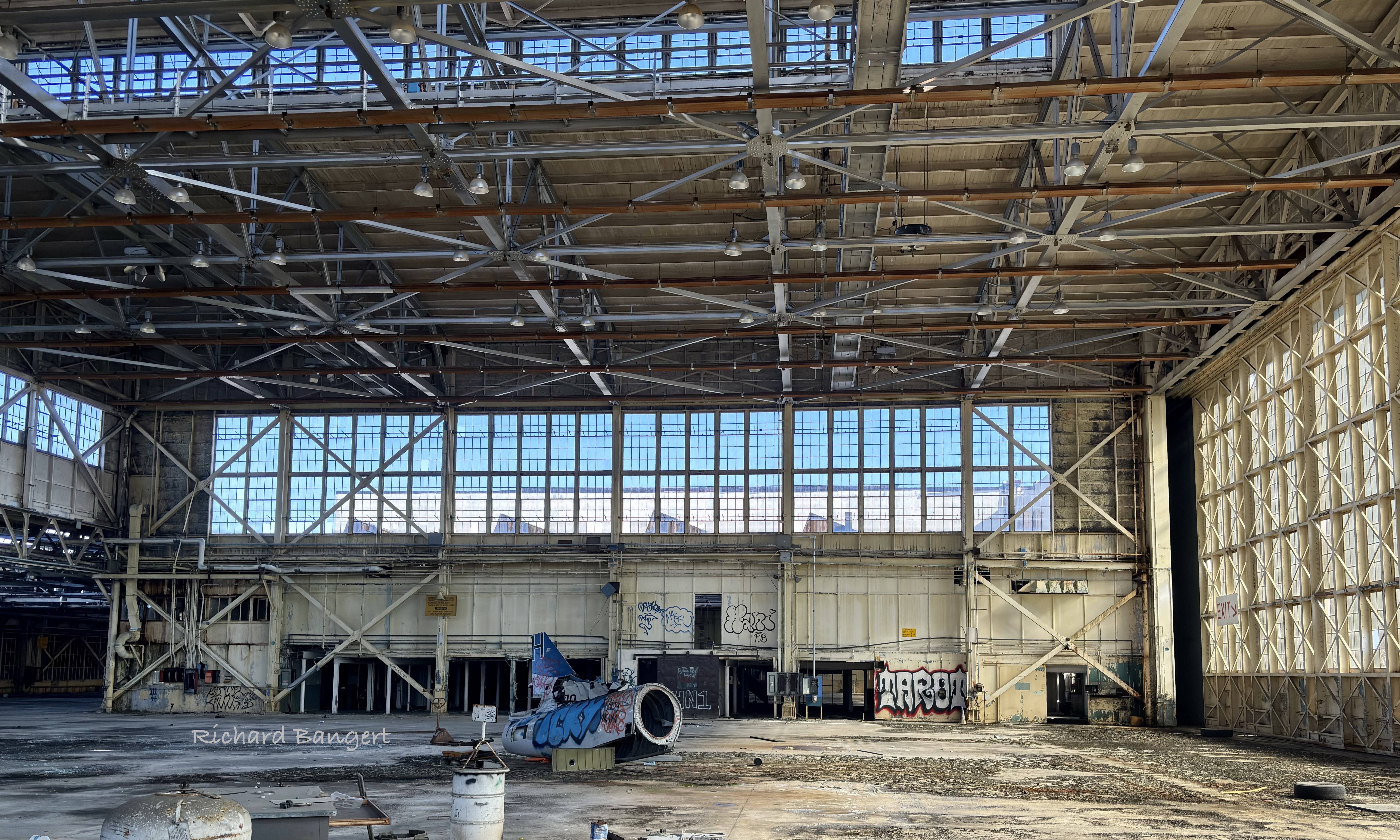
Sliding door on right faces West Tower Avenue. As seen on February 5, 2026.
As for Building 5 at Alameda Point, the Navy had been following the “actionable guidance” in effect since 2012 when it performed an extensive survey of floors and walls in the radium paint shop areas, which were located in a section known as the mezzanine in the middle of the building. The guidance, or goal, was clearly delineated in the Radiological Characterization Survey Report in the form of a numerical limit on scanner readings. “These limits, or release criteria, refer to standards for release of Building 5 from radiological controls, allowing unrestricted use,” states the survey’s report. Above that limit meant the specific locations were marked for subsequent removal of radium-impacted surfaces. Those below the limit required no further action and were scratched off the list.
Navy contractors returned on two occasions to remove contaminated surfaces and perform follow-up scanning. An entire non-structural brick wall was removed and numerous wall and floor surfaces were stripped of coatings. Only a handful of areas, such as a second-floor concrete floor with holes where pipes once passed through, were marked for a subsequent and final work plan.
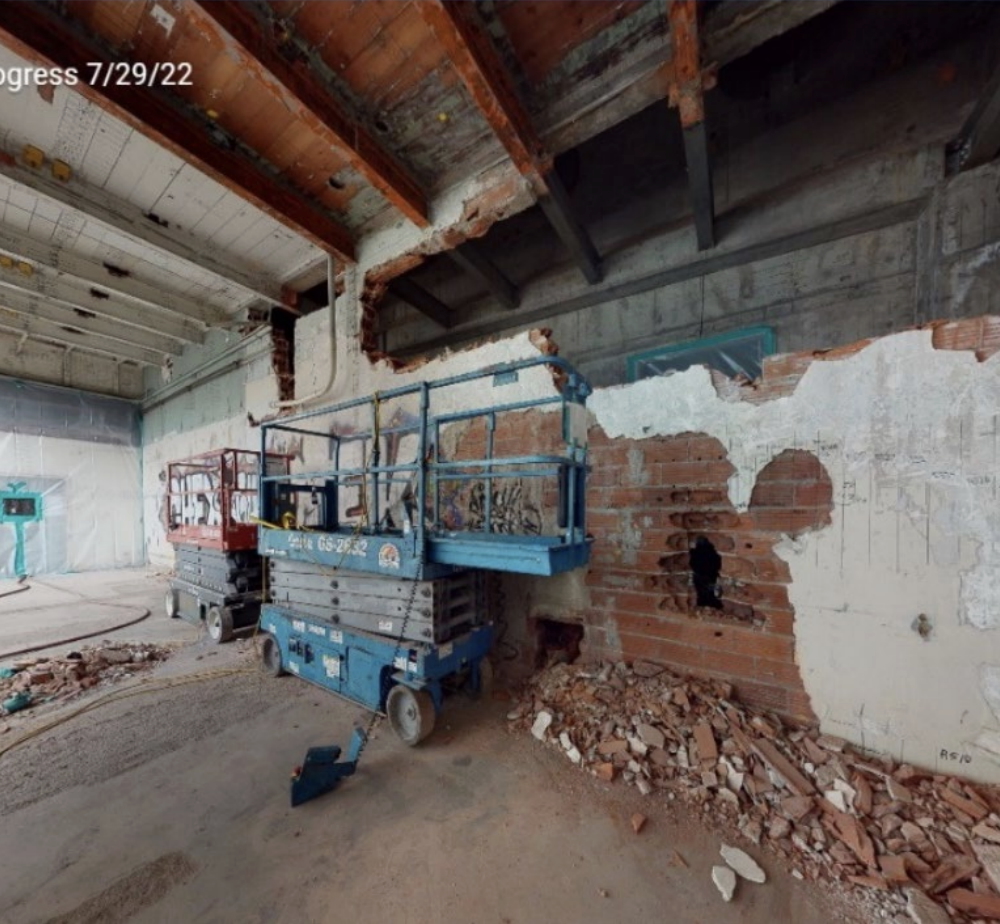
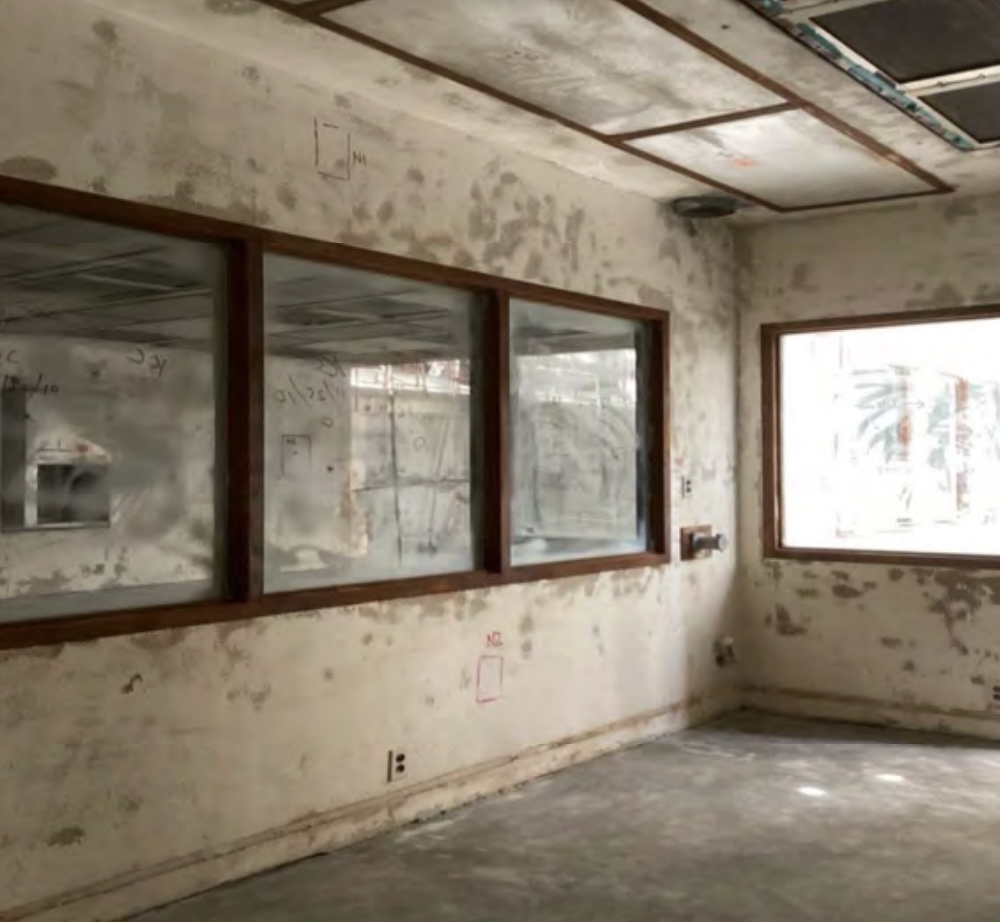
after wall and floor surfaces were stripped bare. Credit: U.S. Navy.
Current Status
The Navy acknowledges that some radiological work remains in Building 5 in its August 2024 Final Radiological Investigation Summary to DTSC on cleanup work and investigations.
When the Alameda Post asked why the remaining cleanup work in Building 5 is not happening, Russ Edmondson, DTSC Media Information Officer said, “The cleanup plan … must show a path to reduce levels of contamination below levels that are protective of human health and allow for safe occupation of the building.”
When the Alameda Post asked the Navy the same question, Dave Darrow, Environmental Coordinator for Alameda Point said, “The Navy is awaiting concurrence from the State that the satisfaction of [previously agreed to] CERCLA requirements supports that all necessary remedial action has been taken.”
Hence, the impasse between the Navy and state regulators. Without a mutually agreed-upon cleanup standard to apply, the Navy cannot complete its work and transfer the property to the City for economic development.
The State of California is the only state in which the regulatory agency lacks a specific numerical cleanup requirement for radiological contamination, according to Preston.
“The lack of a specific numerical cleanup requirement leads to lack of clarity and agreement on a path forward between the DON [Department of Navy] and the State [DTSC] to achieve cleanup of radiological constituents,” Preston’s February 2025 letter states. “It appears the State [DTSC] is unwilling to apply an appropriate framework to regulate federal CERCLA radiological cleanup actions that are protective of human health and the environment,” continued Preston. “Rather the State [DTSC] continues to attempt to apply non-applicable State regulations that impose an undue burden on future transferees and effectively prevent the DON from disposing surplus BRAC property as directed by Congress and federal law and regulation.”
Originally published on the Alameda Post.
Background story on radiological cleanup at Alameda Point is here.
 Alameda Point Environmental Report