
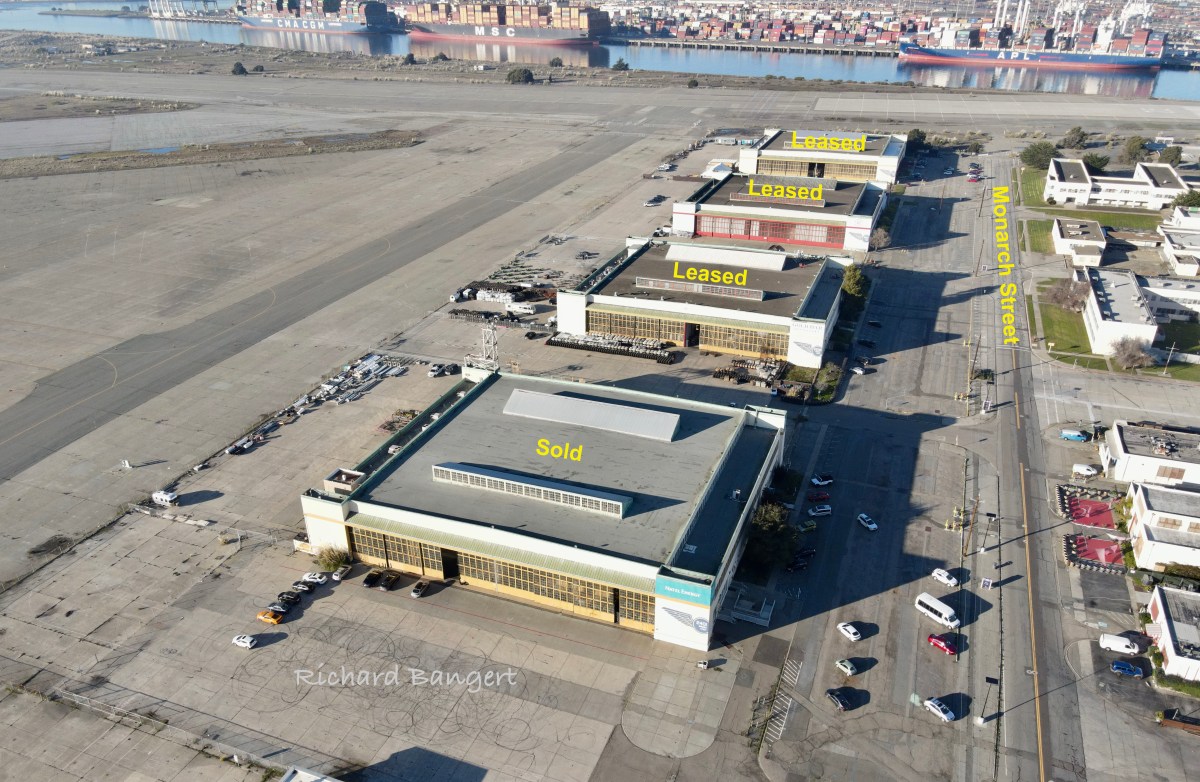
After years of the current city policy not producing the desired pace of building new infrastructure at Alameda Point, the city may change its focus from leasing to selling property.
On January 20, 2026, the City Council will hold a public workshop to discuss plans to boost property sales at Alameda Point that will, in turn, fund new infrastructure in the Adaptive Reuse Area. So far, there have been only five buildings sold in this area generating approximately $31 million, which has already been spent on upgrading some street infrastructure. Meanwhile, the total cost for new infrastructure — streets, utilities, parks, levees, stormwater basins — for all of Alameda Point has jumped from $700 million in 2020 to $840 million in 2025, according to the workshop staff report.
“Unfortunately, while costs since 2020 have escalated 20%, land and building values have not proportionately increased,” states the staff report. “In fact, it appears some values have decreased.”
The City’s current policy states that high-value buildings, such as hangars, will be held onto for their lease revenue until property somewhere else is sold that will provide funds for new infrastructure in front of these buildings. For example, the City passed up an offer in 2023 to purchase one of the high-value hangars, Building 11, for $24.9 million, according to the 2023 Keyser Marston report on leasing versus selling presented to the City Council. Instead, the staff unsuccessfully attempted to lease this hangar in 2023.
The City is now entertaining the idea of trying to sell the vacant hangar (Building 11) and the two buildings attached to it as one unit. “Several developers have toured this complex with staff and expressed a strong interest in purchasing and restoring the property,” states the report.
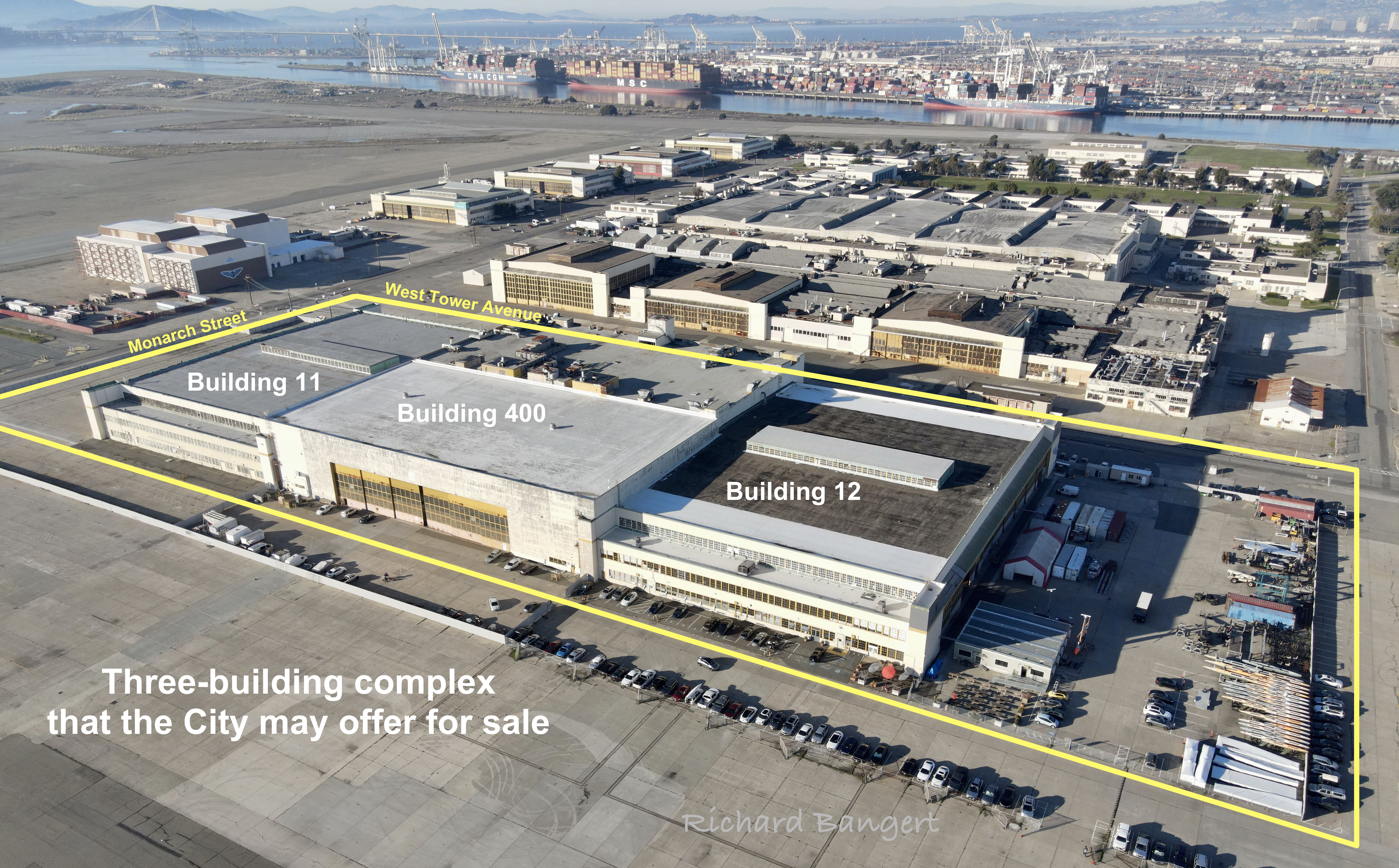
This sale could be seen as a welcome departure from the constraining effect of the current policy that says the complex should wait to be sold until adjacent new infrastructure is completed. The infusion of revenue from such a large sale would fund the completion of infrastructure on adjacent streets and so much more.
The elephant in the Adaptive Reuse Area
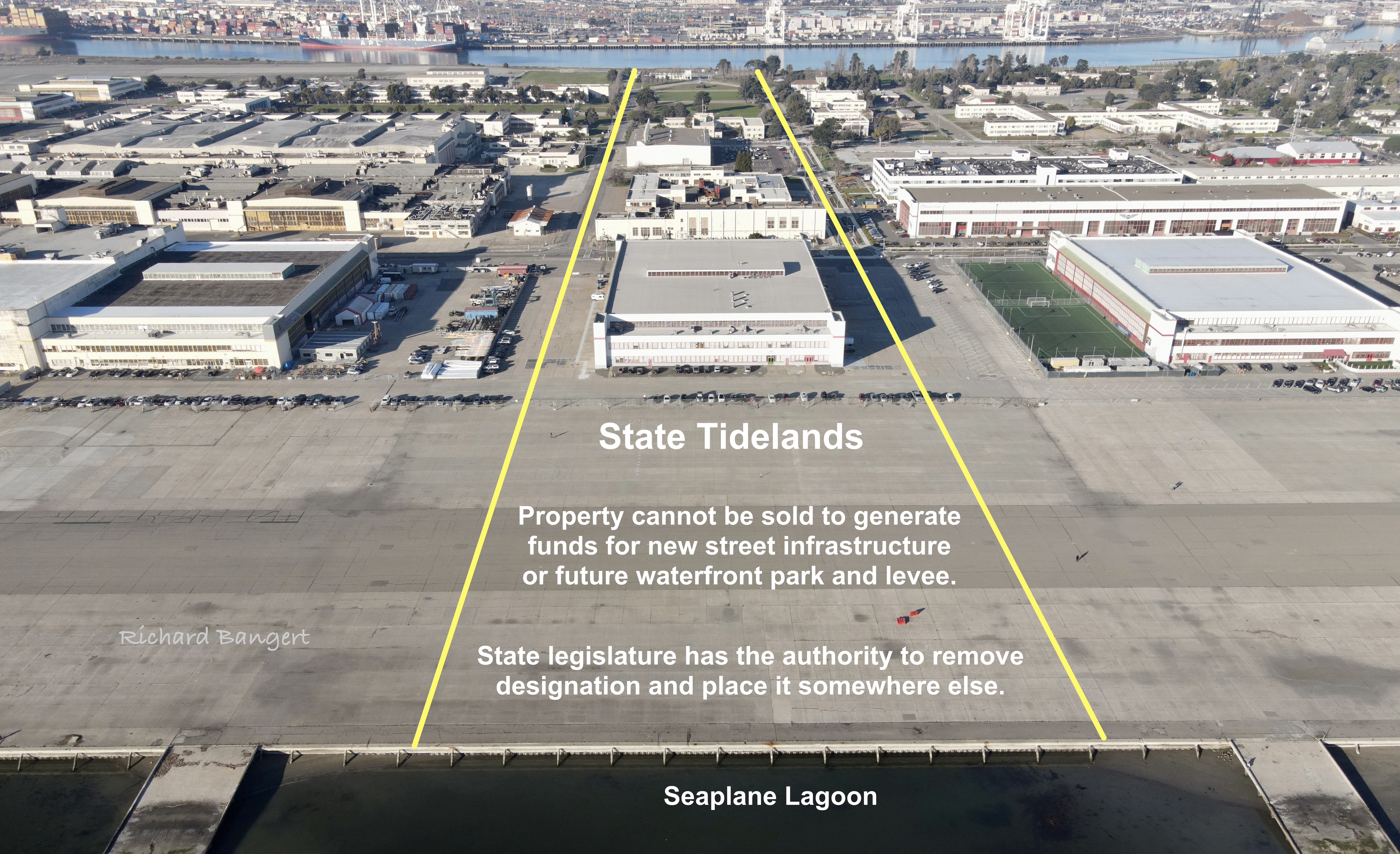
Not covered in the staff report is one of the roadblocks to achieving full infrastructure replacement – the designation of state tidelands on some seven blocks through the heart of Alameda Point. Because state-owned tidelands cannot be sold, this property will never contribute a penny toward new infrastructure. However, the state legislature designated this area as tidelands, and the state legislature can remove the designation and place it somewhere else.
In the early days of base reuse planning, it was determined that much of the future development would be constrained by being state tidelands when it left federal ownership. This prompted the enactment of a state statute that allowed for the swapping of land. Unfortunately, a strip of land dubbed the Tidelands Corridor was left intact as tidelands. The stated rationale in the statute is that it would provide interconnected public access between the Seaplane Lagoon and Oakland Estuary. The Master Infrastructure street grid will now permanently ensure such access without a special zoning overlay.
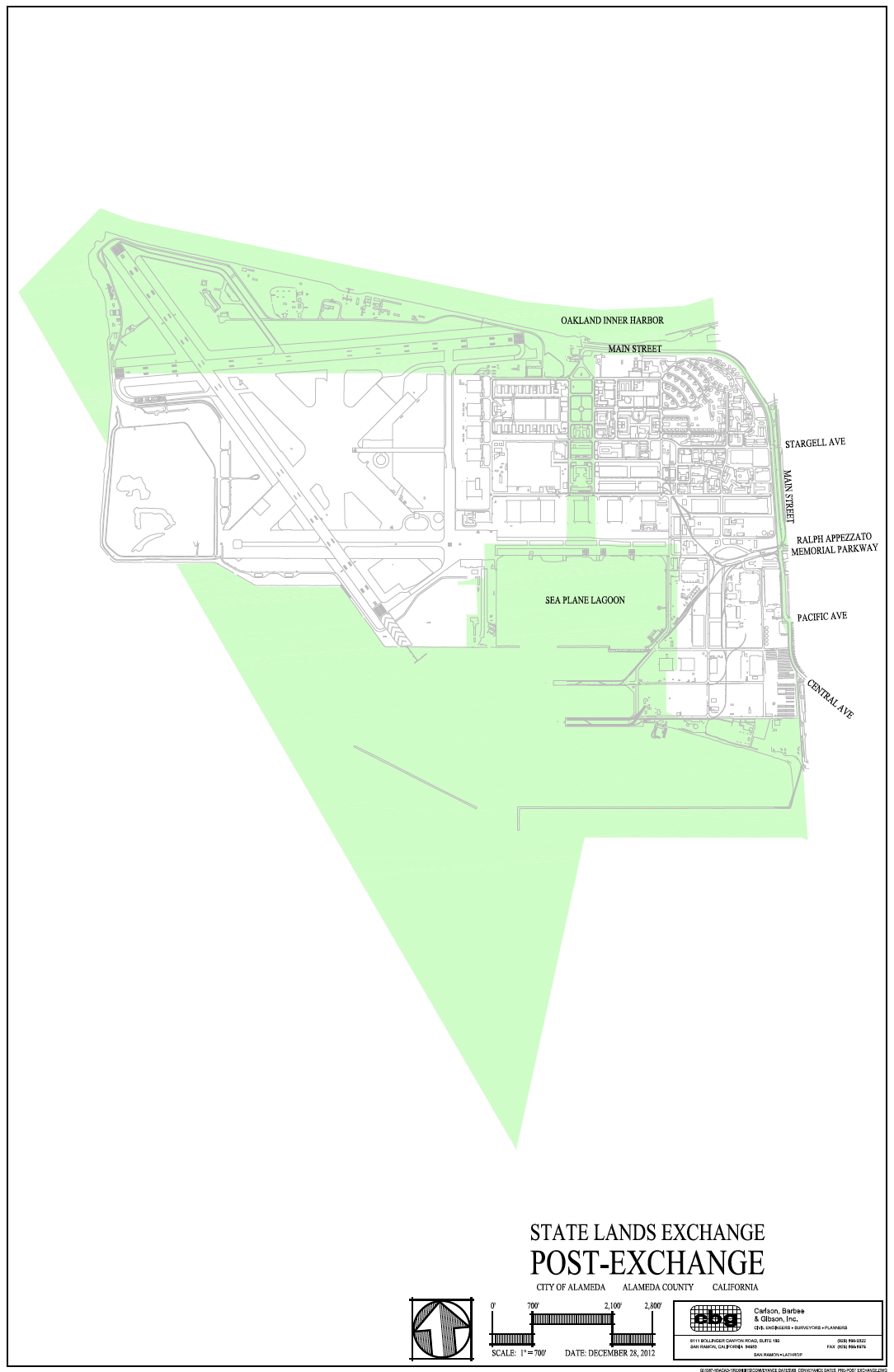
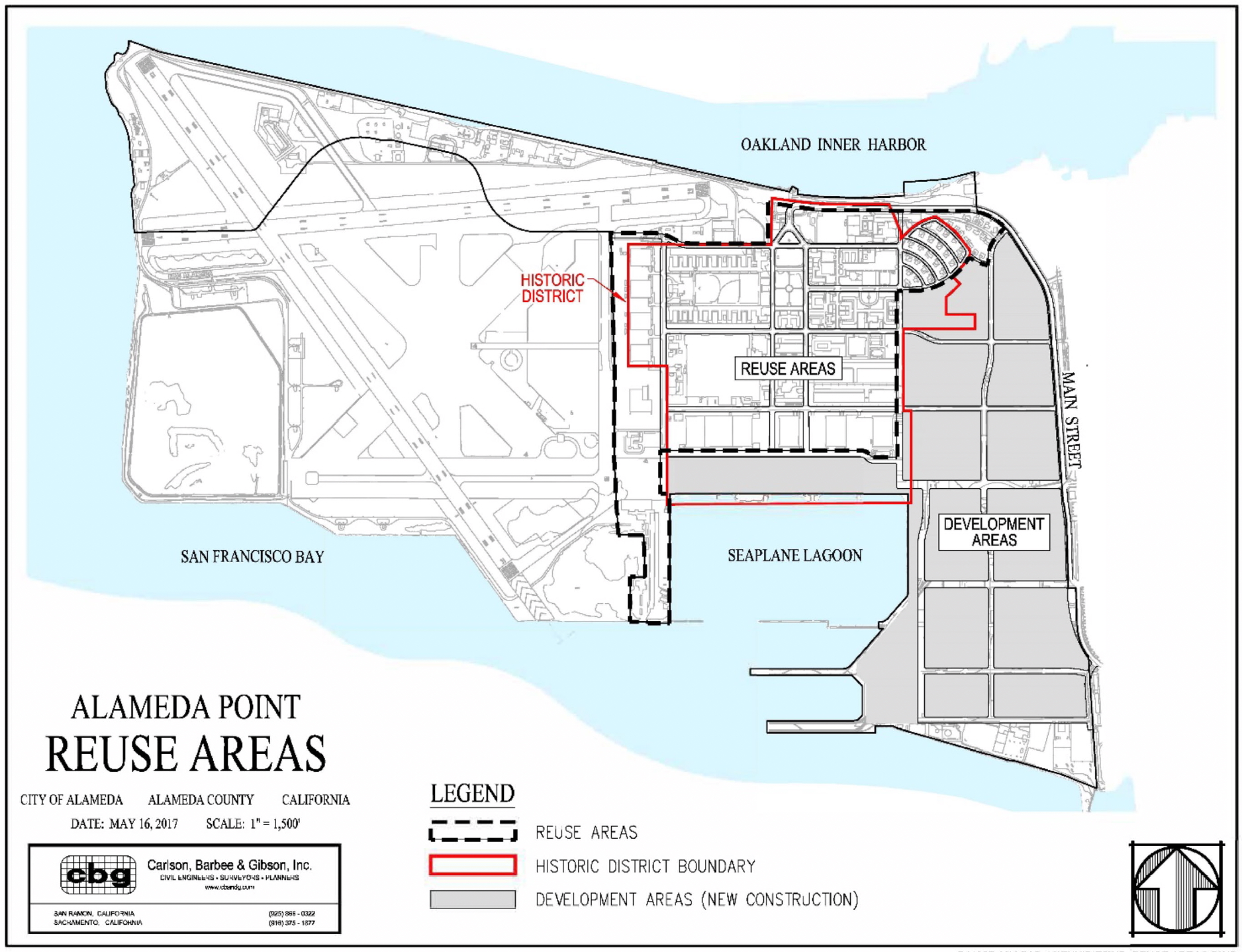
The tidelands corridor currently hosts no tidelands-compliant uses, which are supposed to be for the enjoyment and benefit of all Californians. The current non-compliant uses, such as manufacturing and municipal buildings, can continue only for the useful life of the buildings, according to the statute. So, the current fire station location, for example, cannot be one of the options for a new fire station as presented at a previous meeting, even if it is the ideal location.
Another major unintended consequence of leaving this corridor designated as tidelands is that the empty block in front of the Seaplane Lagoon has little chance of attracting investment in the tens of millions of dollars to construct something on leased land. Plus, the lack of sales revenue from selling this waterfront property will remove the logical source of funding for the adjacent section of waterfront park and associated levee.
A viable solution for the city to consider is to swap this tideland strip for other non-tideland acreage, as has been done elsewhere in Alameda to facilitate development.
Taking valuable property out of the lock box and putting it on the market as soon as possible is the only way to come close to having Alameda Point development pay for its own infrastructure.
The council workshop offers hope that policy decisions that have not panned out, or are having unintended negative consequences, will change.
Originally published on the Alameda Post.
 Alameda Point Environmental Report