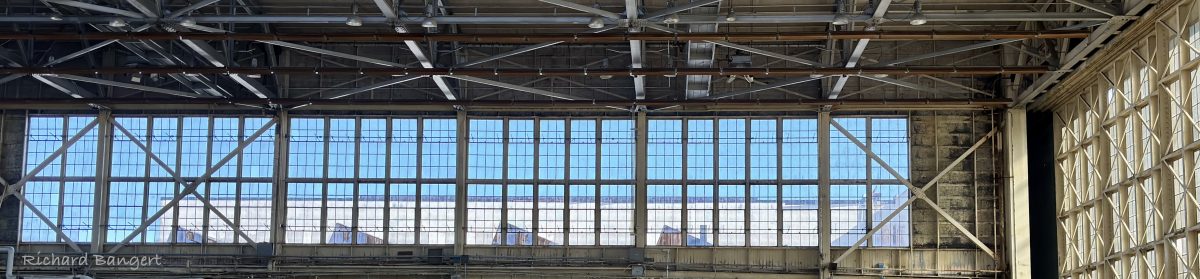

The natural world is a living art gallery. To appreciate the often intricate colorations that evolved in many cases over millions of years requires slowing down, way down, and stopping. It may even require the aid of a magnifying glass or a camera lens. Sometimes it just means being aware at certain times of the year when flowers bloom.
One of the most fascinating, common, but little appreciated, life forms are lichens, shown here in five images. With the naked eye, the details in the “Lichen Galaxy” image, for example, go unnoticed. Yet, there on the blue rock ‘sky’ of the shoreline boulder are yellow, orange, cream, and mushroom-colored lichens.

Lichens are commonly seen on rocks and trees, and appear to be a single plant. In fact, they are a combination of two organisms working together. A fungus provides the structure, protection, and water absorption, while an algae or bacteria species produces food for the lichen through photosynthesis.
In two of the images, what looks like cracked yellow paint is actually a lichen, possibly one called Yellow Map.

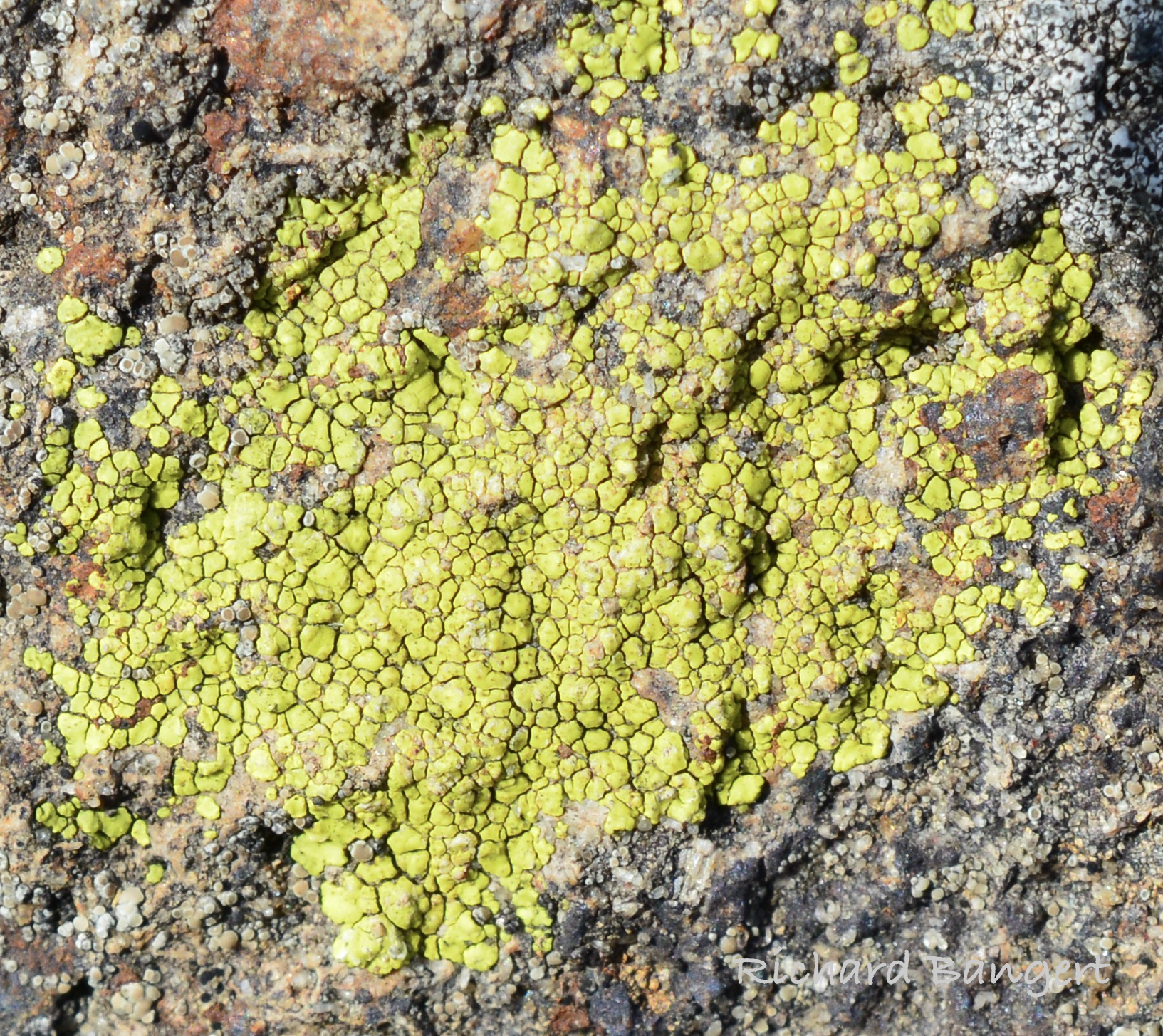
Science Fact: The vibrant orange and yellow hues in some of the lichens are the result of pigment adaptation conferring ultraviolet light protection going back to the Late Cretaceous period 66 to 145 million years ago, according to Wikipedia. The pigments enabled this group to expand from shaded forest habitats to harsher environmental conditions of sunny and arid ecosystems.

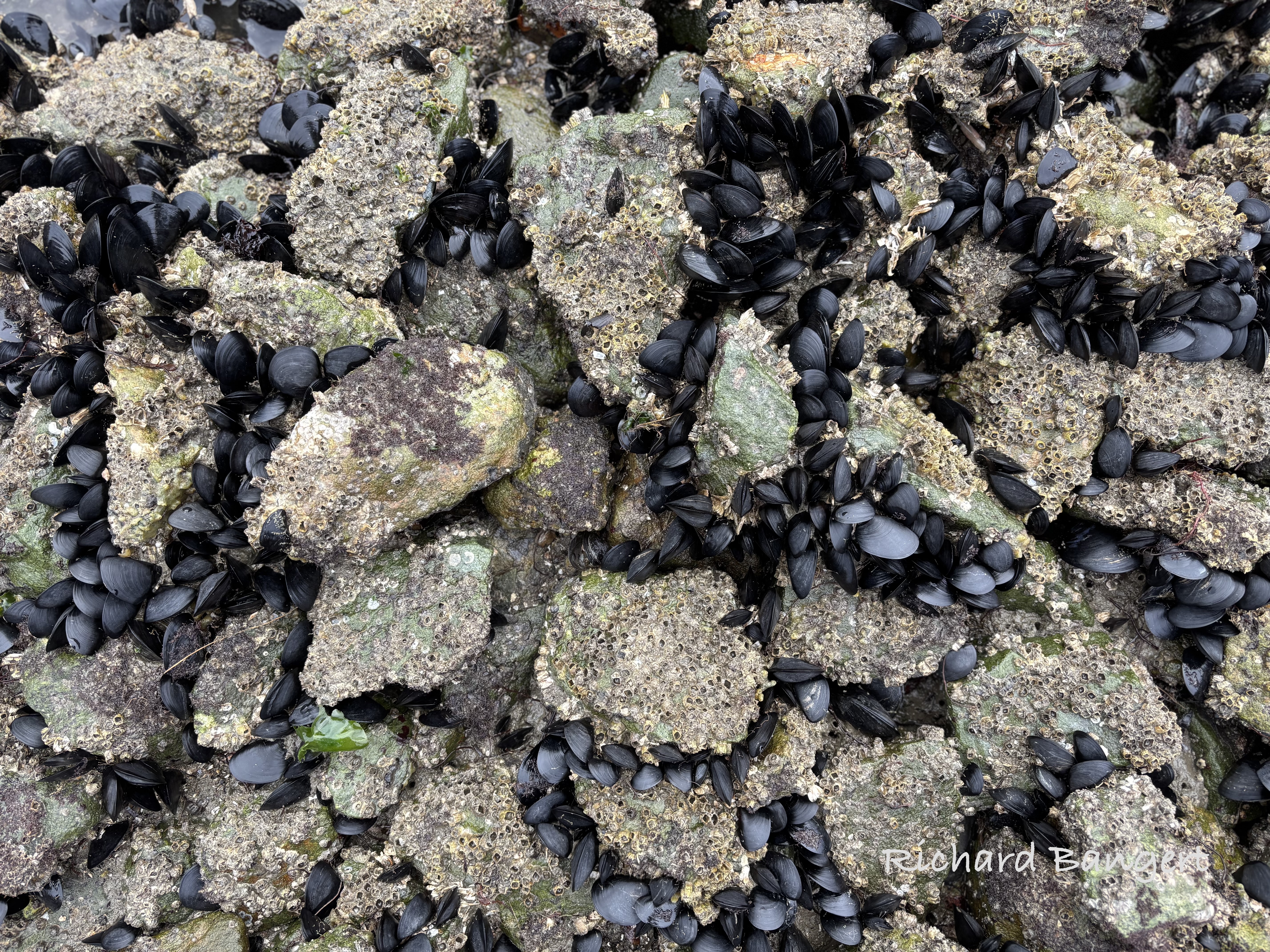
The “Mussel Necklace” image shows mussels filling every nook and cranny between barnacle-covered rocks at very low tide near the Bay Trail and beach. Mussels and barnacles, when visible and above the waterline, appear to be lifeless, but when submerged they feed on micronutrients in the water that build their hard shells and sustain life.
Two images show white barnacles on the sea wall of the Seaplane Lagoon at low tide. When submerged, the inner shell opens and tiny hair-like tentacles come out to begin grabbing phytoplankton and other nutrients that serve as food.


Other images show what happens after nature wears the mussels and barnacles into bits and pieces. Gulls can often be seen repeatedly hovering above pavement and dropping a mussel in order to crack the shell to get at the morsel of food. Black Oystercatchers simply trudge along over rocks at low tide looking for a mussel with enough opening in the shell to jab in their bills and break it open to get at the food.


It is unknown, to this writer anyway, exactly what breaks up the barnacles into little pieces – perhaps they just fall apart when they die. But there they are, scattered about on the ramps of the Seaplane Lagoon like broken bits of fluted ceramic vases (details visible in close-up image) among the bits and pieces of blue-pigmented mussel shells, slowly being weathered and worn back into their base mineral calcium carbonate that will re-enter the marine ecosystem.

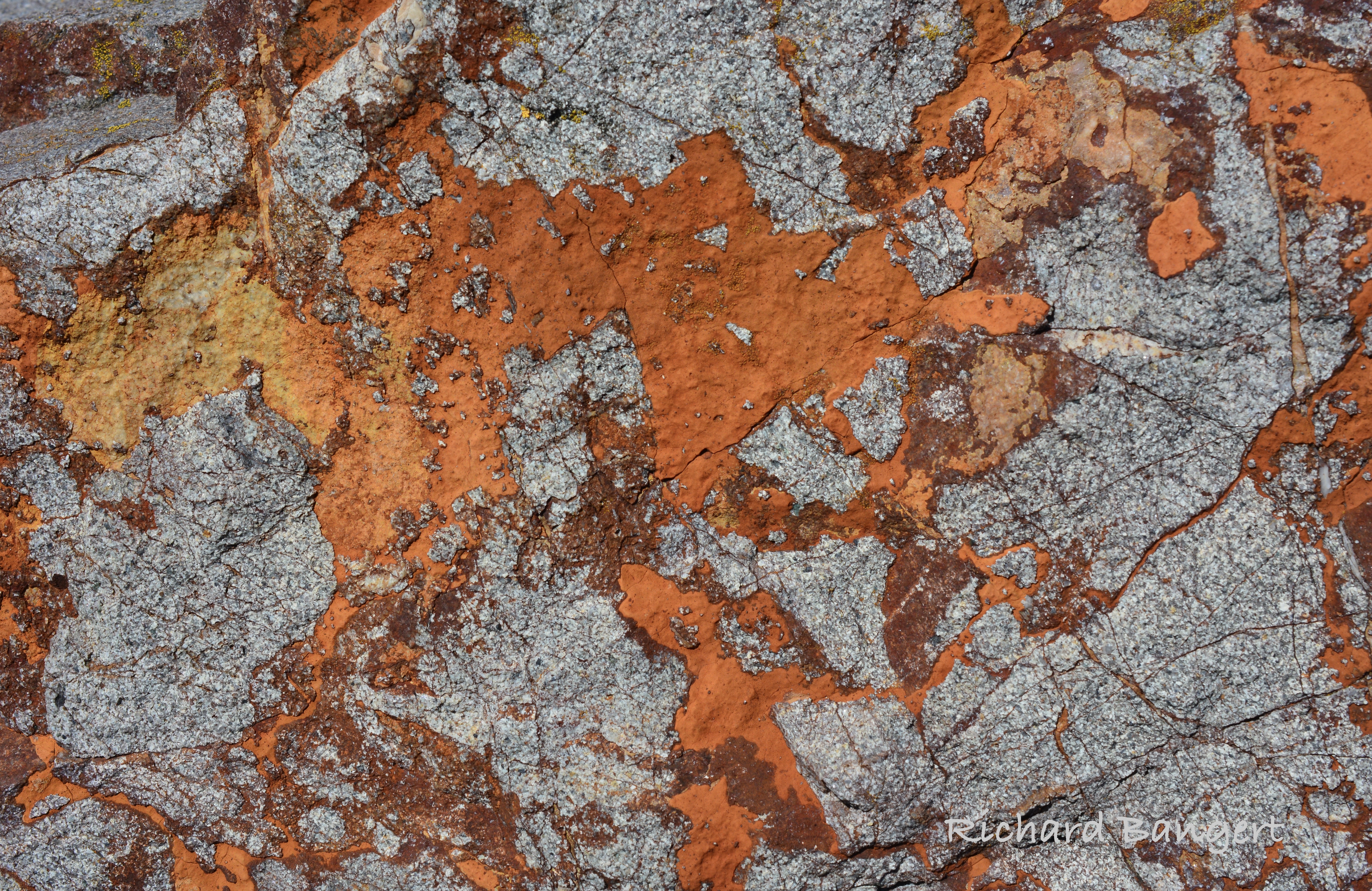
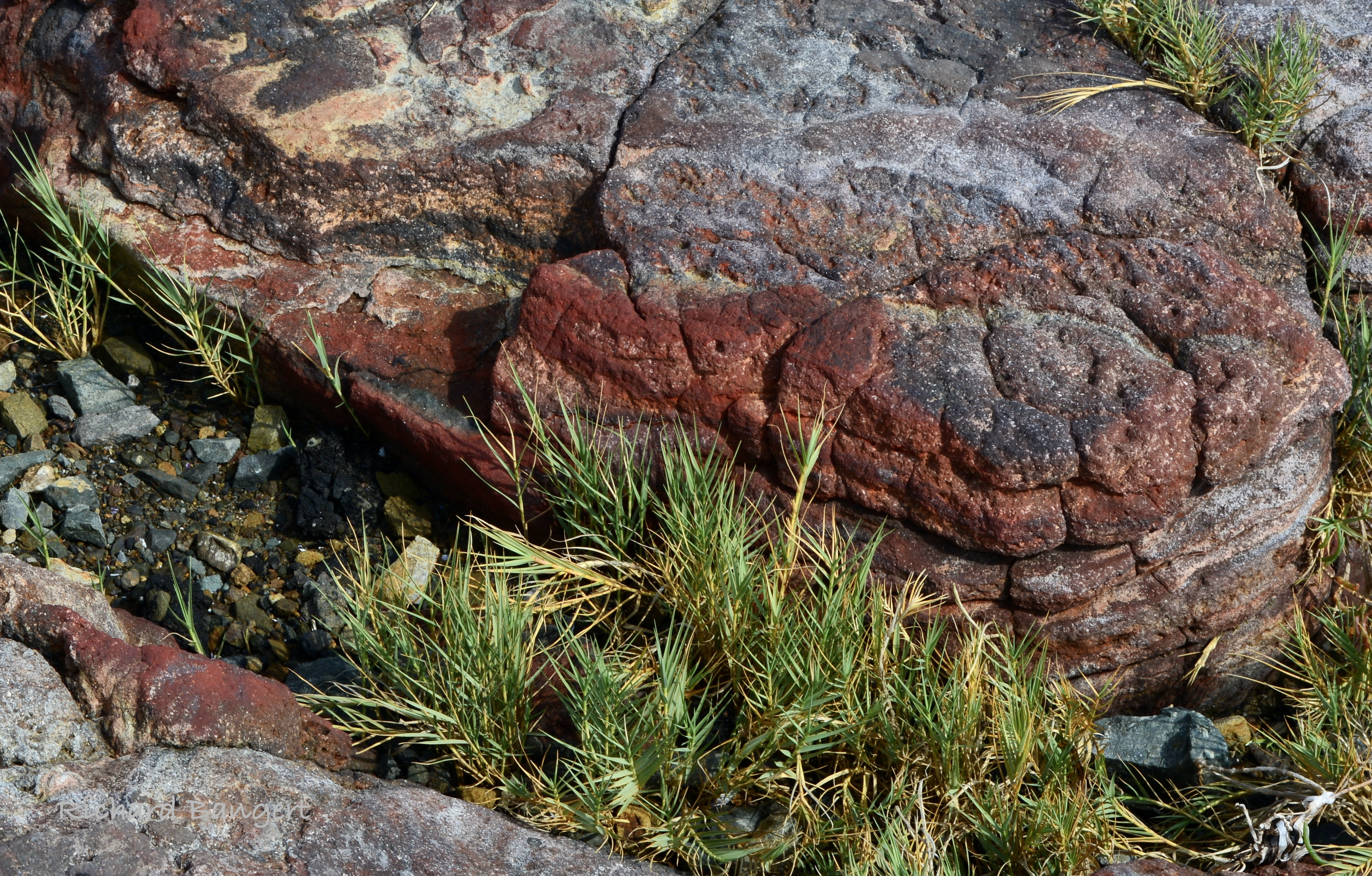
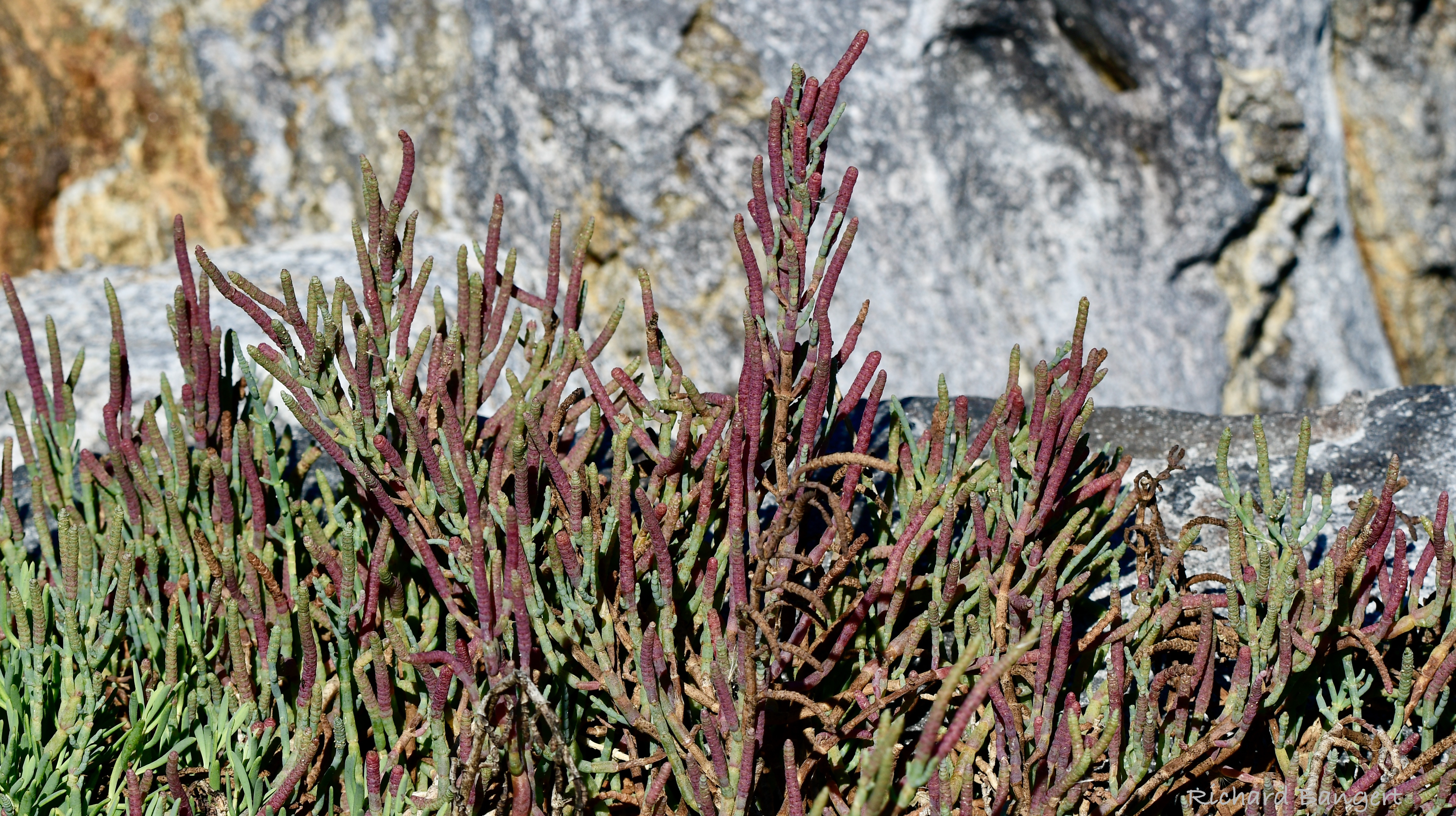
Also included are images of colorful rocks from the “geologic district” – the other historic district – the rip rap that surrounds the former base. Virtually every rock holding up the shoreline is a collage of minerals recycled by nature over eons. The orange and reddish boulders with vegetation shown in two photos seem out of place, like they were brought in from the Southwest to serve as accent colors. But most likely they arrived with the other ancient granites and sandstones that were excavated to construct the Navy base.




A good way to relax and appreciate the natural world is to get close up and ponder things of that nature.
Originally published on the Alameda Post.
 Alameda Point Environmental Report