
Shedding and replacing fur coats
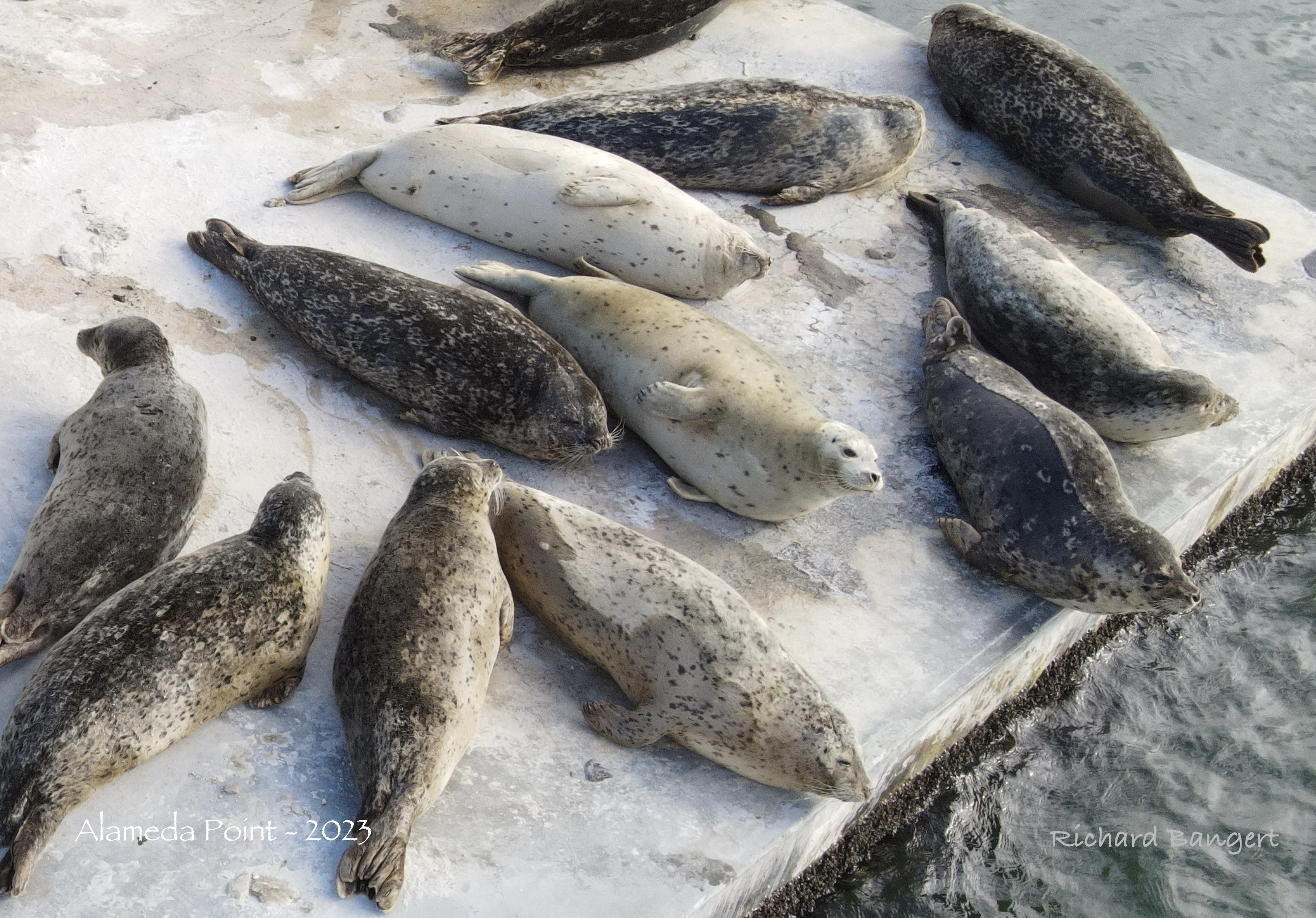
Every summer, and even into the fall, harbor seals go through a biological process known as molting, in which they shed their fur and grow a new layer to keep their fur healthy. You can tell when they are molting by the patchy appearance of their fur.
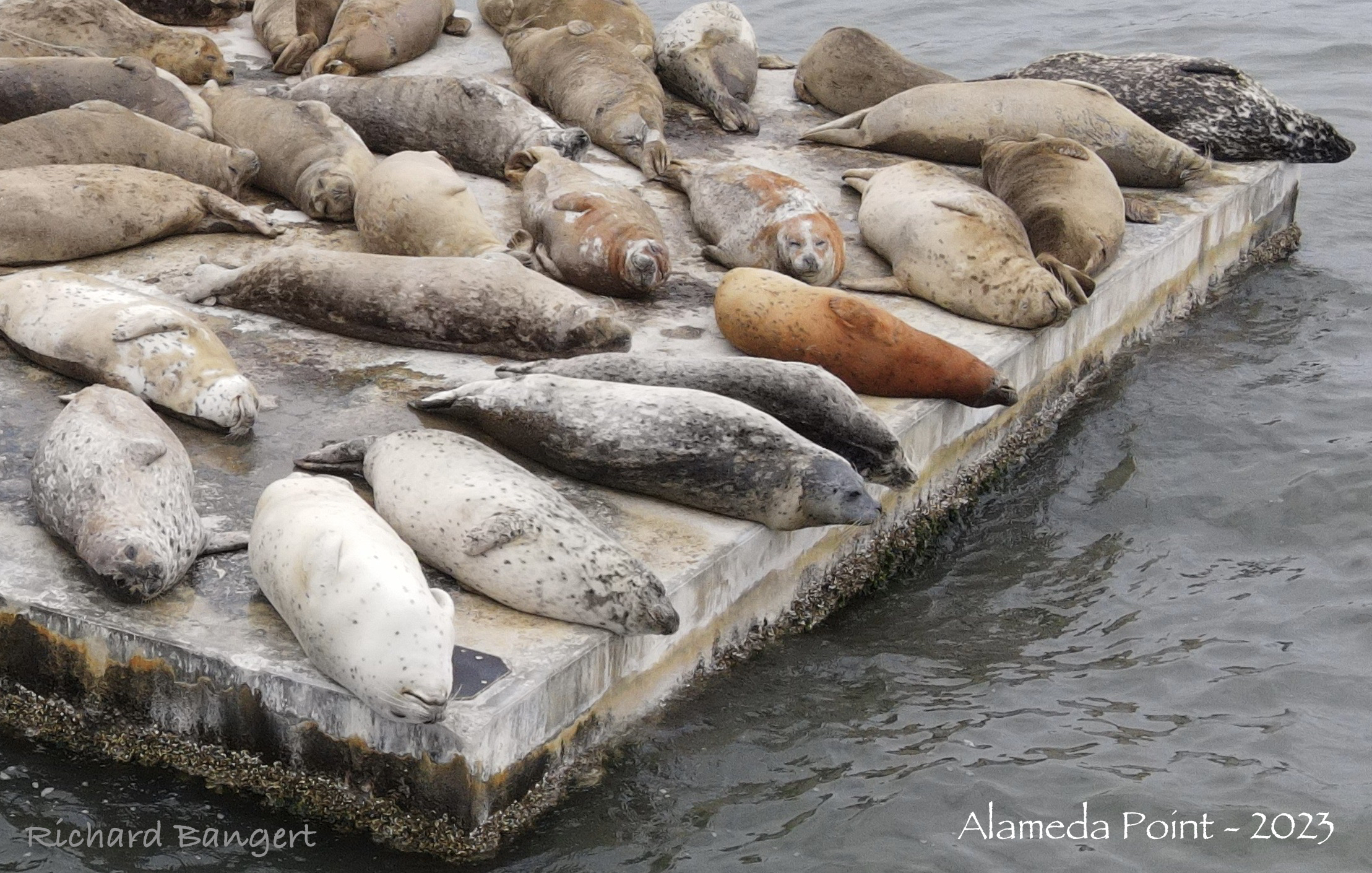
One purpose of fur on mammals is to keep the animal warm by trapping the heat between the skin and the hair. However, the thermal function of fur on seals has been almost completely lost via evolution. Today, the main function of the fur on seals is to protect the skin from mechanical damage caused by fights and UV radiation, according to Chiara Paoli on the Whale Scientists website.
“Still, hair must remain short allowing them to swim fast in the water,” writes Paoli. “In order to maintain these properties, the old pelage [fur] needs to be periodically shed and replaced with a new one.”
Harbor seals need to spend most of their time out of the water while molting “because the blood needs to flow closer to the surface of the skin to promote hair growth,” Paoli continues. “Spending too much time inside the water would incur severe heat loss as the blood loses heat much faster in water than in air.”
Mating behavior
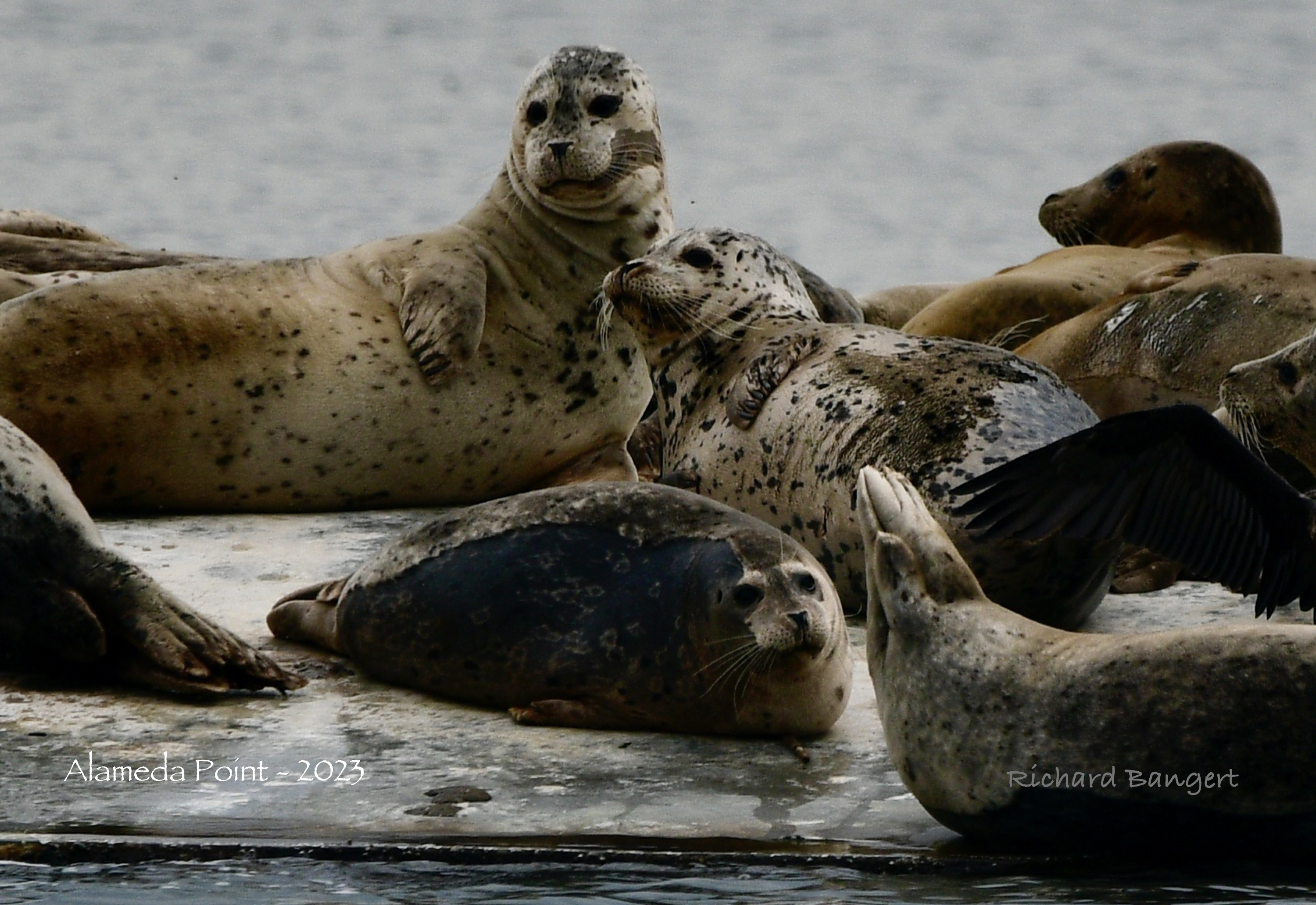
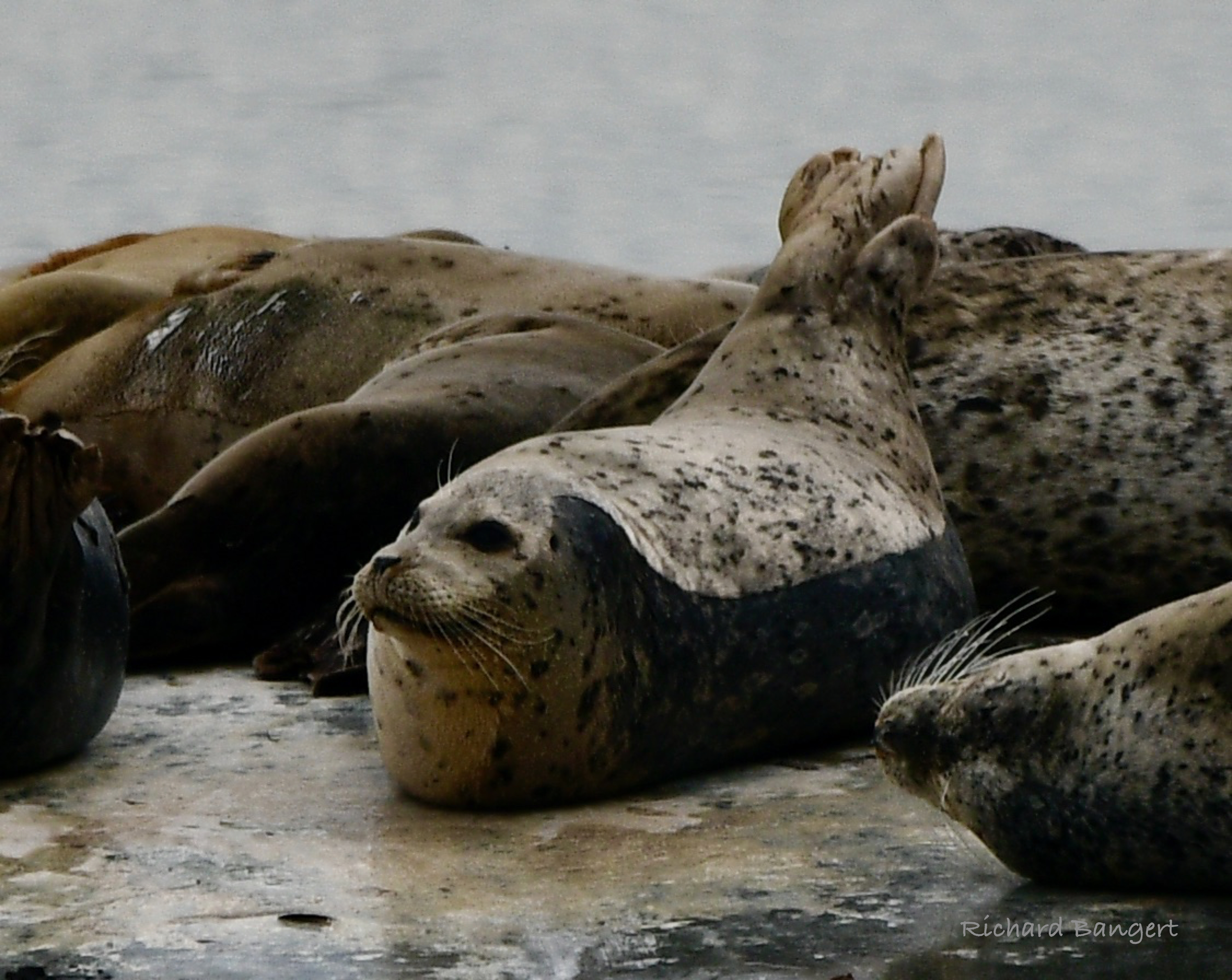
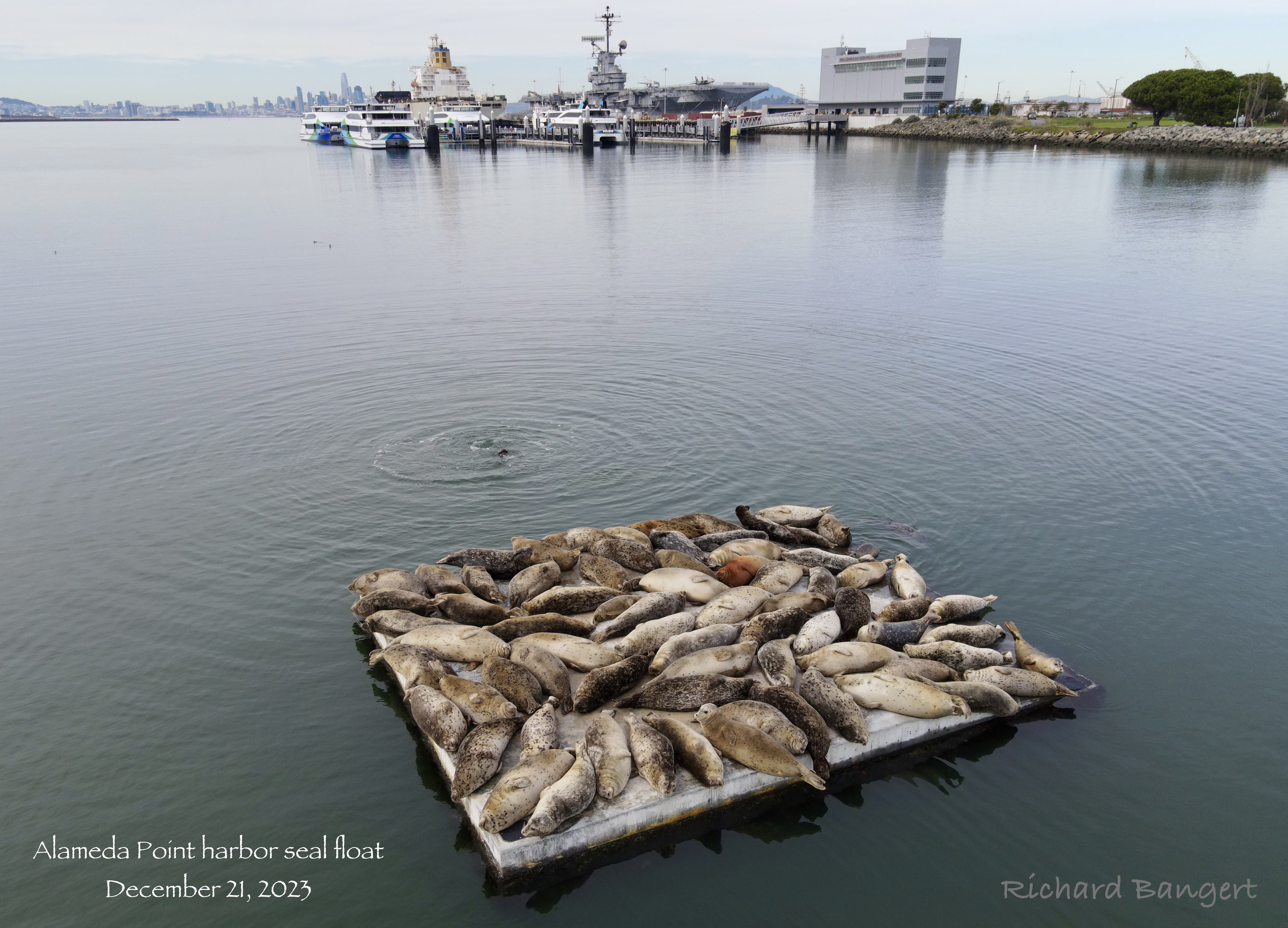
Ever wonder what all the splashing is about that occasionally happens near the harbor seal float at Alameda Point? There is a good chance two seals are engaged in mating behavior or bonding.
Here is a video (no audio) with excerpts of Pacific harbor seals engaged in an acrobatic water dance at Alameda Point on December 21. Part of the behavior involves playful biting or nipping at the neck and flippers of the mate. The video also reveals just how nimble, fast, and strong the seals are.
This is a good time of year to observe lots of seals on the float from a nearby observation point on the Bay Trail. If you paddle out, keep a respectful distance. If the seals raise their heads as you get near, you are too close.
 Alameda Point Environmental Report
Richard,
Wonderful lesson with images to offer welcome illustration. Thank you so much. I’m noticing that there have been few “red” seals this year, if any. Do you know the reason why? Sadly, I’ve not kept record of ratio, but maybe with dated photos… In any case, this is a wonderful blog…Thank you again. Leora
LikeLike